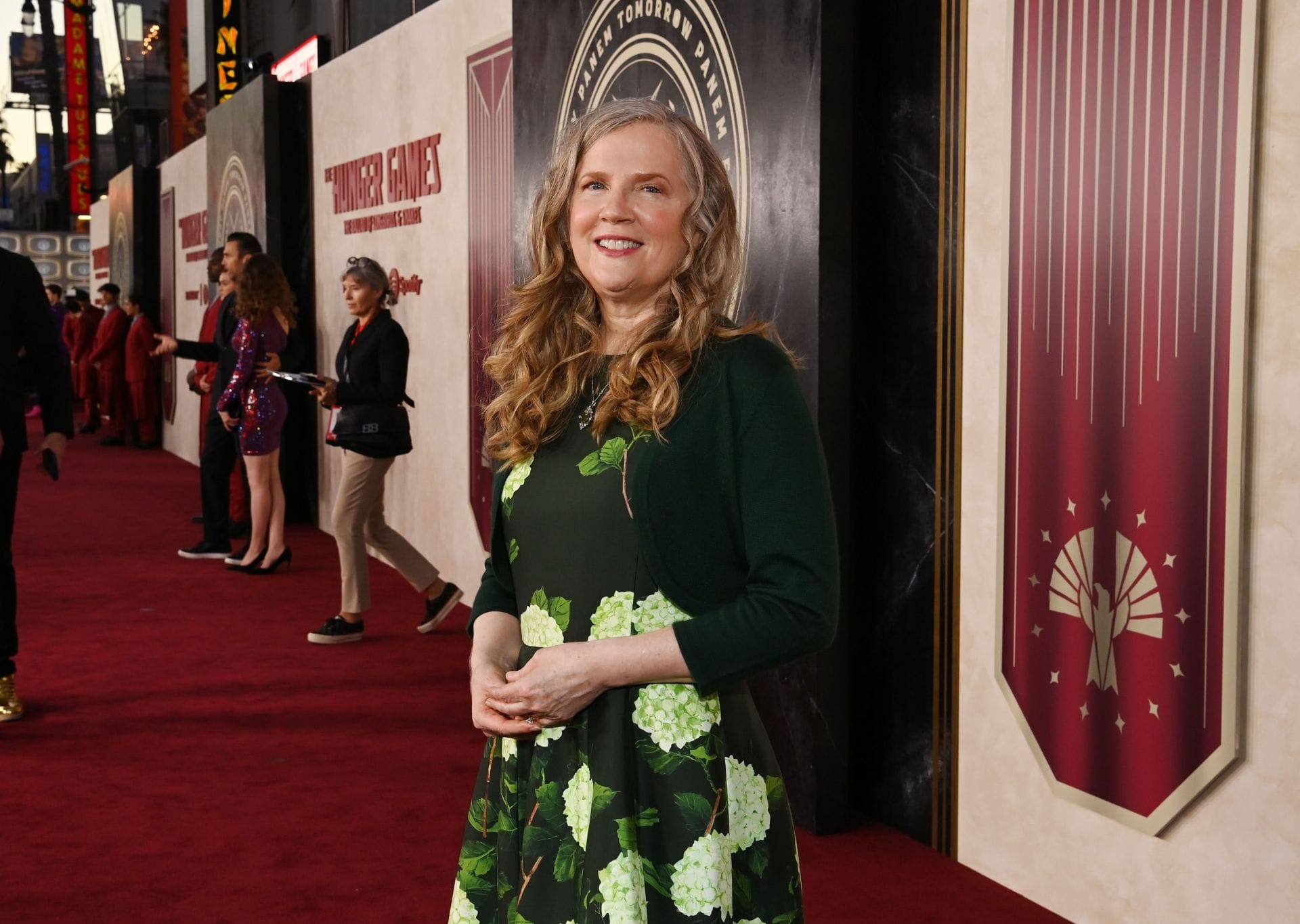
Quentin Tarantino recently wondered why author Suzanne Collins was not sued for allegedly ripping off Japanese author Koushun Takami’s Battle Royale for The Hunger Games. For the uninitiated, Takami’s novel was originally published in 1999 and adapted into a movie by Japanese director Kinji Fukasaku in 2000. Meanwhile, Suzanne Collins published the first book of her original The Hunger Games trilogy in 2008, with a subsequent movie adaptation starring Jennifer Lawrence and Josh Hutcherson in 2012. Both franchises follow a similar plotline, with Battle Royale depicting a dystopian future in which a totalitarian Japanese government forces high school students to fight to the death until one survivor remains. In The Hunger Games, two tributes are chosen from each of the 12 districts in the fictional nation of Panem and forced to participate in a series of televised games till one winner emerges. Readers and critics have often pointed out the similarities between the two franchises, and Quentin Tarantino revisited the theory when he recently appeared on The Bret Easton Ellis Podcast. The Kill Bill director was asked to list his 20 greatest movies of the 21st century, and he named Kinji Fukasaku’s adaptation of Battle Royale as his 11th pick. Following this, Tarantino accused Suzanne Collins of “ripping off” the Japanese novel, saying: “I do not understand how the Japanese writer didn’t sue Suzanne Collins for every f**king thing she owns. They just ripped off the f**king book! Stupid book critics are not going to go watch a Japanese movie called ‘Battle Royale,’ so the stupid book critics never called her out on it.” He continued: “They talked about how it was the most original thing they’d ever fucking read. As soon as the film critics saw the film they said, ‘What the f**k! This is just “Battle Royale” except PG!’” Tarantino also recalled a Pulp Fiction meme that poked fun at the similarities between the two franchises. The director noted that the meme included a still of Samuel L. Jackson and John Travolta driving in a car, featuring a text that read “You know what they call The Hunger Games in France? Battle Royale with cheese.” Suzanne Collins denied being aware of Battle Royale before publishing The Hunger Games Suzanne Collins claimed she did not know about Battle Royale during an interview with The New York Times in 2010 after the release of Mockingjay (the trilogy’s final book), saying: “I had never heard of that book or that author until my book was turned in. At that point, it was mentioned to me, and I asked my editor if I should read it. He said: ‘No, I don’t want that world in your head. Just continue with what you’re doing.’” Suzanne Collins has repeatedly said The Hunger Games was inspired by Greek mythology, especially the myth of Theseus and the Minotaur. According to the myth, King Minos of Crete ordered that the people of Athens send seven girls and seven boys every nine years to Crete as a sacrifice to the Minotaur, a half-human, half-bull creature, in a maze called the Labyrinth. One year, Theseus, the prince of Athens, volunteered to go as one of the young people with a plan to kill the Minotaur. In a 2008 interview with School Library Journal, Suzanne Collins said The Hunger Games protagonist Katniss Everdeen was a “futuristic Theseus,” saying: “The message is, mess with us and we’ll do something worse than kill you-we’ll kill your children. And the parents sat by apparently powerless to stop it. The cycle doesn’t end until Theseus volunteers to go, and he kills the Minotaur. In her own way, Katniss is a futuristic Theseus. But I didn’t want to do a labyrinth story. So I decided to write basically an updated version of the Roman gladiator games.” Suzanne Collins also said that the inspiration for her novel came when she was channel surfing one day, and saw a group of young people competing for something on one channel, followed by war coverage on another. Collins said that “the lines between these stories started to blur in a very unsettling way,” resulting in “the moment when Katniss’s story came to [her].” During the NY Times interview, Suzanne Collins said Everdeen was “heavily influenced by the historical figure Spartacus,” adding that the teenager followed “the same arc from slave to gladiator to rebel to face of a war.” Following The Hunger Games trilogy, Suzanne Collins published two prequels, The Ballad of Songbirds and Snakes (2020) and Sunrise on the Reaping (2025). Both novels have film adaptations, with the former being released in 2023 and the latter scheduled for release in November 2026.
https://www.sportskeeda.com/us/podcasts/news-quentin-tarantino-thinks-the-hunger-games-author-suzanne-collins-sued-ripping-off-battle-royale
Quentin Tarantino thinks The Hunger Games’ author Suzanne Collins should have been sued for “ripping off” ‘Battle Royale