

The authoritative French pollster, Ifop Group, just released shocking data about young French Muslims. It is part of a survey for Ecran de Veille, a magazine that specializes in strategic issues and geopolitics. While born in France and raised as equal citizens, young French Muslims are not joining the mainstream French culture, unlike most youths from other immigrant groups. Instead, they “re-Islamize.” They are turning toward a much more radical Islamic way of life than their own parents. Between 7 percent and 10 percent of the 68 million citizens or residents of France in 2025 are Muslim, against 1 percent in 1975. That’s a seven-fold to ten-fold increase. Fifty percent of the French Muslims are under 24, against 28. 7 percent of the French as a whole. This means that, no matter what, Islam is thus expected to carry weight in French society in the coming decades. Some 80 percent of the French Muslim youths describe themselves as religious, against a French global youth average of 48 percent. Muslims’ religious commitment is steadily increasing. Forty years ago, only 7 percent of the French Muslim youths under 24 were attending prayers at mosque. Today, 84 percent of the Muslim youths attend public prayers on a regular basis, against fewer than 3 percent of the non-Muslim youths as a whole, and 8 percent of the “affiliated” young Christians. Likewise, Ramadan fasting has grown to 83 percent from 51 percent among the young Muslims. In 2003, some 16 percent of French Muslim girls under 24 would don the veil or wear any kind of Islamic garb. That has risen to 45 percent today. Nearly 50 percent of the young Muslim men and nearly 60 percent of the young Muslim women frown upon shaking hands or kissing with the other gender, being medically attended by the other gender or engaging in mixed-gender sport activities. Most French Muslims used in the past to follow the moderate guidelines of the Maliki or Hanafi schools of religious jurisprudence regarding halal food. They partook of regular Christian or Jewish French food as long as pork and alcohol were avoided. Young Muslims today seem to be so influenced by more restrictive views as to insist on fully certified halal products and services. Some popular restaurants owned and managed by non-Muslims, like the Five Guys chain, serve certified halal meat only and have withdrawn wine or beer from their beverages list. The fundamentalist shift is apparent in the realm of theology, philosophy, and science. Whereas in 1998 some 41 percent of the young French Muslims used to support a “modernization” of Islam, only 21 percent express similar views today. Conversely, only 19 percent supported fundamentalism or “Islamism” in 1998, against 42 percent today. Asked a multiple choice question about the fundamentalist groups they support, 24 percent express today sympathy for the Muslim Brotherhood, 9 percent for Salafism, 8 percent for Wahhabism, 8 percent for Tabligh, 8 percent again for Tafkir and 3 percent for Jihadism. Many of these groups are illegal in many Muslim countries. In 1995, the primacy of Sharia over French law was rejected by 62 percent of all Muslims; today, by only 49 percent. Among the young, it is backed by 57 percent. The primacy of la loi is the main tenet of the quasi-constitutional law of 1905 separating Church and State in France. Although most young Muslims attend French secular schools, and large numbers of them go to college, 82 percent tend to discard the standard scientific views and hypotheses on the universe, the growth of life or evolution when it seems to contradict the Kuranic revelation. Youths from other religions tend to separate science and religious tradition. François Kraus, who managed the survey for Ifop, wonders whether this re-Islamization should not be primarily understood “as a way for Muslim youth to assert their identity and collective power” within French society. The fact is that this re-Islamization goes hand in hand with a kind of symbiosis with an ultra-left party, Jean-Luc Mélenchon’s La France Insoumise. In the 2022 presidential election, 69 percent of Muslims voted for Mr. Mélenchon, compared to 22 percent of the French population at large. In the 2024 European elections, 62 percent of Muslims voted for La France Insoumise, meaning France Unbowed. In the subsequent legislative elections, this party achieved its best results in constituencies with large Muslim populations. The identification works both ways. The more La France Insoumise strengthens its foothold among Muslims, the more it aligns itself with radical Islamism or, since October 7, 2023, with an equally radical anti-Israel stance. Many observers conclude that France is undergoing a process of ‘Lebanonization,’ which in turn could lead to a war that would be not merely civil but also ethnic and religious. Mr. Kraus notes that the rise of fundamentalist Islam is fostering, as a mirror effect, an incipient Christian revival, marked by the return of baptism a rite neglected for some 30 years as well as religious services, pilgrimages, and monasticism. Meanwhile, the National Rally continues to climb in the polls. For the first time, an Odoxa-Mascaret poll predicts victory for its leader Jordan Bardella in the 2027 presidential election, regardless of his main opponent.
https://www.nysun.com/article/a-french-rightist-is-for-the-first-time-predicted-to-win-the-presidential-election-in-2027
Tag Archives: authoritative

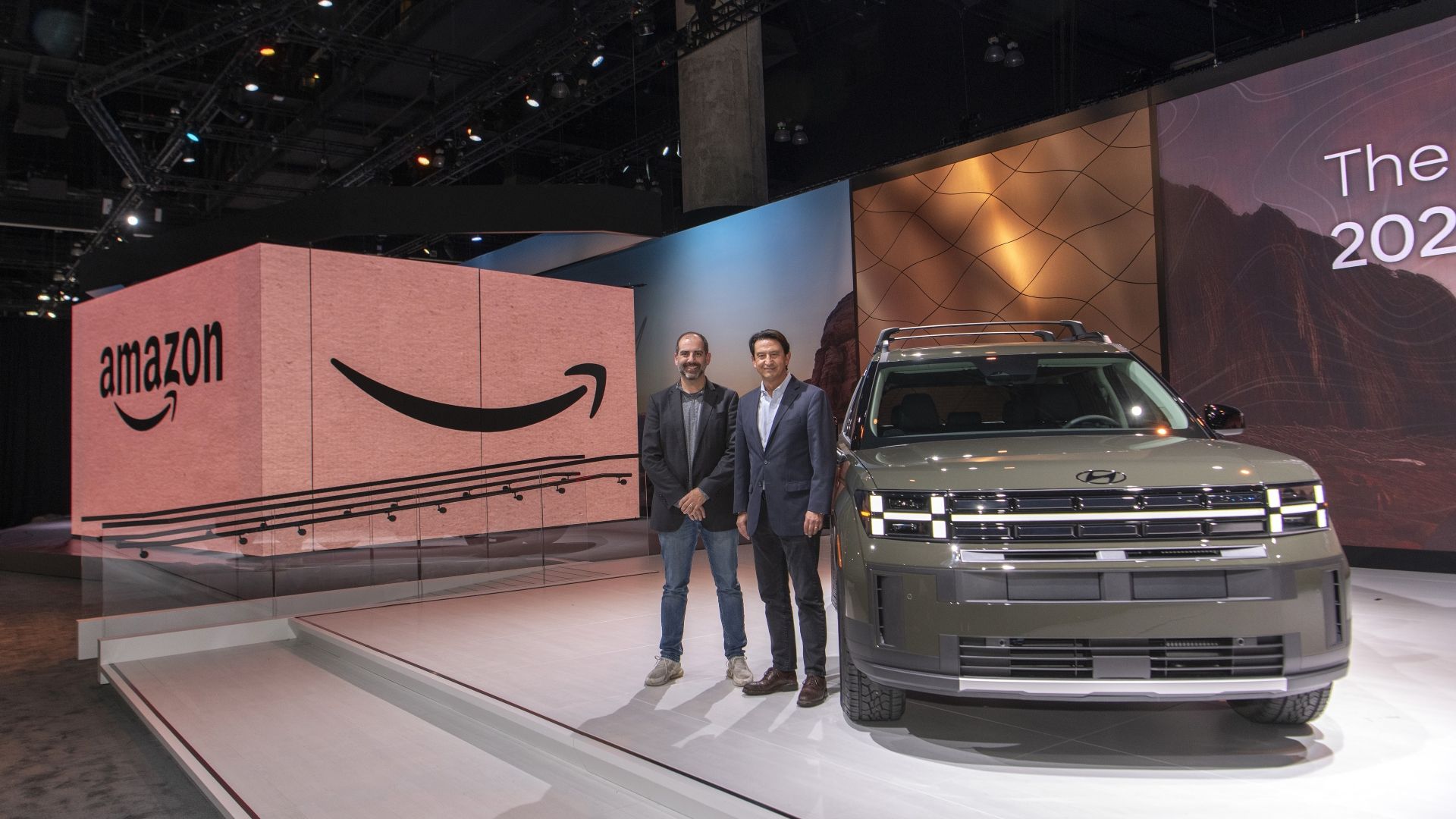
How Amazon Autos improves the car-buying experience
Buying a car has never been simple, but 2025 is shaping up to change that. For years, shoppers have dealt with pushy sales tactics, limited local inventory, and the stress of spending hours at a dealership just to compare a few options. Now, Amazon Autos is stepping into the market with a streamlined online buying experience, and it’s tackling the biggest pain points head-on. The platform connects shoppers to a wide network of partnered dealers across the country, allowing buyers to browse real inventory, compare pricing, and handle much of the purchasing process from home. Instead of negotiating in a showroom, customers get clearer pricing, more transparency, and a broader selection than they’d ever find on a single dealer lot. The result is a buying process that feels closer to online shopping than traditional car hunting. We break down how Amazon Autos is reshaping the car-buying experience, why dealers are eager to join, and what shoppers can realistically expect when using the platform. If you’ve ever wished for a simpler, more transparent way to buy your next car, this might finally be it. In order to give you the most up-to-date and accurate information possible, the data used to compile this article was sourced from various manufacturer websites and other authoritative sources. Amazon has turned the car buying experience on its head We’ve all had to go through the experience of buying a car from a traditional dealer, and the process is often far from pleasant. From pushy sales people to tons of hidden costs, it is far from a straightforward process. This is where Amazon comes in, with their new online car buying platform, Amazon Autos. It aims to streamline everything to make buying a new car less of a headache. Compare prices, specs, and deals The process begins is pretty simple. You start by browsing through cars from dealerships that Amazon has partnered with. Right now their network is relatively small, with only select areas having access, but they are quickly rolling out in more areas as time goes on. You can search for specific cars with specific features and specs and compare prices across their dealership network. This already gets rid of one of the biggest irritations about going into a dealer. It can sometimes be hard to get a straightforward price from a dealer, with hidden deals and other things making it feel overwhelming. You don’t need to negotiate on Amazon Autos. This transparent approach often results in a better deal for you. Buying or leasing Once you’ve found the vehicle that you’re interested in, you click on “estimate your payments.” This will begin the checkout experience. Just like buying a car normally, you choose whether you want to pay cash, finance, or lease. You can then tack on any rebates or deals, as well as any protection plans that you’d like. Once you’re happy with your deal, Amazon verifies your information and passes it on to the dealership. The dealer will ask for the deposit, down payment, or due-at-signing costs, and you’ll select a time to pick up your new ride. Of course, you can pretty easily arrange for test drives before you get to this stage, which you should definitely do before you decide to buy. Amazon Autos also offers support for trade-ins, where you simply enter your details and they will give you an instant offer. Returns are made easier If you buy a used or a certified pre-owned car off of the platform, Amazon offers support for returns if you’re unhappy with your product. Amazon will process everything, and if the return is accepted, you will be totally refunded. Of course, it has to meet certain criteria, but this helps you avoid having to fight with a dealer to get your money back on a lemon. The list of dealers available is limited, but it is ever growing The goal is that Amazon will partner with a wide selection of dealers across the country. This will make Amazon Autos available to you no matter where you are in the country. At the time of rolling out, they have partnered with at least one dealer in every state, other than South Dakota and Alaska. New cars are limited to one automaker As Amazon Autos rolls out, they have plans to incorporate a long list of automakers. However, at the time of writing this article, they have only one partner for new vehicles. At launch, the only dealers that you can buy from are Hyundai dealers, meaning that the only new cars that you can buy on the platform are Hyundais. The already popular brand is looking to make buying its cars more accessible than ever before. You can be really specific about the car that you’re looking for, with the ability to filter by model, fuel type, color, powertrain, and features, among many other things. This allows you to find your perfectly specced car and compare prices from dealership to dealership without having to ever leave your home or speak to anyone. There are plenty of used options too Even though the only new cars you can get are from Hyundai, there are a number of automakers offering used and certified pre-owned vehicles through the platform. If you’re looking to buy a used car, Amazon Autos is just as helpful. Once again, all the filters available allow you to find your perfect car, specced exactly how you want it. For used cars, there is also a bevy of other filters to help you find the car you’re looking for. This includes being able to filter by model year, number of owners, and mileage. We don’t claim that Amazon Autos is perfect, and we’re sure that there will be plenty of hiccups as they roll out across the country. However, the traditional method of buying a car has always been one marred by inconvenience, where dealers always have the upper hand and the average person has to feel around in the dark. We’re glad that there is an alternative. Amazon Autos puts the power back in the hands of the buyer, with the ability to compare prices and shop around easily, access to simply financing, and the ability to find the car that is right for you. You don’t have to deal with shady sales people, you don’t have to get forced into something you don’t want, and you can get fair offers on your current ride. We’re definitely keeping our eye on the platform as it continues to grow.
https://www.howtogeek.com/amazon-autos-fixed-worst-part-buying-car/