
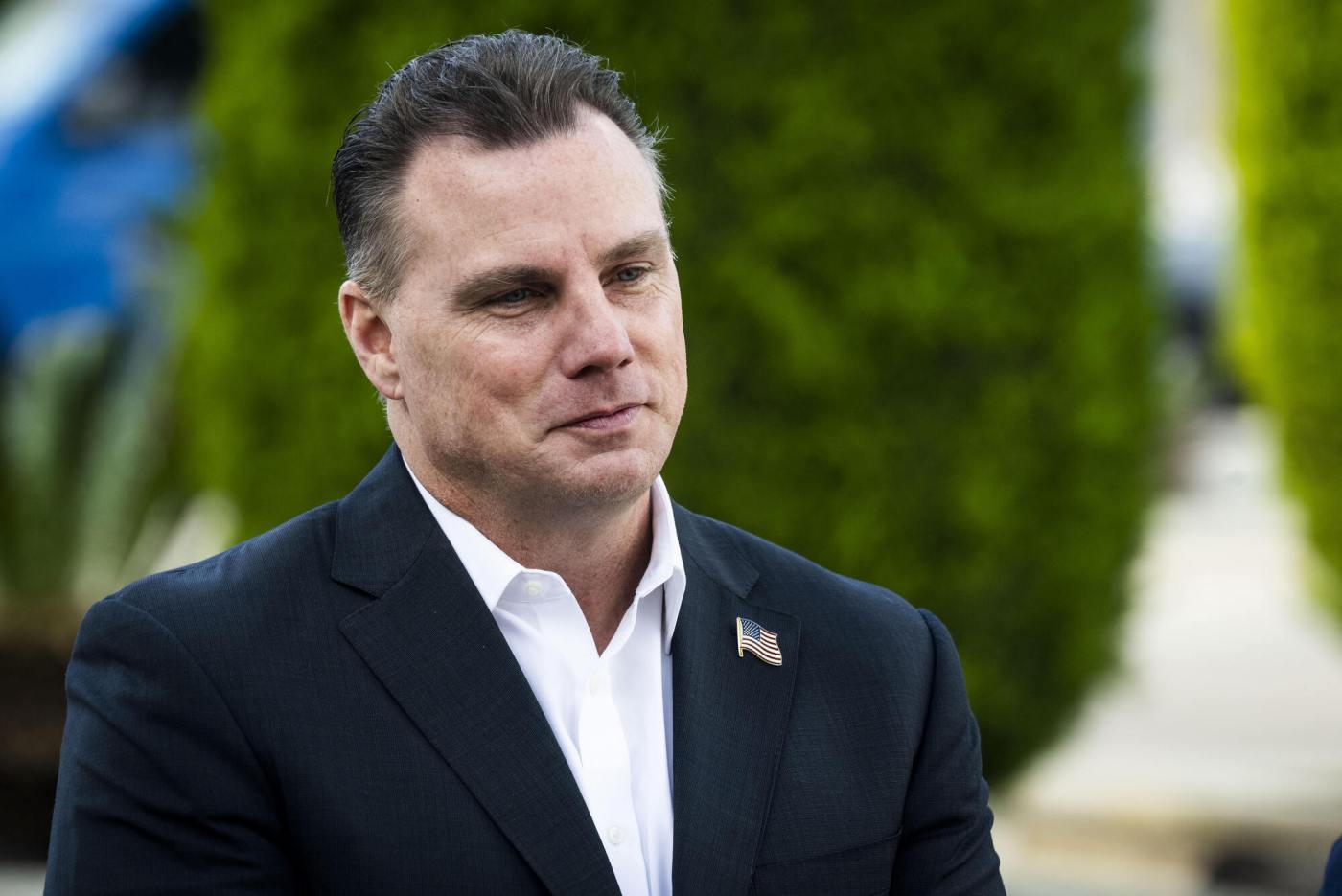
The U. S. Department of Justice said it “rescinds and will remove” records that its former deputy assistant U. S. attorney general, Michael Gates, was terminated and will instead accept his voluntary resignation. The Justice Department, in a letter to Gates dated Friday, Nov. 21, said it will update Gates’ personnel file to note that he voluntarily resigned from his position in its Civil Rights Division. Gates, the former Huntington Beach city attorney, announced on social media on Sunday, Nov. 9, that he had resigned his position in the Trump administration and was returning home to work for the city once more. He said he was “very conflicted” about leaving because the job was “the honor of a lifetime,” but the months felt like years as he missed his family and their events. But the Justice Department had said Gates was terminated from his position “for cause,” personnel records obtained through a records request showed. A Justice Department source did confirm the validity of the letter Gates received on Friday accepting his resignation. There was no further information about the change of decision. “Please accept this letter as formal notification that the Department of Justice Civil Rights Division has accepted your voluntary resignation from the position of Deputy Assistant Attorney General, effective November, 9, 2025. Accordingly, the Division rescinds and will remove from your personnel record any previous reference to your termination.” Gates had maintained that he was fired, but rather was planning to resign from the Justice Department. “They were angry I resigned, and I know this because it was well known throughout the office for months that anybody resigning would make them look bad,” Gates said in an interview last week. “When other people resigned, they were so mad. I’ve seen it with my own eyes because they thought it would make them look bad.” Gates could not immediately be reached for comment Friday evening. But in a Facebook post, Gates called the letter “total vindication.” “DOJ just sent a letter completely reversing now recognizing my resignation!” he posted. Earlier Friday, the Huntington Beach City Council met in closed session for 90 minutes, discussing the rehiring of Gates to work in the city attorney’s office. At its regular meeting on Tuesday, the council called for a special meeting to address “anticipated litigation” in two emails from Gates’ attorney, Benjamin G. Chew, regarding Gates’ employment with the city. In the resignation letter Gates had posted to social media earlier this month, it indicated his last day with the Justice Department would be Nov. 22. The Justice Department’s letter on Friday said his resignation is effective Nov. 9. Gates was elected as Huntington Beach’s city attorney in 2014 and won reelection twice more. He had said he would run for his old post again next year. But in the meantime, Gates said he has accepted the city’s offer to be “chief assistant city attorney” starting Nov. 24. He had been one of the more outspoken elected officials in Huntington Beach and the county, leading his office to fight the state on multiple local control issues, including challenging the state’s sanctuary law, fighting for the city’s voter ID law, and preventing California from mandating the coastal city to build more housing. He announced in February that he was leaving his post as Huntington Beach’s city attorney to head to the Justice Department in Washington, D. C. In his resignation letter, Gates said: “My decision to resign was not made easily but, in light of many circumstances, and after my experiences working at the Civil Rights Division in Washington, D. C., this year, I believe this is the best decision for me and my family.” Staff writer Claire Wang contributed to this report.
https://www.pasadenastarnews.com/2025/11/21/justice-department-says-it-reverses-michael-gates-firing-will-accept-his-resignation/
Tag Archives: gates

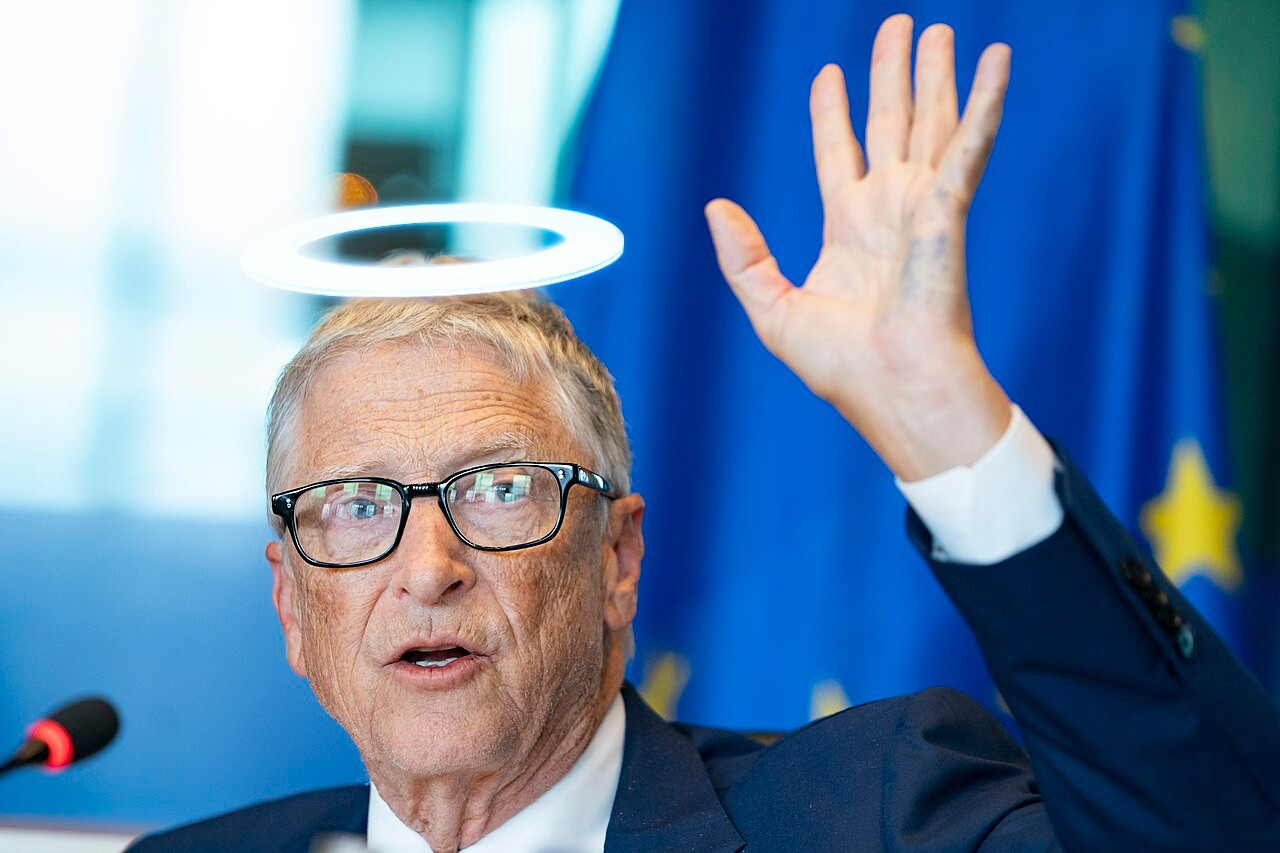
Bill Gates and the Redemption Racket
When Bill Gates announced his “pivot” from climate catastrophe to humanitarian hope, the press dutifully nodded along. A messiah-complex monopolist shedding his alarmist mantle for a brighter, kinder cause.
Take a closer look, though, and you’ll see the same stage, the same spotlight, the same script—just new marketing. For decades, Gates has backed policies that punished farmers, penalized energy independence, and empowered unelected technocrats who operate far beyond democratic reach.
He invested in synthetic meat and lab-grown crops while millions of real farmers faced ruin under the weight of green regulation. He funded climate models that forecasted apocalypse, and initiatives that made energy scarce and food expensive—all under the banner of “saving the planet.”
(RELATED: Saving the Planet by Eating Fruit and Whole Grains Is Possible If You’re Dumb Enough)
Now that public trust in climate crusades is crumbling, he’s rewriting his role. The new storyline: humanity first. Less “save the Earth,” more “save the poor.” It’s a clever shift, not a retreat, but a rebrand. By recasting the mission as “human development,” Gates retains the same hierarchy: billionaires setting the agenda, governments executing it, and citizens left to applaud or adapt. The faces change, the structure doesn’t.
(RELATED: A Better Alternative To the Davos Elites)
What looks like repentance is really repositioning. The sermon has simply moved from melting ice caps to malnourished children. The congregation, weary of doom, is offered a gentler gospel—one where Gates emerges as a benevolent pragmatist rather than a panicked prophet.
Yet beneath the new tone lies the same theology: that salvation flows downward, from the billionaire to the billions. His new rhetoric sounds refreshingly modest. “Let’s stop catastrophizing, let’s focus on real improvements in living standards.”
Again, though, look closer and you’ll see that the modesty is strategic. He isn’t ceding power; he’s consolidating it. For years, his foundation’s model has relied on bypassing local governments and funneling vast sums through “partnerships” with international NGOs. The pivot doesn’t end that pattern. If anything, it perfects it.
The climate panic made him influential. The humanitarian pivot will make him indispensable.
And there’s something almost comic in the presentation. The man who told the world to eat less beef and burn less fuel now frames himself as a champion of practical prosperity. The same policies that strangled small farms and inflated food prices are now being recast as learning curves—as if the damage were a necessary prelude to wisdom. The irony is thick enough to spread on toast.
(RELATED: The Great Salad Scam)
To his credit, Gates is not wrong that poverty and disease kill far more people than carbon. But when he says so, he speaks as though the crises were separate, when in truth, one fed the other. Climate orthodoxy—the kind he financed—throttled developing nations’ access to affordable energy. It kept the poorest poor.
Now, in an act of almost biblical self-forgiveness, he presents himself as the one to lift them up again.
(RELATED: Europe’s Energy Suicide: Brussels Trades Industry for Ideology)
It’s the same savior complex with a new script. The same conviction that global order can be engineered from a Seattle office park. The same faith that the planet’s problems can be solved if only the rest of us would get out of the way.
That’s the real meaning behind the pivot.
There’s a darker side, too. When philanthropy becomes policymaking, democracy shrinks. Decisions about vaccines, food systems, and climate strategies migrate from parliaments to private foundations. No one voted for this, yet it happens anyway. Gates’ fortune makes him unaccountable, and his causes, however noble in appearance, come with no oversight.
He may preach transparency, but he governs through opacity—a king whose crown is the presumption of good intent.
The joke, if there is one, is cosmic. The man who spent years warning us that we were running out of time now assures us that everything will be fine—provided we follow his next plan.
The stage lights dim. The actor changes costume. And the audience, desperate for reassurance, claps on cue.
Meanwhile, governments that once marched to the tune of climate panic now quietly rebrand their failures as “development strategies.” Corporations that cashed in on green hysteria are pivoting, too, marketing the same control with friendlier campaigns.
The transition from fear to hope may feel fresh, but it’s still theater. The same hands still pull the strings.
So what do we do when the man with more money than many small nations becomes the moral compass of modern policy? The answer begins with skepticism. It’s not enough to ask what he funds—we must ask what he gains. Every pivot preserves his power. Every cause, however well-presented, extends his reach.
This is the paradox of Gates. His vision always sounds virtuous, but it always ends with him in charge. Climate, health, education—the topics shift, the hierarchy stays.
And now, with his latest transformation from technocrat to “humanitarian,” he is no longer selling fear but faith in himself.
—
*The Catholic Roots of America’s Horror Craze*
*The Harvard Index of Holiness*
https://spectator.org/bill-gates-and-the-redemption-racket/