
Some very vocal corners of the internet would have you believe that movies, in general, are in a downward spiral. That there simply aren’t as many new classics being produced at the rate they used to be. While these arguments are often couched in some form of misplaced nostalgia mixed with anti-woke nonsense, they do speak to how our consumption of media has changed so drastically in the last decade.
The rise of streaming services has splintered the pipeline that used to deliver entertainment to the masses. Good or bad, or both, what this means for the future of cinema remains to be seen. But right now, it’s plain to see that often the greatest of the new films produced have to compete for our attention in ways they never had to before.
Not all the greatest masterpieces made in the last ten years have fallen through the cracks. Indeed, some of them have been awarded the highest honor bestowed by the most major awards body in the film industry, but even the Oscars have waned in popularity.
All the films on this list are award-worthy, whether they were rightly recognized or not, and they only scratch the surface of the most recently released masterpieces. There’s no way to objectively identify or rank the greatest movie masterpieces from the last ten years, but these ten films are proof positive that movies are still just as great as they’ve always been.
—
### 10. *Paddington 2* (2017)
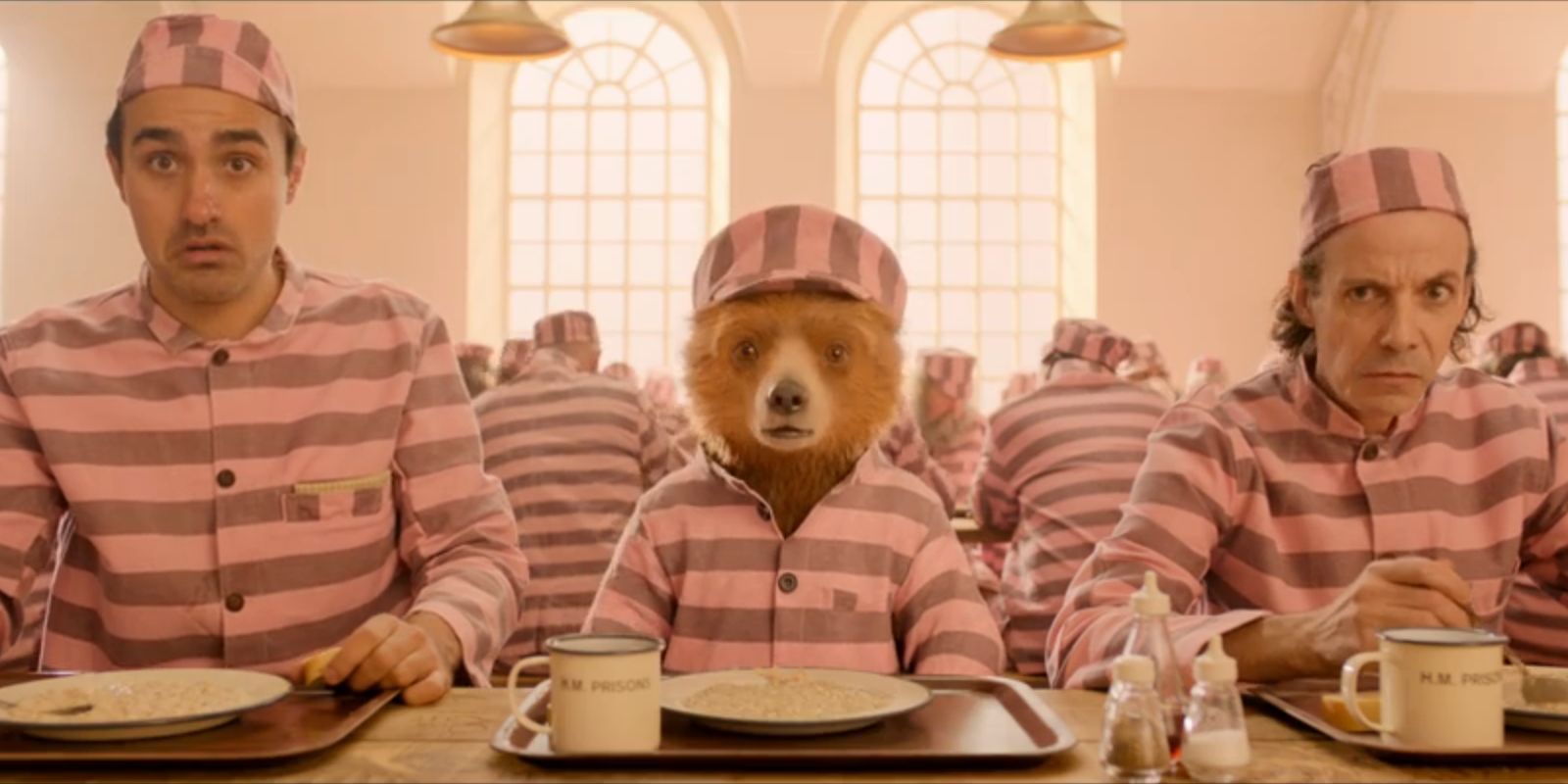
Before we begin to stray too far into pretentious waters, let’s talk about a little marmalade-loving bear who could charm the pants off a group of prisoners. The *Paddington* film franchise has been a wonderful respite from the chaos and calamity of the real world in the last decade, and the marmalade-encrusted crown jewel is easily *Paddington 2*.
The story follows Paddington as he is framed for a robbery and sent to prison, where his indomitable spirit softens the hardened heart of Knuckles McGinty, the prison chef played by Brendan Gleeson. He eventually escapes and goes on the run to prove his innocence.
The sweetly saccharine nature of the Paddington character could easily come off as cloying or cheaply cynical in a world where children’s movies have become deeply commodified, but the film never feels any less than genuine thanks to director Paul King’s deft touch and the ace cast who never let their performances dip into irony or self-amusement. It’s all played wonderfully straight and makes for one of the most charming films ever made.
There may be better films than *Paddington 2*, but few will make you feel as good as it does.
—
### 9. *One Battle After Another* (2025)
Is it too soon to classify *One Battle After Another* as a masterpiece? Absolutely, and while recency bias is a huge factor here—hence the lower ranking—there’s enough to Paul Thomas Anderson’s big, bold, blackly comedic action film that it should be recognized.
Inspired by Thomas Pynchon’s *Vineland* and infused with a timely rage against the machine attitude, it’s not only the most imminent film of 2025, but also one of its most entertaining. Leonardo DiCaprio, in mad-eyed comedic mode, plays a former revolutionary turned pothead crackpot, who is pulled kicking and screaming back into his former life when an adversary starts coming after him and his comrades.
Teeming with memorable performances from DiCaprio, Sean Penn, Regina Hall, Benicio del Toro, and Chase Infiniti, *One Battle After Another* is both Anderson’s funniest and most explosive film, allowing him to flex his action muscles as never before.
Its righteous indignation and bold politics may have ruffled a few right-wing feathers, but its razor-sharp plotline of revolutionaries versus militants feels particularly pointed and appropriate for the current state of America.
—
### 8. *Nope* (2022)
Jordan Peele is one of the most exciting filmmakers working today, in or out of the horror genre that he has called home for his first three films.
*Get Out* was a biting satire of white liberal racism wrapped in a suburban nightmare, *Us* was class warfare bathed in bloody American iconography, and his greatest effort yet, *Nope*, is a grand sci-fi horror epic of spectacle colliding with exploitation.
Set on the struggling ranch of a family who specialize in film horses, deep in the deserts of Agua Dulce, California, the movie follows an estranged brother and sister as they attempt to document an unidentified flying object in hopes of fame and fortune.
Embedded with influences of Westerns and anime, *Nope* is Peele painting on his largest canvas yet. The incredible IMAX cinematography by Hoyte Van Hoytema takes full advantage of the wide-open vistas of its setting and the grandeur of its camera-ready apex predator stalking the skies.
In equal turns disquieting, darkly humorous, and awe-inspiring, *Nope* continues Peele’s streak of boldly original films and should make any film fan look toward the horizon with hope for his next adventure.
—
### 7. *The Power of the Dog* (2021)
Jane Campion’s quiet deconstruction of the myth of the cowboy in her revisionist Western *The Power of the Dog*, based on the novel by Thomas Savage, is one of the boldest takes on the traditions of the genre since Robert Altman’s *McCabe & Mrs. Miller*.
Set on a Montana ranch, the film follows a widow and her son as they come to live there after she marries the softer, second brother, one of the two owners. Meanwhile, her son becomes fascinated with the coarser sibling.
Benedict Cumberbatch gives a nuanced portrayal as Phil Burbank, a man who masks his fragile sensitivity with rugged masculinity. A slow-burn of a Western, the film’s characters don’t become riddled with bullets or arrows but rather corrode from the inside out as their insecurities and bitter emotions brew within.
Alongside Cumberbatch’s definitive performance, Kirsten Dunst, Jesse Plemons, and Kodi Smit-McPhee, all Oscar-nominated, turn in strong work as they expose the interior lives of their characters.
*The Power of the Dog* operates with a cold intimacy that will be familiar to fans of Campion, but is far too often overlooked in the Western genre.
—
### 6. *Nickel Boys* (2024)
Visually arresting and emotionally bruising, RaMell Ross’ adaptation of Colson Whitehead’s heart-wrenching novel about two Black boys’ experiences of abuse at a reform school is incendiary in its depiction of racial discrimination and violence.
*Nickel Boys* is set in the Jim Crow era, following young Elwood as he is sent to the Nickel Academy, which mistreats its segregated Black students and treats them as a lucrative labor force. Elwood bonds with fellow student Turner, and together they attempt to make it through their time at the school alive.
Though a fictional creation, the Nickel Academy was inspired by the real-life Dozier School for Boys, which had a horrid history of abuse and deaths before being permanently closed. That violence is brought into stark view in *Nickel Boys*, which was shot from a first-person perspective.
While that radical style may be discombobulating for some viewers, it succeeds in fully immersing the viewer into the narrative, delivering a shock to the system that should spark a fury in those with any capacity for empathy.
—
### 5. *Past Lives* (2023)
The last ten years have been rife with relationship dramas that keenly observe the connections we make with one another.
*Call Me by Your Name* tenderly depicts desire when coming of age, *Portrait of a Lady on Fire* is an aching forbidden romance, *Drive My Car* shows the healing power of connections and communication, and Celine Song’s *Past Lives* is one of the most subtle and moving depictions of love, longing, and the unknown ever made.
Inspired by real events in Song’s life, the film follows two childhood friends from South Korea whose feelings for each other go unexplored when one of them leaves the country with their family.
Their attempts to reconnect are complicated by career and distance, and by the time they do, one of them is now married. What could be the set-up for a hackneyed love triangle is instead a soft examination of how fate and circumstances can shape lives, and how nothing in this world exists independently of everything else.
It’s profoundly moving and honest, and the three central performances by Greta Lee, Teo Yoo, and John Magaro match Song’s heartfelt script, which lets the relationships play out through key moments where connections are made, missed, and forever altered.
—
### 4. *Quo Vadis, Aida?* (2020)
Jasmila Žbanić’s powerful drama *Quo Vadis, Aida?* depicts the Srebrenica massacre during the Bosnian War through the eyes of an interpreter and her attempts to save the lives of her husband and sons.
As taut as any thriller but laser-focused on the individual plight of one family, the film humanizes the brutality of a war that has often been overlooked in Western cinema except when it’s used as a vague backdrop for exploitative action movies.
As important as contextualizing the human toll of the war as *Schindler’s List* was for the Holocaust, Žbanić’s masterpiece is uneasy but essential viewing.
Jasna Đuričić is commanding in the lead performance as Aida, based on real-life Bosnian survivor and interpreter Hasan Nuhanović, who has since dedicated his life to campaigning to spread the truth of the atrocities and genocide committed during the war.
Žbanić’s film may hopefully bring more eyes toward this unforgivable moment in history, and its ending—which sees victims forced to share the same space as those who murdered their families—is one of the most gut-wrenching in modern cinema.
—
### 3. *Leave No Trace* (2018)
*Leave No Trace* may be the quietest and most unsung masterpiece of the last ten years.
Directed by Debra Granik, who broke through with the Oscar-nominated *Winter’s Bone*, the film is an incredibly affecting portrait of the effects of PTSD as depicted through the prism of a father-daughter relationship.
The always excellent Ben Foster plays Will, a veteran who lives in the wilds of Oregon with his teenage daughter, Tom, played by Thomasin McKenzie. The two live off the land until they are forced to relocate to a more stable home by social services, which turns out to be a difficult transition for Will as he struggles with his mental health.
Based on the novel *My Abandonment* by Peter Rock, which itself was inspired by a true story, the film never sensationalizes or attempts to inject undue tension into the story and treats its characters with deep empathy.
Foster and McKenzie get room to draw out their characters in the quietness, never devolving into histrionics or capital-A acting. There’s a natural beauty to their performances and the relationship between the characters, which is matched by the outward beauty of the visuals in the Oregon wilderness.
A tear-jerker that earns every single one of its tears, *Leave No Trace* is one of the best films of the 21st century and deserves far more attention.
—
### 2. *Moonlight* (2016)
A film that has almost become synonymous with the gaffe that surrounded it at the Academy Awards when its Oscar for Best Picture was mistakenly given to *La La Land*, Barry Jenkins’ *Moonlight* is so much more than one memeable moment.
Based on the semi-autobiographical play by Tarell Alvin McCraney, who also co-wrote the screenplay for the film, it’s a perfect coming-of-age drama where Black identity, sexuality, and masculinity all intersect at pivotal junctures in the life of one young man.
The film follows Chiron, played by three different actors across three segments depicting him as a child, teenager, and adult, as he struggles with his mother’s drug abuse, his burgeoning sexuality, and the crime that threatens to envelop him.
While *Moonlight* brushes shoulders with some of the same themes prevalent in many depictions of Black youth in coming-of-age narratives, it digs even deeper into the psychology of its characters and never lets them remain one-dimensional representations.
Trevante Rhodes, Ashton Sanders, and Alex Hibbert are all exemplary in their individual performances as Chiron, while Mahershala Ali and Naomi Harris give career-defining ones as the drug-dealing father figure and addicted mother he sells to, respectively.
*Moonlight* casts its beam onto characters that are severely underrepresented and demands empathy for them.
—
### 1. *Parasite* (2019)
South Korean cinema broke through Hollywood’s barriers in a big way in the 21st century, making way for the careers of some of the world’s most talented filmmakers to flourish on both sides of the globe.
Park Chan-wook has delivered some of the century’s greatest thrillers with *Oldboy*, *The Handmaiden*, and *Decision to Leave*. Lee Chang-dong gripped audiences with *Burning*. And Bong Joon-ho has defied expectations at every turn with masterpieces like *Memories of Murder*, *Mother*, and the singular *Parasite*.
Depicting class warfare between two families of wildly different economic means, the film may be specific to the inequalities born out of late-stage capitalism in South Korea, but its message rings loud and clear in almost any language.
—
These ten films prove that cinema continues to thrive and surprise, no matter the changing landscape of how we watch movies or the challenges the industry faces. Despite shifts in distribution and audience habits, great storytelling and powerful filmmaking remain very much alive.
https://collider.com/best-movie-masterpieces-last-10-years-ranked/