

James Tolkan, known for his roles as authoritarian figures in the “Back to the Future” and “Top Gun” films, has died. He was 94. Tolkan died Thursday in Lake Placid, New York, where he lived, his booking agent, John Alcantar, said Saturday. A brief obituary published on the “Back to the Future” website said Tolkan died “peacefully,” but no cause of death was given. In “Back to the Future,” Tolkan portrayed the bow tie-wearing vice principal Gerald Strickland, who eyeballed students for trouble in the halls of the fictitious Hill Valley High School in particular Marty McFly, played by Michael J. Fox. “You got a real attitude problem, McFly,” Tolkan’s character says in the 1985 film. “You’re a slacker. You remind me of your father when he went here. He was a slacker, too.” Tolkan also appeared in “Top Gun” as commanding officer Tom “Stinger” Jardian. Near the end of the film, when Jardian asks Tom Cruise’s character, Capt. Pete “Maverick” Mitchell, about his choice for future duty, Mitchell replies that he wants to be a Top Gun instructor. “God help us,” Tolkan’s character replies, laughing. Born in Calumet, Michigan, Tolkan served in the Navy during the Korean War and eventually made his way to New York, where he spent a quarter century acting in theater roles. He was a member of the original ensemble cast of “Glengarry Glen Ross.” Tolkan is survived by his wife of 54 years, Parmelee Welles.
https://abcnews.com/Entertainment/wireStory/actor-james-tolkan-top-gun-back-future-fame-131510749
Tag Archives: authoritarian


Apple introduces digital ID—why it should live on blockchain
On November 12, Apple (NASDAQ: AAPL) announced Digital ID-a revolutionary way for users to create a verified digital identity in their Apple Wallets. For now, this will be available to U. S. citizens and will be accepted at TSA checkpoints across 250 airports for in-person identity verification. This policy will only apply to domestic travel within the United States. “Since introducing the ability to add a driver’s license or state ID to Apple Wallet in 2022, we’ve seen how much users love having their ID right on their devices. Digital IDs bring this secure and convenient option to even more users across the country, as they can now add an ID to Wallet using information from their U. S. passport.” Jennifer Bailey, Apple Pay Vice President To use Digital ID, users will be required to add a valid U. S. passport or driver’s license to their Apple Wallet before undergoing biometric verification. Photographs of the ID, selfies, and facial recognition checks will be carried out before verification is completed. Digital ID is coming quickly Apple is not the only corporation now collecting highly sensitive information to enable digital IDs. Over the past few years, Sam Altman’s Worldcoin has repeatedly made global headlines for offering digital coins and a Worldcoin ID in exchange for biometric data. Worldcoin offices were raided and shut down by authorities worldwide as they learned of this plan. Yet, while corporations are entitled to offer services that their customers may voluntarily avail of, there is also a concerning push for digital IDs by governments worldwide. The EU is rolling out eIDAS 2. 0, which includes mandatory digital wallets, and the U. K. government has recently announced plans for a National Digital ID. While many of the current problems in the world, from identity theft to illegal migration, could be addressed in part by digital IDs, humanity should pause before allowing governments to make them mandatory, and we should pause twice before handing biometric data to private corporations whose only goal is to maximize profits for shareholders. Back to the top ↑ The implications for privacy and liberty While most would agree that government-mandated digital IDs are more concerning than services offered to willing customers, both have implications for privacy and liberty. As history shows us, these things tend to start with a few willing participants and then become so ubiquitous that life becomes practically impossible without widespread adoption. Smartphones are a perfect example of this-many resisted them, but nowadays it’s difficult to engage in daily life without them. Still, a cursory examination of authoritarian governments in history or recent data breaches and privacy violations should convince anyone that, whatever scraps of control and privacy we can carve out, we should do so. Back to the top ↑ Digital IDs should live on a scalable public blockchain It seems that the march toward digital IDs is unstoppable. Since the trend appears to have gained momentum of its own, we should start considering how to develop a system that protects privacy and liberty, rather than abandoning digital IDs as a concept. Scalable public blockchains are part of the answer. The main fears people have regarding digital IDs and currencies are linked to who controls the databases on which the IDs and related data reside. Whether it’s governments, corporations, or both, data harvesting and control of this magnitude is ripe for abuse. But what if we issued digital IDs as tokens on public blockchains, such as BSV? These distributed databases aren’t controlled by any single party, and therefore, the freezing, deletion, blocking of entry, and leaking of biometric and private data that many people fear are not possible. On blockchains, miners maintain the state of the ledger by consensus, and no single entity can make alterations. This addresses two problems: First, the photographic and biometric data needed to issue digital IDs won’t be stored on centralized servers, which are often targets for hackers. Instead, it may live on decentralized overlay networks and nodes that link back to unique non-fungible tokens (NFTs) on the blockchain. Second, with no single party able to alter the database without consensus, abuses of power would be neutralized. For example, if the Iranian citizens had a blockchain-based ID and their government in Tehran wanted to delete them, freeze them, or make it impossible for them to transact, they wouldn’t be able to. But blockchain-based digital IDs offer even more advantages. When combined with technology like zero-knowledge proofs, it becomes possible for individuals to prove things about themselves, such as their name or date of birth, without revealing anything else about themselves. In this way, blockchain-based digital IDs would be privacy-enhancing. Back to the top ↑ The race for the future is on There’s much work to be done before blockchain-based digital IDs can become a reality. Blockchains must scale with tiny fees, necessary token and identity protocols must be built, and certificate-issuing authorities like governments, universities, and private-sector parties like Apple must be educated and onboarded. Blockchains can create a win-win scenario whereby governments obtain the digital IDs they desire, corporations like Apple can offer the services they wish to, and individuals can benefit from both while protecting and even enhancing their privacy. It’s all about who controls the data, and on blockchains, the answer is nobody. However, the clock is ticking, and we need to get moving before Sam Altman, Tim Cook, and Uncle Sam own and control it all. Back to the top ↑ Watch: What can organizations do to get on the Web3 & digital identity bus? | Joanna Drake.
https://bitcoinethereumnews.com/blockchain/apple-introduces-digital-id-why-it-should-live-on-blockchain/

A left-wing influencer’s pro-CCP propaganda falls apart on camera
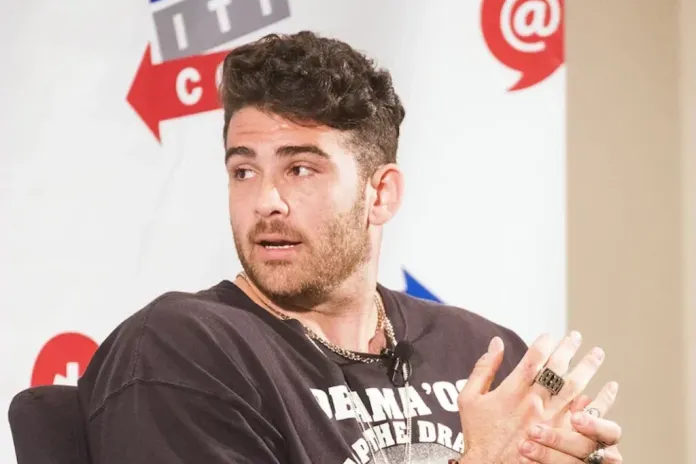
As Newsweek reports, police approached them “within seconds.” Officers detained Piker and his friends, confiscated his friend’s phone, and reviewed the image and footage to make sure no one was mocking their hero, Mao. After the Americans explained that they weren’t mocking him, but were instead huge admirers, their devices were returned, and they were free to go.
The logical conclusion here is clear: China is, in fact, the censorious, authoritarian state its Western critics claim. Or, as Hoover Institution research fellow Liu He wrote on X,
> “Foreigners are finally beginning to see a reality the Chinese are intimately familiar with day in, day out, and have long attained a skin-level understanding of. Not only is there no freedom to criticize the government of China; people don’t even have the freedom to praise China. Whether you support or criticize the state, all speech is subject to political review. You don’t need to expose the system; the system exposes itself.”
Yet this was not, in fact, Piker’s takeaway. Back in his hotel room, the streamer instead told his audience that China is “not as bad as silly Americans imagine it is.”
What’s more, Piker explained the officer’s actions as if they were totally normal and justified, saying,
> “He thought we were making a mockery. They didn’t realize that we were swagged-out white boys who love China. They were being extra attentive to make sure no one was making fun of Mao or anything like that… it’s a cultural difference.”
“People have this false notion that they will like arrest you for a meme or whatever; it’s not like that at all,” Piker bizarrely concluded, evidently overlooking the fact that his experiences prove the opposite—that he would have been in trouble if they’d been mocking Mao.
### MAMDANI RIPS OFF HIS SMILING MASK
Then he claimed, mostly absurdly, that American police are worse than Chinese police! This, of course, ignores the fact that thanks to our First Amendment, Americans are free to criticize and mock even beloved historical figures without fear of arrest or prosecution.
Piker himself is clearly beyond saving, too deeply ensconced in his own cognitive dissonance to perceive the gap between his beliefs and reality, even as it slaps him in the face. But he is, for once, doing a service to his audience by showing them the truth so starkly and in real time.
Any young people tuning in who still have a shred of critical thinking skills may finally realize that their “favorite streamer” is just a useful idiot for authoritarian regimes.
*Brad Polumbo is an independent journalist and host of the Brad vs Everyone podcast.*
https://www.washingtonexaminer.com/opinion/beltway-confidential/3883655/influencer-hasan-piker-pro-ccp-propaganda-falls-apart/