
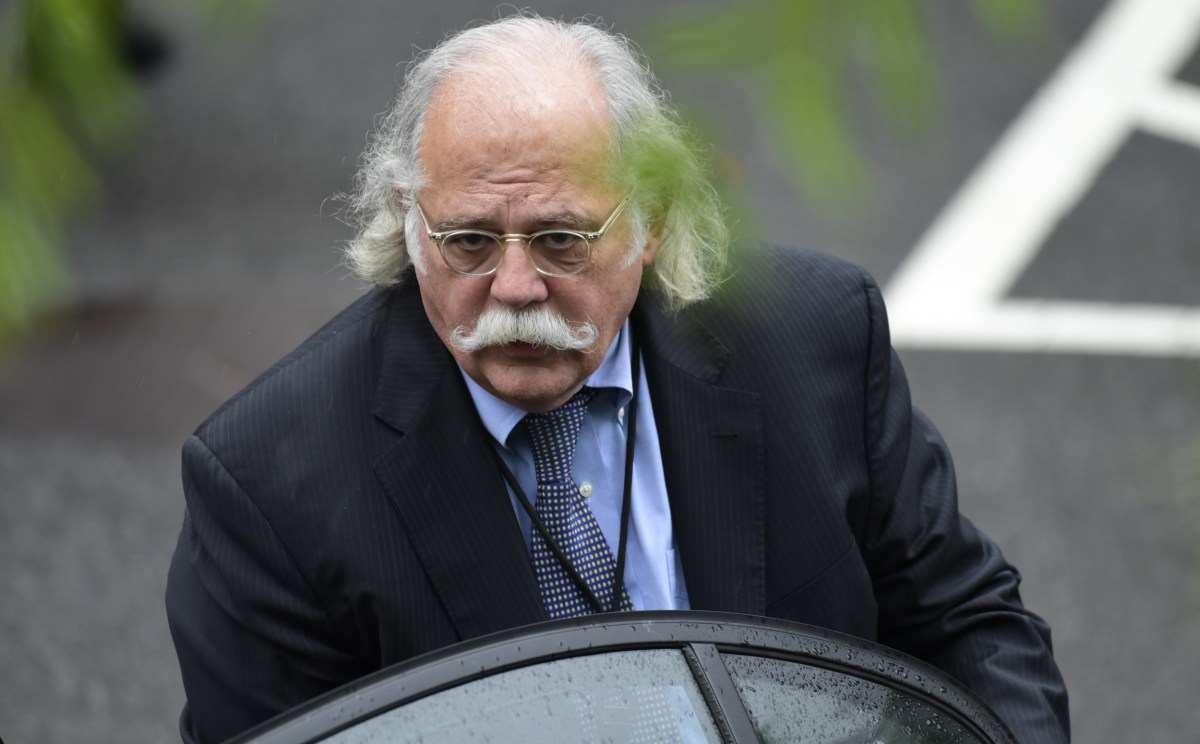
Former White House lawyer Ty Cobb has said President Donald Trump’s attacks on the judiciary seek to “weaken one of the only remaining pillars standing up to him.” Discussing the legality of strikes on alleged drug smuggling boats in the Caribbean Sea, Cobb-a senior administration lawyer in Trump’s first term-said Americans were concerned about the president’s “unprecedented” abuses of power. “The Constitution, really, is not adequate to deal with a president as evil as Trump is-somebody who desires to accumulate and abuse power,” Cobb said. Why It Matters Since early September, the United States has carried out strikes in the Caribbean and Pacific Ocean against alleged drug boats that have killed at least 83 people. According to the Trump administration, the attacks are legitimate, with Trump deploying his authority as commander in chief to take action against a “designated terrorist organization.” The U. S. has deployed the world’s largest aircraft carrier and its strike group to the Caribbean Sea as the military’s campaign on alleged drug smuggling vessels continues. The intensive military buildup is seen as a way to pressurize Venezuela’s authoritarian socialist leader, Nicolás Maduro. The U. S. has accused him of heading a drug cartel, which he denies. What To Know On Sunday, Cobb discussed the president’s actions on MS NOW’s The Weekend, “The main concern is always his resort to violence and authoritarianism.” He cited Trump’s deployment of the National Guard as an example, adding, “Never before in American history, I don’t think, have most Americans been as concerned about their president and his demented narcissism leading him toward revenge and violence. Trump’s abuses of power are unprecedented,” the attorney added, saying the administration was committing war crimes in Venezuela and Colombia. “There is a war, and we should be very concerned about it,” Cobb said. “Lawyers and judges-and, certainly, soldiers this week-should understand that they don’t have to follow illegal orders.” He said of the strikes on alleged drug boats: “There is no question under international law and domestic law that what’s going on in those countries is murder. There’s one standard-which is self-defense, imminent harm-that would allow you to kill civilians in a war or during peace time. “And keep in mind, none of these people, if they were in the United States with a million times the amount of drugs that are on those tiny boats-they would be arrested and detained and they would go to prison. They would not be killed.” Tommy Pigott, a spokesperson for the State Department, previously told Newsweek: “The U. S. is engaged in a counter-drug cartel operation to advance President Trump’s pledge to secure our border, combat narco-terrorists, and stop the flow of deadly drugs into our country. “Maduro is not the legitimate leader of Venezuela; he’s a fugitive of American justice who undermines regional security and poisons Americans.” What People Are Saying Chief Pentagon spokesperson Sean Parnell said in a statement: “Our current operations in the Caribbean are lawful under both U. S. and international law, with all actions in complete compliance with the law of armed conflict.” Venezuelan President Nicolás Maduro said in English during a meeting with labor unions in Caracas last month: “Yes peace, yes peace forever. Peace forever. No crazy war, please!” What Happens Next.
https://www.newsweek.com/cobb-constitution-not-adequate-trump-11096896
Tag Archives: authoritarianism

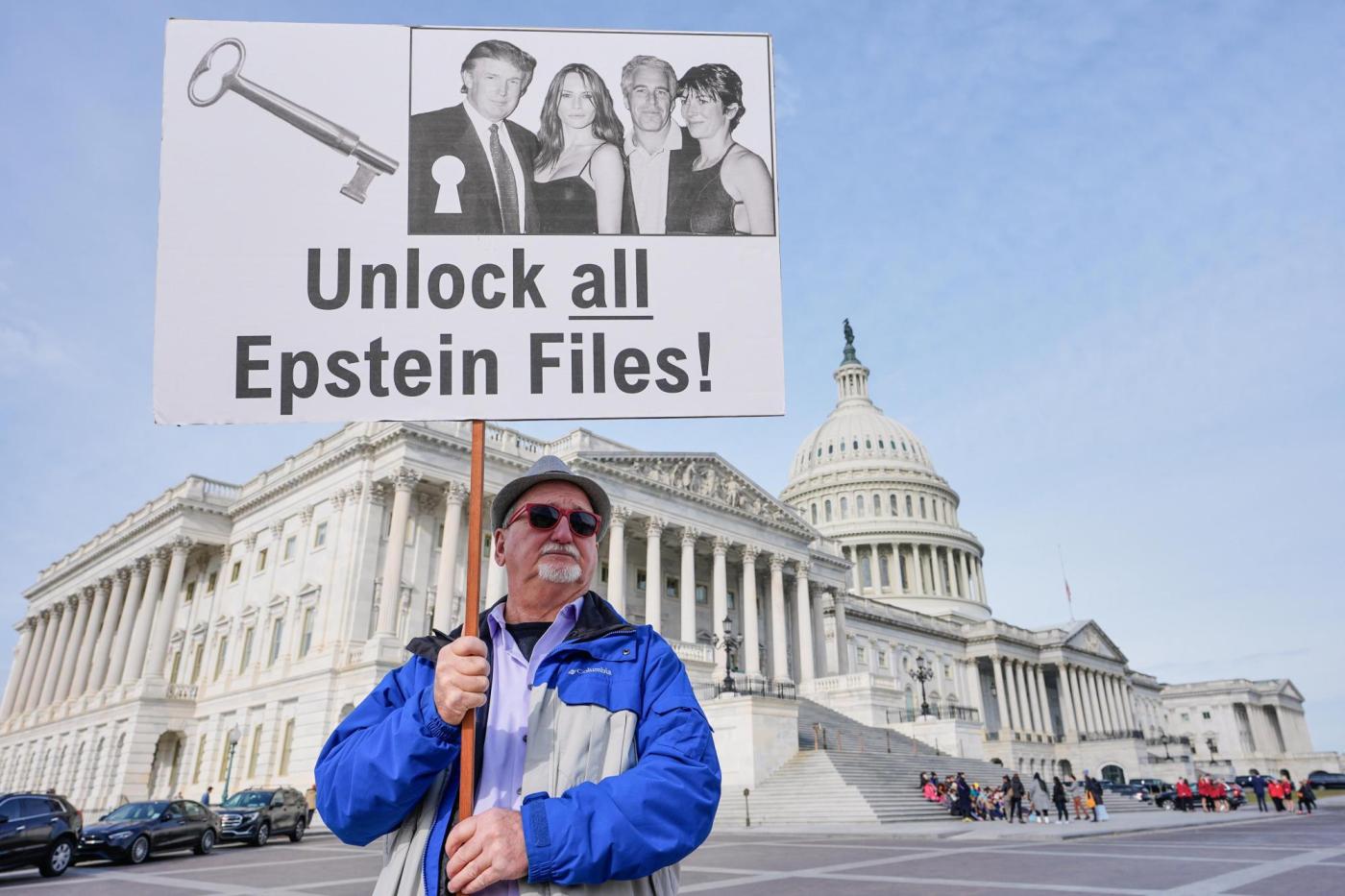
Brooks: The Epstein story? Count me out.
Never before have I been so uncertain about the future. Think of all the giant issues that confront us: artificial intelligence, potential financial bubbles, the decline of democracy, the rise of global authoritarianism, the collapse of reading scores and general literacy, China’s sudden scientific and technological dominance, Russian advances in Ukraine. I could go on and on. So what has America’s political class decided to obsess about over the last several months? Jeffrey Epstein. This is a guy who has been dead for six years and who last was in touch with Donald Trump 21 years ago, Trump has said. Why is Epstein the top issue in American life right now? Well, in an age in which more and more people get their news from short videos, if you’re in politics, the media or online, it pays to focus on topics that are salacious, are easy to understand and allow you to offer self-confident opinions with no actual knowledge. QAnon mentality But the most important reason the Epstein story tops our national agenda is that the QAnon mentality has taken over America. The QAnon mentality is based on the assumption that the American elite is totally evil and that American institutions are totally corrupt. If there is a pizzeria on Connecticut Avenue in Northwest D. C., it must be because Hillary Clinton is running a child abuse sex ring in the basement. The Epstein case is precious to the QAnon types because here, in fact, was a part of the American elite that really was running a sex abuse ring. So, of course, they leap to the conclusion that Epstein was a typical member of the American establishment, not an outlier. It’s grooming and sex trafficking all the way down. (A previous generation of John Birch Society conspiracists were not content to claim Alger Hiss was a communist spy, which he was. They also had to insist that President Dwight Eisenhower was a paid Soviet agent.) Another feature of the QAnon mentality is the conviction that if investigators fail to find evidence to support their febrile imagining, then that is proof that they, too, are part of the cover-up. If the FBI and Justice Department conclude that there was no Epstein client list and there is no evidence that Epstein blackmailed people (as they did conclude), then let’s throw out the rule of law and throw investigations’ raw information onto the internet and let a social media mob sort things out. What could go wrong? Conspiracy thinking is always present at the fringes of society. It goes mainstream only when politicians and other leaders make it so. That’s what Donald Trump, Marjorie Taylor Greene, Nancy Mace, Robert Kennedy Jr. and others have been doing. Who stole the 2020 election? A vast conspiracy! Who runs America? The deep state! We don’t actually have to practice the art of democracy; if we can just reveal the hidden conspiracy, our enemies will be destroyed. I can kind of understand why Machiavellian Republicans would spew conspiracy theories. Those theories stoke cynicism, which serves Republican ends: The government can never be trusted; politicians are all liars. Cynicism causes people to check out of politics. Or, to be more precise, it causes them to care only about politics when they can destroy something. As The Economist noted in an editorial in 2019, “Cynical politicians denigrate institutions, then vandalize them.” It’s a straight line from Candace Owens to Russell Vought. What I don’t understand is why some Democrats are hopping on this bandwagon. They may believe that the Epstein file release will somehow hurt Trump. But they are undermining public trust and sowing public cynicism in ways that make the entire progressive project impossible. They are contributing to a public atmosphere in which right-wing populism naturally thrives. What ‘Epstein class’? I have been especially startled to see Ro Khanna, a House Democrat and one of the most impressive politicians in America, use the phrase “the Epstein class” in his public statements. In an interview with my colleague David Leonhardt this week, Khanna explained that he had gotten the phrase from voters who asked him if he was on the side of “forgotten Americans” or “the Epstein class.” Khanna tried to describe the mentality of the people he encountered: “I realized how much the abuse by rich and powerful men of young girls and the sense of a rape island that Epstein had set up for people embodied the corruption of government. And then many of them saw Donald Trump as fighting this corrupt government.” I know a thing or two about the American elite, ahem, and if you’ve read my work, you may be sick of my assaults on the educated elites for being insular, self-indulgent and smug. But the phrase “the Epstein class” is inaccurate, unfair and irresponsible. Say what you will about our financial, educational, nonprofit and political elites, but they are not mass rapists. That said, I completely understand the challenges Democratic leaders like Khanna are now facing. First, how can you get working-class voters to even listen to your policy ideas unless you first recognize the anger they feel by expressing that same anger? Second, if Trump’s core story is that “the elites betrayed you,” what core story can Democrats tell to register what has happened over the past few decades? These are genuine challenges. If I were a Democratic politician, I might try telling the truth, which in my version would go something like this: The elites didn’t betray you, but they did ignore you. They didn’t mean to harm you. But they didn’t see you in the 1970s as deindustrialization took your jobs; in the ensuing decades as your families and communities broke apart; during all those decades when high immigration levels made you feel like a stranger in your own land. But over the last decade you have made yourself seen. Now the question is: Who is actually going to work with you on your problems? Which party is actually going to help you improve your health outcomes or your kids’ educational outcomes? Which party is actually going to help you achieve the American dream? Will Trump’s war on scientific research or any of the other stuff he’s doing actually do anything to help American workers? If I were a Democratic politician (this role-playing is kind of fun) I’d add that America can’t get itself back on track if the culture is awash in distrust, cynicism, catastrophizing lies and conspiracymongering. No governing majority will ever form if we’re locked in a permanent class war. I’d try to recognize that no political moment is forever. Right now, the dark passions are ascendant. But after one cultural moment, voters tend to hunger for its opposite, which in this case means leaders who project integrity, unity, honesty and hope. The smart play, I’d say, is to rebut conspiracymongering, not abet it. When the giant issues like AI and Chinese dominance come crashing down on us, we will look back on the Epstein moment and ask: “What the hell were we thinking?” David Brooks is a New York Times columnist.
https://www.eastbaytimes.com/2025/11/22/brooks-the-epstein-story-count-me-out/
Klein: Democrats were on a roll. Why stop now?
Back in September, when I was reporting an article on whether Democrats should shut down the government, I kept hearing the same warning from veterans of past shutdown fights: The president controls the bully pulpit. He controls, to some degree, which parts of the government stay open and which parts close. It is very, very hard for the opposition party to win a shutdown.
Which makes it all the more remarkable that Democrats were winning this one.
Polls showed that most voters blamed Republicans, not Democrats, for the current shutdown—perhaps because President Donald Trump was bulldozing the East Wing of the White House rather than negotiating to reopen the government. Trump’s approval rating has been falling in CNN’s tracking poll; it dipped into the 30s for the first time since he took office again.
And last week, Democrats wrecked Republicans in the elections, and Trump blamed his party’s losses in part on the shutdown. Democrats were riding higher than they have been in months.
### Fruitless Deal
Then, over the weekend, a group of Senate Democrats broke ranks and negotiated a deal to end the shutdown in return for—if we’re being honest—very little.
The guts of the deal are this: Food assistance—both SNAP and WIC, I was told—will get a bit more funding, and there are a few other modest concessions on spending levels elsewhere in the government. Laid-off federal workers will be rehired, and furloughed federal workers given back pay. Most of the government is funded only until the end of January. (So get ready: We could be doing this again in a few months.)
Most gallingly, the deal does nothing to extend the expiring Affordable Care Act tax credits over which Democrats ostensibly shut down the government in the first place. All it offers is a promise from Republicans to hold a vote on the tax credits in the future. Of the dozen or so House and Senate Democrats I spoke to over the past 24 hours, every one expected that vote to fail.
### The Strange Role of ACA Subsidies
To understand why the shutdown ended with such a whimper, you need to understand the strange role the ACA subsidies played in it. Democrats said the shutdown was about the subsidies, but for most of them, it wasn’t. It was about Trump’s authoritarianism. It was about showing their base—and themselves—that they could fight back. It was about treating an abnormal political moment abnormally.
The ACA subsidies emerged as the shutdown demand because they could keep the caucus sufficiently united. They put Democrats on the right side of public opinion—even self-identified MAGA voters wanted the subsidies extended—and held the quivering Senate coalition together.
You shut the government down with the Democratic caucus you have, not with the Democratic caucus you want.
But the shutdown was built on a cracked foundation. There were Senate Democrats who didn’t want a shutdown at all. There were Senate Democrats who did want a shutdown but thought it strange to make their demand so narrow: Was winning on health care premiums really winning the right fight? Should Democrats really vote to fund a government turning toward authoritarianism as long as health insurance subsidies were preserved? And what if winning on the health care fight was actually a political gift to Trump?
Absent a fix, the average health insurance premium for 20 million Americans will more than double. The premium shock will hit red states particularly hard. Tony Fabrizio, Trump’s longtime pollster, had released a survey of competitive House districts showing that letting the tax credits expire might be lethal to Republican efforts to hold the House. Why were Democrats fighting so hard to neutralize their best issue in 2026?
### Inverted Logic
The political logic of the shutdown fight was inverted: If Democrats got the tax credits extended—if they “won”—they would be solving a huge electoral problem for Republicans. If Republicans successfully allowed the tax credits to expire—if they “won”—they would be handing Democrats a cudgel with which to beat them in the elections.
This is why Sen. Chuck Schumer’s compromise, which offered to reopen the government if Republicans extended the tax credits for a year, struck many Democrats as misguided. Morally, it might be worth sacrificing an electoral edge to lower health insurance premiums. But a one-year extension solved the Republicans’ electoral problem without solving the policy problem. Why on earth would they do that?
In any case, Republicans were not interested in Schumer’s offer. Trump himself has shown no interest in a deal.
Rather than negotiating over health care spending, Trump has been ratcheting up the pain the shutdown is causing. Hundreds of thousands of federal workers have been furloughed or fired. The administration has been withholding food assistance from Americans who desperately need it. Airports are tipping into chaos as air traffic controllers go without pay.
More than anything else, this is what led some Senate Democrats to cut a deal: Trump’s willingness to hurt people exceeds their willingness to see people get hurt.
I want to give them their due on this: They are hearing from their constituents and seeing the mounting problems, and they are trying to do what they see as the responsible, moral thing. They do not believe that holding out will lead to Trump restoring the subsidies. They fear that their Republican colleagues would, under mounting pressure, do as Trump had demanded and abolish the filibuster. (Whether that would be a good or a bad thing is a subject for another column.)
This, in the end, is the calculation the defecting Senate Democrats are making: They don’t think a longer shutdown will cause Trump to cave. They just think it will cause more damage.
### A Difficult Choice
If I were in the Senate, I wouldn’t vote for this compromise. Shutdowns are an opportunity to make an argument, and the country was just starting to pay attention. If Trump wanted to cancel flights over Thanksgiving rather than keep health care costs down, I don’t see why Democrats should save him from making his priorities so exquisitely clear.
And I worry that Democrats have just taught Trump that they will fold under pressure. That’s the kind of lesson he remembers.
But it’s worth keeping this in perspective: The shutdown was a skirmish, not the real battle. Both sides were fighting for position, and Democrats, if you look at the polls, are ending up in a better one than they were when they started. They elevated their best issue—health care—and set the stage for voters to connect higher premiums with Republican rule.
It’s not a win, but given how badly shutdowns often go for the opposition party, it’s better than a loss.
*Ezra Klein is a New York Times columnist.*
https://www.mercurynews.com/2025/11/12/klein-democrats-were-on-a-roll-why-stop-now/