
Tag Archives: gubernatorial

Crypto has to win over Democrats: Centrifuge legal expert

**Why Crypto Needs Bipartisan Support: An Interview with Eli Cohen, Centrifuge’s Chief Legal Officer**

According to Eli Cohen, Centrifuge’s chief legal officer, the crypto industry should take note of Democratic Socialist Zohran Mamdani’s victory in New York City’s mayoral election. The crypto industry, after all, needs Democrats, Cohen says. The results of recent gubernatorial elections are showing a potential seismic shift in U.S. politics. On November 4, Democrats won several contested elections (for example, in New Jersey and New York), and progressives are energized. Industry lobbyists, who have mainly focused on Republicans, will now have to reach across the aisle for bipartisan support—failing to do so could mean losing everything in the long run.

### The Changing Political Climate and Its Impact on Crypto

**Crypto.news:** We’re at an interesting political moment in the U.S. With everything going on, especially after Election Day, how do you see the current climate affecting crypto regulation?

**Eli Cohen:** That’s a great question. I think it’s going to take a few weeks to fully understand the impact of the elections. But one thing is clear: the crypto industry needs bipartisan support. For some time now, there’s been a debate about whether the industry should align more closely with Republicans or work with both parties. Historically, the industry has leaned toward Republicans, but that strategy needs to change. These election results should make that obvious.

Most lawyers and lobby groups in the space understand this. To get legislation passed—and more importantly, to ensure those laws last beyond a single administration—we need to work with both sides. If we don’t, we risk a future Democratic administration reversing everything. We don’t want to go back to the Biden-Gensler era. And we certainly shouldn’t create so much antagonism with Democrats that we make that a likely outcome. Long-term stability requires broad political support.

### Government Shutdown: Impact on Crypto Legislation

**Crypto.news:** With the government shutdown happening, how is that affecting crypto-related legislation or regulatory efforts?

**Eli Cohen:** To be honest, the shutdown hasn’t really changed much for us. Nothing major is being held up by it. The Senate is still operating, and that’s where most of the action is right now. The House has already passed its version of the market structure bill—the Financial Innovation and Technology for the 21st Century Act, often called the Clarity Act—so there’s no legislative work left for the House at the moment. The Senate, where the bill now sits, continues its process.

There have been ongoing meetings and discussions with both Democrats and Republicans in the Senate. However, I’d say some reactions from the crypto industry to Democratic proposals have been unproductive. The industry needs to engage more seriously with Democratic lawmakers if we want progress. Right now, there are two competing versions of the market structure bill in the Senate, and regardless of which version moves forward, it will need Democratic support. Under current Senate rules, 60 votes are required to bring anything to the floor. So unless Republicans eliminate the filibuster—which is unlikely—they’ll need to negotiate. The problem is, the industry hasn’t really pushed Republicans to engage with Democrats. That has to change because, without bipartisan compromise, nothing will pass.

### Democratic Proposals and Industry Response

**Crypto.news:** Can you provide more specifics on the proposals from Democrats and on how the industry has responded?

**Eli Cohen:** It’s tricky because a lot of these documents haven’t been made public. There was one proposal—a Democratic draft that got leaked by Republicans. Some key Democrats, like Senator Gallego from Arizona, later clarified that it wasn’t a formal proposal but rather a set of internal views. Regardless, it caused a strong adverse reaction from the industry.

One of the most controversial elements in that document was a proposed set of insider trading rules for crypto markets—not just in the general sense, but specifically covering members of the executive and legislative branches. The background here is that members of the Trump family have reportedly made quite a bit of money in crypto, and Democrats want to include rules that would effectively block them from doing that.

From the industry’s perspective, the issue isn’t necessarily with the insider trading rules themselves—most people aren’t against the idea. The concern is political feasibility. The argument is: if those provisions stay in the bill, Trump won’t sign it. That’s also the position Republicans have taken. It’s not that they oppose the rules in principle, but they know that including them makes it impossible to get a signature from the current White House.

### Progressive Resurgence or Center-Hold for Democrats?

**Crypto.news:** With the recent local elections, particularly in New York, there has been some talk of a resurgence of the progressive wing of the Democratic Party. Do you think that’s a meaningful trend?

**Eli Cohen:** I don’t see the New York results as a major bellwether for the rest of the country. Yes, there was a high-profile example with Zohran Mamdani, but I wouldn’t say he’s significantly further left than, say, Brandon Johnson in Chicago or Barbara Lee in Oakland. What I found more meaningful were the results in states like New Jersey and Virginia—those were supposed to be close races, but ended up with decisive wins for moderate Democrats like Sheryl and Spanberger. So, if anything, I think the broader signal is that the Democratic Party is holding steady in the center—not shifting dramatically left.

### What a Bipartisan Approach Might Look Like

**Crypto.news:** Regardless of whether the shift is progressive or moderate, Democrats have taken the lead. With that in mind, how would a bipartisan approach to crypto regulation look?

**Eli Cohen:** That’s a great question, and honestly, we haven’t seen it happen yet in a real way so we’re still figuring that out. But I do think there’s room for alignment. The Elizabeth Warren wing of the Democratic Party is focused on fraud prevention, investor protection, and enforceable regulation—and those are reasonable concerns. I’d argue that stronger anti-fraud protections would be good for the market overall.

The sticking point tends to be who does the regulating. Democrats favor agencies like the Consumer Financial Protection Bureau (CFPB), which Warren helped create. Republicans, on the other hand, lean toward the SEC or CFTC. So there’s a debate over jurisdiction, but I don’t think that’s an unbridgeable divide. With real negotiation, they could find common ground.

### The Retail Disconnect

**Crypto.news:** Mamdani’s base includes a lot of young, educated, white male voters—the same demographic most likely to hold crypto. Is there a disconnect between what the industry wants and what retail investors actually care about?

**Eli Cohen:** I’m not sure there’s a full disconnect, but I do think there’s a gap in expectations. Most retail crypto users don’t want to deal with KYC. That’s a big reason they’re in crypto instead of traditional finance—they don’t want to submit personal information just to move stablecoins from one wallet to another. At the same time, nobody wants to get rugged. No one wants to lose money to a scam or fraud.

So yes, there’s this contradiction in crypto: people demand full decentralization, anonymity, and self-custody until something goes wrong. Then the first question is, “Where are the regulators?” So there’s clearly a desire for some level of investor protection—just not if it comes with friction, surveillance, or restrictions. Finding the right balance is tough.

### Reflections on the Gensler Era

**Crypto.news:** That contradiction was a big part of the criticism during the SEC’s Gensler era—focusing enforcement on large players while meme coins and influencers ran wild. What’s your take?

**Eli Cohen:** The Gensler approach was a disaster, both strategically and politically. He could have issued interpretive guidance—the SEC has the power to do that—but instead, they chose a strategy of trying to crush the industry outright. It didn’t work. You can’t “ban” crypto—that’s not how this works. What it did do was destroy trust. The industry had no reason to work with the SEC, and the SEC made no effort to work with the industry.

I don’t think even the Democratic Party fully understood what Gensler was doing. Either they weren’t paying attention, or worse, they supported it. But I’m hopeful that lessons have been learned. The bipartisan process we’re seeing now in the Clarity Act and Senate proposals is a huge improvement. It’s not Gensler’s approach, and that’s a good thing.

### The Urgent Need for Clear Crypto Regulations

**Crypto.news:** So, from your perspective, what are the most important regulations that the crypto industry is still missing today?

**Eli Cohen:** There are two major areas where regulation is still lacking. The first is stablecoin regulation. The so-called “Genius Act” has technically passed in the U.S. market, but it’s not yet usable. There’s no licensing framework in place. We need actual rules that let stablecoin issuers apply, operate, and comply. There’s a draft of those regulations circulating. I haven’t seen the full document, but people who have are giving feedback.

One of the big concerns is around yield—specifically, whether stablecoins will be allowed to earn yield, not just from issuers but from anyone. U.S. banks are lobbying hard to block this. If those banks succeed, and regulated stablecoins can’t earn yield in any form—even through DeFi—then no one will use them. It’ll end up like in Europe under MiCA, where the regulated stablecoins are barely used. People just default to unregulated options like DAI or USDT. So that’s a huge fight. And if the banks win, we’ll see very little adoption of U.S.-regulated stablecoins.

### The Stakes of the Market Structure Bill

**Crypto.news:** And what about the market structure legislation you mentioned earlier? What’s at stake there?

**Eli Cohen:** The market structure bill in the Senate is crucial—particularly the provision that would clearly define which tokens are not securities. That one clause could change everything for the crypto industry. Right now, the SEC has been operating in a gray area. They’ve claimed that almost every token besides Bitcoin could be a security—including Ethereum—without ever proving it in court. That ambiguity is what allowed the Gensler administration to pursue its aggressive enforcement agenda.

If the market structure bill passes with bipartisan support and explicitly states that certain tokens are not securities, it would finally give the industry a safe, legal framework to operate within. It wouldn’t just clarify the law—it would also prevent future administrations from trying to roll back that clarity. That kind of legal certainty is foundational; it’s what would allow real innovation and compliance to coexist.

### Investor Protection and Token Transparency

**Crypto.news:** If Ethereum and similar tokens are no longer treated as securities, what happens to investor protection? Securities law requires disclosures from issuers. Is anyone thinking about how to build comparable transparency into crypto?

**Eli Cohen:** That’s certainly something that Elizabeth Warren wants. She’s argued that even if these tokens aren’t securities, there should still be some disclosure requirement to protect investors. But here’s the problem: in DeFi, who would do the disclosing? Take Ethereum. Sure, there’s the Ethereum Foundation, but do they have access to all the relevant information? Should they be legally liable for it? I don’t think they want that role, and I’m not sure it fits the ethos of decentralization.

In Bitcoin’s case, no entity could even hypothetically take on that responsibility. And that’s part of the philosophical divide: if you truly believe in permissionless networks, then there might not be a central party to hold accountable—or to require disclosures from.

### Balancing Transparency and Risk

**Crypto.news:** Some people argue that blockchains provide transparency by default—the code is open, the transactions are on-chain. But there’s also off-chain activity, insider info, and market manipulation. How do we balance transparency with risk in permissionless markets?

**Eli Cohen:** That’s the core trade-off. If you want a truly permissionless system, you have to accept that there will be more risk—including market manipulation and insider trading. I think people should be able to choose. If you want to participate in a market that doesn’t require KYC, doesn’t enforce disclosures, and embraces full decentralization, then you should be free to do that—but you should also understand the risks. At the same time, if you want investor protections, you can participate in other markets that offer those. Nobody is forcing you to buy Bitcoin or Ethereum. There are other options. But we shouldn’t try to force traditional regulatory models onto decentralized systems where they just don’t fit. So yes, blockchains offer a degree of transparency, but they don’t eliminate the need for trust—especially when off-chain actions can affect markets. We need to be honest about that and structure markets accordingly.

### The Lawyer’s Perspective: Where to Draw the Line

**Crypto.news:** You’re a lawyer, and I’m sure you heard that your profession’s role in any meeting is to say, “No, you can’t do that.” What are some of the questions you’re most often asked where you have to draw a hard line?

**Eli Cohen:** For what we do at Centrifuge—tokenizing real-world assets—we operate in a pretty heavily permissioned part of the crypto market. Everything on our platform is actually a security, regardless of what the market structure bill eventually says. So we follow securities laws and take compliance seriously. That’s a different environment from something like a DeFi protocol. If you were general counsel at Aave, for example, you’d take a very different approach. We also work with TradFi partners like Janus Henderson and S&P, and they have their own compliance requirements. So we operate with a different risk profile than many other crypto companies.

That said, the biggest non-negotiable red line for me, and for most lawyers in this space, is anything touching sanctions. If you’re moving stablecoins in or out without checking for sanctions compliance, that’s a hard no. That gets you into real trouble.

*This interview has been edited for clarity and length.*
https://bitcoinethereumnews.com/crypto/crypto-has-to-win-over-democrats-centrifuge-legal-expert/

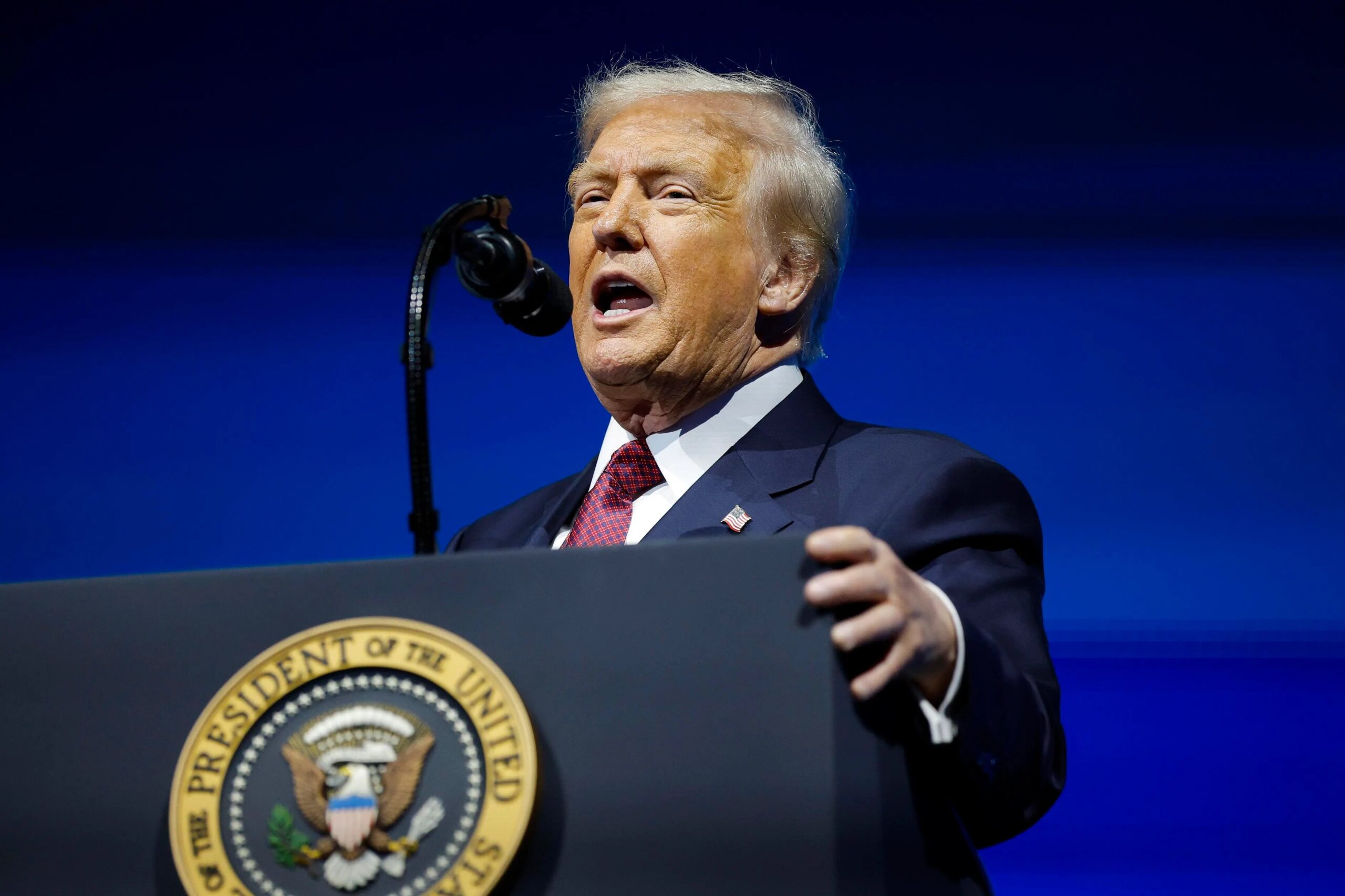
Trump Defends Economic Record After Tuesday’s GOP Election Losses

**Key Facts**

A recent NBC News poll found that 66% of Americans believe former President Donald Trump has fallen short of expectations regarding inflation and the cost of living—his worst mark in six categories highlighted by the news outlet. Additionally, 65% of respondents said he has fallen short on “looking out for the middle class.” The only category where a majority (51%) of the 1,000 registered voters polled felt Trump lived up to expectations was border security and immigration.

**Chief Critics**

Some Republicans have publicly broken with Trump and urged the party to rethink its messaging strategy and economic policies in the aftermath of Tuesday’s election. Rep. Marjorie Taylor Greene (R-Ga.) told CNN on Thursday that the high cost of living is “a massive reason” behind the GOP’s election performance. Similarly, Sen. Jim Justice (R-W.Va.) told Punchbowl, “a lot of people are hurting and the Republicans can’t let that just pass them.” He added, “it’ll be a bad day in the midterm” if Republicans don’t prioritize Americans’ economic concerns before next year’s elections.

**Big Number**

3%. That’s how much the cost of a 10-person Thanksgiving meal has decreased over the past year, according to a new report from Wells Fargo. The report cites pricing data from the Bureau of Labor Statistics, Nielsen, and Circana. However, the cost of food at home has increased by 2.7% annually through August.

**Tangent**

Voters in Virginia, New Jersey, and New York City—where Democratic nominees won major races—said economic issues were the primary factor influencing their voting decisions in Tuesday’s election, outpacing concerns about immigration and crime, according to an Associated Press poll conducted from October 22 to November 4.

In New Jersey, a plurality of voters identified taxes as the top issue facing the state, followed by the economy. For Virginia voters, the economy and health care were the leading issues. Meanwhile, cost of living and crime topped the list for New York City voters.

**Key Background**

– Democratic Rep. Mikie Sherrill defeated her Republican opponent Jack Ciattarelli, who was endorsed by Trump, in the New Jersey gubernatorial race, 56% to 43%.
– Democratic former Rep. Abigail Spanberger won the Virginia governor’s race, beating Republican Lt. Gov. Winsome Earle-Sears 57% to 43%.
– In New York City, Democratic nominee Zohran Mamdani defeated independent former Gov. Andrew Cuomo, also endorsed by Trump, 50% to 42%.

**Further Reading**

– [Thanksgiving Dinner May Be Cheaper This Year Despite Rising Inflation, Report Says (Forbes)](https://www.forbes.com)
– [Trump Falsely Says Gas Prices Have Reached A 20-Year Low—Here’s The Real Data (Forbes)](https://www.forbes.com)
– [Latinos Swung Back To Democrats In Tuesday’s Election After Trump’s Historic Gains (Forbes)](https://www.forbes.com)
https://bitcoinethereumnews.com/finance/trump-defends-economic-record-after-tuesdays-gop-election-losses/

Earle-Sears campaigns in Loudoun County as Republicans push to reclaim Virginia’s swing suburbs

Once a model of Virginia’s suburban shift leftward, Loudoun County is now showing the first hints of movement back, signaling that the GOP’s message on parental rights, education, and safety still resonates in northern Virginia’s fast-growing exurbs.

The event also served as a show of unity for the Republican ticket, with Governor Glenn Youngkin, Attorney General Jason Miyares, and lieutenant governor nominee Winsome Earle-Sears joining John Reid on stage to close out the campaign’s final weekend.

### Loudoun’s Shifting Vote Totals

Loudoun’s changing vote totals underscore this political transformation. Although then-Vice President Kamala Harris still carried the county in 2024, the numbers told a more complicated story: she won more precincts than in 2020, yet Democrats drew nearly 10,000 fewer votes, while Donald Trump gained about 10,000 votes.

This overall swing toward Republicans narrowed what had once been a comfortable Democratic margin and rekindled GOP hopes that the D.C. suburbs may once again be competitive.

### A Larger Political Story

This result highlights how Loudoun’s shift fits into a broader narrative. Once a battleground during former President Barack Obama’s campaigns, the county had become reliably Democrat — until now. In 2024, Virginia’s modest swing toward Republicans was driven largely by northern Virginia, long a Democratic stronghold, which moved more to the right than the nation overall.

For Earle-Sears, who is campaigning to succeed Youngkin, Loudoun’s exurbs and conservative enclaves like Patrick Henry College represent a crucial test of whether the coalition that fueled the governor’s 2021 upset can still deliver statewide.

### Voices from Loudoun

“People’s hearts are turning, especially when it comes to the kids and the schools,” said Kathleen Hannon, 55, a Loudoun County resident who cited classroom policies and law enforcement among her top issues. “She just needs to win over enough in northern Virginia to take the state.”

George Hollis, 79, reflected on Loudoun’s transformation as mirroring Virginia’s political story, emphasizing that Republicans can still win if they turn out their voters. “I think Loudoun’s been the linchpin for years,” Hollis said. “If it goes red again, the rest of the state follows. I just wish this crowd was about three times bigger.”

At the back of the gym, Rebecca Phillips, 20, a journalism student who recently moved to Virginia from California, noted Loudoun has become a flashpoint for cultural debates resonating far beyond the state.

“I think [Winsome Earle-Sears] can win, but it’ll be close,” Phillips said. “Abortion and women’s privacy with the transgender issue are really important to me. At the very least, parents’ rights are being stripped away, and Loudoun has been the center of that fight.”

### Republican and Democratic Campaign Efforts

Earle-Sears’s rally in Purcellville came as Democrats staged their own high-profile push: on Saturday in Norfolk, former President Barack Obama joined Abigail Spanberger, the Democratic gubernatorial candidate on the campaign trail, underscoring how seriously both parties are treating Virginia’s off-year elections.

Introducing Earle-Sears, Youngkin cast the race as a moral and political crossroads, warning that Democrats’ support for attorney general nominee Jay Jones, who has faced backlash over violent remarks he made years ago, revealed “how far the party has fallen.”

He also referenced Obama’s campaign stop in Norfolk earlier in the day for Spanberger, contrasting the Democratic push with Republicans’ closing message in northern Virginia.

“Elections have consequences,” Youngkin told the crowd. “When we go down the right path, Virginia thrives.”

He added that Virginians had “a chance to choose common-sense conservative values” again, pointing to the administration’s record of economic growth.

“We’ve seen $143 billion of investment come to Virginia, more than the last five administrations combined,” he said. “That’s what happens when we choose the right path.”

Notably, neither Youngkin nor any of the Republican candidates mentioned Trump, signaling a deliberate effort to keep the message centered on Virginia rather than Washington.

### Earle-Sears’s Rally Speech

Earle-Sears delivered a fiery speech centered on patriotism, faith, and contrast, brandishing a Virginia flag as she warned that “forward is the only way I know, there’s only darkness back there, and Abigail Spanberger represents the darkness.”

Her message focused on schools, taxes, and public safety—the same issues that helped Republicans regain footing in Loudoun County after years of Democratic dominance.

She vowed to scrap the car tax, keep taxes low, and defend Virginia’s right-to-work law, mocking Democrats who “think you haven’t paid enough” and calling clean-energy policies “solar and wind nonsense.”

Earle-Sears accused Spanberger of hypocrisy for continuing to stand by Jay Jones, citing his past remarks, and charged that the Democrat “sold Virginia down the road for $150,000,” alluding to a donation from the National Democratic Redistricting Committee to Jones’s campaign.

On law enforcement, she touted endorsements from more than 80 sheriffs and said Spanberger “voted against the Laken Riley Act” and “wants to keep the border open.”

She closed by invoking Virginia’s founding ideals, declaring that “the party of Lincoln nominated me, an immigrant to this great country, to be lieutenant governor.”

As the crowd cheered, she added, “Tuesday’s coming, we haven’t come this far to only go this far.”

**OBAMA TAKES AIM AT TRUMP IN VIRGINIA GET-OUT-THE-VOTE EVENT FOR SPANBERGER**

[This section can be linked or expanded upon if needed.]
https://www.washingtonexaminer.com/news/campaigns/state/3871859/earle-sears-loudoun-county-rally/

This Colorado school district was sued for removing library books. Now it’s fundraising for legal fees.

The Elizabeth School District’s website greets visitors with an unusual pop-up: an invitation to help cover legal fees for a lawsuit related to library book removals.

Located southeast of Denver and serving about 2,700 students, the district is raising funds as part of a broader campaign supported by at least three conservative groups — including one led by former Republican gubernatorial candidate Heidi Ganahl — to defend against the lawsuit.

### The Lawsuit Over Library Book Removals

In December, the American Civil Liberties Union (ACLU) of Colorado filed suit against the district. The lawsuit alleges that the Elizabeth school board’s decision to remove 19 books from school libraries violates both federal and state free speech protections.

These books, now back on shelves due to a court order, primarily feature authors or subjects related to LGBTQ people, people of color, or both.

### An Unusual Fundraising Approach

While school districts commonly fundraise for supplies or field trips, soliciting donations to pay legal fees is uncommon. The donation page — hosted by Ganahl’s group — features a heading that reads “Save Elizabeth School District,” with suggested donation amounts ranging from $250 to $10,000.

Publicly available school district financial records do not clarify how much the district has spent on this lawsuit. District officials declined to comment on the expenses.

### Who Is Involved in the Case?

Plaintiffs include two students from the district, a chapter of the NAACP, and the Authors Guild, a professional writers’ organization. Their attorneys argue that book removals violate free speech protections.

Among the removed titles were notable works such as *The Bluest Eye* by Toni Morrison, *The Kite Runner* by Khaled Hosseini, and *It’s Your World If You Don’t Like It, Change It* by Mikki Halpin.

District lawyers counter that the books were removed due to concerns about age-appropriateness, lack of educational value, and sensitive content including graphic violence, explicit sexual references, extreme substance use, and themes of self-harm.

### District Leadership Responds

Elizabeth Superintendent Dan Snowberger declined a phone interview but sent a text message emphasizing the district’s financial stability. He described the lawsuit’s origin as “unusual,” writing:

> “It’s unusual for a behemoth organization like the ACLU with a major financial war chest to come after a small rural district. We will not allow them to impact the educational opportunities for our children in the district, and will do everything necessary to mobilize outside forces to protect our children.”

The district has framed the legal battle against the ACLU as a David versus Goliath story. On social media and at board meetings, some community members have voiced support for both the book removals and the legal fight.

### Community Divisions Over the Issue

Supporters of the removals often cite graphic content—such as descriptions of sexual assault—as inappropriate for students.

However, other community members oppose both the book bans and the fundraising efforts. Jessica Capsel, an Elizabeth resident whose son previously attended district schools, criticized the time and money spent on the lawsuit.

“That pop-up [window] begging for money pops up every time you change a page,” Capsel said. She added that a previous lawsuit she won against the district related to open meeting violations was more straightforward, suggesting the current priorities are misplaced.

### The ACLU’s Position

Tim Macdonald, legal director of the ACLU of Colorado, said the organization did not “come after” Elizabeth. Rather, district students and families asked for compliance with the Constitution to stop banning books that contain viewpoints or content opposed by board members.

He stated:

> “Fighting for the constitutional rights of students in Colorado is how we protect children; violating their constitutional rights is not protecting children.”

### Financial Transparency Questioned

It remains unclear how much the Elizabeth School District has spent on its legal defense since the lawsuit’s filing 10 months ago.

District financial records suggest modest payments to the two main law firms involved. From January through June 2025, the district paid about $6,500 to First and Fourteenth (based in Colorado Springs), none to Mitchell Law (Austin, Texas), and approximately $57,000 to Miller, Farmer, Carlson Law. The latter firm usually handles routine district matters but is also involved in this case.

### Fundraising Details Remain Opaque

The amount raised through the legal defense fundraiser and how those funds are allocated is not publicly clear.

Heidi Ganahl’s conservative news outlet Rocky Mountain Voice operates the online donation page “Save Elizabeth School District” but did not respond to questions about fundraising totals or fund distribution. Ganahl provided a statement saying:

> “Our fundraising assistance supports the board in exercising its authority to curate age-appropriate library content, responding to parental concerns about sensitive themes like explicit content or divisive topics.”

Julian Ellis, one of the district’s lawyers from First and Fourteenth Law, did not respond to inquiries about donations collected. The district website lists Ellis as the recipient for paper checks made payable to the Article III Foundation, an Alexandria, Virginia-based group supporting the district’s legal expenses.

Similarly, Lori Gimelshteyn, executive director of the parents’ rights group Parents United America — another fundraiser host — did not provide information about funds raised or their destinations.

### Additional Fundraising Efforts

Citizens Defending Freedom, based in Mulberry, Florida, is a fourth partner in fundraising efforts for Elizabeth’s legal costs. Last Thursday, they held a “Protect Our Children” fundraiser at a Colorado Springs church, with ticket sales supporting Ganahl’s group.

Tickets ranged from $100 for a single entry to $2,000 for a “platinum” package that included 10 tickets, VIP seating, and a private reception with speakers.

When asked about fundraising totals, a spokesperson for Citizens Defending Freedom referred Chalkbeat to Bonnie Wallace, a legislative liaison for Recovering America — an organization promoting Biblical values — and one of the event speakers. Wallace did not respond to multiple requests for comment.

*This story was originally published by Chalkbeat, a nonprofit news site covering educational change in public schools. To receive newsletters, visit ckbe.at/newsletters.*

*For more Colorado news, sign up for The Denver Post’s Mile High Roundup email newsletter.*
https://www.denverpost.com/2025/10/16/elizabeth-school-district-book-ban-legal-fees/