

Aformer New York Yankees reliever has publicly called out what he believes may be a case of pitch tipping involving Yankees’ current catcher, Austin Wells. In a post on X (formerly Twitter) last month under his handle ExYank54, former relief pitcher Joe Ausanio highlighted what he thinks is an subconscious, inadvertent movement that Wells is making that, to the eagle and highly-trained eye, could relay upcoming pitch types to batters The claim is of course unproven, and even with Ausanio’s guidance on where to look, it remains extremely hard to see to those without big league experience. But Ausanio has some credibility in his voice. After all, in addition his playing career with them, Ausanio is still a part of the Yankees organization, even in retirement. Not Just Anybody Saying This Ausanio arrived with the Yankees organization as a Minor League Rule 5 draft pick in the winter of 1993, pitched in 41 major league games for the Yankees during the 1994 and 1995 seasons, the only big league team he would ever pitch for. The once-prized Pittsburgh Pirates draft pick had had his path to the majors derailed by injury, but would finally make his debut aged 28. Over his two MLB seasons, Ausanio recorded a 4-1 record, struck out 51 batters in 53. 1 innings and posted a 5. 57 ERA and 1. 63 WHIP, serving as a replacement-level arm during some more tumultuous seasons for the Yankees’ bullpen. Ausanio’s time with the Yankees dovetailed with their overdue return to the postseason after more than a decade away. After two more seasons split between the New York Mets and Colorado Rockies’ organizations to round out his playing days, Ausanio returned to the Yankees in front-office roles for a minor league affiliate. He has worked for the High-A affiliate Hudson Valley Renegades in a variety of roles over the past two decades, ranging from director of sales to director of food services all the way up to director of basketball operations, while also working as the head coach of the men’s softball team at Marist College. Ausanio’s opinion on any pitch-tipping is therefore an informed one and also one coming from a Yankees Man, who would much rather it not be true. Yankees Do Unto Others Notwithstanding the caveat that he “could be wrong”, Ausanio claims that a subtle movement of Wells’s head could conceivably relay information to opponents about what kind of pitch is coming next. Any suggestion of pitch tipping is taken very seriously in professional baseball, where pitcher tells can drastically influence game outcomes. Only recently, the Yankees have been named in pitch-tipping allegations, this time going the other way. In successive posts to the platform, Yankees beat writers Gary Phillips of the New York Daily News and Andy Martino of SNY posted their own thoughts on how the Yankees’ hitting line-up were conveying information to each other about what the Toronto Blue Jays’s staff were throwing, building off of comments by Blue Jays manager John Schneider back in September. In Ausanio’s view, through Wells’s subconscious movements, the Blue Jays were able to get something back.
https://heavy.com/sports/mlb/new-york-yankees/former-yankees-pitcher-accuses-austin-wells-of-tipping-pitches/
Tag Archives: notwithstanding


A Great Story, ‘Auction’ Is Weakened by the Director’s Dithering
Pascal Bonitzer’s “Auction” boasts a compelling story, but the movie itself feels inconsistent and often arbitrary. Based on a script inspired by true events, Mr. Bonitzer dutifully outlines a basic trajectory, yet he adds narrative detours that feel unnecessary or, worse, clichéd.
Granted, a “feel good” movie often leans on predictability—it’s no spoiler to say that a happy ending is de rigueur for the genre. However, why the director chose to linger on these elements to such an extent remains puzzling. This is especially surprising considering Mr. Bonitzer’s extensive experience. “Auction” marks his 12th film, and prior to this, he contributed to over 48 screenplays for renowned directors such as Jacques Rivette, André Téchiné, and Anne Fontaine. He began his career as a critic at the famed French film journal, *Cahiers du Cinéma*, where his writing was notably erudite.
If you appreciate serious, intense commentary about “the atony of commentary,” Mr. Bonitzer might be the perfect cinematic guide. But “Auction” is not that dense or obscure. Despite some well-deserved jabs at the art market and its beneficiaries, the film remains light on its feet.
The opening scene is nearly brilliant: a rapacious connoisseur working for a major auction house, André Masson (Alex Lutz), accompanied by his new intern, Aurore (a stern and steely Louise Chevillotte), visits the home of a wealthy dowager (Marisa Borini). The elderly woman is eager to sell a significant work of art, but when she begins to pontificate about family, money, and minorities, what starts as a business transaction over tea morphs into a high farce. The result is discomfiting comedy of a high order.
Mr. Bonitzer’s script, co-written with Ilana Lolic, retains some of its wit, but “Auction” loses momentum as it slides into soap opera territory—or rather, a patchwork of soap operas. The push and pull between human desires is an evergreen topic, but the narrative Mr. Bonitzer and Ms. Lolic have crafted succumbs to overly cutesy tactics that feel less soft-hearted and more soft-headed.
For all its Frenchness, “Auction” unfolds with the dramatic subtlety of a by-the-numbers American romcom. Still, the story is worth recounting.
Through a friendly lawyer, Suzanne Egerman (Nora Hamzawi), and his ex-wife, Bertina (an always welcome Léa Drucker), Masson learns about a potentially valuable painting hidden in faraway Mulhouse, an industrial town out in the sticks. The canvas is found in the home of a single mother (Laurence Côte) and her 30-something son, Martin (Arcadi Radeff). When not working at the local chemical factory, Martin hangs out with his two ne’er-do-well friends, Paco (Matthieu Lucci) and Kamel (Ilies Kadri). They are rough but amicable, if a bit awkward around women.
The painting Martin has haphazardly hung in his bedroom is believed by Suzanne to be *Wilted Sunflowers (Autumn Sun II)* (1914), a work by Austrian expressionist Egon Schiele. The piece was stolen by the Nazis and presumed lost. When Masson and his team confirm its authenticity, they contact the descendants of the family from whom it was stolen.
Bob Wahlberg (Doug Rand) is astonished and grateful for the discovery. So much so, he proposes that Martin receive a 10 percent cut of the proceeds once the artwork goes up for auction.
Given the historical, artistic, and cultural significance fueling this tale of redemption, one might expect the film to possess more depth or flair. However, Mr. Bonitzer and Ms. Lolic often spend their time either connecting narrative dots to blandly reassuring effect or sprinkling factoids about the characters that feel neither as revealing nor as shocking as intended.
“Auction” attempts high drama, a touch of class analysis, and a dash of gender politics, but ultimately boils down to a likable, easily digestible entertainment. It’s better suited as inflight viewing than a night out on the town.
https://www.nysun.com/article/a-great-story-auction-is-weakened-by-the-directors-dithering

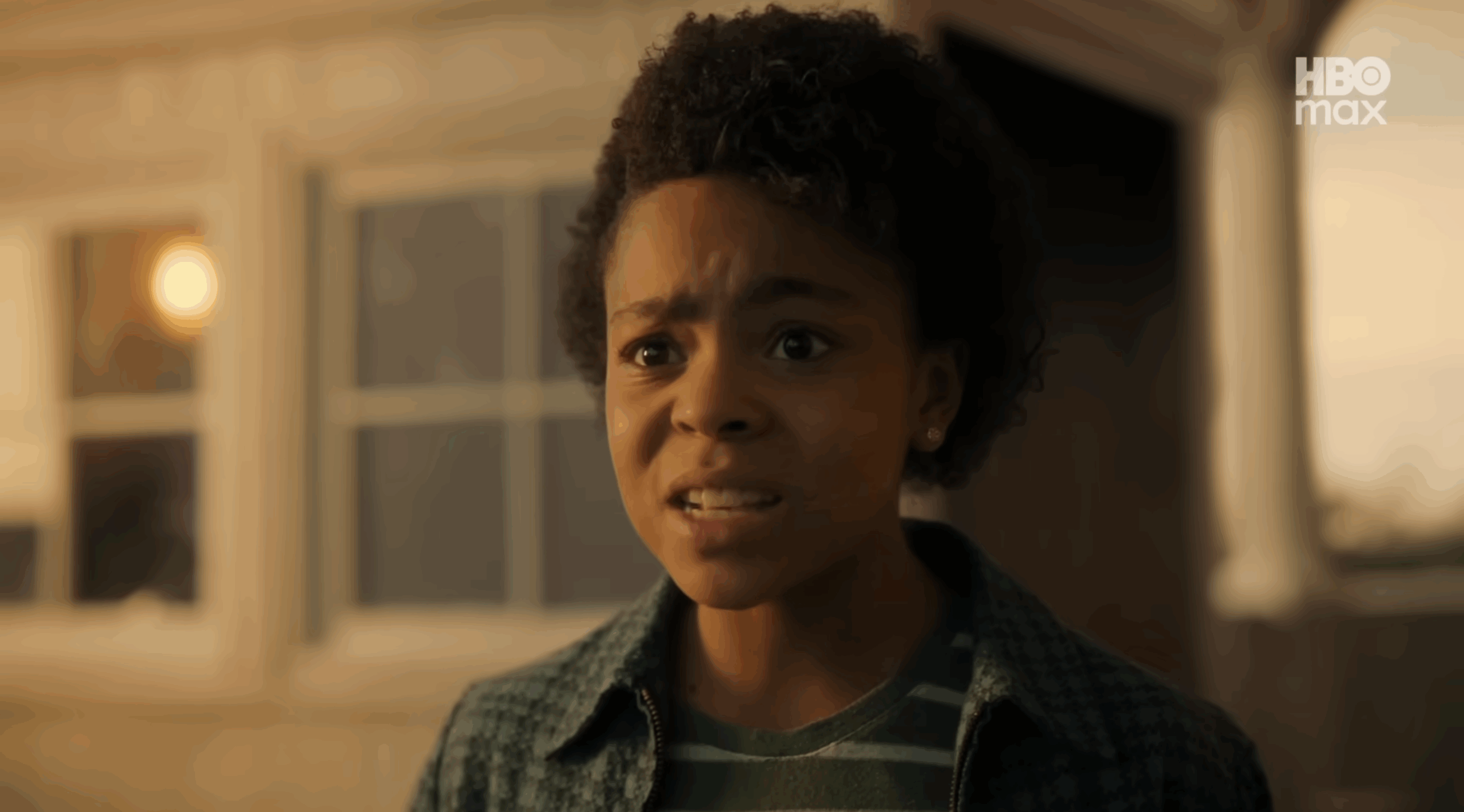
IT: Welcome to Derry Episode 1 Recap
Like Pennywise himself, director Andy Muschietti knows how to make an entrance. Across both *IT* (2017) and *IT: Chapter Two* (2019), Bill Skarsgård’s demonic entity occasionally slithers into frame, slowly and eerily, through the cracks of what’s polite and what’s plausible, before bursting like a hideous geyser to terrify some helpless child. Muschietti’s edge as a director shined in his Pennywise setpieces — the lesser quality of *Chapter Two* notwithstanding. (Even still: the scene between Jessica Chastain and Joan Gregson as Mrs. Kersh? Paralyzing.)
Because maximizing shareholder value is paramount these days, nothing stays in the dark forever. And so, we return to Muschietti’s interpretation of Stephen King’s literary tome with *IT: Welcome to Derry*, a new HBO series helmed by Muschietti along with his producing partner and sister Barbara Muschietti, and screenwriter Jason Fuchs.
Cynical as we ought to be about *Welcome to Derry* as yet another instance of a big studio leveraging its IP library for quarterly growth, it feels right that Muschietti still sits in control. It’s for the better that this prequel feels like an extension of the duology rather than a prolonged prologue.
This is still Derry, Maine as seen in those movies, where nostalgic Americana hides all of its cruelty beneath a veneer of politeness. Handsome production design and muscular sequences of trauma-inducing terror were the markers of Muschietti’s films, and it’s thrilling to see more of that in the first episode of *Welcome to Derry*.
*Welcome to Derry? Welcome to hell, actually.* And it’s great to be back.
—
### Here’s What Went Down in “The Pilot” of *IT: Welcome to Derry*, Directed by Andy Muschietti
In the first episode, we meet the main kids of *IT: Welcome to Derry*. But not all of them survive the premiere.
—
### Welcome (Back) to Derry
It’s simply not *IT* if the plot isn’t also a coming-of-age tale. Adolescents, caught between childhood and adulthood, are at an age where quite literally no one understands them. They don’t even really know themselves. It’s no wonder Pennywise likes to feed on them. They reek of fear — fresh meat to a hungry lion.
We open with Matty (Miles Eckhardt), a stunted adolescent boy who, as far as we can infer, is just trying to escape a bad home environment. Picked up on the road by another family on their way to Portland (or so they claim), Matty soon realizes whose clutches he’s actually trapped in.
The violent, gruesome “birth” of a demonic baby (The Crimson King, is that you?) is just the beginning of a long, long nightmare for poor Matty. And yet, more for HBO Sunday nights, but alas. As far as everyone else in Derry knows, Matty is dead. But his “friends”—associates, really—suspect otherwise.
At school, nerdy outcasts Teddy (Mikkal Karim-Fidler), who in another life might froth at the mouth over chemtrails, and Fred (Jack Molloy Legault), a realist who gets all his fanciful fixes from comic books, struggle to fit in. Meanwhile, Lilly (Clara Stack), a social pariah haunted by her father’s freakish death at a pickle factory, struggles to forgive herself for hurting Matty’s feelings right before his disappearance.
It isn’t long before Lilly hears from Matty—out of her bathroom pipes (a recurring motif in this saga). Teddy and Fred aren’t convinced until Teddy gets a bizarre late-night visit from Pennywise, in the form of lampshades made of screaming human flesh.
This is all preceded by a scene depicting Shabbat, where Teddy’s frustrated father lectures him on the horrors Jews suffered in the Holocaust, and ends his point by tossing out his copy of *The Flash #123* — an issue that introduced the multiverse to comic books. Is Muschietti foreshadowing a Stephen King multiverse? Or is this a playful nod to Muschietti’s colossal 2023 bomb for Warner-owned DC? (By the way, a pristine copy of that comic might net you about $13,000.)
The kids soon link up with Ronnie (Amanda Christine), another neighborhood kid whose father works at the local movie theater and is one of the few people to last see Matty alive. Putting on *The Music Man* (the movie Matty saw, from which Lilly heard the music coming through her pipes), the kids find Matty in the movie.
But is it really Matty?
Remember, Pennywise feeds on fear. In taking the form of Matty and reminding them all how they collectively treated him, Pennywise instills fear for him to feed from. Basically, he’s preparing dinner, and the theater has become his kitchen.
After Matty digs his face into a mysterious baby wrapped in a yellow blanket, his grin turns sinister — as sharp as a knife. It’s then that *IT* veterans should recall this isn’t the first time they’ve seen Pennywise on a screen before.
Thus begins several minutes of pure, pants-shitting terror.
With diegetic lighting turning the whole place blood red, the demon baby that killed (or did it?) Matty now comes after the kids, sending them screaming and running with no place to hide. Just when you think the action lulls, Muschietti snaps things into focus.
Pennywise straight-up rips apart Teddy, his blood and guts spilling over the popcorn on the floor, before making mincemeat of the other kids off-screen. The only survivors are Ronnie and Lilly, who unknowingly holds the severed hand of Teddy’s little sister.
If *Welcome to Derry* seemed confused about who its main character is at first, it makes it clear by the bitter end whose story it’s really telling. But Lilly isn’t the only one whose story matters.
Jovan Adepo (right) seems to be the “main” adult in *IT: Welcome to Derry*.
—
### “A Little Taste of Normal”
*IT* might be a story preoccupied with youth, but it isn’t exclusively about kids. Standing in contrast to the show’s small and already dwindling ensemble of children is its other major character: Major Leroy Hanlon, played by Jovan Adepo.
Fresh from the Korean War, Major Hanlon is assigned to a base in Derry, Maine — the “tip of the spear” against Russia in a war that’s definitely going to happen.
But despite his accolades abroad, not everyone in the Air Force is keen to salute a Black man in 1962.
In our interview with Adepo, the actor told us that *Welcome to Derry* isn’t shying away from the brutal realities of life in a racist America. For now, we’re only seeing the surface — the small indignities and gestures of disrespect, like a refusal to salute in the presence of superior command.
It surely won’t be long before we see worse, like the true colors of Hanlon’s new neighbors. As the major himself said, he’s moving his family into town, which means more Black folk living in a mostly white Maine town.
(If there’s anything we learned from this season of *Peacemaker*, it’s to look closely at the extras.)
It’s 1962, remember. Not everyone will be so welcoming.
To say nothing of Hanlon’s own fears about his newly important position.
Early in the episode, Major Hanlon passes by Special Projects — a closed-off section of the base shrouded in secrecy. Later that night, Hanlon is visited by masked men who beat him for classified specs on experimental weapons.
My first impression was that this was a test; the men would unmask to reveal Hanlon’s own superiors, testing his loyalty. But the men run off to who knows where, leaving the story unresolved. For now.
https://www.esquire.com/entertainment/tv/a69111709/it-welcome-to-derry-episode-1-recap/