Tag Archives: optimizations

Ethereum could get faster in January with gas limit rise to 80M

Transaction throughput on the Ethereum network is set to be boosted again in early January with the second blob parameter-only (BPO) hard fork. This upgrade is expected to enable the Ethereum gas limit to rise from 60 million to 80 million.

Christine Kim, vice president of the research team at Galaxy Digital, shared the news in a post on Tuesday. She noted the confidence expressed by Nethermind developers Ben Adams and Kamil Chodala during Monday’s Ethereum All Core Developers call. They indicated that all testing should be complete before the next BPO hard fork scheduled for January 7, which is expected to increase blob capacity on the Ethereum mainnet by 66%.

This upcoming upgrade will follow the first BPO hard fork on December 9, which also increased blob capacity by 66%.

However, Ethereum Foundation developer operations engineer Barnabas Busa highlighted that two client-level optimizations are still needed before another increase in the block gas limit can occur. These optimizations include partial blob responses on the execution layer and the max blobs flag on the consensus layer.

### What Are Blobs on Ethereum?

Blobs on Ethereum are large data chunks that store transaction and rollup data off-chain. This mechanism lowers gas costs and increases scalability without bloating the network. Optimizing blob capacity to raise the gas limit directly increases the number of transactions and smart contract operations that can fit in each Ethereum block. The result is boosted overall throughput and potentially lower fees.

While raising Ethereum’s gas limit to 80 million won’t match the speed or low costs of layer 1 blockchains like Solana or Sui, it strengthens Ethereum’s appeal as a secure settlement and execution layer. Importantly, this improvement does not significantly compromise decentralization, which remains Ethereum’s greatest advantage over competitors.

### Next Steps for Ethereum Developers

Participants in the weekly Ethereum All Core Developers meetup will reconvene on January 5 to confirm the timeline for raising the gas limit following the second BPO hard fork.

### Increasing Ethereum’s Gas Limit: A 2023 Priority

Increasing Ethereum’s gas limit to expand the network’s execution capacity has been a major focus for developers and researchers this year. There have already been three increases:

– In early February, the gas limit was raised from 30 million to 35 million
– In July, it increased to 45 million
– In late November, it reached 60 million

Members of the Ethereum developer and research community share a common goal to raise the network’s gas limit to 180 million by the end of 2026.

This steady progress highlights Ethereum’s commitment to scalability improvements, ensuring the network can support growing demand while maintaining its security and decentralization.
https://cointelegraph.com/news/ethereum-could-get-faster-gas-limit-rise-january


iPhone tipped for major launch shake-up in 2026 – here’s when to expect the iPhone 18, iPhone Air 2, and more

The iPhone 18 Pro, Pro Max, and foldable iPhone might land in September The iPhone 18, iPhone 18e, and iPhone Air 2 could land around March of 2027 The iPhone Air 2 might have better battery life but no extra cameras We’ve got used to Apple releasing all the year’s new mainline iPhones every September, but that might not be the case anymore, as a major leak points to a launch timing shake-up, and details what to expect from the iPhone Air 2. This new information comes from Apple tipster Mark Gurman, writing for Bloomberg, who has detailed what to expect from the iPhone line and when throughout 2026 and 2027. And while Gurman only details the next 18 months or so of releases here, he claims that this new pattern will continue for “years to come”. So below, here’s a look at how Apple might be shaking things up. That might not sound surprising, but while mainline iPhones typically launch around September, mid-range models like the SE line and the recent iPhone 16e tend to launch earlier in the year, around March. So we might not see any such launches in 2026. As for what we’ll see in or around September, according to Gurman, you can expect the iPhone 18 Pro, the iPhone 18 Pro Max, and probably the first foldable iPhone. So, in other words, this September window is when Apple’s most premium models might launch. However, according to Gurman, that no longer includes the likes of the base model iPhone 18. March/spring 2027 If you’re after the base model, then you’ll instead apparently have to wait until roughly six months later, so around March 2027, when the iPhone 18 is said to be launching alongside the mid-range iPhone 18e and “potentially” the iPhone Air 2. With this approach, starting from 2027, the lower-end models would land in the first half of each year, with the higher-end ones launching in the second half. Gurman also stated that the main upgrade on the iPhone Air 2 will be a new 2nm chipset, which should improve the battery life. We’d previously heard that this phone might have a second rear camera, but according to Gurman, that’s unlikely. Finally, Gurman claimed that the iPhone Air exists partially as a prototype for the foldable iPhone, as that will apparently use “many of the same materials, miniaturization techniques, internal components, batteries, and software optimizations” as the iPhone Air. So the fact that the iPhone Air reportedly isn’t selling brilliantly might not bother Apple too much if it exists in part just to help the company develop a foldable phone. In any case, while we’d take all of this with a pinch of salt, Gurman does have a superb track record for Apple information, and this isn’t the first time we’ve heard talk of a release schedule shake-up, or of the iPhone Air being a test bed for some technologies the foldable iPhone will use. Follow TechRadar Make sure to click the Follow button!.
https://www.techradar.com/phones/iphone/iphone-tipped-for-major-launch-shake-up-in-2026-heres-when-to-expect-the-iphone-18-iphone-air-2-and-more

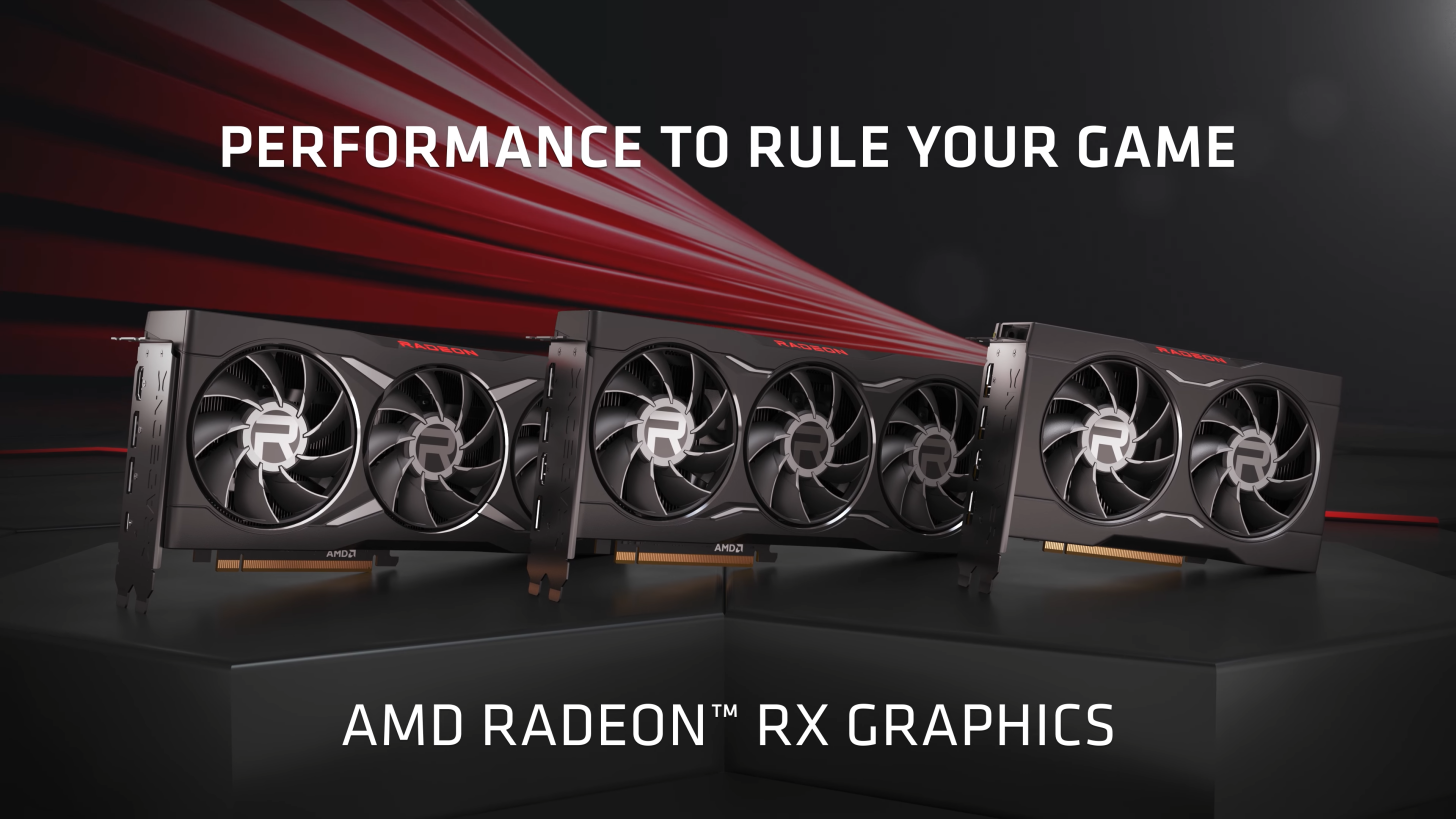
AMD Promises Continued Driver Support For RDNA 1 “RX 5000” & RDNA 2 “RX 6000” GPUs

**AMD Confirms Continued Driver Support for RDNA 1 & RDNA 2 Radeon GPUs**

AMD has addressed recent concerns regarding driver support for its older Radeon GPUs based on the RDNA 1 and RDNA 2 architectures. In a new statement, the company has clarified that Radeon RX 5000 and RX 6000 series cards will continue to receive driver updates, including new game support, optimizations, and security fixes.

### Background: Confusion Around Adrenalin 25.10.2 Driver Release

The release of the AMD Adrenalin 25.10.2 driver update sparked confusion among Radeon users. The update changelog noted that RDNA 1 and RDNA 2 GPUs would be moved to a separate driver branch and labeled as entering “Maintenance Mode.” Additional changes included the temporary removal of USB-C power charging support on the RX 7900 series (which was later reverted) and an increase in the overall driver package size to over 1 GB.

The primary concern, however, was the uncertainty around future driver support for older GPUs. Initial AMD statements hinted that game support for these older GPUs would continue “as per market needs,” but the vague wording failed to clarify exactly what that entailed.

### AMD’s Clarification: Continued Support with Dedicated Driver Branches

Today, AMD has provided a clear explanation on Radeon GPU driver support moving forward. According to the company, RDNA 1 (RX 5000 series) and RDNA 2 (RX 6000 series) GPUs will continue to receive:

– Support for the latest game releases
– Stability and game optimizations
– Security patches and bug fixes

These updates will arrive similarly to those provided for their latest RDNA 3 (RX 7000 series) and upcoming RDNA 4 (RX 9000 series) GPUs.

The key difference is that older GPUs will benefit from a dedicated, stable driver branch. This branch is built on years of tuning and optimizations, ensuring stability and consistent performance for current and future games. Meanwhile, newer GPUs on the RDNA 3 and RDNA 4 architectures will receive drivers that can integrate new features faster through a separate development path.

### What This Means for Radeon Users

AMD summarized the situation as follows:

> “This is not the end of support for RDNA 1 and RDNA 2. Your Radeon RX 5000 and RX 6000 series GPUs will continue to receive game support for new releases, stability and game optimizations, as well as security and bug fixes.
>
> The difference is that these products now benefit from a dedicated, stable driver branch, one built on years of tuning and optimization. This approach helps deliver a smoother, more consistent experience for your games while insulating previous generation GPUs from rapid changes designed for newer architectures.”

### Why AMD Is Taking This Approach

AMD explained the rationale behind splitting the driver codebase:

> “Our goal is simple: to give every Radeon gamer the best experience possible. By separating the code paths, our engineers can move faster with new features for RDNA 3 and RDNA 4, while keeping RDNA 1 and RDNA 2 stable and optimized for current and future games.”

### AMD’s Commitment to Radeon Gamers

The company reinforced its commitment to supporting all Radeon users:

> “We’ve supported Radeon gamers for generations and that commitment isn’t changing. Whether you’re gaming on an RX 5000, RX 6000, or the latest RX 9000, you’ll continue to get the reliability, performance, and care you expect from AMD. Because we’re all part of the same gaming community and every Radeon gamer matters.”

### Looking Ahead

It will be interesting to monitor how AMD delivers on this promise in upcoming driver releases. Currently, the Adrenalin 25.10.2 driver stands as the latest update available for RDNA series GPUs.

For Radeon users, this clarification should bring reassurance that their older GPUs will continue to receive essential support while allowing AMD to innovate rapidly on its newest architectures.
https://wccftech.com/amd-promises-continued-driver-support-for-rdna-1-rx-5000-rdna-2-rx-6000-gpus/

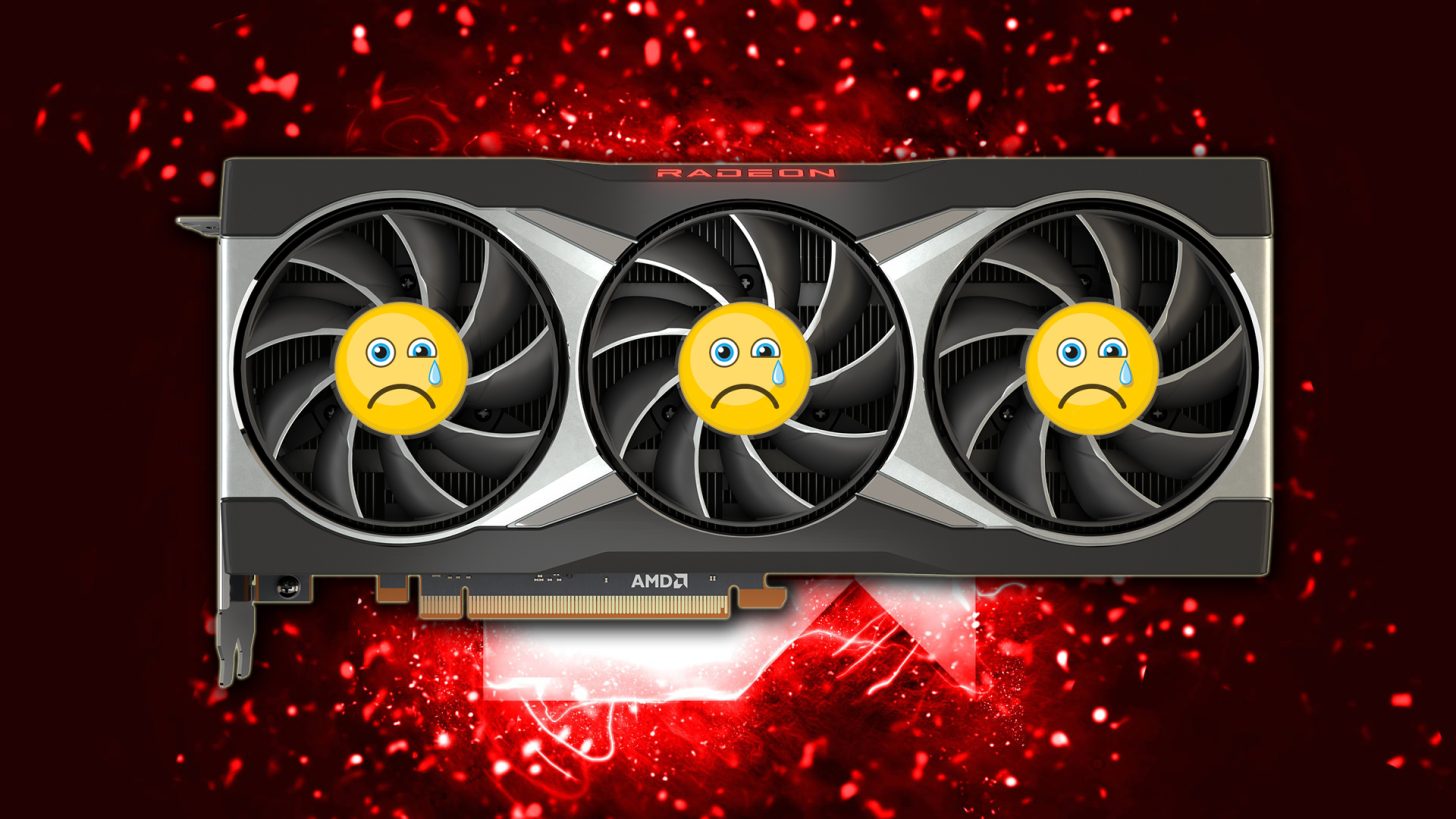
AMD RDNA 1 & 2 GPU Driver Support Moved To “Maintenance” Mode, Game Optimizations & New Tech For RDNA 3, 4 & Beyond

AMD Phases Out Support for First- and Second-Gen RDNA GPUs, Focuses on Latest Architectures

AMD has announced that its first and second-generation RDNA GPU lineups will soon receive only critical updates, effectively ending official optimization and feature support for these older graphics cards. This move affects the Radeon RX 5000 series (RDNA 1), which debuted nearly six years ago, as well as the RX 6000 series (RDNA 2).

### What’s Changing with AMD Driver Support?

In the latest Adrenalin Edition 25.10.2 driver release, which introduced official support for Battlefield 6 and the Ryzen AI 5 3300 APU, AMD limited new driver enhancements such as “Game Support” and “Expanded Vulkan Extensions Support” exclusively to the Radeon RX 7000 and RX 9000 series GPUs. This means that only the RDNA 3 and RDNA 4 architectures will benefit from the newest game optimizations and features.

Notably absent are the RDNA 1 and RDNA 2 families, signaling that AMD is placing these GPUs into maintenance mode. According to statements given to PC Games Hardware, AMD confirmed that while critical security patches and bug fixes will continue for the RX 5000 and RX 6000 series, the company will no longer roll out targeted game optimizations or feature updates for these GPUs.

### What This Means for RX 5000 and RX 6000 Owners

The RX 5000 series originally launched in 2019, with the RX 6000 series following in 2020. Despite the relative recency, AMD’s decision means that these GPUs will no longer receive the latest features or game support going forward. This includes newer variants like the RX 6750 GRE, released as recently as 2023, which will now be excluded from upcoming performance optimizations—a move many consider unexpected and disappointing.

By shifting its focus exclusively to the RX 7000 and RX 9000 series, AMD aims to concentrate resources on developing new and improved technologies for its latest GPU architectures.

### Impact on Consumers and Industry Comparison

This change introduces a degree of uncertainty for consumers who expect extended support for their GPU investments. Concerns are growing that AMD might adopt a similar approach with RDNA 3 and potentially RDNA 4 GPUs once newer generations arrive.

In contrast, NVIDIA has maintained support for older architectures like Maxwell and Pascal for nearly a decade, which has been reassuring for many users who want long-term stability and feature updates for their graphics cards.

### Final Thoughts

While AMD’s decision to limit support for RDNA 1 and RDNA 2 GPUs may be aimed at streamlining its development efforts, it may affect consumer trust and satisfaction. Gamers and professionals using RX 5000 and RX 6000 series GPUs should prepare for a future where their cards receive only essential security patches without ongoing feature enhancements or game-specific optimizations. Meanwhile, AMD is doubling down on innovations within the RX 7000 and RX 9000 series to stay competitive moving forward.
https://wccftech.com/amd-rdna-1-2-gpu-driver-support-moved-to-maintenance-mode-game-optimizations-new-tech-for-rdna-3-4-beyond/