Tag Archives: decentralization

Ethereum News: Bhutan Expands Blockchain Adoption Through Ethereum Staking

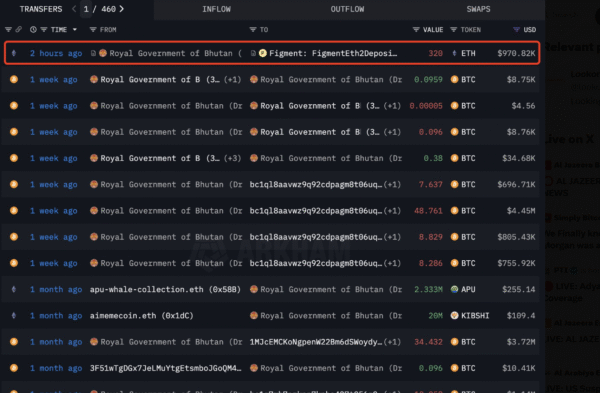
**Bhutan Moves 320 Ethereum to Figment, Deepening Its Digital Asset Strategy**

The Royal Government of Bhutan has taken a significant step in expanding its blockchain adoption by transferring 320 Ethereum (ETH), valued at approximately $970,000, to Figment, a leading institutional staking provider. This move highlights Bhutan’s ongoing commitment to integrating blockchain technology into its national systems and underscores its growing digital strategy.

**Institutional Ethereum Staking: Expanding Digital Horizons**

Figment specializes in providing institutional-grade staking services, offering secure and reliable blockchain participation. Bhutan’s decision to stake Ethereum through Figment is another milestone in its expanding blockchain journey, reflecting the nation’s trust in professional solutions to ensure security, compliance, and effective participation in the blockchain ecosystem.

**Migration of National Digital Identity to Ethereum**

In a broader context, Bhutan has recently started migrating its National Digital Identity (NDI) project to the Ethereum blockchain. This ambitious initiative aims to strengthen the self-sovereign identity of Bhutanese citizens by leveraging Ethereum’s decentralized infrastructure. According to data tracked by Onchain Lens and reported on November 27, 2025, the migration is expected to cover nearly 800,000 inhabitants and is on track to be completed by early 2026.

**A Broader Digital Finance Strategy**

Bhutan’s involvement with digital assets goes beyond Ethereum. The nation has previously added Bitcoin, BNB, and other digital currencies to its strategic reserves, particularly in connection with the pioneering Gelephu Mindfulness City (GMC) project. Bhutan is also known for mining Bitcoin using its abundant hydropower resources, reportedly holding as much as 6,371 BTC. Such efforts demonstrate a diversified and forward-thinking approach to digital economics.

**Gelephu Mindfulness City: Driving Digital Innovation**

The GMC project stands at the heart of Bhutan’s digital ambition. By integrating blockchain technologies, including Ethereum staking, into urban development and economic planning, GMC is positioned to become a hub for digital innovation in the Himalayan region. Acknowledging digital assets as part of strategic reserves within GMC signals Bhutan’s long-term commitment to blockchain and advanced technologies.

**Empowering Citizens through Blockchain**

The migration of Bhutan’s NDI system to Ethereum sets an important precedent, enabling citizens to have greater control over their personal data while enhancing privacy and security. By providing self-sovereign digital identity on a blockchain, Bhutan is empowering its people and establishing a model that other countries may follow as they pursue similar digital transformations.

**A Role Model for Blockchain Adoption**

Bhutan’s proactive embrace of blockchain technology, from digital identity management to crypto reserves and Ethereum staking, makes it a leader among developing nations. As a small country leveraging cutting-edge technology for national development, Bhutan serves as an inspiration for others seeking to integrate blockchain into governance and economic growth.

*Bhutan’s latest move into Ethereum staking reflects a larger global trend where nations are exploring blockchain for public services and innovation. As the world watches, Bhutan continues to demonstrate how digital assets and blockchain infrastructure can be harnessed for long-term national benefit.*
https://bitcoinethereumnews.com/ethereum/ethereum-news-bhutan-expands-blockchain-adoption-through-ethereum-staking/

Monad Mainnet Officially Launches, Ushering in a New Era of High-Performance Blockchain Infrastructure

The much-anticipated Monad Mainnet is now live, one of the biggest blockchain rollouts of the year, and the precursor of a highly scalable, parallelized execution environment that would deliver up to 10, 000 transactions per second. monad. xyz. Monad, an up-and-coming Layer 1 blockchain, with parallel execution features and Ethereum Virtual Machine (EVM)-compatible infrastructure, has gained massive hype in Web3 because of its ability to achieve higher throughput, quicker transaction finality and developer-friendly architecture. Governance Takes Shape with the Mon-Genesis Eco Forum After the mainnet announcement, the community was given another significant update with the launch of the Mon-Genesis Eco Forum v0. 1, a new governance and community coordination center. The forum promotes early members to get involved in governance proposals, ecosystem project and long-term development planning of Monad. The announcement states that those who contribute early can be in a position to get augmented MON allocations in Q4 and this will serve as an incentive to participate in governance in these formative months. This layer of the governance indicates that Monad cares about decentralization and making decisions collectively as it starts to become global blockchain platform. Staking MON Goes Live Across Validator Networks The MON token staking is now on and the mainnet is active in various validator portal allowing users to stake their tokens and earn the rewards by ensuring the security of the network. Delegation is offered on the gmonads. com dashboard and in the BlockVision staking interface, with delegators having a variety of choices to allocate stake to a worldwide network of validators. The staking model makes MON holders stakeholders in the chain performance and security. With the expansion of the number of validators and delegation, the decentralized security model of Monad is set to become stronger and more varied, with the capacity to supply the increased throughput that the chain will be designed to provide Curated Vaults Expand DeFi Access for MON and AUSD The other significant item in the ecosystem rollout is the launch of curated DeFi vaults aimed at simplifying the generation of yields to the users. The MON Vault, managed by Steakhouse, provides an actively maintained strategy to MON holders, and the statistics indicate that a total of 21. 6K dollars of value is locked. MVT is issued to participants as a token of deposit, which allows the flow of liquidity and easy accounting. Simultaneously, the Agora EarnAUSD vault run by Upshift has already achieved a total value locked of 5 million dollars. The vault offers a token of liquid yield, EarnAUSD, that allows users to earn yield on AUSD and retain the flexibility to access their assets. These vaults are some of the first DeFi products on Monad and they are the start of a fast-growing financial ecosystem. DeFi at the Speed of Monad Such categories as spot trading, perpetual derivatives, launchpads, lending and borrowing protocols are now part of the Monad eco system. Having numerous applications within each category, DeFi Teams have started implementing applications that are suited to the parallel execution model of Monad. The early users will be able to visit six spot trading platforms, two perp trading venues, five launchpad and four lending/borrowing protocols.
https://bitcoinethereumnews.com/blockchain/monad-mainnet-officially-launches-ushering-in-a-new-era-of-high-performance-blockchain-infrastructure/

SEC Drops Crypto From 2026 Examination Priorities in Major Policy Shift

The U. S. SEC has released its examination priorities for the 2026 fiscal year, and for the first time in several years, crypto is not mentioned as a specific area of focus. The omission stands out, especially compared to the Gensler era, where crypto routinely appeared as a priority in annual exam documents. The shift aligns with the broader pro-crypto direction seen under President Donald Trump, whose administration has been active in deregulating the sector. A Noticeable Change From Previous Years In last year’s priorities under former Chair Gary Gensler, the SEC explicitly highlighted the offer, sale, trading, and advisory activity around crypto assets. Spot Bitcoin and Ether ETFs were directly named, and the Division of Examinations pledged close monitoring of firms offering crypto-related services. This year’s document removes all of that. The SEC clarified that the published priorities are not exhaustive, but the absence of crypto marks a major shift from the agency’s past stance. Instead, the 2026 list centers on broad themes such as fiduciary duty, custody, customer protection, and oversight of brokerage and advisory firms. Focus Moves to Emerging Tech and Cybersecurity While crypto is not mentioned, the SEC did highlight risks around emerging technologies, including artificial intelligence and automated investment tools. The Division said it will closely review how firms deploy these tools and whether they expose investors to new risks. Cybersecurity is another major theme for 2026. The SEC plans to pay “particular attention” to how financial firms respond to and recover from cyber incidents, including ransomware attacks. This mirrors the growing concern across federal agencies regarding digital-era threats to financial infrastructure. Also Read : Vitalik Buterin Says FTX Collapse Proves Why Decentralization Matters A Pro-Crypto Policy Environment Under Trump The change in tone comes as the U. S. crypto industry expands rapidly under President Trump, who has embraced the sector both publicly and through his family’s ventures. Trump-affiliated businesses have launched or invested in a trading platform, a mining operation, a stablecoin, and multiple token projects. Current SEC Chair Paul Atkins emphasized that examinations should not be a “gotcha” exercise and that firms should be able to engage transparently with regulators. His comments reflect a broader shift away from aggressive enforcement and toward cooperation and clarity, an approach welcomed by many crypto firms. Crypto Moves Toward Normalization, Not Exemption Analyst Mason Blak C noted that the removal of the crypto section does not mean the SEC is abandoning oversight. Instead, crypto is no longer treated as a standalone “problem area.” It is being folded into the broader regulatory system alongside other assets and technologies. The agency can still intervene whenever digital assets pose risks, but the approach is shifting toward normalization rather than punishment. He explained that this moment marks crypto’s transition from the fringe to a regulated part of the financial mainstream, not a victory lap, but a meaningful step toward long-term legitimacy. FAQs.
https://coinpedia.org/news/sec-drops-crypto-from-2026-examination-priorities-in-major-policy-shift/

Uniswap Founder Proposes Major UNI Burn and Governance Overhaul

Uniswap Founder Proposes Major Governance Overhaul to Burn UNI and Reshape Protocol Fees

Uniswap founder Hayden Adams has unveiled a landmark governance proposal aimed at reshaping the decentralized exchange’s financial structure. Introduced through Uniswap governance channels, the plan seeks to activate protocol fees and redirect them toward burning UNI tokens. This initiative is designed to align incentives across Uniswap’s ecosystem and represents the project’s most substantial shift since the launch of UNI in 2020.

**Turning On Protocol Fees and Burning UNI**

The proposal, presented by Adams alongside Devin Walsh and Kenneth Ng, outlines several measures intended to strengthen Uniswap’s long-term sustainability. Central to the plan is the introduction of protocol fees that will be collected and used specifically to burn UNI tokens. This burn mechanism effectively reduces the circulating supply, creating deflationary pressure that rewards holders.

In addition to protocol fees, sequencer fees generated from Unichain operations will also be funneled into the UNI burn process. As part of the proposal, 100 million UNI tokens from the treasury would be permanently burned. This amount represents fees that could have been accumulated since the token’s inception, signaling a retroactive realignment between the protocol’s value creation and tokenholder benefits.

The governance proposal also introduces “Protocol Fee Discount Auctions,” a new mechanism designed to improve liquidity provider outcomes while internalizing MEV (Miner Extractable Value) revenues into the protocol itself.

**Shifting Fee Structures to Boost Adoption**

Uniswap Labs plans to stop collecting fees from its interface, wallet, and API services as part of the restructuring. This move aims to lower barriers to entry and accelerate global adoption by focusing resources on expanding the protocol’s reach.

Additionally, employees from the Uniswap Foundation will be transferred to Labs under a new governance-driven growth fund sourced from the treasury. This strategic shift is intended to blend Labs’ operational agility with governance oversight, fostering faster innovation within the protocol.

The proposal also calls for migrating Unisocks liquidity to Uniswap v4 on Unichain, after which the liquidity position would be burned, further reinforcing the deflationary impact.

**Governance Overhaul and Ecosystem Realignment**

Adams emphasized that these measures will concentrate Uniswap’s efforts on scaling adoption while maintaining decentralization through governance oversight. By merging Labs’ operational capabilities with governance authority, the exchange aims to accelerate protocol-driven innovation in the decentralized finance space.

Uniswap continues to play a critical role in DeFi, having processed roughly $1.8 trillion in annual trading volume. With this proposal, the project seeks to solidify its position as essential financial infrastructure while directly benefiting tokenholders through deflationary mechanisms and ecosystem realignment.

The proposal arrives amid improving regulatory clarity, offering Labs more flexibility to participate proactively in governance decisions that shape Uniswap’s future. Community members and stakeholders are now invited to weigh in on this significant shift as the protocol moves towards its next phase of growth.
https://blockonomi.com/uniswap-founder-proposes-major-uni-burn-and-governance-overhaul/

Interlace Showcases “Capital Agility” as the New Corporate Financial Edge at Hong Kong FinTech Week 2025

HONG KONG, Nov. 5, 2025 /PRNewswire/ — November 3-7, 2025, Hong Kong: Hong Kong FinTech Week 2025, one of Asia’s most influential fintech events, successfully brought together global leaders to explore the future of artificial intelligence, blockchain, and digital assets. Featuring dedicated forums on Web3 and digital finance, the conference has cemented its status as a key platform where policymakers, innovators, and enterprises converge to shape the next phase of global financial connectivity.

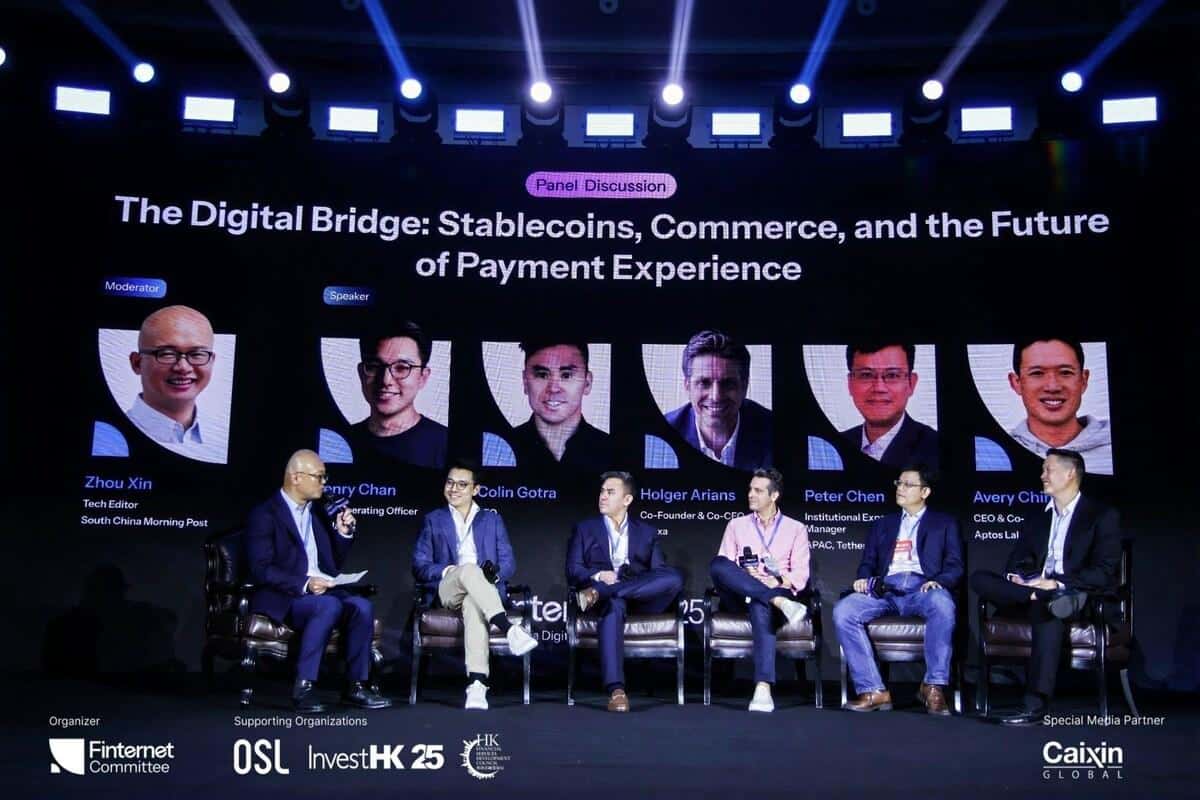
As part of this year’s Finternet Committee 2025, organized by InvestHK, the Financial Services Development Council (FSDC), and OSL Group, Interlace—a leading global card issuance and treasury management platform—was invited to join the conversation. Interlace COO Henry Chan spoke alongside industry leaders from Tether, Morph, Banxa, and Aptos in a panel discussion titled “The Digital Bridge: Stablecoins, Commerce, and the Future of Payment Experience.”

### Capital Agility: The New Benchmark for Corporate Competitiveness

In today’s volatile macroeconomic environment, shaped by geopolitical shifts and policy uncertainty, financial resilience has become mission-critical for enterprises. The ability to move capital seamlessly across borders, chains, and markets has emerged as a defining factor for operational continuity and growth—what Interlace calls *Capital Agility*.

During the panel, Henry Chan shared his perspective as the COO of a company bridging Web2 and Web3 finance. He highlighted that stablecoins are evolving into a “digital bridge” connecting the on-chain economy with real-world commerce. Their use cases now extend far beyond crypto trading, powering cross-border e-commerce, B2B settlements, payroll, and even digital advertising.

> “The value of stablecoins is shifting from decentralization ideology to real-world efficiency,” said Chan. “By enabling real-time, programmable, and transparent transfers across currencies and networks, stablecoins unlock new levels of capital agility for enterprises.”

He further emphasized that while regulatory clarity has accelerated adoption, the true driver lies in enterprise demand for instant settlement and global interoperability.

### From Payment Tool to Financial Infrastructure

For many enterprises, the biggest challenge in adopting stablecoins hasn’t been technology—but fragmentation. Funds are often scattered across multiple chains and wallets, disconnected from fiat accounts and clearing systems. As a result, even innovative companies struggle to balance compliance, security, and liquidity.

> “What enterprises lack is not innovation—it’s infrastructure,” Chan noted. “They need a unified system that connects traditional finance with on-chain liquidity.”

This convergence is now reshaping the competitive landscape. Traditional payment giants such as MasterCard, PayPal, and Western Union are venturing into stablecoin infrastructure, signaling a shift from single-channel competition to network-level integration.

As a global leader in card issuance and treasury management, Interlace has built an open, flexible, and developer-friendly platform—from card issuing and BIN management to multi-currency settlement and risk control. Its modular Card-as-a-Service (CaaS) APIs allow enterprises and developers to embed payments, card issuance, and crypto account functions with ease.

Through this infrastructure, Interlace is helping enterprises achieve true capital agility—bridging traditional and digital finance, and accelerating the mainstream adoption of stablecoins as part of global financial plumbing.

### From Discussion to Deployment: FinTech Week On-Site Highlights

Beyond thought leadership, Interlace also hosted a booth at the event, showcasing its latest card issuance, treasury management, and API solutions. The on-site interactions translated the idea of “capital agility” into practical conversations, giving industry participants a firsthand look at how Interlace is rebuilding global payment connectivity through technology and compliance.

The discussions at Finternet 2025 underscored a clear trend: the global financial system is entering a “reconnection phase.” Stablecoins are no longer a niche concept within the crypto industry—they are becoming essential infrastructure for integrating traditional and digital finance.

Interlace is turning that vision into reality. Whether through enterprise accounts, settlement systems, or card networks, the company is redefining how capital moves across borders with greater transparency, speed, and interoperability.

### About Interlace

To date, Interlace has issued over 6 million cards and serves more than 12,000 enterprise clients across 180+ countries and regions. Its clientele spans Web3 companies, cross-border e-commerce, B2B trade, and fintech platforms.

The company holds multiple financial licenses in the U.S., Hong Kong, and Lithuania, and is certified at PCI-DSS Level 1—the highest standard of payment security.
https://usethebitcoin.com/crypto-live-feed/interlace-showcases-capital-agility-as-the-new-corporate-financial-edge-at-hong-kong-fintech-week-2025/

Bitcoin at $107K, Ethereum at $3,787, BNB at $1,092 — But Ozak AI at $0.012 Could Deliver Bigger ROI

The major cryptocurrencies like Bitcoin, Ethereum, and BNB continue to grow steadily. However, investors are increasingly focusing on early-stage ventures with greater room for expansion. One such promising project is **Ozak AI**, notable for its innovative fusion of blockchain technology and artificial intelligence, as well as its attractive low presale price of $0.012, suggesting substantial upside potential.

With such a low entry point, the potential gains are catching the eyes of investors everywhere.

### Why Early Investors Are Eyeing Ozak AI’s Presale

The Z token presale is structured in multiple phases, with Phase 6 currently priced at $0.012, and Phase 7 set to open at $0.014. The projected final price is expected to reach $1.

Over 971 million Z tokens have been sold so far, raising $4.06 million. Remarkably, the price has already shown an impressive 1100% increase from its initial price of $0.001 in Phase 1.

The Z presale shows clear potential for long-term and sustainable growth. According to its tokenomics, the presale constitutes 30% of the fixed 10 billion Z token supply. This scarcity principle enhances token demand and investor confidence, increasing the likelihood of value appreciation.

Early investors could see major returns before the token even hits exchanges.

### Comparing ROI: Ozak AI vs. BTC, ETH, and BNB

– **Bitcoin (BTC)** is trading around $107K, testing resistance near $112K. Analysts predict that a decisive breakout could target the $125K-$130K range, implying a gain of roughly 20%-25%.
– **Ethereum (ETH)** is trading at $3,787 with immediate resistance near $3,900, potentially targeting $4,200-$4,300, offering similar double-digit upside potential.
– **BNB** currently trades at $1,092, facing resistance around $1,150. Breaking this could push it to $1,250-$1,300, indicating returns comparable to BTC and ETH.

In contrast, **Ozak AI’s** projected token price is $1. If this target is met, investors entering now at the $0.012 presale phase could see returns of approximately **8,233%**—far surpassing the potential returns of the established cryptocurrencies above.

This makes the current Phase 6 presale a compelling opportunity for early investors aiming for significant future gains.

### Ozak AI Ecosystem Driving Growth

Ozak AI is positioned as a next-generation innovation in blockchain-based intelligence technology. Its core goal is to analyze real-time data and forecast market behavior accurately.

Using advanced machine learning models, including neural networks and ARIMA, Ozak AI provides traders and institutions with precise risk assessments, trend analyses, and financial projections.

The platform incorporates the **Ozak Stream Network (OSN)**, a real-time records pipeline combined with Decentralized Physical Infrastructure Networks (DePIN), ensuring decentralization and reliability. This infrastructure guarantees secure and stable information processing.

Moreover, all critical data is securely stored using Ozak AI’s **Data Vaults**. The platform’s security has been audited by reputable firms **Sherlock** and **Certik**, confirming strong security, transparency, and trustworthiness for users and investors alike.

Ozak AI extends beyond conventional statistical feeds through its customizable **Prediction Agents (PAs)**. These agents can be tailored for specific goals such as forecasting Bitcoin volatility or providing impartial market insights. Users can share these agents and earn Z tokens as rewards.

### Strategic Partnerships Strengthening Adoption

Ozak AI has established several strategic partnerships that enhance platform trust and foster growth:

– The **Meganet** partnership enables fast data processing and access to real-time financial information.
– Collaborating with **SINT** introduces one-click AI agents, cross-chain bridges, and voice-enabled smart execution tools.
– The partnership with **Phala Network** facilitates the secure and private application of AI in financial markets.

These collaborations are set to increase adoption, directly fueling token demand and growth.

### Conclusion

Ozak AI’s $0.012 presale phase offers an early chance for investors to get involved in a high-growth blockchain and AI project. With its strong ecosystem, innovative features, and strategic partnerships, Ozak AI is well-positioned for wider acceptance and expansion.

If the projections hold, early investors could enjoy returns of up to **8,233%**, massively outperforming well-known cryptocurrencies such as Bitcoin, Ethereum, and BNB.

For more information about Ozak AI, visit:
**Website:** [Insert Website URL]
**Twitter/X:** [Insert Twitter Handle]
**Telegram:** [Insert Telegram Link]
https://bitcoinethereumnews.com/bitcoin/bitcoin-at-107k-ethereum-at-3787-bnb-at-1092-but-ozak-ai-at-0-012-could-deliver-bigger-roi/?utm_source=rss&utm_medium=rss&utm_campaign=bitcoin-at-107k-ethereum-at-3787-bnb-at-1092-but-ozak-ai-at-0-012-could-deliver-bigger-roi

The Complete 2025 Guide to the XRP Tundra Ecosystem and the XRPL Blockchain

The XRP Ledger (XRPL) has entered 2025 with significant confidence as one of the most efficient and popular blockchain systems. Known for its 3–5 second settlement times and transaction fees that are a fraction of a cent, XRPL continues to serve as a cornerstone of high-speed digital payments.

Over the past year, the network’s metrics have shown increasing participation from validators and consistent throughput even during market volatility. This is supporting evidence that the blockchain was engineered for real-world scale rather than speculative hype.

The Ledger’s stability has attracted developers who focus on practical integrations, including decentralized exchanges, tokenization tools, and cross-border settlement systems. Unlike other chains weighed down by congestion or variable gas fees, XRPL’s consensus model allows consistent performance without sacrificing decentralization.

This environment has quietly fostered one of the most active and technically disciplined blockchain communities, positioning XRP as an efficient base layer for DeFi innovation.

### Where XRP Tundra Fits in the XRPL Economy

XRP Tundra builds directly on that foundation. It extends the Ledger’s utility through a connected dual-chain framework. The ecosystem operates across both XRPL and Solana, using tokens built with two distinct purposes:

– **TUNDRA-S**: A Solana-based utility asset supporting yield and liquidity functions.
– **TUNDRA-X**: A native XRPL governance and reserve token.

Together, they form a synchronized system that links Solana’s performance layer with XRPL’s proven settlement infrastructure. This architecture was developed to maintain clarity between operational and governance responsibilities—an approach similar to how major protocols separate their transactional and coordination layers.

TUNDRA-S powers staking mechanisms and DeFi integrations, while TUNDRA-X anchors governance, treasury, and Layer-2 interactions within the XRPL environment. The structure ensures that functional activity and governance stability evolve in parallel rather than competing for the same resources.

A recent overview from Crypto Infinity highlights how this dual-token design allows the system to scale while remaining consistent with XRPL’s security principles. The concept aligns with a broader movement in blockchain architecture toward modular, interoperable ecosystems.

### Cryo Vaults and the Arrival of Native XRP Staking

For years, XRP holders have faced a fundamental limitation: the asset’s reliability came without a built-in mechanism for generating yield. XRP Tundra’s Cryo Vaults attempt to resolve this by allowing users to “freeze” XRP or TUNDRA tokens for set durations—typically 7, 30, 60, or 90 days—directly within the Ledger.

During these periods, participants earn rewards denominated in TUNDRA-S while maintaining full custody of their underlying XRP. Unlike centralized exchange staking programs that rely on external custodians, Cryo Vaults operate transparently on-chain.

Each vault functions as a time-locked account that automatically releases both principal and rewards upon maturity. The design prioritizes accessibility, with no minimum stake requirement and a simple user interface for deposits and tracking.

Because XRP remains within the Ledger at all times, participants avoid counterparty risks associated with third-party yield services. The protocol’s clarity and auditability mark a significant step for long-term XRP holders seeking passive participation in network economics without leaving their preferred ecosystem.

### GlacierChain and the Path to Layer-2 Expansion

Beyond current functionality, XRP Tundra is preparing for its next phase through the GlacierChain project—a dedicated Layer-2 network designed to expand XRPL’s smart contract and DeFi capabilities.

GlacierChain will operate as an efficiency layer, processing transactions off-chain while maintaining final settlement security on the Ledger. The team aims to bring advanced financial tools—such as automated market makers, lending, and synthetic asset creation—directly to XRP users.

Layer-2 interaction will allow institutional and retail participants to further access DeFi functions without exposing assets to external bridges or chains.

For developers, GlacierChain introduces modular compliance frameworks and scalable architecture for deploying financial applications that inherit XRPL’s transaction integrity.

According to the project roadmap, GlacierChain is being structured with optional identity layers for regulated use cases while preserving open access for standard DeFi activity. This hybrid approach aligns XRP Tundra with the next wave of blockchain design: interoperable, compliant, and globally accessible.

### Audited, Transparent, and Ready for Integration

The XRP Tundra ecosystem has placed verification at the core of its rollout. The project has completed three independent audits through Cyberscope, Solidproof, and FreshCoins, covering smart contract functionality, vault logic, and liquidity mechanisms.

Each audit was published publicly, ensuring that participants can independently review the platform’s integrity.

In addition, Vital Block has issued full KYC verification for the project team—a notable distinction in a market where transparency is often overlooked.

Combined with its use of Meteora’s DAMM V2 liquidity architecture on Solana, which stabilizes trading environments through dynamic fees and permanent liquidity options, Tundra demonstrates a clear emphasis on risk control and technical credibility.

For XRP holders, these measures position Tundra as one of the first large-scale DeFi integrations that blend verifiable compliance with on-ledger participation. It reflects a shift in the broader digital asset space toward protocols built for sustainability, not speculation.

**Join thousands of explorers building the next wave of XRP DeFi:**

[Buy Tundra Now]

**How To Buy Tundra**
**Security and Trust: VitalBlock KYC verification**
**Join The Community**

*Disclaimer:*
The above article is sponsored content; it’s written by a third party. CryptoPotato doesn’t endorse or assume responsibility for the content, advertising, products, quality, accuracy, or other materials on this page.

Nothing in it should be construed as financial advice. Readers are strongly advised to verify the information independently and carefully before engaging with any company or project mentioned and do their own research.

Investing in cryptocurrencies carries a risk of capital loss, and readers are advised to consult a professional before making any decisions based on the above-sponsored content.
https://cryptopotato.com/the-complete-2025-guide-to-the-xrp-tundra-ecosystem-and-the-xrpl-blockchain/

Crypto Market Heats Up as BlockDAG’s Alleged Kraken and Coinbase Listings Spark Talks of a Major Breakout

Leaked Posts Hint BlockDAG Could Soon Appear on Kraken and Coinbase, Sparking Intense Crypto Debate

What began as quiet speculation has transformed into a major talking point across the crypto market. A recent tweet by influencer @MartiniGuyYT, who boasts over 100K followers on X (formerly Twitter), shared what appears to be an internal exchange document listing BlockDAG (BDAG) for integration on both Kraken and Coinbase.

The post quickly went viral, igniting discussions that BlockDAG could be the next cryptocurrency to explode. Although the BlockDAG (BDAG) team has yet to release any official statement, the timing has certainly piqued curiosity.

The project is entering its final phase before launch, with Genesis Day confirmed for November 26. Having raised over $430 million in its presale and building a growing global community of miners and users, the possibility of listings on top-tier exchanges could catapult BDAG into a new league of recognition.

Why Listings on Kraken and Coinbase Could Redefine BlockDAG’s Path

Kraken and Coinbase are among the most trusted and tightly regulated exchanges in the crypto sector. Both platforms uphold strict standards for technical security, compliance, and project legitimacy. Coinbase’s approval process includes thorough evaluations of technology, legal alignment, and governance, while Kraken enforces equally rigorous checks for safety and transparency.

For BDAG to appear on internal documents from these exchanges suggests significant progress in infrastructure and operational readiness. If verified, these listings could grant BlockDAG instant credibility among crypto funds and professional traders.

While many new coins rely heavily on hype, BDAG’s approach combines tested technology with a proven user base and an expanding ecosystem. This foundation supports its case as the next crypto to explode. Notably, Kraken and Coinbase rarely add unproven projects—their listings typically spotlight networks demonstrating global readiness and genuine adoption potential.

If BlockDAG is indeed preparing for launch on these platforms, it signals that extensive groundwork has already been laid behind the scenes. This development further strengthens its position as one of the strongest contenders for the next major crypto breakout.

BlockDAG’s Performance Shows Why It Stands Out

The rumors about BlockDAG’s exchange listings are being taken seriously for good reason. The project has already achieved milestones few others in crypto can match:

  • Over $430 million raised in its presale
  • More than 312,000 coin holders worldwide
  • Over 3 million users on its X1 mobile mining app

The hardware rollout speaks volumes as well. More than 20,000 X-series miners have been sold, with shipments continuing steadily at a rate of 2,000 units per week across over 100 countries. This global reach ensures decentralization even before the network’s official launch—an achievement rarely seen in today’s market.

The ecosystem is already functional. The web-based Dashboard V4 offers a live DAG explorer, real-time trading simulator, exchange order book previews, and referral performance analytics. Unlike many projects that promise future tools, BlockDAG has delivered most of them ahead of its launch.

This is why the recent leaks gained so much traction—it’s not speculation about a memecoin, but rather news about a working Layer 1 project with infrastructure already in place. The only missing piece now appears to be official exchange listings, which seem closer than ever.

Genesis Day Approaches as BlockDAG Finalizes Launch Plans

The countdown to Genesis Day has officially started, marking the final phase of BlockDAG’s launch execution. After months of consistent progress across operations, partnerships, and development, the project is focusing on mainnet activation and exchange debut.

According to the leadership team, the goal is to create the most transparent and efficient blockchain launch possible. Every component, from mining hardware to exchange integration, is being polished to ensure smooth deployment and instant functionality once the network goes live.

The roadmap for the final stage outlines four major milestones:

  1. Finalize the mainnet infrastructure
  2. Complete global miner deliveries
  3. Reach the $600 million presale target
  4. Launch across partnered exchanges

Each objective is part of a detailed plan designed to make BlockDAG’s blockchain not only functional but also ready for real-world scalability and transparency.

Once the presale concludes, the focus will shift toward tracking on-chain analytics, ecosystem growth, adoption data, and measurable usage patterns. Instead of speculation, the community will witness BlockDAG’s progress through real metrics and expanding user activity.

As the team puts it, “This is not just a launch, it’s a handover of power from the presale community to the global blockchain public.”

Could BDAG Be the Next Crypto to Explode? The Signs Are Strong

Regardless of whether Kraken and Coinbase listings are confirmed, the leak has already influenced market perception of BlockDAG. The project has built its reputation on measurable progress rather than hype, but listing speculation has elevated its profile to a new level.

With Genesis Day approaching on November 26, the clock is ticking for those watching BDAG ahead of public trading. Strong user activity, steady miner deliveries, and ongoing market discussions point toward growing momentum.

Many in the community now view BlockDAG as a strong contender for the next crypto breakout. If the rumored listings come to fruition, it might mark the next major shift in the crypto landscape. Given the project’s track record, BlockDAG could indeed become one of the most anticipated launches of 2024.

For many observers, the data clearly supports this view: BlockDAG’s growth, ecosystem, and timing position it as a legitimate contender to be the next crypto to explode in 2025.

Presale & Community Links

Presale Website: [Insert Link]

Telegram: [Insert Link]

Discord: [Insert Link]


This publication is sponsored. Coindoo does not endorse or assume responsibility for the content, accuracy, quality, advertising, products, or any other materials on this page. Readers are encouraged to conduct their own research before engaging in any cryptocurrency-related activities. Coindoo will not be liable, directly or indirectly, for any damages or losses resulting from the use of or reliance on any content, goods, or services mentioned. Always do your own research.

About the Author

Krasimir Rusev is a journalist at Coindoo with many years of experience covering cryptocurrencies and financial markets. He specializes in analysis, news, and forecasts for digital assets, providing readers with in-depth and reliable information on the latest market trends. His expertise and professionalism make him a valuable source of information for investors, traders, and anyone who follows crypto market dynamics.

https://coindoo.com/crypto-market-heats-up-as-blockdags-alleged-kraken-and-coinbase-listings-spark-talks-of-a-major-breakout/