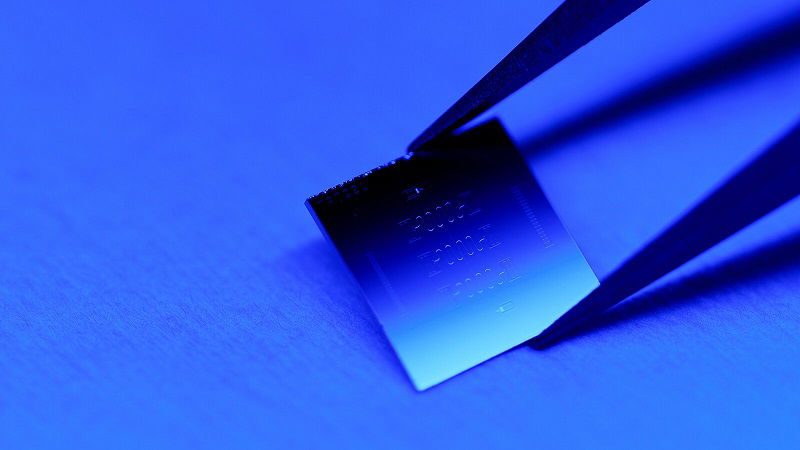
In a groundbreaking leap toward practical quantum computers, engineers at Princeton University have created a superconducting qubit that lasts over one millisecond—three times longer than any previously recorded qubit and about 15 times longer than those used in commercial systems today. Published in *Nature*, this research marks the largest improvement in qubit stability, or “coherence time,” in more than a decade.
Quantum computers promise to solve problems that are impossible for even the most powerful traditional supercomputers, such as modeling complex molecules or optimizing massive data systems. However, today’s machines are still experimental, largely because the building blocks of these systems—qubits—lose their quantum information too quickly to perform useful calculations.
“The real challenge, the thing that stops us from having useful quantum computers today, is that you build a qubit and the information just doesn’t last very long,” said Andrew Houck, Princeton’s dean of engineering and co-principal investigator. “This is the next big jump forward.”
—
### A Major Improvement in Qubit Longevity
The Princeton team’s new qubit lasts more than one millisecond, compared with the typical 70 microseconds for current large-scale processors. While a millisecond might seem short, in quantum computing it represents a massive improvement—enough time to perform far more calculations before errors build up.
Better qubits mean more reliable systems and pave the way toward large-scale, error-corrected quantum computers.
—
### The Science Behind the Breakthrough
This breakthrough came from a new combination of materials. The Princeton researchers used a metal called tantalum for the circuit and paired it with ultra-pure silicon as the base, replacing the sapphire substrates commonly used in the field.
Tantalum, a rare and extremely stable metal, resists contamination during chip fabrication and has fewer microscopic defects that can trap and waste energy.
“You can put tantalum in acid, and still the properties don’t change,” said postdoctoral researcher Faranak Bahrami, one of the study’s lead authors. “It’s incredibly robust.”
This combination allows fragile quantum circuits—known as transmon qubits—to preserve energy far longer. Transmon qubits are already used by major companies like Google and IBM, and Princeton’s new design is fully compatible with existing systems.
“If you swapped Princeton’s components into Google’s best processor, it would work a thousand times better,” said Houck. “And as we add more qubits, the benefits grow exponentially.”
—
### Overcoming Energy Losses in Quantum Hardware
Quantum hardware typically fails because of energy loss caused by tiny surface imperfections in the metals and materials used. These defects absorb energy as it moves through the circuit, leading to errors that multiply as more qubits are added.
By using tantalum, which naturally forms a protective oxide layer and contains fewer of these defects, the Princeton team dramatically reduced these energy losses. Replacing sapphire with silicon further improved performance since silicon can be manufactured with exceptional purity and is already the cornerstone of the computing industry.
Together, these changes unlocked new performance levels never before seen in superconducting circuits.
—
### The Team Behind the Innovation
The project was led by Houck and Nathalie de Leon, co-director of Princeton’s Quantum Initiative. They collaborated with Princeton chemist Robert Cava, an expert in superconducting materials.
Cava, who had no prior experience with quantum computing, was inspired by a talk from de Leon and suggested tantalum as a promising material.
“Then she went and did it,” Cava said. “That’s the amazing part.”
Their work builds on a 2021 collaboration that first demonstrated tantalum’s potential. This latest study takes it further by adding silicon and refining fabrication techniques to achieve record-breaking performance.
—
### Ready for Industrial Scaling
“Our results are really pushing the state of the art,” said de Leon. “And the best part is that this design is ready for industrial scaling—it’s easy to manufacture and fits right into existing production systems.”
Michel Devoret, chief scientist for hardware at Google Quantum AI and winner of the 2025 Nobel Prize in Physics, praised the achievement.
“The challenge of extending the lifetimes of quantum circuits had become a graveyard of ideas for many physicists,” he said. “Nathalie really had the guts to pursue this strategy and make it work.”
—
### A Blueprint for the Future of Quantum Computing
By showing that tantalum-silicon qubits can achieve long coherence times in a scalable form, the Princeton team has provided the blueprint for the next generation of quantum processors.
“We’ve shown it’s possible in silicon,” de Leon said. “That means anyone building large-scale systems can now adopt these methods. It’s a major step toward making quantum computers truly useful.”
https://knowridge.com/2025/11/princeton-builds-a-qubit-that-lasts-1000-times-longer-than-todays-chips/