Tag Archives: schwarzenegger

‘Now You See Me: Now You Don’t’ lands top box office spot on its debut

**“Now You See Me: Now You Don’t” Tops Box Office with Strong Debut**

The latest release in the “Now You See Me” franchise is making waves at the box office. “Now You See Me: Now You Don’t” landed in the No. 1 spot in theaters with its Friday opener, bringing in $8.4 million, according to The Numbers.

The heist film, now the third installment in the popular series, stars Jesse Eisenberg, Woody Harrelson, Dave Franco, Isla Fisher, Lizzy Caplan, and Morgan Freeman. Industry projections estimate the movie could earn up to $24 million over the weekend. The Hollywood Reporter described the film as a “serviceable threequel with too few tricks up its sleeve.”

**Dystopian Action and Sci-Fi Compete for Top Spots**

Securing the second spot was the dystopian action thriller “The Running Man,” which posted $6.45 million in ticket sales. This reboot of the 1987 Arnold Schwarzenegger film—originally based on Stephen King’s 1982 novel—features Glen Powell in the lead role. The New York Post praised Powell, noting he “radiates movie-star energy.”

Last week’s chart-topper, “Predator: Badlands,” slipped to third place, earning $3.5 million this Friday.

**Romantic Drama and Chilling Horror Round Out Top 5**

The romantic drama “Regretting You,” which held the second spot last week, moved down to fourth place with $1.22 million in revenue.

Rounding out the top five is the horror film “Keeper,” which drew $1.05 million on its opening Friday.

Stay tuned for more box office updates as the weekend numbers roll in!
https://nypost.com/2025/11/15/entertainment/now-you-see-me-now-you-dont-lands-top-box-office-spot-on-its-debut/

California voters take up Democrats’ push for new congressional maps that could shape House control

By JONATHAN J. COOPER, MICHAEL R. BLOOD and TRÂN NGUYỄN, Associated Press

LOS ANGELES (AP) — The national battle to control the U.S. House shifts to California on Tuesday as voters consider a Democratic proposal that could erase as many as five Republican districts and blunt President Donald Trump’s moves to safeguard his party’s lock on Washington power.

The outcome will reverberate into next year’s midterm elections and beyond, with Democrats hoping a victory will set the stage for the party to regain control of the House in 2026. A shift in the majority would imperil Trump’s agenda for the remainder of his term at a time of deep partisan divisions over immigration, health care, and the future direction of the nation.

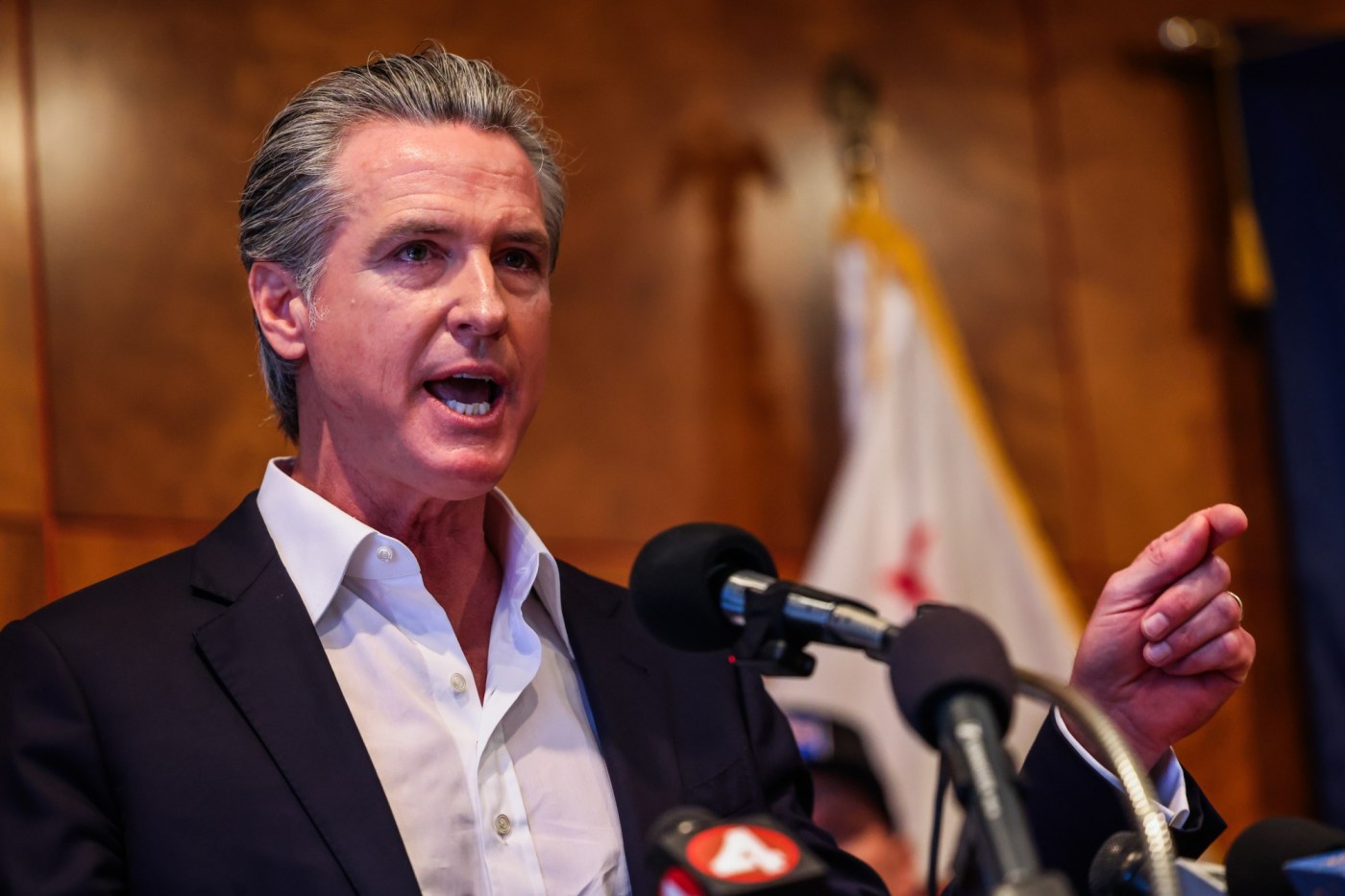
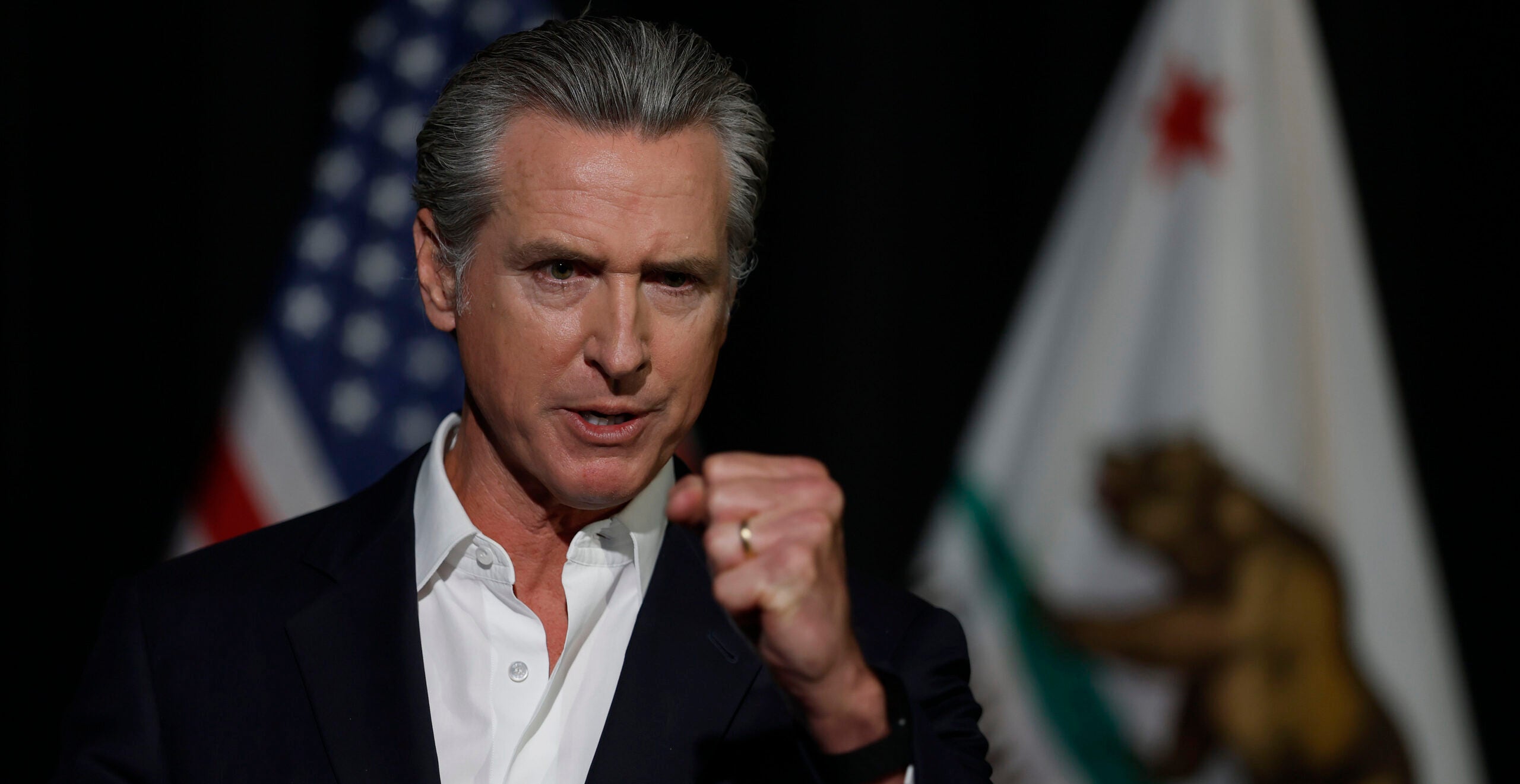
“God help us if we lose in California,” Democratic Gov. Gavin Newsom said.

Democrats need to gain just three seats in the 2026 elections to take control of the House. Heavily Democratic California and its 52 congressional districts represent by far the Democrats’ best opportunity in an unprecedented state-by-state redistricting battle, which started when Texas Republicans heeded Trump’s demand that they redraw their boundaries to help the GOP retain its House majority.

Democrats hold 43 of the state’s seats and hope to boost that number to 48. Trump is fighting not just the Democrats but history. Midterm elections typically punish the party in the White House, but four GOP-led states so far have adopted new district maps to pack more Republican voters into key districts.

### Measure Supported by Newsom, Obama

California’s Proposition 50 asks voters to suspend House maps drawn by an independent commission and replace them with rejiggered districts adopted by the Democratic-controlled Legislature. Those new districts would be in place for the 2026, 2028, and 2030 elections.

The recast districts aim to dilute Republican voters’ power, in one case by uniting rural, conservative-leaning parts of far northern California with Marin County, a famously liberal coastal stronghold across the Golden Gate Bridge from San Francisco.

The measure has been spearheaded by Newsom, who has thrown the weight of his political operation behind it in a major test of his mettle ahead of a potential 2028 presidential campaign. Former President Barack Obama has urged voters to pass it as well.

Newsom has sought to nationalize the campaign, depicting the proposal as a counterweight to all things Trump.

“Republicans want to steal enough seats in Congress to rig the next election and wield unchecked power for two more years,” Obama said in one ad. “You can stop Republicans in their tracks.”

### Critics Say Two Wrongs Don’t Make a Right

Critics urge Californians to reject what they call a Democratic power grab, even if they have misgivings about Trump’s moves in Republican-led states.

Among the most prominent critics is Arnold Schwarzenegger, the movie star and former Republican governor who pushed for the creation of the independent commission, which voters approved in 2008 and 2010.

“It makes no sense to fight Trump by becoming him,” Schwarzenegger said in September, arguing that the proposal would “take the power away from the people.”

After an early burst of TV advertising, opponents of the plan have struggled to raise cash in a state with some of the nation’s most expensive media markets. Data compiled by advertising tracker AdImpact last week showed Democrats and other supporters with over $5 million in ad buys booked on broadcast TV, cable, and radio.

But opponents had virtually no time reserved, though the data didn’t include some popular streaming services like Hulu and YouTube or mail advertising. Total spending on broadcast and cable ads topped $100 million, with more than two-thirds of it coming from supporters. Newsom told people to stop donating in the race’s final weeks.

Trump, who overwhelmingly lost California in his three presidential campaigns, largely stayed out of the fray. A week before the election, he urged voters in a social media post not to vote early or by mail — messaging that conflicted with that of top Republicans in the state who urged people to get their ballots in as soon as possible.

### The National House Map Is in Flux

Democrats hope to pick up as many as five seats in California if voters approve the new boundaries, offsetting the five that Republicans hope to pick up through their new Texas maps. Republicans also expect to gain one seat each from new maps in Missouri and North Carolina, and potentially two more in Ohio.

Congressional district boundaries are typically redrawn every 10 years to reflect population shifts documented in the census. Mid-decade redistricting is unusual, absent a court order finding fault with the maps in place.

Five other GOP-led states are also considering new maps: Kansas, Indiana, Kansas, Louisiana, and Nebraska. On the Democratic side, Illinois, Maryland, New York, and Virginia have proposals to redraw maps, but major hurdles remain.

A court has ordered new boundaries be drawn in Utah, where all four House districts are represented by Republicans, but it remains to be seen if the state will approve a map that makes any of them winnable for Democrats.

Cooper reported from Phoenix and Nguyen from Sacramento, California.
https://www.bostonherald.com/2025/11/04/election-2025-california-prop-50/

6 Ballot Measures to Watch in November

A dose of direct democracy is influencing the off-year elections this November, as voters across six states will decide on 24 statewide ballot measures, according to Ballotpedia. These measures tackle critical issues ranging from redrawing congressional maps and gun control to election integrity. Texas alone will feature 17 of these initiatives on its ballots, as reported by the State Court Report website.

Here are the seven key ballot initiatives to watch ahead of Election Day, November 4.

### 1. Newsom’s Gerrymandering Power Grab – California Proposition 50

California’s Proposition 50 would shift the authority to draw congressional maps from the independent California Citizens Redistricting Commission, established by voters in 2010, back to the state Legislature. If approved, this change is likely to flip five Republican-held U.S. House seats to Democrats.

Governor Gavin Newsom and most Democrats support the measure. The pro-Newsom campaign has raised $106.4 million, dwarfing the $44.3 million raised by opponents. In fact, 95% of all spending for ballot measures in 2025 has been directed toward Proposition 50, according to Nicole Fisher of Ballotpedia.

Newsom frames this move as a response to recent redistricting in Texas that favored Republicans. Former Republican Governor Arnold Schwarzenegger and former U.S. Speaker of the House Kevin McCarthy have campaigned against the change.

Kyle Kondik, managing editor of Sabato’s Crystal Ball at the University of Virginia’s Center for Politics, noted, “Democrats have a big spending advantage. They turned it into a partisan, nationalized fight, and framed it as a tit-for-tat between California versus Texas.”

### 2. Election Integrity on the Maine Ballot – Question 1

Maine voters will weigh in on a measure that introduces voter ID requirements and new absentee voting rules. Maine is unique in not requiring voter ID, while 36 other states have some form of voter ID law, and 24 demand photo ID.

Opponents of the measure have raised $1.7 million compared to $802,000 from supporters, per Ballotpedia. A University of New Hampshire poll reveals the electorate is nearly split: 49% oppose, 48% support, and 3% remain undecided.

If passed, Maine’s Question 1 would require voters to present photo ID both in-person and when voting absentee. It would limit municipalities to one ballot drop box each and require a bipartisan group of election officials to collect ballots from drop boxes.

Kondik explains, “Voter ID is something voters generally support, but it’s the absentee voting rules and other pieces that seem to be giving some voters pause.”

Other provisions include the state providing free photo ID cards to voters without driver’s licenses upon request and prohibiting absentee ballot requests made through family members.

### 3. Democrat Governor Opposes Gun Control in Maine – Question 2

Maine’s Question 2 proposes an “extreme risk protection order,” allowing family members or law enforcement to petition courts to temporarily limit a person’s access to firearms.

Interestingly, Democratic Governor Janet Mills opposes the measure, urging voters to reject it. She argues, “The so-called ‘red flag’ measure has been billed as strengthening gun safety measures—but in reality, it will undermine the safety of the public.” Mills notes that existing laws already permit courts to remove dangerous weapons from individuals who pose risks.

Supporters have raised over $843,000, while opponents have collected less than $65,000. Polling is tight, with 22% of voters still undecided, according to the University of New Hampshire.

Nicole Fisher commented, “Both questions in Maine are neck-and-neck, with a lot of undecided voters.”

### 4. Only Citizens Voting in Texas? – Proposition 16

In Texas, Proposition 16 proposes a constitutional amendment to ban noncitizens from voting. Fourteen states have already passed similar statewide bans, with eight enacting them just last November.

These bans partly respond to local governments in California, Illinois, Maryland, Vermont, and the District of Columbia allowing noncitizens to vote in certain local elections—such as for mayor or school board.

The Texas measure received bipartisan support in both houses of the Legislature. Recently, Texas Secretary of State Jane Nelson reported that as many as 2,724 noncitizens were registered to vote in the state.

### 5. Tough on Crime in Texas – Proposition 3

Texas voters will also consider Proposition 3, a proposed constitutional amendment that denies bail for individuals charged with serious crimes. These include murder, capital murder, aggravated assault causing serious bodily injury with a weapon, aggravated kidnapping, robbery, sexual assault, indecency with a child, and human trafficking.

Governor Greg Abbott supports the amendment, which passed both legislative houses overwhelmingly with bipartisan backing.

### 6. First-in-Nation Parental Rights Amendment – Texas Proposition 15

Proposition 15 in Texas seeks to add parental rights to the state constitution, granting parents the final authority over their children’s care and upbringing. If passed, Texas would be the first state to enshrine such rights constitutionally, though 26 other states have “parents bill of rights” laws.

“This would primarily give parents more rights in court for legal challenges,” said Nicole Fisher. Issues affected may include gender policies, contraception, and other controversial school matters.

The measure enjoys unanimous support in the Texas Senate and broad bipartisan support in the House.

These ballot initiatives highlight the significant role that direct democracy plays in shaping policies on some of the most contentious issues in the nation. Voters in these states have critical decisions ahead that will influence political power, voting rights, public safety, and family matters for years to come.
https://www.dailysignal.com/2025/10/26/6-ballot-measures-watch-november/