Pro-Iran groups have used artificial intelligence to create internet memes in English to try to shape the narrative during the war against the U. S. and Israel and foster opposition to it. Analysts say the memes appear to be coming from groups linked to the government in Tehran and are part of a strategy of leveraging its limited resources to inflict damage on the U. S., even indirectly. That includes how Iran has used attacks and threats to control the flow of traffic through the Strait of Hormuz and maintain a stranglehold on the world’s economy. A ceasefire raised hopes Wednesday of halting hostilities, but many issues remained unresolved. “This is a propaganda war for them,” Neil Lavie-Driver, an AI researcher at the University of Cambridge, said, referring to Iran. “Their goal is to sow enough discontent with the conflict as to eventually force the West to cave in, so it is massively important to them.” It’s not the first time memes have been used in a conflict, and they have evolved to include AI images in recent years. AI imagery bombarded Ukrainians after the Russian invasion in 2022. Last year, the term “AI slop” became widely used to describe the glut of imperfect images posted online during the Israel-Iran war to try to destroy the country’s nuclear program. In the conflict that began Feb. 28 with joint U. S.-Israel strikes, the memes have used well-honed cartoons that lambast U. S. officials. The memes are steeped in American culture The memes are fluent not just in English but in American culture and trolling. Published on various social platforms, they are racking up millions of views though it’s not clear how much influence they have had. They have portrayed President Trump as old, out of step and internationally isolated. They have referenced bruising on the back of Trump’s right hand that prompted speculation about his health; infighting in Trump’s MAGA base; and U. S. Secretary of Defense Pete Hegseth’s fiery confirmation hearing, among other things. “They’re using popular culture against the No. 1 pop culture country, the United States,” said Nancy Snow, a scholar who has written more than a dozen books on propaganda. The pro-Iran images circulating online include a series that uses the style of the “Lego” animated movies. In one, an Iranian military commander raps, “You thought you ran the globe, sitting on your throne. Now we turning every base into a bed of stone,” as Trump falls into a bullseye built of “Epstein files,” the U. S. government’s investigative records on disgraced financier and convicted sex offender Jeffrey Epstein. Analysts believe groups making the memes are cooperating with the government The animations show levels of sophistication and internet access that indicate ties to government offices, said Mahsa Alimardani, a director of Witness, a human rights group working on AI video evidence. “If you’re able to have the bandwidth needed to generate content like that and upload it, you are officially or unofficially cooperating with the regime,” she said, pointing to severe restrictions Iran has imposed on the internet as part of a crackdown on nationwide protests earlier this year. State media has reposted some of the memes, including some from the account behind the “Lego”-style videos, Akhbar Enfejari, which means Explosive News. Akhbar Enfejari described itself as an independent group of Iranians with no connection to the government. “We don’t even receive any funding. We’re just a group of friends working voluntarily paying for our own internet, using our own laptops and computers, and doing all of this ourselves,” the group told the Associated Press on the messaging app Telegram. The group said it is producing and upload from within Iran to try to disrupt decades-long dominance of Western control of the airwaves. “They’ve long dominated the media landscape and, through that power, imposed narratives on many nations,” Akhbar Enfejari said. “But this time, something feels different. This time, we’ve disrupted the game. This time, we’re doing it better.” In addition to the memes coming from pro-Iran groups, Iranian government accounts have trolled the U. S., including in a post Wednesday from Iran’s Embassy in South Africa that said, “Say hello to the new world superpower,” with a picture of the Iranian flag. Both the U. S. and Iran declared victory after agreeing to a ceasefire. Analysts say the deep grasp of U. S. politics and culture is the fruit of more old-school methods of propaganda: a decades-long Iranian government program to promote narratives against the U. S. and Israel. “This meme war comes from institutions that are very aware what the American public is aware of and pop cultural references that can appeal to them,” Alimardani said. Messaging from the U. S. and Israel Analysts say the U. S. and Israel do not appear to be engaging in the same kind of campaign and given the restrictions Iran has put on internet access in the country, getting such messages to ordinary Iranians would be difficult. Early in the war, Israeli Prime Minister Benjamin Netanyahu released a video that used AI to make it seem like he was speaking in Farsi, in which he urged Iranians to overthrow their government. The White House has published a steady stream of memes, but those are aimed at a U. S. audience and feature clips from American TV shows and sports. The U. S. government-run Voice of America, which for decades beamed news reports to many countries that had no tradition of a free press, does still broadcast in Farsi, though it is has been operating with a skeleton staff since Trump ordered it shut down. “This world order is really changing overnight and the U. S. is not going to end up necessarily as the state that everybody listens to,” Snow said.
https://www.latimes.com/world-nation/story/2026-04-09/pro-iran-groups-have-used-ai-to-troll-trump-try-to-control-war-narrative
Tag Archives: Trump


U.S. searches for airman shot down in Iran, while Trump posts ultimatum
Listen · 5: 00 5: 00 At the start of the sixth week of war, U. S. forces search for a missing airman and President Trump reiterates his ultimatum for Iran to open the Straight of Hormuz.
https://www.npr.org/2026/04/04/nx-s1-5773100/u-s-searches-for-airman-shot-down-in-iran-while-trump-posts-ultimatum

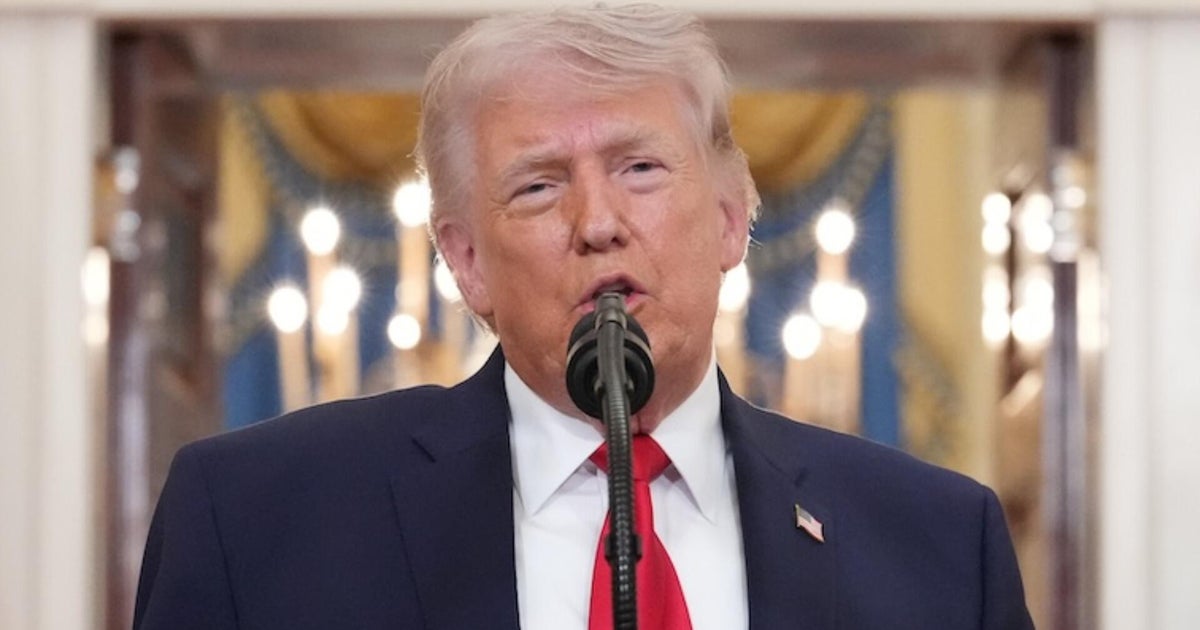
Breaking down Trump’s prime-time Iran speech
President Trump said Wednesday night that the U. S. military is on track to complete its objectives in Iran, but he did not offer a concrete plan for securing the Strait of Hormuz. CBS News national security analyst Aaron MacLean has more.
https://www.cbsnews.com/video/breaking-down-trump-prime-time-iran-speech/
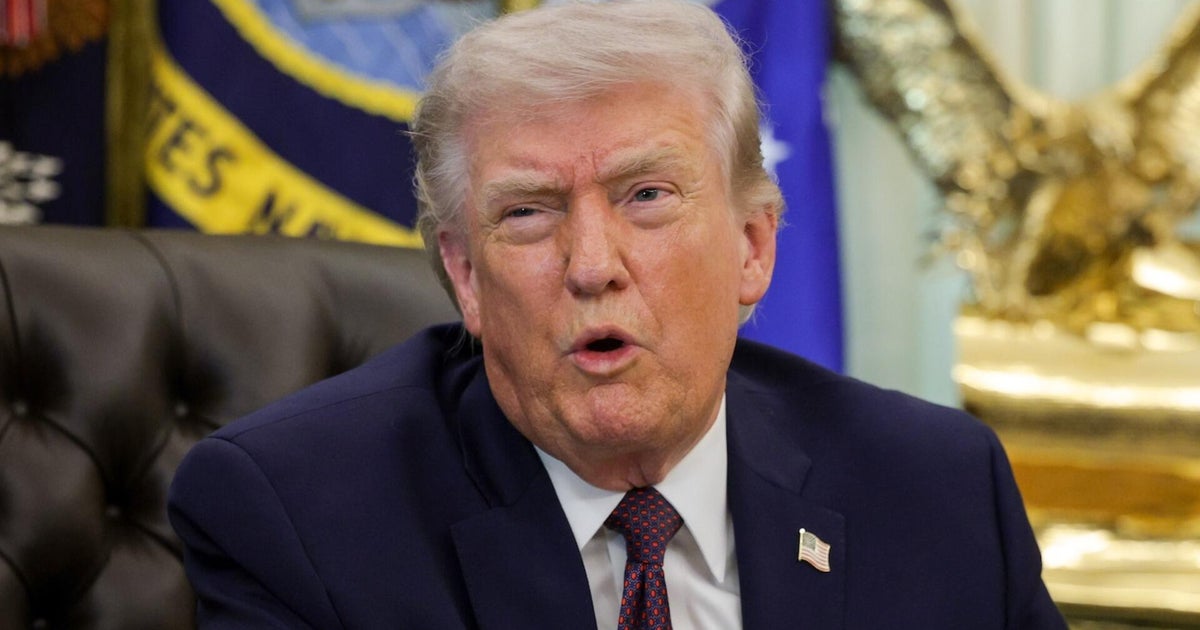
Trump to give “important update on Iran” in national address
President Trump is set to give an update on the war in Iran on Wednesday evening in a prime-time address to the nation. CBS News’ Ed O’Keefe previews the speech.
https://www.cbsnews.com/video/trump-update-iran-national-address/


TSA pay may be coming, but airport delays could persist and ICE agents may not leave soon
Even after President Donald Trump ordered emergency pay for Transportation Security Administration agents to ease long security lines, major U. S. airports on Sunday were still urging travelers to arrive hours early and federal immigration officers brought in to help may not be leaving anytime soon. Trump’s executive order on Friday instructed the Department of Homeland Security to pay TSA officers immediately, though it’s unclear how quickly travelers will see an impact. The move comes during a busy travel stretch, with spring breaks underway and Passover and Easter approaching. Tens of thousands of TSA employees have been working without pay since DHS funding lapsed on Valentine’s Day. The department’s shutdown reached 44 days on Sunday, eclipsing the record 43-day shutdown last fall that affected all of the federal government. Trump deployed Immigration and Customs Enforcement agents to some airports a week ago to help with security as TSA callouts rose nationwide the same officers who may now remain in place if TSA staffing strains continue. Making the rounds on Sunday morning news shows, White House border czar Tom Homan said it depends on how many TSA employees would be returning to work after they start receiving their pay. “ICE is there to help our brothers and sisters in TSA. We’ll be there as long as they need us, until they get back to normal operations and feel like those airports are secure,” he told CBS’ “Face the Nation.” Speaking on CNN’s “State of the Union,” Homan said it also depends on how many TSA agents “have actually quit and have no plan on coming back to work.” Nearly 500 TSA officers have left the agency since the shutdown started, according to DHS. On Saturday night, Maryland Gov. Wes Moore said in a post on X that more ICE agents were being deployed to Baltimore-Washington International Airport to assist at TSA security checkpoints to “speed up the clearance process for passengers not immigration enforcement.” Homan, in his CNN interview, said he hopes TSA officers will be paid by Monday or Tuesday. “It’s good news because these TSA officers are struggling,” Homan said. “They can’t feed their families or pay their rent.” Also on Sunday, Charlotte Douglas International Airport said in a post on X that backpay could arrive for TSA agents beginning Monday. “While this action provides critical relief, CLT supports long-term solutions to ensure continued stability for this essential workforce,” the airport said. Johnny Jones, secretary-treasurer of the American Federation of Government Employees’ TSA chapter, said Sunday that he has heard from workers worried they may not receive their full back pay because TSA management was given very short notice to begin processing payments. He also said TSA agents are concerned they could miss pay for time they were unable to work because they couldn’t afford to report for duty. “It is a disaster in progress,” Jones said. Some of the busiest U. S. airports continued to ask travelers to plan ahead in order to get through security lines. Houston’s main airport, George Bush Intercontinental, warned Sunday evening that TSA wait times could reach four hours or longer. Atlanta’s Hartsfield-Jackson International Airport also told passengers to arrive at least four hours early for both domestic and international flights. LaGuardia Airport posted an alert Sunday evening on its website that “TSA lines are currently longer than usual.” Baltimore-Washington International Airport said Sunday on X that “wait times have greatly subsided on this Spring Break Sunday,” but it still asked passengers to show up several hours early. Louis Armstrong International Airport in New Orleans offered the same guidance. Also on Sunday, passengers could once again see estimated security wait times at the three main airports serving the New York City area LaGuardia, John F. Kennedy and Newark Liberty. All three had removed that feature from their websites earlier in the week, citing “rapid” changes in passenger volumes and TSA staffing. For the same reason, they cautioned that the restored wait times my not always “reflect current conditions”. It’s hard to tell. Caleb Harmon-Marshall, a former TSA officer who runs a travel newsletter called Gate Access, said the staffing crisis won’t improve significantly until officers are confident that they won’t be subjected to more skipped paychecks. “It has to be an extended pay for them to come back or want to stay there,” he said, estimating longer lines could linger for another week or two. Jones, the TSA union leader, offered a more optimistic outlook on Sunday, saying he’s hopeful that passengers could see wait times ease closer to typical levels once workers are able to afford basic expenses like gas to get to work. TSA will also have to decide whether to reopen the checkpoints and security lanes they closed or consolidated at some airports due to inadequate staffing, which led to passengers standing in screening lines that clogged check-in areas or showing up far too early for their flights. A handful of airports have experienced daily TSA officer call-out rates of 40% or higher in recent weeks. ___ Sedensky reported from New York, Yamat from Las Vegas and Raby from Charleston, West Virginia. Associated Press journalist Julie Walker contributed from New York.
https://abcnews.com/US/wireStory/tsa-pay-coming-airport-delays-persist-ice-agents-131505155
Trump says he will sign an emergency order to pay TSA agents during funding impasse
President Trump said Thursday he would sign an order instructing the Homeland Security secretary to immediately pay Transportation Security Administration agents as Congress struggled to reach a deal to end a budget impasse that has jammed airports and left workers without paychecks. Trump announced his decision in a social media post saying he wanted to quickly stop the “Chaos at the Airports.” “It is not an easy thing to do, but I am going to do it!” the president posted. With pressure mounting, the White House had floated the extraordinary move of invoking a national emergency to pay TSA agents, while senators were reviewing a “last and final” offer from Republicans to Democrats to end the funding impasse at the Department of Homeland Security. Details of the president’s plan were not immediately available, but a national emergency declaration would be politically fraught and almost certain to face legal challenges. Instead, the president may simply be shifting money from other sources. Democrats have been refusing to fund Homeland Security as they seek changes to rein in Trump’s immigration enforcement operations. The Senate came to a standstill and senators, ready to leave town for their own spring break, had prepared to stay all night to reach a deal. “The president is doing absolutely the right thing,” said Sen. John Barrasso (R-Wyo.), the GOP whip. “The TSA agents are going to be paid.” Sen. Susan Collins (R-Maine), the chair of the Appropriations Committee, has said there is funding elsewhere that can be legally used to pay the TSA as well as the Coast Guard without declaring a national emergency. The funding shutdown, now in its 41st day, has resulted in travel delays, missed paychecks and even warnings of airport closures. TSA workers are coming up on their second missed payday Friday, with thousands refusing to show up for work. Multiple airports are experiencing greater than 40% callout rates of TSA workers and nearly 500 of its nearly 50, 000 transportation security officers have now quit during the shutdown. Nationwide on Wednesday, more than 11% of the TSA employees on the schedule missed work, according to DHS. That is more than 3, 120 callouts. Trump, who has largely left the issue to Congress to resolve, had warned he was ready to take action, even threatening to send the National Guard to airports, in addition to his deployment of ICE agents who are now checking travelers’ IDs a development drawing concerns. The White House has been considering a menu of options. “They need to end this shutdown immediately or we’ll have to take drastic measures,” Trump said during a morning Cabinet meeting at the White House. At George Bush Intercontinental Airport in Houston, Melissa Gates said she would not make her flight to Baton Rouge, Louisiana, after waiting more than 2½ hours and still not reaching the security checkpoint. She said no other flights were available until Friday. “I should have just driven, right?” Gates said. “Five hours would have been hilarious next to this.” A ‘last and final’ offer on the table Earlier Thursday, Senate Majority Leader John Thune (R-S. D.) announced he had given the final offer to Democrats. Thune did not disclose details of the new framework, but he said that it picked up on what had been the Republican offer over the weekend, before talks with the White House and Democrats had broken off. “Enough is enough,” he said. But as senators retreated to privately discuss the new plan, the action stalled out. Democrats argue the GOP proposals have not gone far enough at putting guardrails on officers from ICE, Customs and Border Protection and other federal agencies that are engaged in the immigration sweeps, particularly after the deaths of two Americans protesting the actions in Minneapolis. They want federal agents to wear identification, remove their face masks and refrain from conducting raids around schools, churches or other sensitive places. Democrats have also pushed for an end of administrative warrants, insisting that judges sign off before agents search people’s homes or private spaces. Senate Democratic leader Chuck Schumer of New York said they needed to see real changes. “We’ve been talking about ICE reforms from day one,” he said. Any deal will almost certainly need to involve a compromise as lawmakers on the left and right flanks revolt. Conservative Republicans have panned their own GOP proposals, demanding full funding for immigration operations and skeptical of the promise from leaders that they would address Trump’s proof-of-citizenship voting bill in a subsequent legislative package. Republicans said after a private lunch meeting that there were other options to shift money than invoking the national emergency. The GOP’s big tax cuts bill that Trump signed into law last year funneled billions to DHS, including $75 billion for ICE operations, ensuring the money is flowing for his immigration and deportation agenda even with the funding shutdown. ICE and other immigration officers are still being paid. Republicans say the Trump administration has already made strides to meet Democrats’ demands, particularly after swearing in former Oklahoma Sen. Markwayne Mullin as the new homeland security secretary to replace Kristi Noem. He has given a nod to the need for the judicial warrants for searches. Airport lines grow as TSA workers endure hardships “This is a dire situation,” the acting TSA administrator, Ha Nguyen McNeill, testified at a House hearing Wednesday. She described the multiple hardships facing unpaid TSA workers piling-up bills and eviction notices, even plasma donations to make ends meet and warned of potential airport closures if more employees refuse to come to work. “At this point, we have to look at all options on the table,” she said. McNeil also said TSA officers working at the nation’s airports had experienced a more than 500% increase in the frequency of assaults since the shutdown began. “This is unacceptable,” McNeill said.
https://www.latimes.com/world-nation/story/2026-03-26/trump-says-he-will-sign-emergency-order-to-pay-tsa-agents
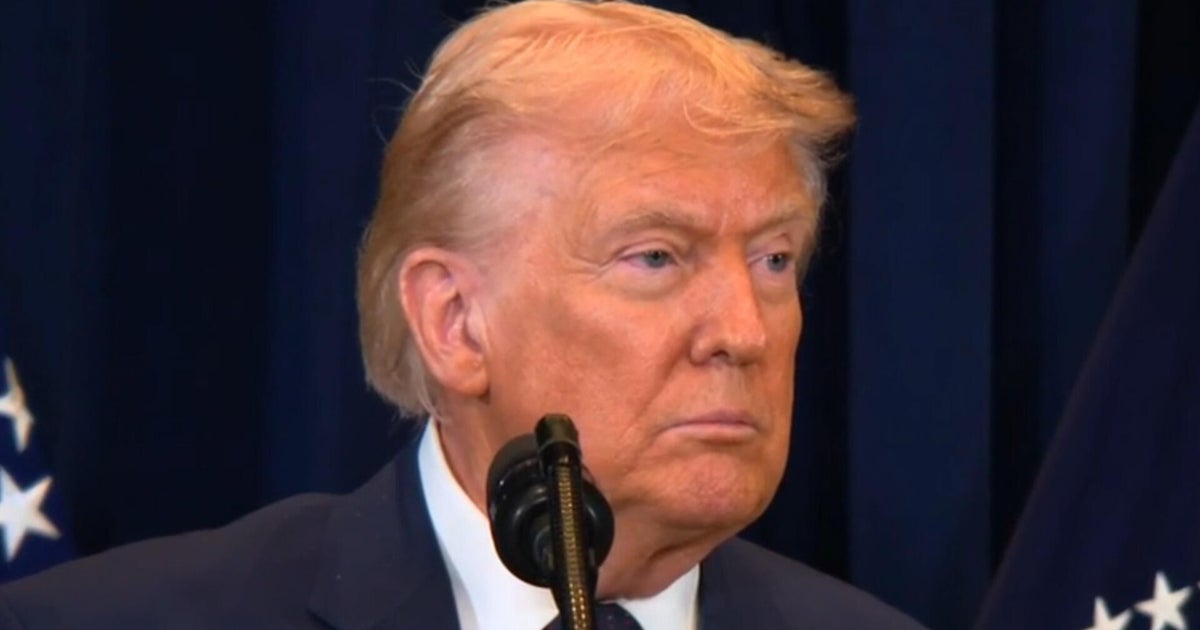
Trump “disappointed” in Iran’s pick for supreme leader, says he likes “idea of internal” candidate
President Trump provided updates on the ongoing conflict in Iran during a press conference on Monday. He expressed his disappointment regarding the country’s recent leadership change, specifically the appointment of Mojtaba Khamenei, the son of the former supreme leader.
Joining the discussion, CBS News congressional correspondent Nikole Killion offered insights and key takeaways from the news conference. Additionally, Joe Zacks, former deputy assistant director for counterterrorism at the CIA, contributed his expert analysis on the situation.
https://www.cbsnews.com/video/trump-disappointed-iran-pick-supreme-leader-likes-idea-internal-candidate/
As a Trump bill restricting voting stalls in Senate, some states forge ahead
While the U.S. Senate remains deadlocked over President Trump’s call for strict citizenship voting requirements, Republicans in some states are pressing ahead with their own measures that could require documentary proof of citizenship to join or remain on the voter rolls.
Proof-of-citizenship legislation won final approval this week in South Dakota and Utah, has already passed one chamber in Florida, and received a committee hearing in Missouri. In Michigan, supporters of voter citizenship documentation submitted 750,000 petition signatures this week in a bid to get a constitutional amendment on the November ballot.
—
### Current Federal Law and Trump’s Position
Federal law already prohibits noncitizens from voting in U.S. elections, with violators subject to fines, imprisonment, and potential deportation. When people register to vote, they affirm under penalty of perjury that they are U.S. citizens. But Trump contends that’s not enough. He wants prospective voters to show proof of their citizenship.
Democrats and voting rights advocates argue that the Republican measures amount to voter suppression, as they may prevent many eligible voters from casting ballots. Similar laws have been overturned by courts as an unconstitutional burden on voting rights.
—
### What Would the Federal Legislation Do?
The federal *Safeguard American Voter Eligibility Act*, or *SAVE America Act*, would require documentary proof of U.S. citizenship to register to vote. This proof could include a U.S. passport, citizen naturalization certificate, or a combination of a birth certificate and government-issued photo identification.
The federal bill also would require voters to present photo identification to cast a ballot, a policy some states already mandate.
The Republican-led House approved the legislation last month on a mostly party-line vote, but it has stalled in the Senate under a filibuster threat from Democrats.
—
### South Dakota and Utah
Legislation passed in South Dakota and Utah would create a two-tier voting system. People who provide documentation of their citizenship could vote in all elections. Those who don’t could vote only in federal elections for president, U.S. Senate, and U.S. House.
This bifurcated voting system is modeled after Arizona, where tens of thousands of voters who have not provided proof of citizenship can cast ballots only in federal elections. Arizona implemented its system after the U.S. Supreme Court ruled in 2013 that the state could not require citizenship documentation for federal elections.
The bills in South Dakota and Utah would take effect upon a governor’s signature, meaning they could be in place for newly registered voters ahead of the November elections.
Utah’s bill also directs election officials to use an online service from U.S. Immigration and Customs Enforcement to check the citizenship status of existing voters. Those flagged would be sent notices asking for proof of citizenship to remain eligible to vote in all elections.
—
### Florida and Michigan
Neither the Michigan initiative nor legislation passed by the Florida House would require people to submit proof of citizenship when registering to vote. Instead, the measures would create a behind-the-scenes review that could result in some people being asked for citizenship documentation.
Under the Michigan measure, the secretary of state would review driver’s license records, juror records, and federal Homeland Security and Social Security data to determine whether registered voters are citizens. Those flagged would be removed from the voter rolls if they cannot provide proof of citizenship.
The Florida legislation would require election officials to verify the citizenship of all registered voters using the state’s driver’s license database. Anyone whose citizenship could not be verified would be required to submit documentary proof.
—
### Why Are Some Pushing for Proof of Citizenship?
Trump and some fellow Republicans have complained for years about noncitizens voting in U.S. elections, although evidence of such occurrences is rare. The few cases found are not nearly enough to affect an election result, studies have shown, and those caught face severe penalties.
In 2024, a student from China was charged with perjury and attempted illegal voting after registering to vote by showing a University of Michigan student ID and signing a document asserting he was a U.S. citizen. He later contacted a local clerk’s office requesting to get his ballot back and ultimately fled the country.
The case provided part of the impetus for the Michigan ballot initiative, said Paul Jacob, chairman of Americans for Citizen Voting, which is backing the measure.
“We want a system we can have confidence in,” Jacob said. “The way you avoid big problems in elections is to fix the small problems when they rise up and present themselves.”
—
### Voting Rights Advocates’ Concerns
Constitutional amendments limiting voting to “only citizens” have won widespread support when placed on state ballots. But voting rights advocates note that requiring documentary proof can get complicated.
During a recent debate in the Florida House, Democratic state Rep. Ashley Gantt recounted how her aunt was born in a South Carolina home at a time when some hospitals didn’t accept Black patients. As a result, she has no birth certificate and has had difficulty trying to demonstrate her citizenship, Gantt said.
A proof-of-citizenship law “would stop many thousands if not more U.S. citizens from voting in Florida,” said Michelle Kanter Cohen, policy director and senior counsel at the nonprofit Fair Elections Center. “It requires documentation that a lot of eligible citizens don’t have, or don’t have access to.”
Nationwide, about 21 million people—9% of voting-age citizens—lack documentary proof of citizenship or cannot easily obtain it, according to a 2024 report by the Center for Democracy and Civic Engagement at the University of Maryland.
—
### Other States
Legal challenges are common when states pass proof-of-citizenship requirements for voters. After Kansas adopted a proof-of-citizenship law 15 years ago, more than 31,000 U.S. citizens ended up getting blocked from registering to vote. Federal courts declared the Kansas law an unconstitutional burden on voting rights, and it hasn’t been enforced since 2018.
Two years ago, New Hampshire and Louisiana both passed proof-of-citizenship laws, prompting lawsuits. New Hampshire’s law went to trial last month and is awaiting a ruling. Louisiana’s election commissioner acknowledged in a December court filing that the requirement has not been enforced.
A nonprofit group also filed a legal challenge to a Wyoming proof-of-citizenship law passed last year. But a federal court dismissed that case while ruling the group lacked standing to sue.
—
The debate over proof-of-citizenship voting requirements remains contentious, balancing concerns over election integrity with fears of disenfranchising eligible voters. As states continue to push forward with various legislation, legal battles and legislative gridlocks are likely to continue through the upcoming election cycle.
https://www.latimes.com/world-nation/story/2026-03-07/as-trump-bill-restricting-voting-stalls-in-senate-some-states-forge-ahead
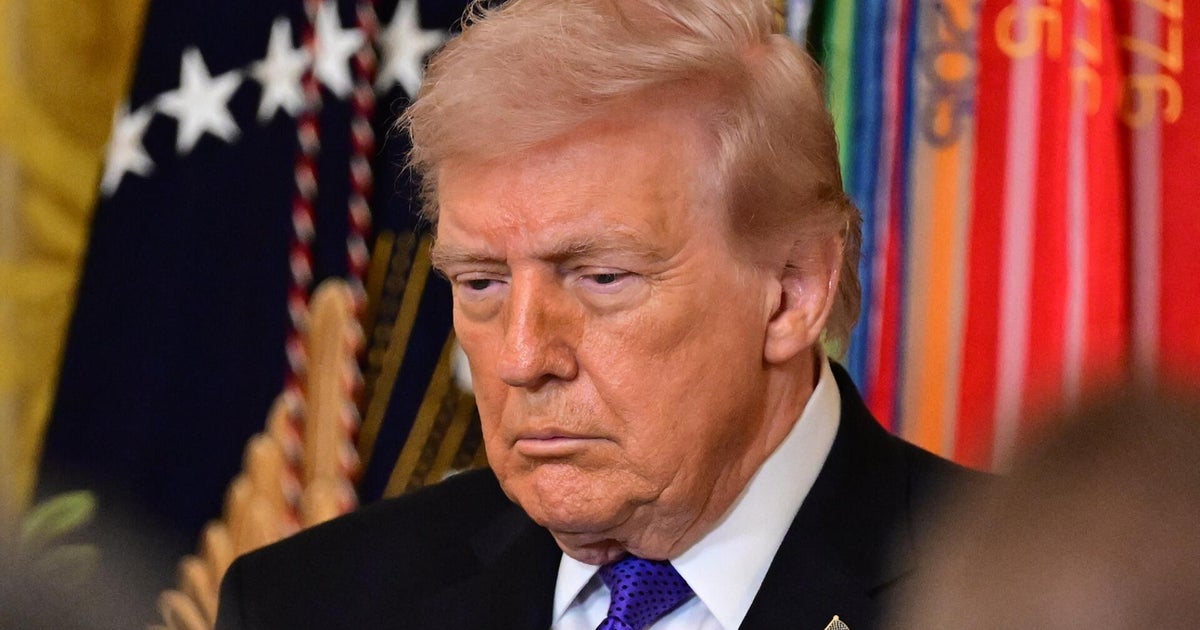
Democrats look to limit Trump’s war powers in Iran
The Senate is preparing to vote on a war powers resolution that would limit President Trump’s authority to strike Iran.
Daniella Diaz, politics and Congress reporter for NOTUS, and Nicholas Wu, congressional reporter for Semafor, join us to discuss the implications of this resolution and what it means for U.S. foreign policy moving forward.
https://www.cbsnews.com/video/democrats-look-limit-trump-war-powers-iran/
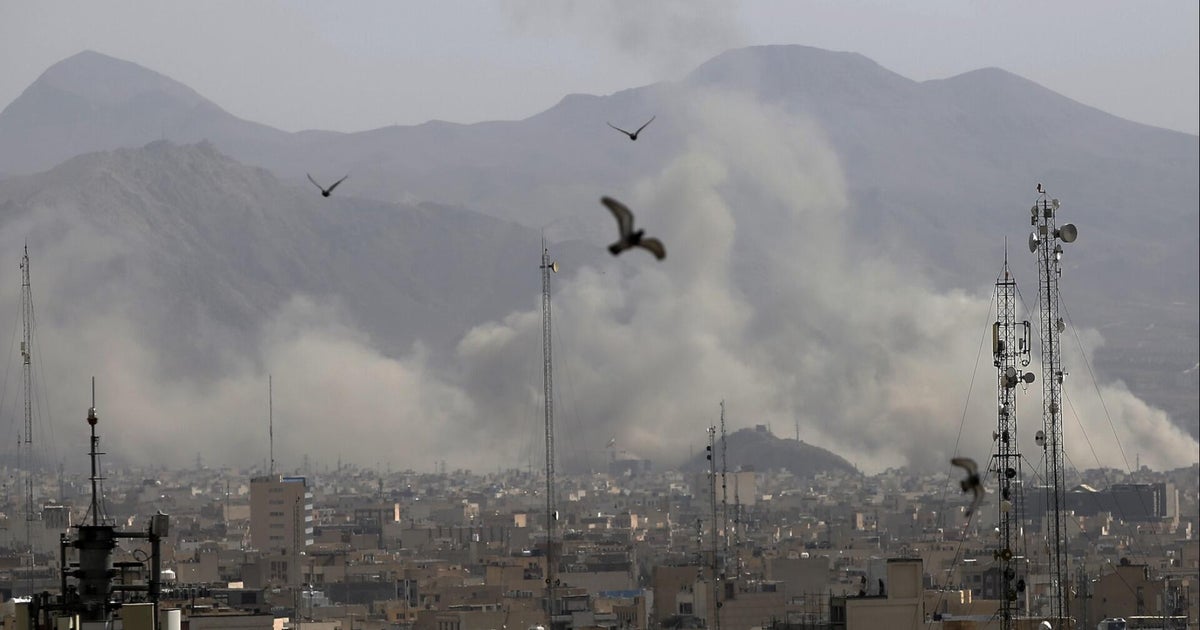
Did Trump start a regional war in the Middle East?
The U.S. and Israel conducted joint strikes in Iran on Saturday. Following the operation, President Trump announced that Supreme Leader Ayatollah Ali Khamenei had been killed.
Margaret Brennan explains what this development could mean for the region and the world.
https://www.cbsnews.com/video/did-trump-start-regional-war-middle-east/