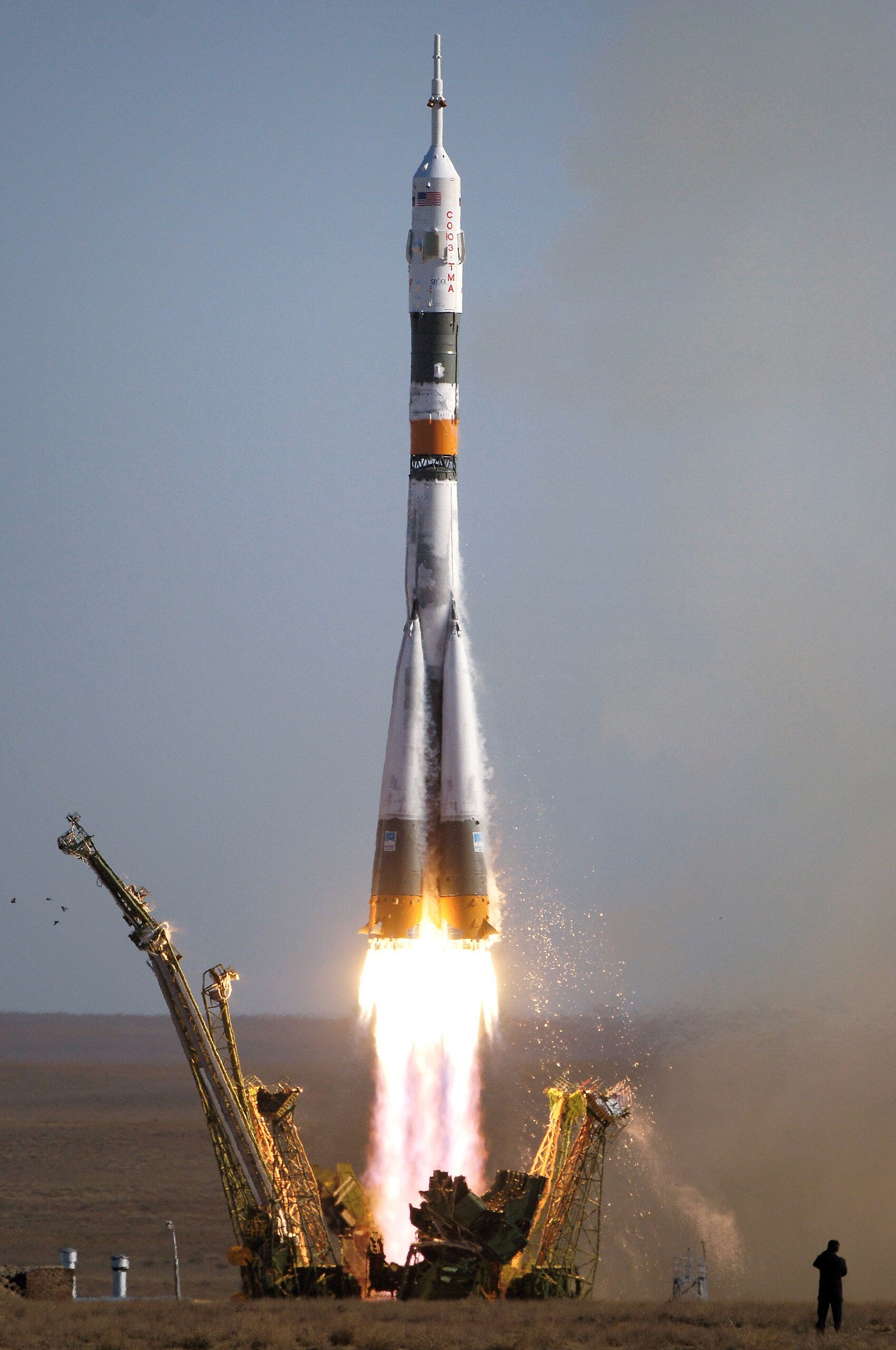
For over a century, rocket propulsion has followed a simple principle: burn fuel, expel it backward, and Newton’s third law pushes you forward. Since Konstantin Tsiolkovsky first formulated the rocket equation in 1903, spacecraft have carried their propellant with them. This necessity has limited mission capabilities by mass ratios. The more fuel you carry, the heavier your rocket becomes, requiring even more fuel to lift that extra weight—a vicious cycle that makes interstellar travel seem impossibly distant.
But what if spacecraft didn’t need to carry propellant at all? That’s the tantalizing possibility explored in a comprehensive new review examining propellantless propulsion methods for space exploration. These systems tap into natural forces and external energy sources rather than chemical combustion, potentially enabling missions that would be completely impossible with conventional rockets.
### Gravity Assist: The Oldest Propellantless Technique
The simplest propellantless technique, which has been used for decades, is the gravity assist. By carefully timing a close approach to a planet, engineers can steal a tiny fraction of that world’s orbital momentum, flinging the spacecraft to higher speeds without burning fuel. The Voyager probes famously used this maneuver to visit all four outer planets.
This technique works brilliantly, but it requires planets to be in exactly the right positions, making mission opportunities rare and trajectories inflexible.
*The Voyager spacecraft successfully used gravity assist to tour the outer planets (Credit: NASA/JPL).*
### Solar Sails: Harnessing Sunlight for Continuous Thrust
Solar sails offer a more continuous and convenient propulsion method by harnessing radiation pressure from sunlight. These enormous membranes reflect photons to generate thrust, accelerating slowly but persistently without any fuel consumption.
Japan’s IKAROS probe demonstrated this technology in 2010, successfully traveling to Venus on sunlight alone. However, solar sails require vast, ultra-thin materials that must survive harsh space conditions for years. Their performance also drops dramatically with distance from the Sun.
*IKAROS, the Japanese satellite that demonstrated the solar sail (Credit: JAXA).*
### Magnetic Sails: Pushing Against the Solar Wind
Magnetic sails take a different approach by using superconducting loops to generate powerful magnetic fields that deflect the solar wind—a stream of charged particles constantly flowing from the Sun. By pushing against this plasma, magnetic sails create thrust without consuming propellant. They potentially offer better acceleration than solar sails and wouldn’t degrade over time like reflective membranes.
The catch? Creating the necessary magnetic field requires enormous superconducting coils, potentially 50 kilometers in radius, maintained at cryogenic temperatures. The technology to build and deploy such structures simply doesn’t exist yet.
### Electric Sails: Using Charged Tethers to Repel Solar Particles
Electric sails represent a newer variant, using charged tethers rather than magnetic fields to repel solar wind protons. These systems promise lighter spacecraft than magnetic sails. However, they depend on deploying extremely long, lightweight wires and require significant electrical power to maintain the necessary charge.
### Challenges and Prospects
Each propellantless method offers unique advantages while facing distinct engineering hurdles:
– **Gravity assists** work now but demand precise planetary alignments.
– **Solar sails** provide steady thrust but need massive, delicate structures.
– **Magnetic and electric sails** avoid material degradation but call for technologies still in development.
The review makes clear that no single approach solves every challenge. However, together, these methods could fundamentally transform how we explore the solar system and beyond. For truly ambitious missions to interstellar space, leaving propellant behind may not just be advantageous—it may be absolutely essential.
https://www.universetoday.com/articles/the-future-of-propellantless-space-travel