General Hospital Spoilers: Tracy’s France Trip Cut Short, Drew Must Pay for Abandoning Ned in Crisis

General Hospital (GH) spoilers hint that Tracy Quartermaine’s (Jane Elliot) trip to France may be cut short due to a family emergency unfolding back home. Fans can expect Tracy to vow that Drew Cain (Cameron Mathison) must pay for abandoning Ned Quartermaine (Wally Kurth) during his time of crisis.

Decades ago, Tracy famously denied Edward Quartermaine (David Lewis) his medication after he faked a heart attack to test her. In a similar vein, Drew accused Ned of faking his own heart attack in GH’s November 10 episode, dismissing it as a classic Quartermaine stunt. However, Drew should have checked more carefully to see if Ned was truly in medical distress during their latest confrontation.

It was cruel of Drew to just walk away while Ned visibly struggled in pain, especially considering that Tracy was the one who found Drew after he was shot. Tracy showed compassion by calling 911 immediately, a move that saved Drew’s life that night. Now, when Tracy hears that Drew abandoned Ned in his time of need, she’s going to be absolutely livid.

No matter how many stunts Drew pulls, he always manages to hit a new low. Ned had mentioned that Tracy was off on a spa getaway in France, which was understandable given all the drama surrounding Monica Quartermaine’s (Leslie Charleson) will. Tracy deserved a chance to celebrate her victory regarding the house and take a breather from the chaos in Port Charles.

Of course, Tracy’s trip may come to an abrupt end once she learns about Ned’s ordeal. This could lead to her racing back home to check on Ned and plotting revenge against Drew. It’s easy to imagine Tracy confronting Drew and accusing him of knowingly walking away while Ned needed real medical assistance.

Tracy may also remind Drew of the night she saved his life and wish she could go back and undo it. Perhaps she will argue that she won’t make the mistake of showing Drew mercy again and promise that he will pay for his latest act of family disloyalty.

General Hospital spoilers indicate that Tracy and Drew will inevitably clash over this Ned mess, so stay tuned for their next intense faceoff.
https://www.celebdirtylaundry.com/2025/general-hospital-spoilers-tracys-france-trip-cut-short-drew-must-pay-for-abandoning-ned-in-crisis/

Watch the November 2025 PlayStation State of Play here

Today marks the date of the latest PlayStation State of Play, but this one will be a bit different from what has come before. This edition is titled **State of Play Japan**, with a sole focus on games developed in Japan and other studios across Asia.

The November 2025 PlayStation State of Play Japan will take place today, November 11, at 2 p.m. PT / 5 p.m. ET. Fans can watch the event live on the official PlayStation YouTube channel.

We know a couple of key details about this special PlayStation event. First, it will run for approximately 40 minutes. Second, the showcase will primarily highlight games from Japan and other Asian studios. This means publishers like Square Enix, Capcom, and Sony Interactive Entertainment are expected to feature prominently.

Don’t miss out on the latest updates and announcements focused on Asian-developed titles—tune in to the PlayStation State of Play Japan today!
https://www.shacknews.com/article/146776/watch-playstation-state-of-play-japan

Demo starts for Chicago Avenue tower

Horizon Realty has begun demolition work to prepare for the construction of a 110-unit apartment building at 1621-1631 Chicago Avenue. Street excavation to disconnect utility lines is currently underway.

Over the weekend, construction workers were seen launching excavation work on Chicago Avenue to expose water lines for disconnection. Developers have informed that the city has notified neighbors about a scheduled water main shutdown starting around 11:30 p.m. Tuesday night.

The developers expect to restore the excavated areas along Chicago Avenue and the adjoining alley later this week. Following this, demolition of the existing building is set to begin in early December. The demolition process is expected to last two to three weeks and will be conducted from the alley and parking lot side of the property, ensuring that Chicago Avenue itself remains unaffected.

Throughout the demolition period, Chicago Avenue and its sidewalk will remain open to the public. However, a protective fence will be installed in front of the construction site for safety purposes.

Once demolition is complete, construction will commence on the new 11-story apartment building, named The Legacy Evanston. Notably, the City Council originally approved a 12-story building last fall but later approved a shortened version of the tower this summer. The updated design includes reduced commercial space and a new facade.
https://evanstonnow.com/demo-starts-for-chicago-avenue-tower/

CFTC a Natural Fit For Regulation: Solana Policy Institute’s President

Kristin Smith, president of the Solana Policy Institute, emphasizes the importance of a fully staffed Commodity Futures Trading Commission (CFTC).

Speaking to Romaine Bostick on “The Close,” Smith highlighted the need for both Republican and Democratic commissioners to be appointed. She stressed that all five seats on the commission must be filled to ensure effective leadership.

Smith pointed out that it is not sufficient to pass a law and then simply hand it over to a commission without the proper leadership in place. Full and balanced representation is crucial for the commission’s success.

(Source: Bloomberg)
https://www.bloomberg.com/news/videos/2025-11-11/need-leadership-at-cftc-solana-policy-institute-s-smith-video

LEGO The Legend of Zelda set coming in 2026

Nintendo Partners with LEGO for New The Legend of Zelda Set Releasing in 2026

Nintendo has teamed up with LEGO once again to bring fans an exciting new set based on The Legend of Zelda. Scheduled for release in 2026, this upcoming set will feature the iconic Hero of Time, Link, in a brand-new LEGO figure.

Earlier today, Nintendo gave fans a sneak peek of the Zelda LEGO set through a video posted on social media. This preview offers the first look at the new LEGO Link figure, showcasing the blond protagonist in his classic green tunic and hat. The figure comes equipped with the legendary Master Sword and Hylian Shield, with a fairy floating beside him—adding a charming touch to the design.

This will mark the second LEGO set inspired by The Legend of Zelda franchise. Last year, LEGO released a set centered around the Great Deku Tree, which included minifigures of both Link and Princess Zelda. Beyond Zelda, LEGO has also created sets featuring other beloved Nintendo characters such as Mario, Bowser, and Donkey Kong.

Currently, Nintendo has provided a link to the official LEGO store page for this collaboration; however, the page is not yet live and returns an error code. As for additional details on what the new Legend of Zelda LEGO set will include beyond the Link figure, fans will need to wait for further announcements.

Stay tuned for more updates on this exciting partnership as we countdown to its 2026 release!
https://www.shacknews.com/article/146778/lego-legend-of-zelda-2026

Greatest Totally free Spins Gambling enterprises October 2025 No deposit Ports

Lobstermania Slots: Zero Download, Exciting Features, and How to Win

Lobstermania is a thrilling slot game featuring 5 reels, 4 rows, and 40 paylines. This zero-download slots game boasts wonderfully tailored betting options with minimal load times, ensuring smooth gameplay. The symbols include apartment designs and thematic signs inspired by the lobster industry. The backdrop showcases the sea, a fresh lobster home, and several stones at the edge of the display, creating an immersive underwater atmosphere.

Mobile Compatibility

Android and iOS users can enjoy Lobstermania on both mobiles and tablets, offering a seamless gaming experience on the go. However, it’s important to note that the Lobstermania online slot is not designed for real money play within New Zealand or Australia. Nevertheless, players from other countries can enjoy the game using real currency.

How to Win at the Slots

One of the standout features of these video slots is their suitability for meeting wagering requirements. Beginners with smaller budgets can easily enjoy the game thanks to accessible bonuses. Usually, a £3 deposit at local casino websites can trigger a 100% bonus wagering offer. Great jackpots are also available at the top 20 UK online casinos and £3 deposit casino platforms. Moreover, these casinos offer players real chances to win money, and the wagering conditions tend to be more reasonable than those tied to other types of bonuses, such as first deposit bonuses.

Understanding Wagering Requirements

Wagering requirements are conditions that must be met before withdrawing bonus winnings. Success in free game modes cannot predict outcomes in real money play, so understanding these terms is crucial.

Free Spins and No Deposit Bonuses

Free spins bonuses allow players to spin real money slots without an initial deposit. These offers provide an exciting opportunity to win real cash with no risk. Sweepstakes casinos, for example, make it easy to win actual money prizes. The game library at such casinos is impressive, featuring over 650 slots, table games, and live dealer options from renowned providers like BGaming and Pragmatic Play, ensuring top-tier gaming action.

At Pulsz Casino, for instance, players regularly receive free gold coins through various promotions, including mail-ins, tournaments, and daily no-deposit bonuses. Games like McLuck are connected to the casino’s in-house jackpot system, so while wins can be fair and consistent, massive jackpots are less common.

Tips for Playing Lobstermania

Most no-deposit casinos enforce bet size restrictions, making it wise to play with moderately high maximum wager limits to maximize bonus advantages. Always review the bonus terms carefully before activating any promotions.

Beginners can try the game for free in trial mode without registration. Once ready, real money play is available immediately after making a deposit. Helpful guides on deposits and bonus activation are often provided by online casino websites.

Fortunate Larry’s Lobstermania 3 Slots

Free spins are a fantastic way to explore popular slot games like Lobstermania without risking your own money. When online casinos offer free spins, they usually apply to a selected range of games from certain developers.

No-deposit bonuses are highly sought after because they grant free spins or bonus funds just for signing up. For instance, LoneStar Casino is well-liked for its easy-to-claim zero-deposit bonus of 100,000 gold coins and 5 free spins, along with an active community of players. Their 200% first deposit bonus adds excellent value for those who choose to buy more gold coins.

Return to Player (RTP) Rates and Choosing the Best Offers

The higher the RTP, the more likely players’ bets will be returned over time. Some casinos even offer over 1,000 free spins bonuses from legitimate US online casinos. When choosing between multiple free spin offers, it’s smart to pick the one linked to games with higher RTP percentages.

No Deposit Free Spins Explained

A no-deposit type of online pokie game allows instant play without downloading an app. Among popular jackpot games is the 88 Fortunes slot, which offers an impressive $119,621.80 jackpot, 234 paylines, high volatility, a 96% RTP, and a maximum win of 250 coins per spin.

Why Free Spins Are Popular

Free spins are often less costly for casinos than deposit match bonuses, making them particularly attractive to players. Expert US online casinos recognize this demand, which is why free spin bonuses remain some of the most popular incentives available.

Choosing Games with High RTP

Some casino games feature a higher return to player rate and lower house edge compared to others. Selecting these games can improve your overall chances of winning and enjoying a rewarding slot experience.

Enjoy playing Lobstermania and other top-tier slots while taking advantage of the best free spins and bonuses available online. Remember to play responsibly and have fun!
https://cryptoverze.com/greatest-totally-free-spins-gambling-enterprises-october-2025-no-deposit-ports/

Roman Trade Missions to India: 1st to 3rd Century

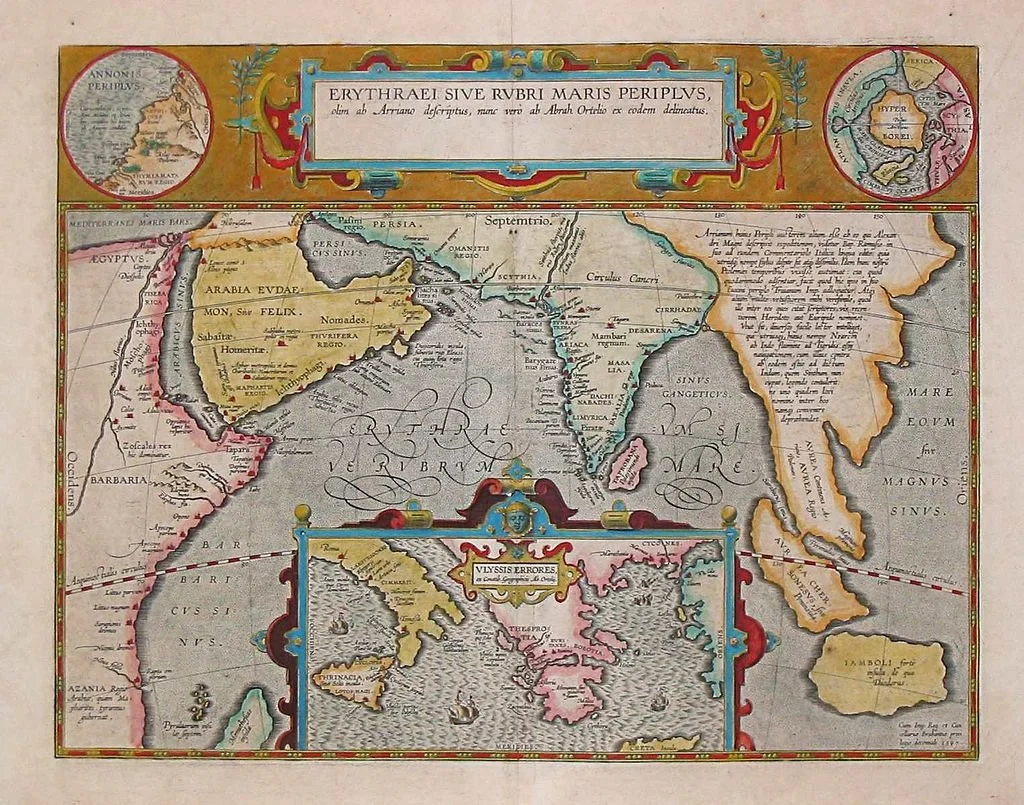
A map said to date from 1597 by Abraham Ortelius. It depicts the locations of the Periplus of the Erythraean Sea. From Egyptian Red Sea entrepôt (a transshipment port) such as Berenice and Myos Hormos Roman merchants operating under the political umbrella of imperial Egypt but largely as private entrepreneurs and syndicates, loaded cargoes when the seasonal winds turned, thereby crossing directly to the ports of the Malabar Coast. The result was not a brief flirtation but sustained, documented commerce that reshaped consumption in both regions and left a clear archaeological footprint centuries later. Knowledge of the monsoon pattern is central to this maritime revolution. Ancient writers attribute the practical discovery of the direct wind route across the open Arabian Sea to the mariner Hippalus, whose name is attached in later sources to the seafarer who realized that the monsoon could be used to make a rapid crossing. The most vivid contemporary guide to the mechanics of those voyages and the ports they serviced is the Periplus of the Erythraean Sea, a pragmatic merchant’s handbook written in Greek in the first century CE. The Periplus instructed captains on seasons for departure, sailing distances, and the goods exchanged, and it explicitly links Egyptian Red Sea harbors with Indian anchorages such as Muziris on the Malabar Coast and farther east and north to ports like Nelkunda and Barygaza. Other Greco-Roman authors, notably Strabo, Ptolemy and Pliny the Elder repeated and amplified these observations: Pliny famously lamented the enormous outflow of Roman bullion to the East and thereby provides contemporary testimony to the scale and significance of the trade, even if his tone is moralizing. The logistics of these missions were anchored in Egypt. Following Augustus’ secure control of Egypt, Roman commerce could reach the Red Sea ports under relatively reliable conditions. Berenice and Myos Hormos (the latter likely corresponding to the later Quseir region) functioned as staging points where cargoes from the Mediterranean wine, olive oil, glassware, fine metalwork, and coins were trans-shipped into Red Sea craft. Roman captains timed departures to the monsoon: ships would ride the southwest monsoon out of the Red Sea, cross the Arabian Sea in weeks rather than months, and then use the returning northeast monsoon for the homeward voyage. This seasonal rhythm structured an annual trading circuit and made repeated, large-scale exchanges possible rather than one-off ventures. On the Indian side, the principal destinations were the sheltered estuaries and backwaters of the Malabar Coast. Muziris, long considered the primary Roman-era entrepôt in southern India appears repeatedly in the Periplus as a hub for pepper, pearls, timber and other highly prized products. Other nodes, including the entrepôts at Arikamedu near modern Pondicherry and the trading emporia around the mouth of the Periyar River, provided additional access to inland producers. The distribution network within India routed commodities from interior markets and coastal fisheries toward these harbors, where foreign merchants met local brokers, guilds and rulers willing to trade access for customs and gifts. This commodity mix explains why Romans were willing to sail such long distances. Southern India supplied pepper, spices, pearls, ivory, aromatic woods, and precious gems, items that could command fortunes in Roman urban markets. In return, Roman consumers sent gold and silver, wine and olive oil, fine tablewares, glassware, and coins; Roman manufactures and Mediterranean foods had status and practical demand. The Periplus and other texts catalogue these categories with a trader’s eye, and the economic consequences are visible in Roman commentary: Pliny’s remarks that gold poured out of the Empire into the East reflecting a structured trade imbalance that contemporary Romans noticed and debated. Archaeology has provided the most persuasive confirmation that the Periplus and classical authors were not merely repeating traders’ tall tales. Excavations at sites on the Indian coast have turned up unequivocal Roman material, amphorae sherds of Mediterranean types, terra sigillata and other fine wares, intaglios, glass fragments and Roman coins, demonstrating repeated contacts over centuries. The site long identified as Arikamedu produced large quantities of Roman ware and Mediterranean glass and has been dated by stratigraphy and finds to the early centuries of the Common Era; its imported assemblage fits neatly with Periplus descriptions of northeastern Indian trade. On the Malabar side, substantial finds at several Kerala sites, most controversially at Pattanam, where archaeologists have reported Roman amphorae, Mediterranean ceramics, beads, and other imported items point toward a busy port landscape that traded directly with Roman ships. Although the precise identification of Pattanam with ancient Muziris remains debated among specialists, the material evidence from the region shows a dense, long-term network of maritime exchange during the first three centuries CE. Beyond ceramics and coins, the movement of organic and botanical goods is reflected with indirect but telling finds. Roman settlements and villas around the Mediterranean display evidence of Indian spices and resins, while excavations at Pompeii and other Roman towns have yielded peppercorns and traces of eastern spices in kitchens and storehouses, showing that Indian condiments were incorporated into Mediterranean culinary life. Conversely, Indian coastal deposits include Mediterranean amphora fragments whose shapes and stamps can be typologically dated to the early imperial period; these amphorae once contained wine and oil that were desirable enough to import across thousands of kilometers of sea. Numismatic and epigraphic evidence further corroborates the intensity of contact. Roman coins denarii and aurei appear in southern Indian hoards and contexts, sometimes in significant quantities, indicating monetary exchanges rather than mere occasional barter. Likewise, Indian inscriptions and later classical sources mention the presence of foreign merchants and sometimes tax arrangements. A handful of Roman goods, including high-status glass and metal objects, have been found in local elite contexts, suggesting the circulation of prestige items and diplomatic gifts alongside market trade. Material connections were matched by cultural interactions. Roman motifs appear in local art, and Indian goods circulated through Roman markets and households. The trade brought wealth and exotic goods to coastal polities, and it also produced a network of agents, interpreters and middlemen whose livelihoods depended on interregional exchange. The pattern was not one of wholesale colonization but of sustained commercial entanglement: caravan routes, riverine feeders and local markets in southern India integrated the region into a broader Indian Ocean economy in which Roman demand played a strong role. Scholars continue to refine the picture. New excavations, improved typologies for dateable Mediterranean sherds, residue analysis of amphora contents, and better numismatic chronologies have all tightened the temporal contours of the trade and exposed its fluctuations: periods of intense activity, phases when political instability or piracy depressed traffic, and the later attenuation of direct Roman-Indian commerce as intervening powers and new maritime networks reconfigured the Indian Ocean. Yet across those shifts, the archaeological record and the contemporary written sources together make a coherent case that in the first and third centuries CE, Roman merchants used the monsoon winds in predictable seasonal circuits from Egyptian Red Sea ports to Indian anchorages, where those voyages established a long-running exchange that left tangible traces in the ground and in the literature. Viewed together, text and trowel give complementary insight. The Periplus and Greco-Roman authors supply the practical vocabulary of sailing seasons, cargo types and port names; the archaeological record supplies the tangible residues amphora fragments, coins, glass and exotic botanical remains that prove sustained contact. The Roman-Indian trade of the early imperial centuries is therefore not an abstract line on a map but a lived, seasonal choreography of sailors, brokers and coastal communities whose exchange of goods transformed taste, wealth and connectivity across two very different maritime worlds. In conclusion, the maritime trade between Rome and southern India during the first through third centuries CE stands as one of antiquity’s most remarkable examples of long-distance commercial integration. What began as an experiment in harnessing the monsoon winds became a sustained and organized exchange that compressed the vast distances between the Mediterranean and the Indian Ocean into a manageable, predictable circuit of travel. This trade was not merely the movement of goods across seas but the development of a cross-cultural ecosystem in which Roman and Indian societies profoundly influenced one another economically, materially, and even symbolically. The combination of literary testimony and archaeological discovery has transformed what might once have seemed a romantic episode of ancient seafaring into a well-documented reality. The Periplus of the Erythraean Sea and the observations of classical geographers provided the framework, while the excavation of Red Sea ports such as Berenice and Indian coastal sites like Arikamedu and Pattanam filled in the empirical detail. Together, they reveal a world in motion: Roman merchants timing their departures with the monsoon’s turn, Indian traders and rulers orchestrating the flow of inland produce to meet foreign demand, and both sides adapting to a rhythm of seasonal winds that dictated the tempo of a globalized economy centuries before the modern age. The economic consequences of this transoceanic connection were immense. Roman markets developed a lasting appetite for Indian luxuries pepper, pearls, spices, ivory and gems while Indian elites gained access to Roman coin, glass, and fine wares that signified wealth and prestige. The imbalance lamented by Pliny the Elder, in which gold drained eastward, is not merely a rhetorical flourish but an early reflection on international trade deficits and the complex dependencies that arise from them. Yet this exchange was not exploitative conquest but negotiated interdependence: each side held what the other desired, and through mutual adaptation, both prospered. Culturally, the trade’s influence rippled far beyond the harbors. Artistic motifs, technologies, and tastes circulated with the goods, while evidence of Indian spices in Roman kitchens and Roman coins in Indian hoards testifies to a two-way diffusion of material culture. These exchanges subtly redefined notions of luxury, identity, and worldliness across both regions. The merchants, translators, and sailors who navigated this network became agents of connectivity, knitting the Mediterranean and Indian Ocean basins into one of the earliest examples of a truly intercontinental economy. Ultimately, the Roman-Indian maritime trade illuminates a broader human story of curiosity, enterprise, and the pursuit of opportunity across the natural boundaries of geography. The monsoon winds, once a barrier, became a bridge linking two great civilizations. Through their shared engagement with the sea, Rome and India participated in a dynamic, centuries-long dialogue of commerce and culture whose traces still gleam in amphora shards, peppercorns, and ancient coins unearthed on opposite sides of the ocean. It remains a vivid testament to how ingenuity and exchange can reshape entire worlds, and how the tides of history often flow along the same routes as the winds that once filled ancient sails. The site has been offering a wide variety of high-quality, free history content since 2012. If you’d like to say ‘thank you’ and help us with site running costs, please consider donating here. Notes: Periplus of the Erythraean Sea The Periplus, (περίπλους and transliterated as períplous), of the Erythraean Sea is one of the most remarkable maritime documents to survive from the ancient world. Written in Greek during the mid-first century CE, it serves as both a navigational guide and a commercial handbook for sailors and traders navigating the waters of the Red Sea, Arabian Sea, and the western Indian Ocean. The term periplus itself means “sailing around” in Greek, and the work provides a detailed account of coastal landmarks, ports, trade goods, and peoples encountered along the maritime routes linking the Roman Empire with Arabia, East Africa, and India. Though the author remains anonymous, internal evidence suggests he was a Greek-speaking Egyptian merchant or shipmaster operating out of one of the Red Sea ports, such as Berenice or Myos Hormos, which were vital links in Rome’s eastern trade network. As indicated in the main text the Periplus offers a vivid picture of the bustling trade that flourished across these routes, describing ports such as Adulis on the African coast, the Arabian markets of Cana and Muza, and the Indian port of Muziris on the Malabar Coast, which received Roman ships bearing gold, silver, and wine in exchange for pepper, pearls, ivory, and fine textiles. It details the monsoon wind patterns that made such voyages possible the southwest monsoon carrying ships eastward in summer and the northeast monsoon returning them westward in winter. The document’s precision in describing distances, directions, and local products makes it not only an invaluable historical source but also evidence of the sophistication of ancient navigation and trade logistics. Beyond its practical guidance, the Periplus reveals the extent of cultural and economic interconnection between the Mediterranean world and the civilizations of the Indian Ocean. It portrays a globalized system of exchange long before modern notions of globalization, in which Roman luxury markets depended on Indian spices and Arabian incense, while African ports exported exotic goods to the farthest corners of the empire. For historians and archaeologists, the Periplus remains a crucial key to understanding the maritime Silk Road of antiquity. A world bound together by the rhythm of the monsoon winds and the universal language of commerce. Hippalus Hippalus was an ancient Greek mariner whose name became synonymous with one of the most significant maritime discoveries of the ancient world-the monsoon wind system of the Indian Ocean. Although little is known about his life and career, Hippalus is credited in Greco-Roman sources, notably the Periplus of the Erythraean Sea and writings of Pliny the Elder, with identifying the regular seasonal winds that blow across the Arabian Sea. This discovery, made around the 1st century BCE, revolutionized sea travel between the Red Sea and the Indian subcontinent, allowing for direct voyages across open water rather than the slower, more perilous coastal routes that had been used for centuries. Before Hippalus’s time, trade between the Mediterranean world and India was largely dependent on hugging coastlines, which required multiple stopovers and was at the mercy of unpredictable weather patterns. Hippalus’s recognition that the southwest monsoon could carry ships swiftly eastward from Arabia to India, and the northeast monsoon could bring them safely back, drastically shortened travel time and increased the volume and regularity of trade. This discovery effectively opened the maritime “highway” that linked Roman Egypt to the rich markets of the Malabar Coast, facilitating the exchange of goods such as spices, silk, ivory, and precious stones in return for gold and silver from the Roman Empire as detailed in the main text. Although some modern historians question whether Hippalus was the first to understand or use the monsoon winds-since Arab, Indian, and earlier sailors likely had practical experience with them-his name became immortalized in Western accounts as the figure who brought systematic knowledge of these winds into the Greco-Roman world. In fact, the southwest monsoon itself was long referred to as the “Hippalus wind.” Whether historical or partly legendary, the story of Hippalus symbolizes the spirit of maritime innovation and the cross-cultural exchanges that defined the early Indian Ocean trade network. His legacy lies not only in the mastery of the winds but in the profound expansion of human connection across continents that his discovery enabled.
http://www.historyisnowmagazine.com/blog/2025/11/11/roman-trade-missions-to-india-1st-to-3rd-century


Kingdom Come: Deliverance 2’s Lead Gameplay Designer has jumped ship to CD Projekt RED

**Kingdom Come: Deliverance 2 Dev Joins CD Projekt RED to Work on The Witcher 4**

Warhorse Studios’ *Kingdom Come: Deliverance 2* has been turning heads this year as an immersive medieval RPG, boasting compelling systems and an engaging story. Now, CD Projekt RED is ramping up excitement for its own medieval RPG, *The Witcher 4*, by bringing a key developer from the Kingdom Come sequel onboard.

Former Warhorse Lead Game Designer Karel Kolmann has made the switch to CD Projekt RED, where he will work as a Senior Quest Designer. This is a significant acquisition for CD Projekt RED, and Kolmann himself shared the announcement on his social media this week.

Kolmann kept the message simple, stating, “I’m happy to share that I’ve joined CD Projekt RED,” in a tweet graphic. However, his LinkedIn profile provides a bit more detail, revealing his new role as Senior Quest Designer at CDPR.

During his eight-year tenure at Warhorse Studios, Kolmann was instrumental in shaping the Kingdom Come series. He contributed as a writer, quest designer, and game designer before stepping into the role of Lead Game Designer. Notably, Kolmann was one of the lead architects behind *Kingdom Come: Deliverance 2’s* Hardcore Mode and its intricate law system.

There’s no doubt that Kolmann’s expertise played a role in many of the features praised in Guides Editor Sam Chandler’s review of *Kingdom Come: Deliverance 2*, making his move to CD Projekt RED an exciting prospect for fans eagerly awaiting *The Witcher 4*.

Stay tuned for more updates on *The Witcher 4* as development continues with fresh talent on board.
https://www.shacknews.com/article/146775/kingdom-come-deliverance-2-karel-kolmann-the-witcher-4-cd-project

Bengals’ Joe Burrow Speaks Out on Joe Flacco After Returning to Practice

Back in Week 2, Cincinnati Bengals franchise quarterback Joe Burrow suffered a torn ligament in his toe, an injury initially expected to sideline him until at least mid-December. However, Burrow appears to be progressing at a rapid pace. The Bengals activated him off injured reserve on Monday, opening a 21-day window for him to return to practice. Within that span, the team will need to add him back to the active roster if the plan is for him to return to game action.

According to Fox Sports’ Jay Glazer, Burrow is targeting a “Thanksgiving-ish” return. This could potentially line him up to play in three weeks on Thanksgiving night against the Baltimore Ravens.

With Cincinnati currently sitting at 3-6, their margin for error is slim if they hope to remain in the hunt for the AFC North—a division that remains wide open.

Despite the challenges, quarterback Joe Flacco’s demeanor and leadership since arriving in Cincinnati have clearly impressed Burrow. Speaking about the veteran signal-caller during his Monday press conference, Burrow said:

“He’s playing great. He’s putting the ball where it needs to go. He’s been accurate with it, getting the ball out. The O-line has been playing great. We’ve been running the ball really well over these last couple of weeks. That’s been exciting to see. And, obviously, our guys on the outside are making plays like they always do.”

Burrow added, “He’s fun to be around. He’s quiet sometimes. I think we have that in common. He’ll throw some off-the-wall stuff out there every once in a while that I like, that makes me laugh. He’s fun to be around. I’m happy that I’ve been able to have this experience and watch him do his thing and see how he operates.”

Through his four starts for the Bengals, Flacco has completed 65.4% of his passes for 1,254 yards, 11 touchdowns, and just two interceptions.

However, if Burrow is healthy enough to return to the field, it’s a no-brainer who Cincinnati must move forward with at quarterback, especially considering they made Burrow one of the highest-paid players in NFL history back in 2023.

When healthy, Burrow has proven to be one of the league’s elite quarterbacks, leading the Bengals to multiple AFC Championship appearances and a Super Bowl berth in 2021. He’s coming off the best statistical season of his career in 2024, but injuries have continued to plague him throughout his career.
https://www.newsweek.com/sports/nfl/bengals-joe-burrow-speaks-out-on-joe-flacco-after-returning-to-practice-11030542