

A jury found that Meta and YouTube are liable for creating products that led to harmful and addictive behavior by young users, a landmark decision that could set a legal precedent for similar allegations brought against social media companies. Jo Ling Kent reports.
https://www.cbsnews.com/video/jury-finds-meta-youtube-liable-in-landmark-social-media-addiction-trial/
Category Archives: technology
Judge says government’s Anthropic ban looks like punishment
A federal judge in San Francisco said on Tuesday the government’s ban on Anthropic looked like punishment after the AI company went public with its dispute with the Pentagon over the military’s potential uses of its artificial intelligence model, Claude. U. S. District Judge Rita F. Lin made the remark at the outset of a hearing about Anthropic’s request for a preliminary injunction in one of its lawsuits against the Pentagon, which has designated the company a supply chain risk, effectively blacklisting it. “It looks like an attempt to cripple Anthropic,” Lin said, adding she was concerned that the government might be punishing Anthropic for openly criticizing the government’s position. Lin said she expected to make a ruling in the next few days on whether to temporarily pause the government’s ban until the court decides on the merits of the case. The hearing in the U. S. District Court for the Northern District of California is the latest development in a spat between one of the leading AI companies and the Trump administration, and it has implications for how the government can use AI more broadly. Anthropic CEO Dario Amodei announced in late February that he would not allow the company’s Claude’s AI model to be used for autonomous weapons, or to surveil American citizens. President Trump subsequently ordered all U. S. government agencies to stop using Anthropic’s products. The Pentagon designated Anthropic as a “supply chain risk” earlier this month, citing national security concerns. That designation is normally reserved for entities deemed to be foreign adversaries that could potentially sabotage U. S. interests. Anthropic has filed two federal lawsuits alleging that this designation amounts to illegal retaliation against the company for its stance on AI safety. It argues that the label will cost it both customers and revenue, since it will bar Pentagon contractors from doing business with the company, as well. The lawsuits, filed in the U. S. District Court for the Northern District of California and the federal appeals court in Washington, D. C., allege the Trump administration violated the company’s First Amendment right to speech and exceeded the scope of supply chain risk law. In today’s hearing, lawyers for Anthropic said it was apparently the first time such a designation had been made against a U. S. company. Lin said the Pentagon has a right to decide what AI products it wants to use. But she questioned whether the government broke the law when it banned its agencies from using Anthropic, and when Defense Secretary Pete Hegseth announced that anyone seeking business with the Pentagon must cut relations with Anthropic. She said the actions were “troubling” because they did not seem to be tailored to the national security concerns in question, which could be addressed by the Pentagon simply ceasing to use Claude. Instead, she said, it looked like the government was trying to punish Anthropic. But a lawyer for the government argued that its actions were not retaliatory, and were based on Anthropic’s disagreement with the government over how its AI model could be used not the company’s decision to speak out about it. The government also argued that Anthropic is a risk because, theoretically, in the future the company could update Claude in a way that endangers national security. Anthropic did not respond immediately to an emailed request for comment.
https://www.npr.org/2026/03/24/nx-s1-5759276/anthropic-pentagon-claude-preliminary-injunction-hearing

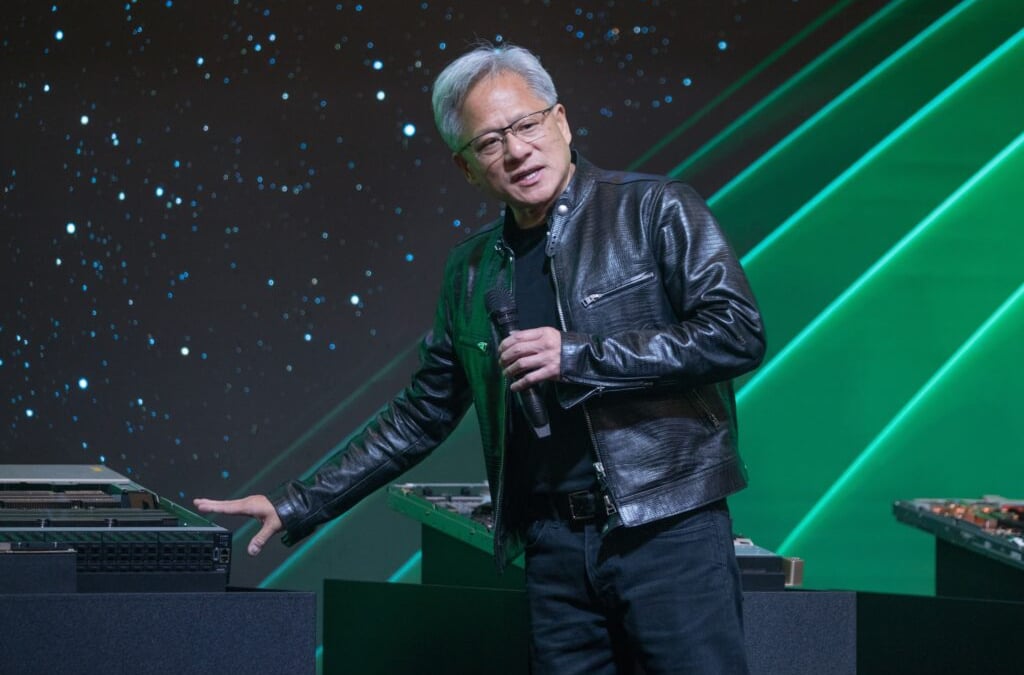
Nvidia Highlights $1 Trillion Opportunity: Jensen Huang Puts 13-Digit Figure In Reach
**Nvidia’s $1 Trillion Opportunity**
Nvidia CEO Jensen Huang has been increasingly bullish on the company’s prospects in data centers and AI chips, as reflected in his recent commentary during quarterly results and industry conferences. However, none of those remarks may compare to his bold statement made at Monday’s event, where he projected a staggering $1 trillion revenue opportunity for Nvidia by 2027.
Huang expects Nvidia’s revenue to double to $1 trillion through 2027, a significant leap from the company’s previous guidance that pointed to $500 billion in revenue visibility for its AI chips. This new figure suggests demand for Nvidia’s upcoming Blackwell and Vera Rubin chips could surpass even the most optimistic forecasts from industry analysts.
These comments come amid rising competition in the AI chip sector and broader questions about whether sustained high spending on AI and data center platforms will continue in the technology industry. Huang’s $1 trillion revenue call may inject renewed enthusiasm into Nvidia’s stock, which has been trading down year-to-date in 2026 as investors and analysts work to interpret the implications of his projection and envision the company’s future growth trajectory.
Nvidia has an impressive track record, having beaten analyst revenue estimates for 14 consecutive quarters. The company’s guidance for the first quarter calls for revenue between $76.44 billion and $79.56 billion, surpassing the prior Street estimate of $71.96 billion. Fiscal year 2025 revenue reached $215.9 billion, marking a 65% year-over-year increase.
The visibility of $1 trillion in revenue from AI chips underscores the strong growth Nvidia is poised to report in the coming fiscal years.
—
**Nvidia’s Other GTC Announcements**
Alongside Huang’s keynote, Nvidia made several other headlines during Monday’s event. The company announced an expanded partnership with Hyundai and Kia to develop autonomous driving technologies based on Nvidia’s DRIVE Hyperion Platform.
Additionally, Nvidia showcased several new products, further demonstrating its commitment to innovation. The GPU Technology Conference (GTC) 2026 continues through March 19, providing more opportunities for Nvidia to unveil upcoming products and partnerships.
Investors should anticipate potential volatility in Nvidia shares through the end of the trading week as the market digests the impact of these announcements.
—
**Nvidia Stock Climbs**
Following Huang’s $1 trillion revenue comments, Nvidia’s stock closed Monday up 1.63% at $183.19, within a 52-week trading range of $86.62 to $212.19. Shares reached an intraday high of $188.88 during the session.
While Nvidia shares are down 1.78% year-to-date in 2026, they remain up over 50% in the past 12 months, reflecting strong investor confidence in the company’s long-term growth potential.
*Image via Shutterstock.*
https://www.benzinga.com/markets/tech/26/03/51286867/nvidia-highlights-1-trillion-opportunity-jensen-huang-puts-13-digit-figure-in-reach
1st vertical farm in downtown office building in US now in Chicago’s Loop
Chicago Hosts First Vertical Farm in a Downtown Office Building in the U.S.
CHICAGO (WLS) — The first vertical farm located inside a downtown office building in the United States has opened its doors in Chicago, and it’s just the beginning of a new farming revolution.
At this innovative urban farm, workers cut fresh cilantro with scissors, place it into containers, and prepare it for delivery to local restaurants — where it could be served on the same night. Remarkably, all of this fresh produce is grown right in a Loop office building on La Salle Drive. The space was formerly occupied by a law firm but has now been transformed into a revolutionary indoor farm.
“We don’t have the challenge of pesticides. We don’t have pests and rodents and things like adverse weather conditions knocking out entire crops,” explained Farm Zero CEO Russ Steinberg.
Currently, the farm operates within a 500-square-foot area using trays and a hydroponic drip watering system that recirculates water. Instead of soil, the plants grow in a cotton-like material, and energy-efficient LED lights provide an effective substitute for natural sunlight.
See also: Climate Ready: Midwest ski resorts ‘cheat’ mother nature to survive season
Although the farm’s current scale is somewhat limited, Farm Zero is expanding rapidly. Plans are underway for a massive new facility inside the historic former home of Roosevelt University on South State Street. The 137-year-old building occupies an entire city block and spans approximately half a million square feet — offering ample space to significantly increase food production.
“We’re developing land inside downtown vacant office buildings,” Steinberg added.
One of Farm Zero’s customers is Blue Plate Catering, which highly values the fresh, healthy vegetables supplied by a local urban farm.
“If you go to Whole Foods or Mariano’s, that food is coming from California or Mexico. Eighty percent of our food comes from there. So, to have a local business that can support, I think it’s a huge breakthrough,” said Blue Plate Executive Chef Charles Haracz.
With 45 million square feet of vacant office space in downtown Chicago, there is tremendous potential for growing fresh food close to the city’s population.
“We have designs on creating an entirely new food system, tackling some of the major challenges that exist between commercial real estate vacancy and the public health crisis,” Steinberg said.
In addition to producing fresh food, Farm Zero serves as an eco-tourism spot. They have hosted tours for school groups and international business visitors, many of whom get the chance to sample the farm’s fresh produce.

When AI becomes a paintbrush, is it art?
Immerse yourself in an installation by Refik Anadol while debating how AI-generated creations stack up in the art world.
https://www.cbsnews.com/video/when-ai-becomes-a-paintbrush-is-it-art-60-minutes/
Mississippi health system shuts down clinics statewide after ransomware attack
The University of Mississippi Medical Center has closed all of its clinics in the state in response to a ransomware attack that impacted its phone and electronic systems, disrupting patient care. The attack was launched on Thursday, compromising the medical center’s systems, including its electronic health records platform Epic and its IT network. It’s unclear how long the effects of the attack would last or whether patient information had been compromised. UMMC vice chancellor for health affairs LouAnn Woodward said in a Friday statement that the university was working with law enforcement, including the FBI, to resolve the system outage. Out of an abundance of caution, she said, UMMC had taken all systems offline until they could test and confirm that they were safe to use. “To use a medical phrase we have stopped the bleeding,” Woodward said. “And while we know much more now than we did 24 hours ago, the extent and the scope of the intrusion is still not fully understood.” UMMC hospitals and emergency departments are still operational. Hospital officials halted care at the center’s total 35 clinics in the state. Appointments, including chemotherapy and elective procedures, were canceled as of Friday. Patients can reschedule appointments, Woodward said, adding that the medical center was working to prioritize the continuation of ongoing, time-sensitive care. For ongoing patient care, staff were employing paper documentation rather than electronic. “I can’t tell you when but I can promise as soon as we possibly can we will be back up and running full steam ahead,” Woodward said. “The bad guys won’t keep us down.” Woodward said at a Thursday press conference that the attackers had communicated with hospital officials and that it was working with law enforcement and cybersecurity specialists on next steps. Robert Eikhoff, the FBI special agent in charge of the Jackson, Miss., field office said the agency’s priority is helping the medical center get its systems back up and running to restore care to patients. “We are in the process of surging resources, both locally and nationally, into this incident to make sure that we are standing alongside with UMMC and their vendors as we look to understand the extent of this attack,” he said.
https://www.npr.org/2026/02/21/nx-s1-5721746/mississippi-health-system-ransomware-attack

Inventor of “signal sniffer” discusses its use in the Nancy Guthrie search
Investigators in Nancy Guthrie’s disappearance are using a device called a “signal sniffer” to try to detect transmissions from her pacemaker. David Kennedy, former NSA hacker and inventor of the pacemaker signal detector, joins CBS News to discuss his work with law enforcement in the search.
https://www.cbsnews.com/video/pacemaker-signal-detectors-inventor-discusses-its-use-in-the-nancy-guthrie-search/


Landmark tech trials on social media addiction seen through a mother’s eyes
Audio will be available later today. With multiple tech addiction trials expected this year, Julianna Arnold of the parents group ‘Parents Rise’ says the legal pressure is overdue for Big Tech.
https://www.npr.org/2026/02/15/nx-s1-5712769/landmark-tech-trials-on-social-media-addiction-seen-through-a-mothers-eyes


New Files Show Jeffrey Epstein Invested in Buzzy Startups Long After His Conviction
Despite being a convicted sex offender, Jeffrey Epstein amassed more than $600 million in assets and maintained a lavish lifestyle until his arrest in 2019, according to a financial audit included in court documents.
Epstein’s connections to Silicon Valley and high-profile startups date back to the dot-com era, long before his criminal activity became public. Even as scrutiny over his abuse of teenage girls and young women intensified, Epstein continued— with the help of venture capitalists, entrepreneurs, and communications professionals—to source and invest in prominent deals.
One notable example is Coinbase. Epstein became an early investor in Coinbase in 2014, when the company was still a two-year-old startup building a platform for buying and selling Bitcoin. Crypto entrepreneur Brock Pierce introduced Epstein to the company. Pierce later sent Epstein updates on the business that were signed by Coinbase founders Fred Ehrsam and Brian Armstrong, according to the New York Times.
In a 2014 message to associates, Ehrsam wrote that it “would be nice to meet him if convenient,” referring to Epstein, who was preparing to invest $3 million in the company. At the time, Epstein was already a convicted sex offender, but Coinbase accepted his money nonetheless.
As Coinbase grew into a leading cryptocurrency platform, Epstein’s stake multiplied in value. In 2018, he sold half of his holdings to Brock Pierce for $15 million, though it remains unclear when or if he sold the rest.
https://www.inc.com/leila-sheridan/new-files-show-jeffrey-epstein-invested-in-buzzy-startups-long-after-his-conviction/91298373
Secretary Noem says body cameras are being deployed to field officers in Minneapolis
**Homeland Security to Deploy Body Cameras to Field Officers Nationwide**
WASHINGTON — U.S. Homeland Security Secretary Kristi Noem announced on Monday, February 2, that her department is deploying body cameras to every field officer in Minneapolis, with plans to expand the program nationwide as funding becomes available.
“Effective immediately we are deploying body cameras to every officer in the field in Minneapolis. As funding is available, the body camera program will be expanded nationwide,” Noem said in a post on X.
The announcement comes amid heightened scrutiny of the immigration enforcement policies under President Donald Trump’s administration, following the recent killing of two U.S. citizens in Minnesota by agents of the federal Immigration and Customs Enforcement (ICE) agency, a branch of the Department of Homeland Security. These incidents have sparked nationwide protests.
Human rights advocates have widely condemned Trump’s immigration policies, criticizing them for lacking due process and fostering a hostile environment for immigrant communities. In contrast, President Trump has defended his administration’s actions as necessary measures to improve domestic security.
Commenting on Noem’s announcement, President Trump told reporters that body cameras “generally tend to be good for law enforcement, because people can’t lie about what’s happening.”
“So it’s, generally speaking, I think 80% good for law enforcement. But if she wants to do that, I’m OK with it,” Trump said, noting that the decision was made by Noem and not by him.
Noem’s announcement followed a call with U.S. Customs and Border Protection Commissioner Rodney Scott, Trump’s Border Czar Tom Homan—who has been tasked with taking over operations in Minnesota—and Acting ICE Director Todd Lyons.
The Secretary affirmed that the Trump administration will “rapidly acquire and deploy body cameras to DHS law enforcement across the country,” signaling a swift move toward increased transparency and accountability in immigration enforcement operations nationwide.
https://www.wctrib.com/news/national/secretary-noem-says-body-cameras-are-being-deployed-to-field-officers-in-minneapolis