Customer service isn’t dying from incompetence.
It’s dying from indifference.
https://www.inc.com/andrea-olson/how-my-dishwasher-hunt-at-lowes-became-a-masterclass-customer-service/91249410
Customer service isn’t dying from incompetence.
It’s dying from indifference.
https://www.inc.com/andrea-olson/how-my-dishwasher-hunt-at-lowes-became-a-masterclass-customer-service/91249410
As he demonstrated in the Knesset this week, Donald Trump is making a serious bid to become a historically consequential figure. His influence extends beyond upending American politics; he is also positioning himself as a key player in furthering world peace.
A recent trip to India highlighted how this peace campaign presents both challenges and opportunities for Trump in the region. While some issues have arisen, the visit also opened doors for important diplomatic advancements.
Read Full Article »
https://www.realclearworld.com/2025/10/18/how_trump_can_better_deal_with_new_delhi_1141774.html
Has Donald Trump “weaponized” the justice system to go after his political enemies? The answer is no.
“What about former FBI director James Comey?” you ask. “What about New York Attorney General Letitia James?” Both went after Trump hammer and tongs. Now both have been indicted by the Trump Justice Department. Are those not textbook cases of “weaponization,” of “retribution,” of using the power of the system to punish people who have punished you?
Hold on.
I write this in mid-October. By the time you read it, I suspect that the list of indictments will be much longer. Candidates for inclusion on this Ko-Ko-like “little list” include John Bolton, national security advisor during Trump’s first term; Jack Smith, the special counsel who managed to rack up 37 indictments against Trump in two criminal cases; and sundry other former intelligence officers and Department of Justice officials. The dragnet will be large; it will be relentless.
So haven’t I just admitted that Trump weaponized the justice system? No. Trump didn’t weaponize the justice system. He inherited a weaponized justice system. More on that shortly.
First, here’s another little list: Peter Navarro, Steve Bannon, Mike Flynn, Rudy Giuliani, John Eastman, Mark Meadows, Sidney Powell, Jenna Ellis, Jeffrey Clark, and George Papadopoulos. That’s a very incomplete roster of Trump aides and supporters who were indicted, prosecuted, disbarred, and/or jailed.
That list does not include the more than 1,200 people convicted over the January 6 protest at the Capitol. Nor does it capture a contrast that Navarro describes in a post on X: “I was dragged through Reagan Airport in leg irons, mug shot, handcuffs, jail cell, the full circus. Meanwhile, Comey faces felonies up to 10 years for the worst political conspiracy in modern history, and he slips quietly through a side door.”
Responding to demands that Comey be subjected to the humiliation of a “perp walk,” Trump’s FBI Director Kash Patel said there would be “no drama.” But the FBI that Trump inherited specialized in such drama. Remember their guns-drawn, dawn raid to arrest his confidant Roger Stone? The tipped-off media were there in force to lap up and regurgitate the entertainment. That’s one element of the system Trump inherited.
Another has to do with the courts. Trump and his allies faced kangaroo courts, kangaroo juries, and a kangaroo media. All are Democrat specialties. There are certainly places in the US where judges, or at least juries, favor conservatives. But is there any analogue to Manhattan or Washington, DC, where the name “Trump” guarantees conviction and hectoring media obloquy? There is not.
The cases that Letitia James and Alvin Bragg brought against Trump in New York were patently ridiculous. But had the President not won re-election, he would be facing a $500 million fine, the destruction of his business empire, and decades in jail—all to a hallelujah chorus of media self-congratulation. At the moment, that media has shifted into a minor key, not crowing but spewing threnodies about “selective prosecution,” “lawfare,” “retribution,” and of course “weaponization.”
Yet Trump could never deploy the sort of judicial and media vendetta that had been organized against him. Republicans lack the kangaroos.
In March, I wrote here about deterrence, not as a feature of military strategy but as a part of political wisdom more generally. The attack on Trump and his allies, I noted, was only incidentally directed at those individuals. Writ large, it was aimed at undermining the very things they claimed to be supporting: “our democracy” and the rule of law.
From that perspective, I said:
> The Trump administration’s efforts to restore fiscal sanity, accountability, and common sense to the workings of government will seem like retaliation or retribution only to those who have betrayed those values. For them, the closure of redundant or malevolent agencies, the exposure of financial wrongdoing and incompetence, the revocation of tolerance for illegal migrants who prey on US citizens will seem simply punitive.
It is punitive because it is in response to egregious wrongdoing. But in the long term, such masculine policies will function less as a punitive expedient than as a deterrent.
The press is full of caterwauling headlines about Trump’s “vindictive,” “weaponized” prosecutions. But if you step back, such imprecations ring hollow. For one thing, as the commentator “Cynical Publius” noted: “James charged Trump with nonsense; Trump charged James with a verifiable crime.” The same is true of Comey. The same will be true of the rogues’ gallery of anti-Trumpists destined for the courts.
After she got done running for office on a platform of suing Trump and calling him “illegitimate,” James dusted off her oratory:
> “When powerful people cheat to get better loans, it comes at the expense of hardworking people. Everyday Americans cannot lie to a bank to get a mortgage, and if they did, our government would throw the book at them. There simply cannot be different rules for different people.”
That was before it was revealed that James lied to a bank to get a lower interest rate on a mortgage.
Here is the moral of the story.
Deterrence works only because there lurks in the background a credible threat of retaliation. Before Trump, Republicans were too lily-livered to mount any such threat.
Would it be better if an incoming administration did not set about indicting its predecessors? Yes. Which is why the President’s vigorous effort to call to account those who waged lawfare against him is a necessary purgative. If vigorously pursued, it may just reset the conventions and courtesies of our political life.
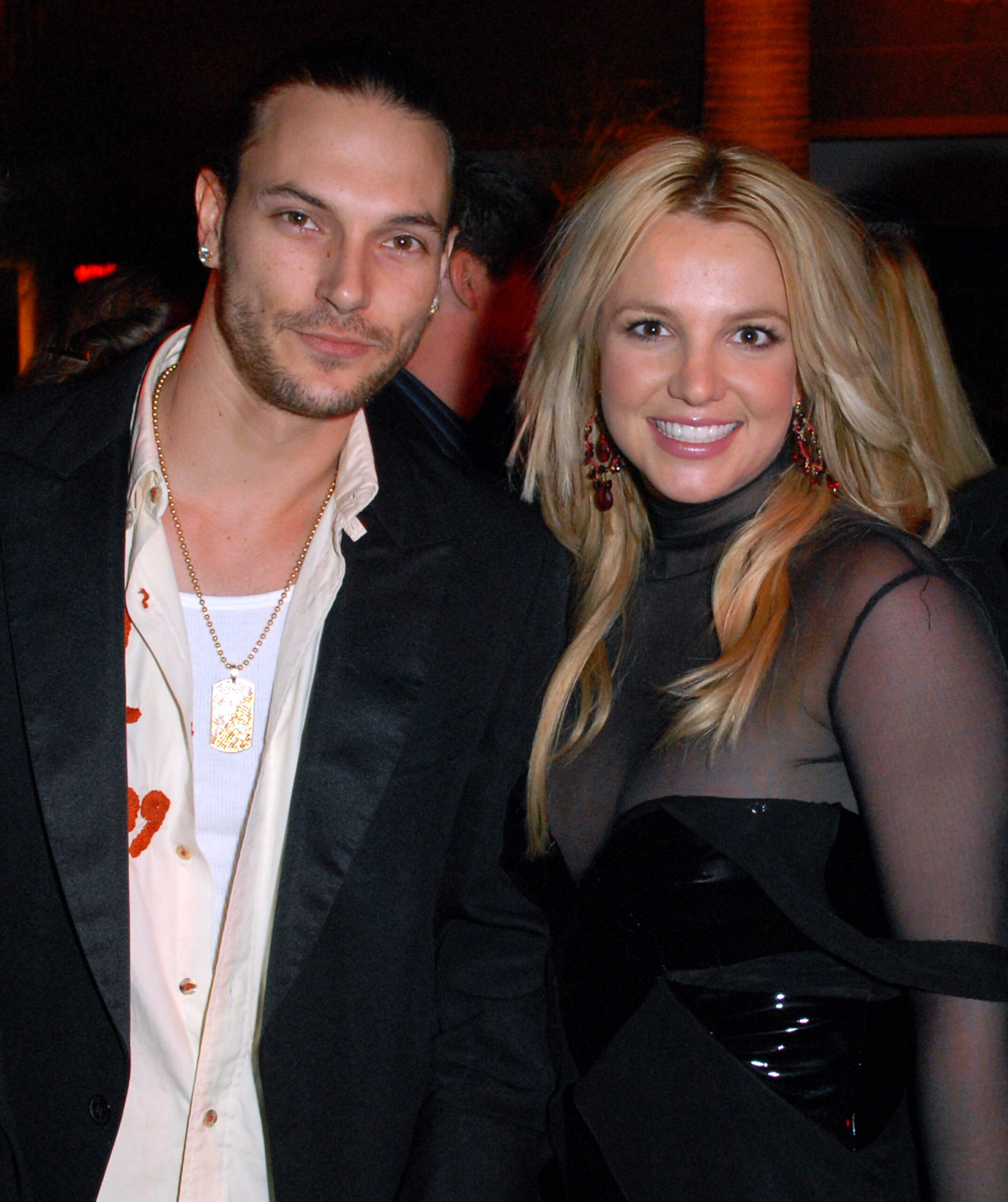
The knives are out. Britney Spears and Kevin Federline are in an all-out war after the father of her two kids unearthed sharp claims in his memoir, *You Thought You Knew* (out Tuesday), alleging his ex-wife was physically and verbally violent with their sons and even used cocaine while breastfeeding.
Federline, 47, writes that he walked into a dressing room at his album-release party in 2006 to find “Britney and [a] young starlet friend snorting a fat line of coke off the table. They didn’t even try to hide it.” At the time, their son Sean Preston (who goes by his middle name) was 1 year old and Jayden James was 1 month old.
“Please don’t go home and breastfeed the kids like this. Call your mom or someone. We need to get formula. You can’t do this,” Federline recalls saying. When his wife allegedly threw a drink at him, he writes, “That was the proverbial final straw, the breastfeeding thing. Her reaction. That’s what ended us.”
Page Six has reached out to representatives for Federline and Spears.
The book also alleges that Spears once punched Preston in the face when he was 10 or 11 years old. Another time, Federline claims, the boys came home from a visit with their mother sporting bleached hair.
“Not just streaked or lightly done. It was bleached down to their scalps. Their skin was burned,” he writes. “I had to shave their heads, and their scalps looked like leopard print from their chemical burns.”
According to the book, when visiting Spears, the young boys “would awaken sometimes at night to find her standing silently in the doorway, watching them sleep. ‘Oh, you’re awake?’ with a knife in her hand.”
Federline claims other harrowing incidents came to light later. “Then there were the stories the boys shared as they got older,” he writes. “Preston once told me she had punched him in the face.”
After the former dancer moved his family — including current wife Victoria and their young daughters, Peyton and Jordan, along with Preston, now 19, and Jayden, 18 — in 2023, the boys stopped seeing Spears.
When the singer told Preston on a phone call that she blamed family members for her ongoing problems, “Preston, to his credit, confronted her. He called out her lies and refused to accept her narrative. Her response was chilling: she told him she wished he, his brother, and me were all dead,” Federline writes.
“How could a mother say that to her son? Preston, having dealt with her vitriol for years, took it better than I did. Trauma like that left scars, ones I fear they’ll carry for the rest of their lives,” he continues.
The exposure of these toxic details has prompted the singer to fight back in public, calling out her ex Wednesday for “constant gaslighting” and dismissing the book as “white lies” that are “extremely hurtful and exhausting.”
“I 100 percent beg to differ the way he is literally attacking me from Kevin’s book breaking, once again he and others are profiting off her.”
While one source defended Federline to Page Six as a good father, they also said “there’s zero grace given to [Spears] in this whole situation.”
The source said the tell-all is a paycheck for the father of six, who is not known to currently have a job and who was awarded alimony of $20,000 a month for 13 months — half the duration of his marriage to Spears, according to Federline’s book. Spears also paid $20,000 in child support until her sons were 18.
“People love to assume that I was just coasting off her money, but that couldn’t be further from the truth. I wasn’t some bum just sitting around waiting for a check. My Super Bowl commercial alone paid almost a million dollars for just three days’ work,” Federline writes of the 2007 ad for Nationwide.
Around that time, he says, he was also getting paid $100,000 for paid appearances at clubs in Vegas and Miami.
“At my peak, I was making $300,000 to over half a million a year,” he writes, while admitting: “that cash spent fast.”
His wife Victoria has worked as a special education teacher.
“Kevin is a really nice guy who was thrust into a weird situation. He’s a very simple guy whose whole public life is defined by a relationship he was in,” the source told Page Six. “Kevin’s head and heart seemed to be in the right place.”
In the book, Federline claims his intention for penning the memoir is to “sound the alarm” about Spears’ worrisome behavior.
Since her conservatorship was lifted in 2021, Britney has regained control over her life and full control of her fortune, estimated to be between $40 million and $60 million.
But fans and observers have expressed concern over the singer’s presence on social media, including videos that show her dancing with knives, looking disheveled, and making bizarre statements.
In one recent video posted to Instagram, dog excrement was visible on the floor of her home.
Writes Federline: “Something bad is going to happen if things don’t change.”
He even calls on members of the #FreeBritney movement, which tirelessly drew attention to her conservatorship and showed the singer support throughout her court battles, to reorganize as “Save Britney.”
“What does he want us to do? Hire a psychiatrist and send one to Britney’s door?” Pilar Vigneaux, who helped organize the #FreeBritney movement, told Page Six.
“How can we help Britney if everything is redacted?” she added of the singer’s post-conservatorship care plan.
“He’s part of the problem,” Vigneaux alleged of Federline. “One of the crucial parts of the conservatorship was Kevin’s involvement in it. They used the children as bait for Britney to work. They negotiated with Kevin for him to have full custody of the kids and to use the kids to force Britney to work: ‘If you want to see your kids you got to do this show. If you want to see your kids you have to do this album.’”
As for current concern about Spears’ mental state, Vigneaux pointed to a trip to Mexico Spears took this past spring and documented on Instagram.
“If she was really in such a horrible state and unstable she would have been doing crazy things in Cabo. The Mexican press would have definitely said something about it.”
At the time, though, TMZ did report that Spears was “difficult” and allegedly had to be told by flight attendants to extinguish a cigarette while indulging in a few alcoholic drinks on a chartered plane from Cabo San Lucas, Mexico, to Los Angeles.
Vigneaux also feels that Preston and Jayden, despite the claims in Federline’s book, owe it to their mom to help her if she needs it.
“If I were her kid, I would try to help her,” Vigneaux said, admitting: “She’ll never be the Britney she once was. She was 27 when her life was stolen from her. You could never recover from that.”
https://pagesix.com/2025/10/18/entertainment/inside-britney-spears-and-kevin-federlines-all-out-war-of-words/
For many college basketball experts, selecting the greatest players of the women’s poll era sounds easy—until they try it. Of course, USC’s Cheryl Miller and Diana Taurasi of UConn are relatively easy choices. But narrowing the list from there gets tricky, inevitably leaving out talented players, including those who sharpened their skills later during professional careers.
In honor of the 50th anniversary of the women’s basketball poll, The Associated Press assembled a list of the greatest players since the first poll in 1976. And in the spirit of the Top 25 rankings, the choices are certain to spark debate and prompt plenty of handwringing among those in a position to vote.
“Nearly impossible,” said Rebecca Lobo, a former UConn standout and NCAA champion, describing the assignment. “As I’m looking down the list, I’m like no-brainer, no-brainer, no-brainer. But then I’m like, wait, there’s too many no-brainers and not enough slots.”
Lobo was one of 13 panel members consisting of former players and AP sportswriters who voted on the greatest players. They were instructed to consider only the athletes’ college careers. Other factors, however, were left to their discretion, including championship pedigree, record-breaking statistics, or simply a player’s ability to will their teams to victory.
“It was extraordinarily difficult, especially trying to hone in on a player’s college career and eliminate their pro career from your brain,” Lobo added. “There are going to be players who are Hall of Fame-caliber players who aren’t on the list.”
Joining Miller in the frontcourt on the first team are Breanna Stewart and Candace Parker. Caitlin Clark joins Taurasi as the guards.
Taurasi helped UConn win three national championships, including carrying the Huskies to the last two basically on her own during her junior and senior seasons.
“What an accomplishment and what an honor,” Taurasi said. “To think about the history of the game and where it’s gone. You always have to look at the past to go into the future. There’s so many great women who paved the way.”
Clark led Iowa to back-to-back NCAA championship game appearances while setting the career scoring record for any Division I women’s or men’s basketball player. Her play on the court—including her logo 3-point shots—helped lift women’s basketball to unprecedented levels of attention and energy during her last two seasons.
“Being named an AP All-American is one of the most storied honors in college sports,” Clark said. “It means a lot to be named to this all-time list alongside players I looked up to. It’s fun to think about what it would have been like if we all played together.”
The frontcourt of Miller, Stewart, and Parker dominated the game during their eras. Stewart won four NCAA championships at UConn and earned Most Outstanding Player of the Final Four all four years. Parker led Tennessee to back-to-back titles in 2007-08. Miller, one of the original NCAA greats, starred for USC and led the Trojans to consecutive championships in 1983-84.
“I grew up watching Cheryl Miller play,” Parker said. “She’d be No. 1. My dad was like, ‘This is who we wanted you to be.’ I’m honored to be on this list with her.”
The second team’s backcourt is UConn’s Sue Bird and Virginia’s Dawn Staley. The former Cavaliers guard and current South Carolina coach is the only women’s player to win the Most Outstanding Player of the Final Four on a losing team when her Cavaliers fell to Tennessee. Bird helped UConn win championships in 2000 and 2002.
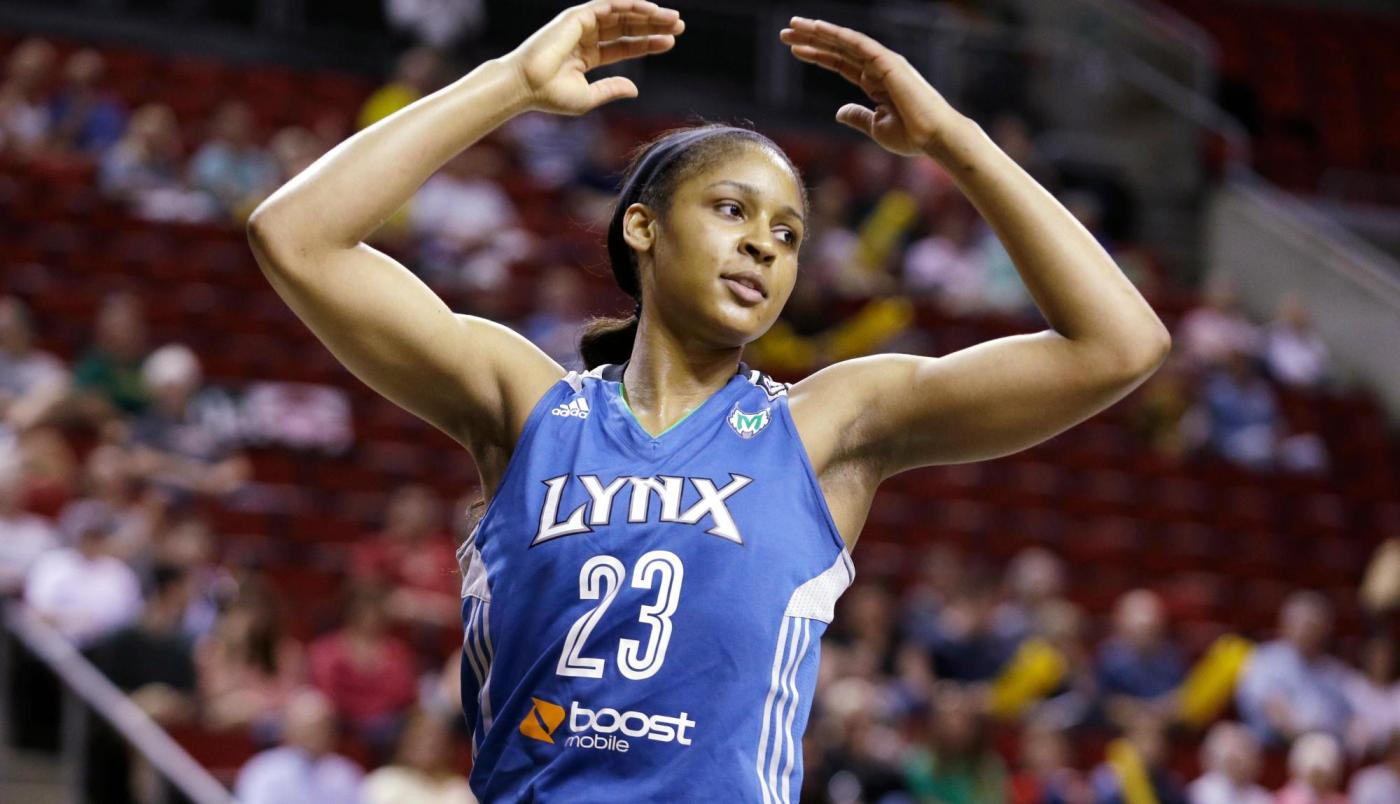
The Lady Vols’ Chamique Holdsclaw, UConn’s Maya Moore, and Lusia Harris of Delta State are on the second team frontcourt.
Holdsclaw was a three-time NCAA champion and twice earned the tournament’s Most Outstanding Player honor. Moore was part of the Huskies’ dynasty that won a then-record 89 consecutive games, helping UConn to consecutive titles in 2009-10. Harris led Delta State to three AIAW titles in the mid-1970s and was the tournament’s MVP each year.
“I’d watch these two teams play and I’m not sure who would win,” UConn coach Geno Auriemma said of the first and second teams selected by the panel. Auriemma has four former players on the first two teams but would enjoy looking to the bench at a group of reserves that includes UCLA’s Ann Meyers Drysdale, Kansas’ Lynette Woodard, and Texas Tech’s Sheryl Swoopes in the backcourt. For the frontcourt, there is USC’s Lisa Leslie, Baylor’s Brittney Griner, and South Carolina’s A’ja Wilson.
“I am always asked if players today could play back in the ‘70s or ‘80s or vice versa. When you’re great in one generation, you’re going to be great in any generation,” said Meyers Drysdale, who was also a member of the voting panel. “I don’t think there’s any name that is wrong or there’s any name that is right. There are so many great players that are going to be left off.”
https://www.twincities.com/2025/10/18/who-are-the-greatest-womens-college-basketball-players/
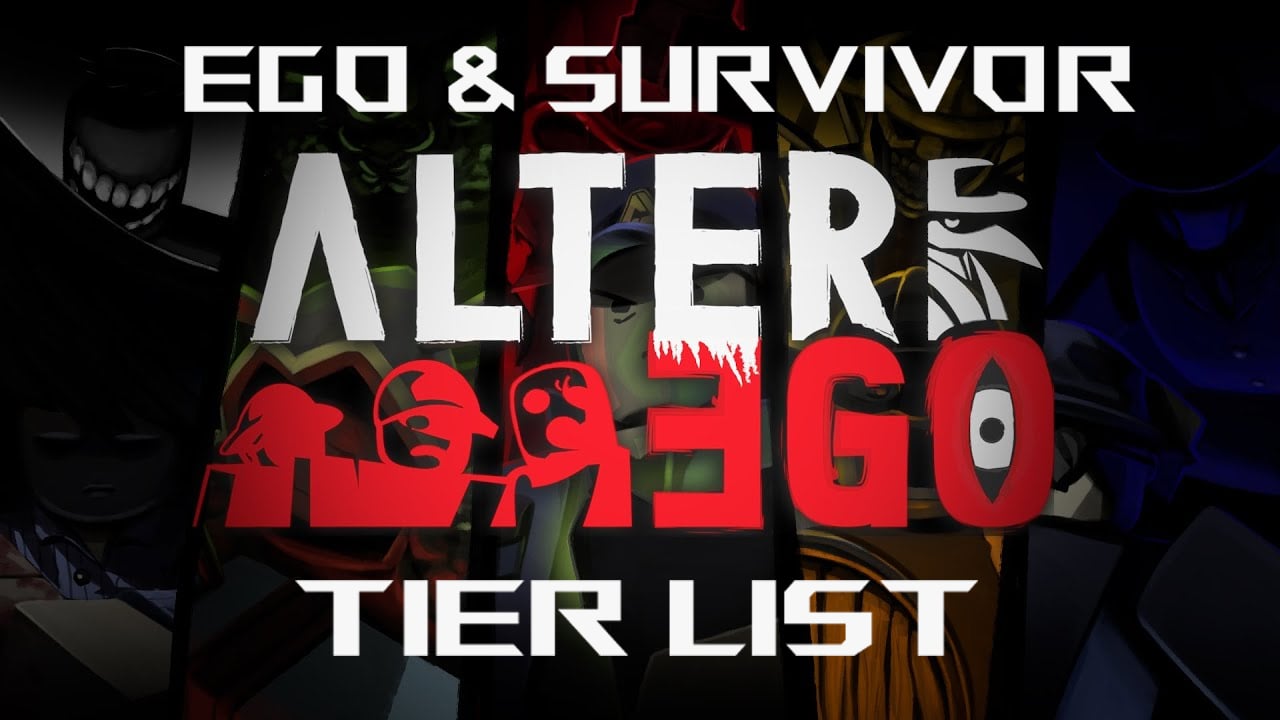
**Caducus Ego**
Overall, Caducus has proven to be more reliable than Husk for several reasons. First, Caducus’ Swipe ability is far superior to Husk’s Slam. Swipe offers greater forward mobility and features a wider swing, allowing it to hit multiple Survivors at once. Additionally, Caducus’ movement ability, Spectral Dash, doesn’t deal damage but is much faster, less awkward to use, and grants stealth, enabling a more unpredictable approach.
Foul Breath provides significant utility as a ranged projectile. It can be used to snipe low-health enemies or to disrupt a generator’s progress, slowing Survivors as they attempt puzzles. Dark Descent, Caducus’ ultimate, boasts massive range and grants extensive map visibility. Unlike Husk’s ultimate, you cannot be hit or stunned during Dark Descent’s flight, and it can down multiple Survivors on its descent.
—
**Commander Survivor**
In a high-skilled, team-based setting, Commander is arguably the best Survivor. Commander excels because of the ability to reliably locate generators for the team using Survey and then speed their completion through Strength in Numbers, facilitating faster escapes when the killer arrives.
Strength in Numbers is considered the best skill in the game when finishing generators and making your way to escape doors. Additionally, the Leadership passive allows you to locate teammates near a killer and assist them in speeding up their tasks. Survey also helps you and your team spot the killer before they approach a generator, boosting overall team awareness.
While Commander offers tremendous team utility, keep in mind that this Survivor lacks solo power, which can make playing with an uncoordinated team challenging.
—
**Noob Survivor**
Noob is a well-rounded Survivor, blending team utility with solid solo capabilities. The Stun Slingshot can be launched from a distance to save both yourself and allies, with better aiming potential compared to Fjord’s Slash, making it harder for killers to dodge.
Bloxy Cola is incredibly useful for repositioning if you get spotted on a generator, or for regenerating stamina when being chased or trying to assist teammates. Although the passive ability isn’t particularly strong, Noob’s core skill set is effective for both team play and solo carrying.
—
**Fjord Survivor**
Fjord is primarily designed as a team support, and while he can be very effective, several issues place him in A-Tier. His Slash ability stuns enemies for five seconds, which is powerful when combined with other stuns, but is difficult to land due to a slow telegraph that allows killers to dodge easily. A good tactic is to bait killers into corners and initiate Slash around corners for surprise hits.
Warrior’s Call reduces damage taken by allies but slows Fjord significantly, effectively acting as a taunt that draws the killer’s focus. Combining this with Commander’s Strength in Numbers can help your team escape more easily. However, Warrior’s Call leaves Fjord vulnerable, and once the killer finishes focusing on him, the team-wide buff ends as well.
The best strategy with Fjord is to use Warrior’s Call to save teammates, then attempt to Slash when the killer charges, retreating immediately afterward.
—
**Husk Ego**
Husk’s abilities can feel awkward and slow to land, which is why Husk ranks lower than Caducus. However, with practice and familiarity with timing, Husk actually deals more damage. Forward Leap is excellent for initiating AOE damage against groups working on generators, but it requires planning due to the slow startup—avoid spamming this move.
Ancient Punishment provides some mobility and deals more damage than Caducus’ damage skill, along with a stun effect, though it can be tricky to land effectively. Fortunately, the ability currently has a wide hitbox in Alpha.
Husk’s ultimate, Crushing Slam, is weaker than Caducus’ flight ultimate but still offers execution potential and some mobility. It automatically counters Fjord’s Slash. The main drawbacks are that Husk can be stunned more easily than Caducus and cannot bypass terrain, so Survivors can vault to avoid the attack.
—
In summary, Caducus stands out for reliability and mobility, Commander shines in team-based scenarios, Noob offers a strong balance of utility and solo power, Fjord delivers potent team support with some vulnerability, and Husk can deal high damage with a steeper learning curve and certain limitations. Choosing the right character depends on your playstyle and team composition.
https://www.destructoid.com/alter-ego-tier-list-and-guide/?utm_source=rss&utm_medium=rss&utm_campaign=alter-ego-tier-list-and-guide
Listen now and subscribe:
Apple Podcasts | Spotify | Stitcher | RSS Feed | SoundStack | All Of Our Podcasts
—
**About Reed Williams**
Reed Williams is the Director of Digital Engagement & Narrative Strategy at Equality Virginia, the leading statewide LGBTQ+ advocacy organization in Virginia. A trans woman and TED speaker, she writes about the policy and personal stakes of equality in Virginia.
—
**Stay Updated**
Catch the latest in Opinion: get opinion pieces, letters, and editorials sent directly to your inbox weekly!
—
*I understand and agree that registration on or use of this site constitutes agreement to its user agreement and privacy policy.*
https://dailyprogress.com/opinion/column/article_9f2f0c78-4ec0-560e-be65-840e4e7a679b.html
You. And you. And you too. You all ripped the Dodgers for standing fairly pat at the trade deadline, despite glaring holes in left field and in the bullpen.
Heck, this was the headline in this very newspaper: “Andrew Friedman struck out on the Dodgers’ urgent need for a closer.” How ever would the Dodgers return to the World Series?
The San Diego Padres had crept within three games of the Dodgers, and they had given up one of their two elite prospects for Mason Miller. The Philadelphia Phillies, a team that would finish with more wins than the Dodgers in the regular season, had swapped prospects for Jhoan Duran.
The Dodgers, the team that had spent $85 million on veteran relievers Tanner Scott and Kirby Yates over the winter, had gotten their last three saves from Alex Vesia, Jack Dreyer and Ben Casparius. Their trade deadline pickups: Brock Stewart, a setup man who soon would be lost to injury for the season, and Alex Call, a fourth outfielder.
The Padres will not represent the National League in the World Series. Neither will the Phillies. The Dodgers will.
So that was Friedman late Friday night, drenched in celebratory alcohol after a championship series sweep, sloshing through pools of liquid forming on plastic sheeting. You love him now. Three months ago, you crushed him.
“Yeah,” he said with a shrug. “It comes with it.”
Friedman, the Dodgers’ president of baseball operations, appreciates your passion, if not your advice.
“The thing I can’t do is make moves based on what people think we should do,” he said. “We’re going to make mistakes. We’re going to be aggressive taking shots.
“Our goal is to be essentially the casino: be right more than we’re wrong, and have it yield a really good product that has a chance to win the World Series.”
To be the casino means to have options, and to hit on one of them, rather than depending on only one option.
“Our thing on not acquiring some pitching was, we thought we were going to be leaving talented pitchers off our playoff roster as is,” Friedman said. “It wasn’t as front of mind as it was for others.”
Let’s rewind here.
In left field, the Dodgers had to decide whether to acquire a productive bat for a corner outfield spot and release Michael Conforto, pick up a platoon partner for him, or let him ride. They picked up Alex Call, with an unannounced postseason contingency.
“I will say Kiké (Hernández) trading for him last year, re-signing him this year—that was part of the calculus, given his postseason pedigree,” Dodgers manager Dave Roberts said. “So that’s not something that was lost on us.”
It ain’t bragging if you back it up.
The Dodgers include October on their schedule every year, so they could afford to carry Hernández and his .255 on-base percentage and 0.1 WAR for six months because he conveniently transforms into a star for one month.
Hernández can play anywhere in the infield or outfield. The Dodgers did not include Conforto on their playoff roster. Hernández has started every game this postseason, with a .375 OBP. That took care of left field.
The closer?
Friedman believed the Dodgers had enough good arms that one would emerge, even with so many quality arms available in trade. He readily admits he had no idea Roki Sasaki would be the one, as Sasaki was on the injured list at the trade deadline and did not emerge as a reliever until mid-September.
“We said internally that things are lining up that we are going to be at the peak of our health in October,” Dodgers president Stan Kasten said. “And, if that’s the case, we love our rotation, we love our lineup, and we love our bullpen.”
Still, while the starters were headed toward health, the Dodgers made an audacious bet in not adding a late-inning relief arm. Scott, Yates, Brusdar Graterol, Michael Kopech and Evan Phillips all were injured, ineffective, or both.
In the postseason, Sasaki has given up one run and three hits in eight innings. He has three saves, as many as Yates had in the regular season.
“Those trades in July for relievers? That’s why we tried to do what we did in the offseason: be aggressive,” Friedman said. “Not only are the prices out of whack, the same reliever volatility that we were suffering from in that moment can still happen after you make a trade.”
Miller and Duran and, for that matter, David Bednar performed well for their new teams. Camilo Doval and Ryan Helsley did not.
So the Dodgers kept their prospects and determined some kind of solution would come from within.
“What we weren’t going to do was do something that we felt was foolish just to placate in that moment,” Friedman said, “and that’s how we have to try to operate and explain it as clearly as we can.
“That said, we’re going to make mistakes. We’re going to make mistakes quite often, and our goal is to learn from them and try to be right more than we’re wrong.”
What appeared in the moment to be two big mistakes turned out not to be.
Friedman has built two World Series champions within five years, with a third seemingly on deck, so he does not appear to be a moron, no matter what you might see on social media or in the comments section.
Perhaps the Dodgers’ World Series berth might silence his skeptics among the fan base.
“They’re enjoying the success,” Friedman said. “And I’m glad they are.”
Winning the trade deadline is not the goal. Winning a championship trophy is, and the sometimes confounding but always contending Dodgers are four victories away.
https://www.latimes.com/sports/dodgers/story/2025-10-18/andrew-friedman-dodgers-trade-deadline-pitching-world-series
**Unbanked Bitcoin Documentary Premieres on Apple TV, Amazon Prime, and Google TV This Halloween**
A new documentary titled *Unbanked* is set to premiere on major streaming platforms Apple TV, Amazon Prime, and Google TV on October 31, 2025—coinciding with the 17th anniversary of Satoshi Nakamoto’s original Bitcoin white paper.
**Exploring Bitcoin’s Real-World Impact**
Unlike previous documentaries that focused largely on Bitcoin’s mysterious origins or its technical creation, *Unbanked* delves into how Bitcoin has evolved into a practical financial tool. The film showcases real-world experiences from individuals and organizations across four continents, highlighting Bitcoin’s growing adoption in both developed and developing countries.
The documentary captures stories of how people use Bitcoin for savings, remittances, and business transactions, providing a human-centered perspective on the cryptocurrency. This approach aims to move beyond trading speculation to illustrate Bitcoin’s tangible influence on financial access worldwide.
**Featuring Industry Leaders**
*Unbanked* features interviews with prominent figures in the cryptocurrency space, including Michael Saylor, Jack Dorsey, and Erik Voorhees. Their insights help underscore the transformative role Bitcoin plays in today’s financial landscape.
**Premiere and Release Details**
The documentary’s release date—Halloween 2025—was intentionally chosen to align with October 31, 2008, when Satoshi Nakamoto published the foundational Bitcoin white paper. Streaming simultaneously on Apple TV, Amazon Prime, and Google TV, *Unbanked* seeks to reach a broad audience interested in the ongoing evolution of digital currency.
**Awards and Critical Reception**
Prior to its streaming debut, *Unbanked* has already garnered acclaim on the U.S. film festival circuit. It won Best Documentary at the Manhattan Film Festival and earned a Spotlight Award at the Harlem International Film Festival.
Producers have also announced plans to submit the film for Academy Award consideration, reflecting their ambition to elevate public awareness and foster wider recognition of Bitcoin’s impact.
Early audience feedback has been overwhelmingly positive, with many viewers praising the documentary’s focus on personal stories and practical applications rather than hype or speculation.
**A Timely Documentary for a Growing Industry**
As Bitcoin gains increased mainstream attention—prompting governments, financial institutions, and businesses to explore blockchain solutions—the release of *Unbanked* arrives at an opportune moment.
By featuring influential voices and portraying Bitcoin’s diverse uses across the globe, the documentary offers a comprehensive look at its evolving role in finance and society.
The Halloween streaming debut marks a significant chapter in the ongoing conversation about cryptocurrency and its expanding presence in culture and media.
—
Stay tuned for *Unbanked* on Apple TV, Amazon Prime, and Google TV this October 31, and discover how Bitcoin is changing lives around the world.
https://coincentral.com/bitcoin-documentary-unbanked-featuring-michael-saylor-to-stream-on-halloween/
For months, investors believed that buying shares in Bitcoin treasury companies like MicroStrategy and Metaplanet was the smarter, safer way to gain exposure to the world’s largest cryptocurrency. It felt like a shortcut to Bitcoin profits — until the Bitcoin treasury bubble burst.
According to a new report by 10x Research, retail investors have lost over $17 billion chasing these so-called “Bitcoin treasury” stocks. Surprisingly, the crash didn’t come from a fall in Bitcoin’s price, but from something far more painful.
### Sky-High Premiums Come Crashing Down
During 2024 and early 2025, excitement around Bitcoin’s institutional adoption reached its peak. Investors were paying 3 to 4 times their net asset value (NAV) just to own shares in Bitcoin-holding companies. These stocks were treated like leveraged bets on crypto’s future.
However, as global markets cooled and trade tensions between the US and China added uncertainty, these inflated valuations couldn’t hold. Multiples collapsed to around 1.0–1.4× NAV, wiping out billions in shareholder value — even while Bitcoin’s price remained near record highs.
Overall, 10x Research estimates that around $20 billion was overpaid, highlighting the steep cost of chasing hype over real assets.
### Metaplanet & MicroStrategy Struggle Too
Metaplanet, once dubbed “Asia’s MicroStrategy,” stopped buying Bitcoin in early October after its share price plunged nearly 47% in just three weeks. This decline pushed its enterprise value below the worth of its BTC holdings. The company alone lost $4.9 billion from its peak.
MicroStrategy wasn’t spared either. Its premium sharply fell from 4× to 1.4× NAV, demonstrating how even established players felt the squeeze.
### How Investors Lost Big
10x Research calls this the end of the “financial magic.” These treasury firms, once celebrated for their bold Bitcoin strategies, now face mounting pressure to prove real value through lending, custody, or arbitrage services.
The crash boiled down to simple math: these companies bought Bitcoin with stock or debt at inflated prices. When valuations cooled, investors who bought at the peak faced losses of about 67% compared to holding Bitcoin directly.
As a result, many investors are shifting to spot Bitcoin ETFs or direct Bitcoin holdings, where transparency is clearer and premiums don’t erode returns.
### What’s Next?
10x Research further warns that the premium collapse could erase an additional $25-30 billion in value by year-end, striking another heavy blow to speculative Bitcoin capital.
To survive, firms must now achieve 15-20% returns through real-yield strategies — or risk collapse.
—
Investors looking for cryptocurrency exposure should consider the lessons from this episode carefully: chasing inflated premiums on Bitcoin treasury stocks carries significant risks, especially when underlying asset prices remain stable. Direct ownership or transparent ETFs may offer safer alternatives moving forward.
https://coinpedia.org/news/bitcoin-treasury-bubble-about-to-burst-say-10x-research/