

Zoom Communications has raised its full-year profit outlook after reporting stronger-than-expected third-quarter earnings, sending its shares higher in extended trading. The company credited its expanding suite of artificial intelligence tools for driving growth at a time when competition in the video-conferencing market remains fierce. The virtual meeting giant, which became a household name during the pandemic, said rising demand for its AI-integrated products helped deliver another quarter of solid performance. Zoom reported total revenue of £946 million ($1. 229 billion), an increase of 4. 4 per cent year on year, with its Enterprise segment once again serving as the backbone of the business. AI Push Drives Revenue Across All Segments According to the company’s latest financial results, Enterprise revenue reached £570 million ($741. 4 million), up 6. 1 per cent from last year. Online revenue rose 2 per cent to £376 million ($488. 4 million). Zoom’s AI-powered product ecosystem, which includes features across Meetings, Phone, Contact Center and the Customer Experience (CX) suite, continues to be a key driver of adoption among large organisations. Chief executive Eric Yuan said in a press statement that the company is now firmly positioned as an ‘AI-first platform’ designed to help businesses collaborate more efficiently. ‘We are seeing strong momentum with Custom AI Companion and our AI-first Customer Experience suite, which helped make this one of our best CX quarters,’ Yuan said. He added that adoption of the recently announced AI Companion 3. 0 had ‘grown meaningfully’ across major customer accounts. Zoom’s AI Companion 3. 0, introduced at Zoomtopia in September, is the newest generation of its agentic AI assistant. The tool supports advanced note-taking, cross-platform meeting analysis and intelligent recommendations, such as suggesting which meetings employees can skip based on workload and priorities. It can also keep conversations on track and includes a group assistant capable of answering questions on behalf of teams. Industry analysts say Zoom’s continued rollout of advanced, autonomous AI tools could help the company strengthen its position in the hybrid work landscape. Rebecca Wettemann, CEO of Valoir, told Reuters that Zoom’s AI-driven offerings provide ‘an attractive foundation for future AI monetisation efforts while driving adoption’ of higher-value plans. Profitability Surges as Zoom Tightens Costs Zoom also posted significant gains in profitability. GAAP income from operations jumped to £239 million ($310. 4 million), up from £140 million ($182. 8 million) in the same quarter last year. GAAP net income soared to £472 million ($612. 9 million), marking a 204 per cent increase year on year. Non-GAAP net income also climbed to £357 million ($462. 8 million), with diluted EPS rising to $1. 52. Operating cash flow surged 30 per cent to £486 million ($629. 3 million), leaving the company with a strong liquidity position of £6. 33 billion ($7. 9 billion) in cash and marketable securities. As part of its capital allocation strategy, Zoom repurchased approximately 5. 1 million shares during the quarter. Its board has authorised an additional £788 million ($1 billion) in share buybacks, a move likely to be welcomed by investors. Customer Growth Remains Solid Zoom ended the quarter with 4, 363 customers contributing more than £79, 000 ($100, 000) in trailing 12-month revenue, an increase of 9. 2 per cent. The company also reported a stable 98 per cent net dollar expansion rate among Enterprise customers, indicating that large clients continue to spend at consistent levels. Online churn remained flat at 2. 7 per cent, while the percentage of long-term online monthly recurring revenue grew to 74. 4 per cent. Full-Year Outlook Raised as Hybrid Work Trend Continues On the back of its strong third-quarter results, Zoom increased its full-year revenue forecast. The company now expects total revenue between £3. 699 billion and £3. 702 billion ($4. 852 billion and $4. 857 billion). Non-GAAP income from operations is projected to reach up to £1. 513 billion ($1. 960 billion). Zoom said it expects revenue for the fourth fiscal quarter to range between £960 million and £964 million ($1. 230 billion and $1. 235 billion). The company held its quarterly earnings call on 24 November, during which executives discussed the results and provided updated insights on strategy, AI development and market outlook.
https://www.ibtimes.co.uk/zoom-raises-annual-profit-forecast-amid-shares-increase-attributes-growth-ai-integration-1757767
Tag Archives: recommendations


Schiavo Convenes Hearing on EV Charging, Affordability, Infrastructure
Assemblywoman Pilar Schiavo, (D-Chatsworth), Chair of the Select Committee on Electric Vehicles and Charging Infrastructure, convened a joint informational hearing at the Los Angeles Cleantech Incubator to walk through updates to the electric vehicle industry since the last hearing of the select committee, to examine persistent barriers to charging access and reliability and outline successful and efficient programs that foster innovation and progress in the middle of shifting federal priorities. The hearing brought together leaders from state agencies, utilities, the EV industry, community organizations, ports and companies making the transition, and more to provide comprehensive updates on the challenges and progress of electrifying transportation across California. “California has made tremendous progress over the last decade improving charging reliability, expanding access, increasing affordability, and supporting innovation across the EV industry,” said Assemblywoman Schiavo. “But the transition is far from seamless, and federal roadblocks now threaten the policies and investments that helped us get here. Yesterday’s hearing was about protecting that progress and charting the next chapter of California’s clean transportation future.” The hearing featured three panels providing statewide perspectives, sector-specific challenges and detailed recommendations for legislative action. State agencies updated the committee on the host of programs and technical assistance providers as well as positive market trends in EV adoption with over 29% of new cars sold being EVs. The following panel dug into challenges and opportunities in passenger vehicles. Comments identified the need for flexibility in funding for technologies that fit the lifestyles of all Californians. Finally, the panel on the medium and heavy duty commercial sector provided an opportunity to hear first hand from companies making the transition to EVs on the challenges and also benefits in maintenance and driver quality of life that they’ve seen from the transition. At the root of all of the discussions were the need for California to continue as a leader in the backdrop of federal headwinds in consistently supporting technological innovation, money-wise programs that address access and affordability and guiding the transition to emission free transit. “As we move into the next legislative year, the insights shared today will help drive smarter, more forward-thinking policy,” said Schiavo. “California must continue to lead, not just in vehicle innovation, but in creating an EV charging experience that is seamless, affordable and accessible for every community.” Below is a full list of panelists, and the full committee hearing can be found here. Statewide Overview & Recommendations Gia Vacin, Deputy Director, Governor’s Office of Business and Economic Development (GO-Biz) Nancy Skinner, Commissioner, California Energy Commission Michelle Buffington, Chief, Mobile Sources Control Division, California Air Resources Board (CARB) Passenger Vehicle / Light Duty Sector Laura Renger, Executive Director, CalETC Mike Murphy, Chief Executive Officer, American EV Jobs Alliance Minh Le, General Manager, Los Angeles County Energy & Environmental Services Emil Abdelshehid, Director, Power New Business and Electrification Division, LADWP Daniel Barad, Western States Policy Manager, Union of Concerned Scientists Commercial Vehicle / Medium & Heavy-Duty Sector Adam Browning, Executive Vice President for Policy & Communications, Forum Mobility Rudy Diaz, Chief Executive Officer, Hight Logistics Artie Mandel, Director of Government Affairs, Port of Los Angeles Chanel Parson, Director of Clean Energy and Demand Response, Southern California Edison Joseph K. Lyou, Ph. D., Chief Executive Officer, Coalition for Clean Air.
https://scvnews.com/schiavo-convenes-hearing-on-ev-charging-affordability-infrastructure-needs/


Equine virus outbreak elsewhere prompts ISDA recommendation
Idaho State Department of Agriculture officials recommend that upcoming horse events in the state are cancelled and related movement of the animals stopped temporarily following confirmed reports of Equine Herpesvirus Type 1 linked to several recent competitive events in Texas and Oklahoma. While Idaho has no confirmed EHV-1 cases, the state veterinarian urges horse owners, trainers and event organizers to take “immediate biosecurity precautions” and temporarily stop any transporting or hauling of horses, according to a department news release. The recommendation aims to protect Idaho horses. Recommended biosecurity steps, according to ISDA’s website, include quarantining for 21 days horses that attended the Waco, Texas, or Guthrie, Okla., events and contacting the Idaho state veterinarian immediately; taking exposed horses’ temperatures twice daily and reporting fever or other virus signs to a veterinarian; isolating horses who show neurological signs, nasal discharge or coughing; wearing protective gear around horses who show signs; disinfecting environments and shared equipment; and avoiding sharing equipment between exposed and unexposed horses. EHV-1 must be reported to ISDA within two days of discovery. The virus cannot infect humans. In horses, the virus is contagious and potentially deadly. The virus can cause respiratory disease, abortions in pregnant mares and in severe cases neurological disease, according to the release. Confirmed cases of neurologic EHV-1 in horses that attended the competitive events have been identified in Texas, Oklahoma and Louisiana. Idaho horse owners who attended the events or were near them should contact the Idaho state veterinarian immediately, according to the release. ISDA biosecurity recommendations detail.
https://capitalpress.com/2025/11/21/equine-virus-outbreak-elsewhere-prompts-isda-recommendation/


Crypto firms call for ‘immedeate’ regulatory clarity in letter to President Donald Trump
A coalition of over 65 crypto firms, led by the Solana Policy Institute, has addressed a letter to U. S. President Donald Trump, calling for immediate executive action to clarify digital asset regulations and push forward crypto-friendly tax and enforcement policies through federal agencies. In the Nov. 20 letter, the coalition urged the administration to act swiftly on a series of targeted measures designed to ensure that “the United States remains the best place in the world to build, invest, and innovate.” The letter takes inspiration from recommendations outlined in the President’s Working Group Report on Digital Assets, which was released earlier this year, said the Solana Policy Institute, alongside crypto firms such as Coinbase, Uniswap Labs, and Exodus, among others. According to them, federal agencies like the Treasury Department, the Internal Revenue Service, the Securities and Exchange Commission, and the Justice Department can take “immediate steps” without waiting for new legislation from Congress. Clarify crypto taxation First, the group has asked Trump to clarify how staking and mining rewards are taxed by directing the Treasury to treat them as self-created property that is taxed only upon sale or conversion. Among other asks, they also called for implementing a “de minimis tax rules” such as a $600 exemption for small crypto transactions, and establishing proper definitions that clarify that activities like bridging and wrapping tokens are not taxable events. Crypto-friendly Senator Cynthia Lummis has already introduced a digital asset tax bill earlier this year that proposes similar measures, including ending the double taxation of miners and setting a lower reporting threshold, which could complement the administrative actions now being sought. Establish developer protections Next on the list is a call for greater protection of developers, especially as concerns have mounted around recent verdicts involving the creators of Samourai Wallet, who were sentenced to prison for building privacy-focused crypto tools that prosecutors linked to illicit use. A similar high-profile case involves Tornado Cash developer Roman Storm, who was convicted of operating an unlicensed money transmission business, even though his involvement was limited to publishing open-source code. The group urged the Justice Department to drop the case against Storm and recognize that “Storm’s work on Tornado Cash represents the publication of open-source software not a financial crime.” “Doing so will further support that code is speech under the First Amendment and signals that the U. S. will protect innovation,” the group said. As such, they have asked the president to “encourage the SEC’s Crypto Task Force to coordinate with the Divisions of Corporation Finance, Investment Management, and Trading and Markets to issue interim guidance, no action, and exemptive relief clarifying that developers of source-available, permissionless protocols and front-ends are not subject to enforcement while related rulemaking proceeds.” Other agendas Beyond the aforementioned priorities, the coalition has called for stronger interagency coordination to streamline how crypto is regulated across federal departments and to create consistent expectations for both builders and users. They want the SEC and the Commodity Futures Trading Commission to publicly affirm support for self-custody, and have urged the agencies to “utilize their existing authority to provide exemptive relief for digital assets and DeFi technology” in line with recommendations from the President’s Working Group Report on Digital Assets. Finally, the letter calls for updated guidance from FinCEN that would make clear the Bank Secrecy Act does not apply to noncustodial blockchain software, consistent with earlier agency positions.
https://crypto.news/crypto-firms-call-for-immedeate-regulatory-clarity-in-letter-to-president-donald-trump/


Developing and Deploying Software in a Sustainable Way
Sustainable APIs benefit most from minimalism, Jochen Joswig said at OOP Conference. Deployment should consider energy, usage, carbon intensity, hardware acquisition. Remote work, long device lifespans, and green office practices can lower emissions. Efficient CI, selective builds, smaller artefacts, and optimized assets can further reduce energy use. DevGreenOps is an extension of the DevOps approach, in which environmental sustainability considerations are integrated into every step of the DevOps cycle. Applying transparency, minimalism, efficiency, and awareness, helps to design sustainable digital services. There are many ideas for ensuring the ecological sustainability of APIs, Joswig said. The API Thinking collective has an overview of best practices in their Sustainable API Green Score. Most of the practices fall into the transparency, minimalism, and efficiency categories. Joswig argued that projects will see the greatest benefits from practices in the minimalism category, like: “decommissioning unused APIsexchange with the smallest sizeoptimize queries to limit returned information”, or “collect only required data”: These best practices not only reduce the bandwidth, hardware resources and energy footprints of software providing the API, but they are also a clear indication of clean and well maintained code. The recommendations of “deploy API near consumers” and “Be near Data Centers” are among the most controversial, because they seem to contradict the idea of location shifting, Joswig said. But location shifting itself is also controversial; it might be less sustainable than it looks: Leaving resources in “suboptimal” locations under utilized or idle is hardly efficient. Constantly moving data from location to location will increase the load on the network in between, which results in the need to expand it, which results in more emissions during the build out and during the operation. Deploying software into data centers in a sustainable way depends on multiple factors, like: How much energy is needed to host and run the software vs. how much energy is needed to transfer the data How big is the expected average difference in carbon intensity for the particular use case Does the software deployment result in new hardware acquisition at the deployment site It is important to look at use cases for expected average carbon intensity, Joswig said. If, for example, you can be sure that your software won’t run during the night, then your software will benefit from the presence of solar energy in the grid, which helps keep the energy carbon intensity low during the day. Even if during the night the carbon intensity of the grid is very high, your use case won’t be affected by this, he said. One of the most sustainable actions any software-building company can take is allowing remote work. The study from the Öko-Institut Arbeiten im Homeoffice gut für die Umwelt und die Mitarbeiter: innen? shows that working from home can greatly reduce CO2 emissions, especially if no additional hardware has to be acquired. Joswig mentioned that when employees commute, then providing convenient infrastructure for bicycles and supporting ride sharing among employees can be very impactful too. Joswig mentioned that other factors of sustainability are devices like laptops, smartphones, monitors, keyboards, mice, routers, servers, etc. Utilising them for as long as possible and ensuring a long lifespan is important. When devices must be replaced, they should find a second home e. g. through refurbishing or donation programs. Inside the office, we can do a lot to be more sustainable, Joswig explained: We can choose green energy providers and save energy by turning off lights, monitors, coffee machines, etc. during the night and over the weekends. We can shift towards a paperless office, and we can try to save water. Applying DevGreenOps, a tool like EcoCI can measure or estimate the energy required by any pipeline run, including a build pipeline run. For the “minimal” category, Joswig advises a “build once deploy everywhere” approach, for teams working with different environments for development, testing and production. Teams working with mono-repos only need to run builds for the parts of the code, which have actually changed. Only build the frontend, if the frontend code changed, only build the backend, if the backend code changed, don’t build anything if only the documentation was updated, Joswig suggested. There are tools that help you reduce the size of your build artefacts, like SlimToolkit for Docker containers. Most build tools and frameworks, especially for frontend web applications, already come with support for optimizations of the build output, Joswig said. Tree shaking, minification, and compression of static assets should already be the standard in every production build. Some tools can also do more, like Parcel, which supports differential bundling, development branch removal, and image optimization. Image optimization is an especially interesting feature, because images are typically responsible for most of a web page’s weight, Joswig explained: Having a build tool like parcel, which can automatically convert images into web optimized formats, and resizes them to only what is really necessary, can save a lot of bandwidth, memory and unnecessary computation on the client. However, overrelying on such features may result in unnecessary load during the build process itself, Joswig concluded.
https://www.infoq.com/news/2025/11/sustainable-software/?utm_term=global


FAA says flight cuts will stay at 6% because more air traffic controllers are coming to work
**Flight Reductions Implemented at 40 Major U.S. Airports Amid Safety Concerns**
WASHINGTON (AP) — Flight reductions have been put into effect at 40 major U.S. airports following recommendations from the Federal Aviation Administration’s (FAA) safety team. This move comes after a “rapid decline” in controller callouts, which raised concerns about maintaining safe air traffic operations.
The agencies involved announced that a 6% flight reduction limit will remain in place while officials evaluate whether the air traffic system can safely return to normal operations. Transportation Secretary Sean Duffy and FAA Administrator Bryan Bedford emphasized that safety remains their top priority, and all decisions will continue to be guided by data.
Since the restrictions took effect last Friday, thousands of flights have been canceled. Initially, the FAA had planned to increase flight cuts gradually from 4% up to 10% of flights at the affected 40 airports.
Authorities are closely monitoring the situation to ensure that the nation’s air travel system operates safely and efficiently, prioritizing passenger safety above all.
https://www.dailynews.com/2025/11/12/government-shutdown-flight-cuts/
Chicago Mayor Johnson stands firm on proposed city budget, corporate head tax plan
Some members of the Chicago City Council continue to label the proposed budget as “dead on arrival”—primarily because it includes a controversial corporate head tax. Despite opposition from at least half of the council, as well as pushback from Governor JB Pritzker, civic and business groups, Mayor Brandon Johnson remains steadfast and refuses to back down.
“It is deeply disturbing right now that we have leaders in this state that are prepared to defend millionaires and billionaires and not the people in Austin and not the people in Roseland. What is wrong with us?” Johnson said in a passionate statement.
In a fiery response to reporters, Johnson pointed to Tuesday’s Democratic victories in New York and other municipalities as evidence that people want his model of governing—one that he says stands up for working people. However, many alders argue that the head tax is a “job killer,” saying that opposing it is actually standing up for workers.
Alex Nitkin from the Illinois Answers Project joined ABC7 to discuss the budget’s implications. “I think you’re going to see companies across the city leave the city, leave the state,” said 19th Ward Alderman Matt O’Shea.
Alderman Scott Waguespack (32nd Ward) added, “I’ve had this discussion with the mayor before. If you attack businesses in the way that he has over the last couple of years, you’re essentially setting yourself up for failure because you’re not bringing in the taxes you need to run city programs.”
Alders opposed to the head tax would like to see the mayor present more cuts and efficiencies in the budget before asking large companies—with over 100 full-time workers—to pay a $21-per-month, per-employee tax. They’re also calling on the mayor to implement more of the savings recommended in the Ernst & Young budget report commissioned by Johnson.
“It’s incredible to see somebody spend $3.2 million and then ignore the vast majority of those recommendations that would put us on the right path,” Waguespack said.
As the budget debate plays out, S&P Global Ratings has issued a warning about a possible credit downgrade for the city if financial concerns aren’t addressed.
“This budget is a very sound, balanced budget—65% of which is structural in nature,” Johnson said.
The mayor wants the City Council to vote on his budget before Thanksgiving. Observers predict a very close decision—if it comes to a tie, Johnson himself will cast the tiebreaking vote.
https://www.yahoo.com/news/articles/chicago-mayor-johnson-stands-firm-230005787.html

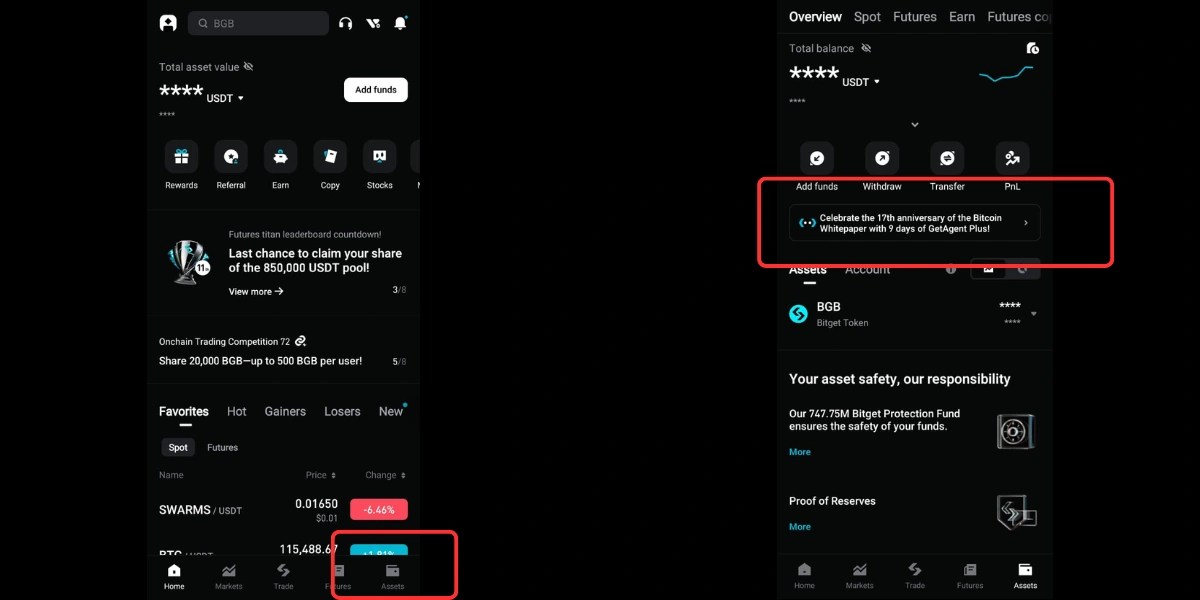
What is Bitget’s GetAgent? The AI trading assistant simplifying crypto investing
As artificial intelligence (AI) continues to evolve and scale, it is finding new applications in everyday operations. In the blockchain space, AI agents show immense promise in analyzing and executing successful trades without human intervention.
In late September, the Bitget crypto exchange reintroduced itself as a Universal Exchange, unveiling among its innovative offerings the AI-powered trading assistant, **GetAgent**. This one-of-a-kind intelligent application enables traders to access real-time industry news, perform portfolio analysis, and create and execute strategies — all directly from a simple chat interface.
In this article, we explore GetAgent’s value proposition, unique features, and its role within Bitget’s broader AI-powered trading strategy.
—
### What is GetAgent?
GetAgent is a chat-based artificial intelligence (AI) trading assistant integrated into the Bitget exchange. It embodies Bitget’s broader vision of becoming a **Universal Exchange (UEX)**. As a UEX, Bitget combines the best features of centralized and decentralized exchanges by integrating advanced tools and AI to offer users a seamless, all-in-one trading experience.
Described by CEO Gracy Chen as the “best AI in crypto,” GetAgent leverages core AI principles to transform complex trading strategies into actionable insights. It operates in a **“closed-loop system,”** continuously learning from users’ trading strategies and holdings to offer highly tailored trading recommendations suited both for beginners and seasoned traders.
—
### How Does GetAgent Work?
GetAgent employs a chat-based interface, allowing users to interact with an AI agent that performs trading tasks which otherwise require manual analysis and execution—tasks that can be time-consuming and prone to human bias.
The agent uses several applications of AI to deliver its functionality:
– **Natural Language Processing (NLP):** To understand and generate responses in a natural, conversational tone.
– **Machine Learning and Computer Vision:** To study patterns and price trends from charts, enabling intelligent decisions and predictions.
– **Data Analysis:** To extract insights from industry news and real-time market data, such as token prices and portfolio balances.
Combined with automation and trade execution capabilities, GetAgent becomes a powerful tool for executing trading strategies *without* leaving the chat interface.
—
### Examples of Queries You Can Ask GetAgent
– “Help analyze the BTC price trend.”
– “What futures are suitable to open for SOL right now?”
– “How are the BGB technical indicators?”
– “What is the hot news in the crypto market today?”
– “Analyze my portfolio and provide insights and recommendations.”
– “Help me buy 5 USDT of BTC.”
– “Is it better to go long or short on BTC right now?”
—
### Key GetAgent Functionalities
**1. Real-Time Market Analysis**
GetAgent aggregates and analyzes real-time market data using AI, helping traders make informed, data-driven decisions. It provides a deeper, more accurate view of asset movements by interpreting market trends, technical indicators, and industry news.
**2. Personalized Recommendations**
Before replying, GetAgent studies the account holder’s trading history, strategies, portfolio, and watchlist to offer personalized advice. Whether suggesting portfolio diversification or specific trades, the chatbot provides tailored recommendations aligned with your goals.
**3. Full Suite Integration**
GetAgent advances Bitget’s Universal Exchange vision by enabling investment in various financial assets — cryptocurrencies, stocks, ETFs, forex, gold, and even real-world assets (RWAs) like real estate and commodities. The chatbot supports spot and futures trading, investing, and automation via deployable trading bots.
**4. In-Chat Trade Execution**
Trade execution is seamless within the chat interface. GetAgent supports direct actions like token swaps and OnChain trades without needing to switch apps, saving time and reducing complexity in the fast-paced crypto market.
**5. Continuous Learning**
GetAgent continuously learns from your trading behavior, evolving to provide increasingly tailored feedback and suggestions that align with your unique strategies.
—
### 7 Reasons to Use Bitget GetAgent
1. **Comprehensive Portfolio Analysis & Execution:** Optimize your trading outcomes with real-time analysis and direct trade execution.
2. **Time-Saving Chat Interface:** Enter and exit markets swiftly without leaving the chat window.
3. **Personalized Strategy Optimization:** The AI studies your trading habits to enhance your strategy with overlooked data-driven insights.
4. **Simplified Trading Workflow:** Eliminate the hassle of toggling between multiple tabs and platforms.
5. **Beginner-Friendly Guidance:** NLP capabilities help first-time traders by suggesting strategies and guiding initial trades.
6. **Advanced Insights for Pros:** Data-backed analysis helps experienced traders sharpen their skills.
7. **Seamless Integration:** GetAgent works hand-in-hand with other Bitget features like Bitget Seed for discovering new cryptocurrencies and supports AI-enhanced copy trading.
—
### How to Access Bitget GetAgent
GetAgent is accessible from multiple points across the Bitget Universal Exchange interface:
– **Assets Page:**
From Bitget’s homepage, tap the ‘Assets’ button at the bottom right, then click the ‘GetAgent’ floating window above the assets tab for detailed AI portfolio analysis and strategy recommendations.
– **OnChain Token Page:**
Click the ‘Markets’ tab at the bottom of the homepage, select ‘OnChain,’ then choose a cryptocurrency and press the ‘GetAgent’ tab above the ‘Trade’ button for token-specific AI insights.
– **Trading Pages (Spot, Futures, Margin):**
Navigate to the ‘Markets’ tab, select your trading market and asset, then click the ‘GetAgent’ tab for quick, in-depth analysis before placing trades.
– **More / Shortcuts Menu:**
From the homepage, go to the ‘More’ tab under shortcuts, find GetAgent among the Bitget products, and select it. You can also add GetAgent to your homepage shortcuts using the ‘Edit’ button in the ‘Quick Access’ menu.
—
### GetAgent Plans
– **Free Plan:** Analyze the top 50 coins and use futures strategies.
– **Plus Plan:** Offers 10 daily questions, personalized strategy generation, and deeper market analysis.
– **Ultra Plan:** Provides priority access, up to 50 daily questions, and early access to new features.
—
### Conclusion
Bitget UEX is pioneering the next wave of intelligent, user-centric crypto trading with GetAgent. It is redefining how beginners learn crypto, how traders execute strategies, and how investors optimize portfolios by integrating advanced AI capabilities seamlessly within a chat interface.
With GetAgent, users no longer navigate complex dashboards or face delays—with the power of AI, your next trade begins with a simple question.
—
*Explore GetAgent today and revolutionize your trading experience on Bitget Universal Exchange.*
https://bitcoinethereumnews.com/crypto/what-is-bitgets-getagent-the-ai-trading-assistant-simplifying-crypto-investing/


Study finds women get more benefits from exercise than men
**Women Benefit More from Exercise Than Men, Study Finds**
A new study published Monday in *Nature Cardiovascular Research* reveals that women experience significantly greater health benefits from exercise compared to men. Researchers found that, with the same amount of physical activity, women have a three-fold reduction in their risk of death from heart disease compared to men.
These findings challenge the traditional “one-size-fits-all” exercise guidelines, which assume that both sexes receive the same benefits from identical amounts of exercise. The research team, led by Jiajin Chen, a research associate at the Xiamen University Institute of Cardiovascular Diseases in China, emphasized the need for sex-specific physical activity recommendations.
> “Compared with male individuals, females derive equivalent health benefits with only half the exercise time,” the team wrote. “The findings might have potential to encourage females to engage in physical activity.”
### Study Details
The study analyzed data from over 85,000 participants enrolled in the UK Biobank, a large-scale, long-term health research project in the United Kingdom. Each participant wore activity trackers on their wrists, providing objective measures of their physical activity levels.
The results showed that to reduce their risk of heart disease by 30%, men need about 530 minutes of moderate-to-vigorous exercise each week. Women, on the other hand, need only 250 minutes—less than half the amount—to achieve similar benefits.
When looking at the current exercise guidelines, women who met the recommended target of 150 minutes of weekly exercise had a 22% lower risk of heart disease. Men who met the same target experienced a 17% reduction in risk.
### Why Might Women Respond Better to Exercise?
Researchers suggest several physiological reasons for the differences between men and women. One key factor is estrogen—circulating estrogen levels are much higher in females and can promote body fat loss during physical activity.
Additionally, crucial differences in muscle mass composition between men and women might contribute to why exercise provides better cardiovascular benefits among females.
### Addressing the Gender Gap in Physical Activity
These findings come at a time when women are generally less physically active than men and are also less likely to address their heart disease risk factors adequately.
Dr. Emily Lau, director of the Women’s Heart Health Program at Brigham and Women’s Hospital in Boston, commented on the study in an accompanying editorial:
> “This study provides strong evidence that a one-size-fits-all approach cannot and should not be used to guide physical activity recommendations for men and women.”
She added,
> “Despite this apparent female physical activity advantage, previous work has shown that women are consistently less physically active and less likely to achieve recommended activity targets, highlighting the need to more specifically tailor physical activity recommendations to women.”
### Additional Resources
For more information on the benefits of physical activity for women, visit the American Council on Exercise website.
—
This research underscores the importance of personalized exercise guidelines that account for differences between men and women to optimize heart health outcomes for all.
https://www.upi.com/Health_News/2025/10/29/exercise-benefits-women-men-study/6441761756213/


MacPaw releases Moonlock, a standalone macOS security app with real-time protection, smart insights, built-in VPN, more
After teasing its release earlier this month, MacPaw, the macOS software company behind beloved apps such as CleanMyMac and Setapp, has officially launched **Moonlock** today. This all-new standalone cybersecurity application is designed to provide real-time protection, offer visibility into your Mac’s security posture, and deliver clear steps to improve it—all without requiring you to be a cybersecurity expert.
Built on the same engine that has powered CleanMyMac’s security features since 2023, Moonlock is backed by MacPaw’s in-house research lab. This team actively tracks Mac-specific malware, stealer families, AMOS variants, and other threats. Launching as a standalone app, Moonlock arrives at a critical moment for macOS users, with threats expanding faster than Apple’s native tools are evolving.
### Rising Threats and Growing Mac Adoption
Recent data reveals that 66% of Mac users faced a cyber threat last year. Additionally, MacPaw’s malware detections have increased by 20% in 2024 compared to 2023. Why the spike?
Mac adoption is surging. In the last quarter alone, Mac shipments outpaced global PC growth by nearly double, largely driven by increased enterprise adoption and the popularity of new models. This growth creates an expanding attack surface, making macOS an increasingly lucrative target for cybercriminals.
We’re in the midst of a significant shift—not one lost on MacPaw, which serves over 30 million users worldwide.
### What Is Moonlock?
If you’re already a CleanMyMac user, the name Moonlock might sound familiar. It’s the engine behind both the scanning and real-time malware detection features found under the Protection tab in CleanMyMac.
This engine, independently validated by AV-TEST and notarized by Apple, is now spun out into its own dedicated product. Freed from the constraints of a maintenance-focused framework, Moonlock offers more focused and advanced protection.
My favorite aspect of Moonlock is that it’s designed not only to detect and stop threats but also to make cybersecurity approachable. It features a user-friendly interface, unique sound design cues, and personalized insights intended to help users build lasting cybersecurity habits—rather than merely reacting to alerts.
—
## Key Moonlock Features
Let’s dive into what Moonlock offers. The application is divided into six main tabs:
### 1. Home
Home serves as your security control center. It’s the first screen upon opening the app, showing your protection level (mine said “Weakened Mac”), a list of hardening recommendations, feature monitors such as Detection History, and a visual representation of your Mac’s security status.
This is likely where you’ll spend most of your time checking your day-to-day cybersecurity posture.
### 2. Malware Scanner
Moonlock’s malware scanner works in two main modes: passive and active.
– **Passive Scanner**
Runs continuously in the background—even if you close the app. It scans every file you interact with, reacting immediately to malware or phishing attempts. Detected threats are halted and quarantined, with records viewable in the Detection History on the Home tab.
– **Active Scans**
Within the Malware Scanner tab, you can run three types of manual or scheduled scans: *Quick, Balanced,* and *Deep*. Scheduling scans with the Scan Planner lets you choose times when you’re not using your Mac, preventing interruptions.
All scanning is powered by the proprietary **Moonlock Engine**, validated by AV-TEST and notarized by Apple. During testing, the Scan Planner stood out as an excellent feature, allowing deep scans during idle hours—a godsend for uninterrupted productivity.
### 3. VPN
Moonlock includes a built-in VPN to protect your internet traffic. Like MacPaw’s separate ClearVPN app, it promises **no logging or tracking of user data**—a vital privacy safeguard because logs can be subpoenaed, breached, or sold.
The VPN also features a **Kill Switch**, which instantly cuts off your internet if the VPN connection drops. This dramatic but effective fail-safe protects your data until the connection is securely re-established.
### 4. Network Inspector
A unique feature rarely seen in user-facing apps, Network Inspector gives you control over where your Mac can connect. You can block specific countries known to be sources of malicious activity.
In my testing, I blocked about nine countries, including usual suspects like China and Russia. The list is exhaustive—even connections to the United States can be blocked.
When an app or website tries to connect to a blocked location, Moonlock immediately stops it. Functioning like a geo-firewall at the system level, it is based on real threat clustering. However, it’s a blunt tool that may block legitimate services and can be circumvented by proxies—so use it with caution.
### 5. System Protection
System Protection is an eye-opener for many users. After granting Moonlock system access, it performs a custom audit of your macOS security settings, including FileVault, firewall controls, privacy permissions, sharing settings, and encryption.
Better yet, it provides **clear, actionable, step-by-step instructions** to address any security gaps.
This is not generic advice. For example, it suggested:
– Switching my Mac account from Administrator to Standard User to limit what malware can do if I make a mistake.
– Using secure keyboard entry in Terminal to prevent other apps from eavesdropping on sensitive input.
– Disabling AirPlay when unnecessary to close a wireless entry point attackers could exploit.
All solid, practical tips that I found genuinely useful.
### 6. Security Advisor
Security Advisor acts as an educational center designed for users with little to no security experience. It offers safety tips and practical habits to avoid cyberattacks, presented as simple, sometimes fun micro-actions you can commit to directly in the app by clicking “Deal” buttons.
Examples include improving password strength, checking links before clicking, and managing risky app permissions.
Though it’s a basic 101 course, Security Advisor does a great job making security feel manageable and approachable for the average user.
—
## Price and Availability
Moonlock is available now for **$54/year**, with a **7-day free trial**. It is also included with MacPaw’s Setapp subscription.
—
I’m interested to hear your thoughts on the Moonlock app! Feel free to share your experiences and questions in the comments below.
https://9to5mac.com/2025/10/28/macpaw-releases-moonlock-a-standalone-macos-security-app-with-real-time-protection-smart-insights-built-in-vpn-more/