
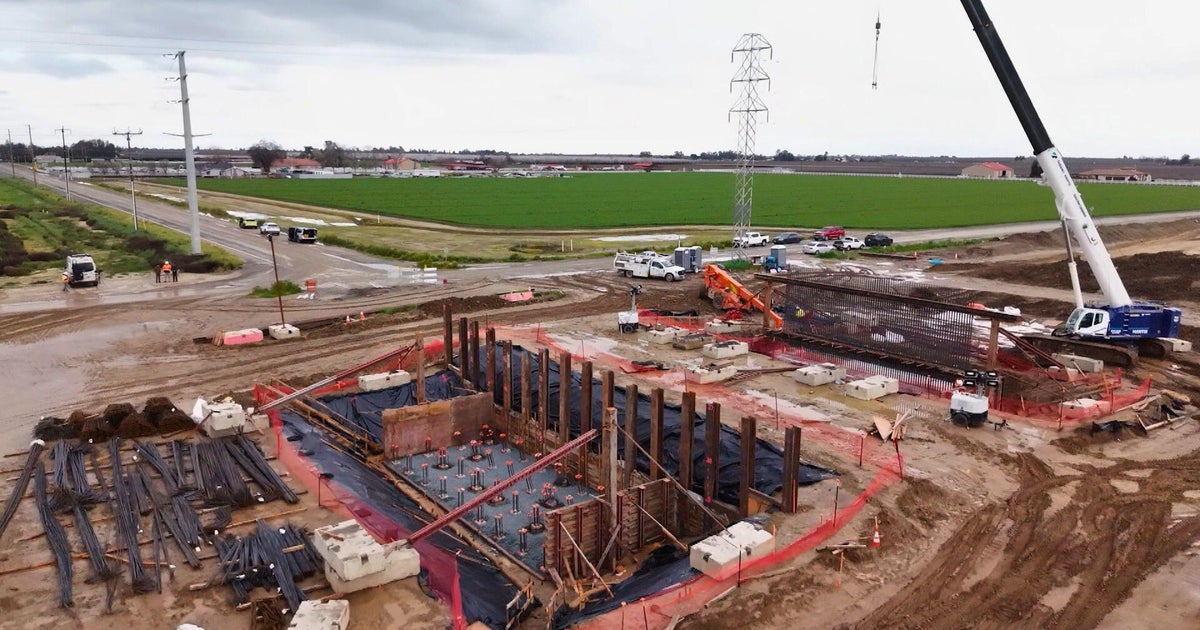
With high-speed rail ambitions in California delayed by years and coming in at a higher-than-expected cost, Lou Thompson, who sat on the state’s high-speed rail peer review group, said “failure is always an option.” He doesn’t think failure is what will necessarily happen in California, but earlier ambitions have been scaled back. When California voters approved a bullet train between Los Angeles and San Francisco in 2008, the estimated price tag was $33 billion, with a target completion date of 2020. Nearly two decades later, the California High-Speed Rail Authority is preparing to lay its first tracks to connect Bakersfield and Merced a portion of the original route with a target completion of 2033. “When you have a project like this, and when the budget no longer permits you to finish it the way you wanted to, you start cutting off your arms and legs,” Thompson said. What happened to California’s plans Rep. Vince Fong, a Republican representing California’s Central Valley, sits on the House Transportation and Infrastructure Committee. He says that when California voters first approved high-speed rail, the promise and price tag were more of a marketing campaign than a realistic projection. “We’re now in 2026. There are no trains. There’s no track laid,” he said. “It was a complete bait and switch.” It became clear after voters approved the plan in 2008 that the specifics hadn’t been worked out, Fong said. California Secretary of Transportation Toks Omishakin, who’s relatively new to the job agrees with that point. He’s been left to answer for his predecessors. “I don’t think the voters fully understood and neither did we in the public sector what it was going to take to actually get this project delivered,” Omishakin said. To get the necessary political buy-in from the whole state, the plan called for the train to run inland, threading the farmland of the Central Valley. But at the time, the California High-Speed Rail Authority hadn’t answered basic questions, like precisely where it could lay down its tracks, the public and private property the route would traverse what’s known as right of way So far, the state has had to negotiate roughly 3, 000 parcels of land to run its train through the Central Valley leg, Omishakin said. California’s environmental regulations have also slowed the process. Those regulations have triggered years-long reviews, lawsuits and delays which, combined with the relatively high cost of labor and construction in the U. S., have also added to the price tag. While the federal government made modest contributions to the project under the Obama and Biden administrations, the financial burden fell chiefly on California, and when construction started, the state didn’t have the financing to complete the full route. In 2019, with costs ballooning and the timeline years off schedule, bipartisan political pressure mounted. “Right now, there simply isn’t a path to get from Sacramento to San Diego, let alone from San Francisco to L. A.,” Gov. Gavin Newsom, who inherited the project, said at the time. Under Newsom, who didn’t respond to repeated interview requests, California decided to focus on completing that initial Central Valley segment. It’s a route few are likely to ride, according to the Rail Authority’s own projections. The ultimate goal remains connecting northern and southern California. More than 20 countries have high-speed rail. Why doesn’t the U. S.? The American rail system was once envied around the world. In the 1800s, the U. S. government oversaw the birth of the transcontinental railroad, stitching the country together as it expanded westward. In the 1950s, the Eisenhower administration decided to create and, critically, continuously fund the interstate highway system, fueling a car culture that still dominates today. Meanwhile, Japan’s bullet train opened in 1964. Today, more than 20 countries largely in Europe and Asia have high-speed rail, generally defined as cruising at 150 miles per hour or more. In Africa, Morocco has a train traveling at a top speed of nearly 200 miles an hour. And Egypt has broken ground on a high-speed rail line. “The simple answer is they’ve decided they want to do it and pay for it, and we haven’t,” Thompson said. Thompson, who is in his 80s said he’s dubious about the prospect of seeing high-speed rail completed in the U. S. in his lifetime. “But maybe yours, I don’t know,” he said. Can a private company make high-speed rail work in the U. S.? Brightline, a private company, believes it can achieve what California hasn’t. In 2018, it opened a train between Miami and Orlando that hits top speeds of around 125 miles an hour. While it’s not a high-speed rail, it’s akin to a beta test for Brightline’s next project: a bullet train connecting L. A. and Las Vegas in just two hours. It’s a trip that can take five hours by car. “Brightline West will be true high-speed rail, first time in the country,” Mike Reininger, managing director of Brightline West, said. “And we’ll operate at speeds of about 200 miles an hour maximum.” Brightline is avoiding complicated right-of-way issues out west by running on the median of the I-15 highway. Construction has already begun on some of the station structures. The plan is to start service in late 2029. The company says building out west will also avoid the tragedy that has plagued the south Florida route, where trains run at street level, through crowded neighborhoods. In the near-decade since operations began, more than 200 people have been hit and killed by Brightline trains, according to numbers compiled by The Miami Herald and local public radio station WLRN. It will be safer out west, the company says, where train crossings won’t be at street level. But there are also the finances. In Florida, stratospheric costs of building and running the rail line vastly outstrip revenues. Analysts have downgraded Brightline’s debt to junk, raising questions about private rail as a business. “The business has built slower than we originally expected it to build. We thought we would be carrying more passengers today than we are,” Reininger said. “The business is in fact growing month over month, year over year. That’s a great thing.” Brightline West has already received some federal funding and is hoping for a $6 billion loan from the Trump administration. Can California get the high-speed rail project back on track? In California, there’s not much hope for federal funding at the moment. In 2025, The Trump administration canceled $4 billion in grants previous administrations had committed to the state’s bullet train project, calling it the “worst cost overrun I’ve ever seen.” In a statement to 60 Minutes, Secretary of Transportation Sean Duffy said the administration is in favor of high-speed rail, but this project has “wasted billions in taxpayer dollars yet delivered nothing.” Omishakin said the California High-Speed Rail Authority believes it can complete the Central Valley segment without money from the federal government, but that the full route from L. A. to San Francisco would be challenging without it. Lou Thompson says large infrastructure projects like these require consistent, stable funding that only the federal government can provide, much like it did for the interstate highway system 70 years ago. Plus, he says, “a lot of the benefits of the project, the reason why you build a project, is public pollution reduction, congestion reduction, improved safety, comfort all of those things are public benefits.”.
https://www.cbsnews.com/news/us-high-speed-rail-60-minutes/
Tag Archives: transportation

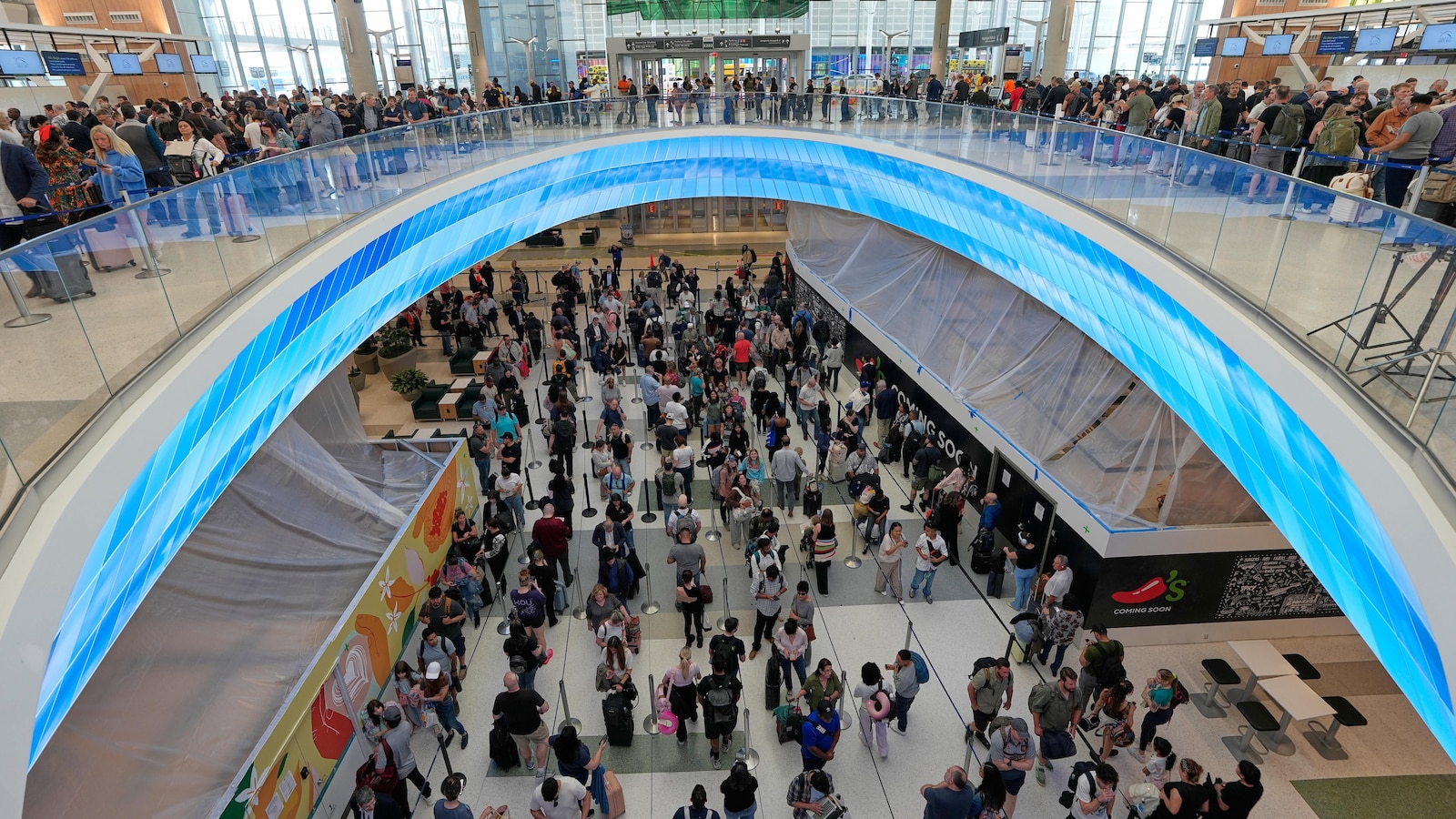
TSA pay may be coming, but airport delays could persist and ICE agents may not leave soon
Even after President Donald Trump ordered emergency pay for Transportation Security Administration agents to ease long security lines, major U. S. airports on Sunday were still urging travelers to arrive hours early and federal immigration officers brought in to help may not be leaving anytime soon. Trump’s executive order on Friday instructed the Department of Homeland Security to pay TSA officers immediately, though it’s unclear how quickly travelers will see an impact. The move comes during a busy travel stretch, with spring breaks underway and Passover and Easter approaching. Tens of thousands of TSA employees have been working without pay since DHS funding lapsed on Valentine’s Day. The department’s shutdown reached 44 days on Sunday, eclipsing the record 43-day shutdown last fall that affected all of the federal government. Trump deployed Immigration and Customs Enforcement agents to some airports a week ago to help with security as TSA callouts rose nationwide the same officers who may now remain in place if TSA staffing strains continue. Making the rounds on Sunday morning news shows, White House border czar Tom Homan said it depends on how many TSA employees would be returning to work after they start receiving their pay. “ICE is there to help our brothers and sisters in TSA. We’ll be there as long as they need us, until they get back to normal operations and feel like those airports are secure,” he told CBS’ “Face the Nation.” Speaking on CNN’s “State of the Union,” Homan said it also depends on how many TSA agents “have actually quit and have no plan on coming back to work.” Nearly 500 TSA officers have left the agency since the shutdown started, according to DHS. On Saturday night, Maryland Gov. Wes Moore said in a post on X that more ICE agents were being deployed to Baltimore-Washington International Airport to assist at TSA security checkpoints to “speed up the clearance process for passengers not immigration enforcement.” Homan, in his CNN interview, said he hopes TSA officers will be paid by Monday or Tuesday. “It’s good news because these TSA officers are struggling,” Homan said. “They can’t feed their families or pay their rent.” Also on Sunday, Charlotte Douglas International Airport said in a post on X that backpay could arrive for TSA agents beginning Monday. “While this action provides critical relief, CLT supports long-term solutions to ensure continued stability for this essential workforce,” the airport said. Johnny Jones, secretary-treasurer of the American Federation of Government Employees’ TSA chapter, said Sunday that he has heard from workers worried they may not receive their full back pay because TSA management was given very short notice to begin processing payments. He also said TSA agents are concerned they could miss pay for time they were unable to work because they couldn’t afford to report for duty. “It is a disaster in progress,” Jones said. Some of the busiest U. S. airports continued to ask travelers to plan ahead in order to get through security lines. Houston’s main airport, George Bush Intercontinental, warned Sunday evening that TSA wait times could reach four hours or longer. Atlanta’s Hartsfield-Jackson International Airport also told passengers to arrive at least four hours early for both domestic and international flights. LaGuardia Airport posted an alert Sunday evening on its website that “TSA lines are currently longer than usual.” Baltimore-Washington International Airport said Sunday on X that “wait times have greatly subsided on this Spring Break Sunday,” but it still asked passengers to show up several hours early. Louis Armstrong International Airport in New Orleans offered the same guidance. Also on Sunday, passengers could once again see estimated security wait times at the three main airports serving the New York City area LaGuardia, John F. Kennedy and Newark Liberty. All three had removed that feature from their websites earlier in the week, citing “rapid” changes in passenger volumes and TSA staffing. For the same reason, they cautioned that the restored wait times my not always “reflect current conditions”. It’s hard to tell. Caleb Harmon-Marshall, a former TSA officer who runs a travel newsletter called Gate Access, said the staffing crisis won’t improve significantly until officers are confident that they won’t be subjected to more skipped paychecks. “It has to be an extended pay for them to come back or want to stay there,” he said, estimating longer lines could linger for another week or two. Jones, the TSA union leader, offered a more optimistic outlook on Sunday, saying he’s hopeful that passengers could see wait times ease closer to typical levels once workers are able to afford basic expenses like gas to get to work. TSA will also have to decide whether to reopen the checkpoints and security lanes they closed or consolidated at some airports due to inadequate staffing, which led to passengers standing in screening lines that clogged check-in areas or showing up far too early for their flights. A handful of airports have experienced daily TSA officer call-out rates of 40% or higher in recent weeks. ___ Sedensky reported from New York, Yamat from Las Vegas and Raby from Charleston, West Virginia. Associated Press journalist Julie Walker contributed from New York.
https://abcnews.com/US/wireStory/tsa-pay-coming-airport-delays-persist-ice-agents-131505155
Trump says he will sign an emergency order to pay TSA agents during funding impasse
President Trump said Thursday he would sign an order instructing the Homeland Security secretary to immediately pay Transportation Security Administration agents as Congress struggled to reach a deal to end a budget impasse that has jammed airports and left workers without paychecks. Trump announced his decision in a social media post saying he wanted to quickly stop the “Chaos at the Airports.” “It is not an easy thing to do, but I am going to do it!” the president posted. With pressure mounting, the White House had floated the extraordinary move of invoking a national emergency to pay TSA agents, while senators were reviewing a “last and final” offer from Republicans to Democrats to end the funding impasse at the Department of Homeland Security. Details of the president’s plan were not immediately available, but a national emergency declaration would be politically fraught and almost certain to face legal challenges. Instead, the president may simply be shifting money from other sources. Democrats have been refusing to fund Homeland Security as they seek changes to rein in Trump’s immigration enforcement operations. The Senate came to a standstill and senators, ready to leave town for their own spring break, had prepared to stay all night to reach a deal. “The president is doing absolutely the right thing,” said Sen. John Barrasso (R-Wyo.), the GOP whip. “The TSA agents are going to be paid.” Sen. Susan Collins (R-Maine), the chair of the Appropriations Committee, has said there is funding elsewhere that can be legally used to pay the TSA as well as the Coast Guard without declaring a national emergency. The funding shutdown, now in its 41st day, has resulted in travel delays, missed paychecks and even warnings of airport closures. TSA workers are coming up on their second missed payday Friday, with thousands refusing to show up for work. Multiple airports are experiencing greater than 40% callout rates of TSA workers and nearly 500 of its nearly 50, 000 transportation security officers have now quit during the shutdown. Nationwide on Wednesday, more than 11% of the TSA employees on the schedule missed work, according to DHS. That is more than 3, 120 callouts. Trump, who has largely left the issue to Congress to resolve, had warned he was ready to take action, even threatening to send the National Guard to airports, in addition to his deployment of ICE agents who are now checking travelers’ IDs a development drawing concerns. The White House has been considering a menu of options. “They need to end this shutdown immediately or we’ll have to take drastic measures,” Trump said during a morning Cabinet meeting at the White House. At George Bush Intercontinental Airport in Houston, Melissa Gates said she would not make her flight to Baton Rouge, Louisiana, after waiting more than 2½ hours and still not reaching the security checkpoint. She said no other flights were available until Friday. “I should have just driven, right?” Gates said. “Five hours would have been hilarious next to this.” A ‘last and final’ offer on the table Earlier Thursday, Senate Majority Leader John Thune (R-S. D.) announced he had given the final offer to Democrats. Thune did not disclose details of the new framework, but he said that it picked up on what had been the Republican offer over the weekend, before talks with the White House and Democrats had broken off. “Enough is enough,” he said. But as senators retreated to privately discuss the new plan, the action stalled out. Democrats argue the GOP proposals have not gone far enough at putting guardrails on officers from ICE, Customs and Border Protection and other federal agencies that are engaged in the immigration sweeps, particularly after the deaths of two Americans protesting the actions in Minneapolis. They want federal agents to wear identification, remove their face masks and refrain from conducting raids around schools, churches or other sensitive places. Democrats have also pushed for an end of administrative warrants, insisting that judges sign off before agents search people’s homes or private spaces. Senate Democratic leader Chuck Schumer of New York said they needed to see real changes. “We’ve been talking about ICE reforms from day one,” he said. Any deal will almost certainly need to involve a compromise as lawmakers on the left and right flanks revolt. Conservative Republicans have panned their own GOP proposals, demanding full funding for immigration operations and skeptical of the promise from leaders that they would address Trump’s proof-of-citizenship voting bill in a subsequent legislative package. Republicans said after a private lunch meeting that there were other options to shift money than invoking the national emergency. The GOP’s big tax cuts bill that Trump signed into law last year funneled billions to DHS, including $75 billion for ICE operations, ensuring the money is flowing for his immigration and deportation agenda even with the funding shutdown. ICE and other immigration officers are still being paid. Republicans say the Trump administration has already made strides to meet Democrats’ demands, particularly after swearing in former Oklahoma Sen. Markwayne Mullin as the new homeland security secretary to replace Kristi Noem. He has given a nod to the need for the judicial warrants for searches. Airport lines grow as TSA workers endure hardships “This is a dire situation,” the acting TSA administrator, Ha Nguyen McNeill, testified at a House hearing Wednesday. She described the multiple hardships facing unpaid TSA workers piling-up bills and eviction notices, even plasma donations to make ends meet and warned of potential airport closures if more employees refuse to come to work. “At this point, we have to look at all options on the table,” she said. McNeil also said TSA officers working at the nation’s airports had experienced a more than 500% increase in the frequency of assaults since the shutdown began. “This is unacceptable,” McNeill said.
https://www.latimes.com/world-nation/story/2026-03-26/trump-says-he-will-sign-emergency-order-to-pay-tsa-agents

No ICE agents at Logan Airport yet as agents deploy to busy airports
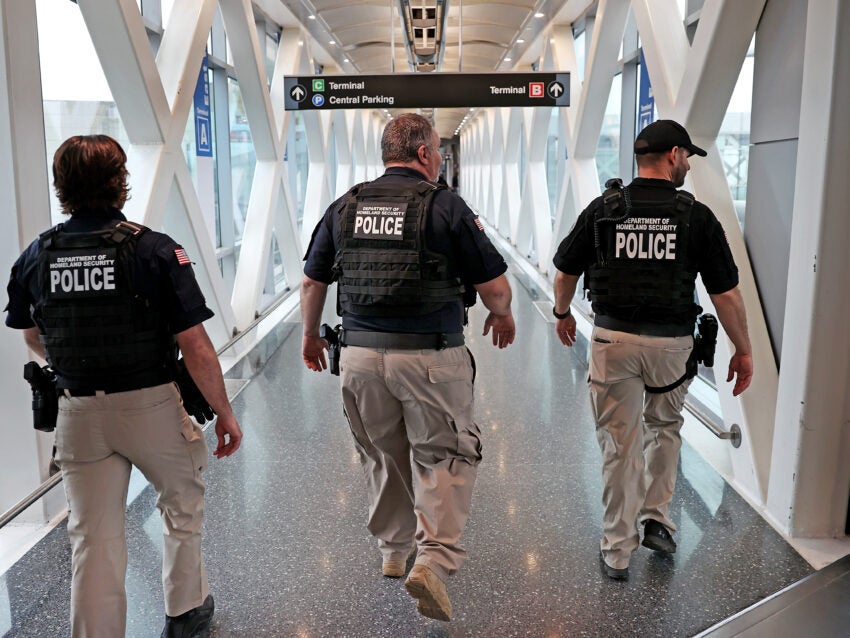
No ICE agents took up Transportation Security Administration roles at Logan Airport in Boston Monday as President Donald Trump orders federal immigration agents to beleaguered airports, the local union said. ICE agents were not deployed to any New England airport, according to Mike Gayzagian, the president of AFGE Local 2617, the New England branch of the TSA officers’ union. Agents could come next week, but those rumors are unsubstantiated, Gayzagian said. A group of DHS officers were seen at Logan Monday and indicated to The Boston Globe they were part of a “Visible Intermodal Prevention and Response” operation, a TSA specialized security team that has been in operation for years, the paper reported. As the partial government shutdown continues into its second month, funding for DHS, including U. S. Immigration and Customs Enforcement, is at the center of the shutdown. Trump said Sunday he would send ICE agents to airports starting Monday. Massport confirmed ICE agents were not deployed at Logan International Airport, but deferred to the TSA. Speaking for TSA, DHS declined to say if agents were deployed to New England airports, citing “operational security reasons.” ICE agents were deployed to 14 airports, CNN reported, where airport wait times were reaching multiple hours. Logan Airport, where the majority of TSA agents have stayed at work, has so far avoided the delays plaguing other major hubs. Here are the airports, per CNN, where ICE agents were deployed, where Trump promised they would arrest “all Illegal Immigrants.“.
https://www.boston.com/news/local-news/2026/03/23/no-ice-agents-at-logan-airport-yet-as-agents-deploy-to-busy-airports/
Rideshares to and from LAX could get more expensive under new proposal
At the top of the list of things people don’t like about LAX are the traffic in and out of the airport and the high cost of rideshares. Now, airport officials are proposing a plan they hope will ease one of those problems while increasing the other.
On Tuesday morning, Los Angeles World Airports (LAWA) board members are expected to vote on whether to increase the access fees for private transportation companies that ferry travelers to and from Los Angeles International Airport. This includes rideshare companies such as Uber and Lyft, along with taxi and limousine services.
The proposal aims to encourage riders to use the yet-to-open Automated People Mover, also known as Skylink, and reduce vehicle traffic around the terminals.
### Travelers React to Proposed Fee Increase
Travelers at the airport Monday who heard about the vote were incredulous.
“We expect rides to be expensive like in every city but for it to go up even more is kind of crazy,” said Jordan Conway, who was catching a ride into the city after arriving from Nashville with his friend for their annual trip to Southern California. Their ride from the airport was projected to cost about $80.
Currently, rideshare companies including Uber and Lyft pay $4 to access the airport for pickups and drop-offs. Under the proposed plan, the fee would rise to $12 to access the airport’s central terminal area, and $6 for picking up and dropping off at Skylink.
The increases would also apply to black car, taxi, and limousine drivers, who currently pay nothing to drop off passengers curbside at the airport.
### Uber Pushes Back
Uber has begun reaching out to its customer base to rally opposition to the plan. In an email sent Monday, Uber stated, “LAX is pushing through a proposal that would more than double the fees you pay to get picked up or dropped off by rideshare.”
LAWA officials told The Times there is room to reconsider when the new fees would be implemented, possibly postponing until after the long-delayed Automated People Mover actually opens.
### Delay and Details on the Automated People Mover
The train, originally slated to open in 2023, has faced significant delays due to disputes between the airport and contractor LAX Integrated Express Solutions involving timeline, compensation, and production issues.
David Reich, deputy executive director for mobility strategy at Los Angeles World Airports, said the people mover is now scheduled to open in early summer. It’s anticipated to run 24/7 in four-car sets, two minutes apart during peak hours, accommodating up to 200 passengers per train.
LAWA estimates the train will move 85 million passengers per year.
“By distributing traffic amongst multiple locations rather than funneling it all into the central terminal area, we can reduce gridlock, improve safety, and give passengers better options on how to get to LAX,” Reich said.
“It’s just not sustainable anymore for all the vehicles — 80,000 to 100,000 a day — to come into that very limited curb front.”
### Fee Increase Justified by Market Rates
The proposed access fee increase would be the first at LAX in 10 years, according to airport officials. Fees at LAX have traditionally been below other major travel hubs, including Boston, Seattle, and San Francisco International Airports, where rideshare companies are charged $6 for access.
“We’ve made all these investments, so it makes sense now to look at getting those fees on par with the market rate for access,” Reich explained.
How companies decide to navigate the additional cost, or whether to pass it on to customers, remains up to them. This could affect how some people move around the city.
### Impact on Travelers
Brandon Bailey, who flew into LAX from Texas on Monday morning, told The Times the potential increase will leave a hole in his travel budget.
“It’ll definitely affect my travels, I come in every month for work,” Bailey said. “I’m just going to pay it, but I’m paying more today than I ever have.” His Uber ride from the airport to his destination was priced at $58.
Along with increasing the access fees, the board is also discussing a limit on rideshare pickups: allowing only 30% of pickups at the central terminal area within the airport horseshoe, with the remaining 70% at Skylink. For passenger drop-offs, the percentages would be reversed, Reich said.
The current proposal allows the board to increase the fees 30 days after the vote, but implementation may be delayed until the people mover is operational, Reich added.
### Political Response and Public Criticism
On Monday afternoon, seven state Assembly members and two state senators issued a statement calling on the board to delay the vote. They echoed Uber’s criticism that the public did not have enough time to consider the proposal or understand the reasoning behind it.
“At a time when Californians face a persistent affordability crisis, we should carefully consider policies that increase transportation costs or make work opportunities connected to the airport more difficult to access,” the statement said.
However, LAWA maintains they have been studying how to implement policies around Skylink since 2020. Reich said, “In earnest, we started talking about plans, both publicly to our board and directly to Uber and Lyft and other companies, since at least 2023.”
### Expert Takes: Rising Costs and Travel Hacks
John E. DiScala, creator of the travel tips and deals website Johnny Jet, said the proposal comes at a difficult time as gas prices are also rising.
DiScala noted he doesn’t know if Uber or Lyft passing the fee increase on to customers will change traveler behavior. But the overall rising costs for gas and other essentials are adding up.
So much so, he said, that his neighbor recently asked for a ride to LAX to avoid paying for a rideshare.
One possible effect could be on hotel shuttles to the airport — a trick DiScala uses when traveling alone. He predicts hotels may crack down on shuttle riders who are not staying at their facilities.
Instead, people might start asking friends who live near the airport for rides.
“There is a saying that you know someone loves you if they pick you up at LAX,” he said.
—
This proposal reflects the ongoing balancing act at LAX between improving infrastructure and managing the costs and convenience for travelers and transportation providers alike. As the vote approaches, many eyes will be on how the changes could reshape travel to and from one of the nation’s busiest airports.
https://www.latimes.com/california/story/2026-03-09/rideshares-to-from-lax-could-get-more-expensive-under-new-proposal
Bodies of all 9 missing skiers in deadly California avalanche have been recovered, authorities say
TRUCKEE, Calif Crews recovered the bodies of nine backcountry skiers who were killed in a California avalanche four days ago, authorities said Saturday, concluding a harrowing operation hindered by intense snowfall. A search team reached the bodies of eight victims and found one other who had been missing and presumed dead since Tuesday’s avalanche on Castle Peak near Lake Tahoe. The ninth person who was missing was found “relatively close” to the other victims, but it was impossible to see them because there were white-out conditions on Tuesday when the others were located. The recovery efforts had been put on hold for several days because of heavy snow and the threat of more avalanches. Helicopters with the California National Guard and California Highway Patrol recovered the bodies on Saturday morning by hoisting them from the mountain and bringing them to nearby snowcats trucks outfitted for transportation on the snow. Officials said on Friday that they were using water to break up the snow in the area as avalanche mitigation work, a technique that is designed to intentionally release unstable snowpack to reduce the risk when rescue crews go in. The mitigation and search efforts have included California Highway Patrol air operations, Nevada County Sheriff’s search and rescue, Tahoe Nordic search and rescue, the utility company Pacific Gas & Electric, the Sierra avalanche center and others. Victims Carrie Atkin Truckee-Tahoe area Danielle Keatley Marin County, CA Kate Morse Marin County, CA Kate Vitt Marin County, CA Caroline Sekar San Francisco, CA Liz Clabaugh Boise, ID The three remaining victims were identified on Saturday. All were professional guides. Andrew Alissandratos Nevada Nicole Chu South Lake Tahoe Michael Henry-Tampa, FL KGO-TV/ABC7 Eyewitness News contributed to this report.
https://abc30.com/post/9-bodies-missing-skiers-deadly-california-avalanche-have-been-recovered-authorities-say/18631146/


EUR/USD eases from weekly highs as the US Dollar picks up
EUR/USD is pulling back from highs above 1. 1600, but keeps most of its weekly gains, trading at 1. 1585 at the time of writing on Thursday. Growing confidence that the Federal Reserve will ease its monetary policy further over the coming months is weighing on the US Dollar, while hopes of a peace deal between Russia and Ukraine have supported the common currency this week. Economic data released on Wednesday revealed a larger-than-expected increase in US Durable Goods Orders and a decline in weekly Initial Jobless Claims, but that did not alter the view that the US central bank will cut rates by 25 basis points after their December meeting. Beyond that, rumours that White House National Economic Council Director Kevin Hassett an open dove will replace Jerome Powell as Fed Chair after the end of his term in May, cement hopes that the bank will cut rates at least two or three more times in 2026. Trading volumes are expected to remain subdued on Thursday, with US markets closed for the Thanksgiving bank holiday. During the European session, however, the Eurozone’s Consumer Confidence index and the minutes of the European Central Bank’s latest monetary policy meeting might provide some guidance for the Euro (EUR). Monetary policy divergence is weighing on the US Dollar While most of the world’s major central banks are at the end of their easing cycles, the Fed is widely expected to cut interest rates by at least a full point in the next 12 months. Unless this context changes radically, prospects of a lower yield are likely to weigh heavily on speculative demand for the US Dollar. On the macroeconomic front, December’s German GfK Consumer Confidence Survey has shown a moderate improvement to -23. 2, from -24. 1 in November. The impact on the Euro, however, has been marginal. On Wednesday, US Durable Goods Orders data showed a 0. 5% growth in September, following an upwardly revised 3% growth in August, and beating expectations of a 0. 3% increase. Excluding transportation, orders for all other products grew 0. 6%, higher than the 0. 2% market consensus. Apart from that, weekly US Initial Jobless Claims declined to a seven-month low of 216, 000 in the week of November 22, from 222, 000 in the previous week, against expectations of a moderate increase to 225, 000 claims. The focus on Thursday will be on the Eurozone’s final Consumer Confidence Index, which is expected to confirm a -14. 2 reading in November, unchanged from October. Later in the day, the ECB will release the minutes of its October 30 monetary policy meeting, when the central bank’s committee agreed to keep its benchmark interest rate unchanged at the 2. 0% level. Technical Analysis: EUR/USD met resistance above 1. 1600 The EUR/USD pair is on a bullish trend from the 1. 1500 area, but the top of the descending channel from early October highs, now around 1. 1620, is likely to pose a significant resistance for Euro bulls. Technical indicators are positive, the 4-hour Relative Strength Index (RSI) is trading near the 60 level, and the Moving Average Convergence Divergence (MACD) keeps trending higher above the zero line. Bulls, however, will have to breach trendline resistance above the mentioned 1. 1620 to confirm a trend shift and aim towards the October 28 and 29 highs, near 1. 1670, and the October 17 high, near 1. 1730. On the downside, immediate support is at the previous resistance level of 1. 1550 (around November 21 and 24 highs). Further down, the 1. 1500 psychological level and the November 5 lows, near 1. 1470, will provide support before the channel bottom, now around 1. 1420.
https://bitcoinethereumnews.com/finance/eur-usd-eases-from-weekly-highs-as-the-us-dollar-picks-up/

Interstate 5 drivers can expect record-breaking travel, increased CHP presence over Thanksgiving
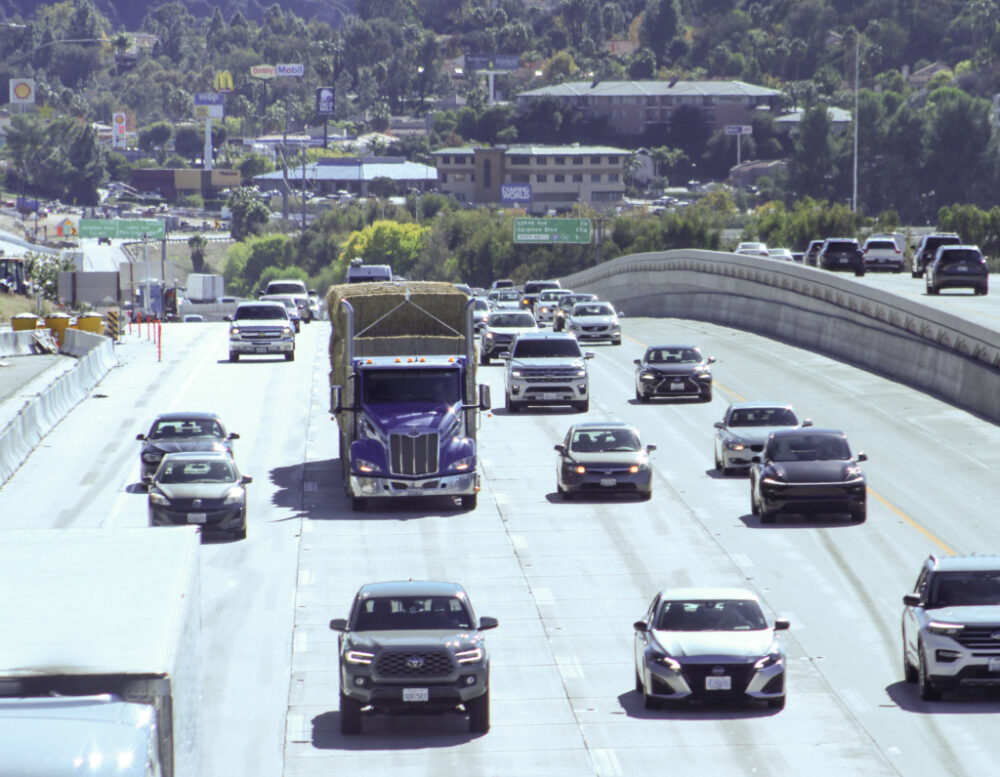
Commuters on Interstate 5 this week may have noticed a significant uptick in traffic over the past few days. California Highway Patrol officials said that they’re expecting more traffic on the I-5 this week as motorists travel for the Thanksgiving holiday. CHP has designated the period between 6 p. m. Tuesday to Sunday at midnight as a Holiday Enforcement Period, or a period of increased presence on the road in the midst of higher travel activity. The holiday weekend also overlaps with one of CHP’s Maximum Enforcement Periods this year, said Officer Carlos Burgos-Lopez, a spokesman for the CHP’s Newhall-area Office. “During the HAPs and MAPs release last week that it projected local residents would be traveling in record-breaking numbers during the Thanksgiving holiday period. “(Auto Club) projects 6. 78 million local residents will travel 50 miles or Out of those 6. 78 million travelers, 5. 88 million of them are expected to be traveling by car, according to the release, a 2. 7% increase over Auto Club’s 2024 car travel numbers. Burgos-Lopez said CHP officers will be focusing on DUIs and assisting disabled motorists, and that motorists should keep the expected holiday travel conditions in mind. “Just be aware that it’s obviously a travel time of the year for Thanksgiving and Christmas. They’re going to come across a lot more traffic than expected,” Burgos-Lopez said. Officer Erik Larsen with CHP Traffic Management confirmed that there were no wind advisories, upcoming California Department of Transportation closures or rain expected in the Santa Clarita Valley corridor during the Thanksgiving travel period.
https://signalscv.com/2025/11/interstate-5-drivers-can-expect-record-breaking-travel-increased-chp-presence-over-thanksgiving/


Legacy of Mayor Marilyn Hatley
On Thursday, November 20, 2025, the City of North Myrtle Beach honored Mayor Marilyn Hatley for nearly three decades of devoted leadership at the forefront of the City of North Myrtle Beach. “We are deeply grateful to have been guided by such a strong, visionary woman-both on City Council and as our Mayor.” “Her strength, compassion and unwavering commitment have shaped North Myrtle Beach for the better, creating a lasting impact on residents and visitors alike.” “Mayor Hatley, thank you for 29 years of exceptional service.” “City legacy projects she has played important roles in”: “Beach Preservation: Mayor Marilyn Hatley created a pivotal movement when it came to making the North Strand beaches healthy and beautiful. She also served and was the leading pioneer behind the South Carolina Beach Advocates, along with Mayor Goodwin in Folly Beach, South Carolina.” “North Myrtle Beach Park and Sports Complex: Mayor Hatley also played a massive role in helping to advocate for an expansion to the Park and Sports Complex. The city dedicated $36 million toward the first part of the expansion, including six new baseball/softball fields and multipurpose fields (soccer, lacrosse, etc.).” “North Myrtle Beach Aquatic and Fitness Center: Mayor Hatley was the movement behind creating the notable Aquatic and Fitness Center in North Myrtle Beach. She fought relentlessly to make the Fitness Center what it is today, and was also a leading part of the expansion that will be taking place in 2026. She cared for members, residents and those looking to move to the city to have something for everyone to stay fit and healthy.” “Robert Edge Parkway Bridge: A vital connection that improved and eased traffic in North Myrtle Beach is another one of Mayor Hatley’s greatest legacy accomplishments. This is considered one of the busiest in North Myrtle Beach, with a 2023 South Carolina Department of Transportation study showing the daily count at 44, 900 vehicles a day.”.
https://www.nmbtimes.com/legacy-of-mayor-marilyn-hatley/

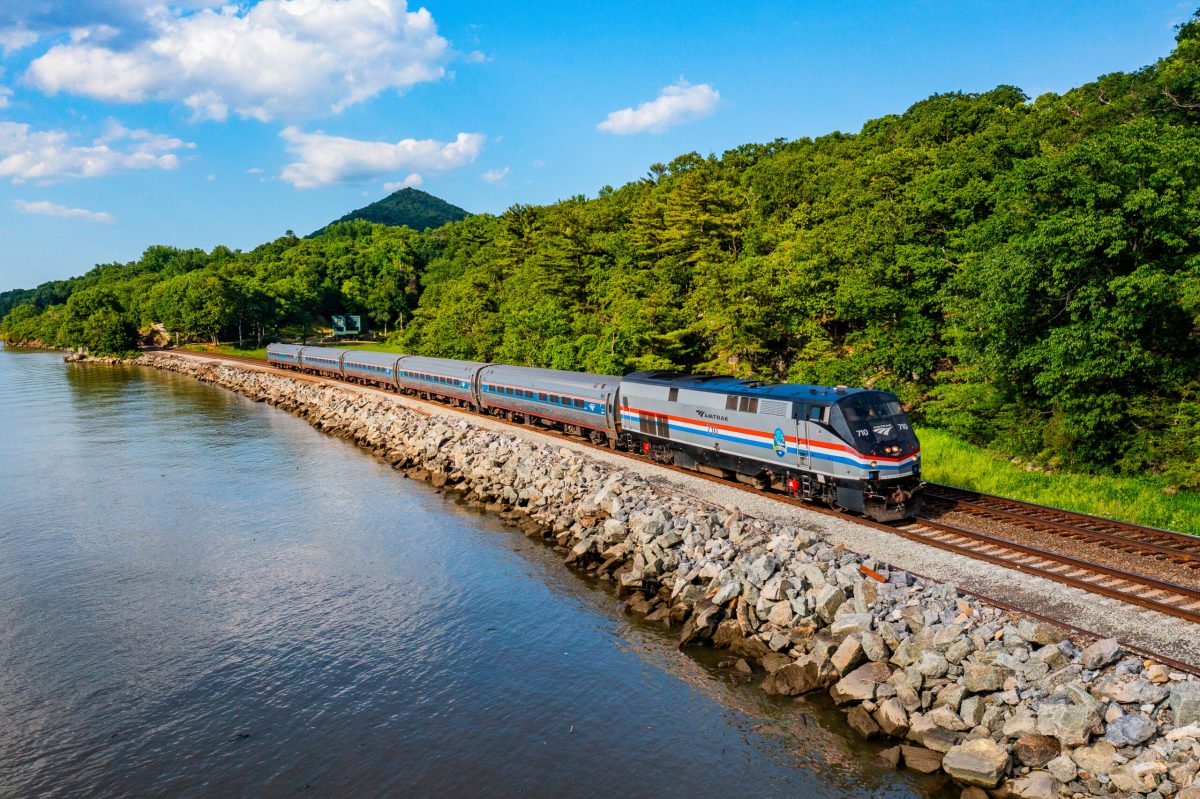
America Is Finally Falling in Love With Amtrak. The Tracks Can’t Keep Up
As millions of Americans crowd highways and airports this Thanksgiving week, Amtrak is enjoying an unexpected surge: a record 36. 2 million passengers in fiscal year 2025, up a remarkable 10 percent from the year prior. The company calls it a “historic milestone” for U. S. public transportation. “These results show what’s possible when we lead with purpose,” Amtrak President Roger Harris said in a statement shared with Newsweek. But while ridership is surging, the country’s aging rail infrastructure remains far from ready to meet the demand. Amtrak’s popularity spike comes as the broader travel industry cools. According to the 2025 Deloitte Holiday Travel Survey, more than half of Americans plan to travel between Thanksgiving and early January, the highest intent in five years, but they’re spending less overall. Average trip budgets are down 18 percent, and many travelers are choosing to drive or take the train instead of flying to save money. That shift is benefiting Amtrak, whose fares are typically lower than airfare on short routes and appeal to cost-conscious travelers tired of packed airports and rising ticket prices. “These numbers show that Americans want more train travel, not less,” Amtrak CEO Stephen Gardner said. Yet as more travelers rediscover rail, experts warn the U. S. lacks the infrastructure needed to sustain that momentum, to say nothing of the political will. John Robert Smith, former chairman of Amtrak’s board and longtime chair of Transportation for America, said the country’s failure to modernize its rail network stems from decades of policy neglect. “National leaders often ask why we can’t have passenger rail service like Europe or Asia,” Smith told Newsweek. “The simple answer is that those governments chose to invest in passenger rail as a vital form of connectivity. In this country, we haven’t done that.” Smith, who also served as mayor of Meridian, Mississippi, recalled that when he joined the Amtrak board in 2002, “the U. S. was spending more money collecting roadkill from highways than on the entire national passenger rail system.” The result, he said, is a “highway-centric nation” that never matched that investment with comparable support for rail. America’s Rail Gap Is Widening That imbalance has left the U. S. far behind its global peers. China has built more than 25, 000 miles of high-speed rail since 2008, while France’s TGV network regularly runs trains above 180 mph. By contrast, no Amtrak line meets international high-speed standards. A May 2025 Bechtel Group report said the U. S. has struggled to advance high-speed rail because of inconsistent funding, slow and fragmented permitting, complex land acquisition, and delivery systems that have not kept pace with the scale of the projects. “We’ve been trying to develop high-speed rail in the U. S. for a long time. We have not really succeeded,” said Eric Goldwyn, a transportation and land-use professor at NYU’s Marron Institute, in comments to the outlet SmartCitiesDive. “The biggest barrier has been funding.” Funding has long defined the modern Amtrak era. Joe Biden’s 2021 Bipartisan Infrastructure Law allocated $66 billion for rail the largest federal investment since Amtrak’s founding in 1971. But four years later, much of the money remains tied up in planning, permitting and negotiations with states and private freight owners. According to the Federal Railroad Administration, fewer than a dozen major rail projects have moved beyond preliminary design, and only a small number, such as the Gateway Tunnel between New York and New Jersey and parts of the Chicago Hub Improvement Program, have broken ground. (The Trump administration said it was shutting down Gateway because it was a “Democrat project,” despite the infrastructure improvements being critical for the nation’s biggest economy.) Smith said the uneven progress illustrates a larger issue. “We made a historic promise with the infrastructure bill, but we haven’t matched it with the urgency or coordination it demands,” he said. “The money is there, but the willpower to execute at scale is not. Until we treat rail as essential infrastructure like highways or airports we will keep falling behind our global peers.” Meanwhile, expectations are shifting. The Deloitte survey found that Generation Z and millennials now make up half of all U. S. holiday travelers, a generational change that is reshaping not only where Americans go but how they get there. Younger travelers are gravitating toward more affordable, lower-carbon options and increasingly see rail as a convenient, environmentally friendly alternative. Momentum Is Growing Last year, 1. 2 million people traveled by train for Thanksgiving, far fewer than the roughly 18 million who flew, but experts say the trend line is changing. Amtrak’s bookings for the 2025 holiday season are already up by double digits compared with last year, with Northeast Corridor routes selling out days ahead. “People are rediscovering something that should never have been forgotten,” Smith said. “Rail connects people in a way that air travel never will. It ties communities together.” For Amtrak and rail advocates, the ridership boom is both a warning and an opportunity. Air travel continues to deteriorate, and federal data shows consumer complaints against U. S. airlines hit a record high in 2024. Rail is becoming increasingly attractive as a result. “If Amtrak’s success this year shows anything, it’s that demand is not the issue,” Smith said. “We’ve reached a point where people want the train, but the infrastructure to support them is not there yet.” Amtrak officials say the gap is starting to narrow. The company has committed more than $22 billion in federal infrastructure funds to replace aging bridges, tunnels and trainsets as part of a sweeping modernization plan focused on long-distance service and its busiest corridors. One early win has emerged along the Gulf Coast, where Amtrak’s restored service between New Orleans and Mobile has exceeded expectations, doubling and in some cases tripling early ridership and revenue projections. Smith called the route “a bellwether for what passenger rail can become nationwide, not just for mobility but for economic development in every town it serves.” What Comes Next for Amtrak Although previous administrations have faced criticism for slow progress on rail modernization, there is growing agreement that Amtrak’s survival and its recent growth rest on a rare source of political unity. Earlier this year, the Trump administration’s fiscal 2026 transportation budget proposed flat funding for Amtrak at about $2. 4 billion. Rail advocates described it as a continued commitment to the national network. The plan increases support for long-distance routes while reducing federal assistance for the critical Northeast Corridor, a shift officials say reflects stronger revenue on that corridor after record ticket sales. “After decades of cuts and uncertainty, even flat funding is a sign of bipartisan recognition that rail matters,” said Jim Mathews, president and CEO of the Rail Passengers Association. “With predictable investment, trains can give Americans a safer and more efficient travel alternative to congested roads and highways.” Transportation advocates see that as evidence of momentum increasingly crossing party lines. “We’re seeing a growing bipartisan recognition that rail is an important piece of the U. S. transportation network,” Mathews said. For Smith, the lesson is straightforward: Americans have decided they want passenger rail. The question now is whether Washington will meet that demand. “We’re finally at a point where people want the train,” he said. “The next question is whether we will build the country to match that demand.”.
https://www.newsweek.com/america-is-finally-falling-in-love-with-amtrak-the-tracks-cant-keep-up-11110010