

Your friendly wolf companion in Ghost of Yotei is not just there to add to the mystique. You can rank up a special skill tree to turn your lupine friend into a supplementary murder machine that can help you out in challenging situations. To do so, you need to earn its trust by finding all the wolf dens in the game and completing the mission attached to each one. All Wolf Den locations in Ghost of Yotei When you find each wolf den, you will need to follow the wolf and assist it. Usually, this will mean taking on enemies who are trying to kill wolves in the local area, and sometimes it will mean a duel against a particularly powerful foe, so be careful. Yotei Grasslands Great Mountain Wolf Den this den can be found to the northwest of the Crow’s Nest Watchtower. Green Hill Wolf Den this den is located south of Leake Shikotsu, beside the road that runs south to Shirahige Falls. Ishikari Plains Old Wound Wolf Den this can be found west of the Rumoi River, to the northwest of Stone Jaw Coast. Dying Fire Wolf Den is found to the west of the Matasumae Outpost. Tokachi Range Howling Fields Wolf Den can be found to the south of the Boar’s Eye Cave. Hunter’s Watch Wolf Den can be found in the center of the Ohara Plains. Nayoro Wilds White Scars Wolf Den this is found just north of Kankan Creek along the Nupur River. Teshio Ridge Cold Lake Wolf Den this den can be found to the east of Sarobetsu Lake. Biting Wind Wolf Den this can be found to the north of the Sentinel Forest. Oshima Coast Waterfall Wolf Den this den can be found to the east of the Saito Artillery Outpost.
https://www.shacknews.com/article/146946/all-wolf-den-locations-ghost-of-yotei
Tag Archives: supplementary

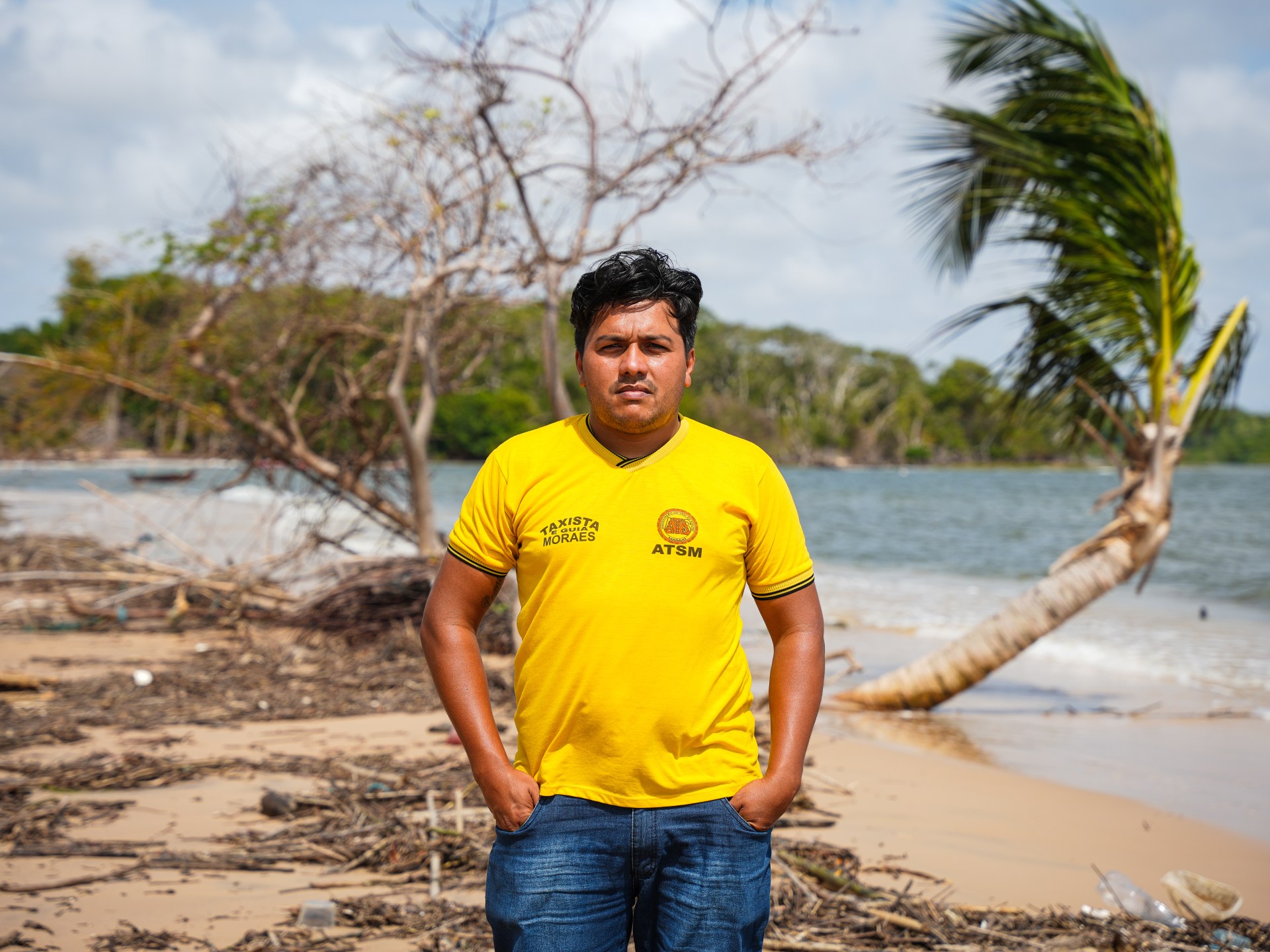
Where Amazon meets ocean: A Brazilian community fights rising tides
On Marajó Island, at the confluence of the Amazon River and Atlantic Ocean in northern Brazil, life ebbs and flows with the tides. For more than four decades, Ivanil Brito found paradise in her modest stilt house, just 20 metres (65 ft) from the shoreline. There, she and her husband Catito fished, cultivated crops, and tended to livestock.
“I was a very happy person in that little piece of land. That was my paradise,” she says.
That paradise vanished during a violent storm in February 2024, when relentless waters surged through Vila do Pesqueiro town, eroding the coastline that had nourished generations.
“Even though we didn’t move far, it feels like a completely different world,” Ivanil shares from their new settlement less than a kilometre (half a mile) inland. “This is a mangrove area—hotter, noisier, and not a place where we can raise animals or grow crops.”
Vila do Pesqueiro, home to about 160 families, lies within the Soure Marine Extractive Reserve, a protected area managed by the Chico Mendes Institute for Biodiversity Conservation. Established to preserve traditional ways of life and promote sustainable resource management, the reserve now confronts the harsh realities of climate change.
While fishing remains the primary livelihood, local cuisine and tourism provide supplementary income to residents. Yet, intensifying tides and accelerating erosion threaten their very existence.
For Ivanil’s son Jhonny, a fisherman studying biology at Universidade do Pará’s Marajó-Soure campus, these transformations are deeply worrying.
“The place where our houses used to be is now underwater,” he says. “For me, moving isn’t just about safety; it’s about protecting the place and the people who shaped my life.”
Meanwhile, residents like Benedito Lima and his wife Maria have chosen to remain, despite their home now standing perilously close to the water’s edge. Leaving, they say, would mean surrendering their livelihood.
“Every new tide shakes the ground,” Benedito explains, gazing towards what used to be a safely distant canal. “This isn’t even the high-tide season yet.”
Climate adaptation here takes various forms. Some families rebuild farther inland, while others adjust their daily routines to accommodate the sea’s advance.
Community leader Patricia Ribeiro believes that a collective resilience sustains Vila do Pesqueiro.
“Our stories have always been passed down through generations,” she says. “This is our home, our ancestry. We want to stay here to protect what our families built. As long as we’re together, we won’t give up.”
As Brazil prepares to host the 30th United Nations Climate Change Conference (COP30) in nearby Belém, communities like Vila do Pesqueiro exemplify what is at stake.
Through its initiatives, the International Organization for Migration (IOM) supports efforts to enhance resilience, protect livelihoods, and ensure these families can continue living safely on their ancestral lands.
https://www.aljazeera.com/gallery/2025/11/10/where-amazon-meets-ocean-a-brazilian-community-fights-rising-tides?traffic_source=rss


Komeito’s Exit Triggers Fierce Battle Over Japan’s Next Prime Minister
Hopes within the Liberal Democratic Party (LDP) of bringing the Democratic Party for the People (DPP) into a new alliance to secure a lower house majority have been dashed. The DPP signaled skepticism over joining a coalition that would not function meaningfully, casting doubt on the possibility of a stable partnership.
Currently, the LDP holds 196 seats on its own, while the Constitutional Democratic Party (CDP) controls 148. Opposition parties argue that a united front among the top three opposition groups could surpass the ruling party’s numbers. The CDP has even suggested backing DPP leader Tamaki as prime minister in a joint opposition strategy.
Tamaki has expressed readiness to serve if chosen but stressed the need for policy alignment before any partnership could form. Leaders of the Japan Innovation Party echoed this call for deeper consensus on policy priorities, warning that cooperation without shared principles would be difficult.
Even Komeito, now in opposition, has not ruled out cooperating with opposition forces on specific policies. However, it remains unlikely to support a non-LDP prime ministerial candidate outright, given its history of joint policymaking with the LDP. The party also emphasized that resolving the politics and money scandals contributing to the coalition’s collapse is essential for regaining public trust.
Political analysts say three main scenarios now loom:
1. The LDP could delay the prime ministerial vote while seeking a new coalition partner.
2. Opposition parties could unite to seize power, potentially elevating Tamaki to the premiership.
3. Takaichi could form a minority government, possibly calling a snap election after passing a supplementary budget.
Any of these outcomes would leave Japan facing a period of political instability and legislative gridlock.
Commentators warn that the upheaval has exposed deeper issues in Japan’s democracy. Notably, only 0.7% of the electorate participated in the LDP leadership vote that elevated Takaichi, despite her finishing third in the initial parliamentary ballot. This highlights the outsized influence of party factions in the process.
Critics suggest that Takaichi’s “Japan is back” slogan signals a return to the Abe-era policies of aggressive monetary easing and corporate stimulus. This raises questions about whether such an agenda truly serves the public interest amid stagnant wages, demographic decline, and fiscal strain.
Furthermore, scandals surrounding the Unification Church, the Moritomo Gakuen document falsification case, and the return of controversial figures linked to past political wrongdoing have further eroded public trust and fueled Komeito’s frustration.
With pressing challenges such as social security reform, foreign policy strategy, and support for a struggling middle class still unresolved, commentators argue that Japan is at a turning point. The question now is whether a new era of cooperative, citizen-driven democracy can emerge from the current turmoil or whether entrenched political dynamics will once again prevail.
https://newsonjapan.com/article/147251.php