
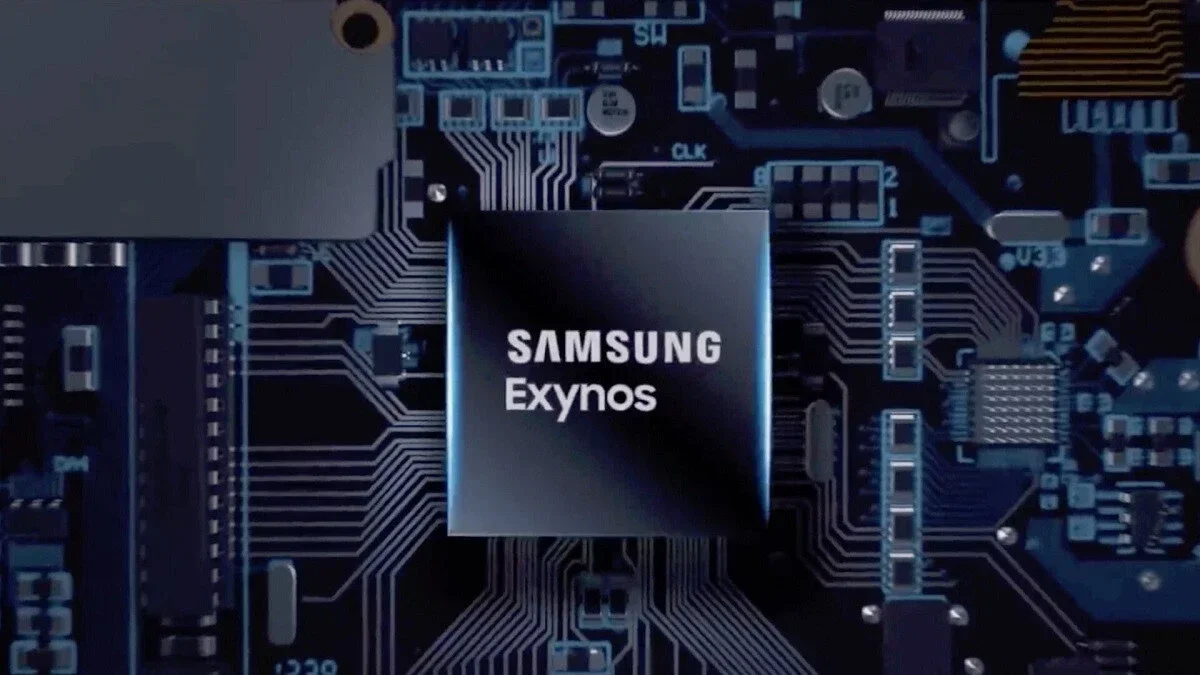
Samsung’s System LSI Division is pricing the Exynos 2600 application processor (AP) $20 to $30 a piece lower than the rival Snapdragon 8 Elite Gen 5 AP. A report out of Korea says that the price cut is being done to drive demand for Samsung’s homegrown component on a cost performance basis. The Qualcomm Snapdragon 8 Elite Gen 5 is expected to be priced in a range between $240 and $280 per unit. With the price cut, the Exynos 2600 AP could cost between $210 and $250 for each chip. Samsung spent 25. 5% more on mobile APs for its phones during the first three quarters of the year Another report out of Korea notes that the cost of an AP usually makes up more than 30% of the total cost of a smartphone. Thus, Qualcomm’s price hikes for its Snapdragon APs are bound to raise the prices manufacturers layout for such smartphone components. That makes the Exynos 2600 a more compelling choice for phone manufacturers. One only needs to look at Samsung’s own numbers to see the extra expense higher AP pricing can bring. Samsung’s latest quarterly report revealed that the company spent 10. 9275 trillion won ($7. 45 billion) in the first three quarters of the year on mobile AP purchases. That was up a whopping 25. 5% over the 8. 0751 trillion won ($5. 51 billion) it spent on APs for mobile devices during the same period last year. That increase can be traced back to Samsung being forced to use Qualcomm’s AP on some Galaxy S25 series models instead of the Exynos 2500 AP as originally planned. Samsung paid an extra $400 million to Qualcomm for Snapdragon chips last year Last year, when Samsung Foundry’s 3nm yield was so low that it couldn’t build enough Exynos 2500 APs for the Galaxy S25 series, Sammy had to turn to the Snapdragon 8 Elite AP to power each model in the line. This cost it an additional $400 million that it had to pay to Qualcomm to purchase the chipsets. The Samsung Galaxy S26 and Galaxy S26+ are expected to use the Exynos 2600 in Europe, South Korea, parts of Asia and in other markets. Those two models will be powered by the Snapdragon 8 Elite Gen 5 in the U. S., Japan, and China. The Galaxy S26 Ultra will employ the Snapdragon AP in all regions. Which AP do you want to power your Galaxy S26 series phone? Exynos 2600 AP. Snapdragon 8 Elite Gen 5 AP. Exynos 2600 AP. 0% Snapdragon 8 Elite Gen 5 AP. 0% For years, Exynos APs were derided for being underperformers that would typically heat up. The Exynos 2600 AP is a decacore chipset built using Samsung Foundry’s advanced 2nm GAA node. Not only will it use smaller transistors to hike the all-important transistor density figure, but it will also use Gate-All-Around (GAA) transistors that use nanosheets to wrap the gate around all four sides of the channel. This reduces current leak, improves the drive current, and leads to the production of more powerful SoCs with improved energy efficiency. The 2nm Exynos 2600 trounced the 3nm Snapdragon 8 Elite Gen 5 in a benchmark test In a benchmark test, the Exynos 2600 allegedly had these results: a single-core tally of 4, 217 and a multi-core score of 13, 482. This outscored the Snapdragon 8 Elite Gen 5, produced by TSMC using its 3nm process. That AP scored a single-core and multi-core score of 2, 865 and 9, 487 respectively. Not only did the Exynos 2600 crush its rival, its single-core result would be the fastest among smartphone SoCs in that category, a metric that Apple’s A-series APs have traditionally owned. The Exynos 2600’s single-core score also matched the result for Apple’s new M5 chip. Things are coming together for the Exynos 2600 as the early word is that the Snapdragon 8 Elite Gen 5 chip is running hotter than it should. Should the Exynos 2600 AP perform strongly in real world situations with the Galaxy S26 series next year, Exynos APs might be found under the hood of some non-Samsung flagship phones. However, most consumers knowledgeable enough to understand the situation prefer that their brand-new Galaxy S26 series handsets be equipped with a Snapdragon chipset instead of the Exynos 2600. But that is based on past perceptions for Exynos APs. Luckily for Samsung, what with Snapdragon prices rising and Exynos 2600 AP prices declining, Samsung will get a financial break next year as it will be needing fewer Snapdragon chips and more homegrown Exynos silicon for its latest flagship phone line.
https://www.phonearena.com/news/with-the-galaxy-s26-series-samsung-could-save-big-bucks_id175877
Tag Archives: underperformers
Cattle Look to Thursday Following Weaker Wednesday Action
Live cattle futures settled the Wednesday session with gains ranging from 20 to 35 cents. Preliminary open interest rose by 1,887 contracts on Wednesday. Additionally, 7 of the previous 10 deliveries were retendered against October live cattle for Amarillo.
Cash trade has yet to be reported this week, as the Wednesday Fed Cattle Exchange saw no bids or sales on the 1,172 head offered.
Feeder cattle futures recovered from midday lows to close the session with losses between 20 and 65 cents. The CME Feeder Cattle Index increased by another $1.45 to $374.47 on October 14.
USDA Wholesale Boxed Beef prices were mixed in the Wednesday afternoon report, with the Choice/Select spread at $17.32. Choice boxes were up $2.06 to $366.48, while Select boxes were down $1.39 to $349.16.
USDA federally inspected cattle slaughter for Wednesday was estimated at 122,000 head, bringing the weekly total to 348,000. This figure is 13,000 head above last week but 21,193 head below the same week last year.
**Live Cattle Futures Closing Prices:**
– October 2025 Live Cattle closed at $242.175, up $0.350
– December 2025 Live Cattle closed at $246.775, up $0.275
– February 2026 Live Cattle closed at $248.750, up $0.225
**Feeder Cattle Futures Closing Prices:**
– October 2025 Feeder Cattle closed at $379.725, down $0.450
– November 2025 Feeder Cattle closed at $380.675, down $0.650
– January 2026 Feeder Cattle closed at $377.850, down $0.200
As of the date of publication, Austin Schroeder did not have, either directly or indirectly, positions in any of the securities mentioned in this article. All information and data provided herein are solely for informational purposes.
For more detailed commodity analysis—from crude oil to coffee—sign up free for Barchart’s best-in-class market insights.
—
**More from Barchart:**
– Will Cattle Futures Continue to Reach New Highs During the Off-Demand Season?
– Beef Prices Are Going Up: What’s Behind the Surge and How Much Higher Will They Go?
– Commodity Market Roundup: August’s Top Performers and Underperformers
– The Bullish Cattle Stampede Rumbles On: Here’s What to Watch Next After Record Cattle Highs
*The views and opinions expressed in this article are those of the author and do not necessarily reflect the views of Nasdaq, Inc.*
https://www.nasdaq.com/articles/cattle-look-thursday-following-weaker-wednesday-action