The Supreme Court’s decision Friday to strike down the majority of tariffs imposed by President Trump could provide some relief to L. A.’s trade-reliant economy but only if they are not reimposed again through other means. The court’s 6-3 ruling that Trump didn’t have the authority to impose tariffs under the International Emergency Economic Powers Act rolled back levies that have upended international trade. “We’ve seen that the tariffs have a significant impact on our supply chain, on our manufacturers and especially on our port logistics and trade sector,” said Stephen Cheung, chief executive of the nonprofit Los Angeles County Economic Development Corp. “I think this decision will have a significant impact on the Los Angeles economy. However, it’s going to take a long time to unravel, so we’ll see specifically how everything is going to pan out,” he said. The tariffs dealt a blow to a large swath of businesses in Southern California and across the state, including farmers, automakers, home builders, tech companies and apparel retailers. MGA Entertainment, the Chatsworth maker of Bratz dolls, said a little more than half of its products are made in China, while hardware and lumber seller Anawalt in Malibu said the majority of its lumber comes from Canada and nearly all of its steel products are made in China. During a news conference Friday following the decision, Trump said that under other legal authorities he will impose a 10% global tariff and pursue additional levies, including a possible 30% tariff on foreign cars. “The Supreme Court’s ruling on tariffs is deeply disappointing, and I’m ashamed of certain members of the court absolutely ashamed,” Trump said. “They’re very unpatriotic and disloyal to our Constitution.” Friday’s high-court decision affects up to $170 billion in tariffs collected under the International Emergency Economic Powers Act of 1977, including 10% to 50% duties and penalties on China, Canada and Mexico. Whether importers who paid the tax can seek refunds was left to a lower court to decide. It’s estimated some $100 billion in tariffs were not affected by the decision. The ports of Los Angeles and Long Beach which handle nearly a third of the nation’s containerized cargo and are the primary trade gateway to Asia saw a surge of traffic the first half of last year as importers sought to get ahead of the tariffs, largely imposed in April. However, traffic tailed off the second half of the year, with the L. A. port expecting a single-digit decline in volume this year before Friday’s decision. The twin facilities form the largest ports complex in North America, supporting more than 200, 000 jobs and contributing $28 billion to the regional economy in 2022, according to a California Center for Jobs & the Economy report. The uncertainty surrounding the tariffs derives from the complexity of the tariffs themselves as well as the other legal options Trump has to impose them again. Mike Jacob, president of the Pacific Merchant Shipping Assn., which represents ocean carriers, marine terminal operators and others in the industry, said the tendency is to think of the tariffs as uniform. “It was different rates for different countries. That was compounded by different rates for different commodities. And there’s a lot of changes that have occurred with specific commodities,” he said. “So it’s almost impossible to take a broad brush and say, here’s what we expect to happen except to say that it’s still a pretty unsettled space.” In seeking to impose a 10% global tariff, Trump would be relying on a provision of the Trade Act of 1974, while his ability to pursue additional levies would rely on other sections of that act and another law. Economist Jock O’Connell, international trade advisor at L. A.’s Beacon Economics, said that Trump may have authority to impose the 10% global tariffs, but additional levies would involve trade authorities. “That would be a cumbersome process. The tariffs have to be more specifically framed and the subject of an investigation,” he said. Also complicating the process are trade deals the U. S. has been negotiating with foreign countries based on the tariffs. O’Connell expects they will seek to renegotiate them. “They’re likely to come back to the table and say, ‘Well, you don’t have the authority to impose these,’” he said. Gene Seroka, executive director of the Port of Los Angeles, said importers are facing tough decisions right now, given that any ocean carrier leaving an Asian port today would not be subject to the tariffs that were struck down. “That executive is asking: ‘Are my commodities now exempt from this tariff?’ If the answer is yes, ‘Can I buy more of that product and get it shipped while there are no tariffs?’” he said. Those decisions would revolve around such factors as the availability of space on the vessel and local warehouses, as well as trucking services, he said. Mark Zandi, chief economist at Moody’s Analytics, said the decision should be good news for the larger U. S. economy and businesses on the “front line” of the trade wars, such as transportation, distribution, agriculture and retail. “If the president lets the Supreme Court decision stand and doesn’t try to replace the tariffs, that’s a plus for the economy but that’s not what’s going to happen,” he said.
https://www.latimes.com/business/story/2026-02-20/what-supreme-courts-decision-to-strike-down-tariffs-means-for-l-a-s-trade-dependent-economy
Tag Archives: manufacturers

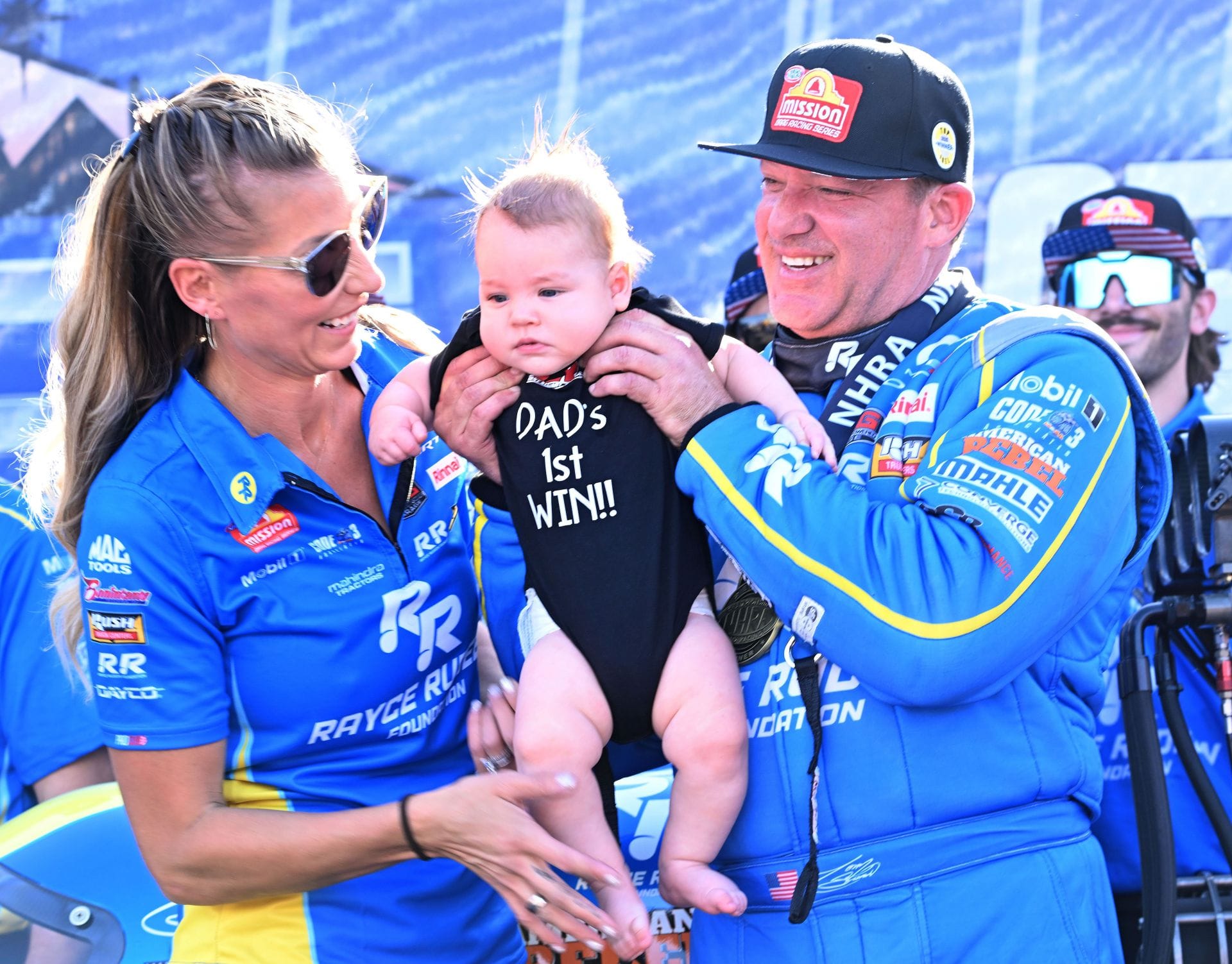
Tony Stewart once revealed the hidden sponsor drama behind dating Leah Pruett: “Two or three people that knew who I was with”
It is tricky for two race car drivers to start dating when they represent rival manufacturers. Such was the case with Tony Stewart and his wife, Leah Pruett, back in the day. While Stewart was a Mobil 1 and Ford athlete, Pruett was backed by Dodge and Pennzoil at the time. Stewart, also known as ‘Snoke’ by his fans, said that himself on Dale Earnhardt Jr.’s NASCAR podcast. Before announcing that they were engaged back in 2021, Stewart and Pruett had to address their conflicting interests. Thanks for the submission! Recalling the same, Tony Stewart said (42: 53), “She’s sponsored by Dodge; I’m sponsored by Ford. So, no joke. I called my PR guy and said, ‘Hey, this is what’s going on’ because nobody knew we were doing anything together. Like, there were two or three people that knew who I was with and where I was at.” Luckily, neither Dodge and Pennzoil, nor Ford and Mobil 1 had a problem with the relationship between Tony Stewart and Leah Pruett, who originally met through drag racing legend Don Prudhomme through FaceTime back in 2019. In fact, they were willing to work around it. Stewart also made sure not to wear clothes with Ford or Mobil 1 branding whenever he went to Pruett’s events. Needless to say, Pruett did the same. Recalling a trip back from Swing Arm City, Utah, Stewart said (43: 15), “I remember on the way home from Swing Arm (City) with Ken (Block), I’m driving the motorhome, she’s on the right side of the motorhome and I’m on the phone with Mobil 1, she’s on the phone with Pennzoil and we hang up from that call and I’m calling Ford and she’s calling Dodge at the same time and we’re three feet from each other having these conversations.” Tony Stewart and Leah Pruett finally tied the knot in 2021. In December 2025, the couple welcomed their first child into the world, a baby boy they named Dominic. Today, Stewart competes full-time in the NHRA Top Fuel class and is expected to represent Elite Motorsports in 2026. Pruett, on the other hand, will drive the NHRA Top Fuel dragster for Tony Stewart Racing. “I was just keeping Leah’s seat warm”- Tony Stewart opens up on vacating his wife Leah Pruett’s Top Fuel seat following NHRA return Shortly after announcing her pregnancy, Leah Pruett decided to quit racing for a while. She had motherly duties to carry out, so her husband, Tony Stewart, offered to help. Throughout the 2024 and 2025 NHRA seasons, the former NASCAR Cup Series champion served as the interim driver for Pruett’s Tony Stewart Racing dragster. Stewart won his maiden Top Fuel event in 2025, also capturing the NHRA regular-season championship. He also earned the NHRA Rookie of the Year honors in 2024. However, Stewart knew he would have to step away from the TSR Top Fuel machine if and when Pruett decides to return to formal racing. “I said from the very beginning that I was just keeping Leah’s seat warm and that it was hers as soon as she was ready to come back,” Tony Stewart said in a statement. “And as much as I wanted to continue driving, TSR is not in a position to add a second Top Fuel car.” “But with Richard (Freeman, owner of Elite Motorsports) buying Josh Hart’s team and our recent alliance, I can still work as an owner and a driver to help both our organizations grow,” he added. 2026 marks Stewart’s third straight year competing full-time in the NHRA. He finished 2025 fifth on points, with Doug Kalitta topping the leaderboard.
https://www.sportskeeda.com/nascar/tony-stewart-revealed-hidden-sponsor-drama-behind-dating-leah-pruett-two-three-people-knew-i-with


Walmart brings the Apple Watch SE 2 with LTE down to an unbelievably low Black Friday price
Just because the likes of Amazon, Best Buy, and Samsung kicked off their extended Black Friday 2025 sales events last week, that doesn’t mean other major US retailers and device manufacturers are to be ignored right now. Walmart, for instance, has joined the party a little late compared to its aforementioned rivals, but still early from a historical standpoint, with a tide of special holiday deals on super-popular products available a couple of days before Thanksgiving this year. Perhaps the greatest such promotion sees the second-gen Apple Watch SE drop to an unreal price with built-in cellular connectivity. Released back in 2022 at a recommended price of $250 and up, the Apple S8-powered timepiece can currently be had for as little as $129. But the wearable is not marked down by only 120 bucks, as $250 is the regular price of an entry-level variant sans 4G LTE support. Instead, you’re actually looking at saving a whopping (and totally unprecedented, of course) $170 here, at least if you hurry. Yes, Black Friday 2025 is technically still three days away, but I highly doubt that Walmart will be able to handle your demand and keep this phenomenal offer going until November 28. Although a vastly improved third-gen Apple Watch SE has been released a couple of months ago, scoring a pretty decent $50 discount of its own in the meantime, the Apple Watch SE 2 (with LTE) is simply too good to be turned down at $129. As long as the 40mm size is not too small for your wrist, that is. Yes, our largely positive Apple Watch SE 2 review from three years ago is (largely) true today as well, with that processor, the Retina display, and the health monitoring tools all looking as great as a cash-strapped hardcore Apple fan can get this Christmas. No, the battery life is not exactly dreamy, but that’s true for most “mainstream” smartwatches around right now.
https://www.phonearena.com/news/apple-watch-se-2-lte-walmart-black-friday-2025-deal_id176045
If things go as planned with the Galaxy S26 series, Samsung could save big bucks buying the AP
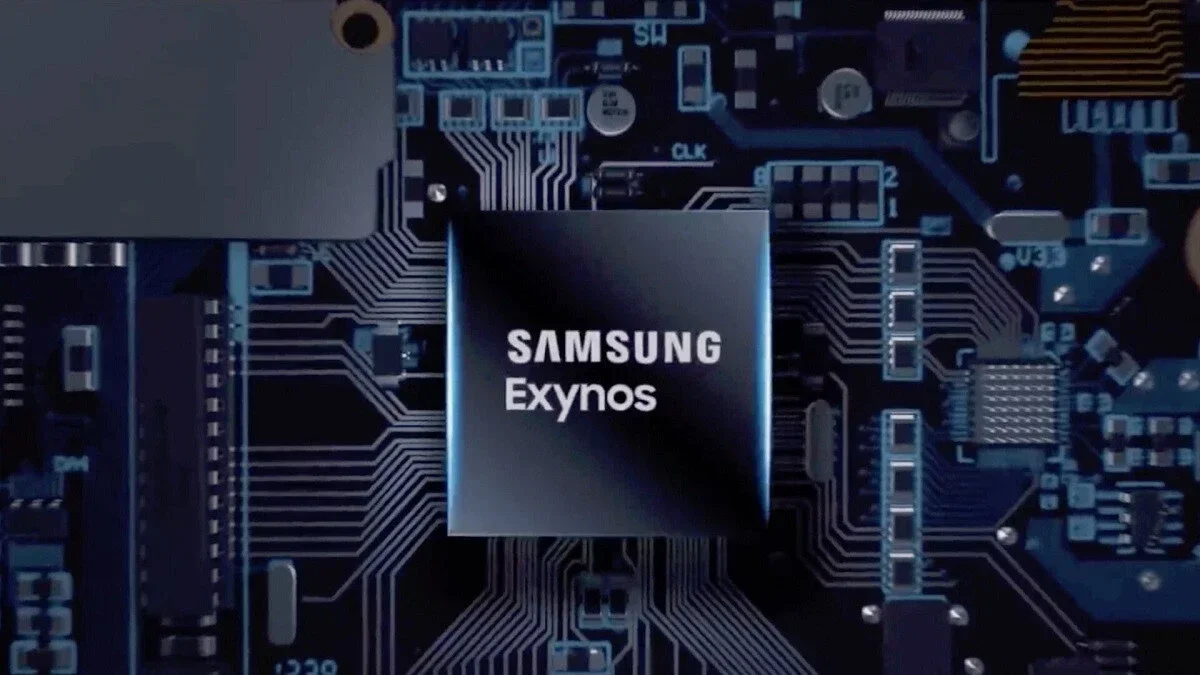
Samsung’s System LSI Division is pricing the Exynos 2600 application processor (AP) $20 to $30 a piece lower than the rival Snapdragon 8 Elite Gen 5 AP. A report out of Korea says that the price cut is being done to drive demand for Samsung’s homegrown component on a cost performance basis. The Qualcomm Snapdragon 8 Elite Gen 5 is expected to be priced in a range between $240 and $280 per unit. With the price cut, the Exynos 2600 AP could cost between $210 and $250 for each chip. Samsung spent 25. 5% more on mobile APs for its phones during the first three quarters of the year Another report out of Korea notes that the cost of an AP usually makes up more than 30% of the total cost of a smartphone. Thus, Qualcomm’s price hikes for its Snapdragon APs are bound to raise the prices manufacturers layout for such smartphone components. That makes the Exynos 2600 a more compelling choice for phone manufacturers. One only needs to look at Samsung’s own numbers to see the extra expense higher AP pricing can bring. Samsung’s latest quarterly report revealed that the company spent 10. 9275 trillion won ($7. 45 billion) in the first three quarters of the year on mobile AP purchases. That was up a whopping 25. 5% over the 8. 0751 trillion won ($5. 51 billion) it spent on APs for mobile devices during the same period last year. That increase can be traced back to Samsung being forced to use Qualcomm’s AP on some Galaxy S25 series models instead of the Exynos 2500 AP as originally planned. Samsung paid an extra $400 million to Qualcomm for Snapdragon chips last year Last year, when Samsung Foundry’s 3nm yield was so low that it couldn’t build enough Exynos 2500 APs for the Galaxy S25 series, Sammy had to turn to the Snapdragon 8 Elite AP to power each model in the line. This cost it an additional $400 million that it had to pay to Qualcomm to purchase the chipsets. The Samsung Galaxy S26 and Galaxy S26+ are expected to use the Exynos 2600 in Europe, South Korea, parts of Asia and in other markets. Those two models will be powered by the Snapdragon 8 Elite Gen 5 in the U. S., Japan, and China. The Galaxy S26 Ultra will employ the Snapdragon AP in all regions. Which AP do you want to power your Galaxy S26 series phone? Exynos 2600 AP. Snapdragon 8 Elite Gen 5 AP. Exynos 2600 AP. 0% Snapdragon 8 Elite Gen 5 AP. 0% For years, Exynos APs were derided for being underperformers that would typically heat up. The Exynos 2600 AP is a decacore chipset built using Samsung Foundry’s advanced 2nm GAA node. Not only will it use smaller transistors to hike the all-important transistor density figure, but it will also use Gate-All-Around (GAA) transistors that use nanosheets to wrap the gate around all four sides of the channel. This reduces current leak, improves the drive current, and leads to the production of more powerful SoCs with improved energy efficiency. The 2nm Exynos 2600 trounced the 3nm Snapdragon 8 Elite Gen 5 in a benchmark test In a benchmark test, the Exynos 2600 allegedly had these results: a single-core tally of 4, 217 and a multi-core score of 13, 482. This outscored the Snapdragon 8 Elite Gen 5, produced by TSMC using its 3nm process. That AP scored a single-core and multi-core score of 2, 865 and 9, 487 respectively. Not only did the Exynos 2600 crush its rival, its single-core result would be the fastest among smartphone SoCs in that category, a metric that Apple’s A-series APs have traditionally owned. The Exynos 2600’s single-core score also matched the result for Apple’s new M5 chip. Things are coming together for the Exynos 2600 as the early word is that the Snapdragon 8 Elite Gen 5 chip is running hotter than it should. Should the Exynos 2600 AP perform strongly in real world situations with the Galaxy S26 series next year, Exynos APs might be found under the hood of some non-Samsung flagship phones. However, most consumers knowledgeable enough to understand the situation prefer that their brand-new Galaxy S26 series handsets be equipped with a Snapdragon chipset instead of the Exynos 2600. But that is based on past perceptions for Exynos APs. Luckily for Samsung, what with Snapdragon prices rising and Exynos 2600 AP prices declining, Samsung will get a financial break next year as it will be needing fewer Snapdragon chips and more homegrown Exynos silicon for its latest flagship phone line.
https://www.phonearena.com/news/with-the-galaxy-s26-series-samsung-could-save-big-bucks_id175877
Tariff Relief In The Works To Cut Grocery Bills
**Seeking Alpha News Quiz: Test Your Investing Knowledge**
Up for a challenge? Test your knowledge on the biggest events in the investing world over the past week with the latest Seeking Alpha News Quiz. See how you stack up against the competition!
—
### Almost the Weekend! Here Is the Latest in Trending:
**Major Restructuring:**
Verizon (VZ) is set to undergo its largest round of layoffs next week. The company’s new CEO is aggressively cutting costs to reverse customer losses and improve performance.
**On the Hill:**
President Trump has proposed several changes to Obamacare. Separately, the newly signed federal funding package includes a ban on hemp THC products.
**Next Stop, Mars:**
Jeff Bezos’ Blue Origin (BORGN) successfully launched NASA’s landmark Mars mission using its New Glenn rocket, marking the first time the company recovered its booster for this mission.
—
### Easing Prices with Tariff Relief
The Trump administration plans to remove tariffs on select goods from four Latin American countries—Ecuador, Argentina, Guatemala, and El Salvador—that are not produced in the U.S. This move aims to lower food prices and reduce grocery bills for American consumers.
**Details of the Agreement:**
The White House announced agreements with these nations to deepen bilateral trade and investment. The four countries committed to addressing various non-tariff barriers affecting U.S. goods and businesses. Notably:
– Argentina will open its market to live cattle from the U.S.
– Argentina will also allow U.S. poultry market access within a year.
According to a senior U.S. official, bananas, coffee, beef, cocoa, and certain textile products imported from these countries will be exempt from tariffs, while other imports will maintain existing rates: 15% for Ecuador and 10% for Argentina, Guatemala, and El Salvador.
The deals are expected to be signed within approximately two weeks, with the White House expecting retailers and wholesalers to pass on savings to consumers.
**Bigger Picture:**
Paul Donovan, UBS’ chief economist, commented, “Heightened political concerns about U.S. consumers’ inflation perceptions seem to be leading a drive to reduce the tariffs U.S. importers pay on food products.”
Inflation impacts are significant: between January and September, banana prices rose approximately 8%, coffee increased by 15%, and U.S. beef prices reached record highs due to droughts, high feed costs, smaller herds, and strong demand.
—
### Seeking Alpha Analysis Highlights
– **5 Tech and Consumer Stocks at Risk of Steep Declines**
– **The Big Short’s Big Bet**
– **The Next AI Winner Isn’t Big Tech — It’s Energy**
– **Why Meta’s Post-Earnings Selloff Is an Early Gift (Rating Upgrade)**
– **BDC Battle: The 16% Yield Comeback, or 12% From The Rising Star**
—
### What Else Is Happening?
– Comcast and Netflix (NFLX) prepare bids for Warner Bros. (WBD).
– Bitcoin (BTC-USD) drops below $100K amid intensifying market selloff.
– Fed’s Kashkari did not support the last rate cut and remains undecided on December’s move.
– October jobs report will exclude the unemployment rate, says Hassett.
– Ackman to host livestream on Fannie Mae and Freddie Mac proposals.
– Robinhood (HOOD) and Gopuff partner for a new cash-delivery service.
– Anavex (AVXL) tumbles after Martin Shkreli announces it as his next short.
– Gilead (GILD) achieves late-stage trial success for a new one-pill HIV therapy.
– Tariffs, not the Grinch, may increase costs of Christmas trees.
– Yum! (YUM) puts Pizza Hut up for sale.
—
### Today’s Markets
**In Asia:**
– Japan: -1.8%
– Hong Kong: -1.9%
– China: -1.0%
– India: +0.1%
**In Europe (at midday):**
– London: -1.9%
– Paris: -1.5%
– Frankfurt: -1.6%
**Futures at 7:00 AM:**
– Dow: -0.6%
– S&P 500: -0.8%
– Nasdaq: -1.2%
**Commodities and Yields:**
– Crude oil: +2% to $59.86
– Gold: -1% to $4,153.10
– Bitcoin: -6.6% to $96,123
– 10-year Treasury Yield: Unchanged at 4.13%
—
### On The Calendar
Stay tuned for upcoming economic reports and events that could impact the markets.
—
Test your investing knowledge and stay informed with Seeking Alpha!
https://seekingalpha.com/article/4843752-tariff-relief-in-the-works-to-cut-grocery-bills?source=feed_all_articles

Was Extra Range The Only Point Of Pickup Trucks Having Two Gas Tanks?
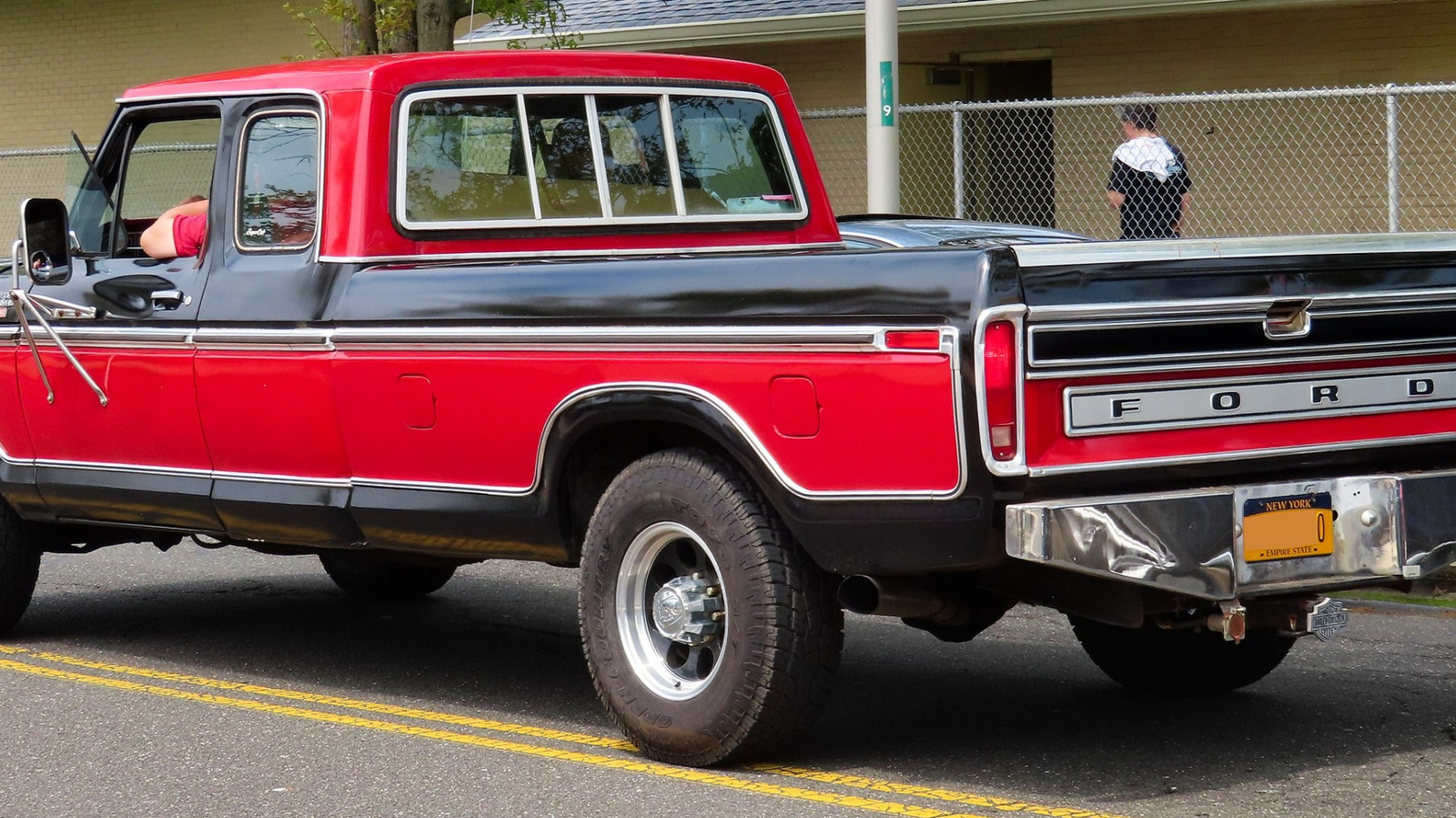
To today’s motorists an older Ford F-250 with two fuel filler doors on its flank might be an odd sight, but decades ago this wasn’t unusual for pickup trucks. Yes there actually were two fuel tanks behind those body panels, and the extra fuel capacity was there to increase the range of these workhorses. In the days before transmissions with overdrive, fuel injection, and other technological advancements, fuel economy wasn’t as good as it is today. When Congress enacted Corporate Average Fuel Economy (CAFE) standards in 1978, each automaker’s light trucks only had to average 17. 5 miles per gallon. The requirement for 2031 is 45. 2mpg for trucks and 65. 10mpg for passenger cars, reflecting the positive effects of the steadily-increasing requirement. CAFE standards remain in place for the future, although the recent budget bill took away the federal government’s ability to fine automakers for violating them. As for those older trucks, owners of 1978 Ford F-250 pickups report to Fuelly an average of just over 8 mpg. Adding extra fuel capacity to increase its driving range seems like an obvious solution, but why split that capacity between two tanks versus fitting one large tank? First off, it’s easier to design and install two smaller tanks compared to a single humongous one. Having two tanks also means the weight of the extra fuel 6. 1 pounds per U. S. gallon can be distributed more evenly around the chassis. Ford placed one tank under the front of the bed and another at the rear, which helped balance the truck and improve traction on some surfaces. On the other hand, Chevrolet favored placing one tank on either side of the truck, which turned out to be a deadly mistake. Chevy’s twin fuel tank design was appropriately called “side saddle” with the two tanks sitting outside the frame rails on either side of the truck. You may have realized this quicker than the engineers at General Motors, but placing 20 gallons of gasoline outside each frame rail with only body panels for shielding may not have been the smartest move. Between 1973 and 2009 hundreds of people were killed in Chevy C/K pickup truck crashes that resulted in fires. Beyond that fatal flaw in Chevy trucks there were plenty of other issues with other manufacturers’ dual-tank setups. Switches, gauges, and valves would sometimes malfunction, making one or both tanks unusable. Some drivers had trouble filling up, especially if the tanks were on opposite sides of the truck. If a driver had a quick memory lapse after hopping out of their truck, mistakes could lead to underfilling or overfilling one or both tanks. Nowadays, most manufacturers offer 30-plus gallon tanks on their pickup trucks, making dual-tank setups unnecessary. For example, the 2025 Ford F-250 Super Duty pickup comes standard with a 34-gallon tank (a 48-gallon unit is optional). The EPA doesn’t test trucks that big, but most owner and expert reports place the F-250’s consumption at 15-20 mpg. That’s enough fuel to drive more than 700 miles between fill-ups with the larger tank. If you simply must have the long-haul capacity of dual tanks, there are bed-mounted aftermarket auxiliary tanks for most modern pickup trucks.
https://www.jalopnik.com/1996114/why-some-pickup-trucks-have-two-gas-tanks/