

From Where I Sit Chris Gibbs Shelby County, Ohio, has found itself in a revealing split-screen moment. On the one side, township residents are packed into a county community hall to weigh in on the future of their farmland and to participate in a public process to testify that industrial wind and solar energy development threatens their soil, livelihoods, and the landscapes their families had tended for generations. On the other side, inside the City of Sidney, the view looks entirely different. A $3 billion Amazon data center project is advancing not because residents were meaningfully consulted, but because a majority of city council members approved a property tax abatement on over 200 acres of annexed farmland. Residents’ questions were heard only after decisions had essentially been made, and concerns were addressed only after the city had committed to Amazon’s most significant financial incentive. So why is it that landowners in the townships have a formal voice over wind and solar projects that create energy, while city residents have none over a sprawling data center campus that consumes that same energy? SB 52: A Voice in the Townships Senate Bill 52, passed in 2021, was a direct response to rural Ohioans’ demand for greater local control over utility-scale wind and solar farms. For the first time, county commissioners and township trustees could bar such projects within unincorporated areas. While in my view, SB 52 severely limits a farmland owner’s ability to maximize their asset’s potential, Shelby County’s commissioners did administer the law as intended. They held hearings, listened to residents, confirmed township support, and passed a resolution restricting wind and solar across 14 townships. To date, over 30 Ohio counties have imposed similar restrictions. Whether one agrees with the policy or not, the process was public and collaborative. Township residents heard a clear message that their land and neighborhoods matter, and their voices count. City Limits: A Different System, A Different Outcome Sidney residents, like most Ohioans living in incorporated municipalities, have little recourse other than the ballot box to influence their city’s land-use decisions. Under Ohio’s home-rule system, city councils can approve tax abatements, zoning changes, and megaproject agreements without public referendum or township-style veto power. In theory, this makes cities nimble, yet in practice, it often means residents learn about major deals only after they are largely complete. That is exactly what happened with Amazon. City council approved a tax package worth up to $350 million in foregone property taxes over 30 years. In exchange, Amazon will make a $50 million payment-in-lieu-of-taxes over 15 years. Residents raised concerns about environmental impacts, water usage, electric grid capacity, and the fairness of granting a multinational corporation a multi-decade tax holiday when many local businesses operate without such incentives. Their frustration was not only with Amazon’s footprint. It was with a system that asks residents to trust decisions they believe were not fully disclosed. The Uneven Geography of Public Power The contrast, where one part of the county is empowered while another is sidelined, raises an interesting question: Why do Ohioans have vastly different levels of control over land-use decisions based solely on which side of a city boundary they live on? If you own 200 acres of farmland in “Anytownship, Ohio,” SB 52 gives you legal standing to stop a solar project next door. But suppose you own a home near a proposed data center being built within city limits. In that case, you can speak at a council meeting for two or three minutes to voice your concerns, yet the city can still approve a project that may increase utility bills, strain water capacity, and change your neighborhood forever. Both decisions involve land. Both shape the county’s future. But only one involves robust public input. Toward a More Transparent Urban Process I concede that Ohio cities cannot and should not operate exactly like Ohio townships. Economic development often requires speed and confidentiality. But that reality does not excuse a process that leaves residents wanting. Local leaders still have the chance to close the trust gap. Upcoming agreements with Amazon covering infrastructure, water, and sewer, as well as ongoing development, give the council another opportunity to invite public engagement before votes. Amazon’s data center may ultimately prove a wise investment that invites yet more economic activity and jobs, or it may set precedents that residents regret for decades. Regardless of the outcome, if township residents can be trusted to help shape the future of their land and community, surely city residents deserve the same consideration. ~ And that’s the way I see it from where I sit. Gibbs is a farmer and lives in Maplewood, Ohio. He and his family own and operate 560 acres of crops, hay, and cattle. Gibbs is retired from the United States Department of Agriculture and currently serves as President of the Gateway Arts Council, Chairman of the Shelby County Democratic Party, and President of Rural Voices USA and Rural Voices Network.
https://miamivalleytoday.com/of-solar-and-data-centers/
Tag Archives: unincorporated

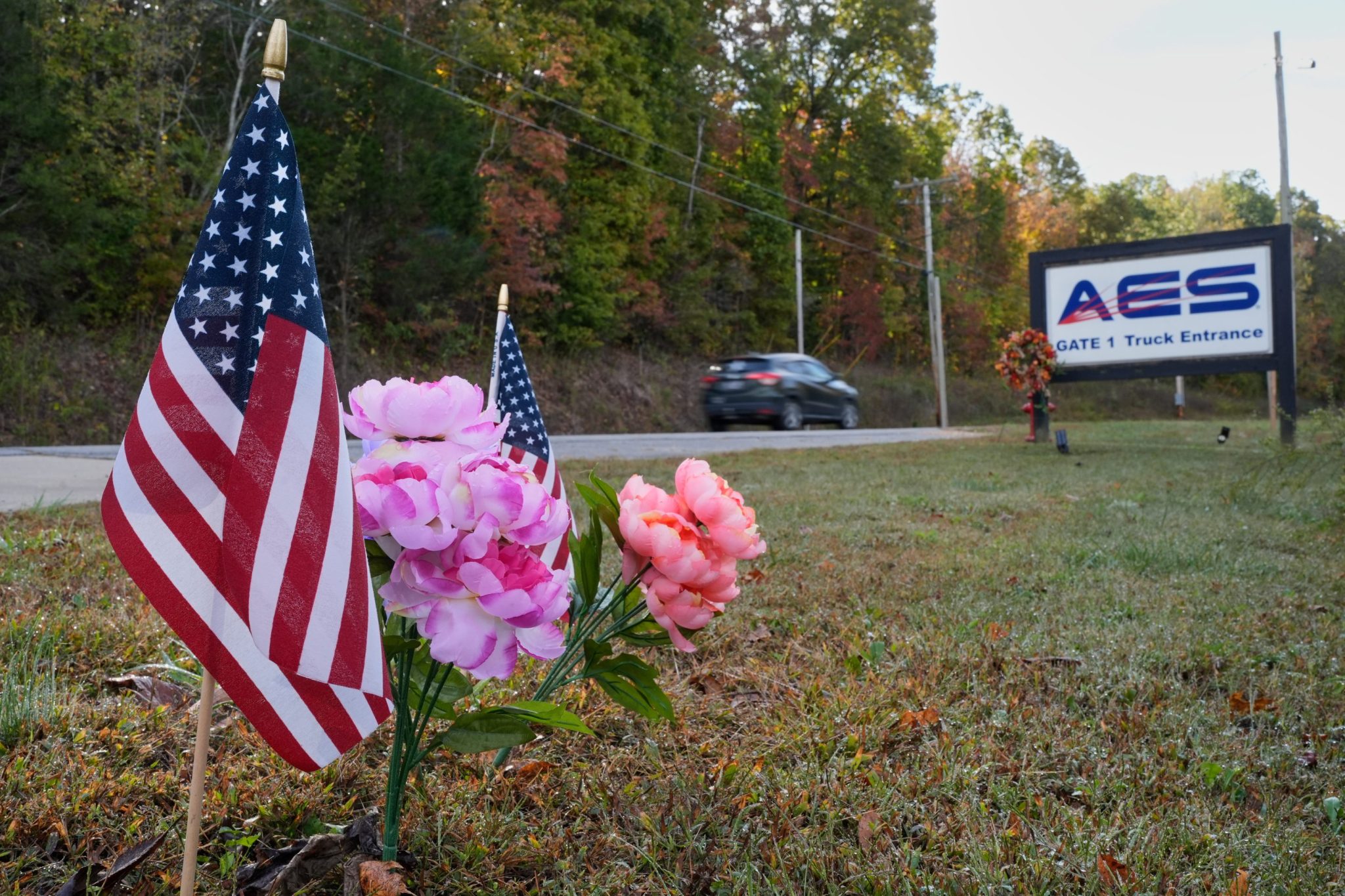
The fatal blast at a military munitions factory was a chain reaction of up to 28,000 pounds of explosives
Investigators still haven’t been able to identify the remains of two of the people killed in the October 10 explosion at the Accurate Energetic Systems factory in Bucksnort, an unincorporated community about 60 miles (97 kilometers) southwest of Nashville, officials said at a news conference.
The delicate investigation at the site of the plant has concluded, but determining a cause could take months more, said Brice McCracken, the Bureau of Alcohol, Tobacco, Firearms and Explosives’ (ATF) special agent in charge at the National Center for Explosives Training and Research. In addition to locating victims’ remains, the on-site work involved removing and disposing of explosives that didn’t detonate in the blast.
The next phase centers on ATF labs and testing facilities, where investigators will try to determine what triggered the explosion, said Jamey VanVliet, ATF special agent in charge in the Nashville division.
“Those results don’t come quickly,” VanVliet said. “They come through time, care, and precision. And that’s what this community deserves: answers that are proven, not guessed.”
### The Explosion and the Site
Authorities reported that between 24,000 and 28,000 pounds of explosives detonated that day. The blast originated on the 15,000-square-foot plant’s first floor, near kettles used in the production of an explosive mixture for the commercial mining industry, McCracken explained.
The building was primarily used to make explosives known as cast boosters—typically a mixture of TNT and RDX (also called cyclonite)—which are poured by hand into cardboard tubes. Explosives were mixed in kettles on the mezzanine level before being pumped into heating kettles on the main floor.
“Everything is mixed up top and then it pumps down into the lower floor, where it stays heated,” McCracken said. “Then they’re able to pull it out in a pitcher and each cast is hand-poured into the cardboard tube.”
The main floor also stored explosives near a loading dock. Cast boosters were cooled on that floor before packaging. After the initial explosion in the production kettles, investigators believe other explosive materials stored on the main floor also detonated.
During the investigation, authorities searched an area of about 500 acres (200 hectares), much of which was dense woods, looking for evidence. The scene was turned back over to the company on Thursday, McCracken added.
### Impact and Community
The blast, which was felt more than 20 miles (32 kilometers) away, left a smoldering wreck of twisted metal and burned-out vehicles at the factory. Authorities confirmed there were no survivors at the blast site.
Items of interest for the investigation were found more than half a mile away, Humphreys County Sheriff Chris Davis said.
Accurate Energetic Systems employs about 150 people and operates a sprawling complex in rural central Tennessee, with eight specialized production buildings and a laboratory. The facility straddles the Hickman and Humphreys county line in unincorporated Bucksnort.
The company, headquartered in nearby McEwen, serves customers in the aerospace, defense, demolition, and mining industries. It has been awarded numerous military contracts—largely by the U.S. Army and Navy—to supply different types of munitions and explosives. Their products range from bulk explosives to landmines and small breaching charges, including C-4.
In a statement on Friday, Accurate Energetic Systems CEO Wendell Stinson said the company is “continuing to support investigators and is under obligation to preserve the site for a to-be-determined period of time,” anticipating it may be “many months” before more on-site review is complete.
The company also started a fund with a local community foundation to help solicit donations for families affected by the tragedy.
### Victims and Identification Efforts
The explosion killed people ranging in age from 21 to 60. The Tennessee Bureau of Investigation (TBI) has positively identified 14 of the 16 victims using rapid DNA testing.
Given the severe damage at the scene, TBI Director David Rausch explained that they had initially expected to identify only 40% to 50% of the victims. While their efforts have fallen short of identifying every victim, authorities have named all 16 individuals.
Officials continue conducting tests to identify the final two victims, Sheriff Davis said. He expressed the emotional toll on the families, noting, “There’s not enough words in the dictionary that we could use to describe those feelings or emotions.”
### Lawsuit Filed Over the Explosion
Last week, a lawsuit was filed in state court on behalf of the 9-year-old daughter of Jeremy Moore, one of the victims killed in the blast.
The lawsuit targets AAC Investments LLC, a company closely tied to Accurate Energetic Systems. It claims that AAC was the owner, operator, and manager of the factory and that the explosion occurred because AAC did not maintain a “reasonably safe factory” for explosives work.
Jeremy Moore, 37, was remembered fondly by his family. According to his obituary, he cherished spending time with and supporting his daughter at cheerleading, softball, and any adventure she wanted to pursue.
Lee Coleman, an attorney representing Moore’s family, stated that the complaint could be amended as more details become available and that additional defendants might be added.
A spokesperson for Accurate Energetic Systems declined to comment on the lawsuit.
—
This tragic event has profoundly impacted the local community, and investigations continue as authorities work to uncover the cause and provide answers to those affected.
https://fortune.com/2025/10/25/fatal-blast-military-munitions-factory-tennessee-accurate-energetic-systems-explosives/