

Key Insights: AVAX drops 90% from its ATH, testing the final accumulation zone between $15-$11. Avalanche’s TVL growth surged 3, 200%, positioning it among the top DeFi platforms for future expansion. Breakout targets for AVAX range from $43 to $302, contingent on sustained support and market recovery. Avalanche (VAX) has recently reached a crucial support zone after a significant decline from its all-time high (ATH) in 2021. According to market analysts, the cryptocurrency is now testing the final accumulation zone. This comes after a 90% drop from its ATH, and many believe this could present an important opportunity for long-term investors. Price Movement and Current Support Zone AVAX has been under pressure since its peak in 2021, when the cryptocurrency reached new heights. As of the time of writing price stands at approximately $14. 47, with a 24-hour trading volume exceeding $408 million. The support zone between $15 and $11 has drawn attention due to a mix of technical indicators, including a four-year mega support level, the 0. 786 Fibonacci retracement level, and a wedge floor. The belief is that these levels could serve as a solid foundation for price stabilization. AVAX is expected to maintain support at these levels before any further upward movement. However, the key to further recovery lies in whether the price can hold this support and break through the targeted resistance levels. TVL Growth and Avalanche’s Market Position Avalanche has been showing signs of improvement on the decentralized finance (DeFi) front. The Total Value Locked (TVL) in the Avalanche network has more than doubled since July 2024. Notably, the Real World Asset (RWA) TVL has risen by an impressive 3, 200%, pointing to a growing interest in the platform. This growth places Avalanche among the top 3 entities in a market that is projected to reach $18 trillion by 2023. Despite this positive development, the price of AVAX has been under pressure in the short term. The network’s fundamentals continue to strengthen. As the DeFi sector expands, more investors are paying attention to Avalanche’s growing presence in the market. Breakout Targets for AVAX Looking ahead, analysts are forecasting potential breakout levels for AVAX. If the price can maintain its support and eventually break resistance, targets are set at $43, $85, $145, and even $302. These levels indicate the long-term potential of AVAX, provided it can gain traction in the market. The path to these higher price points will depend on the broader market conditions and Avalanche’s continued growth in the DeFi sector. If AVAX can sustain its current support and avoid further declines, it may find itself in a position to capitalize on the next phase of market recovery.
https://bitcoinethereumnews.com/tech/avax-faces-key-support-with-breakout-targets-ranging-to-302/
All posts by admin

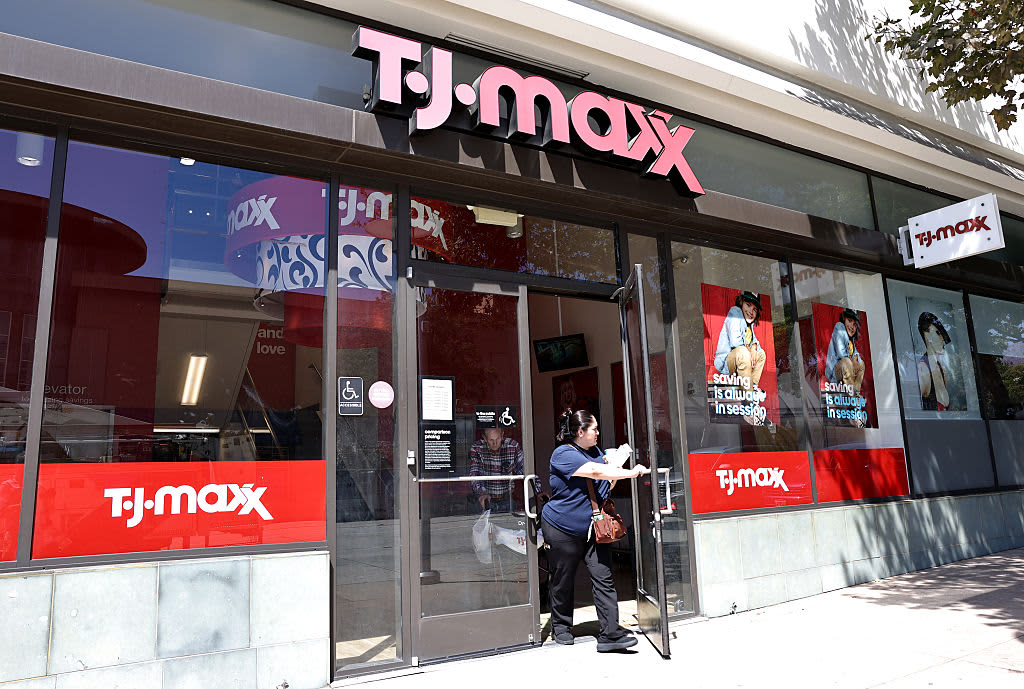
TJX Companies (TJX) earnings Q3 2026
The CEO of TJX Companies said on Wednesday the holiday shopping season is off to a “strong start” as the discounter behind TJ Maxx, Home Goods and Marshalls issued fiscal third-quarter results that beat expectations on the top and bottom lines. “The availability of merchandise continues to be outstanding, and we are excited about the deals we are seeing in the marketplace,” CEO Ernie Herrman said in a news release. He said the company’s brands are “strongly positioned as gifting destinations for value-conscious shoppers this holiday season.” Still, the retailer’s holiday guidance fell short of Wall Street’s expectations. Assuming current tariff levels stay in effect, the company is expecting comparable sales to rise between 2% and 3% in its current quarter, shy of expectations of 3. 1% growth, according to StreetAccount. TJX is expecting earnings per share to be between $1. 33 and $1. 36, which is also just below expectations of $1. 37, according to LSEG. Shares rose more than 2% in premarket trading. Here’s how TJX performed during the quarter compared with what Wall Street was anticipating, based on a survey of analysts by LSEG: Earnings per share: $1. 28 vs. $1. 22 expected Revenue: $15. 12 billion vs. $14. 85 billion expected The company’s reported net income for the three-month period that ended Nov. 1 was $1. 44 billion, or $1. 28 per share, compared with $1. 30 billion, or $1. 14 per share, a year earlier. Sales rose to $15. 12 billion, up 7% from $14. 06 billion a year earlier. During the third quarter, comparable sales rose 5%, far ahead of expectations of 3. 7% growth, according to StreetAccount. TJX raised its guidance after the better-than-expected third-quarter results. While guidance for its current quarter was weaker than Wall Street anticipated, its full-year outlook came in stronger. For fiscal 2026, TJX is now expecting comparable sales to rise 4%, better than the 3. 4% growth analysts were expecting, according to StreetAccount. It’s expecting earnings per share to be between $4. 63 and $4. 66, better than the $4. 61 analysts were expecting, according to LSEG. The off-price retailer has been growing faster than expected in recent years thanks to value-hunting consumers who are still willing to shop for new clothes, but looking for an impressive discount. While uncertain economic times are a challenge for most companies, they tend to help off-price retailers because of a trade down effect from wealthier shoppers. Even higher tariffs have been seen as a positive for TJX because if they force price increases elsewhere, it’s more reason to shop at an off-price store, the company said previously.
https://bitcoinethereumnews.com/finance/tjx-companies-tjx-earnings-q3-2026/


Bears bold predictions for huge Week 12 game against Steelers
The Chicago Bears are in first place by themselves in the NFC North. They take a 7-3 record into their Week 12 home game against the Pittsburgh Steelers (6-4) in a game that gives them a new chance to earn respect around the NFL. The Bears have reeled off three consecutive wins with the rapidly improving Caleb Williams at quarterback. There is still quite a bit of room for Williams to improve his game, but he has become an elite QB1 when it comes to evading the opponent’s pass rush and turning an attempted sack into a positive running play. Williams was the most sacked quarterback in the league a year ago when he was trapped 68 times. He has been sacked just 16 times this season. Williams’ usual move is to spin away from a potential sacker’s arms and run to the outside before turning it upfield for a significant gain. There are other areas of improvement for the Bears this season, but those are the signature plays that have stood out in recent victories over the Bengals, Giants and Vikings. Williams has been a major difference maker for Bears head coach Ben Johnson. There are two significant question marks that this improving team takes into this game. None of the victories the Bears have had this season have come over winning teams. They can only play the teams on their schedule, but that is a fact that the team will have to overcome this week against the Steelers and in upcoming games against the Packers (2), 49ers and Lions. The other factor working against the Bears is Steelers quarterback Aaron Rodgers. Williams will throw for 250-plus yards and 2 TDs The Bears will go as far as Williams can take them this season, and he has been a leader who can come through when the game is on the line. That brings comfort to Johnson and Williams’ teammates. While much of it has to do with his ability to run with the ball, he also has one of the strongest arms in the league. Williams has completed 194 of 325 passes for 2, 329 yards with 13 touchdowns and 4 interceptions. While his completion percentage of 59. 7 percent is not where the quarterback would like it to be, he has shown improvement in Year 2. He can make enough big plays with his arm that the Bears’ offense has become a dangerous commodity. Second-year wide receiver Rome Odunze has been a solid target with 39 receptions for 600 yards and 6 touchdowns and he has produced 12 plays of 20 yards or more. Veteran DJ Moore is also dependable even though he has not been as productive as he has been in the past. Moore has caught 31-421-1 through the first 10 games. The X-factor could be rookie tight end Colston Loveland. He caught the game-winning TD pass against the Bengals in Week 9 and he has the hands and the route-running ability to cause big problems for the Steelers’ brutal pass defense. Pittsburgh ranks 32nd as Mike Tomlin’s team allows 261. 7 yards per game through the air. Bears will punish Rodgers or backup QB Mason Rudolph with 2 interceptions The former Packers quarterback has dominated the Bears with a 24-5 career record against them. Rodgers has bragged about owning the city of Chicago after one of his last victories with Green Bay. There is no guarantee that the 41-year-old quarterback will be in the lineup because of a fractured left (non-throwing) wrist, but the Bears have to find a way to defeat their long-time rival if he is under center.. The Bears defense has the ability to punish either Rodgers or Steelers backup Mason Rudolph. The defense is not like to dominate with the pass rush, but the Bears excel at taking the ball away from their opponents. Safety Kevin Byard leads the league with 5 interceptions and he excels at bating quarterbacks into thinking their receiver is open and ruining those plans with his quickness and decisive play. Nahshon Wright has been an upgrade at cornerback and he has 4 interceptions and 8 passes defensed. Wright has returned an interception for a touchdown. Linebacker Tremaine Edmunds has 4 interceptions in addition to leading the team with 89 tackles. Bears have significant momentum and will earn victory The Steelers got off to an excellent start and built a solid lead in the AFC North when they won 4 of their first 5 games. They have struggled in the ensuing 5 games with a 2-3 record. The defense has been vulnerable all year and they are particularly bad at stopping the passing game. The Bears are improving and know how to make key plays when the game is on the line in the 4th quarter. This has been their signature this season and it will come into play against Pittsburgh in a 24-20 triumph.
https://clutchpoints.com/nfl/chicago-bears/bears-bold-predictions-for-huge-week-12-game-against-steelers


(Guest opinion) Carol Hawkins: It’s time to transition off fossil fuels
Colorado faces a difficult choice, transition off fossil fuels to renewable sources of energy or continue to jeopardize our environment and health. Transition, will cause economic and social disruption for workers and communities. Consequently, any “just transition” requires solutions that mitigate the negative consequences while simultaneously eliminating the deadly pollution caused by burning fossil fuels. I have lived in Weld County since purchasing my house in 2017. I lived in Maine at the time, near the end of an ”unexpected journey” watching my partner die from Alzheimer’s. I decided to move back to Colorado where I had family and a history of living in the state since the early 1970s. I wanted familiar surroundings. I searched online and found the perfect bungalow, my retirement home, in Ault, a rural town in a good location between Greeley and Fort Collins. I had no idea of the influx of fracking about to come. Shortly after moving, I received a forced pooling notice. I went from grief and PTSD to a sense of doom. Fracking! What did this mean for my quiet life and my health? The facts about fracking and the impacts were easy to find, but fighting the frack hasn’t been easy. Weld County, otherwise known as “Welled” County, remains the most polluted and fracked in the state. My neighbors, many who work in oil and gas, are mostly working class, and others are first-time home owners looking for affordable housing or long-time residents. Local government is staffed by those who appear unaffected by fracking. When wells were drilled next to the Highland School campus, located in the middle of town, I called the Ault Town Office and Weld County Oil and Gas to question why the drilling was so close to the school when SB 181 called for 2, 000-foot setbacks. The Ault Town Office said that they had no knowledge of drilling near the school, although it was happening just down the street, and the Weld County Oil and Gas Office laughed off my reference to SB 181 with the comment “those rules are easy to get around.” And I’ve come to learn that he is right. All you have to do is look at the loopholes. One is home rule, the other is reverese setbacks. I then turned to the state and began to protest permits, but soon learned that state regulators and the governor support the fossil fuel industry. However, outside of Colorado, a global consensus calls for a “just transition” away from fossil fuels. The planet is heating, driven by greenhouse gases from extracting and burning fossil fuels like oil and fracked gas. Agreements from COP28 called for net-zero emissions by 2050. Current research, developed by analyzing efforts toward a “just transition” around the world, provides principles that guide policy development: governmental support, dedicated funding streams, strong and diverse coalitions, and economic diversification to address the short-term impacts and long-term needs that workers and communities. Colorado must come together around this framework of principles for a “just transition,” but the transition from fossil fuels to renewables will still disrupt existing economies, and some communities may face economic hardship due to the loss of jobs and tax revenue from the fossil fuel industry. However, we must make the hard choice to experience the gains from a clean energy economy and healthy environment. Colorado’s current environmental damage and health impacts are not sustainable and challenge communities reliant on oil and gas to make the hard choice we need a “just transition” off of fossil fuels. Stop the permits and clean up the mess while supporting displaced workers and disproportionately impacted communities, like Ault. Carol Hawkins is a retired English professor who moved back to Colorado from Maine in 2017. She was served a forced pooling notice in 2018 and has been part of the resistance to fracking ever since. Her focus centers on health impacts and damage to our environment, with a particular interest in health care and job training for displaced oil and gas workers, along with support for disproportionately impacted communities like hers in Ault.
https://www.reporterherald.com/2025/11/19/guest-opinion-carol-hawkins-its-time-to-transition-off-fossil-fuels/


Shocking FTX Creditor Allegations Reveal Blocked Billion-Dollar Rescue Bids
A stunning revelation from a former FTX creditor committee member has rocked the cryptocurrency world, alleging that potential billion-dollar rescue bids for the bankrupt exchange were deliberately blocked. These shocking claims suggest creditors may have lost out on massive recovery opportunities due to legal interference. What Did the FTX Creditor Actually Reveal? Arush, a former member of the FTX Unsecured Creditors Committee, dropped a bombshell on social media platform X. He stated that three major companies actively sought to bid for FTX’s assets but faced obstruction from the exchange’s bankruptcy law firm. This FTX creditor’s testimony contradicts official narratives about the bankruptcy proceedings. The alleged interested bidders included: Bullish a major cryptocurrency exchange Figure a blockchain lending platform One unnamed centralized exchange How Could This Have Changed Creditor Recovery? The blocked bids weren’t just ordinary offers. According to the FTX creditor, these proposals involved equity structures that could have added tens of billions of dollars to creditor repayments. This represents far more value than simple cash settlements. The consortium bid organized by the creditors committee envisioned an FTX 2. 0 relaunch. This approach could have preserved enterprise value rather than liquidating assets piecemeal. Every FTX creditor potentially stood to benefit significantly from this alternative path. Why Would Anyone Block Better Deals? The former FTX creditor made serious allegations about motivations. He claimed the law firm obstructed these superior deals to force a liquidation process that would generate higher legal fees. This accusation strikes at the heart of bankruptcy ethics and creditor protection. Moreover, the FTX creditor called recent statements from FTX’s lawyers who claimed there were no interested buyers a blatant lie. The sharing of this post by FTX founder Sam Bankman-Fried adds another layer of complexity to these already serious allegations. What Does This Mean for Future Crypto Bankruptcies? These revelations from a former FTX creditor could set important precedents for how cryptocurrency bankruptcies are handled. The case highlights the critical need for transparency in creditor committees and legal representation. The situation raises crucial questions about: Creditor committee oversight mechanisms Legal fee structures in complex bankruptcies Bid evaluation processes for distressed crypto assets Protections for the average FTX creditor What’s Next for the FTX Creditor Community? The allegations from this courageous FTX creditor have ignited discussions about potential legal challenges to the current bankruptcy process. Creditors may explore options to investigate the blocked bids further and potentially recover lost value. This situation serves as a stark reminder that in complex bankruptcies, the interests of legal professionals don’t always align with those of the people they’re supposed to serve the creditors themselves. Frequently Asked Questions Who is the FTX creditor making these allegations? The whistleblower is Arush, a former member of the FTX Unsecured Creditors Committee who had inside knowledge of the bankruptcy proceedings and potential acquisition offers. Which companies were allegedly blocked from bidding? According to the allegations, Bullish (crypto exchange), Figure (blockchain lending platform), and one unnamed centralized exchange were prevented from submitting formal bids. How much value might creditors have lost? The equity-based proposals could have added tens of billions of dollars to creditor recoveries compared to liquidation values, representing potentially massive losses for each FTX creditor. Why would a law firm block better deals? The allegation suggests the law firm preferred liquidation because it would generate higher legal fees through extended bankruptcy proceedings rather than a quick sale. Has FTX’s legal team responded to these claims? As of now, FTX’s bankruptcy lawyers maintain their position that there were no serious interested buyers, directly contradicting the FTX creditor’s allegations. What can creditors do about this situation? Creditors can potentially petition the bankruptcy court to investigate these allegations and consider challenging the legal team’s actions and fee structures. Did this investigation into FTX creditor allegations surprise you? Share this explosive revelation with others in the crypto community who need to understand the importance of transparency in bankruptcy proceedings. Your shares help ensure these critical issues receive the attention they deserve. To learn more about the latest cryptocurrency regulatory developments, explore our article on key developments shaping cryptocurrency regulatory frameworks and institutional adoption.
https://bitcoinethereumnews.com/tech/shocking-ftx-creditor-allegations-reveal-blocked-billion-dollar-rescue-bids/


Alger Concentrated Equity ETF Q3 2025 Portfolio Update
Nov. 19, 2025 8: 19 AM ETNBIS, NVDA, ALAB, NFLX, GFL, TWLO Fred Alger Management 44 Follower s Comments Summary The Alger Concentrated Equity ETF outperformed the Russell 1000 Growth Index during the third quarter of 2025. NVIDIA Corporation is a privately held $27. 4 billion growth equity investment manager. Alger is a pioneer of actively managed, growth equity investing. Their journey over the past six decades has been defined by navigating change, embracing disruption, and investing in innovation. For inquiries or communication, please use Fred Alger Management’s official channels. Comments Recommended For You.
https://seekingalpha.com/article/4845534-alger-concentrated-equity-etf-q3-2025-portfolio-update?source=feed_all_articles


Your Two Cents for November 19
From Two Cents: “I don’t recall a time when the Supreme Court was ever at the beck and call of any previous President to get his way.”.
https://rapidcityjournal.com/opinion/letters/article_b1d458fe-de6c-4324-a1af-97a7b5688696.html

Squid Game US series from Fight Club director David Fincher looks to still be happening at Netflix, with potential plot and filming details unveiled
After months of silence, it looks like David Fincher’s US Squid Game series is still going ahead at Netflix, and cameras are set to start rolling very soon. The upcoming series has been listed on the Film and Television Industry Alliance website, titled Squid Game: America. According to the site, the show is set to start filming on February 26, 2026, in Los Angeles, California. Original Squid Game producer Kim Ji-yeon and director Hwang Dong-hyuk are listed as producers on Squid Game: America, alongside David Fincher, Zeus Zamani, and Rhett Giles. Dennis Kelly is down to pen the script. Cate Blanchett is the only cast member listed at this time. The listing also features a new project description, which reads, “A US version of the Korean hit series, the spinoff is set in the same world but we get to see how the games are handled in America.” This is not a huge surprise, as we knew the series would be set in the same world as the original series, but in America. But it’s interesting that the games will still be played after what happened at the end of Squid Game season 3. The original Squid Game series ended with main character Gi-hun sacrificing himself so that Player 222’s baby could win. Afterwards, Front Man escapes with the baby before blowing up the island where the games are held. However, the finale then skips forward several months. Front Man is driving through LA when he spots a recruiter played by Blanchett in an alleyway, playing ddakji with another person. The recruiter and Front Man share a look, and the series comes to a close there. The divisive ending left viewers feeling confused. However, there is no doubt that it set up the spin-off. But it is not clear whether the American version will fully mimic the original series. Are we going to watch another round of games play out until one person dismantles the twisted system? With Squid Game being the most popular TV show ever on Netflix, it is clear why the streamer would want to build on the franchise. We just hope the spin-off switches things up a bit. As for Fincher, the Gone Girl and Fight Club director was linked to the project in 2024, with the filmmaker rumored to direct the series. No other cast members have been announced at this time. Although with Front Man in LA at the end of Squid Game season 3, we wonder if Lee Byung-hun will appear in the new show.
https://www.gamesradar.com/entertainment/drama-shows/squid-game-us-series-from-fight-club-director-david-fincher-looks-to-still-be-happening-at-netflix-with-potential-plot-and-filming-details-unveiled/
Larry Summers resigns from OpenAI board after release of emails with Epstein
Former Treasury Secretary Larry Summers said Wednesday that he will resign from the board at OpenAI after the release of emails between him and the notorious sex offender Jeffrey Epstein. Summers had announced Monday that he would be stepping back from all public commitments, but it was not immediately clear whether that included his position at the artificial intelligence startup. “I am grateful for the opportunity to have served, excited about the potential of the company, and look forward to following their progress,” Summers said in a statement to CNBC. OpenAI’s board told CNBC it respects Summers’ decision to resign. “We appreciate his many contributions and the perspective he brought to the Board,” the OpenAI Board of Directors said in a statement. Details of Summers’ correspondence with Epstein were made public after the House Oversight and Government Reform Committee released more than 20, 000 documents it obtained pursuant to a subpoena from Epstein’s estate.
https://www.cnbc.com/2025/11/19/larry-summers-epstein-openai.html


Will David Pastrnak Score a Goal vs. the Anaheim Ducks on November 19?
Is David Pastrnak going to score a goal when his Boston Bruins play the Anaheim Ducks on Wednesday? The puck drops at 10:00 PM ET — we can help you make the best bet via the stats and trends available here. David Pastrnak Anytime Goal Odds vs. the Ducks Anytime Goal Odds: +110 (Bet $10 to win $11.00 if he scores a goal) Pastrnak Goals Betting Stats Out of two opportunities, Pastrnak has exceeded his points prop bet in one game he’s played with a set points prop. Through 21 games, Pastrnak has 26 points, including nine multi-point contests. Pastrnak has scored in nine of 21 games this season, including multiple goals in a game twice. Pastrnak’s 11 goals this season have come via 72 shots (15.3% conversion percentage). In one game against the Ducks this season, he has scored one goal on five shots. He has taken 23 shots on the power play, resulting in five goals. Pastrnak Recent Performance Date Opponent Home/Away Result Points Goals Time On Ice 11/17/2025 Hurricanes Home L 3-1 0 0 20:06 11/15/2025 Canadiens Away W 3-2 2 0 20:15 11/13/2025 Senators Away L 5-3 2 1 20:05 11/11/2025 Maple Leafs Home W 5-3 3 2 23:45 11/8/2025 Maple Leafs Away W 5-3 1 1 18:27 11/6/2025 Senators Home W 3-2 OT 0 0 22:53 11/4/2025 Islanders Away W 4-3 SO 1 0 20:54 11/1/2025 Hurricanes Home W 2-1 0 0 16:37 10/30/2025 Sabres Home W 4-3 OT 2 1 20:17 10/28/2025 Islanders Home W 5-2 2 1 16:59 Boston Bruins vs. Anaheim Ducks Game Info Game Day: Wednesday, November 19, 2025 Game Time: 10:00 PM ET TV Channel: ESPN+ Watch the NHL on Fubo!
https://www.bleachernation.com/picks/2025/11/19/will-david-pastrnak-score-a-goal-vs-the-anaheim-ducks-on-november-19/