

Colorado faces a difficult choice, transition off fossil fuels to renewable sources of energy or continue to jeopardize our environment and health. Transition, will cause economic and social disruption for workers and communities. Consequently, any “just transition” requires solutions that mitigate the negative consequences while simultaneously eliminating the deadly pollution caused by burning fossil fuels. I have lived in Weld County since purchasing my house in 2017. I lived in Maine at the time, near the end of an ”unexpected journey” watching my partner die from Alzheimer’s. I decided to move back to Colorado where I had family and a history of living in the state since the early 1970s. I wanted familiar surroundings. I searched online and found the perfect bungalow, my retirement home, in Ault, a rural town in a good location between Greeley and Fort Collins. I had no idea of the influx of fracking about to come. Shortly after moving, I received a forced pooling notice. I went from grief and PTSD to a sense of doom. Fracking! What did this mean for my quiet life and my health? The facts about fracking and the impacts were easy to find, but fighting the frack hasn’t been easy. Weld County, otherwise known as “Welled” County, remains the most polluted and fracked in the state. My neighbors, many who work in oil and gas, are mostly working class, and others are first-time home owners looking for affordable housing or long-time residents. Local government is staffed by those who appear unaffected by fracking. When wells were drilled next to the Highland School campus, located in the middle of town, I called the Ault Town Office and Weld County Oil and Gas to question why the drilling was so close to the school when SB 181 called for 2, 000-foot setbacks. The Ault Town Office said that they had no knowledge of drilling near the school, although it was happening just down the street, and the Weld County Oil and Gas Office laughed off my reference to SB 181 with the comment “those rules are easy to get around.” And I’ve come to learn that he is right. All you have to do is look at the loopholes. One is home rule, the other is reverese setbacks. I then turned to the state and began to protest permits, but soon learned that state regulators and the governor support the fossil fuel industry. However, outside of Colorado, a global consensus calls for a “just transition” away from fossil fuels. The planet is heating, driven by greenhouse gases from extracting and burning fossil fuels like oil and fracked gas. Agreements from COP28 called for net-zero emissions by 2050. Current research, developed by analyzing efforts toward a “just transition” around the world, provides principles that guide policy development: governmental support, dedicated funding streams, strong and diverse coalitions, and economic diversification to address the short-term impacts and long-term needs that workers and communities. Colorado must come together around this framework of principles for a “just transition,” but the transition from fossil fuels to renewables will still disrupt existing economies, and some communities may face economic hardship due to the loss of jobs and tax revenue from the fossil fuel industry. However, we must make the hard choice to experience the gains from a clean energy economy and healthy environment. Colorado’s current environmental damage and health impacts are not sustainable and challenge communities reliant on oil and gas to make the hard choice we need a “just transition” off of fossil fuels. Stop the permits and clean up the mess while supporting displaced workers and disproportionately impacted communities, like Ault. Carol Hawkins is a retired English professor who moved back to Colorado from Maine in 2017. She was served a forced pooling notice in 2018 and has been part of the resistance to fracking ever since. Her focus centers on health impacts and damage to our environment, with a particular interest in health care and job training for displaced oil and gas workers, along with support for disproportionately impacted communities like hers in Ault.
https://www.reporterherald.com/2025/11/19/guest-opinion-carol-hawkins-its-time-to-transition-off-fossil-fuels/
Tag Archives: local

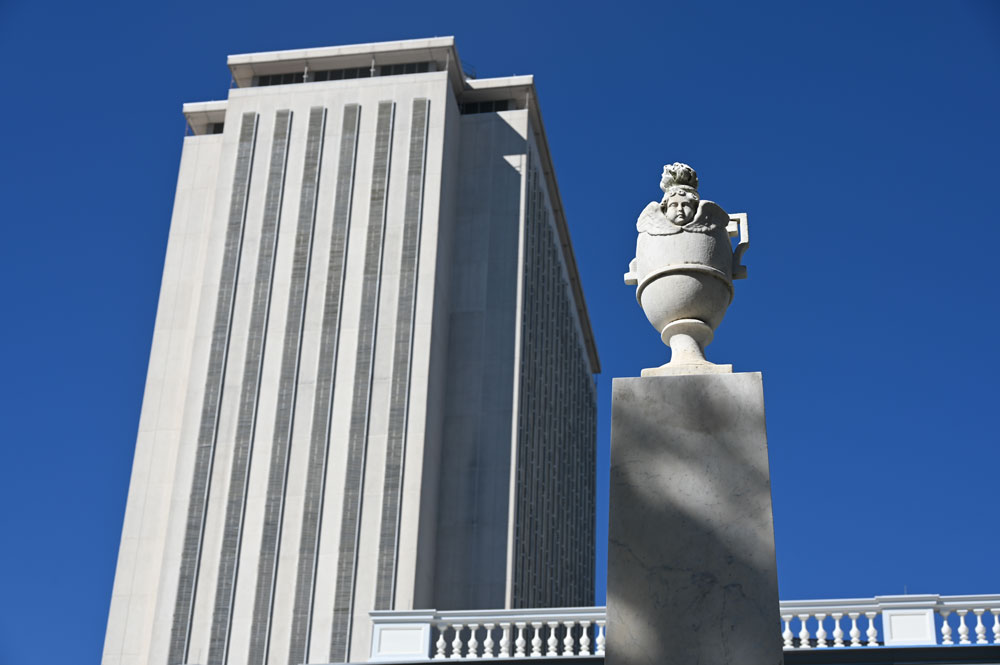
Florid Republican Re-Files Bill To Punish Local Governments Removing Confederate Monuments
A Florida Republican has re-filed a measure aimed at penalizing local governments that attempt to remove or destroy Confederate monuments and other historic memorials.
HB 496, introduced by Sen. Stan McClain, an Ocala Republican, demands that the state protect “each historic Florida monument or memorial from removal, damage, or destruction.” This marks the fourth consecutive legislative session in which the bill has been introduced, reflecting a broader conservative response to the nationwide movement to take down or rename Confederate statues.
“The Legislature finds that an accurate and factual history belongs to all Floridians and future generations and that the state has an obligation to protect and preserve such history,” the bill states.
Under the proposed legislation, local government officials who try to remove these monuments could face fines of up to $1,000. Additionally, they could be subject to lawsuits brought by groups involved in maintaining or erecting the memorials, or by any Floridian who regularly uses the site for “remembrance purposes.” Courts may award damages of up to $100,000 to the suing party.
The push to remove Confederate images gained momentum in 2015, following the tragic massacre at Mother Emanuel AME Church in Charleston, South Carolina. White supremacist Dylann Roof killed nine Black people in that attack and had been photographed multiple times with a Confederate battle flag.
From 2015 to 2018, approximately 110 Confederate memorials were removed across the United States. During this period, Florida stopped flying the Confederate flag over its State House. Hillsborough County was among the first local governments in Florida to act after the Charleston incident; its county commission voted to remove a Confederate flag displayed in its county center.
In 2016, the Florida Legislature voted to remove a statue of Confederate General Edmund Kirby Smith, which represented Florida in the U.S. Capitol. Two years later, in 2018, the state replaced that statue with one of Mary McLeod Bethune, an educator who founded a private college for African American students in Daytona Beach, which later became Bethune-Cookman University.
The movement to remove Confederate statues was revitalized in 2020 after the killing of George Floyd, a Black man, by a white police officer. That year alone, 168 monuments were removed nationwide, sparking a counter-movement aimed at preserving such statues in Florida.
In 2023, Florida Republicans first attempted to pass legislation banning the removal, damage, or destruction of historic monuments. Similar measures were introduced in the 2024 and 2025 legislative sessions but failed to reach either the House or Senate floors.
As of 2024, Florida still has 73 Confederate monuments and memorials statewide.
Sen. McClain’s office did not immediately respond to a request for comment. The 2026 legislative session is scheduled to begin on January 13.
https://flaglerlive.com/confederate-nostalgia/

Renowned restaurant chain closes after being targeting by anti-Israel protests
**Plant-Based Kosher Chain Shouk Closes Permanently Amid Protests and Boycotts**
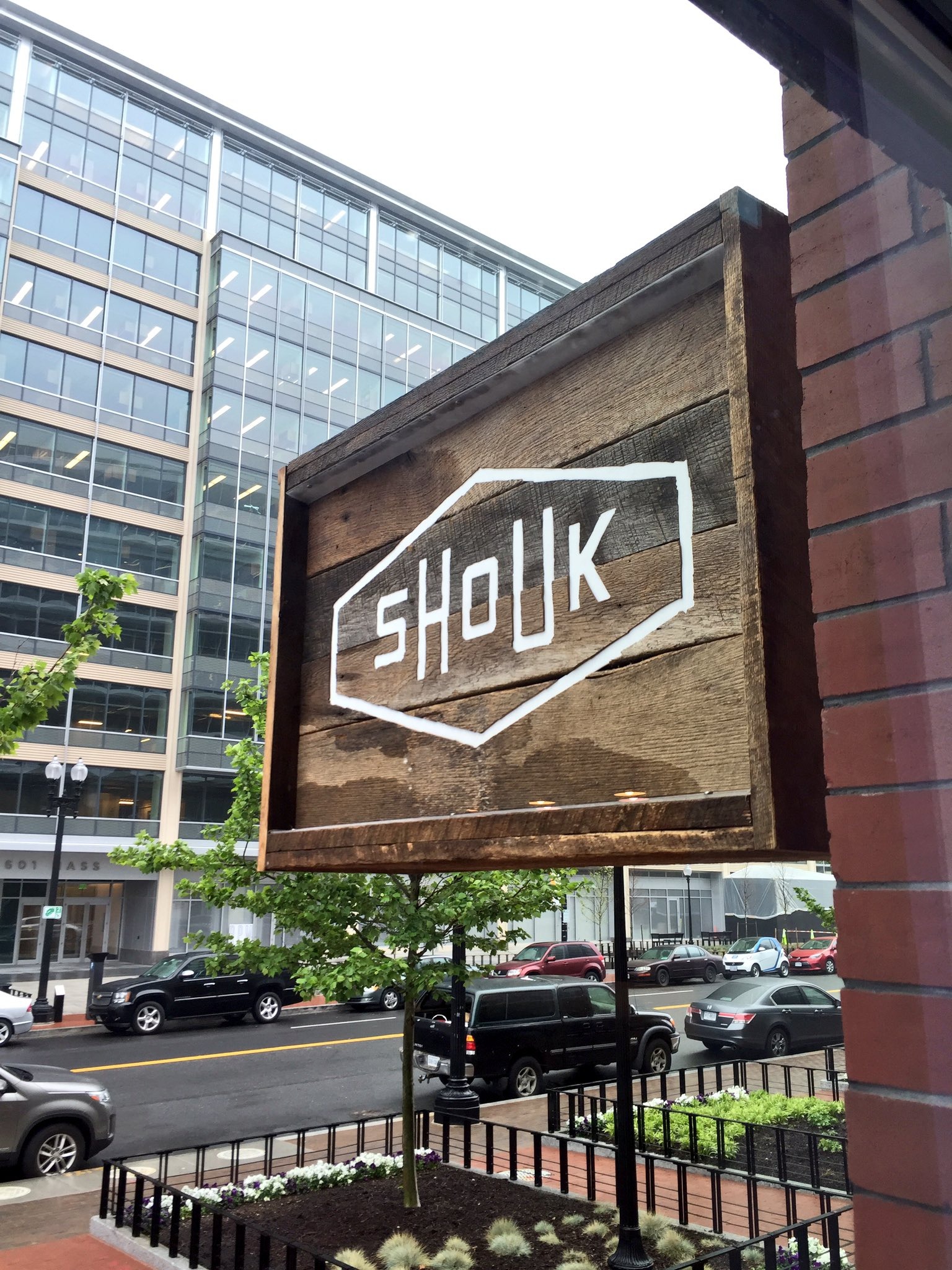
Shouk, a plant-based kosher street-food chain based in Washington, D.C., has permanently shut down its final locations this month. The closures come after two years of protests and boycotts led by anti-Israel activists, which significantly impacted the business.
Once celebrated by the Food Network and *The Washington Post* for its popular “Shouk Burger,” the chain operated five stores across the region. However, local activist group DC for Palestine spearheaded a boycott campaign alleging that Shouk’s falafel and other menu items “appropriated” Palestinian cuisine. The group also accused the owners of being “complicit in Israeli apartheid.”
Dennis Friedman, a Jewish American co-owner who, along with Israeli partner Ran Nussbacher, opened the first Shouk location over a decade ago, rejected these accusations. Speaking to Fox News Digital, Friedman emphasized that Shouk’s mission was to bring people together.
“I don’t agree with that because the intention of Shouk was pure and good,” Friedman said. “When my business partner came to me, it wasn’t ‘let’s make Israeli food.’ He wanted to make plant-based food that reminded him of his childhood and home. That was the core of where we started to build the recipes.”
Friedman explained that Shouk has primarily been promoted as a Mediterranean, plant-based, and Middle Eastern restaurant. “Very rarely have we claimed anything else. That’s why Shouk is written in both Arabic and Hebrew in all the stores because we are a place to bring everyone together.”
He described Shouk as “a gathering place for people of all races, colors, and creeds to come together to enjoy food” that is good for customers and the planet alike.
The co-owner noted that their Georgetown location was the first target of protests, citing its proximity to Georgetown University and the area’s “heavy Muslim population.” Friedman said business was thriving before October 7, but protests quickly began to damage their income.
“We reached out to local business groups and representatives and hired security outside our stores,” Friedman said, describing the experience of being harassed by protesters over the past two years as “scary and unnerving.”
He recounted some disturbing incidents: “We had everything from little children coming into the store during a busy lunch screaming ‘Free Palestine’ while their parents videoed for social media.”
Friedman called the protests part of a “very coordinated” and effective effort by the Boycott, Divestment and Sanctions (BDS) movement to hurt Shouk.
“There were posters of dead baby Palestinian children on the windows or on our seating outside. It ranged from vandalism to intimidation to maybe things that we don’t even know,” he added.
Reflecting on Shouk’s 12-year run, Friedman called it an “amazing experience” beyond his “wildest dreams.” He said the business was “near and dear” to his heart, and stressed that he and Nussbacher made every effort to support their employees throughout the closures.
“Most of our staff have been with us since we opened,” Friedman said. “Our turnover was very low because we ran the company ethically, we ran it well, and we ran it fairly. So our staff became part of our family, and they didn’t want to leave.”
Shouk closed its last locations just days before a ceasefire between Israel and Hamas was reached.
DC for Palestine celebrated the closures as a “BDS win” in an Instagram post, writing:
“Shouk WAS one of the main targets of our ‘APARTHEID? I DON’T BUY IT’ consumer boycott initiative! Much of what they served was Palestinian food that they culturally appropriated as ‘Israeli street food.’ Additionally, they imported Israeli ingredients for their dishes. TODAY WE ARE HAPPY TO ANNOUNCE THAT, AS OF OCTOBER 1, 2025, SHOUK HAS CLOSED ITS DOORS, PERMANENTLY!”
The group urged supporters to continue boycotting U.S. and local businesses that sell Israeli products.
https://nypost.com/2025/10/24/business/israeli-restaurant-chain-closes-after-getting-hit-by-gaza-protests/