Category Archives: politics

Rifts in Gaza flotilla? Greta Thunberg removed from leadership committee

**Rifts Emerge in Gaza Flotilla: Greta Thunberg Removed from Leadership Committee**

Greta Thunberg, the renowned Swedish climate activist, has been quietly removed from the leadership committee of the Global Sumud Flotillas. This decision comes amid internal rifts and communication challenges faced by the flotilla organizers during their mission to breach the Gaza naval blockade.

The Global Sumud Flotilla, which aims to challenge the blockade on Gaza, made a scheduled stop in Tunisia. Greta Thunberg was seen arriving at the port of Sidi Bou Said, Tunisia, as part of this effort. The flotilla paused for two days in Tunisia before setting sail again on September 10, 2025, to join the Maghreb Sumud Flotilla on its journey to Gaza.

The ongoing tensions within the flotilla’s leadership highlight the complexities of coordinating such a high-profile and politically sensitive mission. As the flotilla continues its voyage, organizers are working to resolve internal disputes to maintain their focus on challenging the naval blockade.

*Tunis, Tunisia, September 7, 2025.*
*Photo credit: REUTERS/JIHED ABIDELLAOUI*
https://www.jpost.com/diaspora/antisemitism/article-868231

Trump White House scrambles to save Kirk’s young voter machine after his death

Trump White House Scrambles to Save Kirk’s Young Voter Machine After His Death

The Trump White House is working to maintain Charlie Kirk’s influence with young voters after his assassination left a leadership gap at Turning Point USA.

Charlie Kirk, a prominent conservative activist and founder of Turning Point USA, played a key role in mobilizing young voters in support of former President Donald Trump. His sudden death has created uncertainty about the future direction of the influential youth movement.

Efforts are now underway within the Trump administration and the broader conservative network to preserve and continue Kirk’s legacy and voter outreach. The focus remains on sustaining engagement with young Americans who have been pivotal to recent political campaigns.

Photo credit: CHENEY ORR/REUTERS, REUTERS/Annabelle Gordon

By REUTERS

https://www.jpost.com/american-politics/article-868246

Tej Pratap warns, ‘Sudarshan Chakra’ awaits those insulting sisters

**Tej Pratap Warns, ‘Sudarshan Chakra’ Awaits Those Insulting Sisters**

*By Snehil Singh | Sep 21, 2025, 02:17 PM*

Tej Pratap Yadav, the elder son of Rashtriya Janata Dal (RJD) patriarch Lalu Prasad Yadav, has issued a stern warning to anyone who insults his sisters. He cautioned that such individuals will face the “Sudarshan Chakra” of Lord Krishna.

This statement comes in the wake of a cryptic social media post by his sister, Rohini Acharya, on the platform X (formerly Twitter). In her post, Acharya wrote, *“I have fulfilled my duty and dharma as a daughter and a sister. For me, my self-respect is supreme.”*

### Social Media Speculation and Fallout

Rohini Acharya’s post has raised eyebrows across political circles, sparking speculation about her current relationship with the RJD. Adding to the intrigue, Acharya unfollowed all RJD leaders on social media and set her account to private.

Previously, she had publicly criticized a photograph showing Tejashwi Yadav’s aide Sanjay Yadav seated in the front seat of the party’s campaign van. Unconfirmed reports had suggested she was hoping to receive an Assembly election ticket, though party leadership has denied these claims.

### Family Support: Tej Pratap’s Response

Amidst the political turmoil, Tej Pratap Yadav has come out strongly in support of his sister. He said, *“Rohini is much older than me. As a child, I played in her lap.”*

He also highlighted her sacrifice, noting that she had donated a kidney to their father, Lalu Prasad Yadav. Tej Pratap affirmed, *“I am fully with my sister in the ongoing episode,”* and warned that anyone who insults her would have to face consequences.

### Rivals Seize the Opportunity

Political rivals have not missed the chance to target the RJD following Acharya’s post. Janata Dal (United) spokesperson Neeraj Kumar remarked, *“Rohini Acharya is a daughter who donated a kidney for her father. Now, Lalu Yadav, it is your responsibility to decide who is at fault.”*

As of now, the RJD has not issued any public response to Rohini Acharya’s post or the ensuing controversy.

*Stay tuned for more updates on this developing story.*
https://www.newsbytesapp.com/news/politics/tej-pratap-s-sudarshan-chakra-warning-amid-row-over-sister-s-post/story

Mithun Manhas emerges as front-runner for BCCI president post: Report

**Mithun Manhas Emerges as Front-Runner for BCCI President Post: Report**

*By Gaurav Tripathi | Sep 21, 2025, 07:51 AM*

Former Delhi cricketer Mithun Manhas has emerged as the leading candidate for the president of the Board of Control for Cricket in India (BCCI). According to Cricbuzz, the final decision is expected to be announced on Sunday morning, just hours before the nomination deadline.

**Election Details and Nominations**

Manhas has been nominated by the Jammu & Kashmir Cricket Association (JKCA) for the upcoming BCCI election and Annual General Meeting (AGM), scheduled for September 28. Despite facing competition from notable contenders such as Sourav Ganguly and Harbhajan Singh, Manhas has solidified his position as a strong candidate.

Former Indian Test cricketer Raghuram Bhatt is also in the fray and is expected to arrive in Mumbai on Sunday to file his nomination.

**Strategic Discussions Ahead of the Polls**

A key meeting in New Delhi on Saturday saw the presence of BCCI office-bearers and former officials, who deliberated on potential office-bearers for the upcoming elections. A source close to the meeting revealed that there is a 90% chance of Manhas being chosen as the next BCCI president.

While Bhatt is likely to secure a spot on the apex council, Arun Dhumal is anticipated to continue his role as IPL chairman. The final round of discussions will take place Sunday morning, just before nominations close in the afternoon.

**Profile: Mithun Manhas**

Mithun Manhas, 45, boasts an impressive domestic cricket career spanning 18 years from 1998 to 2016. He played 157 first-class matches, amassing nearly 10,000 runs at an average of around 46. He captained Delhi to the prestigious Ranji Trophy title during the 2007-08 season.

Although Manhas never represented India at the international level, he was regarded as one of the most dependable players in domestic cricket. Off the field, he has gathered valuable administrative experience through his work with the JKCA and his participation in BCCI’s AGMs on behalf of his state.

As the countdown to the elections continues, Mithun Manhas appears poised to take on a pivotal role in shaping the future of Indian cricket administration.
https://www.newsbytesapp.com/news/sports/mithun-manhas-emerges-front-runner-for-bcci-president/story

The format is the politics

The spectacle is not a collection of images; it is a social relation among people, mediated by images.
— Guy Debord, The Society of the Spectacle, Thesis 4 (1967)

A single week turned the calendar into an instrument: the political killing on September 10; the next day, a 9/11 podium used to anoint a fallen martyr of the movement; and, by Sunday, a stadium funeral where a posthumous Medal of Freedom would render the man an icon.

It was a week dense enough to power an entire season of politics, reverberating insistently into the midterms.

The First Lesson of Political Grief is Staging

A man is killed in public and, within hours, a nation begins curating its memory around him. In Arizona, an NFL stadium is reserved for September 21, doors at eight in the morning, the programme at eleven; it is a logistical poem in the language of scale. The memorial is not only commemorative, but instructive. It demonstrates that this movement can fill an arena, that its sorrow lays public claim.

President Donald Trump has said he will attend the memorial. He has also vowed to award Charlie Kirk the Presidential Medal of Freedom posthumously, transfiguring a personal loss into a civil sacrament.

These gestures are not incidental. They are narrative instruments, designed to transmute grief into doctrine.

The Facts and the Legal Response

The facts, as recited by prosecutors, are bald and bloodless. On September 10 at Utah Valley University, a single shot from a distance ended Kirk’s life. A 22-year-old, Tyler Robinson, now stands charged with aggravated murder and related offences. Utah County has announced it will seek the death penalty.

Digital footprints, including Discord transcripts, and physical evidence are alleged to bind the suspect to the act. These particulars will be tested in court. Their public function, however, is already clear: to classify the event as political violence and to affirm the state’s intent to respond with maximal severity.

The Killing Unfolds in the Feeds

Yet the more immediate and more volatile story is how the killing unfolded in the feeds. Within minutes there was video, then more video: angles from beneath the rally tent; a stifled cry; confusion breaking into flight; the snap of sirens.

It was ubiquitous—on X, TikTok, Instagram, YouTube, Facebook, even Truth Social, where the president posted the formal announcement. Legacy outlets abstained from airing the impact but platforms did not await permission. The gatekeeper never vanished, only relocated.

In this digital ecology, verification trails virality, and meaning congeals before officials can reach a lectern.

How Platforms Manufacture Meaning

This is consequential. What is amplified in initial moments shapes the risk curve. The research is unambiguous: moral-emotive language accelerates dissemination; incendiary content outpaces correction; and the spotlight on perpetrators creates a contagion window where mimicry becomes plausible.

Hence the evolution of journalistic ethics—no notoriety norms that de-emphasise names and imagery. Hence the platform tools that slow virality: labels, friction, age-gates.

These are not ornamental choices. They are instruments of harm reduction.

The gatekeeper never vanished; it relocated. In this digital ecology, verification trails virality and meaning congeals before officials can reach a lectern. Because in the platform economy, everything is content and content is metastasis.

Even Roblox, a children’s game engine, moved to remove over one hundred user-created experiences based on the killing. Violence, once a rupture, now feeds a market.

Jubilee Media’s Surrounded as a Case Study

Ostensibly a space for empathetic encounter, the format is optimised not for understanding but for spectacle. A single guest is ringed by adversaries and moderation is minimal. Fact-checks are late and cosmetic. The design favours confrontation over clarity.

Charlie Kirk’s appearance in an episode titled Can 25 Liberal College Students Outsmart 1 Conservative?, aired a year before his death. After the killing, clips from the episode were re-cut, re-framed and re-circulated across partisan lines. Surrounded became a supply chain; affect became archive.

We are now, remarkably, at the point where public figures seriously suggest Jubilee as a host for presidential debate. This is not an evolution of democratic culture; it is a capitulation to clip logic. The shift from policy to performance, from moderation to monetisation, is nearly complete.

The London Rally and Elon Musk’s Role

Meanwhile, in London on September 13, there was another spectacle: the Unite the Kingdom rally led by Tommy Robinson. Over 100,000 gathered and clashes ensued. Twenty-six police officers were injured and twenty-five arrests made.

But the most circulated moment came not from a marcher, but a mogul: Elon Musk, in a recorded video, warned that violence is coming and urged supporters to fight back or die. Downing Street condemned the rhetoric. But it had already circulated—sliced, subtitled and algorithmically elevated by the platform Musk owns.

The rally was a street event only in setting. Its real venue was the screen.

The Substitution of Scale for Legitimacy

It would be facile to conflate Arizona’s arena and Whitehall’s streets into one story of right-wing bloom. The two phenomena differ in texture and intent. But they do share one defining grammar: the substitution of scale for legitimacy.

A full bowl in Glendale and a six-figure march in London are intended to function as affective plebiscites. If you resist the reading, you are accused of condescension. If you accept it, you surrender the premise that democracy rests on anything beyond optics.

What is being manufactured here is not merely sentiment, but a durable grammar.

The old regime of meaning-making, wherein editors determined exposure and sequence, is defunct. Now the crowd publishes first. Institutions scramble to retrofit coherence. Graphic video is not a glitch; it is the baseline. Platforms pretend their exceptions are rare. They are not. They are the rule.

The Triptych of the Right

Here, distinctions matter, crucially. The modern right is often misread as monolithic. It is not. It operates in three distinct but overlapping registers: conservatism, populism and hate.

Conservatism, at its most principled, is a temperament anchored in institutional continuity, constitutionalism and the moral suspicion of speed. It harbours a philosophical wariness of haste, premised on the belief that swift political action often courts instability and that time is democracy’s truest proving ground.

Populism is a style. It presumes to speak directly for the people against an allegedly corrupt elite. It collapses mediation, scorns process and privileges immediacy.

Hate is neither style nor temperament. It is a politics of exclusion that recruits grievance as license for menace.

All three currents were visible in the American aftermath. The conservative response was constitutional: call for calm, insist on process. The populist response was martial: recast the death as proof of siege. The hateful fringe celebrated, doxxed and organised.

The same triptych holds in the United Kingdom. The Conservative Party is beleaguered and directionless. Reform UK, unencumbered by governing record, offers the populist idiom in its purest form. The Robinson rally showed hate, unadorned.

Keir Starmer’s characterisation of the moment as the fight of our times came only after institutional hesitation—a faltering calculus over what counted as free expression and what crossed into incitement.

In a liberal society, the line must be drawn with precision. That becomes treacherous when the owner of the platform is also its most prolific arsonist.

Why These Distinctions Matter

These distinctions are not academic. They determine remedy.

  • A conservative pathology calls for institutional repair.
  • A populist seizure demands procedural ballast: transparency, clarity and the visible work of government.
  • Hate, meanwhile, requires constraint: social quarantine, prosecutorial clarity and refusal to launder eliminationist discourse as legitimate pluralism.

The media system, part battlefield, part vector, has tools. Newsrooms can abstain from premature motives. They can elevate accuracy over engagement. Platforms can intervene: interstitial warnings, algorithmic friction, context over shock.

None of this silences grief. It merely resists its weaponisation.

Volume over Truth?

What of the presidency? The 9/11 dais becomes canon; the Medal of Freedom, scripture. This is not commemoration; it is choreography. The president’s call for nonviolence is framed as boundary. Yet its elasticity ensures that boundary will be tested by echo, by reinterpretation, by omission.

Reform’s rise reveals a deeper confusion: agenda-setting is mistaken for capacity. Populism thrives in this ambiguity. It seizes attention, but cannot govern. It shortens deliberation, but cannot substitute for it.

Conservatism, if it is to recover, must reject the populist tailcoat and return to the long arc of capacity as its only claim to power.

The contrast is striking: while states elsewhere fall for fear of the feed, here the feed is enlisted to govern. We are left to ponder a grim symmetry—between the censorship that catalyses revolt and the spectacle that pacifies it.

The Power of Language

Finally, there is language: the medium through which all political life flows. A conservative idiom draws thresholds that make coexistence possible. A populist idiom dissolves them. A hateful idiom sharpens them into knives.

The coming weeks will test which idiom prevails. Will grief become instruction, or mandate? Will virality dictate virtue? Will newsrooms favour volume over truth?

As grief metastasises into legacy, a new guard gathers in the wings—polished, pious and poised for virality. As The Hollywood Reporter notes, figures like Riley Gaines, Alex Clark and Allie Beth Stuckey may soon channel Kirk’s ethos into an even more ardent, platform-native activism.

Nothing is preordained. Meaning will be shaped, as it always is, by human choice: who speaks, who edits, who clips, who captions.

The cameras will pan across a stadium and across Whitehall. These images are not innocently large. They are arguments waged through lens and lighting.

The Work Ahead

The work ahead is neither theatrical nor viral. It is unfashionably slow. To let institutions speak before the feed canonises; to grant mourning its moment, but not a monopoly on meaning; to recover the courage of discernment: between dissent and menace, spectacle and substance, grief and grievance.

This work will not trend. But it may still be what saves the republic.

The Future of Media

What, then, of the future of media itself? In this maelstrom of platforms, clips and narrative distortion, the challenge lies not only in content but also in architecture.

Journalism must reclaim tempo as ethical stance—not slowness for its own sake, but discernment as democratic discipline. Institutions that once curated public understanding must reimagine their function, not as arbiters of truth but as scaffolds for trust.

Platform companies, long allergic to responsibility, will either accept civic obligations or deepen their complicity in democracy’s decline.

What emerges from this crucible must be more than regulatory friction. It must be a renewed compact between public attention and public consequence.

Otherwise, the feed will not merely report history; it will write it, untethered from judgment, propelled only by what bleeds, what spreads and what sells.

A Global Contrast

Yet irony shadows the global stage. In Nepal, the so-called Gen Z revolution surged in response to the government’s ban on social media platforms—all but TikTok—provoking youth-led protests that surrounded the Parliament and forced a democratic reckoning.

There, platforms were seen as threats to order. But in the West, the same digital scaffolding is not only permitted but instrumentalised. It is not the enemy of government but its medium.

The contrast is striking: while states elsewhere fall for fear of the feed, here the feed is enlisted to govern. We are left to ponder a grim symmetry—between the censorship that catalyses revolt and the spectacle that pacifies it.

By the time you read this on Sunday, the funeral will have unfolded—its reels already clipped, re-captioned and fed back into the machine that made Kirk an icon, looping grief into spectacle, and spectacle into script.

https://www.thenews.com.pk/tns/detail/1345120-the-format-is-the-politics

Russia launches large-scale attack on Ukraine, three dead, dozens injured

The enemy’s target was our infrastructure, residential areas, and civilian enterprises, Ukrainian President Volodymyr Zelenskyy stated. He added that a missile armed with cluster munitions struck a multi-storey building in the city of Dnipro.

“Each such strike is not a military necessity but a deliberate strategy by Russia to intimidate civilians and destroy our infrastructure,” Zelenskyy wrote on his official Telegram account.

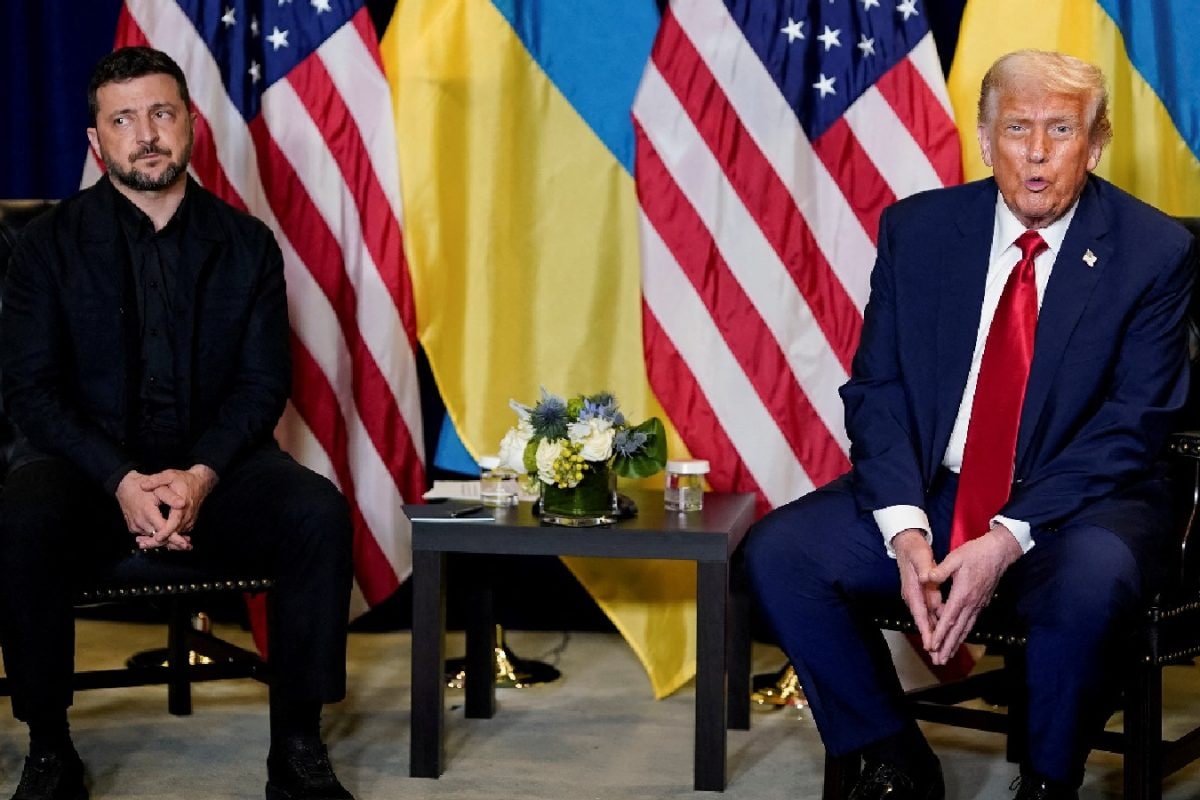
The Ukrainian president also informed that he expected to meet United States (US) President Donald Trump on the sidelines of the United Nations General Assembly (UNGA) next week. He added that the first ladies of Ukraine and the US would likely hold separate talks focused on humanitarian issues concerning children. His comments, made on Friday, were embargoed until Saturday morning.

At least 30 people were wounded in the attack in Ukraine’s central Dnipropetrovsk region, Governor Serhii Lysak said. Several high-rise buildings and homes were damaged in the eastern city of Dnipro, according to the Associated Press (AP).

### Russia-Ukraine War: Drone and Missile Strikes Continue

In the Kyiv region, authorities reported strikes in Bucha, Boryspil, and Obukhiv, damaging homes and cars. In western Lviv, Governor Maxim Kozytsky said two cruise missiles were shot down.

Russia launched a total of 619 drones and missiles, the Ukrainian Air Force reported. This included 579 drones, eight ballistic missiles, and 32 cruise missiles. Ukrainian forces successfully shot down 552 drones, two ballistic missiles, and 29 cruise missiles.

“Western weapons once again prove their effectiveness on the battlefield,” the Air Force said.

### Russia Denies Violating Estonia’s Airspace

Russia’s Defence Ministry has denied that its aircraft violated Estonia’s airspace after Tallinn reported that three Russian fighter jets crossed into its territory on Friday without permission for 12 minutes.

The incident, described by Estonia’s top diplomat as an unprecedentedly brazen incursion, occurred just over a week after NATO planes downed Russian drones over Poland, raising fears that the war could spill over into neighboring countries.

Moscow stated that the MiG-31 fighter jets remained over neutral Baltic Sea waters, more than 3 kilometres from Estonia’s Vaindloo Island in the Gulf of Finland. On September 19, the three MiG-31 jets completed a scheduled flight from Karelia to an airfield in the Kaliningrad region. The flight was conducted in strict compliance with international airspace regulations and did not violate the borders of other states, the ministry added, citing objective monitoring data.

In response, Estonian officials said Tallinn had summoned a Russian diplomat to protest and initiated consultations among NATO allies under Article 4, which allows members to confer whenever territorial integrity, political independence, or security is threatened.

### Polish and Allied Aircraft Scrambled

Poland’s Operational Command reported that Polish and allied aircraft were deployed overnight in response to Russian long-range airstrikes in neighboring Ukraine. The operation was described as preventive and aimed at securing airspace near the threatened zones.

Polish jets have frequently patrolled the country’s airspace amid Russian attacks on Ukraine. Last week, Romania also deployed two F-16 jets to intercept a drone that briefly entered its airspace.

### Zelenskyy Seeks to Finalise Security Guarantees in New York Meetings

Zelenskyy said Ukraine and its partners have laid the groundwork for long-term security guarantees, and he hopes to gauge progress during next week’s meetings in New York.

European nations are ready to move forward with a framework if the United States remains closely engaged, Zelenskyy added, noting that discussions are ongoing among military leadership and general staffs in Europe and the US.

“I would like to receive signals for myself on how close we are to understanding that the security guarantees from all partners will be the kind we need,” Zelenskyy said.

He stressed that sanctions against Russia must remain if peace efforts stall and said he would press the issue with Trump.

“If the war continues and there is no movement toward peace, we expect sanctions,” he said, adding that Trump is seeking strong steps from Europe.
https://www.mid-day.com/news/world-news/article/russia-ukraine-war-three-killed-in-massive-drone-and-missile-attack-across-nine-regions-says-volodymyr-zelenskyy-23594995

Jesse Watters Steamrolls Tarlov’s ‘Both Sides’ Fascist Rhetoric Narrative [WATCH]

Fox News host Jesse Watters challenged Democratic strategist Jessica Tarlov during a broadcast of *The Five* on Friday, saying he no longer takes issue with Democrats labeling Republicans as fascist because the term has become routine and uncontrollable.

The exchange occurred during a panel discussion about political violence following the assassination of Turning Point USA founder Charlie Kirk. Some Democrats have attempted to link Republicans and former President Donald Trump to the rise in violence, a claim Watters dismissed.

Tarlov referenced Trump’s recent criticism of Vice President Kamala Harris, noting that Trump himself had called her a fascist. Watters interrupted her response, saying, “He’s only saying Kamala’s fascist because he ran out of things that she was dumb. That’s your word. He was just making fun of it. But Jessica, just listen.”

Tarlov pushed back, responding, “No, it was literally my turn. I do mind, deeply.”

The tense exchange highlighted how partisan divides have remained sharp since the 2024 election. During the campaign, Harris and her allies accused Trump of fascism, while President Joe Biden said Trump should be locked up. These statements followed the July 13, 2024, assassination attempt against Trump at a rally in Butler, Pennsylvania.

The gunman, 20-year-old Thomas Matthew Crooks, opened fire on the crowd, killing volunteer fire chief Corey Comperatore. Trump was struck by a bullet that grazed his ear.

Watters argued that Democrats’ use of the “fascist” label has lost meaning. “You guys have called us this word a lot. You can’t control yourselves. We can’t control you. Nancy [Pelosi] can’t. No one can. At this point, say it. Say it all you want. I’m done complaining about it because we look weak when we complain,” Watters said.

He continued, “Please don’t say it. We’re warning you. It’s putting people in danger. Everyone’s getting shot. Their cars are getting firebombed. Conservatives can’t give a speech at a college. I’m done with saying it. You guys are going to say it.”

Watters added, “It kind of reminds me of little kids when they call you a name and then you react. They’re like, ‘Oh, we’re going to call that name again.’ So we’re done. Call us whatever you want. Call us the F-bomb. Call us the real F-bomb. I don’t care anymore.”

The issue of political rhetoric resurfaced after a second attempt on Trump’s life was uncovered on September 15, 2024, when Secret Service agents arrested Ryan Routh outside Trump International Golf Club in West Palm Beach, Florida. Agents reported Routh was hiding in bushes with an AK-47-style rifle.

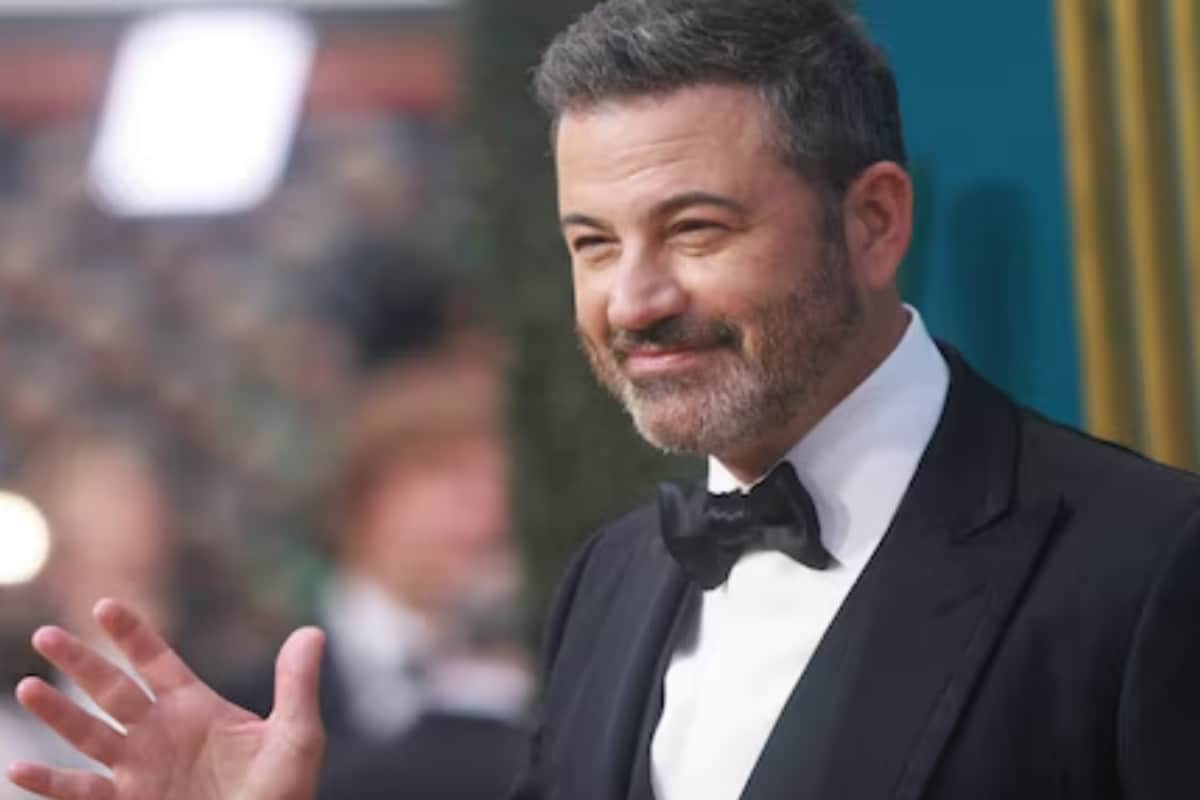
Democrats have continued to portray Trump’s administration as a threat to democracy since the start of his second term. This debate has spilled into the media, where Disney-owned ABC indefinitely suspended late-night host Jimmy Kimmel after he made remarks about Kirk’s alleged shooter, sparking renewed criticism of the network’s handling of political commentary.

Polling data reflects divisions in public opinion. According to a survey conducted by Napolitan News Service, 26 percent of Americans aged 18 to 34 said the country is better off now that Charlie Kirk has been killed, though respondents also acknowledged it is always difficult to wish ill of another human being. Among Democrats, 24 percent agreed with the sentiment.
https://www.lifezette.com/2025/09/jesse-watters-steamrolls-tarlovs-both-sides-fascist-rhetoric-narrative-watch/

Trump’s new visa policy could hit India’s real estate market

**Trump’s New Visa Policy Could Impact India’s Real Estate Market**

*By Akash Pandey | Sep 20, 2025, 07:13 PM*

US President Donald Trump has introduced a new visa policy that is set to influence India’s real estate market significantly. Starting September 21, 2025, a hefty $100,000 annual fee will be imposed on most H-1B visa petitions. This development is expected to impact the residential property segment in Indian metro cities notably, while the commercial real estate sector might experience different effects, particularly through the operations of Global Capability Centres (GCCs).

### Major Impact on Indian Metro Cities

In the fiscal year 2024, over 71% of H-1B visa approvals went to Indian nationals. Experts believe that the new fee will discourage US onsite deployments and reduce overseas hiring. This shift could directly affect remittance-driven home buying and long-term housing decisions among Indian tech professionals.

Real estate specialists warn that cities such as Bengaluru, Hyderabad, Pune, and Gurugram are especially vulnerable to a slowdown due to this policy change.

### Housing Market Risks

Industry experts have highlighted three primary risks to India’s residential real estate market due to this policy:

– A decline in demand for premium housing.
– Delays in property purchase decisions as US relocations get postponed.
– Slower absorption of mid-to-high-end residential projects targeted at technology sector buyers.

A real estate consultant based in the Delhi NCR region noted that the sudden increase in visa costs is likely to dampen the sentiments of families planning overseas relocations, which could reduce property investments back home.

### The Role of Remittances in Housing Demand

Pareekh Jain, CEO of Pareekh Consulting, pointed out that remittances have been a major driver of housing demand in India. Although primary housing demand may rise due to some individuals returning from the US or moving to Indian metros, overall investment demand in the real estate sector is expected to weaken amid reduced remittances and increased job insecurity.

Similarly, Vishal Raheja, Founder and MD of InvestoXpert, emphasized that the increased H-1B visa fee is likely to affect housing demand negatively.

### Potential Boost for Commercial Real Estate

Despite challenges facing the residential sector, commercial real estate might see a potential upswing. American companies may accelerate the growth of their Global Capability Centres (GCCs) in India as they rethink staffing strategies in response to the new visa costs.

Indian metro cities could witness increased leasing of office spaces and expanded infrastructure development driven by this shift. According to data from CBRE, GCCs currently account for 35-40% of office space absorption in major cities like Bengaluru, Hyderabad, and Pune.

### Shifting Global Investment Patterns

As developers, buyers, and investors adapt to these new conditions, India’s real estate market is likely to experience a shift towards mid-segment housing and rental ecosystems.

Akash Puri from India Sotheby’s International Realty noted that higher H-1B visa costs might encourage top Indian talent to explore luxury real estate markets in other global cities. This dynamic could create fresh demand for real estate markets that offer greater stability and enhanced lifestyle options.

The new H-1B visa fee represents a significant shift with wide-ranging consequences for India’s housing and commercial property sectors. Stakeholders will need to closely monitor these trends and adjust their strategies accordingly.
https://www.newsbytesapp.com/news/business/trump-s-h-1b-fee-threatens-india-s-property-boom-in-tech-hubs/story

Trump’s new visa policy could hit India’s real estate market

**Trump’s New Visa Policy Could Impact India’s Real Estate Market**

*By Akash Pandey | Sep 20, 2025, 07:13 PM*

**Overview**

US President Donald Trump has introduced a new visa policy that could significantly affect India’s real estate market. Beginning September 21, 2025, an annual $100,000 fee will be imposed on most H-1B visa petitions. This move is expected to influence primarily the residential property market in major Indian metro cities, while the commercial real estate sector may experience distinct effects, especially through Global Capability Centres (GCCs).

**Market Impact on Indian Cities**

With over 71% of H-1B approvals in fiscal year 2024 granted to Indian nationals, experts anticipate that the new fee will discourage onsite deployments and reduce overseas hiring. This shift could profoundly impact remittance-backed home buying and long-term housing decisions among technology professionals.

Real estate analysts warn that cities like Bengaluru, Hyderabad, Pune, and Gurugram could witness a downturn due to this policy change.

**Housing Forecast: Three Key Risks**

Industry experts have identified three major risks to the residential real estate market caused by the new visa fee:

1. A decline in demand for premium housing.
2. Delayed purchase decisions resulting from postponed relocations to the US.
3. Slower absorption rates of mid-to-high-end projects targeting tech-sector buyers.

A Delhi NCR-based real estate consultant highlighted that the sudden spike in visa costs is likely to dampen sentiment among overseas-bound families who were relying on US assignments for property investments back home.

**Investment Shifts: Remittances Driving Housing Demand**

Pareekh Jain, CEO of Pareekh Consulting, emphasized that remittances play a crucial role in driving housing demand in India. He predicts that while primary housing demand may see growth as some professionals return from the US or relocate to Indian metros, overall investment demand in real estate is expected to weaken due to lower remittances and increased job insecurity.

Vishal Raheja, Founder & MD of InvestoXpert, echoed these concerns, stating that the proposed H-1B visa fee could dampen housing demand among Indian buyers.

**Commercial Real Estate: A Potential Boost**

Despite challenges in the residential sector, the commercial real estate market may find new opportunities. The expansion of Global Capability Centres (GCCs) might accelerate as American companies restructure their staffing strategies to minimize overseas costs.

Indian cities could experience increased office space leasing and infrastructure development as a result. According to CBRE data, GCCs currently account for 35-40% of office space absorption in metros like Bengaluru, Hyderabad, and Pune.

**Uncertainty and Shifting Investment Patterns**

As developers, buyers, and investors adapt to these developments, India’s real estate market is likely to see a pivot toward mid-segment housing and rental ecosystems.

Akash Puri from India Sotheby’s International Realty observed that higher H-1B costs could prompt top Indian talent to explore global cities for luxury real estate investments. This shift is expected to fuel fresh demand in markets offering stability and lifestyle benefits.

**Conclusion**

The new H-1B visa fee introduced by the US government is poised to reshape India’s real estate landscape, with mixed effects across residential and commercial sectors. While residential properties in tech-centric metro cities may face challenges, commercial real estate, propelled by GCC growth, could witness new momentum. Stakeholders will need to navigate this evolving environment carefully to capitalize on emerging opportunities.
https://www.newsbytesapp.com/news/business/trump-s-h-1b-fee-threatens-india-s-property-boom-in-tech-hubs/story

Trump’s H-1B fee will drive start-ups to India: Amitabh Kant

**Trump’s New H-1B Visa Fee Will Drive Start-Ups to India: Amitabh Kant**

*By Akash Pandey | September 20, 2025, 03:07 PM*

Amitabh Kant, former G20 Sherpa and ex-CEO of NITI Aayog, has voiced strong opinions regarding US President Donald Trump’s newly announced H-1B visa policy. In a recent post on X (formerly Twitter), Kant highlighted that the proposed $100,000 annual fee per H-1B visa worker would stifle innovation within the United States while providing a significant boost to India’s rapidly growing startup ecosystem.

According to Kant, by effectively shutting its doors to global talent, America risks shifting technology labs and startups to Indian cities such as Bangalore, Pune, Gurugram, and Hyderabad. He emphasized that this policy shift presents a unique opportunity for India’s top doctors, engineers, scientists, and innovators to contribute meaningfully to the country’s developmental goals.

### An Opportunity for a ‘Viksit Bharat’

Kant described the new US visa restrictions as a potential catalyst for India’s ambition to become a developed nation—often referred to as ‘Viksit Bharat’. With Indian professionals historically dominating the H-1B visa program, the move could propel domestic innovation and entrepreneurship at home.

Last year, Indian nationals accounted for approximately 71% of approved H-1B visa beneficiaries, according to official government data. This statistic underscores the pivotal role Indian talent has played in shaping the US technology landscape.

### Understanding the New H-1B Policy

The Trump administration’s executive order aims to curb abuses of the H-1B program and prioritize American workers. The new rules apply to both new applications and renewals, introducing a steep $100,000 annual fee per skilled worker under the visa program. Additionally, a “gold card” program has been launched, offering expedited visas for wealthy investors willing to invest up to $2 million in the US economy.

Major technology companies like Amazon, Microsoft, and Meta have historically received thousands of H-1B approvals under the previous rules, leveraging global talent to drive growth.

### Potential Impact on US Industries

These changes, which take effect from September 21, 2025, could severely affect several crucial sectors in the US, including healthcare, higher education, and technology. The steep fees may deter companies from hiring skilled international workers, potentially leading to talent shortages.

While the new policy is expected to face legal challenges, if upheld, it would significantly increase the cost of employing foreign professionals under the H-1B program.

### Global Talent Shift: ‘America’s Loss, India’s Gain’

Amitabh Kant’s remarks serve as a strong endorsement of India’s ability to fill the innovation void that might be created by America’s tighter immigration rules. He stated, “America’s loss will be India’s gain,” underscoring the vast pool of Indian doctors, engineers, scientists, and innovators who are now positioned to contribute substantially to India’s growth story.

As the H-1B program remains a critical gateway for Indian engineers and professionals impacting the global tech industry, the evolving US visa landscape could reshape the innovation map, favoring India’s burgeoning technology hubs.

*Stay tuned for more updates and in-depth analyses on global tech and policy shifts.*
https://www.newsbytesapp.com/news/world/trump-s-h-1b-fee-hurts-us-but-helps-india-amitabh-kant/story