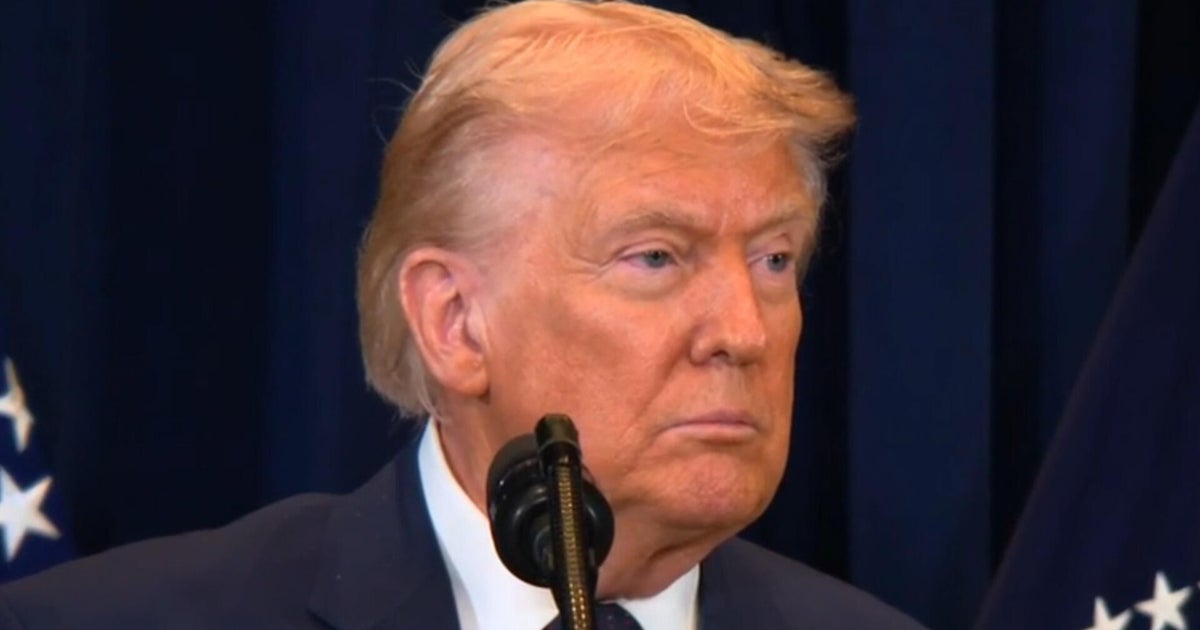
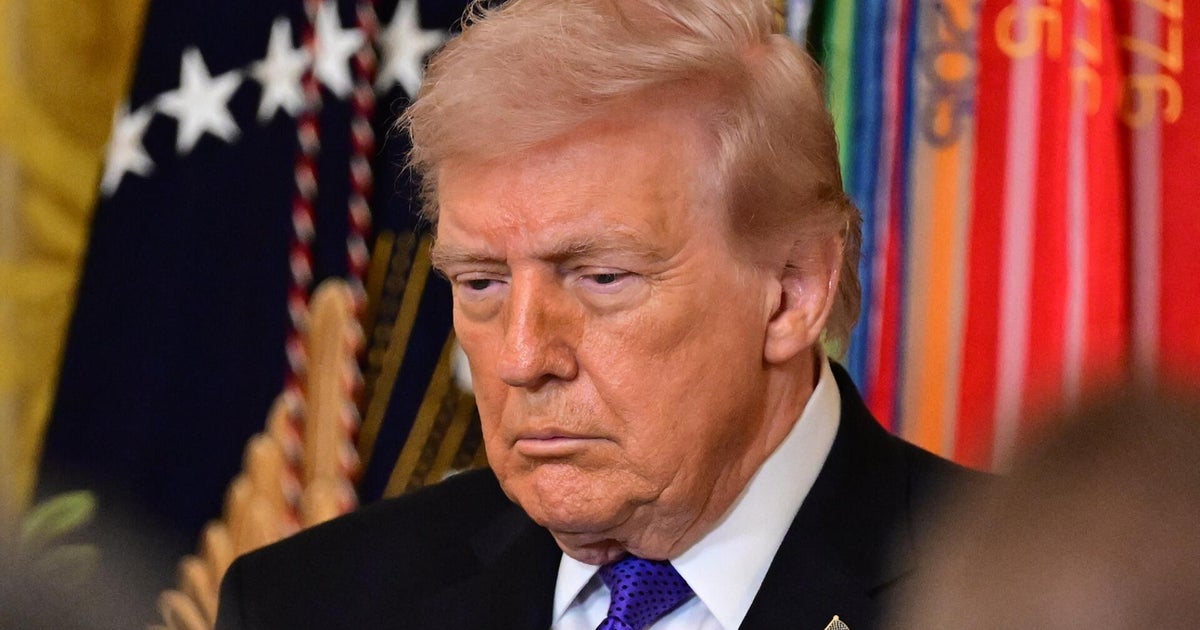
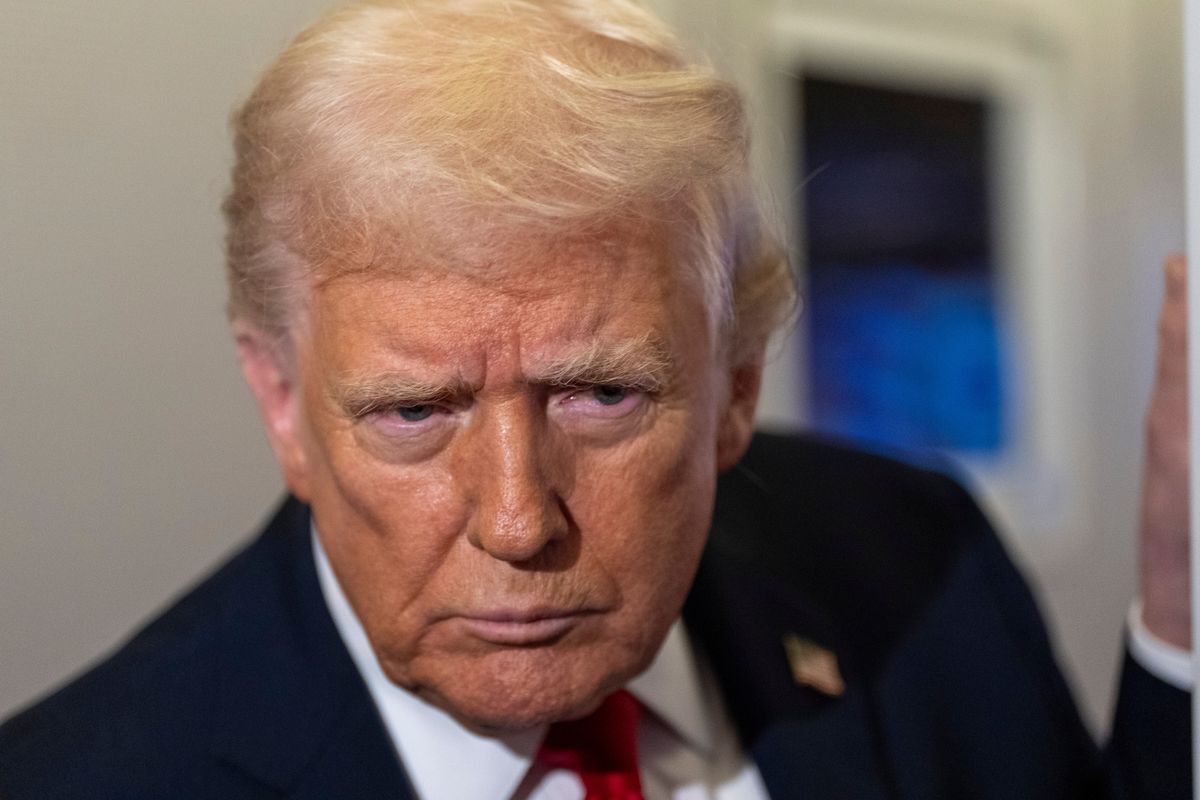
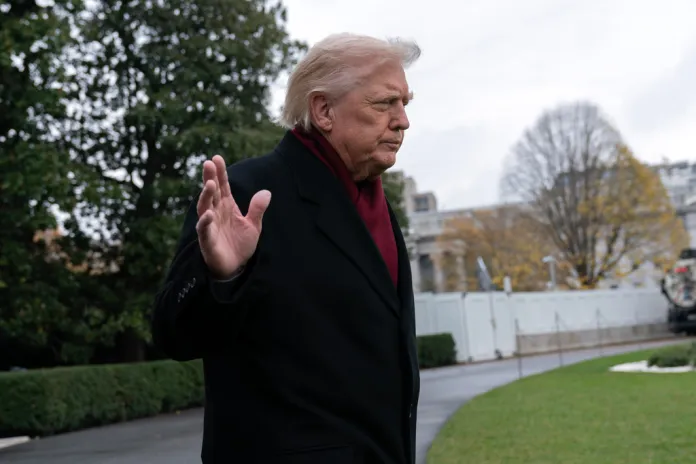
WASHINGTON (AP) President Donald Trump said Wednesday’s “heinous assault” on two National Guard members near the White House proves that lax migration policies are “the single greatest national security threat facing our nation.” “No country can tolerate such a risk to our very survival,” he said. Trump’s remarks, released in a video on social media, underscores his intention to reshape the country’s immigration system and increase scrutiny of migrants who are already here. With aggressive deportation efforts already underway, his response to the shooting showed that his focus will not waver. The suspect in the shooting is believed to be an Afghan national, according to Trump and two law enforcement officials. He entered the United States in September 2021, after the chaotic collapse of the government in Kabul, when Americans were frantically evacuating people as the Taliban took control. The 29-year-old suspect was part of Operation Allies Welcome, the Biden-era program that resettled tens of thousands of Afghans after the U. S. withdrawal from the country, officials said. The initiative brought roughly 76, 000 Afghans to the United States, many of whom had worked alongside American troops and diplomats as interpreters and translators. It has since faced intense scrutiny from Trump and his allies, congressional Republicans and some government watchdogs over gaps in the vetting process and the speed of admissions, even as advocates say it offered a lifeline to people at risk of Taliban reprisals. Trump described Afghanistan as “a hellhole on earth,” and he said his administration would review everyone who entered from the country under President Joe Biden a measure his administration had already been planning before the incident. During his remarks, Trump also swung his focus to Minnesota, where he complained about “hundreds of thousands of Somalians” who are “ripping apart that once-great state.” Minnesota has the country’s largest Somali community, roughly 87, 000 people. Many came as refugees over the years. The reference to immigrants with no connection to Wednesday’s developments was a reminder of the scope of Trump’s ambitions to rein in migration. Administration officials have been ramping up deportations of people in the country illegally, as well as clamping down on refugee admissions. The focus has involved the realignment of resources at federal agencies, stirring concern about potentially undermining other law enforcement priorities. However, Trump’s remarks were a signal that scrutiny of migrants and the nation’s borders will only increase. He said he wants to remove anyone “who does not belong here or does not add benefit to our country.” “If they can’t love our country, we don’t want them,” Trump added. Afterward, the United States Citizenship and Immigration Services announced it would indefinitely stop processing all immigration requests for Afghan nationals pending a review of security and vetting protocols. Supporters of Afghan evacuees said they feared that people who escaped danger from the Taliban would now face renewed suspicion and scrutiny. “I don’t want people to leverage this tragedy into a political ploy,” said Shawn VanDiver, president of #AfghanEvac. He said Wednesday’s shooting should not shed a negative light on the tens of thousands of Afghan nationals who have gone through the various legal pathways to resettling in the U. S. and those who await in the pipeline. Under Operation Allies Welcome, tens of thousands of Afghans were first brought to U. S. military bases around the country, where they completed immigration processing and medical evaluations before settling into the country. Four years later, there are still scores of Afghans who were evacuated at transit points in the Middle East and Europe as part of the program. Those in countries like Qatar and Albania, who have undergone the rigorous process, have been left in limbo since Trump entered his second term and paused the program as part of his series of executive actions cracking down on immigration. Vice President JD Vance, writing on social media, criticized Biden for “opening the floodgate to unvetted Afghan refugees,” adding that “they shouldn’t have been in our country.” “Already some voices in corporate media chirp that our immigration policies are too harsh,” he said. “Tonight is a reminder of why they’re wrong.” ___ Amiri reported from New York. Associated Press writer Eric Tucker in Washington contributed to this report.
https://mymotherlode.com/news/national/us-government/10235992/trump-says-lax-migration-policies-are-top-national-security-threat-after-national-guard-members-shot.html
Tag Archives: congressional
Trump’s Obamacare subsidy plan in flux after GOP outcry
But the conservative backlash was palpable both in public and private, particularly from Republicans in the House, who suggested the president was ceding too much ground to Democratic healthcare demands and that the White House should consult more closely with GOP lawmakers. A House Republican, who was granted anonymity to discuss talks among colleagues, described the private reaction to reported details about Trump’s yet-to-be-released proposal as “not good.” “This is what happens when policies are made in darkness,” they told the Washington Examiner. The White House did not respond to a request for comment. Press secretary Karoline Leavitt later declined to rule out a possible announcement from the president. “Right now, the president is very much involved in these talks, and he’s very focused on unveiling a healthcare proposal that will fix the system and will bring down costs for consumers,” Leavitt told reporters at the White House. “As for the details of those discussions, I’ll let the president speak for himself.” Some initial GOP feedback was more openly negative. Rep. Bob Onder (R-MO), a physician and member of the conservative House Freedom Caucus, said in a series of posts that “doubling down on a broken system is not reform” and that he was “hoping” a pitch from the president for an extension with limits “isn’t true.” Others, such as Rep. Tim Burchett (R-TN), appeared more open-minded, despite broader opposition to extending the pandemic-era enhanced subsidies that will expire at year’s end. In addition, at least one Senate Democrat expressed cautious optimism about Trump’s plan that a bipartisan deal could be reached to prevent out-of-pocket premiums from skyrocketing for millions of people. “A lot of folks are getting nervous because the president of the United States has the audacity to propose some changes” to Obamacare, Burchett said in a video posted to X. “Everybody’s going to freak out, clutch their pearls, and wring their hands. Look, that’s why you negotiate. You put something on the dadgum table, and then you fight over it.” Burchett added that he does not support the details of the framework but predicted that Republicans “will probably kill it in the press, and everybody will be anonymous sources.” “We haven’t done anything in, what, 15 years? Everyone’s griping and moaning about it,” he continued. “At least Trump’s got the guts to do something about it.” Sen. Maggie Hassan (D-NH), one of eight Senate Democrats who crafted the shutdown-ending deal with Republicans to reopen the government, said a formal proposal would be evidence of Trump and congressional Republicans “now coming to the table” ahead of the subsidy cliff and a promised vote next month by Senate GOP leadership on a healthcare bill of Democrats’ choosing. “While I have significant concerns about some of the ideas reportedly in the president’s proposal, it nonetheless represents a starting point for serious negotiations,” Hassan said in a statement. “The fact that President Trump is putting forward any offer at all to extend the Affordable Care Act’s tax credits shows that there is a broad understanding that inaction in this regard will cause serious harm to the American people.” As part of a government funding deal to end the shutdown, Senate Majority Leader John Thune (R-SD) promised Democrats a floor vote to address the subsidies on a bill of their choosing by the second week of December, before Congress heads home for the remainder of the year. Bipartisan talks have continued behind the scenes in a bid to find a solution that could muster the 60 votes needed to clear a filibuster. Trump and Republicans face possible backlash at the ballot box in the 2026 midterm elections if the healthcare credits are not addressed. And Democrats are ready to wield healthcare as an election rallying cry to try to topple the Republican majorities in the House and Senate. BIPARTISAN HOUSE GROUP FLOATS COMPROMISE ON OBAMACARE SUBSIDY EXTENSION Publicly, Trump has pushed for redirecting the subsidies from insurance companies to individual health savings accounts, echoing GOP concerns that federal aid has done more to line the pockets of corporations than lower healthcare costs for people. “THE ONLY HEALTHCARE I WILL SUPPORT OR APPROVE IS SENDING THE MONEY DIRECTLY BACK TO THE PEOPLE, WITH NOTHING GOING TO THE BIG, FAT, RICH INSURANCE COMPANIES, WHO HAVE MADE RILLIONS, AND RIPPED OFF AMERICA LONG ENOUGH,” Trump wrote in a recent Truth Social post. “THE PEOPLE WILL BE ALLOWED TO NEGOTIATE AND BUY THEIR OWN, MUCH BETTER, INSURANCE. POWER TO THE PEOPLE! Congress, do not waste your time and energy on anything else.” Naomi Lim and Lauren Green contributed to this report.
https://www.washingtonexaminer.com/policy/healthcare/3896993/trump-obamacare-subsidy-plan-in-flux-gop-outcry/
Adrian Fontes condemns President Trump for saying Mark Kelly should face death penalty
PHOENIX Arizona’s top elections official said President Donald Trump’s recent comments about congressional Democrats who reminded military members not to obey unlawful orders are dangerous for democracy. “The Democrats did the same thing my drill instructors did in Marine Corps boot camp. They told us, ‘You’re not to obey unlawful orders.’ Pretty simple. I think everybody whoever wore the uniform knows that,” Arizona Secretary of State Adrian Fontes told KTAR News 92. 3 FM’s Outspoken with Bruce & Gaydos on Friday. One of the Democrats Trump condemned was U. S. Sen. Mark Kelly of Arizona, who said he and the other Democrats were specifically referring to recent strikes against alleged drug smuggling boats in the Caribbean Sea, which he believes are “really close” to crossing over into illegal activity. They delivered their message in a Tuesday video post. Two days later, Trump lashed out on Truth Social in a response to a Washington Examiner article about the video. What did President Donald Trump say in response to ‘unlawful orders’ post? “It’s called SEDITIOUS BEHAVIOR AT THE HIGHEST LEVEL,” the president posted. “Each one of these traitors to our Country should be ARRESTED AND PUT ON TRIAL. Their words cannot be allowed to stand We won’t have a Country anymore!!! An example MUST BE SET.” Trump later added that he believes the video was “SEDITIOUS BEHAVIOR, punishable by DEATH!” He also shared a post by a user who wrote, “HANG THEM.” “The president of the United States of America threatened American citizens and political opponents with death. That’s not what we do in this country. That’s not how you America,” Fontes said. Trump’s comments are putting the country down a dark path, he added. “This is some serious stuff here and particularly when you’ve got calls for political violence, which this is clearly,” Fontes said. “It’s not just unseemly and way beneath the office, but it’s disturbing, and it really takes us to a much darker place than, I think, we’ve been in before in this country.”.
https://ktar.com/arizona-news/unlawful-orders-trump-fontes-kelly/5780611/
Texas seeks Supreme Court order to use a congressional map judges held is likely racially biased
By MARK SHERMAN WASHINGTON (AP) Texas on Friday asked the Supreme Court for an emergency order to be allowed to use a congressional redistricting plan pushed by President Donald Trump that is favorable to Republicans in the 2026 elections despite a lower court ruling that it likely discriminates on the basis of race. The state is calling on the high court to intervene to avoid confusion as congressional primary elections approach in March. The justices have blocked past lower-court rulings in congressional redistricting cases, most recently in Alabama and Louisiana, that came several months before elections. Texas redrew its congressional map in the summer as part of Trump’s efforts to preserve a slim Republican majority in the House in next year’s elections, touching off a nationwide redistricting battle. The new redistricting map was engineered to give Republicans five additional House seats, but a panel of federal judges in El Paso ruled 2-1 Tuesday that the civil rights groups that challenged the map on behalf of Black and Hispanic voters were likely to win their case. If the ruling holds for now, Texas could be forced to hold elections next year using the map drawn by the GOP-controlled Legislature in 2021 based on the 2020 census. Texas was the first state to meet Trump’s demands in what has become an expanding national battle over redistricting. Republicans drew the state’s new map to give the GOP five additional seats, and Missouri and North Carolina followed with new maps adding an additional Republican seat each. To counter those moves, California voters approved a ballot initiative to give Democrats an additional five seats there. The redrawn maps are facing court challenges in California, Missouri and North Carolina.
https://www.whittierdailynews.com/2025/11/21/election-2026-redistricting-texas-scotus/
What to know about expanded work requirements about to kick in for SNAP
After a disruptive U. S. government shutdown, federal SNAP food assistance is again flowing to low-income households. But in the months ahead, many participants will have to abide by new work requirements. The Supplemental Nutrition Assistance Program provides monthly benefits averaging around $190 per person to about 42 million people nationwide. During the first couple weeks of November, many of those recipients missed their regular allotments as President Donald Trump’s administration battled in court over whether to tap into reserves to fund the program while the government was shut down. Here’s what to know about SNAP: The benefits are available across the country after lapses For the first part of the month, the situation was chaotic after the federal government said SNAP would not be funded because of the government shutdown. Some states replenished the electronic benefit cards used in the program either fully or partially, using their own funds or federal dollars that were part of court orders. Others didn’t. Most states boosted food charities, but lines were long and some shelves were empty. As soon as the government reopened on Nov. 12, many states rushed to get out benefits. By Tuesday, all states either had loaded full November benefits onto people’s electronic spending cards or were working on it, according to an Associated Press review. Participants should receive December SNAP benefits according to their normal schedule. More SNAP recipients will face work requirements A massive tax and spending bill signed into law in July by Trump expanded requirements for many adult SNAP recipients to work, volunteer or participate in job training for at least 80 hours a month. Those who don’t are limited to three months of benefits in a three-year period. The work requirements previously applied to adults ages 18 through 54 who are physically and mentally able and don’t have dependents. The new law also applies those requirements to those ages 55 through 64 and to parents without children younger than 14. It repeals work exemptions for homeless individuals, veterans and young adults aging out of foster care. And it limits the ability of states to waive work requirements in areas lacking jobs. The Trump administration waived the work requirements in November, but the three-month clock on work-free SNAP benefits will be in full force for much of the country in December. Under a Nov. 1 court order, the count will not yet begin in places with existing waivers in place due to relatively high local unemployment rates. Those waivers extending past this month cover all or parts of 10 states, the District of Columbia and the U. S. Virgin Islands, and are set to expire between the end of 2025 and January 2027, depending on the place. The new requirements are expected to reduce the average monthly number of SNAP recipients by about 2. 4 million people over the next 10 years, according to the Congressional Budget Office. Agriculture secretary casts doubt about SNAP In the aftermath of the shutdown, Agriculture Secretary Brooke Rollins, whose department administers SNAP, has cast doubt on the program. Rollins has said it is rife with fraud, including deceased people receiving benefits and some people receiving multiple benefits. Rollins suggested that everyone who receives SNAP be required to reapply. But it’s not clear whether Rollins was suggesting an additional requirement or referring to the current one that mandates people to periodically recertify their income and other information. An Agriculture Department spokesperson didn’t clarify but instead said in a statement that the standard recertification processes for households is part of a plan to eliminate fraud, abuse and waste. Under federal law, most households must report their income and basic information every four to six months and be fully recertified for SNAP at least every 12 months. Full recertification can occur every 24 months for households where all adults are age 60 and above or have disabilities. But states can require more frequent eligibility verifications. Last year, 27 states required at least some households to be fully recertified every four to six months, depending on their household circumstances, according to a USDA report. ( ).
https://whdh.com/news/what-to-know-about-expanded-work-requirements-about-to-kick-in-for-snap/
Epstein Records Set for Unsealing as Democrats Push Last-Minute Conspiracy Claims [WATCH]
Both chambers of Congress have approved legislation to release all files related to Jeffrey Epstein, the convicted sex offender and New York financier who died in federal custody. The House passed the measure 427-1, and the Senate approved it unanimously. President Donald Trump said over the weekend that he supports full disclosure. The bill grants Attorney General Pam Bondi authority to redact or withhold information that could endanger national security or interfere with ongoing federal investigations. The scope of the files and the high-profile individuals associated with Epstein have been central to the debate surrounding the release. This Could Be the Most Important Video Gun Owners Watch All Year Lawmakers have noted that a process is required to prevent defamation, and that being named in the files does not indicate involvement in criminal activity. The issue has been a point of political focus since the investigation into Epstein gained renewed attention. Some Democrats have circulated allegations that federal agents removed Trump’s name from the documents prior to their release. The claims were made as debate continued over the expected scope of disclosure and the individuals likely to be referenced in the material. The release of the files is expected to include information involving multiple public figures. Lawmakers have pointed to previous incidents involving communications connected to Epstein. Del. Stacey Plaskett of the Virgin Islands exchanged text messages with Epstein in 2019 during a hearing with former Trump attorney Michael Cohen. During that hearing, Epstein sent her suggested questions. Plaskett had previously supported tax benefits that affected Epstein’s operations in the Virgin Islands. The order to release the files follows years of congressional interest in records associated with Epstein, whose criminal case involved charges of sex trafficking. The newly approved legislation sets out the process for handling the documents and outlines the attorney general’s authority regarding redactions and national security concerns.
https://www.lifezette.com/2025/11/epstein-records-set-for-unsealing-as-democrats-push-last-minute-conspiracy-claims-watch/
House votes to denounce Rep. Chuy Garcia for ‘election subversion’ after Dem civil war
WASHINGTON House lawmakers agreed Tuesday to denounce retiring Illinois Rep. Chuy Garcia over his underhanded scheme to prevent challenges against his hand-picked successor a slippery ploy that sparked a Democratic revolt. In 236-183, the lower chamber adopted a resolution to rebuke Garcia (D-Ill.), 69, for timing his retirement announcement after the filing deadline for primary candidates in his district, a cutoff his chief of staff happened to meet. Twenty-three Democrats backed the resolution to condemn their colleague. Rep. Marie Gluesenkamp Perez (D-Wash.) announced the resolution last week after the House reconvened to reopen the government and slammed her colleague for “election subversion.” “I believe election subversion is wrong no matter who’s doing it, and I think that right now we’re seeing a profound, very loud call from Americans for transparency,” Gluesenkamp Perez, 37, told CNN’s “The Lead with Jake Tapper” Monday. “You don’t just turn a blind eye to wrongdoing or unethical behavior when it’s politically convenient,” she added. “It’s not fun to call out a member of your own party, but I think it’s important.” Adding to the plot, Garcia was the first person to sign his aide’s nominating petition, days before he announced his retirement, Politico reported, showing a document filed with Illinois elections officials. Republicans happily agreed to rebuke Garcia, while Democratic leadership scolded Gluesenkamp Perez for daring to call a member of her own party. “I strongly support Congressman Chuy Garcia. He’s been a progressive champion in disenfranchised communities for decades,” House Minority Leader Hakeem Jeffries (D-NY) told reporters Monday. Allies of Garcia, who was first elected to the House in 2019, quietly revealed to the Chicago press on Nov. 3 that he would not seek reelection for a fifth term in his Illinois 4th Congressional District seat. There happened to be a 5 p. m. deadline that same day for Democratic petitions for his seat and his chief of staff, Patty Garcia, conspicuously managed to turn in the necessary paperwork just before the deadline. The seemingly sneaky move left the retiring rep’s chief of staff the sole Democratic candidate for his heavily blue seat. Before the Tuesday vote, Garcia circulated a letter to his Democratic colleagues underscoring that he is not related to Patty Garcia, despite sharing a last name and blaming his wife’s battle with multiple sclerosis for his last-minute withdrawal. “In the days before the filing deadline, my wife received the news that the MS she has been fighting for several years is getting worse,” he wrote. “Meanwhile, I was told by a cardiologist to take it easy-or else.” “Weighing these difficult health and family circumstances, I decided to retire.” Garcia did not outright deny speculation that he deliberately timed his retirement to benefit his chief of staff in his letter to colleagues obtained by The Post. Democrats unsuccessfully moved to table the resolution denouncing Garcia on Monday, in a bid to stymie a politically dicey vote. Gluesenkamp Perez and retiring Rep. Jared Golden (D-Maine) both joined with Republicans in killing the effort to table consideration of the resolution to denounce Garcia. Numerous Democrats, such as Rep. Becca Balint (D-Vt.), publicly spoke in defense of Garcia. It is rare for the House to denounce one of its own members, particularly with support from that lawmaker’s own party. Back in March, the GOP-led House formally censured Rep. Al Green (D-Texas) for disrupting President Trump’s address to a joint session of Congress. Other lawmakers to face a formal rebuke include then-Rep. Adam Schiff (D-Calif.) and former Long Island lying Rep. George Santos.
https://nypost.com/2025/11/18/us-news/house-votes-to-denounce-rep-chuy-garcia-for-election-subversion-after-dem-civil-war/
With Big Ten $2.4B deal looming, lawmaker asks questions about tax-exempt status of college sports
A lawmaker skeptical of the Big Ten’s proposed $2. 4 billion deal with a private investor has requested a Congressional analysis of the tax consequences for the NCAA, its schools and conferences in the changing college sports industry. “Legitimate questions have been raised about whether it is time to rethink the tax-exempt regime under which college sports currently operates,” Sen. Maria Cantwell, D-Wash., wrote in a letter Monday to the head of the Congressional Joint Committee on Taxation. Last month, Cantwell sent a letter to Big Ten leaders warning that deals with private investors could have negative consequences, including impacting the schools’ tax-exempt status. Her letter Monday asked for a more detailed look at how a number of changes impacting college sports could impact the longstanding tax-exempt standing held by those who oversee college athletics. Among the questions from Cantwell, who is the ranking member on the Senate committee that oversees college sports, were: Whether Congress should consider rewriting tax rules for name, image and likeness collectives that work with schools to provide payments to players. She cited other analysis that has determined collectives don’t qualify as tax-exempt organizations. If there were measures Congress should consider “with respect to addressing excessive compensation for coaches” and the size of their buyouts. The tax implications for athletes if they are classified as employees or independent contractors. The timing comes at a key moment for the Big Ten, which is facing resistance from the universities of Michigan and Southern California over a proposed $2. 4 billion deal that would break off the league’s media rights and other properties and place them in a separate business that could negotiate deals through 2046. Among the reservations Michigan and USC leaders have expressed about the deal are an uneven distribution of the funds from the deal and the overall impact of joining with a private investor. “We greatly value our membership in the Big Ten Conference and understand and respect the larger landscape,” USC athletic director Jennifer Cohen wrote in letter to boosters last week. “But we also recognize the power of the USC brand is far-reaching, deeply engaging, and incredibly valuable, and we will always fight first for what’s best for USC.” In her letter last month to the Big Ten leaders, Cantwell spelled out the stakes of selling part of the conference’s media rights. “Your university’s media revenues currently are not taxed because they are considered ‘substantially related to’ your tax-exempt purpose,” she wrote. “However, when a private, for-profit investor holds a stake in those revenues it raises questions whether the revenue loses its connection to your institution’s educational purpose.” ___ AP college sports:.
https://ktar.com/national-news/with-big-ten-2-4b-deal-looming-lawmaker-asks-questions-about-tax-exempt-status-of-college-sports/5778145/
Congress Has Forgotten How to Legislate Congress once built the future through lawmaking; today, it mostly performs instead of legislates. By Michael S. Kochin
Who in Congress in 2025 Is Truly a Legislator?
This isn’t a trick question. I am not asking who holds the title, who can raise the most money, or who can win a primary. I am asking who is engaged in the actual foundational work of legislating.
Legislation is a specific, wearying art. This art is a process: a member identifies a problem, works with think tanks, academics, and interest groups to create a plan and build a coalition, and directs professional staff to meticulously draft that plan into formal legislation.
What signature legislation does Senator Tom Cotton truly want to pass? What complex national problem does Senator Ted Cruz seek to solve with a new, workable law? We see a Congress full of prominent names, but few seem attached to any signature legislative ambition.
This is not Ted Kennedy’s Congress, which passed the Americans with Disabilities Act. It is not Newt Gingrich’s Congress, which—love it or hate it—was defined by a specific legislative agenda in the “Contract with America.” And it is certainly not the Congress of Representative Carl Vinson.
When Vinson looked at the world in the 1930s, he saw a rising tide of fascism and militarism. As chairman of the House Naval Affairs Committee, his response was not just to give speeches; it was to legislate. He was the principal author of the “Two-Ocean Navy Act,” a monumental bill that authorized a 70% increase in the fleet and funded the creation of the industrial capacity to build it.
It was the law that gave America the naval power to fight and win World War II.
A decade later, Vinson faced a new challenge: the dawn of the nuclear age. When the brilliant but abrasive Admiral Hyman Rickover—the “Father of the Nuclear Navy”—was twice passed over for promotion and faced mandatory retirement, the Navy’s own bureaucracy nearly killed its own future.
Vinson, the legislator, intervened. He and his colleagues in the Senate used their congressional power to pass special legislation, bypassing the retirement rules to keep Rickover on duty. Vinson then personally rammed the authorization bills through Congress to fund the first nuclear submarines and carriers.
That is what a legislator does.
They see a 30-year problem and write a 30-year solution. They protect visionaries from the bureaucracy. They build the future.
When was the last time we saw this kind of ambitious, structural legislating?
Supposedly, the last major, thought-out piece of legislation to be passed was the Dodd-Frank Act in 2010—and as many would note, “thought-out” does not necessarily mean “well thought-out.”
Today, we have a Congress focused on oversight of the executive branch rather than on legislating. Oversight is, without question, a crucial and necessary constitutional duty. But oversight has become an end in itself, rather than a means to an end.
When a congressional hearing is designed not to gather information for a new law, but to create a two-minute viral video clip for social media, it is performance, not governance.
This legislative atrophy comes at a perilous cost, because our most pressing national problems are metastasizing, and they cannot be fixed without new laws.
The regulation of artificial intelligence, for example, is not a partisan issue; it is a national security and economic one. We need a new framework to establish liability, protect data privacy, and prevent misuse by foreign adversaries. But instead of a legislator for the AI age, we have a void.
Look at our critical infrastructure. The FAA is not failing because of one administrator; it is failing because its regulatory approach needs rethinking, its technology is dangerously antiquated, and its air traffic controller workforce is stretched to the breaking point.
These are not problems an executive order can fix. They require complex, multi-year authorization and appropriations bills—the boring, essential work that only Congress can do.
Look at our national defense. The United States needs a 21st-century navy, but it also needs a 21st-century industrial capacity to build that navy. This means new laws to revitalize shipyards, secure critical supply chains, and lay out and fund a stable procurement plan. We are trying to manage a new era of global challenges with a force structured by Vinson’s generation.
Higher education reform requires new laws. The modernization of the FDA, NIH, and NSF requires new laws. The President’s tariff authority needs to be clearly redefined by new laws.
America’s problems are not solving themselves. I have ideas, as do many Americans, but is anybody in Congress interested in ideas—mine or anybody else’s?
Oversight is important. But we, the public, must start demanding more. We must ask our representatives not just what they stopped, but what they built.
Somebody must have the ambition to legislate.
We need a Congress that remembers its primary purpose.
*Comments are closed.*
http://www.ruthfullyyours.com/2025/11/16/217452/
House Democrat exchanged texts with Epstein on how to hurt Trump during 2019 congressional hearing
Jeffrey Epstein was feeding questions to Rep. Stacey Plaskett during a 2019 congressional hearing, providing her with real-time help on how to damage President Trump’s reputation, newly released documents reveal.
The texts, first reported by the Washington Post, show the convicted pedophile communicating with Plaskett during a February 27, 2019, House Oversight Committee hearing. During this hearing, then-former President Trump’s ex-attorney Michael Cohen testified about Trump’s alleged payments to mistresses intended to silence stories before the 2016 election. Trump has vehemently denied all allegations.
In the texts, Epstein appeared to be watching the hearing on television while Cohen mentioned former Trump executive assistant Rhona Graff. “Cohen brought up RONA keeper of the secrets,” Epstein texted, misspelling Graff’s first name.
“RONA??” responded Plaskett, a non-voting delegate representing the U.S. Virgin Islands. “Quick I’m up next is that an acronym,” she added, suggesting she was preparing to question Cohen soon.
“That’s his assistant,” Epstein replied.
The text messages also indicate Epstein influenced which questions Plaskett asked Cohen. “He’s opened the door to questions re who are the other henchmen at Trump Org,” Epstein texted at 12:25 p.m. “Yup. Very aware and waiting my turn,” Plaskett responded.
Plaskett began questioning Cohen at 2:28 p.m., asking about Graff and other Trump associates Epstein had mentioned, according to the Washington Post. At 2:34 p.m., Epstein texted Plaskett “Good work” — just a minute after she finished her questioning.
These texts were released as part of approximately 20,000 pages of documents from Epstein’s estate made public Wednesday by the House Oversight Committee. The documents redacted Plaskett’s name, but the newspaper analyzed the messages and compared them with hearing footage to confirm that Plaskett was indeed texting Epstein.
At the time of the hearing, Epstein had already been convicted on state prostitution charges and, months later, he was charged with sex trafficking minors. Epstein owned two private islands in the U.S. Virgin Islands — Great Saint James and Little Saint James — which federal authorities have called the nexus of his sex-trafficking operations.
Initially, Plaskett declined to comment on the revelations. However, after the newspaper published its story Friday night, her office issued a statement confirming she had contact during the hearing with her former campaign donor.
“During the hearing, Congresswoman Plaskett received texts from staff, constituents, and the public at large offering advice, support, and in some cases partisan vitriol, including from Epstein,” the statement said. “As a former prosecutor, she welcomes information that helps her get at the truth and took on the GOP that was trying to bury the truth.”
In July 2019, the Virgin Islands delegate vowed to part ways with $8,100 in campaign donations that Epstein had given her, after initially stating she planned to keep the funds.
In June 2023, Plaskett made headlines when she accidentally said on MSNBC that Trump “needs to be shot” over his alleged mishandling of classified documents, quickly correcting herself by saying he should be “stopped.”
Earlier this week, Trump called on the Department of Justice to investigate Epstein’s connections to Democratic bigwigs and institutions like JP Morgan Chase.
In response, U.S. Attorney General Pam Bondi instructed Jay Clayton, the U.S. Attorney for the Southern District of New York, to oversee an investigation, vowing it would be handled “with urgency and integrity.”
https://nypost.com/2025/11/15/us-news/house-democrat-exchanged-texts-with-epstein-on-how-to-hurt-trump-during-2019-congressional-hearing/