Tag Archives: kevin hassett

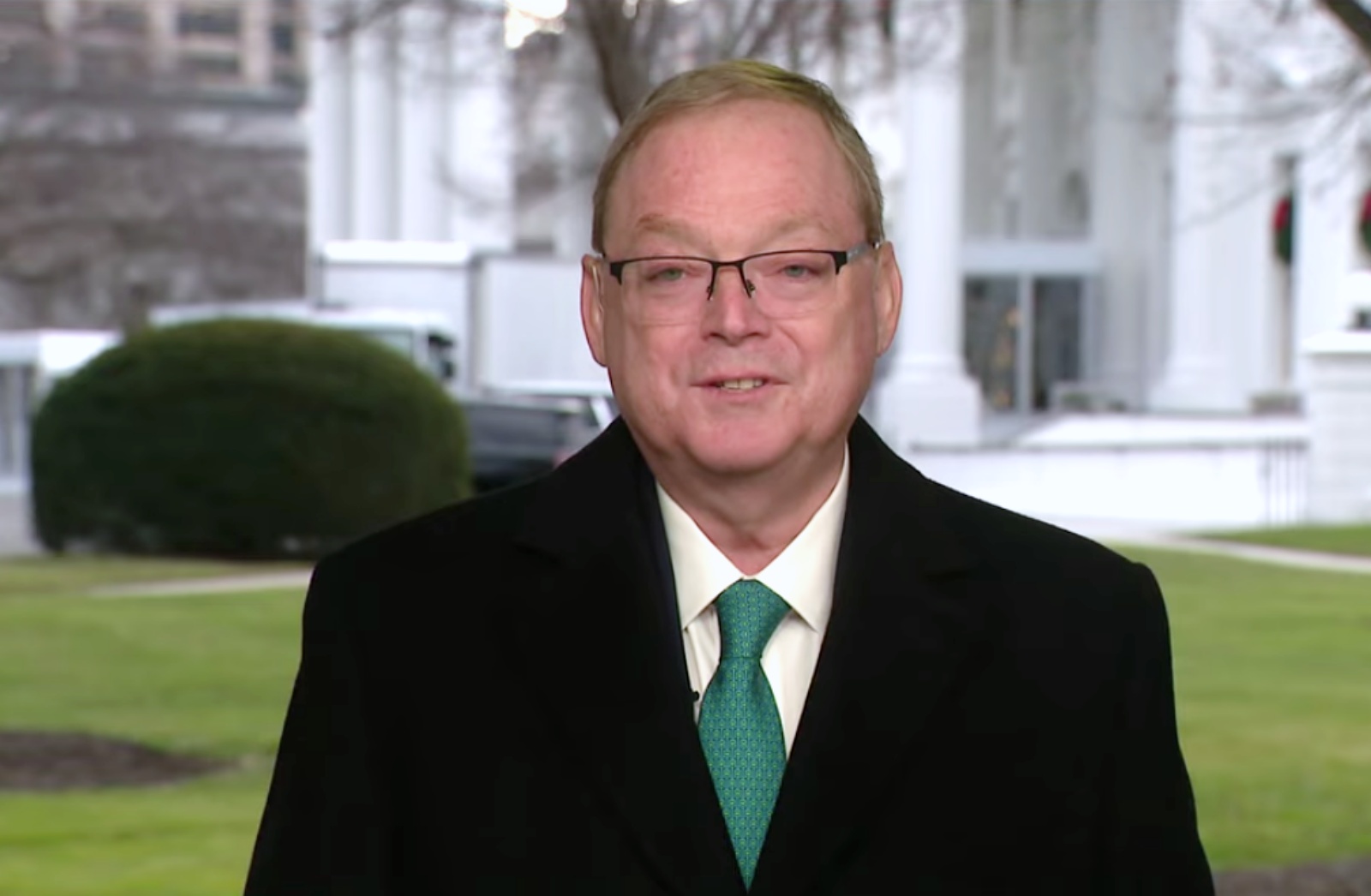
White House Economic Advisor Kevin Hassett Predicts 2026 as Largest Tax Refund in US History

As tax season approaches in the United States, American citizens might actually have something to look forward to. According to Kevin Hassett, the White House Director of the National Economic Council, next year’s tax filing will see taxpayers receive the “biggest refunds of all time.”

His bold prediction is based on a recent major legislative change. Due to the way new laws were passed, the Internal Revenue Service (IRS) ended up holding onto more of taxpayers’ money than it was supposed to. Now, the agency needs to give it all back.

### The New Law Behind Kevin Hassett’s Record-Breaking Refund Prediction

The main reason for this historic payout is a new bill called the **One Big Beautiful Bill Act (OBBBA)**, which was formally signed into law on July 4, 2025. While this legislation took effect immediately, providing substantial tax cuts right away, the timing of its passing—midway through the year—caused an issue with paperwork.

Since the OBBBA law was activated after the 2025 tax year had already started, the IRS did not have enough time to adjust its national withholding tables. As a result, most workers ended up paying their taxes at higher rates based on the old tax collection tables during the latter half of the year.

### Tax Adjustments to Expect in 2026

“There is so much good news in the new year because you are going to see the biggest tax refund season of all time,” Hassett told Fox News anchor Shannon Bream.

“The ‘big, beautiful bill’ was passed in July, and you know, the IRS did not have time to change all the forms, and so now everybody’s going to get huge tax refunds—if they were overtime workers, if they are seniors, if they had tip income.”

### Who Will Benefit Most?

One reason the economic advisor is confident in a historic tax refund in 2026 is the specific nature of the new deductions. The OBBBA law didn’t just reduce general rates; it also targeted particular groups of workers who are now eligible for significant payouts:

– **Service and Hospitality Workers:** Often earning income from tips, they benefit from the “No Tax on Tips” mandate, which gives them a deduction of up to £18,687 ($25,000) from their total earnings.

– **Hourly Employees:** The “No Tax on Overtime” law allows a major deduction on additional shifts, letting taxpayers deduct up to £9,000 ($12,500) of qualified overtime compensation.

– **Seniors:** Americans aged 65 and older can now deduct an additional £4,468 ($6,000) from their taxes. This change aims to provide older adults, many living on fixed incomes, with a quick financial boost.

### A Potential “Tariff Dividend” Cheque

On top of the regular tax refunds, the government is considering injecting more cash into the economy. Hassett and other White House officials have confirmed they are exploring the possibility of issuing a proposed £1,490 ($2,000) “tariff dividend” cheque.

Funded by extra revenue collected from trade tariffs, these cheques would be a separate payment intended to assist low- and middle-income households across the U.S.

With these new laws and potential additional payments, 2026 is shaping up to be a year of substantial financial relief for many Americans. Be sure to review your tax situation carefully and prepare for what could be the most rewarding tax season ever.
https://www.ibtimes.co.uk/white-house-economic-advisor-kevin-hassett-predicts-2026-largest-tax-refund-us-history-1764663

EUR/USD eases from weekly highs as the US Dollar picks up

EUR/USD is pulling back from highs above 1. 1600, but keeps most of its weekly gains, trading at 1. 1585 at the time of writing on Thursday. Growing confidence that the Federal Reserve will ease its monetary policy further over the coming months is weighing on the US Dollar, while hopes of a peace deal between Russia and Ukraine have supported the common currency this week. Economic data released on Wednesday revealed a larger-than-expected increase in US Durable Goods Orders and a decline in weekly Initial Jobless Claims, but that did not alter the view that the US central bank will cut rates by 25 basis points after their December meeting. Beyond that, rumours that White House National Economic Council Director Kevin Hassett an open dove will replace Jerome Powell as Fed Chair after the end of his term in May, cement hopes that the bank will cut rates at least two or three more times in 2026. Trading volumes are expected to remain subdued on Thursday, with US markets closed for the Thanksgiving bank holiday. During the European session, however, the Eurozone’s Consumer Confidence index and the minutes of the European Central Bank’s latest monetary policy meeting might provide some guidance for the Euro (EUR). Monetary policy divergence is weighing on the US Dollar While most of the world’s major central banks are at the end of their easing cycles, the Fed is widely expected to cut interest rates by at least a full point in the next 12 months. Unless this context changes radically, prospects of a lower yield are likely to weigh heavily on speculative demand for the US Dollar. On the macroeconomic front, December’s German GfK Consumer Confidence Survey has shown a moderate improvement to -23. 2, from -24. 1 in November. The impact on the Euro, however, has been marginal. On Wednesday, US Durable Goods Orders data showed a 0. 5% growth in September, following an upwardly revised 3% growth in August, and beating expectations of a 0. 3% increase. Excluding transportation, orders for all other products grew 0. 6%, higher than the 0. 2% market consensus. Apart from that, weekly US Initial Jobless Claims declined to a seven-month low of 216, 000 in the week of November 22, from 222, 000 in the previous week, against expectations of a moderate increase to 225, 000 claims. The focus on Thursday will be on the Eurozone’s final Consumer Confidence Index, which is expected to confirm a -14. 2 reading in November, unchanged from October. Later in the day, the ECB will release the minutes of its October 30 monetary policy meeting, when the central bank’s committee agreed to keep its benchmark interest rate unchanged at the 2. 0% level. Technical Analysis: EUR/USD met resistance above 1. 1600 The EUR/USD pair is on a bullish trend from the 1. 1500 area, but the top of the descending channel from early October highs, now around 1. 1620, is likely to pose a significant resistance for Euro bulls. Technical indicators are positive, the 4-hour Relative Strength Index (RSI) is trading near the 60 level, and the Moving Average Convergence Divergence (MACD) keeps trending higher above the zero line. Bulls, however, will have to breach trendline resistance above the mentioned 1. 1620 to confirm a trend shift and aim towards the October 28 and 29 highs, near 1. 1670, and the October 17 high, near 1. 1730. On the downside, immediate support is at the previous resistance level of 1. 1550 (around November 21 and 24 highs). Further down, the 1. 1500 psychological level and the November 5 lows, near 1. 1470, will provide support before the channel bottom, now around 1. 1420.
https://bitcoinethereumnews.com/finance/eur-usd-eases-from-weekly-highs-as-the-us-dollar-picks-up/

‘Obamacare is a 100% Democrat Policy. It’s Always Been’: Kevin Hassett [WATCH]

Kevin Hassett, director of the National Economic Council, said recent wage gains are not enough to offset what he described as the financial damage caused by the policies of Joe Biden. In a recent discussion, Hassett outlined how real wages have changed this year and criticized Democratic approaches to health care and consumer costs. Hassett said purchasing power has increased but still falls short of the losses families experienced. “Purchasing power has gone up that so real wages that’s w divided by P, for our technical people of the audience, have gone up by about $1,200 this year,” he said. He described the gain as only partial progress after earlier losses. “So the way to think about it is that we’ve dug a $3,000 hole because of Biden policies, and we’ve, you know, gained $1,200 on the way out already, which should give you a great deal of hope for the future, that the wage increases that we’re seeing will continue, and even if inflation stays positive, make it so that people feel way better when they go to the grocery store and to buy a car.” Hassett pointed to consumer costs and said the administration has taken steps to bring expenses down in specific areas. “You know, we’ve reduced the cost of buying a car with the deductibility of interest,” he said. This Could Be the Most Important Video Gun Owners Watch All Year He added that multiple policy actions are in motion. “I mean, there’s a million things that we’re doing to fix this problem, but it’s just kind of astonishing to be the cost problem is somehow being blamed on us.” He then shifted to the Affordable Care Act, arguing that its design and later changes under Democratic leadership pushed prices higher. “Now think about it, especially with the Obamacare thing. So Obamacare is 100% democratic policy. It’s always been 100% democratic policy,” Hassett said. He criticized the expansion of subsidies during COVID-19. “What they did is they expanded the subsidies during covid and then all those subsidies basically went right into the pockets of insurance companies, and Obamacare insurance policies have doubled in price relative to normal policies, and so the fastest inflation in the economy is these big government subsidies thrown at Obamacare insurance.” Hassett compared the pattern to other federally backed programs. “Think about it’s kind of like if you give lots of student loans, then the tuition goes up. It’s that effect,” he said. He argued that Democrats are now directing blame at the Trump administration instead of addressing the underlying issues. “And so now they’re blaming President Trump for Obamacare as well. They should have fixed Obamacare in the first place,” he said. Hassett said former President Donald Trump had advanced a plan that would have changed how subsidies were distributed. “President Trump had a plan in the big, beautiful bill to give people some subsidies, but the Democrats didn’t like it, because the subsidies weren’t going to their campaign contributors, the insurance companies,” he said. The comments reflect ongoing disagreements over health-care policy, consumer costs, and the long-term effects of economic decisions made under each administration.
https://www.lifezette.com/2025/11/obamacare-is-a-100-democrat-policy-its-always-been-kevin-hassett-watch/