
How do we contend with being shaped by where we’re from, especially when we’re too ashamed to accept it? I’ve always lived close to my family, two hours from Campbell County, a county home to the small town at the foothills of the Blue Ridge Mountains where my mom grew up. It was where her parents grew up too, and their parents before them. My great-great-grandparents, the Pools, moved from Brookneil, Va. to Concord Va. after the Great Depression and made their money growing tobacco and raising cattle. They bought a couple dozen acres after sharecropping for a couple years in town, and built a little farmhouse on their newly acquired land. Now, it’s inhabited by Scott, my grandmother’s cousin. They don’t talk-my grandmother voted for Donald Trump: a hard line, full stop. A dealbreaker for Scott. For me though, it’s more complex. My grandparents were always around in my childhood. They’d come stay with my mom while my dad was at work to help with my newborn sister and keep a 4-year-old me entertained. I have fond memories of tussling with my grandfather, who had to be told to play more gently with me. He often forgot I was a little girl and not an older boy, even though that’s how I’ve always acted. When my sister was older, we’d have sleepovers at my grandparents’ quaint one-story house. I remember going down to the basement to rummage through old baseball cards and antique dolls. It’s just a bit bigger than a double wide, the house where my mother grew up. A couple hundred yards from the house where her grandmother lived and died. I’ve always been political, whereas they’ve always been religious. Those two identities didn’t clash until the rise of Trump’s MAGA, and then I realized there was a part of myself I’d always have to hide if I wanted to keep them in my life. Now, I feel as though no matter how often we talk, they’ll never fully know me since I decided to stifle this definitive piece of my identity that I feel explains so much of who I am. With Scott, it’s something I don’t have to hide. We both agree that we’re cut from the same cloth. My mom doesn’t understand how Scott became the person she is. After all, she grew up in the same place as the rest of our family that we feel are so wildly different from us. But Scott’s the type of person to focus on what unites us rather than what divides us. I didn’t know much about her growing up. I knew she was somewhat estranged from the family after trotting off to New York City in the ‘90s, but I didn’t realize how close we really were until I posted a picture from Kasteel Well on Facebook and got this comment from ‘AS’: “Where are you?? Is that Kasteel Well? Is this the Emerson school?” I responded, “yes it is!” Best to keep it short and sweet, I thought, since I had no clue why this random third cousin would be able to identify my campus from just one picture of naked trees and a moat. But then she responded: “I was a professor at Emerson in the late ‘80s early ‘90s and taught at the Castle in 1993-4. How crazy is that?” That’s when it started. A year and a half later, I thought about the prompt for this semester’s magazine issue-what connects us? I thought about me and this random distant relative who were tied together by a medieval castle owned by Emerson in the Dutch countryside. But it turned out to be so much more. It’s a now-defunct alternative press publication in Boston that Scott was the editor of while getting her master’s in writing, literature, and publishing at Emerson. It’s the first gay-friendly bar in the town that she and my mom grew up in. She said she opened it because there were no other cool places to go, so why not make the cool place? It’s the bar she tended in Boston, where she served the likes of Winona Ryder and Johnny Depp, next to the Four Seasons on Tremont, back when it was the Ritz Carlton. It’s the view of the stars from her farmhouse, which my Aunt Sue says is “the best view of the stars you’ll ever see.” No trees, no lights, no people. Just wide open space and the brilliant night sky. Over a long weekend, in the middle of the fall semester, I asked my mom to take me to see Scott. She wanted to meet at a little coffee shop in Appomattox, about halfway between Richmond (where I’m from) and where my mom grew up. I knocked out during the car ride there and woke up to a sign welcoming travellers to the town “where the nation reunited”-where the Civil War ended. The Blue Ridge Mountains looked true to their name-they gleamed cerulean in the distance. We walked into the coffee shop (she wanted to meet here because it’s owned by “big ol’ libs”). Then I saw her, dressed in all black, wearing dirt caked Hunter boots, with a long black bonnet concealing her dark, curly hair. Just like my mom’s. The first thing I noticed was that she didn’t have the drawling Southern accent that my grandparents, aunts, and uncles all share. The second thing I noticed was that it actually wasn’t gone, just hiding. Waiting ‘til she gets real fired up about something, impassioned, hands flying in the air, inhibitions released. Then, the ends of words start “droppin’.” Just like me. She told me about writing plays at Emerson in Boston and teaching about great female writers at the Castle. She told me about her uncle, the school superintendent of Campbell County who made the decision to integrate the school system during the Civil Rights Movement, only to wake up to a burning cross in his yard. She told me about her mother, the voter registrar who traveled across Appalachian Virginia to attend African American church services and register Black voters. She told me about her family getting death threats from the Ku Klux Klan because of it. For hours, I sat, enamored and fascinated by her very existence. Like me, she worked at a bar through college while simultaneously editing-her at the Boston Phoenix and me at The Beacon. She came back to the place she grew up in to visit her parents, who were both much sicker and older than she expected to find them. She remembers riding in her daddy’s truck to bring the cattle to the market and telling him it’s not just a visit. She was tired of the fast-paced city life and was ready to return to the country for good. “He looked over with tears in his eyes and said, ‘Well that’d be mighty fine,’” she told me, her own eyes glistening too. After our first meeting, we planned a phone call. It was that call where she told me about hammock camping across Central America in the middle of getting her master’s. She spoke of the transcendence she experienced sitting atop Mayan ruins at night, with monkeys and toucans as her roommates. The phosphorescent waters in Mexico, where all the waves break at the same time because of a continental shift causing a mile-deep drop on the ocean floor. She also told me about her home, where she once had to chase out a cooper hawk, where she would drive up the road to get heirloom fruits from trees that were hundreds of years old to make treats and desserts for her friends, the way my great-grandmother Betty did. She also remembers Betty, her aunt, fondly, how she’d come over and bake big cakes, make sweet tea, and stay up all night playing the card game Rook. She remembers how Betty used to pinch her fingers, squint her eyes, and say, “I love you thiiiiis much,” a testament to her humor. I think about how my mom has that phrase tattooed on her arm now. We talked about our family history, the 16 siblings my great grandfather Norris had. How his parents wouldn’t go to his sister’s-Scott’s mother Annie’s-wedding because she was marrying a Methodist man and they were raised Baptist. I think about how upset my grandparents were when my mother told them she’d be marrying an atheist. Not just an atheist, but a Northern one too. Bless her heart. I think about how despondent they’d be if I were to marry a woman. I’m certain they’d never speak to me again. They certainly wouldn’t attend the wedding, and my grandfather would die before officiating it-which I grew up my whole life hearing he wanted to do. I think about how he became the bitter man he is, damned to spend the rest of his life in a wheelchair due to exposure from Agent Orange, a highly toxic herbicide, in Vietnam. I remember how Scott told me my great-grandfather Norris died from asbestos exposure in the Navy. How my dad was exposed to that, too. How those three men have all reconciled differently with the cards they’d been dealt. And my mom, who returned to Lynchburg, Va. for the first time in probably over a decade to see her father in the hospital. He sneered when he heard we visited Scott. How could someone who had traveled the whole world and lived in some of the biggest cities on the East Coast decide to come back to a small mountain town in Virginia despite it all? For the same reason she opened that little gay bar, where she told me Venezuelan baseball players came to dance with lesbians. Where the drummer of The Psychedelic Furs came to perform-a scene straight out of her groovy stomping grounds in Brooklyn and Back Bay. Because people like us still exist in places like that little mountain town in Virginia, even if you don’t see us. Upon moving back to Virginia in the late ‘90s, Scott decided to open up her bar because her and her friends didn’t have anywhere cool to go for drinks and dancing. Lo and behold, there was a whole sleeper cell population of “freaks,” as Scott affectionately calls them, waiting for a safe space to come show themselves. In a town like Lynchburg, home to Jerry Falwell and Liberty University, that act is more than brave; it’s revolutionary. And it’s necessary, because queer people are everywhere. Even in the mountains of Virginia. This existence is more of an act of courage than being who you are in any of those other places that welcome you with open arms. That’s what Scott embodies-embracing who you are loudly and proudly for the chance of finding others like you, despite the guarantee of hatred, discrimination, anger, and even danger. Accepting that those things shape you just as much as the good stuff. It’s a lesson I learned on my own, as Scott did too. And her mother before her. And her mother before her.
https://berkeleybeacon.com/the-outlaw-of-appalachia/
Tag Archives: scott


How Low Can The Bitcoin Price Go Before The Bleed Ends?
Scott Matherson is a leading crypto writer at Bitcoinist, known for his sharp analytical mind and deep understanding of the digital currency landscape.
He has earned a reputation for delivering thought-provoking and well-researched articles that resonate with both newcomers and seasoned crypto enthusiasts alike.
Beyond his writing, Scott is passionate about promoting crypto literacy. He frequently works to educate the public on the potential of blockchain technology, helping to expand awareness and understanding within the community.
https://bitcoinethereumnews.com/bitcoin/how-low-can-the-bitcoin-price-go-before-the-bleed-ends/

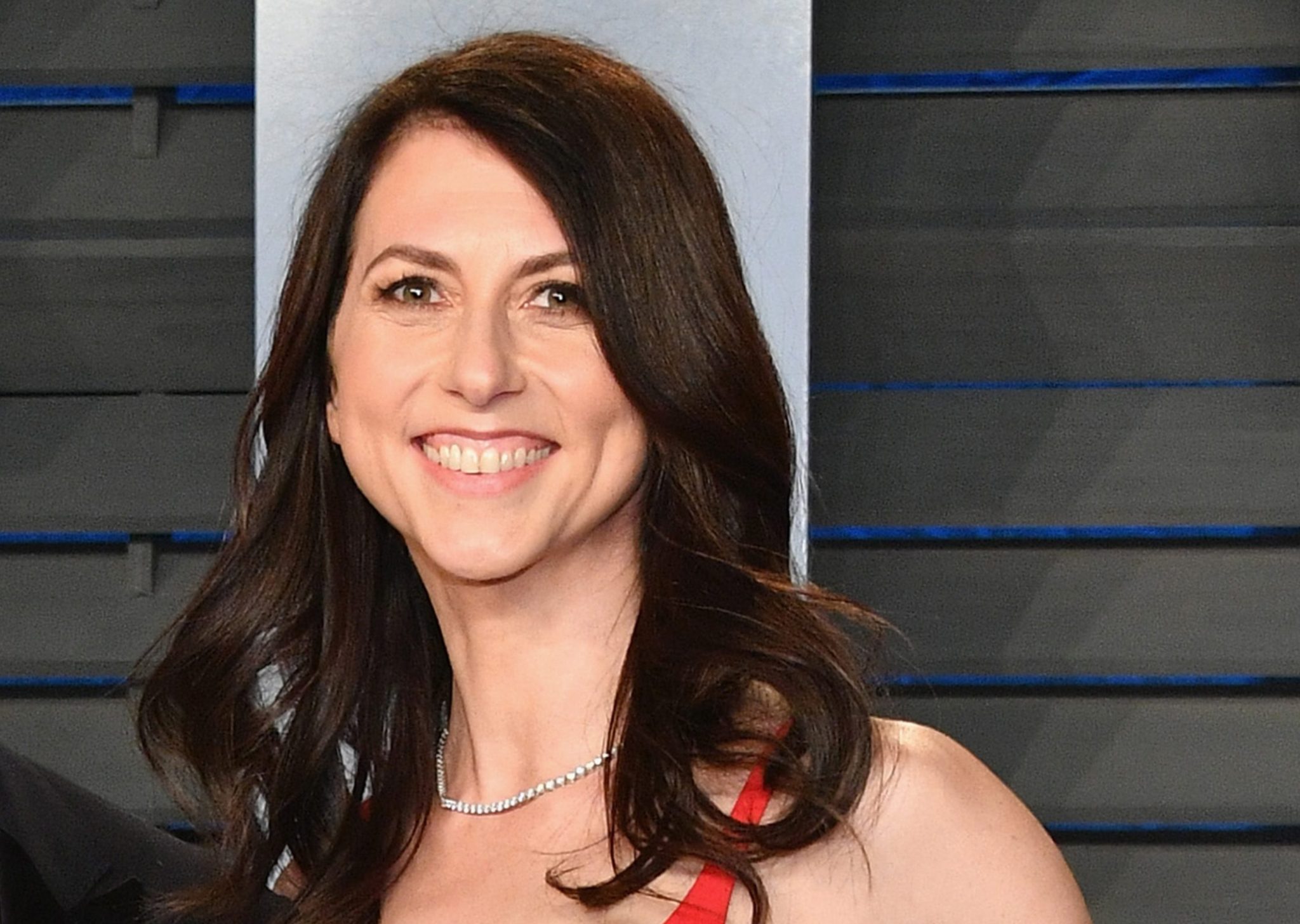
MacKenzie Scott gifts $80 million to Howard University, marking one of the school’s largest donations in its 158-year history
On Sunday, Howard University announced that Scott, who is worth an estimated $35.6 billion, donated $80 million to the historically Black college. True to Scott’s style, the gift is unrestricted, meaning the university can use the resources as it chooses. Of the $80 million, $63 million will go toward Howard University, and $17 million will be allocated to the school’s College of Medicine.
This marks one of the largest single donations to Howard in its 158-year history.
“This historic investment will not only help maintain our current momentum, but will help support essential student aid, advance infrastructure improvements, and build a reserve fund to further sustain operational continuity, student success, academic excellence, and research innovation,” said Wayne A. I. Frederick, Howard’s interim president and president emeritus, in a statement.
Howard University says the gift comes at an “opportune time,” as the federal government shutdown has delayed annual federal appropriations that the school receives to support student success, academic programming, research, and the operations of the university and Howard University Hospital.
Due to the shutdown that began on October 1, new grant awards from the Department of Education have been halted because nearly 95% of non-student aid staff were furloughed, leaving only essential staff working. Key programs like the HBCU Capital Financing Program, which offers renovation and construction loan subsidies, are now left in limbo.
The timing is particularly unfortunate considering that in September, the Education Department announced a $495 million increase for HBCUs and Tribally Controlled Colleges and Universities (TCCUs) for FY 2025.
At the same time, however, education experts find this action difficult to reconcile with the Trump administration’s desire to dissolve the Department of Education.
“If [the Trump administration] actually cared about HBCUs and tribal colleges, then you would not see such a big attack on other sectors of higher education,” Mike Hoa Nguyen, an associate professor of education at UCLA, recently told The American Prospect.
### MacKenzie Scott’s DEI Dedication
Scott’s gift to Howard builds on other recent DEI-focused donations. She donated $42 million to 10,000 Degrees, a Bay Area nonprofit focused on expanding college access for low-income and largely non-white students, alongside other eight-figure commitments to Native student scholars and HBCU endowments through the United Negro College Fund (UNCF).
In September, Scott made a $70 million donation to the UNCF as part of a campaign to bolster pooled endowments across 37 HBCUs. This strategy is designed to increase revenue streams and narrow historical wealth and funding gaps.
In October, the African American Cultural Heritage Action Fund announced a $40 million gift from Scott—twice the size of her previous donation to the organization in 2021—representing 20% of its fundraising so far.
Scott emphasizes, though, that while the dollar amounts are high, they don’t fully represent their level of impact.
“When my next cycle of gifts is posted to my database online, the dollar total will likely be reported in the news,” she wrote in an October 15 essay on her organization Yield Giving’s site. “But any dollar amount is a vanishingly tiny fraction of the personal expressions of care being shared into the world this year.”
“The potential of peaceful, non-transactional contribution has long been underestimated, often on the basis that it is not financially self-sustaining, or that some of its benefits are hard to track,” she continued. “But what if these imagined liabilities are actually assets?”
https://fortune.com/2025/11/03/mackenzie-scott-80-million-gift-howard-university/

Psyops On The Sunday Shows!
Part of keeping up with the news—and then watching the Sunday shows—is that you start to see the propaganda code embedded in our political matrix. Follow us as we do our best impersonation of Lawrence Fishburne’s Morpheus and “show you how deep the rabbit hole goes.” This week, at least.
—
### Scott Bessent
We’ve already covered some of the most ridiculously idiotic things Bessent said on ABC’s *This Week* [here](#), so we’re going to focus on his other two Sunday show appearances.
On NBC’s *Meet The Press*, host Kristen Welker pressed Bessent on the new 10 percent tariffs Donald Trump announced this week. The tariffs followed Ontario airing an ad featuring real 1987 footage of Ronald Reagan explaining why tariffs are bad—a move that apparently hurt Trump’s feelings.
Bessent’s defense was neither compelling nor especially sensible.
**BESSENT:** “Well, Kristen, let’s—let’s think about this. This is a kind of propaganda against U.S. citizens. You know, it’s psyops.”
Is it, though? Because if playing footage of and quoting Republicans being hypocritical liars counts as “psyops,” this very weekly rundown would qualify as an MKUltra program.
Welker also asked Bessent for details on whether these new Canadian tariffs would apply to all goods or only select items, but he did not know.
Welker then launched some “psyops” of her own by playing a clip of Trump promising to bring the price of groceries “way down.” After listing several items like coffee, beef, and bacon whose prices are actually rising, Bessent got a bit defensive and tried to shift the goalposts.
**BESSENT:** “Kristen, it’s unfortunate—as much as I like you—you like to cherrypick. You know, when we came in, it was ‘egg-flation, egg-flation, egg-flation.’ You know, egg prices are down.”
Bessent took a similar tone with a similar question on CBS’s *Face The Nation* when host Margaret Brennan pressed him. He tried the classic spouse’s tactic when losing an argument:
**BESSENT:** “You listed the things that are up, but we’re seeing plenty of things that are down. Why does everyone always point out the things they suck at instead of the things they’re so great at, Margaret?”
Back on *Meet The Press*, before the interview ended, Bessent was asked about the destruction of the East Wing of the White House to make way for Trump’s gaudy ballroom. Welker played a clip of Trump promising that they would not touch the original White House structure, then asked why Trump didn’t tell the public his real intentions.
While Bessent recycled the usual talking points and false equivalences we’ve all heard about previous White House renovations, he added a new one we had to note.
**BESSENT:** “Well, again, I think this was a judgment call on the president. The president is a master builder. And I don’t know. I assume that maybe parts of the East Wing could have been asbestos, could have been mold, could have not fit with the design.”
A MASTER BUILDER! Here is a video of Trump loving asbestos—while you catch your breath laughing at the suggestion that he is a MASTER BUILDER.
—
### Arnold Schwarzenegger
Former California Republican governor and aging Terminator Arnold Schwarzenegger appeared on CNN’s *State of the Union* to criticize California’s redistricting effort.
Current California Governor Gavin Newsom is leading an effort to redraw the state’s congressional maps after Texas redrew its maps to steal five Democratic House seats, giving Trump and the GOP even more power.
While Schwarzenegger’s reasoning sounds fair, it strikes us as a bit Pollyanna-ish.
**SCHWARZENEGGER:**
“Texas started it. They did something terribly wrong. And then, all of a sudden, California says, well, then we have to do something terribly wrong. And then now other states are jumping in. And now this is spreading like wildfire all over the country. […] The thing is that you cannot cheat your way out of it. What they should do is, what the Democrats should do is, they should outperform Trump.”
The problem with that, Governator, is that in many places it’s already rigged against Democrats, so that even when Democrats turn out more voters, Republicans still manage to gain seats!
Democrats have tried to pass voting rights and national fair redistricting laws, but you cannot get there if we are fighting with our fists while the GOP uses laser blasters.
If anyone should understand the need to improvise to defeat a stronger and more ruthless enemy, it should be the guy who took down a Predator.
—
### Margaret Brennan
Speaking of gerrymandering, we conclude with Margaret Brennan on CBS’s *Face The Nation*, particularly the end of her interview with House Minority Leader Hakeem Jeffries.
When Jeffries brought up the topic of gerrymandering and election denial, Brennan’s attempt to “both sides” the issue sounded less like CBS News and more like OAN.
**BRENNAN:**
“You said Democrats ‘there are no election deniers on our side of the aisle.’ You said that back in January. But recently you’ve been using the term ‘rigged elections’ in reference to the upcoming midterms. Democrats were appalled when President Trump used language like that. How do you justify using that now? Doesn’t that undermine faith for voters you need to show up?”
Ahem, no. Because voters can understand the difference between denying the results of a fair election and the GOP’s effort to change the rules to cheat and steal elections.
This “both sides” argument would be laughable if made by a terrible op-ed writer or some journalistically bankrupt outlet. Guess we didn’t have to wait long for the “Bari Weiss Effect” to be noticed at CBS News.
—
Have a week. Share. I’m also HERE.
https://www.wonkette.com/p/psyops-on-the-sunday-shows