Tag Archives: treasury

ABC’s Stephanopoulos Blasted by Sec. Bessent Over His Shutdown Hypocrisy [WATCH]

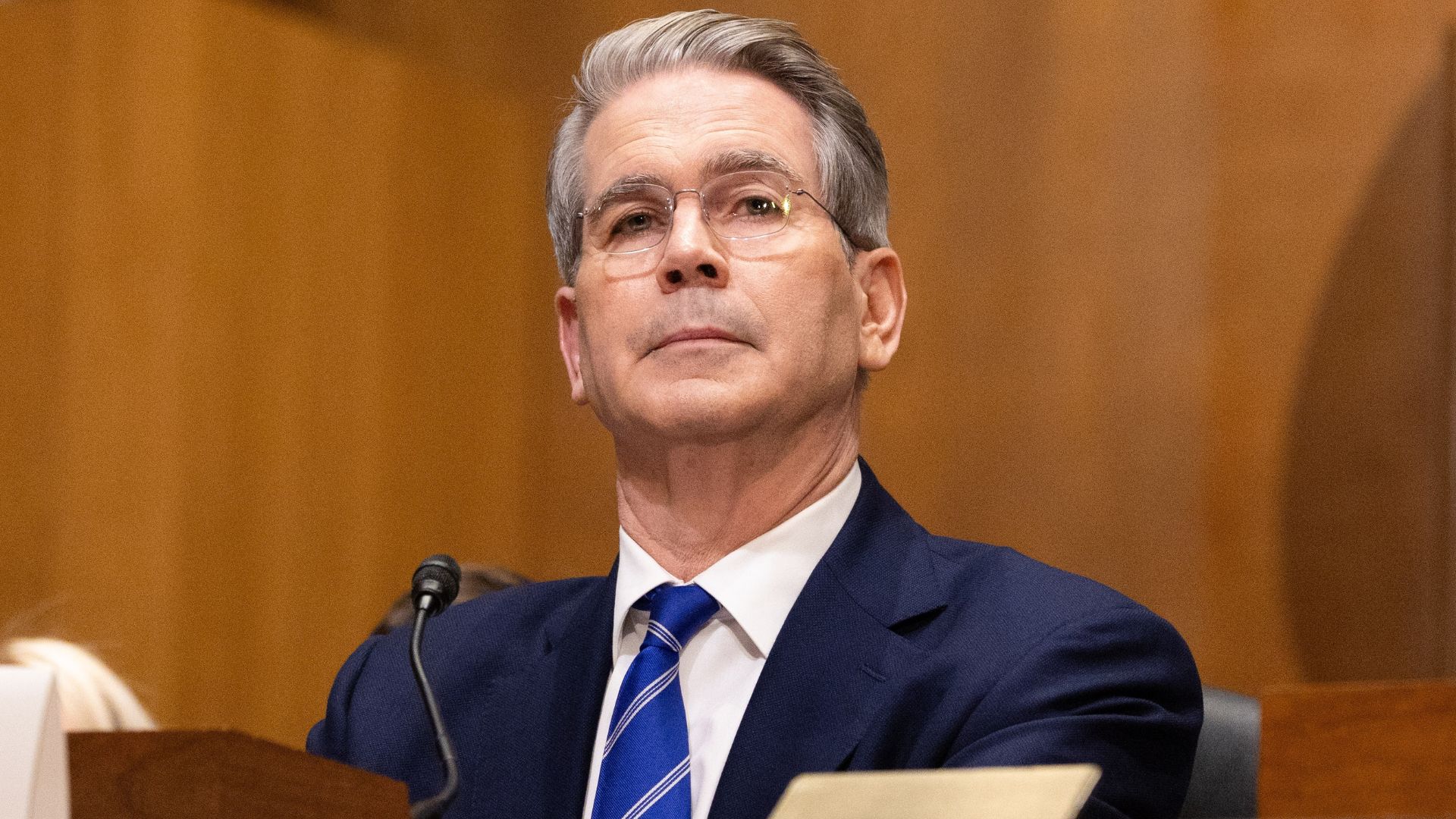
Treasury Secretary Scott Bessent challenged ABC’s George Stephanopoulos on Sunday over his past comments blaming Republicans for government shutdowns, leading to a sharp exchange during an interview on “This Week with George Stephanopoulos.”

The discussion focused on the ongoing federal shutdown and the Senate’s repeated failure to pass a Republican-backed continuing resolution aimed at reopening the government. Over 38 days, the Senate voted 14 times on the proposal. Fifty-two Republicans and three Democrats supported the measure, leaving it five votes short of the 60 needed to end the stalemate.

Stephanopoulos asked whether the Trump administration would consider supporting the elimination of the legislative filibuster as a way to resolve the impasse. Bessent quickly rejected the idea and turned the question back on Stephanopoulos.

“No, George. The best way to do it— and look, you were involved in a lot of these in the ’90s. And, you know, you basically called the Republicans terrorists and, you know, you said that it is not the responsible party that keeps the government closed,” Bessent said.

Bessent argued that Democrats now find themselves in the same position they once criticized.

“And so, what we need is five brave, moderate Democratic senators to cross the aisle, because right now it is 52-3, 52-3. Five Democrats can cross the aisle and reopen the government. That’s the best way to do it, George,” he added.

Stephanopoulos responded, “I can disagree with you about the history there, but we don’t have a history lesson right now.”

Bessent persisted, saying, “No, no, no. George, George, George. If you want, I’ve got all your quotes here. I got all your quotes here, George.”

“I went back, read your book. So you got one purchase on Amazon this week. And that’s very much what you said.”

The on-air exchange referenced Stephanopoulos’s role during the 1995-1996 government shutdowns when he served as a senior adviser in President Bill Clinton’s White House. At the time, Stephanopoulos was instrumental in shaping the administration’s public messaging against congressional Republicans, led by then-Speaker Newt Gingrich.

In a 2000 interview with PBS’s “Frontline” for its documentary “The Clinton Years,” Stephanopoulos acknowledged the Clinton administration’s strategy.

“Our strategy was very simple. We couldn’t buckle, and we had to say that they were blackmailing the country to get their way. In order to get their tax cut, they were willing to shut down the government, throw the country into default for the first time in its history and cut Medicare, Social Security, education and the environment just so they could get their way. And we were trying to say that they were basically terrorists, and it worked,” he said at the time.

Bessent’s comments highlighted what he characterized as a shift in the political narrative surrounding shutdowns. While Democrats previously accused Republicans of holding the government hostage to achieve policy goals, Bessent argued that the current situation reverses that dynamic, with Democrats now blocking a clean continuing resolution that would reopen the government.

The interview followed another tense moment for Stephanopoulos earlier in the month. On October 12, he abruptly ended an interview with Vice President J. D. Vance after accusing the vice president of dodging questions about Border Czar Tom Homan.

As Vance began to respond, Stephanopoulos cut the segment short mid-sentence, drawing criticism from viewers who accused the host of bias.

Bessent’s appearance on ABC further illustrated the growing tension between the Trump administration and major media outlets as negotiations continue to break the deadlock in Congress.

With only a handful of Senate Democrats needed to reach the 60-vote threshold, the administration has continued urging bipartisan cooperation to reopen the government.
https://www.lifezette.com/2025/11/abcs-stephanopoulos-blasted-by-sec-bessent-over-his-shutdown-hypocrisy-watch/

Bitcoin Crash Linked to $1T Treasury Cash Grab:What’s Next?

Key Insights: Treasury’s $1T Cash Buildup Drains Market Liquidity, Pressuring Bitcoin

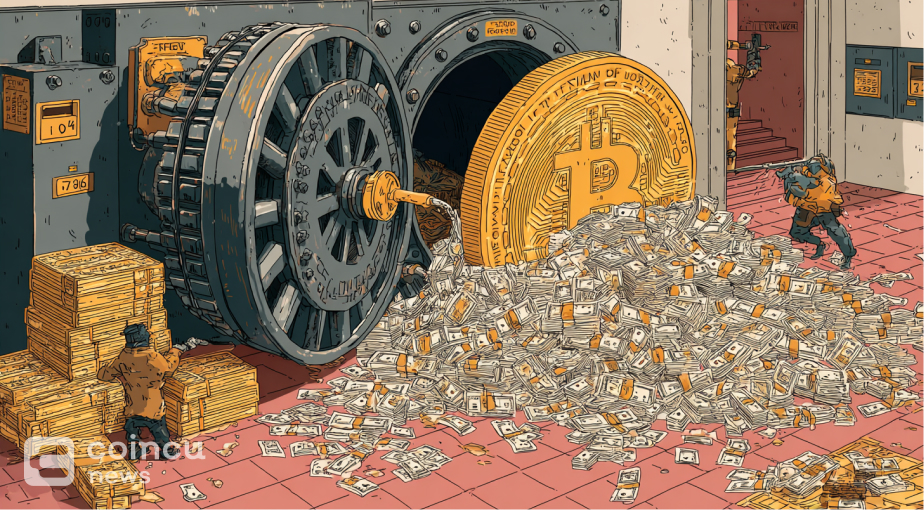
The U.S. Treasury’s nearly $1 trillion cash buildup has drained market liquidity, tightening funding conditions and putting pressure on Bitcoin’s price. In response, the Federal Reserve has resumed overnight repurchase agreement (repo) operations, injecting $30 billion in liquidity to ease short-term market stress.

Treasury Cash Balance Nears $1 Trillion

A new report from ET, a researcher at SoSoValue (Agarwood Capital), highlights the growing cash balance in the Treasury General Account (TGA) and renewed stress in funding markets as key factors behind tightening U.S. dollar liquidity. As the TGA approaches $1 trillion, it is effectively removing cash from circulation and reducing reserves in the banking system, resulting in tighter funding conditions.

At the same time, the spread between the Secured Overnight Financing Rate (SOFR) and the Federal Reserve’s target rate has widened to +30 basis points, indicating that banks are paying more to borrow short term.

Fed Resumes Overnight Repo Operations

In response to these tightening conditions, the Federal Reserve has reintroduced overnight repo operations, supplying nearly $30 billion in short-term liquidity as of October 31. This marks the first such intervention since 2019 and signals a shift away from passive balance sheet reduction toward direct market support aimed at easing funding stress.

The liquidity drain-related issues are also linked to the ongoing U.S. government shutdown. To prepare for potential spending delays, the Treasury has issued additional debt, which has increased the TGA balance, effectively pulling dollars out of the market.

Bitcoin’s Price Reflects Tightening Dollar Liquidity

Bitcoin has shown sensitivity to shifts in dollar liquidity. Unlike technology stocks, which have remained relatively stable, Bitcoin has experienced a decline since mid-October. The report connects this drop to rising funding costs and reduced dollar flow in the markets.

Data indicates that reverse repurchase agreements—a tool banks use to access short-term cash—have climbed back to $50 billion, pointing to heightened demand for safe and liquid assets.

According to ET, monitoring changes in TGA and reverse repo balances provides more accurate real-time insights into liquidity conditions than simply tracking the size of the Fed’s balance sheet.

Reopening Could Restore Liquidity and Support Bitcoin

The report suggests that market conditions may improve once the U.S. government reopens. As the author notes, “Historically, when the Treasury hoards cash and liquidity tightens to extremes, a market reversal often follows.” Forecasts indicate a potential congressional deal by mid-November, which would likely lead the Treasury to resume spending, reduce the TGA balance, and put dollars back into the market.

This influx of liquidity could alleviate pressure on risk assets such as Bitcoin. The researcher further notes that Bitcoin may be entering the final stage of its current correction. Should liquidity improve alongside possible rate cuts, the market could begin a new upward phase.

https://bitcoinethereumnews.com/bitcoin/bitcoin-crash-linked-to-1t-treasury-cash-grabwhats-next/

Scott Bessent Explains The Big Picture Everyone is Missing During the Shutdown [WATCH]

**Treasury Secretary Scott Bessent Highlights Impact of Trump Administration’s Spending Cuts Amid Shutdown**

Treasury Secretary Scott Bessent stated on Sunday that the Trump administration’s reduction in government spending has largely gone unnoticed during the ongoing shutdown but has played a crucial role in helping the United States avoid a recession.

Speaking on CNN’s “State of the Union,” Bessent discussed the administration’s fiscal policies alongside the Federal Reserve’s recent interest rate cuts. The Federal Reserve announced on Wednesday that it would lower its benchmark interest rate by a quarter-point, bringing the range to between 3.75% and 4.00%.

During the interview, CNN host Jake Tapper asked Bessent whether the U.S. risked entering a recession if the Fed continued cutting rates too aggressively.

“I believe that we are in a transition period here as we are seeing the Trump administration has cut back on government spending,” Bessent explained. “What has gone unnoticed during the shutdown is, for the fiscal year that ended September 30, the government spent less than it did the year before. And because the GDP grew, the deficit-to-GDP—which had been 6.4%, 6.5% deficit, the highest when we weren’t at war and weren’t in a recession—was brought down to 5.9%.”

Bessent continued, “So we are bringing down government spending, and I would think that the Fed would want to assist with that. Because if we go back and look, MIT just published a study that said 42% of the great inflation of 2022 came from excess government spending. So if we are contracting spending, then I would think inflation would be dropping. [If] inflation is dropping, then the Fed should be cutting rates.”

### Major Spending Cuts Save Taxpayers Billions

The Trump administration began implementing major spending cuts earlier in 2025, targeting what officials described as “inefficient or duplicative” programs across multiple agencies. According to an October 4 update from the Department of Government Efficiency (DOGE), the administration’s cost-reduction initiatives saved an estimated $214 billion for taxpayers—roughly $1,329 per taxpayer.

These spending reductions coincided with a broader effort to rein in the federal deficit while addressing the shutdown’s fiscal impact. Administration officials have argued that reduced government outlays are helping stabilize inflation and ease pressure on working families, despite temporary disruptions caused by the shutdown.

### Federal Reserve Rate Cuts and Policy Tensions

Federal Reserve Chairman Jerome Powell had previously warned that continued rate cuts could increase inflationary risks if not balanced by sound fiscal management. However, tensions between Powell and President Donald Trump over rate policy have been ongoing for months.

Trump has repeatedly called for the central bank to lower rates more aggressively to support growth, arguing that high interest rates are hindering small business expansion and homeownership. Powell said earlier this year that the Fed would have cut rates sooner if not for the trade and tariff policies enacted by the administration.

The Fed’s first rate cut came on September 17, lowering the benchmark by a quarter-point to a range of 4.00% to 4.25%. A second cut followed in October, bringing the rate to its current level between 3.75% and 4.00%.

Because of the government shutdown, most federal economic data releases have been delayed, leaving analysts without recent updates on job growth, consumer spending, or inflation trends.

### Economic Outlook and Potential Risks

Tapper pressed Bessent on whether he believed the economy could slip into a broader recession if the Fed halts rate cuts.

“I think that we are in good shape, but I think that there are sectors of the economy that are in recession, and the Fed has caused a lot of distributional problems there with their policies,” Bessent said. “I wrote a 7,000-word essay on that. We’ve seen the biggest hindrance for housing here is our mortgage rates. So if the Fed brings down mortgage rates, then they can end this housing recession. Low-end consumers who have gotten killed under President Biden—these high rates are hurting them because they have debt, not assets. So I think that there are sections of the economy that could go into recession.”

Bessent reiterated his belief that the economy is in a “transition period,” contrasting his outlook with that of former Treasury Secretary Janet Yellen. Yellen, under the Biden-Harris administration, characterized inflation as “transitory,” a view later proven incorrect as consumer prices surged during her tenure.

Bessent clarified that his use of “transition” referred instead to a short-term shift in economic conditions as the administration reduces spending and stabilizes long-term growth.

*Watch the full interview on CNN’s “State of the Union.”*
https://www.lifezette.com/2025/11/scott-bessent-explains-the-big-picture-everyone-is-missing-during-the-shutdown-watch/

Ethereum hackers lose $13.4M, Bitmine plunges 30% – Is ETH in trouble?

**Key Takeaways**

– ETH hackers are facing significant losses after panic-selling over 7,800 ETH during a recent market dip, realizing $3.37 million in losses.
– Institutional investors’ confidence in Ethereum appears to be wavering, with ETH treasury firms struggling and ETF outflows steadily increasing.
– Despite these challenges, new developments hint at growing interest from Asia-based investors aiming to bolster Ethereum’s ecosystem.

### Why Are ETH Hackers Facing Losses?

In a rare case of consistently poor timing in a notoriously volatile market, six hacker-linked wallets panic-sold 7,816 ETH worth approximately $29.1 million at around $3,728 per ETH amid the recent market dip. This move locked in a staggering $3.37 million in realized losses.

Data from Lookonchain reveals that these wallets have collectively lost over $13.4 million due to mistimed ETH trades, repeatedly selling low and subsequently buying back at higher prices. Unfortunately for these hackers, their attempts to capitalize on market movements have backfired spectacularly, leaving them unable to catch a break.

### Institutional Investors Are Not Entirely Bullish

Ethereum’s biggest backers are showing signs of strain. Bitmine, one of the few treasury firms still actively accumulating ETH, has seen its stock price plunge nearly 30% in the past two weeks. Other ETH-heavy firms such as SharpLink and Bit Digital are also experiencing downward trends.

Meanwhile, ETF data highlights consistent outflows over the past week, signaling increasing bearish sentiment among institutional investors. Analyst TedPillows pointed out that treasury companies are running low on cash, and ETF redemptions are piling up, which could weigh heavily on ETH’s price unless these key players help fuel a strong rebound soon.

### A New Wave of Asian Interest Emerges

In a potentially game-changing development, AMBCrypto previously reported that the focus may be shifting eastward. Huobi founder Li Lin is reportedly raising $1 billion for a new Asia-led Ethereum treasury firm.

This new venture, backed by major players such as HashKey, Fenbushi Capital, and Meitu, aims to focus on treasury management and Ethereum infrastructure. If successful, it would rank among the largest independent ETH-focused capital initiatives to date, potentially injecting fresh momentum into the market.

### Ethereum Struggles to Find Its Footing

Ethereum’s recent price action suggests signs of exhaustion. At press time, ETH was trading near $3,878 after a week marked by lower highs. The candlestick pattern indicates weakening bullish momentum, with the 20-day EMA now acting as resistance around $4,136.

Trading volume has declined, and the Relative Strength Index (RSI) is subdued at 41, reflecting limited buying interest among traders. Unless Ethereum can break firmly above the $4,000 level, this move looks more like a temporary pause within a larger downtrend.

For now, the market appears to be waiting for a clearer signal before committing to a decisive direction.

**Conclusion**

While ETH faces significant headwinds—from hacker losses to institutional uncertainty—the emergence of new investment initiatives, particularly from Asia, could provide a critical boost. Traders and investors alike will be closely watching key resistance levels and market signals in the coming weeks to gauge Ethereum’s next move.
https://eng.ambcrypto.com/ethereum-hackers-lose-13-4m-bitmine-plunges-30-is-eth-in-trouble