RB Jonathan Taylor’s huge day leads Colts to overtime win vs. Falcons

Jonathan Taylor delivered a huge performance in the Colts’ thrilling overtime victory over the Falcons. It’s no surprise that Taylor once again earned the title of Colts Player of the Game after an outstanding display on the field.

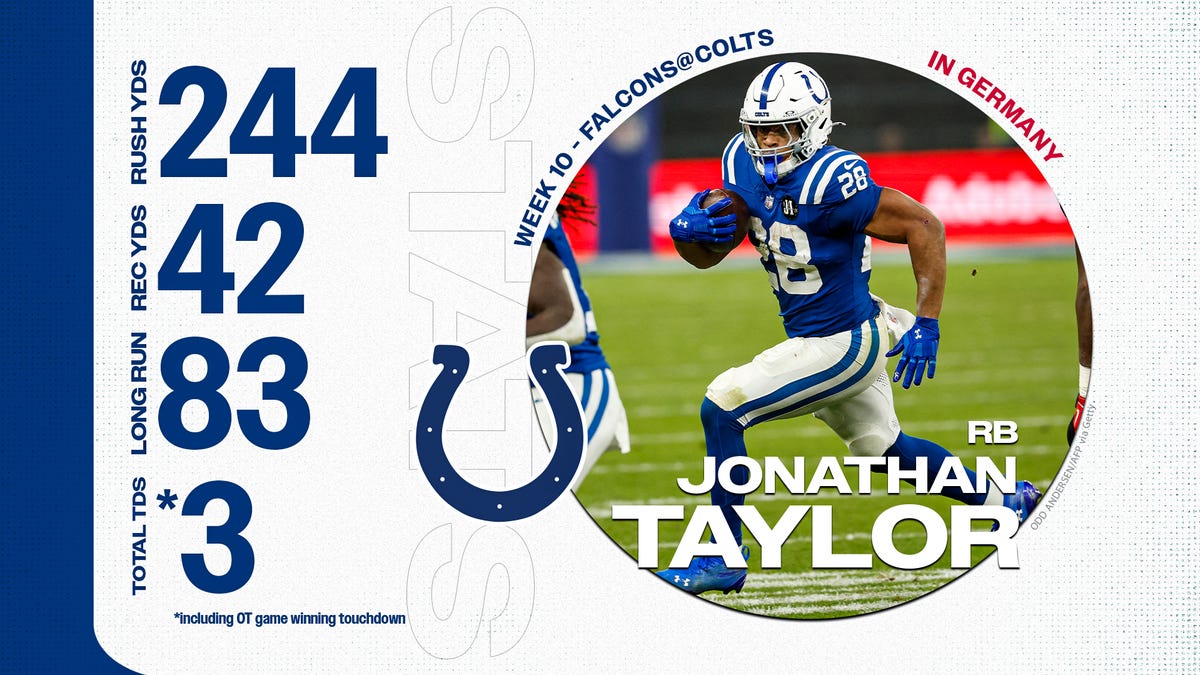
The sixth-year running back recorded a season-high 244 rushing yards and three rushing touchdowns on 32 carries during Indianapolis’ 31-25 overtime win against Atlanta in Berlin, Germany. Taylor’s standout performance included an 83-yard touchdown run, the longest rushing play of the season, breaking Falcons running back Bijan Robinson’s previous mark of 81 yards.

In overtime, Taylor sealed the victory by scoring the game-winning touchdown. He finished the game by gaining 33 yards on five consecutive carries during the final drives. With an impressive average of 7.6 yards per carry, Taylor led the Colts in both rushing yards and scoring. Remarkably, he ran for just 11 yards fewer than quarterback Daniel Jones, who threw for 255 yards.

Heading into the game, Taylor needed 105 rushing yards to surpass the 1,000-yard mark for the season. After his dominant outing, reaching a 2,000+ yard rushing season now seems well within reach. In total, he amassed 286 all-purpose yards, adding three receptions for 42 yards. Taylor was also one of three Colts players to record three or more receptions during the game.

Through the first 10 weeks of the season, Jonathan Taylor has tallied 15 rushing touchdowns and 1,139 rushing yards, underscoring his vital role in the Colts’ offense. His remarkable consistency and explosive plays continue to make him a force to be reckoned with on the field.
https://coltswire.usatoday.com/story/sports/nfl/colts/2025/11/09/jonathan-taylors-huge-day-leads-colts-overtime-win-falcons/87183294007/

Emeka Egbuka’s sixth TD of the season gives Bucs 7-0 lead

The Buccaneers are off to a strong start at home against the Patriots. Quarterback Baker Mayfield threw a 21-yard touchdown pass to Emeka Egbuka, giving Tampa Bay an early 7-0 lead. This score capped a quick six-play, 65-yard drive that energized the team and the home crowd.

Earlier in the drive, Mayfield and Egbuka connected on a crucial 24-yard gain that moved the Bucs into New England territory. Egbuka continues to impress this season and now leads all rookie receivers with six receiving touchdowns.

Despite dealing with a hamstring injury recently, the No. 19 overall pick appears healthy and ready to contribute on the field this Sunday.
https://www.nbcsports.com/nfl/profootballtalk/rumor-mill/news/emeka-egbukas-sixth-td-of-the-season-gives-bucs-7-0-lead

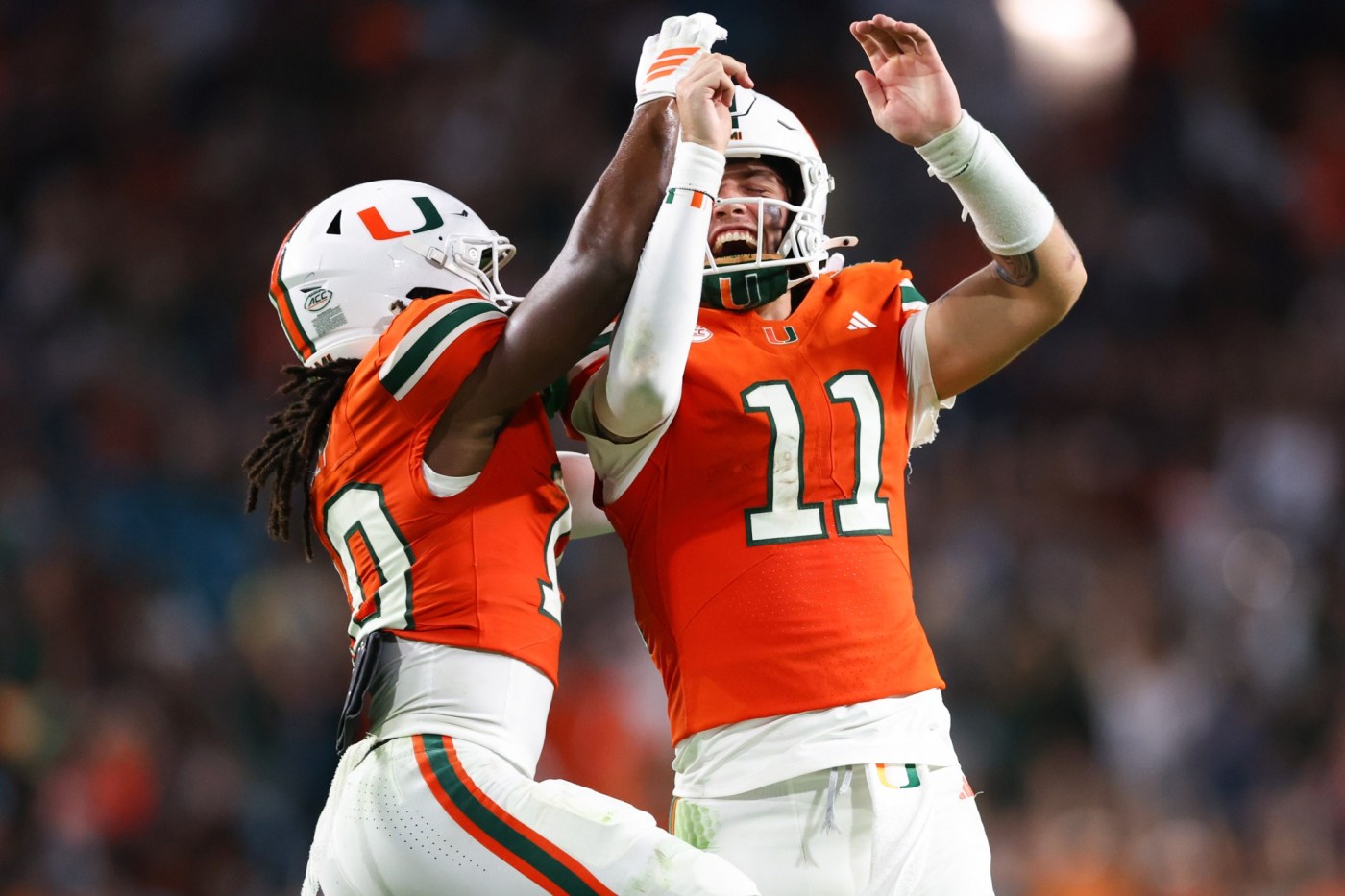
Five things we learned in Miami Hurricanes’ needed win over Syracuse

The Miami Hurricanes bounced back from their disappointing loss to SMU with a four-touchdown win over a struggling Syracuse team, keeping their playoff hopes alive. Miami needed the win, and ultimately got the victory. Here are five things we learned from Saturday evening’s win:

### 1. The Offense Started Poorly

Hurricanes fans were getting restless in the first half as Miami’s first four drives ended in punts. UM did not get on the board through the first 27 minutes of the game against a defense that has been one of the worst in the Power 4. Several things tripped the Hurricanes up. A potential big play was batted down at the line, and UM made mistakes like dropped passes that caused drives to stall.

As halftime neared, Miami’s offense was clearly struggling. It was a bad look for an offense that was hovering just above 50th in the nation. Going forward, the Hurricanes will need to put pressure on teams early.

“I thought the players attacked the opportunities with a lot of energy and I think after some moments of struggling, we finally just cut it loose,” Miami coach Mario Cristobal said. “I think it’s that simple. We called it more freely, played more freely. We just cut it loose and stopped worrying about the outcome and started focusing more on the process.”

### 2. But It Ultimately Showed Up

After a slow first half, UM started putting up points. Offensive coordinator Shannon Dawson reached into his bag of tricks, pulling new plays out including running wide receiver Malachi Toney as a Wildcat quarterback. Toney threw a touchdown pass to quarterback Carson Beck, and Beck tossed a backwards pass to offensive lineman Francis Mauigoa for a touchdown.

The Hurricanes ended the game with 385 total yards, a bit below their season average. They scored 31 points and put the game out of reach by the start of the fourth quarter. UM also got a spark on offense from freshman running back Girard Pringle Jr., who averaged 7.9 yards per carry and scored his fourth touchdown of the season.

“Great eyes. He sees it really well,” Cristobal said. “Very explosive—you saw that. He has a different gear as well.”

### 3. Defense Wins Games

While Miami’s offense struggled early, the defense dominated. Syracuse’s offense was not the toughest test Miami’s defense has faced, but the Hurricanes aced it all the same. Miami held Syracuse scoreless until the third quarter and constantly caused havoc.

UM finished the game with a season-high three sacks and 11 tackles for loss. Miami also had three takeaways: two interceptions including a pick-six by Keionte Scott, and a fumble recovery.

“At the end of the day, if the opponent doesn’t score, they don’t win,” defensive end Akheem Mesidor said. “That’s the mindset.”

The one blemish on the defense’s record was the run defense. Syracuse rushed for 161 yards, or 214 yards when adjusted for sack yardage. It was UM’s worst performance against the run this season.

### 4. Penalties Cleaned Up

The Hurricanes have battled penalty issues all season, but fouls were not a big problem during this game. Miami finished with five penalties for 54 yards, which, while not excellent, was better than the eight penalties for more than 60 yards they were averaging entering the game.

“I think when all three facets of the game—special teams, defense, offense—are working hand in hand, it creates those types of clean games,” Beck said. “You eliminate the penalties, you eliminate the turnovers, and usually you have efficient plays that move in a positive direction, which ultimately leads to wins.”

Importantly, the offensive line cleaned up its penalties. That unit did not have a single penalty called against it Saturday after committing five pre-snap penalties in the loss to SMU.

### 5. Akheem Mesidor Dominates

UM defensive end Rueben Bain Jr. has earned much attention for his excellent season, and rightfully so. But Bain’s counterpart on the opposite end of the defensive line deserves just as much recognition. Mesidor has been outstanding this season, and he had one of his best games as a Hurricane.

Mesidor finished with five tackles, a team-leading 3.5 tackles for loss, and 1.5 sacks. Pro Football Focus gave Mesidor a team-best defensive grade of 87 for this game. His season defensive grade is 90.3, ranking 19th nationally among defensive players with 200 or more snaps.

“As a defensive lineman, the best thing for me is getting sacks,” Mesidor said. “So to be able to do that and then have defensive line coach Jason Taylor come out and celebrate with me is amazing.”

The Hurricanes showcased resilience and growth in their win over Syracuse. If they build on these performances, especially enhancing their offensive starts and shoring up run defense, Miami’s playoff hopes remain very much alive.
https://www.orlandosentinel.com/2025/11/09/five-things-we-learned-in-miami-hurricanes-needed-win-over-syracuse/

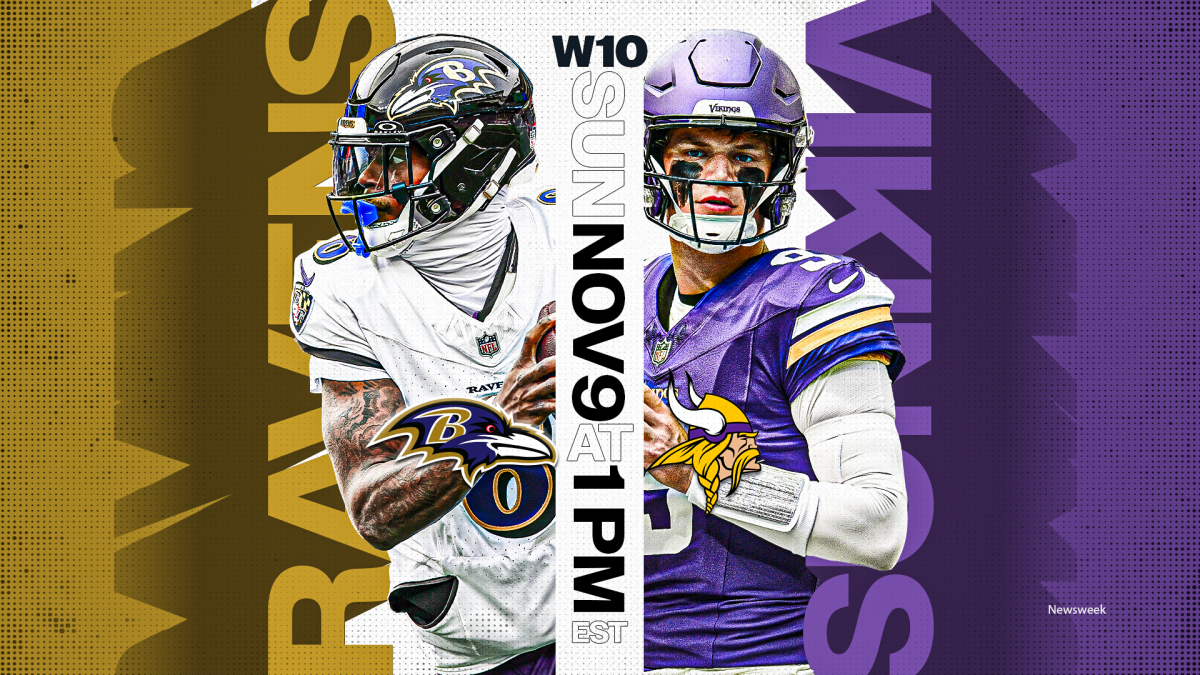
How to Watch Ravens vs Vikings: Live Stream NFL, TV Channel

Lamar Jackson and the Baltimore Ravens face off against Justin Jefferson and the Minnesota Vikings in Week 10 of the NFL season. The game takes place on Sunday, November 9, 2025, at U.S. Bank Stadium.

**How to Watch Ravens vs. Vikings**
– **When:** Sunday, November 9, 2025
– **Time:** 1:00 PM ET
– **TV Channel:** FOX
– **Live Stream:** Fubo (try for free)

The Ravens arrive with a 3-5 record, averaging 25.3 points and 183.0 passing yards per game. On the ground, they are strong, rushing for an average of 135.5 yards per game, ranking 6th in the league. Quarterback Lamar Jackson has thrown for 1,073 yards with 14 touchdowns and only one interception so far this season. Running back Derrick Henry has been a powerhouse, accumulating 629 rushing yards and six touchdowns. Wide receiver Zay Flowers has contributed significantly with 550 receiving yards through eight games. With Jackson back full-time in the lineup, the Ravens are in a much better position to stack up wins.

On the other side, the Minnesota Vikings enter this matchup with a 4-4 record. They average 22.8 points, 191.9 passing yards, and 99.9 rushing yards per game. Wide receiver Justin Jefferson has caught 47 passes for 649 yards and two touchdowns. Rookie quarterback J.J. McCarthy has seen limited action, throwing for 444 yards, four touchdowns, and four interceptions this season.

Defensively, the Vikings have been solid against the pass, allowing just 194.5 yards per game. However, they have given up 122.3 rushing yards per game and allow 23.3 points on average.

This promises to be an exciting NFL matchup that you won’t want to miss! Make sure to tune in and catch all the action live.

**Live Stream Ravens vs. Vikings with Fubo:**
Start your free trial today! Fubo offers a free trial, allowing you to watch the NFL on local CBS and FOX broadcasts every Sunday. You can also live stream NFL RedZone and access football coverage all season long on NBC, CBS, FOX, ESPN, NFL Network, and more. Regional restrictions may apply.

*Note: If you purchase a product or register for an account through the links on our site, we may receive compensation.*
https://www.newsweek.com/how-to-watch-ravens-vs-vikings-live-stream-nfl-tv-channel-11017454

The impossibility of perfect fairness in transaction ordering

For decades, research in distributed systems, especially in Byzantine consensus and state machine replication (SMR), has focused on two main goals: consistency and liveness. Consistency means all nodes agree on the same sequence of transactions, while liveness ensures the system continues to add new ones.

Still, these properties do not stop bad actors from changing the order of transactions after they are received. In public blockchains, that gap in traditional consensus guarantees has become a serious problem. Validators, block builders, or sequencers can exploit their privileged role in block ordering for financial gain—a practice known as maximal extractable value (MEV).

This manipulation includes profitable frontrunning, backrunning, and sandwiching of transactions. Because transaction execution order determines validity or profitability in DeFi applications, the integrity of transaction ordering is vital for maintaining fairness and trust.

## Introducing Transaction Order-Fairness

To address this critical security gap, **transaction order-fairness** has been proposed as a third essential consensus property. Fair-ordering protocols ensure that the final order of transactions depends on external, objective factors, such as arrival times (or receiving order), and is resistant to adversarial reordering.

By limiting how much power a block proposer has to reorder transactions, these protocols move blockchains closer to being transparent, predictable, and MEV-resistant.

## The Condorcet Paradox and the Impossibility of Ideal Fairness

The most intuitive and strongest notion of fairness is **Receive-Order-Fairness (ROF)**. Informally defined as “first received, first output,” ROF dictates that if a sufficient number of transactions (tx) arrive at a majority of nodes earlier than another transaction (tx′), then the system should order tx before tx′ for execution.

However, achieving this universally accepted “order fairness” is fundamentally impossible unless all nodes can communicate instantaneously (i.e., operating in an instantly synchronous external network). This impossibility arises from a surprising connection to social choice theory, specifically the **Condorcet paradox**.

The Condorcet paradox illustrates how, even when every individual node maintains a transitive internal ordering of transactions, the collective preference across the system can result in non-transitive cycles. For example:

– A majority of nodes receive transaction A before B,
– A majority receive B before C,
– A majority receive C before A.

Hence, the three majority preferences form a loop (A → B → C → A). This means that no single consistent ordering of transactions A, B, and C can satisfy all majority preferences simultaneously.

This paradox demonstrates why perfectly achieving Receive-Order-Fairness is impossible in asynchronous networks or even in synchronous networks with long external network delays.

## Hedera Hashgraph and the Flaw of Median Timestamping

Hedera, which employs the Hashgraph consensus algorithm, seeks to approximate a strong notion of receive-order fairness (ROF). It assigns each transaction a final timestamp, computed as the median of all nodes’ local timestamps for that transaction.

However, this approach is inherently prone to manipulation. A single adversarial node can deliberately distort its local timestamps and invert the final ordering of two transactions, even when all honest participants received them in the correct order.

**Example:**

Consider five consensus nodes (A, B, C, D, and E) where Node E acts maliciously. Two transactions, tx₁ and tx₂, are broadcast to the network. All honest nodes receive tx₁ before tx₂, so the expected final order should be tx₁ → tx₂.

But adversary Node E assigns:

– tx₁ a later timestamp (3)
– tx₂ an earlier timestamp (2)

to skew the median.

When the protocol computes medians:

– For tx₁, timestamps are (1, 1, 4, 4, 3) → median is 3
– For tx₂, timestamps are (2, 2, 5, 5, 2) → median is 2

Because the final timestamp of tx₁ (3) is greater than that of tx₂ (2), the protocol outputs tx₂ → tx₁, reversing the true order observed by all honest nodes.

This example shows a critical flaw: the median function, although seemingly neutral, can be exploited by even a single dishonest participant to bias the final transaction order.

As a result, Hashgraph’s often-touted “fair timestamping” offers only a surprisingly weak notion of fairness. It fails to guarantee receive-order fairness and depends on a permissioned validator set rather than on cryptographic guarantees.

## Achieving Practical Fairness Guarantees

To circumvent the theoretical impossibility revealed by Condorcet, practical fair-ordering schemes must relax the fairness definition.

The **Aequitas** protocols introduced the criterion of **Block-Order-Fairness (BOF)**, or batch-order-fairness.

BOF dictates that if sufficiently many nodes receive a transaction tx before another transaction tx′, then tx must be delivered in a block *before or at the same time* as tx′. That is, no honest node can deliver tx′ in a block after tx. This relaxes ROF’s strict requirement of “must be delivered before” to “must be delivered no later than.”

### Practical Example of BOF

Consider three consensus nodes (A, B, and C) and three transactions: tx₁, tx₂, and tx₃.

A transaction is considered “received earlier” if at least two of the three nodes (a majority) observe it first. Applying majority voting to determine the global order:

– tx₁ → tx₂ (agreed by A and C)
– tx₂ → tx₃ (agreed by A and B)
– tx₃ → tx₁ (agreed by B and C)

These preferences create a loop: tx₁ → tx₂ → tx₃ → tx₁, which means strict ROF is impossible.

**BOF resolves this by grouping all conflicting transactions into the same batch or block instead of forcing one to come before another.** The protocol outputs:

> Block B₁ = {tx₁, tx₂, tx₃}

From the protocol’s perspective, all three transactions happen simultaneously. Inside the block, a deterministic tie-breaker (such as a hash value) decides the exact execution order.

This approach ensures fairness for every pair of transactions and maintains a consistent final transaction log where each transaction is processed no later than the ones preceding it.

Importantly, BOF does **not** result in partial ordering. Every node still agrees on a single, linear sequence of transactions. Transactions inside each block remain arranged in a fixed execution order.

When no conflicts occur, the protocol achieves the stronger ROF property.

## Limitations of Aequitas and the Introduction of Themis

While Aequitas successfully achieves BOF, it faces significant challenges:

– Very high communication complexity.
– Guarantees only **weak liveness**, meaning a transaction’s delivery is guaranteed only after completing the entire Condorcet cycle it belongs to. This could cause arbitrary delays if cycles chain together.

To improve upon this, the **Themis** protocol was introduced, enforcing the same strong BOF property but with improved communication efficiency.

Themis uses three key techniques:

1. **Batch Unspooling**
2. **Deferred Ordering**
3. **Stronger Intra-Batch Guarantees**

### Themis Protocol in Action

In its standard form, Themis requires each participant to exchange messages with most nodes, causing communication cost to grow quadratically with network size.

However, in **SNARK-Themis**, nodes use succinct cryptographic proofs to verify fairness without direct communication with every other participant. This optimization reduces communication complexity to linear growth, enabling scalability in large networks.

**Example:**

Five nodes (A-E) receive transactions tx₁, tx₂, and tx₃ with differing local orders due to network latency, forming a Condorcet cycle.

Instead of waiting for the cycle to resolve completely, Themis:

– Identifies all transactions in the cycle as a **strongly connected component (SCC)**
– Outputs them as a batch-in-progress:

> Batch B₁ = {tx₁, tx₂, tx₃}

By doing this, Themis keeps the system live and avoids stalling by allowing continued processing of new transactions while finalizing internal batch order.

## Summary: The Evolution of Fairness in Distributed Systems

The concept of perfect fairness in transaction ordering may seem straightforward: whoever’s transaction reaches the network first should be processed first.

However, as the Condorcet paradox illustrates, this ideal cannot hold in real distributed systems. Nodes experience different transaction orders, and conflicting views prevent any protocol from always producing a universally “correct” sequence without compromise.

Hedera’s Hashgraph attempts to approximate this ideal via median timestamps but relies more on trust than proof. A single dishonest participant can skew the median and flip transaction order, showing that “fair timestamping” is not truly fair.

Protocols like Aequitas and Themis move the discussion forward by acknowledging what is achievable. Instead of chasing the impossible, they redefine fairness to preserve order integrity under real network constraints.

This evolution draws a clear line between perceived fairness and provable fairness. True transaction-order integrity in decentralized systems must rely not on reputation, validator trust, or permissioned control, but on cryptographic verification embedded within the protocol itself.

*This article does not contain investment advice or recommendations. Every investment and trading decision involves risk, and readers should conduct their own research.*

*The views expressed here are the author’s alone and do not necessarily reflect the views of Cointelegraph. Cointelegraph does not endorse the article’s content or any product mentioned. Readers assume full responsibility for any decisions related to the products or companies discussed.*
https://bitcoinethereumnews.com/tech/the-impossibility-of-perfect-fairness-in-transaction-ordering/

Saylor Hints Bitcoin Buy Goldman Sachs Predicts More Rate Cuts

**Michael Saylor’s Strategy May Be Preparing Another Bitcoin Purchase as Goldman Sachs Forecasts Interest Rate Cuts by Mid-2026**

Michael Saylor’s investment firm, MicroStrategy, may be gearing up for another Bitcoin acquisition amid forecasts of a wave of interest rate cuts by mid-2026, according to Goldman Sachs. The Strategy founder’s latest social media post, captioned “Best continue,” has sparked fresh speculation of renewed accumulation, coinciding with the investment bank’s expectation that monetary easing could begin as early as December this year.

### Saylor’s Post Sparks Speculation of Fresh Bitcoin Accumulation

MicroStrategy currently holds approximately 641,205 BTC, which is valued at around $65.45 billion. With an average purchase price of $74,064 per Bitcoin, the firm is sitting on roughly $18 billion in unrealized gains.

The chart shared by Saylor highlights 85 separate Bitcoin purchases over time. Notably, last week the company increased its holdings with a $21 million purchase, which immediately reignited speculation that another buying phase may be underway. This move follows Saylor’s direct call to acquire more Bitcoin as the leading cryptocurrency trades near $101,000.

Each orange marker on Saylor’s graph represents a Bitcoin purchase, even during the significant downturns experienced in 2022. This consistent buying strategy has effectively lowered the firm’s cost basis, positioning MicroStrategy as one of the strongest long-term corporate holders of Bitcoin.

### Goldman Sachs Sees Three More Fed Rate Cuts

At the same time, Goldman Sachs is predicting a major shift in U.S. monetary policy that could further support Bitcoin’s next upward move. David Mericle, Goldman’s chief U.S. economist, stated that the Federal Reserve is likely to cut interest rates three times between December 2025 and June 2026. These cuts could reduce the federal funds rate to between 3% and 3.25%.

This outlook contrasts with the cautious optimism expressed by Fed Chair Jerome Powell, who has indicated that while inflation is declining and the labor market is weakening, rate cuts are unlikely to happen this year. Despite Powell’s cautious stance, Goldman Sachs analysts believe there are still compelling reasons for additional easing.

Generally, reductions in interest rates increase liquidity and risk appetite in financial markets, conditions typically viewed as bullish for cryptocurrencies. Lower interest rates and declining bond yields often encourage more investors to allocate funds toward assets like Bitcoin.

### Current Bitcoin Market Status

Bitcoin is currently trading at approximately $103,352, reflecting a 1.04% increase over the last 24 hours, according to TradingView data.

This combination of MicroStrategy’s consistent Bitcoin buying and Goldman Sachs’ forecast of future interest rate cuts suggests a favorable environment for the leading cryptocurrency in the coming years.
https://bitcoinethereumnews.com/bitcoin/saylor-hints-bitcoin-buy-goldman-sachs-predicts-more-rate-cuts/

NFL Confirms Punishment for Panthers RB Rico Dowdle & 1 Other Player

The Carolina Panthers secured one of the most surprising upset victories in recent NFL memory by handing the Green Bay Packers a 16-13 defeat in Week 9. With this win, the Panthers improved their record to 5-4, quietly emerging as a sneaky wild-card contender in the NFC.

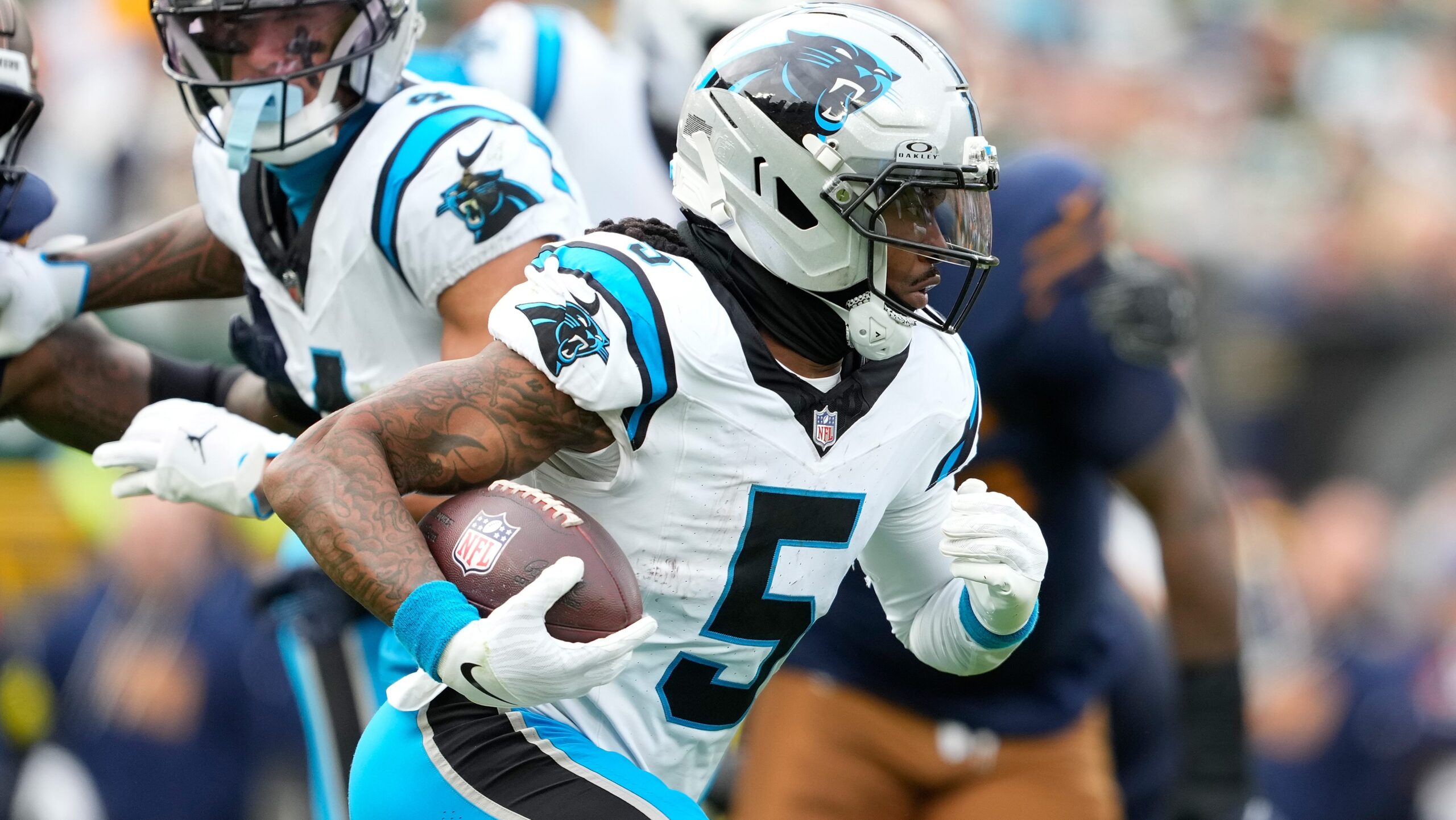
Carolina’s formula for winning games revolves around strong defense and a powerful running game on offense. Once again, the Panthers received a standout performance from running back Rico Dowdle, though both he and rookie linebacker Nic Scourton faced punishments from the league on Saturday night.

### NFL Announces Fines for Rico Dowdle and Nic Scourton

Dowdle’s rise as the Panthers’ lead running back has been one of the season’s most surprising developments. Despite starting only three games, he has rushed for 735 yards this season, ranking fourth-highest in the NFL. Over a few weeks, Dowdle has essentially overshadowed Chuba Hubbard in Carolina’s offensive plans.

Against the Packers, Dowdle delivered another dominant performance, rushing for 130 yards and two touchdowns on 25 carries, along with catching two passes for 11 yards. His impressive rushing totals have helped the Panthers’ offense improve, even if they aren’t consistently putting up huge point totals each week.

Following one of his touchdowns against Green Bay, Dowdle celebrated with the now-famous “Two Pumps” touchdown celebration. However, this led to an unsportsmanlike conduct penalty and a $14,491 fine from the NFL.

On Saturday, the league confirmed Dowdle’s fine and also announced that rookie outside linebacker Nic Scourton was fined $8,701 for taunting.

Joe Person of The Athletic shared the news on X (formerly Twitter), stating:
“Rico Dowdle’s $14,491 fine for his two-pump celebration officially fell under the ‘obscene gestures’ provision, per NFL’s weekly gameday accountability release. In addition to Dowdle, Panthers rookie OLB Nic Scourton fined $8,701 for taunting vs. Packers.”

### Panthers Look to Continue Momentum in Week 10

The fine levied against Dowdle has been public knowledge throughout the week, so the league’s confirmation comes as no surprise. Dowdle has responded positively to the situation by launching a GoFundMe campaign to raise money for the Children’s Home Society of North Carolina, with an initial goal of $14,000—the same amount as his fine.

As of Sunday morning, Dowdle has raised over $44,000, far exceeding his original target. He has since increased the fundraising goal to $60,000, turning a league fine into a charitable opportunity.

With momentum on their side and a rising star in Dowdle, the Panthers will look to build on their recent success as they head into Week 10.
https://heavy.com/sports/nfl/carolina-panthers/rico-dowdle-nic-scourton-fine-punishment-2/

Study shows Texas among nation’s top 10 most overweight states

A new study conducted by WalletHub has ranked Texas among the most overweight and obese states in the United States.

The findings highlight growing concerns about the state’s health and wellness challenges. This ranking sheds light on the importance of addressing obesity and promoting healthier lifestyles across Texas communities.
https://www.chron.com/news/houston-texas/article/texas-overweight-wallethub-study-21141561.php

Putin’s troll sets out to dupe the American right

**Putin’s Special Envoy Dmitriev Targets U.S. Far Right to Undermine Support for Ukraine**
*By Mark Toth and Jonathan Sweet | The Hill | November 6, 2025*

Vladmir Putin’s special envoy and head of the Russian Direct Investment Fund, Kirill Dmitriev, has suddenly become ubiquitous in U.S. political discourse. Meanwhile, Russian Foreign Minister Sergey Lavrov has been largely quiet since his maximalist negotiating approach with Team Trump failed.

Moscow, presumably guided by Lavrov, after securing a concession on Tomahawk missiles, chose to maintain Putin’s hardline demands for ending the war in Ukraine prior to the proposed Trump-Putin summit in Budapest. According to Moscow’s terms, NATO would have to admit that it was the root cause of the war, Kyiv would have to cede all of the Donbas region, and the Armed Forces of Ukraine would essentially have to disband. None of these demands are likely to be met.

When Russia’s Plan A failed, Putin shifted to Plan B to capture Team Trump’s attention—testing his latest “wunderwaffe.” Trump was reportedly unimpressed, calling Putin’s testing of the Burevestnik nuclear-powered cruise missile “not appropriate.” Following this, Trump canceled the Budapest meeting after Putin’s nuclear provocations.

In response, the U.S. Treasury imposed sanctions on Russia’s two largest oil companies, Rosneft and Lukoil. Putin’s oil and energy sector, already weakened by long-range Ukrainian strikes on refineries and pipelines, remains Moscow’s lifeline for funding the ongoing military operation in Ukraine.

A week later, Putin announced testing of a nuclear-capable underwater drone codenamed Poseidon. Then, in response to Trump’s threat to resume nuclear testing, Putin instructed Kremlin officials to “submit plans for the possible resumption of [Russian] nuclear testing.”

Under the Biden administration and continuing now, Putin’s favorite tactic has been nuclear bluffing. However, this nuclear “Kabuki theater” appears to have little effect on Team Trump.

### Dmitriev’s Mission: Winning Over the U.S. Far Right

Enter Kirill Dmitriev. Putin is aware that both he and Lavrov overplayed their hand. Dmitriev’s mission appears to be finding a way back “in from the cold.” The Stanford- and Harvard-educated 50-year-old seems to believe that reaching out to the U.S. far right is his best path forward.

Fearmongering is Dmitriev’s chosen tool. However, his underlying mission is to undermine U.S. military support and aid for Ukraine.

In pursuit of this goal, Dmitriev recently met with Rep. Anna Paulina Luna (R-Fla.), thanking her for supporting Putin’s unreasonable negotiating demands on Ukraine. He also appeared on a podcast with Lara Logan, falsely claiming that Putin upholds “traditional [conservative] values.” But deliberately targeting civilians in Ukraine is neither conservative nor liberal — it is a war crime. The same applies to the kidnapping of Ukrainian children.

Steven Moore, a former Capitol Hill chief of staff and founder of the Ukrainian Freedom Project, told us that with the “collapse of Tucker Carlson, who has always been on message for the Kremlin, the Russians are looking for a new way to pretend that they care about America’s culture wars.” Dmitriev seems to have been tasked with exactly that.

Following Zohran Mamdani’s recent victory in the high-profile New York City mayoral race, Dmitriev posted that George Soros had been a key backer of Mamdani’s campaign. Later that evening, he quote-tweeted the New York Post’s cover, captioned “On your Marx, get set, Zo!” while adding, “Good Morning, NYC Comrades!”

Few expected a Putin stooge to warn Americans about a “communist in sheep’s clothing.” Yet Dmitriev delivered precisely that message. His aim was not to genuinely warn Americans but rather to undermine growing U.S. support for Ukrainian President Volodymyr Zelensky.

### Undermining Republican Support for Ukraine

To succeed, Dmitriev must erode the increasing Republican backing for military aid to Ukraine. Thus, he attempts to court America’s conservative base by exploiting fears of communism and making fictitious claims about Russian conservative and religious values.

This strategy comes amid a resurgence of Republican support for U.S. economic and military assistance to Ukraine. As Moore noted in a recent *Wall Street Journal* op-ed, Republican voter support for aid had dropped to 19 percent by March 2025 but has since rebounded to 47 percent among Trump voters.

Notably, Christian Republicans who attend church weekly are a key demographic behind this renewed support. They may be recognizing that Ukraine is a deeply religious country sharing many core values with America.

Moore emphasized, “80 percent of Ukrainians identify as Christians. Baptists are the third largest Christian denomination in Ukraine after Orthodox and Catholics.” Roughly half of Ukrainians attend religious services at least once a month, compared to fewer than 10 percent of Russians.

Putin, hypocritically framing his war as a religious crusade, has the Russian Orthodox Patriarch Kirill declare the invasion a “Holy War” against a West that has “fallen into Satanism.”

### Dmitriev’s Efforts Are Unlikely to Succeed

Dmitriev is not fooling Team Trump. Treasury Secretary Scott Bessent reportedly dismissed Dmitriev after the latter claimed that new U.S. sanctions would have no impact on the Russian economy. Yet Dmitriev persists, apparently believing that he and Putin have a seat at America’s culture war table.

Americans across the political spectrum should dispel this notion by firmly showing Dmitriev the door.

*Topics: Foreign Affairs, Government, News/Current Events*
*Keywords: dupe, Putin, Trump, war*

*Disclaimer: Opinions posted here are those of the individual authors and do not necessarily represent the views of The Hill or its management.*

**Support Independent Journalism**
If you found this article informative, please consider supporting us:
– [Donate by Credit Card]
– [Donate by PayPal]
– Or mail donations to: Free Republic, LLC, PO Box 9771, Fresno, CA 93794

Thank you very much, and God bless you.
https://freerepublic.com/focus/f-news/4351605/posts

Steelers Have Second Opportunity at Training Camp Safety Standout

The Pittsburgh Steelers could use additional safety depth, and recently, safety Sebastian Castro became available.

Castro, who began the season on the Steelers’ practice squad, was waived from the Tampa Bay Buccaneers’ active roster on Saturday. According to FOX Sports’ Greg Auman, the Buccaneers are “expected to sign back” Castro to their practice squad on Monday. However, before that can happen, Castro will need to clear waivers.

The Steelers have an opportunity to put in a claim for the safety before the 4 p.m. ET waiver deadline on Monday. Alternatively, General Manager Omar Khan could attempt to sign Castro directly to the Pittsburgh practice squad if he clears waivers.

Castro was originally signed by the Steelers as an undrafted free agent in May. He quickly endeared himself to fans as a potential diamond in the rough during training camp and the preseason.

With the possibility of adding a promising safety like Castro, the Steelers could bolster their depth at the position as the season progresses.
https://heavy.com/sports/nfl/pittsburgh-steelers/sebastian-castro-waivers-buccaneers-release-nfl-news/