Tag Archives: restrictions

South Korea’s FSC is finalizing a bill to oversee stablecoin regulation

South Korea is close to finalizing its long-awaited stablecoin legislation, amid ongoing discussions between the central bank and the Financial Services Commission (FSC) over which authority should regulate digital tokens pegged to the Korean won.

### Legislative Developments and Regulatory Turf War

The FSC plans to submit a government-sponsored bill by the end of 2025. This bill will join five other competing stablecoin proposals currently under review in the National Assembly, all of which have been submitted by individual lawmakers.

Meanwhile, the Bank of Korea (BOK), which published a stablecoin whitepaper on October 27, emphasized that “currency functions on trust rather than technology.” The BOK is also seeking a role in licensing and monitoring stablecoins, indicating a turf conflict with the FSC.

Sejin Kim, a fintech policy analyst at the Information Technology and Innovation Foundation, explains the situation: “Most of the bills in the National Assembly envision a licensing regime for private stablecoin issuers. The central bank, on the other hand, wants to keep issuance in the hands of banks over concerns about financial stability.”

The FSC views stablecoins as part of the broader virtual asset market. Therefore, it maintains that licensing, exchange oversight, and custody supervision should remain within its jurisdiction. However, none of the current bills fully align with the preferred models of either the FSC or the BOK, according to Jeonghwan JK Kim, an attorney specializing in digital assets at Architect Legal Advisory.

### The Kimchi Premium Extends to Stablecoins

Newly elected President Jae-Myung Lee has expressed concerns about South Korea’s heavy reliance on USD-backed assets. USD-pegged stablecoins such as USDC and USDT currently dominate Korea’s crypto market. According to the Bank of Korea, the total trading volume of USD-pegged stablecoins reached 56.95 trillion won ($41.6 billion) in the first quarter of 2025—a threefold increase from 17.06 trillion won in the third quarter of 2024.

However, Korean investors are paying more for USDT and USDC than investors abroad. This price gap, referred to as the “kimchi premium,” arises from strong local demand and capital controls that make it difficult for traders to move funds in and out of the country. The phenomenon was first observed during the 2017 Bitcoin bull run—when prices surged by as much as 30%—and has now spread to stablecoins.

### A Pro-Crypto Presidency

President Lee has pledged to transform South Korea into a digital asset hub. His election campaign prominently featured plans to establish a Korean won-pegged stablecoin market and to permit domestic companies to issue stablecoins.

Despite this enthusiasm, Sejin Kim cautions that the current debate on stablecoins is focused on the wrong priorities. She argues that both the FSC and BOK are preoccupied with licensing authority and the notion that stablecoins will unlock new growth industries.

“Stablecoins primarily serve as a high-volume settlement system with razor-thin profit margins,” Kim explained. “The success of Korea’s stablecoin ecosystem will depend largely on managing distribution costs and fostering growth in surrounding industries.”

She added, “Licensing should come only after the fundamental design principles are determined. For a won-pegged stablecoin to function effectively in Korea’s real economy, it must be developed alongside practical use cases such as spot ETFs, tokenized securities (STO), international remittances, and cross-border B2B settlements. ETFs act as the investment pipe, stablecoins act as the settlement pipe. Korea can only capture global capital flows if both pipes move together.”

### Central Bank’s Cautious Stance

The Bank of Korea insists that won stablecoin issuance should be led by banks. In its whitepaper, the BOK outlined several risk factors, including depegging risks where the coin loses its one-to-one value with the fiat currency, mass redemptions, as well as potential foreign exchange violations and capital flight.

BOK Governor Chang-yong Rhee warned that issuing won-pegged stablecoins could serve as a loophole to bypass foreign exchange regulations, possibly increasing capital outflows and exchange rate volatility.

Jaewon Choi, a finance professor at Seoul National University, concurs with the central bank’s cautious approach. “While USD stablecoins see high trading volumes in Korea, it remains uncertain whether a won-denominated stablecoin will gain traction,” he said. “The concerns raised by the Bank of Korea are legitimate. Although we cannot predict a collapse until it happens, the risk of depegging exists even among the most liquid USD stablecoins, so won-denominated coins are likely to carry similar risks.”

Sejin Kim also noted the differences in global liquidity profiles: “The Korean won does not have the same liquidity as the USD, so Korea must carefully evaluate the economic implications of introducing won-pegged stablecoins at scale.”

Jeonghwan JK Kim pointed out that Korea’s regulatory framework remains anchored in a “positive-list” approach, where only activities explicitly approved by authorities are permitted. “Initial coin offerings (ICOs) are a prime example. They are not formally banned, but regulatory pressure has prevented any from launching in practice,” he said. This legacy complicates Korea’s ability to adopt a more market-driven, innovation-first framework like the U.S. Genius Act.

### Emerging Won-Pegged Stablecoins

Two issuers are poised for a stablecoin rollout once legislation is finalized.

Blockchain developer IQ AI and Frax Finance announced the launch of the KRWX stablecoin on October 30. Designed for multi-blockchain and cross-border use, KRWX is currently at the proof-of-concept stage and is not yet available to South Korean residents.

Meanwhile, KRW1—launched by Busan Digital Asset Custody Services in September—is South Korea’s first official stablecoin. It was designed with Korean regulations and institutional transactions in mind, targeting use cases such as cross-border remittances, emergency aid distribution, and institutional finance applications. KRW1 is still in pilot mode pending the finalization of national stablecoin rules.

### Balancing Control and Innovation

South Korea appears to be leaning toward a split regulatory model, where the central bank manages reserves and settlement functions, while the FSC oversees licensing and cryptocurrency exchanges. “While not yet formalized, the current bills assume some form of shared responsibility,” said Jeonghwan JK Kim.

He further noted that the first stablecoins will likely emerge from bank-led consortia rather than tech startups. “Both regulators agree that stablecoins should be introduced gradually and operate as safe, institutionally anchored assets.”

This approach would make Korea’s stablecoin ecosystem less experimental but potentially more durable over the long term.

*Claim your free seat in an exclusive crypto trading community limited to 1,000 members.*
https://bitcoinethereumnews.com/finance/south-koreas-fsc-is-finalizing-a-bill-to-oversee-stablecoin-regulation/


Philippines Introduces Rice Import Quota to Balance Farmer Protection and Food Security

The Philippines has announced that it will reopen rice imports in January 2026, allowing 300,000 tonnes of rice to enter the country after several months of import restrictions. This move comes as local rice stocks run low and prices soften across Asia, raising questions about how far protectionist policies can go before hurting consumers.

Since September 2025, the Philippine government has banned rice imports to support domestic farmers during the harvest season and prevent a collapse in farmgate prices. This is a classic example of a protectionist policy—a government action designed to shield local industries from foreign competition. By limiting imports, the government aimed to increase demand (and prices) for locally produced rice, giving farmers higher incomes.

However, the downside soon became clear. Domestic rice stocks began to run out, pushing the government to temporarily lift the import ban in January. The import quota, which restricts the quantity of rice entering the market to 300,000 tonnes, is meant to ease shortages without flooding the market and driving prices down too sharply.

Meanwhile, Thailand and Vietnam, the region’s biggest rice exporters, are reporting strong harvests. Thai rice prices have dipped to around 6,200–6,600 baht per tonne, while Vietnam has maintained stable prices and reaffirmed its export target of 8 million tonnes for 2025. These trends demonstrate the power of global supply and demand in determining market prices: when supply increases, prices tend to fall.

Adding uncertainty to the picture, the UN’s Food and Agriculture Organization (FAO) has warned that El Niño conditions could reduce future harvests across Southeast Asia, threatening regional food security. If this occurs, reduced supply could push prices up sharply—a reminder of how external shocks affect both producers and consumers.

For students, this story is a textbook case of how governments use trade restrictions like import quotas to balance the competing goals of protecting farmers and ensuring affordable food for consumers. It also highlights the tension between free trade, which promotes efficiency and consumer choice, and protectionism, which prioritizes domestic economic stability and employment.
https://thecuriouseconomist.com/philippines-introduces-rice-import-quota-to-balance-farmer-protection-and-food-security/

How to Watch Ravens vs Vikings: Live Stream NFL, TV Channel

Lamar Jackson and the Baltimore Ravens face off against Justin Jefferson and the Minnesota Vikings in Week 10 of the NFL season. The game takes place on Sunday, November 9, 2025, at U.S. Bank Stadium.

**How to Watch Ravens vs. Vikings**
– **When:** Sunday, November 9, 2025
– **Time:** 1:00 PM ET
– **TV Channel:** FOX
– **Live Stream:** Fubo (try for free)

The Ravens arrive with a 3-5 record, averaging 25.3 points and 183.0 passing yards per game. On the ground, they are strong, rushing for an average of 135.5 yards per game, ranking 6th in the league. Quarterback Lamar Jackson has thrown for 1,073 yards with 14 touchdowns and only one interception so far this season. Running back Derrick Henry has been a powerhouse, accumulating 629 rushing yards and six touchdowns. Wide receiver Zay Flowers has contributed significantly with 550 receiving yards through eight games. With Jackson back full-time in the lineup, the Ravens are in a much better position to stack up wins.

On the other side, the Minnesota Vikings enter this matchup with a 4-4 record. They average 22.8 points, 191.9 passing yards, and 99.9 rushing yards per game. Wide receiver Justin Jefferson has caught 47 passes for 649 yards and two touchdowns. Rookie quarterback J.J. McCarthy has seen limited action, throwing for 444 yards, four touchdowns, and four interceptions this season.

Defensively, the Vikings have been solid against the pass, allowing just 194.5 yards per game. However, they have given up 122.3 rushing yards per game and allow 23.3 points on average.

This promises to be an exciting NFL matchup that you won’t want to miss! Make sure to tune in and catch all the action live.

**Live Stream Ravens vs. Vikings with Fubo:**
Start your free trial today! Fubo offers a free trial, allowing you to watch the NFL on local CBS and FOX broadcasts every Sunday. You can also live stream NFL RedZone and access football coverage all season long on NBC, CBS, FOX, ESPN, NFL Network, and more. Regional restrictions may apply.

*Note: If you purchase a product or register for an account through the links on our site, we may receive compensation.*
https://www.newsweek.com/how-to-watch-ravens-vs-vikings-live-stream-nfl-tv-channel-11017454

McCarthy: “I call it the ‘Seinfeld’ shutdown because it’s a shutdown about nothing.”

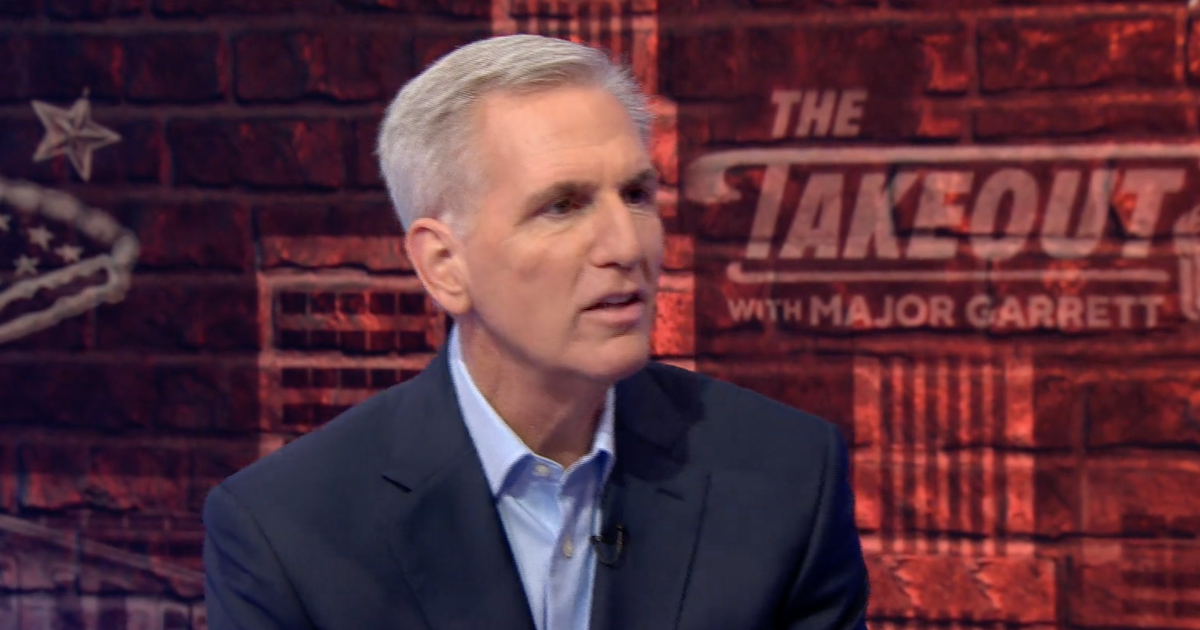
Former House Speaker Kevin McCarthy has criticized Democrats for declining to pass a continuing resolution to keep the government open without conditions.

“I call it the ‘Seinfeld’ shutdown because it’s a shutdown about nothing,” the California Republican told CBS News chief Washington correspondent Major Garrett. He was referencing the common joke that the seminal sitcom *Seinfeld* was a “show about nothing.”

McCarthy contrasted the current impasse with the situation in 2013, saying it is “the reverse [of] where Republicans were,” when some GOP lawmakers pushed for a spending bill that would roll back the Affordable Care Act, while Democrats advocated for a “clean” bill to fund the government. That standoff led to a 16-day government shutdown before Republicans ultimately conceded to Democrats.

This year, the roles appear reversed. Republicans are pushing for a clean bill to keep the government open at existing spending levels. Meanwhile, Democrats are demanding extensions to expiring health insurance subsidies and a rollback of Medicaid restrictions passed earlier this year.

Democrats argue that immediate negotiations over health insurance tax credits are crucial to prevent millions of people from facing higher premiums. Republican leaders say they are open to negotiating on health care — but only after the shutdown ends.

McCarthy accused Democratic leaders of “trying to find a message” and being “fearful” of their party’s rank-and-file members. He also noted a key difference from prior funding fights: the country is now more divided, with each side blaming the other, making it difficult to pinpoint who is responsible for the stalemate.
https://www.cbsnews.com/news/kevin-mccarthy-seinfeld-shutdown-trump-democrats/

ChatGPT to allow “erotica” for verified adult users

OpenAI has announced plans to loosen restrictions on ChatGPT, its popular AI chatbot. Among the changes, the company intends to allow the chatbot to engage in sexting with verified adults.

CBS News senior business and technology correspondent Jo Ling Kent reports on these developments, highlighting the evolving capabilities and use cases of AI technologies like ChatGPT.
https://www.cbsnews.com/video/openai-allow-chatgpt-sext-verified-adult-users/