All posts by admin

RBI should opt for 25bps repo rate cut, says SBI

**RBI Should Opt for 25bps Repo Rate Cut, Says SBI**

*By Dwaipayan Roy | Sep 28, 2025, 04:49 pm*

A recent report by the State Bank of India (SBI) has recommended a 25 basis points (bps) cut in the repo rate for the upcoming Reserve Bank of India (RBI) monetary policy meeting. This suggestion comes amid expectations of benign inflation. However, most economists anticipate that the Monetary Policy Committee (MPC) will likely maintain the status quo when it announces its decision on October 1.

**Rate Reduction Considered the Best Option**

The SBI report described a 25bps rate cut as the “best possible option” for the RBI. This recommendation follows the central bank’s earlier actions, where it slashed the key short-term lending rate (repo) by 100bps in three installments since February, prompted by a decline in consumer price index (CPI)-based inflation.

Despite this, some experts believe the MPC may choose to maintain the current stance during its upcoming policy review meeting.

**Upcoming MPC Meeting**

The MPC, headed by RBI Governor Sanjay Malhotra, will convene for a three-day meeting from October 1 to 3 to discuss the policy rate. The meeting takes place amid ongoing geopolitical tensions and the US imposing 50% tariffs on Indian shipments.

In its August bi-monthly monetary policy review, the central bank opted to keep rates on hold while assessing how these external factors might impact India’s economy.

**Expectations and Analyst Views**

Aditi Nayar, Chief Economist at ICRA, noted that GST rationalization could lower headline CPI inflation by 25-50bps during Q3 FY2026 and Q2 FY2027. She also expects October-November 2025 to bring a new low in CPI inflation, though anticipates an upward trend thereafter.

Dharmakirti Joshi of Crisil Limited expects a repo rate cut as early as October, driven by lower-than-expected inflation and robust demand.

As the MPC meeting approaches, market watchers will keenly observe how these factors influence the RBI’s policy stance.
https://www.newsbytesapp.com/news/business/sbi-recommends-25bps-repo-rate-cut-for-upcoming-rbi-mpc/story

Karur stampede: Eyewitness accounts reveal chaos, panic before tragedy struck

**Karur Stampede: Eyewitness Accounts Reveal Chaos and Panic Before Tragedy Struck**

*By Snehil Singh | Sep 28, 2025, 01:43 PM*

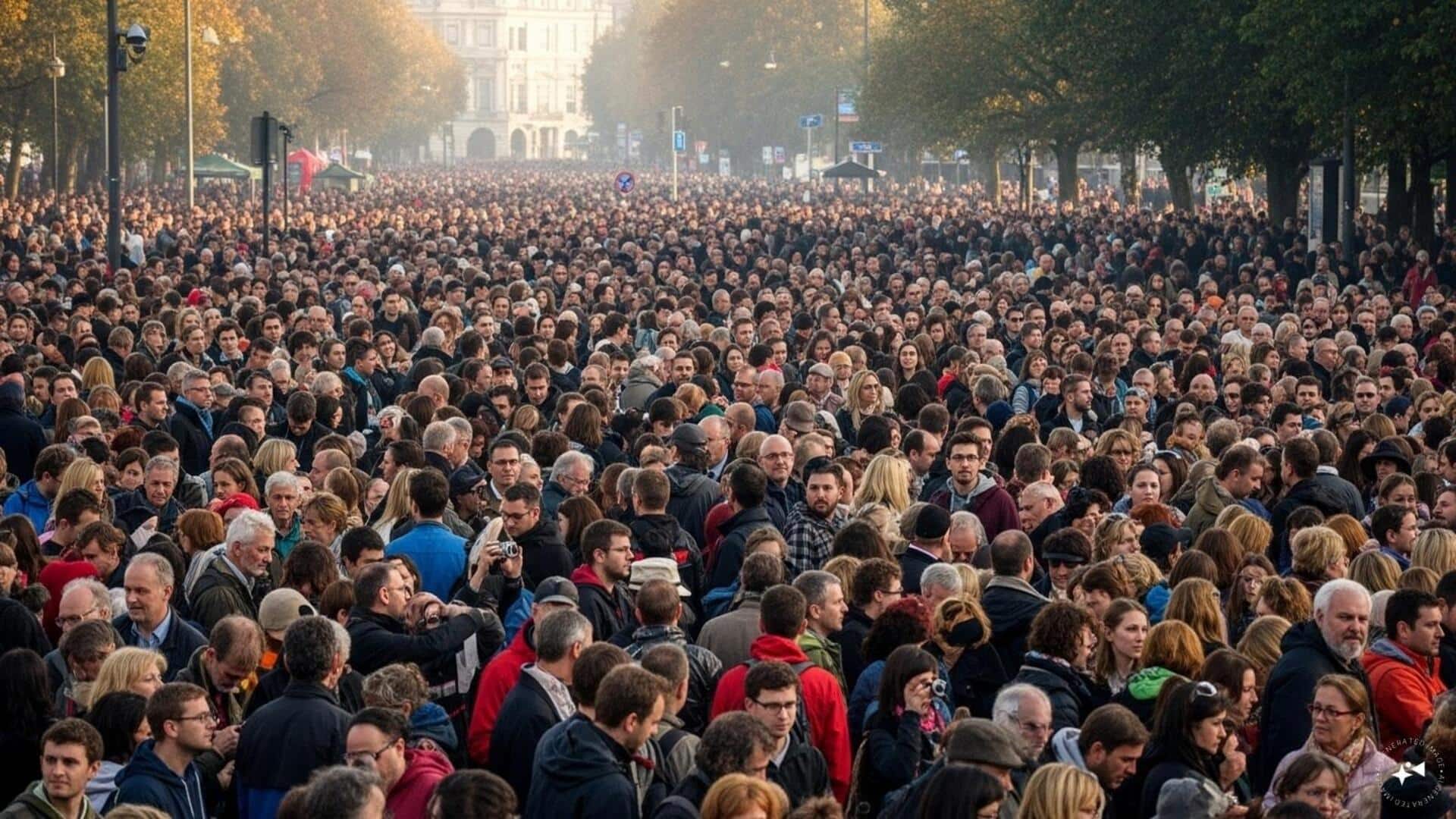
A political rally in Karur took a tragic turn on Saturday evening when a stampede claimed the lives of 39 people, including women and children, and left dozens injured. The incident occurred during a Tamilaga Vettri Kazhagam (TVK) rally where crowds had gathered to see actor-turned-politician Vijay, affectionately known as Vijay Mama by his fans.

**Initial Chaos**

Eyewitnesses and victim families have shared harrowing details of the chaos leading up to the disaster. Vinod Kumar, brother-in-law of one of the victims, recounted how a family of four had been waiting to see Vijay. “There was a power cut from 7 to 7:30 pm. The crowd surged forward just before his arrival,” he said. Tragically, his sister-in-law and her two children died on the spot due to suffocation.

Another victim, 45-year-old Jayanti, had attended the rally with her 20-year-old son, Ashwin Kumaran. Jayanti also lost her life during the stampede.

**Emergency Chaos at the Venue**

Ashwin Kumaran described the harrowing scene following the stampede. He alleged that police and TVK volunteers were unable to assist due to their own injuries. “No one was telling us where ambulances were. There was no water supply, and the road was very narrow and constricted,” he revealed.

The rally venue was strewn with shoes, crushed water bottles, torn flags, broken poles, and other debris. Many attendees were pushed into low-lying sewerage drains while attempting to escape, and some climbed onto thatched roofs only to fall down.

**Aftermath and Response**

Following the tragedy, Vijay expressed his “unbearable, inexplicable pain and grief” on social media. He prayed for those hospitalized and announced compensation of ₹20 lakh each to the families of the deceased and ₹2 lakh each to the injured.

Calling the loss “irreparable,” Vijay assured full support from Tamilaga Vettri Kazhagam to the victims’ families. In addition, both the state government and the Central government have announced compensation packages for those affected by the tragedy.

The stampede at the Karur rally serves as a grim reminder of the need for stringent crowd control and emergency preparedness measures, especially during large public gatherings.
https://www.newsbytesapp.com/news/india/power-cut-narrow-roads-what-factors-led-to-karur-stampede/story

UN reimposes sanctions on Iran after nuclear talks collapse

**UN Reimposes Sanctions on Iran After Nuclear Talks Collapse**
*By Snehil Singh | Sep 28, 2025, 03:05 PM*

The United Nations has reimposed sweeping sanctions on Iran, a decade after they were first lifted. This move follows the collapse of nuclear negotiations between Iran and Western powers. The newly reinstated sanctions prohibit transactions related to Tehran’s nuclear and ballistic missile programs and are expected to have a broader impact on Iran’s already struggling economy.

### Diplomatic Efforts and Calls for Dialogue

US Secretary of State Marco Rubio has urged Iran to “accept direct talks, held in good faith” and called on UN member states to “immediately” implement the sanctions. Meanwhile, the foreign ministers of Britain, France, and Germany reaffirmed their commitment to pursuing a diplomatic solution aimed at preventing Iran from acquiring nuclear weapons. They also urged Tehran to “refrain from any escalatory action.”

### Iran’s Response and Failed Attempts to Delay Sanctions

Although Iran has permitted UN inspectors back into its nuclear sites, President Masoud Pezeshkian rejected a US proposal for a temporary pause in nuclear activity in exchange for handing over the country’s entire stockpile of enriched uranium. An effort by Russia and China to postpone the sanctions implementation until April was unsuccessful.

Germany, along with the UK and France, which spearheaded the sanctions, stated it had “no choice” but to act given Iran’s non-compliance with its international obligations.

### Diplomatic Fallout

Russia has refused to enforce the sanctions, labeling them invalid. Russian Foreign Minister Sergei Lavrov claimed the sanctions “finally exposed the West’s policy of sabotaging the pursuit of constructive solutions.” In reaction to the renewed sanctions, Iran recalled its ambassadors from the UK, France, and Germany for consultations.

### Economic Impact of the Renewed Sanctions

The reinstated sanctions are already affecting Iran’s economy. According to Iranian engineer Dariush, the exchange rate is soaring and prices are climbing. On Saturday, the US dollar reached a record high of approximately 1.12 million rials on the black market.

Despite these challenges, the Brussels-based think tank International Crisis Group noted that Iran appears dismissive of the sanctions, having already adapted to previous US restrictions.

The situation remains tense as the international community monitors developments closely, hoping for a diplomatic resolution to avoid further escalation.
https://www.newsbytesapp.com/news/world/sweeping-un-sanctions-hit-iran-as-nuclear-negotiations-completely-collapse/story

1,869% rally in 5 years! Do you own this stock?

**1,869% Rally in 5 Years! Do You Own This Stock?**
*By Dwaipayan Roy | Sep 28, 2025, 04:49 PM*

**What’s the Story?**
Cupid Limited has delivered stellar returns of over 244% in just six months and an astounding 1,869% over five years. This remarkable performance is expected to draw heightened interest in the upcoming Monday trading session.

Aditya Kumar Halwasiya, the company’s Chairman and Managing Director, recently announced that Q2 FY26 is set to be the best quarter in Cupid’s history. This optimistic outlook is driven by new product launches, accelerating momentum in the FMCG vertical, and a strong pipeline of institutional orders.

**Financial Growth**
Cupid Limited reported a total income of ₹203.18 crore during the financial year, with a net profit of ₹40.89 crore. The company has witnessed rapid growth in its B2C FMCG segment, generating over ₹50 crore in revenue within just one year. This success is attributed to a vast distribution network spanning 1.2 lakh retail outlets across India, enabling robust consumer connections and expanding market presence.

**Strategic Shift**
Halwasiya’s Vision for Cupid’s Future
Halwasiya emphasized Cupid’s transformation from a contraceptive company to a consumer wellness and health-tech leader. He highlighted the company’s focus on sustainable growth, global expansion, and innovation—all while ensuring that personal care and preventive healthcare remain accessible to everyone.

This strategic shift, coupled with solid financials and expanding market reach, positions Cupid Limited as a compelling stock to watch closely in the coming quarters.
https://www.newsbytesapp.com/news/business/cupid-limited-to-report-best-ever-quarter-stock-up-244/story

Suryakumar Yadav averages paltry 16.28 in T20 tournament finals: Stats

**Suryakumar Yadav Averages Paltry 16.28 in T20 Tournament Finals: Stats**

*By Gaurav Tripathi | Sep 28, 2025, 11:54 AM*

For the first time in history, India and Pakistan will face off in the final of the Asia Cup. The highly anticipated clash is set to take place at the Dubai International Stadium on September 28. While Team India remains unbeaten in the tournament, concerns have arisen over the form of their captain, Suryakumar Yadav.

### Struggling Form in 2025

Suryakumar Yadav’s (SKY) recent T20 International (T20I) form has been underwhelming. In 2025 alone, he has averaged a disappointing 12.37, scoring just 99 runs in 10 innings at a strike rate of 110. His batting style, particularly his premeditated shots like the pick-up flick, has often let him down this year. Notably, his only significant innings came against Pakistan in the group stage, where he remained unbeaten on 47. In all other nine innings, he failed to surpass 15 runs and recorded three ducks.

### Underwhelming Record in T20 Finals

Despite being recognized as one of the best T20 batters of his generation, SKY’s performance in high-pressure finals has been far from impressive. According to ESPNcricinfo records, he has appeared in seven T20 finals, scoring just 114 runs at a modest average of 16.28. His strike rate in these matches stands at 112.87, hampered by a few low scores including a duck and multiple single-digit contributions. His highest score in any final is 48.

### IPL and Other Finals Performances

Four of Suryakumar’s seven T20 final appearances have come in the Indian Premier League (IPL). Across these finals, his scores were 24, 5, 15, and 19. He also appeared in the Champions League T20 final once, where he was dismissed without scoring. In 2024, SKY played his first T20 final representing India—the T20 World Cup final against South Africa—but managed only three runs.

### A Bright Spot: Syed Mushtaq Ali Trophy Final

SKY’s last T20 final appearance was in last year’s Syed Mushtaq Ali Trophy final. He played a crucial innings of 48 runs off 35 balls, helping Mumbai chase down a 175-run target against Madhya Pradesh and secure the championship. This performance remains his best in any final to date.

### Overall Impressive T20I Career

Despite recent struggles, Suryakumar Yadav’s overall T20I career stats are commendable. Over 89 matches, he has amassed 2,669 runs at an average of 37.59 with a striking rate of 164.65. He has recorded 21 half-centuries and 4 centuries in the format. Additionally, SKY holds the joint third-most Player-of-the-Match awards in T20Is, with 16 to his name.

Notably, he is the first cricketer to score T20I centuries in four different countries: South Africa, England, New Zealand, and India, highlighting his adaptability on foreign pitches.

As the Asia Cup final approaches, all eyes will be on Suryakumar Yadav to see if he can rediscover his best form and lead India to glory against their arch-rivals Pakistan.

*Stay tuned for live updates from the Dubai International Stadium.*
https://www.newsbytesapp.com/news/sports/decoding-suryakumar-yadav-s-run-in-t20-tournament-finals/story

Faith, friendship and quiet harmony

At dawn, when the first rays of sunlight hit the snow-capped peaks of Speen Ghar [trans: The White Mountain], the valley below glows in soft gold. Parachinar, the only Shiite-majority city among the Khyber Pakhtunkhwa tribal districts, lies cradled in this rugged frontier along the Pakistan-Afghanistan border. For decades, these hills were known for sectarian clashes and roadblocks, not peace.

Yet, beneath the towering ridges of Speen Ghar, a quieter story unfolds; one of faith, friendship, and lasting coexistence.

Near Parachinar, in the village of Malana, tucked amid walnut groves and spring-fed streams, an Imambargah and a Sikh Gurdwara stand right next to each other. Their shared wall tells a story older than the conflicts that have scarred this borderland.

“This is Baba Nanak House,” says Barkat Ali, aged 60, the caretaker of the Gurdwara, pointing to the modest building marked by an orange Sikh flag. Inside, a green cloth drapes the Takht, where ceremonial kirpans [daggers] gleam softly in the morning light.

“Sikhs are our brothers. During their festivals, we open our Imambargah doors for them and offer them accommodation. We even provide wood for their cooking,” he adds.

Centuries ago, the Turi tribe, a Shiite Pashtun community in Kurram, donated this very land to the Sikhs and helped build their Gurdwara—a gesture of solidarity that continues to resonate through the village’s stone courtyards and narrow alleys.

Though no Sikh families remain in Malana today, devotees travel from across Pakistan to visit Baba Nanak House, where tradition holds that Guru Nanak, the early 16th-century founder of Sikhism, once stayed.

In nearby Parachinar’s bustling Turi Market, the Singh brothers Mukesh and Rakesh carry that legacy into the present. In their early thirties, the twins run a family spice shop and speak fluent Pashto, dressed in the same shalwar kameez as their Muslim neighbours.

Every Muharram, as Shiite mourners mark the martyrdom of Imam Hussain, the Singhs serve tea, sweet drinks, and baskets of candies to participants.

“This is our way of honouring our friends,” Rakesh says. “Our fathers and grandfathers did it and we will pass it on to our children.”

“Before 2007, Shiite, Sunni, Sikh, Hindu, and Christian neighbours celebrated each other’s festivals,” he continues. “We danced the Attan together at weddings. Those were beautiful days.”

Their Muslim neighbours return the affection. Gul Hassan, a dry fruit vendor, recalls attending the brothers’ weddings and gifting them a traditional sehra, a bridal headdress.

“We share tea, lunch, and life,” he says with a smile.

Kurram once had a thriving Sikh community, with three functioning Gurdwaras and nearly 80 families, before sectarian violence erupted in 2007. Today, only seven families, around 45 people, remain. Many left for larger cities such as Peshawar, Lahore, and Hasan Abdal, seeking safety during years when the main Parachinar-Tal Road remained sealed by conflict.

Yet even in those violent times, Sikh lives were spared. Local Muslim elders ensured safe passage for those who chose to leave.

“During the conflict, the roads were opened and security provided so Sikh families could leave safely,” recalls Mukesh Singh.

Santokh Singh, who migrated to Peshawar, remembers the Parachinar of his youth with fondness.

“Before 2007, Shiite, Sunni, Sikh, Hindu, and Christian neighbours celebrated each other’s festivals,” he says. “We danced the Attan together at weddings. Those were beautiful days.”

Despite the shrinking population, acts of generosity continue to knit the communities together. During Ramadan, Mukesh discreetly distributes food to poor Muslim families, fulfilling the Sikh tradition of charity without seeking recognition.

Local Muslim leaders, too, step forward in times of need. Nazir Hussain, secretary of the Parachinar Shopkeepers Union, often donates to Sikh religious events.

“Whenever the Sikh community asks for help, we provide every possible support,” he says.

Farther west in Tirah Valley, near central Kurram, Bhagat Singh, a shopkeeper with a long white beard wrapped in a dark blue turban, reflects on three centuries of shared history.

“Our families have lived here for 300 years,” he says softly. “These valleys are my home. I was born here and here I will die.”

In a region once synonymous with bloodshed, the quiet companionship of an Imambargah and a Gurdwara offers a different narrative. As the golden light of Speen Ghar falls over Parachinar, it illuminates not just mountains, but a truth often overlooked: that faith, when rooted in respect, can build bridges where politics too often builds walls.
https://www.thenews.com.pk/tns/detail/1346828-faith-friendship-and-quiet-harmony

Burberry’s Festival Beat

Daniel Lee, Chief Creative Officer of Burberry Group, used the Burberry Spring 2026 collection to connect music with fashion in clear, direct ways. The runway was set under a sky-patterned tent in Perks Field at Kensington Palace, creating a setting that felt like a festival backstage. The floor was covered in dirt, while guests laughed and moved like a crowd eagerly waiting for a headline act.

The clothes maintained British tailoring but offered a music lover’s wardrobe with polish for the stage and durability in the mud. The collection balanced heritage with hedonism, featuring utility pieces built for both performance and weather. Lee referenced decades of British music culture—from the Mod period to folk rock and the current indie revival—filtering these influences through Burberry’s practical design to give each reference a modern shape.

“Musicians have always had incredible style, and together with fashion, they form a really strong culture,” Lee explained. The clothes embodied this idea with cropped A-line coats in Pop-Art checks and tartans in vibrant apple green and acid yellow. Classic camel coats kept their traditional structure while allowing a swinging hem.

The front row added to the festival atmosphere. British cultural icon Twiggy (Dame Lesley Lawson) arrived ahead of a group of musicians, joking, “I want to get in before the boy band arrives.” Also present were Elton John, Vanessa Williams, Skepta, Central Cee, and Naomi Campbell. Anna Wintour attended alongside US tennis star Jack Draper. Benji B, one of the world’s most respected music curators, mixed Black Sabbath tracks into the soundtrack, underlining the connection between rock heritage and new audiences.

Shine and weather protection remained central themes throughout the collection. Sequinned mini kilts flashed Burberry checks in pink and green, while glossy bomber jackets and wet-look leathers reflected light. Trench-inspired pieces appeared in denim, raffia, and waterproof cotton, proving that Burberry still designs with the elements in mind. Crochet and chainmail dresses were paired with fringe and flat lace-up shoes, perfect for festival grounds.

Suits stayed slim and short in silhouette, often featuring a Canadian-denim twist. Other looks were accented with hot pink polish or brown coatings featuring 1960s edges. Accessories included oversized fringe bags, skinny crochet scarves, and belts with prominent buckles—each serving a practical purpose while adding visual impact.

Daniel Lee delivered a focused vision: rock and roll style works when adapted for a modern mindset. In this latest collection, heritage pieces met a festival mood, and England felt ready to swing again.
https://www.thenews.com.pk/tns/detail/1346803-burberrys-festival-beat

Age of agitation

Protests erupted worldwide well before the invasion of Iraq in March 2003. However, those demonstrations failed to prevent the invasion. Today, Israel’s ongoing assault on Gaza has reignited similar global protests. Nearly every major city has witnessed streets taken over by demonstrators demanding action against what they describe as the genocide and ethnic cleansing of Palestinians. So far, these atrocities have only escalated.

The Black Lives Matter movement also continues to be an ongoing struggle—now more of a campaign than a protest. Unlike the Occupy Wall Street movement, it has not faded away.

In Bangladesh, protests in 2024 led to a regime change. In 1977, the so-called Tehreek-i-Nizam-i-Mustafa protest resulted in the promulgation of martial law and the execution of Zulfikar Ali Bhutto. However, the 126-day sit-in following the 2013 elections and the Pakistan Tehreek-i-Insaf protests after a successful no-confidence vote against the government proved futile.

Indonesia’s Suharto and the Philippines’ Marcos were ousted after prolonged, persistent mass movements. In contrast, Adolf Hitler’s downfall came through military defeat and his suicide. Mussolini of Italy and Pinochet of Chile lost power after fighting erupted within their ranks. Mussolini met a remarkably gruesome end, whereas Pinochet escaped relatively unscathed.

The Iraqi people revolted against Saddam Hussein in 1991 and again in 1999. However, these uprisings were crushed with brutal oppression, and Saddam survived as long as his international support remained intact. A similar fate befell Libya’s Gaddafi.

This brief overview suggests that street protests do not always fully represent the people’s will. This raises two key questions: why do people protest, and what determines whether protests lead to positive or negative outcomes?

### Why Do People Protest?

Psychologically speaking, protests spring from fear, anger, hope, or moral outrage. Fear remains fear only up to a certain point; once it crosses a threshold, it transforms into motivation to resist and retaliate. Fear of losing land or livelihood has sparked many recent protests.

For example, the 2016 Standing Rock Sioux protest in the USA opposed the Dakota Access Pipeline crossing sacred indigenous land. In India, some agricultural laws faced similar protests from small farmers fearing loss of income and land ownership. In 2000, residents of Kerala protested Coca-Cola’s bottling plant, which extracted 1.5 million liters of water daily, drying wells and ponds and raising pollution concerns.

Among various fears, the fear of annihilation is perhaps the strongest motivator. The Holocaust resistance movements of Jews in Nazi camps during the 1940s aimed to overcome the fear of extermination by Hitler. This fear translated first into anger and later into brutal aggression.

Palestinians and Kashmiris are motivated similarly; their protests arise from a complex interplay of fear and hope. Anti-immigrant campaigns reflect similar fears—locals feeling culturally invaded by immigrants. This sentiment was openly expressed by Angela Merkel, former Chancellor of Germany, in 2010 when she declared Germany’s multiculturalism experiment a failure.

Right-wing movements in Europe and the US exploit this fear politically. The September 13 anti-immigrant protest in London, dubbed the Unite the Kingdom rally, epitomized this trend. Participants waved English, American, Israeli, and Union Jack flags; Trump’s MAGA hats appeared prominently.

The rally raised more questions than it answered. Tony Robinson, founder of the English Defence League and an anti-Islam campaigner, was the chief organizer and symbolically significant. Elon Musk’s speech at the rally, ominous and suggesting possible violence if immigration policies did not change, underscored rising tensions.

### The Impact and Meaning of Protests

This historical survey of protests reveals various forms of suffering that compel people to outcry. However, protests motivated solely by moral outrage are relatively rare.

After the Vietnam and Iraq wars, the Palestinian cause has uniquely inspired massive global rallies. Participants often have no racial, religious, or political ties to Palestine; they are neither directly impacted by the Gaza crisis nor beneficiaries of its resolution. Yet they mobilize, stepping out of their comfort zones. This illustrates pure public solidarity, even as most governments and capitalist institutions oppose such protests.

Protests never fail completely. Even when they do not achieve their stated goals, they reflect the mass mood, highlight critical issues, express resentments, and surface collective conscience.

Whether these protests will lead to a free Palestine remains uncertain, but their participants will persist in raising their voices for justice—for people on the verge of extermination.
https://www.thenews.com.pk/tns/detail/1346771-age-of-agitation

Burberry’s Festival Beat

Daniel Lee, Chief Creative Officer of Burberry Group, used the Burberry Spring 2026 collection to connect music with fashion in clear, direct ways. The runway was set under a sky-patterned tent in Perks Field at Kensington Palace, creating a setting that felt like a festival backstage. The floor showed dirt while guests laughed and moved like a crowd waiting for a headline act.

The clothes maintained British tailoring while offering a music lover’s wardrobe polished enough for the stage and durable enough for the mud. The result was a balance of heritage with hedonism, featuring utility pieces built for both performance and weather. Lee referenced decades of British music culture—from the Mod period to folk rock and the current indie revival—filtering these influences through Burberry’s practical design to give each reference a modern shape.

“Musicians have always had incredible style, and together with fashion, they form a really strong culture,” Lee said. The clothes followed this idea, showcasing cropped A-line coats in Pop-Art checks and tartans in apple green and acid yellow. Classic camel coats retained their structure while allowing a swinging hem.

The front row added to the festival vibe. Twiggy (Dame Lesley Lawson), a British cultural icon, arrived ahead of a group of musicians. “I want to get in before the boy band arrives,” she said playfully. Elton John, Vanessa Williams, Skepta, Central Cee, and Naomi Campbell were also present. Anna Wintour attended alongside US tennis star Jack Draper.

Music curator Benji B, one of the world’s most respected in his field, mixed Black Sabbath into the soundtrack to highlight the connection between rock heritage and new audiences.

Shine and weather protection remained central themes throughout the collection. Sequinned mini kilts flashed Burberry checks in pink and green, while glossy bomber jackets and wet-look leathers reflected light. Trench-inspired pieces appeared in denim, raffia, and waterproof cotton, reminding guests that Burberry still designs for the elements.

Crochet and chainmail dresses came with fringe and flat lace-up shoes suitable for festival grounds. Suits stayed slim and short in silhouette, often with a Canadian denim twist. Others featured hot pink polish or brown coatings with 1960s edges.

Accessories included oversized fringe bags, skinny crochet scarves, and belts with prominent buckles. Each piece served a practical purpose while adding visual impact.

Daniel Lee delivered a focused concept: rock and roll style works when adapted for a modern mindset. In this latest collection, heritage pieces met a festival mood, and England felt ready to swing again.
https://www.thenews.com.pk/tns/detail/1346803-burberrys-festival-beat