CHICAGO (WLS) — Chicago’s West Loop community was left in shock after a brazen attack and armed robbery was caught on video this week. The video may be difficult to watch. The armed robbery happened in the middle of afternoon Thursday as people were out and about in the West Loop. Chicago police say they are still looking for the suspects. ABC7 Chicago is now streaming 24/7. Click here to watch “I watched the video like 10 times and I was just a lost for words,” Jars store manager Ashley Shannon said. Shannon says she was in the back working at the West Loop store during the crime. It wasn’t until later in the day she found out the attack happened right outside the shop. “I was in the back working with the mixer and the mixer is a little loud, so I didn’t really hear any commotion outside really,” Shannon said. “You know this is Chicago, and we know that things can happen anywhere, but it’s like literally at my doorstep.” The video has since gone viral. ABC7 has blurred the face of the victim to protect his identity. It shows two people robbing a man at gunpoint in broad daylight in the Fulton Market District in the West Loop. Chicago police confirmed they are investigating the attack as an armed robbery and battery. It happened around 4: 23 p. m. afternoon in the 200 block of North Peoria Street, near Lake Street. The video shows two people surrounding a man on the ground, and at one point one of them hits the victim in the face while pointing a gun. Chicago police said the robbers took the man’s belongings before driving off in an SUV. Police say the victim declined medical attention. SEE ALSO | Wendella boat crew pulls man from Chicago River who had fallen off downtown bridge “I think most of the time you think something like that happens at night, but you see it happening in the middle of the day,” resident Marcus Smith said. “Kind of not even being hidden. It’s probably the most alarming thing about it.” Julie Darling is president of the West Loop Community Organization. She says the area has already seen an increased police presence and urges people to stay vigilant. “We do have heavy police presence here in Fulton Market, and it’s something that our organization has been fighting for a long time, and we finally received it last August, where we do have permanent patrol in the neighborhood,” Darling said. “Police can’t be every corner, unfortunately, but we do have a rapid response time now. I’m usually walking with a purpose so I’m usually moving pretty quick too,” Smith said. “But outside of that, you know, you just got to pray you don’t run into a situation like that.” Chicago police say area detectives are still investigating. Anyone with information has been asked to give police a call.
https://abc7chicago.com/post/chicago-crime-west-loop-community-shocked-video-shows-man-robbed-gunpoint-beaten-broad-daylight-peoria-street/18597664/
Tag Archives: unfortunately

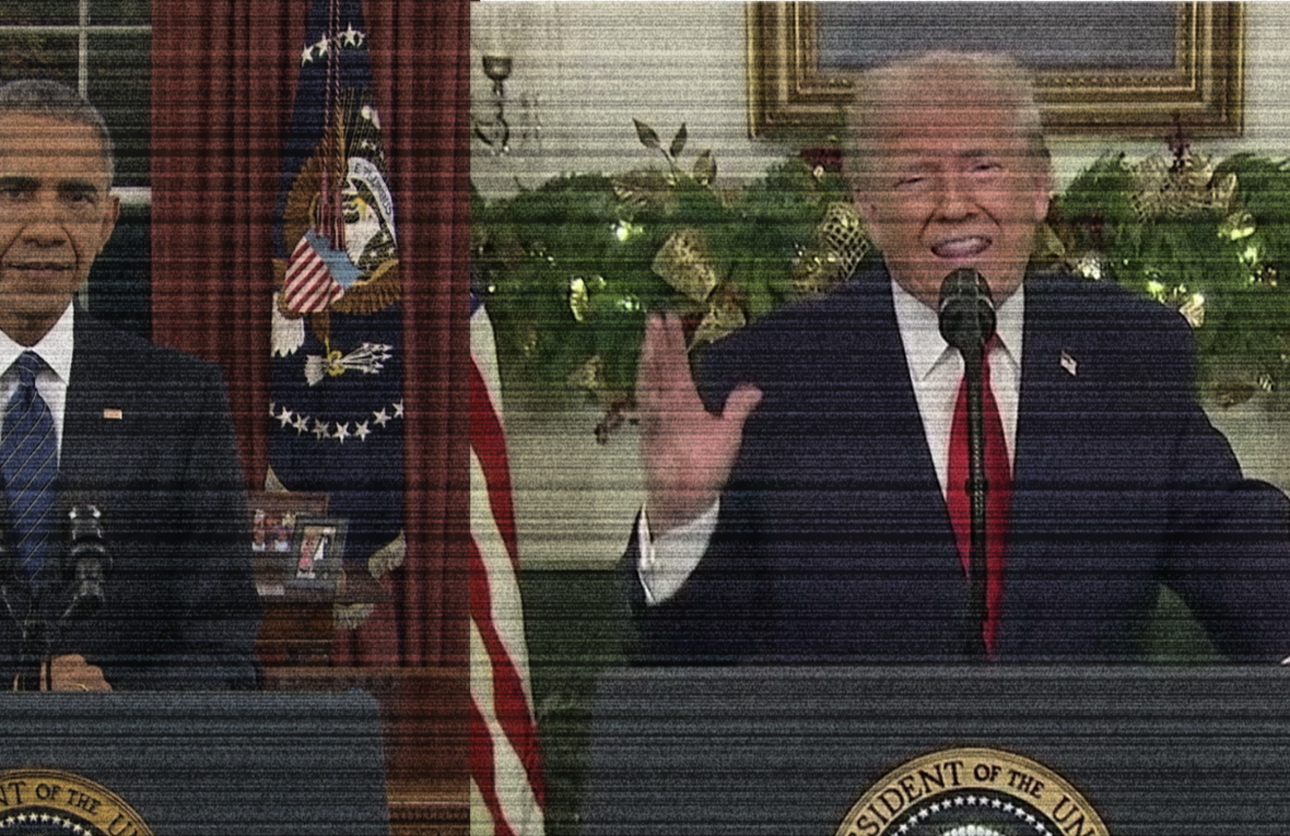
Why Did TV Networks Refuse Obama Fifteen Minutes, But Gave Trump Almost Twenty?
In November 2014, President Obama requested that the major television networks give him 10 to 15 minutes of airtime to speak directly to the nation about immigration reform. However, all the networks declined his request. One reason stood out: the networks claimed that President Obama would be too partisan.
It may sound unbelievable, but that was the official stance at the time. Yet, fast forward to Wednesday evening, and all the networks agreed to broadcast a shortened version of a Trump rally speech, presenting it as an official address to the nation—despite there being no real reason for it. Has Trump ever said anything on camera that wasn’t partisan or self-serving?
The Guardian reported on Thursday evening that when President Obama finally took to the airwaves to present his immigration reform plan, many Americans missed it. Instead of seeing the President outline his long-awaited overhaul of a highly debated issue, viewers were treated to regular programming. At 8 p.m., ABC aired an episode of *Grey’s Anatomy*. CBS showed *The Big Bang Theory*, Fox broadcast *Bones*, and NBC featured *The Biggest Loser: Glory Days*.
Popular Information recalled similar instances: networks have repeatedly declined to air prime time speeches from recent Democratic presidents, citing concerns over political bias. For example, in 2022, broadcast networks chose not to air a prime time speech by former President Joe Biden, in which he warned about threats to democracy, judging the speech to be too political. Instead, NBC aired a rerun of *Law & Order* and CBS broadcast an episode of *Young Sheldon*.
Back in 2014, the five major networks also refused to air President Obama’s immigration speech, which laid out a plan to protect millions of undocumented immigrants from deportation. The *Washington Post* described the speech as “the most significant presidential intervention to alter the U.S. immigration system in nearly three decades.” But rather than airing the speech, CBS chose *The Big Bang Theory*, and NBC aired *The Biggest Loser: Glory Days*.
Trump, meanwhile, will not get the outcome he hopes for because the public no longer believes his falsehoods about the economy. Unfortunately, the executives running the networks have been compromised—a sad reality that ultimately harms the public.
In another ongoing controversy, after a rocky start to her new role, Bari Weiss plans to hold yet another town hall event—this time with JD Vance. Weiss describes herself as a radical centrist, but it’s clear that she fits perfectly with what Trump wants from Paramount.
Who truly suffers in all this? The American people.
https://crooksandliars.com/2025/12/why-did-tv-networks-refuse-president-obama


Giants Swipe NFC Contender’s WR Ahead of Week 15
**Giants Claim WR Ryan Miller from Buccaneers Ahead of Week 15 Matchup**
The New York Giants made an under-the-radar move before their Week 15 contest with the Washington Commanders, swiping wide receiver Ryan Miller from the Tampa Bay Buccaneers’ roster. Fox Sports Bucs insider Greg Auman reported the news on December 11, noting:
> “Receiver Ryan Miller, cut by the Bucs on Wednesday, has been claimed by the Giants.”
The Giants subsequently confirmed the roster move, which Auman described as a “tough loss for the Bucs [losing a] special-teams standout who has one touchdown catch this season.”
Tampa Bay had been hoping to sneak Miller back onto their practice squad following the return of starters Mike Evans and Jalen McMillan. However, the Giants acted quickly to snatch him up, securing a plus-special teamer and serviceable wide receiver. Miller now has several weeks—and the upcoming offseason—to prove he deserves a full-time role on Big Blue’s 53-man roster.
—
### New Giants WR Ryan Miller Had a Mini-Breakout With Buccaneers in 2024
Considering his undrafted status out of Furman, Miller’s 2024 campaign with the Buccaneers could be classified as a mini-breakout. Last season, he recorded 12 catches for 128 yards and 2 touchdowns—solid numbers for his second year in the NFL.
Unfortunately, that spurt of offensive production didn’t carry over into 2025. This season, Miller remained an important piece for Tampa Bay on special teams, but his contributions as a receiver were limited. Even with the Bucs dealing with injuries at the position early in the season, Miller registered just 2 catches for 34 yards and one touchdown.
It remains to be seen if he can carve out a role amid the Giants’ wide-open depth chart at receiver.
—
### Giants Announce Beaux Collins’ Return to Practice
In other wide receiver news, undrafted rookie and camp standout Beaux Collins returned to practice this week after recovering from a neck/concussion issue that kept him on injured reserve. Giants team reporter Matt Citak announced on December 12 that Collins will be ruled out for Week 15, meaning he’ll need at least one more week before returning to action.
Per NFL rules, the Giants have 21 days to activate Collins from IR following his return to practice. They’ll need to free up a roster spot whenever they make that decision.
With the addition of Ryan Miller, it’s uncertain which receiver might be at risk when Collins is ready to rejoin the active roster. The Giants currently have several IR players designated to return, meaning each week could serve as an audition as the bottom of the roster battles to keep their spots.
—
**Stay tuned for more updates as the Giants continue to shape their roster amid a pivotal stretch of the season.**
https://heavy.com/sports/nfl/new-york-giants/week-15-news-ryan-miller-commanders/


Endemic Fraud in Minnesota’s Somali Community Is an Issue; but the Problem Doesn’t Involve Illegals
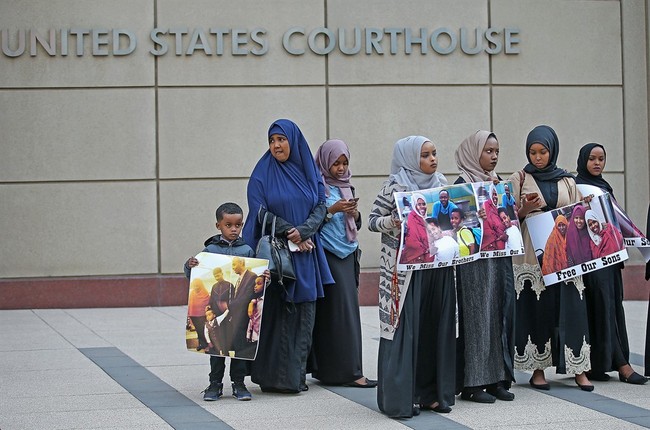
President Trump took to Truth Social on Friday to lash out at the reports about Somali remittances from the United States funding the ongoing civil war in Somalia; see Minnesota Fraud Feeding Terror: Autism, Meals Scams Bankroll Al-Shabaab RedState. Minnesota, under Governor Waltz, is a hub of fraudulent money laundering activity. I am, as President of the United States, hereby terminating, effective immediately, the Temporary Protected Status (TPS Program) for Somalis in Minnesota. Somali gangs are terrorizing the people of that great State, and BILLIONS of Dollars are missing. Send them back to where they came from. It’s OVER! President DJT My colleague, Rusty Weiss, has more on the depth and breadth of fraud coming from one immigrant community. Unfortunately, the President’s announcement is not going to come close to solving the problem. The Somali population in Minnesota is about 86, 000. It is concentrated in the Twin Cities area, and dates from the early 1990s, and the refugee stream from the civil war that resulted in our military involvement and the Black Hawk Down incident; see Operation GOTHIC SERPENT. October 3-4, 1993 RedState. That Somalia civil war is not to be confused with the current one. More importantly, the majority, 58 percent, were born in the United States. The remaining 42 percent were born in Somalia, and most of them are naturalized U. S. citizens. The Temporary Protected Status for Somalis ends on March 17, 2026, unless otherwise extended. Work authorization expired on September 17, 2025. Of the non-resident Somalis in the United States, only 705 are here under TPS. Don’t get me wrong, I’m all for ending TPS for most nationalities, but let’s not pretend that canceling it for Somalis will have any measurable impact on fraud and support for terrorism. In short, revoking TPS for Somalis will reduce the number of Somali immigrants by a fraction of a percent, assuming the case is adjudicated before TPS naturally expires, and there is no evidence that the fraud originating in Minnesota’s Somali community is by non-U. S. citizens. The most recent arrest for “material support of terrorism” was a 23-year-old Somali who was a naturalized citizen. I suspect that U. S. citizens, not Somali nationals, led the massive $250 million ripoff of the Feeding Our Future program. Likewise, the $14+ million “autism” scam seems to have been led by a U. S. citizen. The problem, as I see it, is multidimensional. The core problem was the decision to settle a large number of Third (if that) World refugees in a fairly homogenous community. That resettlement achieved a critical mass that allowed the Somalis to avoid assimilation, see any speech by Democrat Representative Ilhan Omar (MN-05) if you need evidence. It also allowed the implantation of Somali culture into the United States. For instance, the recent election for mayor of Minneapolis hinged on the Somali clan identity of one of the candidates; see We’re Doomed. Omar Fateh Lost the Minneapolis Mayor’s Race Because He Lost the Loyalty of Somali Clans RedState. Part of that culture sees outsiders as fat sheep to be fleeced. The idea of “outsiders” leaves no one safe. Me and my clan against the world; Me and my family against my clan; Me and my brother against my family; Me against my brother. -The hierarchy of priorities, as ordered by a Somali proverb From Me Against My Brother; At War in Somalia, Sudan and Rwanda; by Scott Peterson. A free online PDF of the book is at this link; the quote can be found on page 27. Small wonder that grants that are part of a high-trust society are pillaged for the benefit of family and self. And if part of that family is in a terrorist group back home, who cares? The second part of the problem is that theft and corruption on this scale can’t exist without the authorities’ knowledge. Christopher Rufo acknowledges that in his epic expose of Somali corruption. David Gaither, a former Minnesota state senator and a nonprofit leader] believes the mainstream media, alongside Minnesota’s Democratic establishment, have long turned a blind eye to fraud within the Somali community. This, in turn, allowed the problem to metastasize. “The media does not want to put a light on this,” Gaither said. “And if you’re a politician, it’s a significant disadvantage for you to alienate the Somali community. If you don’t win the Somali community, you can’t win Minneapolis. And if you don’t win Minneapolis, you can’t win the state. End of story.” As if to prove the point, here is a thoroughly stump-broke Minneapolis Police Chief Brian O’Hara apologizing to the Somali community for doing his job. Not to put too fine a point on it, there is a massive dose of Whtle liberal guilt at work. If you see the Somalis as downtrodden “POC,” victimized by “systemic racism,” you’re not very likely to make yourself part of a government you hate by reporting blatant fraud to the police. It is estimated that 30, 000 women and girls in Minnesota have undergone female genital mutilation, despite it being a felony. Undoubtedly, some of those were sent back to Somalia for the festivities, but common sense tells you that if a majority of Somali women have had the procedure, there is a thriving underground community of “reproductive health” providers. Part of the solution is to shut down the refugee flow so the Somali community distances itself from the “old country.” Another vital part of the solution is a comprehensive audit followed by the firing and selected imprisonment of government and non-profit officials who knew, or should have known, what was going on and did nothing. Some consideration should be given, where possible, to denaturalizing people involved in this fraud. I’d think that most naturalized citizens supporting the al-Shabaab terror group could lose citizenship just as easily as Nazi death camp guards did. Perhaps the problem will go away, but I wouldn’t bet on it. The only way it ends is with fearless enforcement of the law and the same type of federal scrutiny that crushed the Sicilian Mafia.
https://redstate.com/streiff/2025/11/22/endemic-fraud-in-minnesotas-somali-community-is-an-issue-but-the-problem-doesnt-involve-illegals-n2196469

Cowboys Cut Ties with Former 1st Round Pick Cornerback
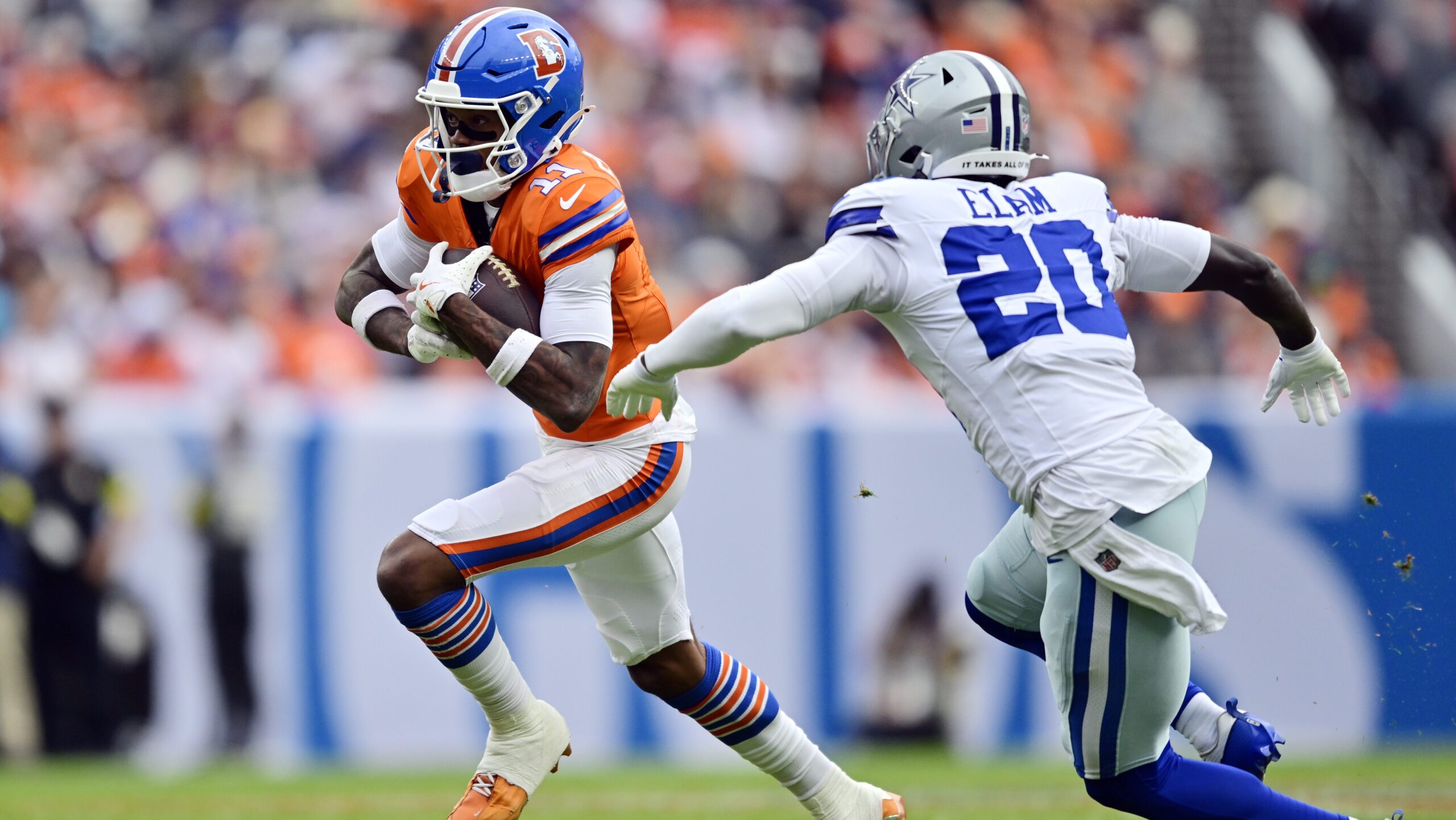
The Dallas Cowboys earned a much-needed win over the Las Vegas Raiders in Week 11, keeping their dim playoff hopes alive for at least one more week. If they really want to give themselves a shot at finding their way into the postseason, taking down the Philadelphia Eagles in Week 12 would certainly help their cause. For much of the season, the Cowboys have been piecing things together on the defensive side of the ball, particularly when it comes to their secondary. One guy who has been helping out on the backside of the defense was former first-round cornerback Kaiir Elam, but his time with the team came to an abrupt end on Saturday afternoon. Cowboys Release Kaiir Elam Before Week 12 Meeting with Eagles Entering the season, the Cowboys were hoping to be able to rely on their top duo of Trevon Diggs and DaRon Bland at cornerback, but injuries have once again limited their time together on the field. Diggs is currently on injured reserve with a concussion, while Bland missed a pair of games earlier in the season due to a foot injury. With Diggs and Bland in and out of the lineup, Elam took on a bigger role in the secondary. The No. 23 overall pick in the 2022 NFL Draft, Elam was traded to Dallas from the Buffalo Bills over the offseason after he struggled mightily early in his career. Unfortunately, those struggles continued with the Cowboys. Elam suited up for all 10 of Dallas’ games this season, racking up 29 tackles and a pass deflection. His coverage numbers were still awful, though, as he allowed a passer rating of 105. 0 when he was the closest defender in coverage. With Bland healthy and Caelen Carson and Reddy Steward earning more snaps, the front office decided to cut Elam before their upcoming matchup in order to open up a roster spot for running back Malik Davis. “The Cowboys waived CB Kaiir Elam and signed RB Malik Davis from the practice squad,” Tom Pelissero of NFL Network shared in a post on X. Cowboys Looking to Get Revenge vs. Eagles After Week 1 Loss While Elam continued to earn snaps for the Cowboys, it was more due to a lack of available options. Since entering the NFL, the young cornerback has been unable to hold up in coverage, which is why he’s looking for a new home once again after getting traded just a couple of months ago. Another team could look to take a flier on Elam, but his tape simply is not good, and it’s fair to wonder what the future holds for him. In the meantime, Dallas will continue putting the final touches on its preparations for its upcoming matchup with Philadelphia. After suffering a hard-fought 24-20 loss to the Eagles back in Week 1, the Cowboys will be eager to get some revenge, and a win here may be the only shot they have at salvaging their season. Kickoff for this highly anticipated divisional matchup is scheduled for 4: 25 p. m. ET on Sunday afternoon.
https://heavy.com/sports/nfl/dallas-cowboys/kaiir-elam-waived-cut/
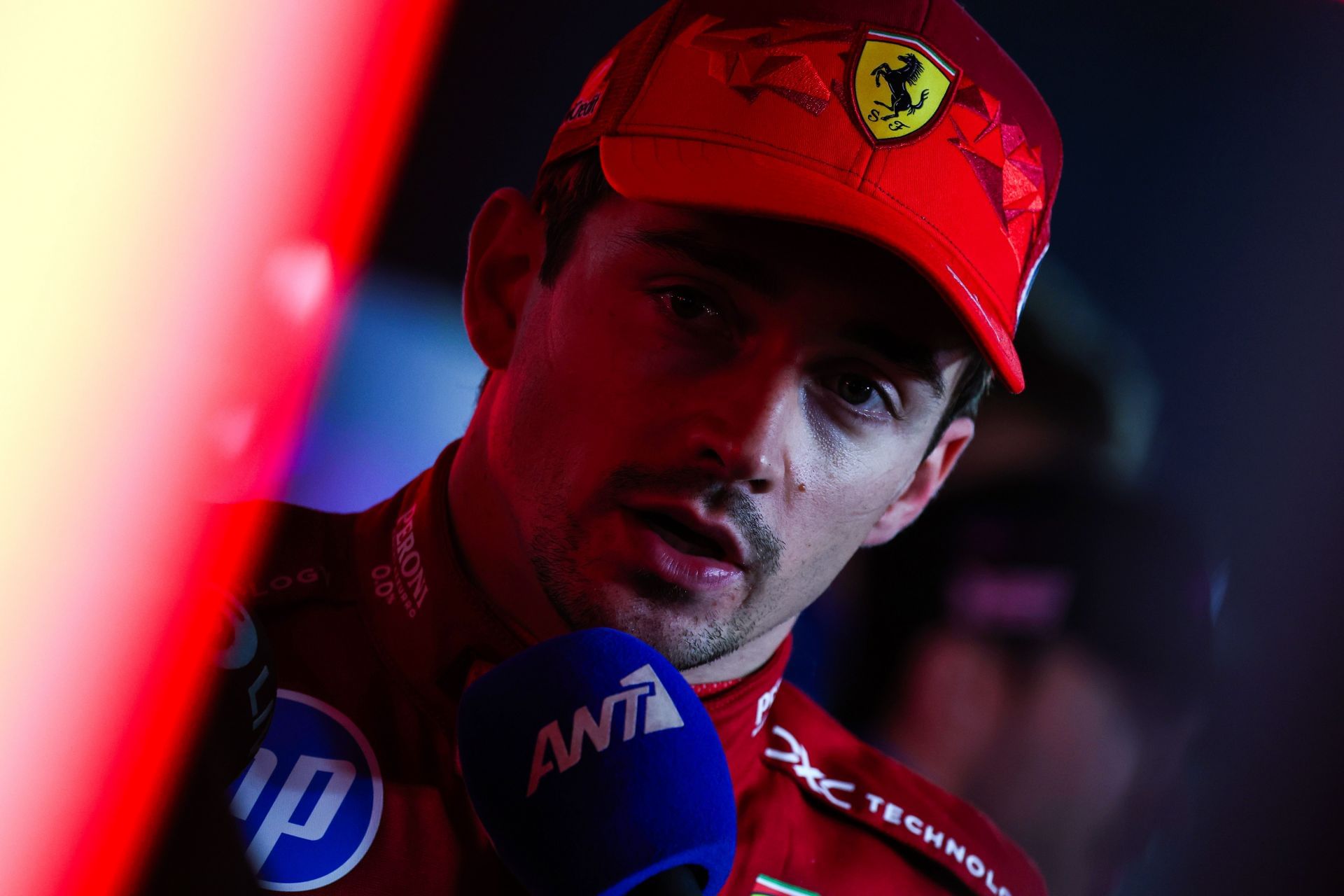
Weeks after John Elkann’s ‘talk less’ remark to Ferrari drivers, Charles Leclerc doesn’t hold back in his criticism of the car
Charles Leclerc shared flat-out criticism about Ferrari’s years-long issue with its F1 car, which has denied him performance in wet conditions, such as those at the Las Vegas GP qualifying on Saturday. The Scuderia had mixed but dismal results in qualifying, with Lewis Hamilton eliminated in Q1 in dead last, while Leclerc made it to Q3, but could only manage P9. After the team’s double DNF at the Brazilian GP two weeks ago, Ferrari chairman John Elkann had criticized the drivers, urging them to ‘talk less and focus on driving.’ Ahead of the Las Vegas GP weekend, both Leclerc and Hamilton had highlighted that the criticism was in a positive light and promised better results. Unfortunately, it all went downhill this weekend. Ferrari had decent pace in the practice sessions, with Leclerc topping FP1 on Friday. However, none of the three free practice sessions had wet conditions. FP2 was a slightly damp session, but nowhere near the qualifying conditions. In qualifying, both Ferrari drivers had trouble with getting their tires in the right window, especially Charles Leclerc, who found himself in the runoff areas more often. In a post-qualifying interview, the Monegasque blamed Ferrari’s lack of adaptability to wet conditions, stating that it has been an unsolvable problem that has existed since he joined the team in 2019. “Since I joined the team, we’ve been struggling massively at finding the grip in those conditions. It’s usually frustrating because it’s probably been my biggest strength in the junior categories. We are doing something wrong. I have no idea what that is because we’ve turned the car upside down.” Charles Leclerc expanded on how former teammate Carlos Sainz, who had driven for Red Bull, Renault, and McLaren, and current teammate Lewis Hamilton, who brought a wealth of experience from his time at McLaren and Mercedes, gave their inputs to help Ferrari’s setup in wet conditions, but to no avail. “We’ve had Lewis and obviously Carlos before that, who joined from the other teams that will tell us the fittings they had with the other cars, but it’s just extremely difficult to find the grip with our car, and very unpredictable as well, which causes us to do a lot of mistakes. It’s not that we are not trying because we’re the team which tried absolutely everything, but for some reason, we haven’t found our way yet.” Charles Leclerc ‘won’t miss’ the Ferrari SF25 in the new technical era from 2026 Charles Leclerc found the cold and wet conditions during the Las Vegas GP qualifying to be too tricky. However, he eventually made peace with the underwhelming result, stating, “It is what it is.” The Monegasque also spoke about Ferrari’s pursuit of second place in the constructors’ championship, which now feels far-fetched. Mercedes built a 36-point lead over the Scuderia after the Brazilian GP, and on Saturday, George Russell qualified in P4, ensuring a great starting position to extend its lead in the race on Sunday. “I mean, we’re fighting for third or maybe second, but honestly, second is going to be difficult for the constructors’ [championship]. What I want to do is to be fighting for wins, so surely it’s not a car I will miss.” Though Kimi Antonelli qualified in P17, he will start ahead of Lewis Hamilton. So, the best result for Ferrari at the Las Vegas GP would be minimizing the extension of Mercedes’ lead, with Charles Leclerc needing to do the heavy lifting.
https://www.sportskeeda.com/f1/news-weeks-john-elkann-s-talk-less-remark-ferrari-drivers-charles-leclerc-hold-back-criticism-car

Wicked: For Good – Fails To Stick An Already Very Flawed Ending
Wicked: For Good might not be technically terrible, but much like the last film, considering the amount of talent and everything else involved with these movies, they should have been better. Wicked: For Good already had a difficult task of adapting the weaker second act of the musical, but despite an over two-hour running time, everything is somehow both rushed and also drags the pacing to a slog. Director: Jon M. Chu Summary: Elphaba, the future Wicked Witch of the West and her relationship with Glinda, the Good Witch of the North. The second of a two-part feature film adaptation of the Broadway musical. Wicked: For Good Struggles To Adapt A Flawed Act Two It seems that the pink and green glasses have finally come off some people’s eyes. Wicked: Part One, released last year, was far from a perfect film, but what stood out the most was how it completely failed to justify not only splitting this into two films, but two films with over two-hour runtimes. However, the second act of the musical is dense as hell, with a ton going on. Going into it, the thought was that perhaps that second half was going to show why this film had to be split into two. A whole movie that would give that dense act room to breathe and maybe even add something to it that would make the adaptation from stage to screen make sense. Unfortunately, Wicked: For Good is just as weak as the second half of the musical is, but it is much slower and was released a year later than the first film. The second act of the musical is supposed to be a jarring change, but this works on stage because the second half almost immediately follows the first. With movies, there is a lot more time between the parts when you’re doing a true part one and two, so you have to work twice as hard to make the films work in that original context, but also still work as standalone pieces. Wicked: For Good picks up not long after the events of the first film, but despite part one ending on a big moment, it takes Wicked: For Good a half hour to find any sort of balance. This sort of pacing flows a lot better on stage, with just an intermission between the two parts. By the time Wicked: For Good finds its footing, you’re twenty minutes in and already going a bit cross-eyed because there is so much going on and almost no time is spent exploring it. One would think that with all of this extra time, the story would feel less rushed since what is usually half of the show has a full movie’s worth of time to breathe, but not every character involved with Wicked: For Good took advantage of the extra runtime in the best ways. So many character beats seem like they come out of nowhere, and some of the interesting changes they do make are only undercut when the film fails to address them by the end. To be as vague as possible, they give a character who has a very good reason to be mad the microphone to express said anger. But that character then vanishes from the final reveals of the film, drawing extra attention to their emotional state, which is more jarring than if they had just faded into the background. All of the other relationships, aside from the one between Elphaba and Glinda, are also given the short stick. Wicked: For Good might be giving Jobathan Bailey plenty to do, but his romance with Elphaba and his complicated relationship with Glinda aren’t given the time they need. These dynamics matter, and one way this film could have improved upon the play is by making them feel more fleshed out. The film also makes the decision to add two more songs to the mix. In theory, this isn’t a bad idea since songs are where characters go through emotional development in musicals. However, the songs are given to Elphaba and Glinda, which makes sense since they are the stars of the show, but they are the last two who need more emotional arcs. The two songs aren’t bad, but they are also forgettable and don’t really add much to the narrative, relying instead on songs for “show, don’t tell.” Again, this is not uncommon for musicals, but the entire show is uses songs to subvert the “show don’t tell” aspect, and two more songs about these two singing about their journeys isn’t the bandage that Act Two or Wicked: For Good needed to get itself out of mediocrity. Failing To Learn From The Musical And The First Film’s Mistakes The things that didn’t work in the first film also apply to Wicked: For Good. The sets are undercut by strange cinematography and lighting choices that still make them look oddly fake. It’s such a strange decision that would be awesome if it were intentional [some sort of nod to the stage roots], but it’s just distracting. Our two leading ladies are doing their damndest in these roles, but the second half of the film is not exactly kind to Glinda. Ariana Grande is playing a character who essentially turns a blind eye to many terrible things and believes she’s doing the right thing. The film and Grande’s performance never really have her come to terms with what is happening around her. She is horrified by what the Wizards and Madame Morrible are doing to Elphaba, but Glinda never really accepts responsibility for the discrimination that she was essentially condoning by aligning with the Wizard. Her new song, The Girl in the Bubble, alludes to someone staying wilfully ignorant, but again, the film has only focused on the Elphaba element and how all of this has impacted Glinda’s life and self-perception, when there is so much else going on. Cynthia Erivo has a tough role this time around because there are several character arcs she needs to move through at lightning speed. Both her relationships with Fiyero and her half-sister, Nessarose, are given a lot of weight and importance in her story, but in both aspects, it feels like we skipped a chapter or two between the end of Wicked and the beginning of Wicked: For Good. The romance between Fiyero and Elphaba was barely alluded to in the first one, so the rush to true love is jarring even by musical standards. Elphaba’s relationship, or lack thereof, with her half-sister has also completely broken down off-screen. This film has over two hours to flesh out all of this, yet it repeats all the mistakes that the musical did. Wicked: For Good might not be technically terrible, but much like the last film, considering the amount of talent and everything else involved with these movies, they should have been better. Universal hasn’t shown why this musical needed to move from stage to screen, because it doesn’t take advantage of any of the benefits gained from filmmaking over stage production. Everything looks cheap and fake instead of real and immersive, thanks to strange lighting and cinematography choices. They didn’t take advantage of the extra runtime in either film to really expand anything in a real and meaningful way, though the consequences of that decision are very much magnified in the second film. Nearly all of the talent involved have done stagework in some way, so if you aren’t going to take advantage of your change of medium, why not just do a stage run and film it Hamilton style? Wicked is already a story that has changed mediums, going from book to musical. However, the musical took the source material and adapted it for the stage, while taking advantage of both the strengths and weaknesses of that medium. Then again, nothing I write here will dissuade the stans, and anyone who hasn’t seen the first one is unlikely to check Wicked: For Good out. If you’re worried about the weird pacing issues and want to get the most out of the musical experience, wait for the inevitable sing-along double feature showings. That is, without a doubt, the best way to experience both of these films.
https://bleedingcool.com/movies/wicked-for-good-fails-to-stick-an-already-very-flawed-ending/


Saved from the scrapheap: Bazball proves more good than bad to give England Ashes hope
England ended the opening day of the Perth Test with renewed Ashes hope after a ferocious fast-bowling display redeemed a disastrous batting collapse. Ben Gardner reflects on a chaotic day of extremes. How quickly things can change. At around 6am, when those who decided not to brave the first ball began to wake, the texts rolled in. ‘Ashes already done, awful start,’ read one. ‘Had a little hope, gone!” was another. A third, simply: ‘FFS’. And somehow, England end day one on top, leading by 49 with one wicket left to take. England’s post-sunrise excellence almost feels like an affront to those who had to sit through the darkness before the dawn, but it will also make the next all-nighter worth staying up for. At the time, the early decrees of doom were hard to dispute, because England fans have been here before so often, the hope proven false in a flash, and because this felt like their best chance squandered. After Scott Boland’s first over, it felt as if Mitchell Starc would need to do most of the work himself. Unfortunately for England, he did so. His 7-58 were career best figures to take him past 100 Ashes wickets. Among modern bowlers, only Bob Willis, Dennis Lillee, Glenn McGrath and Shane Warne have more Ashes scalps at a lower average. Without Pat Cummins and Josh Hazlewood, England were hoping to exploit an attack shorn of two of the Big Three. Instead, Starc stood tall as the Big One, seizing a day that will rank alongside World Cup wins in every format, right at the top of a career decorated with highlights. This was the game England had to win, and it’s still a game they could win. So unlikely did that feel halfway through, the analysis already felt there to be written. Here’s a sneak peek at what would usually be on the scrapheap: “What was the worst bit? To begin with, it was how simply Australia’s plans fell into place. Mitchell Starc tempted Zak Crawley to drive, and while he just about resisted attempting to recreate his first-ball boundary in the 2023 series, it only took six balls for the edge to be found. For Ben Duckett, it was full and straight that did the trick. “Ollie Pope and Harry Brook counterattacked through Plan A, but were quickly undone by Plan B. Cameron Green has Pope’s number, having dismissed him three times in 26 balls in Test cricket, his awkward release making even his bad balls dangerous. Pope was pinned lbw trying to work away a leg-stump yorker four balls into their battle. It took one fewer delivery for the short ball ploy to do for Brook, remembering Australia’s Big Boundaries too late to properly pull out of a full-blooded hook shot, and instead gloving behind. “Still, if it had all felt a bit too easy for Australia to that point, it was about to get easier. Brook was the sixth wicket to fall, in the 30th over. By the end of the 33rd, England were all out, the last three perishing attempting what Brook had tried to avoid, caught in the deep on the leg-side. England were questioned for warming up with this series with three ODIs in New Zealand, and the worries were only heightened by their struggles with the bat, whitewashed and failing to make it into the 41st over at any point. Their effort here was shorter than any of those three. It was also England’s shortest completed Test innings under Brendon McCullum’s stewardship. They had their worst batting day at the worst possible moment. “A run rate in the fives but all done in a session and a half. Dismissals that ranged from the avoidable to the lamentable. Conditions which were tough and required application, but not such a lottery that survival was impossible. This was the disaster Bazball’s critics say happens much more frequently than it actually does, but this series will also go a long way to deciding how Bazball is remembered.” ALSO READ: Bazball’s arrived, they forgot the brains Michael Vaughan laments ‘all too predictable’ England collapse in Ashes opener How much of that remains true? Perhaps plenty. And yet the flipside of England’s approach is that, even in their car crashes, they’re driving so quickly they end up getting some way towards their destination. At the equivalent stage inside 30 overs, both sides had lost five wickets but England had double the runs. England’s five seamers had combined to roughen and rattle Australia, and while Steve Smith and Marnus Labuschagne survived for a time as much by chance as by grit, they were hardly better off for it. England’s quicks were superb, justifying the decision to go without a spinner by each bringing something different. It took Jofra Archer two balls to show off his devastating ability against left-handers, Jake Weatherald’s first Test innings ending flat on his front. It will get easier at some point, but maybe not this series. With Usman Khawaja taking an ill-timed toilet break, Smith and Labuschagne were joined inside the first over, but were tied down by Archer and Gus Atkinson, the latter metronomic and unlucky. After Archer bowled Labuschagne off the elbow, it was Brydon Carse’s turn, Smith and Khawaja nicked off with two rip-snorters. Then the captain took centre-stage, claiming the day’s last five wickets, fielders always in just the right place, Australia outthought and outgunned. England’s management deserves plenty of credit here. The decision to pension off James Anderson remains unpopular, but with him around, game time for Atkinson and Carse would have been limited. The fitness of Jofra Archer and Mark Wood has been well managed, particularly the former, who, if not valued and handled delicately, could easily have been lost to the format altogether. Instead he looks every inch the worldbeater he was in 2019. And then there’s the captain himself, bowling as well as he ever has, looking as fit as he ever has, triceps bulging through his sleeves to claim a first Ashes five-for in a decade. England with the bat witnessed the good and bad of Bazball, while the bowling attack, surely England’s fastest ever, reaped the rewards of 18 months’ planning and brave calls. One day in, English hope remains. Their fans know too well that even that small victory is all too rare.
https://www.wisden.com/series/the-ashes-2025-26/cricket-news/saved-from-the-scrapheap-bazball-proves-more-good-than-bad-to-give-england-ashes-hope
How you’re charging your tablet is quietly ruining the battery – here’s how experts do it instead
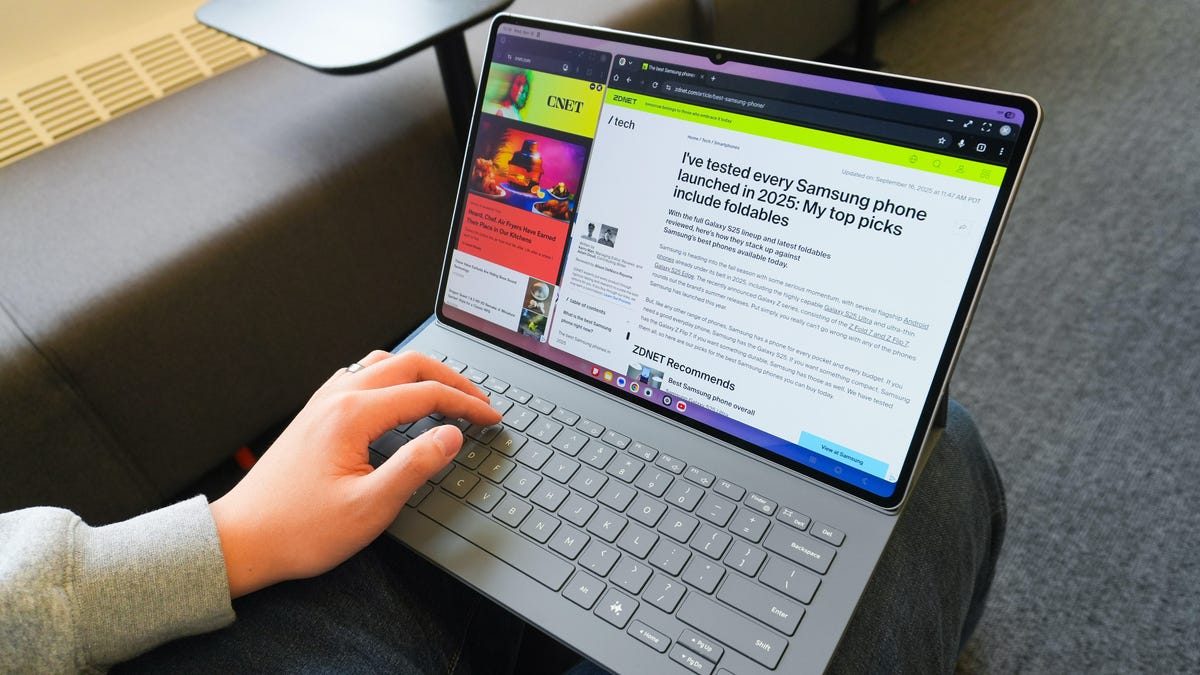
Follow ZDNET: Add us as a preferred source on Google. ZDNET’s key takeaways Unplug at 100%, and keep the battery between 20% and 80%. Avoid draining to 0%; store unused tablets at 50%. Use certified chargers to prevent stress and overheating. As someone who uses a tablet daily, I’m constantly looking for ways to make its battery last longer. However, some habits you don’t think twice about could actually be hurting your battery over time. There are ways to extend your tablet’s battery life, and there are some things you should avoid that do the opposite. Also: I tried this massive 25-inch Android tablet for a week and it surprised me Most tablets offer six to eight hours of use on a single charge, though battery life diminishes with age and continued use. While there are many things you can do to conserve battery life, here are the ones you should avoid to ensure your battery’s longevity. 1. Leaving your tablet plugged in overnight This isn’t always a problem with newer tablets, but most tablets on the market will suffer from being left plugged in overnight. Tablets typically charge to 100% and stop using electricity. However, leaving your tablet plugged in can cause it to continue trickle-charging to keep the battery full, which can stress the battery over time and diminish its lifespan. Instead, unplug your tablet when its battery reaches 100%. As a rule of thumb, it’s best to keep your battery charged between 20% and 80%. Also: Unplugging these 7 common household devices helped reduce my electricity bill Like all the common charging mistakes we make with our tablets, leaving it plugged in overnight once or twice won’t permanently damage it. Battery damage happens when these incorrect practices become a habit and are followed often. 2. Letting the battery drain to 0% (and forgetting it) I’ve been guilty of letting my tablet’s battery drain to 0%, only to set it aside and forget to charge it for a couple of days. Repeatedly letting your battery drain to 0% makes it age much faster, risking battery death and requiring a replacement or repair to revive it. I’ve unfortunately learned this the hard way after leaving my discharged Nintendo Switch Lite in a drawer for a couple of months, only to learn that its battery had been irreparably damaged. Lithium-ion batteries are simply not meant to stay empty, so most tablets don’t truly hit 0% when they shut down. Instead, they shut down with a little charge to protect the battery, which is why a low-battery screen appears when you try to turn them on. If you leave your tablet with a drained battery for days, weeks, or months, the battery continues to slowly discharge until the voltage drops too low, potentially damaging the battery’s internal chemistry. Also: 8 reasons why I replaced my Kindle with an iPad Mini for reading ebooks Repeatedly doing this results in a battery that is less capable of holding a charge or, worse, incapable of recharging altogether. To prevent this and prolong your battery’s life, avoid letting the battery drop below 20%. If you won’t use your tablet for some time, charge it to 50% capacity and shut it down before storing it. 3. Using the wrong charger Your local dollar store may be a good spot to get party and craft supplies, but not electronics. No matter how enticing the idea of buying a $1 charger seems, it’s probably best to avoid it. Using a cheap, non-certified, or incorrect charger for your tablet can deliver inconsistent power, overcharge it, or result in inefficient charging. All of these cause increased strain on your battery and a shorter lifespan. Using the wrong charger on your battery can do more than simply prolong its charging time. If a charger’s wattage isn’t properly matched to the battery, it can overheat your device as it struggles to supply enough power, or even overload the tablet’s circuits if it can’t regulate the power draw. Cheap chargers can also deliver fluctuating voltage, which stresses the battery and wears out its chemistry. Also: The new iPad Pro’s biggest upgrade isn’t the M5 chip I’d buy it for this feature instead Many certified chargers, like Apple-certified or USB-PD ones, have built-in safety measures that off-brand and cheap chargers skip. These measures prevent surges and overheating that could damage the battery and charging port. When charging your tablet, it’s best to look for a charger that is either certified or properly matched for your device, from the cable to the brick.
https://www.zdnet.com/article/how-youre-charging-your-tablet-is-quietly-ruining-the-battery-heres-how-experts-do-it-instead/