Category Archives: community

Firefighters visit Tanner Duckrey School in North Philly to raise awareness

About 425 students from kindergarten through eighth grade had the exciting opportunity to board a real firetruck, check out fire hoses, and receive free firefighter hats during Fire Prevention Week at the Dr. Tanner G. Duckrey Public School in North Philadelphia on Monday.

Philadelphia Fire Commissioner Jeff Thompson attended the event held at 1501 West Diamond St. He emphasized the importance of educating children about fire safety from a young age. “We just try to educate them. It starts when they are younger — and hopefully they will share that message with their friends and family and make themselves safer and make the entire community safer,” Thompson said. “They are going to go home and ask their parents to check the batteries in the smoke alarms and all of those things.”

Duckrey Principal David S. Cohen expressed pride in the students for beating some of the fastest school evacuation records during recent fire drills. Each year, the Philadelphia Fire Department selects a school to kick off Fire Prevention Week with a special assembly.

“They watched the fire drill, made sure all the doors were locked and the lights were turned off, examined the fire evacuation routes, and set the timer, ensuring everyone got out quickly,” Cohen explained. “Our time is a minute and 58 seconds, which is less than most schools.”

The event concluded with a celebration in the schoolyard, where students were informed about best practices for staying safe during fires.

Students received valuable safety tips, such as the importance of feeling the door to check for heat in case of a fire—signaling danger on the other side. “If possible, children should try to go to an open window and seek help,” Cohen advised.

Additionally, he highlighted the necessity of testing smoke alarms monthly by holding the test button for five seconds. Free smoke alarms are available from the Philadelphia Fire Department by calling 311. The department installs approximately 8,500 smoke alarms annually to enhance community safety.

“Every season is fire season, and fires are everyone’s fight!” said Philadelphia Fire Department Spokesperson Rachel Cunningham. She noted that in autumn and winter, the use of space heaters and fires for warmth presents obvious dangers. Throughout the rest of the year, fires can be sparked by activities such as cooking and grilling, discarding cigarette butts in dry and windy conditions, faulty electrical cords or wiring, and various other hazards.

Stay informed and connected — subscribe to The Philadelphia Tribune NOW!

**Community Guidelines for Comments:**

– Keep it Clean: Please avoid obscene, vulgar, lewd, racist, or sexually-oriented language.
– Please Turn Off Your Caps Lock.
– Don’t Threaten: Threats of harming another person will not be tolerated.
– Be Truthful: Don’t knowingly lie about anyone or anything.
– Be Nice: No racism, sexism, or any form of discrimination degrading others.
– Be Proactive: Use the ‘Report’ link on each comment to let us know of abusive posts.
– Share with Us: We’d love to hear eyewitness accounts and the history behind an article.
https://www.phillytrib.com/news/local_news/firefighters-visit-tanner-duckrey-school-in-north-philly-to-raise-awareness/article_4c172854-8be5-4866-a4db-6ecf5c4633d1.html

DOGE Holds Firm, PEPE Pulls Back, But AlphaPepe’s Presale Momentum Crowns It Among the Top New Crypto Coins to Invest in 2025

The meme coin market is showing mixed signals as 2025 progresses. Dogecoin (DOGE) continues to hold its ground above key support levels, Pepe Coin (PEPE) is retracing after a brief surge, and a new contender, AlphaPepe (ALPE), is quickly stealing the spotlight.

While older names consolidate, AlphaPepe’s presale momentum and rapid community growth have positioned it among the top new crypto coins to invest in in 2025, offering a rare balance of hype and structure in the meme space.

### AlphaPepe’s Presale Momentum Accelerates

AlphaPepe has emerged as one of the fastest-growing meme presales this year. The project has already raised more than $250,000, attracted over 2,000 holders, and seen its second USDT liquidity pool surpass $5,000 — a clear indicator of rising participation and liquidity.

Unlike typical meme tokens that rely purely on social buzz, AlphaPepe integrates real structure into its model. It features instant token delivery, staking rewards of up to 85% APR, and an independently audited smart contract for transparency. These fundamentals, combined with a rapidly expanding online community, are fueling speculation that AlphaPepe could be the next meme coin to achieve breakout status once it lists.

The timing of the presale is also ideal. With Bitcoin and Ethereum stabilizing near record highs, traders are rotating profits into smaller, high-upside assets, and AlphaPepe has become a prime destination for that capital flow.

Analysts believe that if current demand continues, AlphaPepe could mirror early-stage rallies seen in Shiba Inu or Dogecoin, with potential price targets between $0.50 and $1 after listings.

### Dogecoin Holds Firm

Dogecoin remains the legacy cornerstone of the meme coin sector. Now trading around $0.26, DOGE has shown resilience through recent market fluctuations, maintaining both liquidity and community engagement.

Network updates have improved efficiency and reduced transaction times, strengthening its utility as a low-cost payment token. Despite lacking the explosive upside of newer entrants, Dogecoin’s long-established ecosystem and loyal following keep it relevant in every bull cycle.

Analysts note that its stable price action around current levels is a sign of confidence, especially as rumors persist of a possible Dogecoin ETF that could bring mainstream exposure. If momentum continues into early 2026, DOGE could revisit the $0.35 to $0.40 range.

### Pepe Coin Pulls Back After Strong Run

Pepe Coin (PEPE) has been facing short-term headwinds after its recent rally. The token’s price has retraced slightly from its highs as traders take profits and liquidity shifts toward newer opportunities like AlphaPepe.

Still, Pepe remains an important player in the meme ecosystem, representing the cultural spark that revived meme trading earlier this cycle. Analysts suggest that PEPE could consolidate near its support zone before attempting another rebound if broader market sentiment improves.

Its long-term performance will depend on whether it can sustain community engagement and build additional use cases beyond pure speculation.

### Conclusion

Dogecoin continues to prove its staying power, Pepe is recalibrating after a strong run, and AlphaPepe is quickly rising as the market’s new focal point.

With $250K raised, over 2,000 holders, and expanding liquidity, AlphaPepe’s presale momentum has crowned it among the top new crypto coins to invest in 2025. While DOGE and PEPE anchor the meme coin narrative, AlphaPepe represents the next evolution—a project blending viral appeal with transparent tokenomics, staking rewards, and smart launch mechanics.

For investors seeking early exposure ahead of the next meme cycle, AlphaPepe stands out as the clear breakout candidate of the year.

### Quick Links

– Website: [Insert link here]
– Telegram: [Insert link here]
– X: [Insert link here]

### Frequently Asked Questions (FAQs)

**What makes AlphaPepe different from Dogecoin and Pepe?**
AlphaPepe combines meme-driven marketing with structured features like instant token delivery, staking options, and an audited contract, giving it both hype and reliability.

**How much has AlphaPepe raised so far?**
The presale has surpassed $250,000 with more than 2,000 holders and growing liquidity pools.

**Why is Dogecoin still important in 2025?**
Dogecoin remains the original meme coin with real adoption, strong liquidity, and community backing that keeps it relevant every cycle.

**Why did Pepe Coin pull back recently?**
After a strong rally, traders took profits and rotated capital into newer presales, causing a short-term correction in PEPE’s price.

**Is AlphaPepe the best new meme coin to invest in?**
Many analysts believe so. Its combination of transparency, staking, and presale traction make it one of 2025’s most promising early-stage meme projects.

*Disclaimer: This publication is sponsored. Coindoo does not endorse or assume responsibility for the content, accuracy, quality, advertising, products, or any other materials on this page. Readers are encouraged to conduct their own research before engaging in any cryptocurrency-related actions. Coindoo will not be liable, directly or indirectly, for any damages or losses resulting from the use of or reliance on any content, goods, or services mentioned. Always do your own research.*

### About the Author

**Krasimir Rusev** is a reporter at Coindoo with many years of experience covering cryptocurrencies and financial markets. He specializes in analysis, news, and forecasts for digital assets, providing readers with in-depth and reliable information on the latest market trends. His expertise and professionalism make him a valuable source of information for investors, traders, and anyone who follows the dynamics of the crypto world.
https://coindoo.com/doge-holds-firm-pepe-pulls-back-but-alphapepes-presale-momentum-crowns-it-among-the-top-new-crypto-coins-to-invest-in-2025/

Mumbai Entrepreneur Launches ‘Quiet India’ To Combat Noise Pollution As Public Health & Economic Threat

Mumbai Social Entrepreneur Launches Quiet India: The Nation’s First Large-Scale Movement Against Noise Pollution

Savitha Rao, a social entrepreneur from Mumbai, has launched Quiet India, the country’s first large-scale national movement aimed at tackling noise as a significant public health and economic concern. This initiative seeks to reframe silence not as mere absence, but as a necessary foundation for health, dignity, and national development.

Citizen-led Movement for National Impact

India Positive Citizen, which promoted grassroots participation in nation-building, says Quiet India aspires to unite fragmented efforts across the country into a cohesive movement. Unlike previous initiatives targeting specific festivals, neighbourhoods, or isolated sources, Quiet India takes a holistic approach.

The movement brings together citizens, health professionals, urban planners, law enforcement, and policymakers to address noise pollution as both a public health emergency and an economic liability.

Alarming Noise Levels in Urban India

According to Quiet India, noise levels in urban centres such as Mumbai have crossed alarming thresholds. Estimates indicate that Mumbai had 4.6 million vehicles on its roads by the end of 2023, generating millions of honks daily.

In many areas, noise regularly exceeds the World Health Organization’s recommended limits of 55 decibels during the day and 40 decibels at night.

Speaking to The Free Press Journal, Rao said, “Noise is the pollution we have normalised. Quiet India is about making silence our right, not our luxury. It is about reclaiming silence as a shared inheritance, and building a soundscape worthy of the India we aspire to be.”

Health Consequences of Noise Pollution

Medical experts warn that prolonged exposure to high decibel levels is linked to elevated stress hormones, high blood pressure, heart disease, and cognitive impairments.

Dr. Mickey Mehta, a wellness expert and member of Quiet India’s advisory panel, explains, “Silence is nourishment. Without it, the body cannot heal, the mind cannot focus, and immunity is weakened. A calm soundscape is as critical as clean water or nutritious food. The sound of stillness brings bliss and wellness.”

Enforcement and Citizen Responsibility

Traffic authorities in Mumbai acknowledge the challenge but stress enforcement limitations.

Prashant Pardeshi, Mumbai South’s Deputy Commissioner of Police (Traffic), stated, “We penalise offenders and run awareness drives, but no amount of enforcement can succeed unless citizens themselves reduce needless honking. Road discipline is as much about culture as compliance.”

Economic Implications of Noise Pollution

The campaign focuses not only on improving quality of life but also on enhancing India’s global competitiveness. The movement highlights that high noise levels reduce urban livability, deter foreign investment, and decrease workforce productivity—factors that could undermine Mumbai’s aspirations as a global financial hub.

Sandeep Bajoria, Quiet India’s advisory board chairman, said, “Noise pollution directly impacts India’s economic growth. A quieter Mumbai is better for its citizens, and it makes the city more attractive for investors, businesses, and global talent.”

Multi-Pronged Solutions for a Quieter India

Quiet India promotes a range of solutions from technology to citizen action. Key focus areas include:

  • Changing behaviour by reducing habitual honking
  • Limiting loudspeakers
  • Respecting quiet zones
  • Advocating for stricter regulations on construction noise and modified vehicle exhausts
  • Controlling night-time disturbances
  • Implementing noise barriers and strategic zoning
  • Increasing green spaces to absorb noise pollution

Innovative tools like Google’s experimental ‘noise ratings’ for restaurants—introduced following Rao’s suggestion—aim to make quietness a valued metric in public spaces.

Noise and Accessibility

Social leader Raju Waghmare, who is visually impaired, explained how noise affects dignity and independence.

“The blind depend on auditory cues to navigate the city. Unnecessary honking and noise drown out those signals. Noise doesn’t just hurt, it takes away independence,” he said.

Research and Publications

Rao’s latest book, Noise in Our Nation, outlines the hidden costs of unchecked noise on health, education, the environment, and the economy. It also provides practical recommendations for stakeholders at every level.

Learn More

To find out more about Quiet India and how you can contribute, visit the official website: https://quietindia.in/

https://www.freepressjournal.in/mumbai/mumbai-entrepreneur-launches-quiet-india-to-combat-noise-pollution-as-public-health-economic-threat

Three more arrested in Manchester synagogue terror attack

Three More Arrested in Manchester Synagogue Terror Attack

A man and two women, aged between 18 and their mid-40s, have been detained in connection with the deadly Yom Kippur attack at a Manchester synagogue.

In response to the tragedy, a vigil was organised by the Jewish Representative Council of Greater Manchester and Region to honour the victims of the attack. The event took place in Manchester, Britain, on October 3, 2025.

Photo credit: Hannah McKay / Reuters

https://www.jpost.com/international/article-869359

Through the Eyes of a 6-Year-old Child, Orange Became a Symbol of an Indigenous Movement

The color orange was chosen because of something that happened to Phyllis Webstad when she was only six years old.

It was September 30, 1973, the first day she attended St. Joseph’s Mission Residential School in British Columbia. Her grandmother had bought Webstad a brand-new shiny orange shirt to wear, adding to the young student’s first-day-of-school excitement.

“I didn’t understand why they wouldn’t give it back to me; it was mine!” Webstad recalls. The color orange has always reminded her of that moment — how her feelings didn’t matter, how no one cared, and how she felt like she was worth nothing.

“All of us little children were crying, and no one cared,” she said.

She never forgot the loss that turned into a hurt to her heart.

### The Birth of the Orange Shirt Society

In 2013, Webstad was invited to return to St. Joseph’s as an Indian residential school survivor. She convinced other survivors to buy orange t-shirts as a way to remember those who attended residential schools in Canada. This movement led to the formation of the Orange Shirt Society.

Wearing orange shirts has become a symbol of defiance against those things that undermine children’s self-esteem, and a commitment to anti-racism and anti-bullying in general, Webstad explains.

However, the Orange Shirt Society is not only about defiance. Orange Shirt Day has become an opportunity for First Nations, local governments, schools, and communities to come together in the spirit of reconciliation and hope for generations of children to come.

### Why September 30?

September 30 was chosen as the primary day of remembrance because it is around that time of year that Indigenous children were taken from their homes and sent to residential schools.

It also serves as an opportunity to set the stage for anti-racism and anti-bullying policies for the coming school year, Webstad notes.

### Growth of Orange Shirt Day

Since 2013, Orange Shirt Day has evolved into days of reflection throughout Canada and the United States. Orange has also become a color embraced by women jingle dress dancers.

Today, Orange Shirt Day carries a more serious tone, especially following the revelation in late May of the discovery of the remains of 215 children in a mass grave at the former Kamloops Indian Residential School. Since then, thousands of other bodies have been found at residential schools throughout Canada.

“Every child matters” has become a mantra seen on t-shirts and rally signs nationwide.

In 2021, for the first time, Canada officially celebrated Truth and Reconciliation Day on September 30. However, to many, September 30 will always be known as Orange Shirt Day, a lasting legacy of the difference Phyllis Webstad made in creating an Indigenous movement.

### Help Us Tell Stories That Could Save Native Languages and Food Traditions

At a critical moment for Indian Country, Native News Online is launching its most ambitious reporting project yet: **”Cultivating Culture.”** This three-year investigation focuses on two vital forces shaping Native community survival — food sovereignty and language revitalization.

The devastating impact of COVID-19 accelerated the loss of Native elders and, with them, irreplaceable cultural knowledge. Yet across tribal communities, innovative leaders are fighting back — reclaiming traditional food systems and breathing new life into Native languages.

These aren’t just cultural preservation efforts; they are powerful pathways to community health, healing, and resilience.

Our dedicated reporting team will spend three years documenting these stories through on-the-ground reporting in 18 tribal communities, producing over 200 in-depth stories, 18 podcast episodes, and multimedia content that amplifies Indigenous voices.

We’ll show policymakers, funders, and allies how cultural restoration directly impacts physical and mental wellness, while celebrating successful models of sovereignty and self-determination.

This isn’t corporate media parachuting into Indian Country for a quick story — this is sustained, relationship-based journalism by Native reporters who understand these communities. It’s “Warrior Journalism”: fearless reporting that serves the 5.5 million readers who depend on us for news that mainstream media often ignores.

### We Need Your Help

While we have secured partial funding, we are still $450,000 short of our three-year budget. Our immediate goal is to raise $25,000 this month to keep this critical work moving forward: funding reporter salaries, travel to remote communities, photography, and the deep reporting these stories deserve.

Every dollar directly supports Indigenous journalists telling Indigenous stories. Whether it’s $5 or $50, your contribution ensures these vital narratives of resilience, innovation, and hope do not disappear into silence.

The stakes couldn’t be higher. Native languages are being lost at an alarming rate. Food insecurity plagues many tribal communities. But solutions are emerging — and these stories need to be told.

Support independent Native journalism. Fund the stories that matter.

*Levi Rickert (Potawatomi)*
Editor & Publisher
Native News Online
https://nativenewsonline.net/currents/through-the-eyes-of-a-6-year-old-child-orange-became-a-symbol-of-an-indigenous-movement-4

Bhopal News: “That’s It”, Writes Software Engineer Before Hanging Self

**28-Year-Old Software Engineer Found Dead in Bhopal: Investigation Underway**

Bhopal (Madhya Pradesh): A 28-year-old software engineer was found hanging in his rented flat at Old Minal Residency, under the jurisdiction of Ayodhya Nagar police station, on Saturday night. The discovery came two days after he allegedly ended his life.

The deceased, identified as Mudit Saxena, left behind a handwritten note on a table that simply read, “That’s It.” According to reports, Mudit had been living alone and was working on developing his own software after quitting his job.

In recent months, he was reportedly under significant financial and mental stress. His father, who works at Vallabh Bhawan, discovered the body when he visited the flat. Police stated that Mudit had sent a message to his father asking him to take away his scooter, mentioning that he would no longer need it.

Mahesh Lilhare, the officer in charge at Ayodhya Nagar police station, said the body appeared to be at least two days old. The police have registered a case and sent the body for post-mortem to determine the exact time of death.

Preliminary investigations revealed that Mudit had taken a substantial amount of money from his father to fund his software project. He had been under pressure due to the challenges he faced during this endeavor. Authorities have seized his mobile phone for further examination.

The police are currently awaiting statements from family members to ascertain the exact circumstances behind the suicide.

*If you or anyone you know is struggling with suicidal thoughts, seek help here: [Mental Health Helplines]*
https://www.freepressjournal.in/bhopal/bhopal-news-thats-it-writes-software-engineer-before-hanging-self

Faith, friendship and quiet harmony

At dawn, when the first rays of sunlight hit the snow-capped peaks of Speen Ghar [trans: The White Mountain], the valley below glows in soft gold. Parachinar, the only Shiite-majority city among the Khyber Pakhtunkhwa tribal districts, lies cradled in this rugged frontier along the Pakistan-Afghanistan border. For decades, these hills were known for sectarian clashes and roadblocks, not peace.

Yet, beneath the towering ridges of Speen Ghar, a quieter story unfolds; one of faith, friendship, and lasting coexistence.

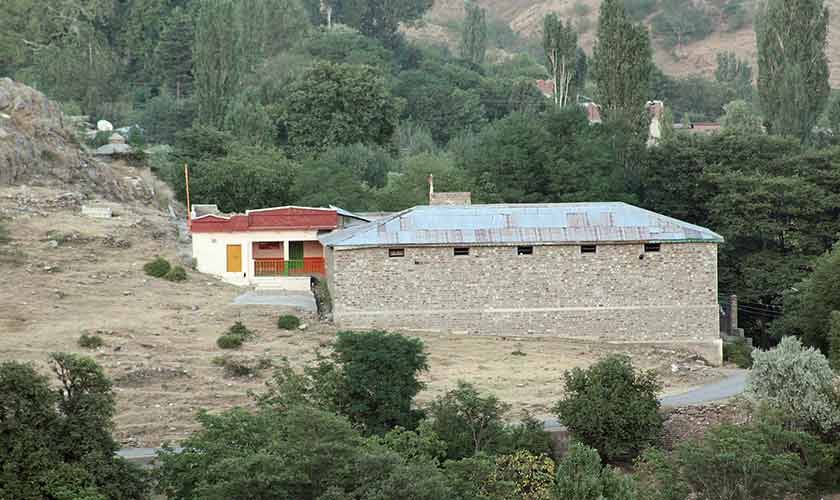
Near Parachinar, in the village of Malana, tucked amid walnut groves and spring-fed streams, an Imambargah and a Sikh Gurdwara stand right next to each other. Their shared wall tells a story older than the conflicts that have scarred this borderland.

“This is Baba Nanak House,” says Barkat Ali, aged 60, the caretaker of the Gurdwara, pointing to the modest building marked by an orange Sikh flag. Inside, a green cloth drapes the Takht, where ceremonial kirpans [daggers] gleam softly in the morning light.

“Sikhs are our brothers. During their festivals, we open our Imambargah doors for them and offer them accommodation. We even provide wood for their cooking,” he adds.

Centuries ago, the Turi tribe, a Shiite Pashtun community in Kurram, donated this very land to the Sikhs and helped build their Gurdwara—a gesture of solidarity that continues to resonate through the village’s stone courtyards and narrow alleys.

Though no Sikh families remain in Malana today, devotees travel from across Pakistan to visit Baba Nanak House, where tradition holds that Guru Nanak, the early 16th-century founder of Sikhism, once stayed.

In nearby Parachinar’s bustling Turi Market, the Singh brothers Mukesh and Rakesh carry that legacy into the present. In their early thirties, the twins run a family spice shop and speak fluent Pashto, dressed in the same shalwar kameez as their Muslim neighbours.

Every Muharram, as Shiite mourners mark the martyrdom of Imam Hussain, the Singhs serve tea, sweet drinks, and baskets of candies to participants.

“This is our way of honouring our friends,” Rakesh says. “Our fathers and grandfathers did it and we will pass it on to our children.”

“Before 2007, Shiite, Sunni, Sikh, Hindu, and Christian neighbours celebrated each other’s festivals,” he continues. “We danced the Attan together at weddings. Those were beautiful days.”

Their Muslim neighbours return the affection. Gul Hassan, a dry fruit vendor, recalls attending the brothers’ weddings and gifting them a traditional sehra, a bridal headdress.

“We share tea, lunch, and life,” he says with a smile.

Kurram once had a thriving Sikh community, with three functioning Gurdwaras and nearly 80 families, before sectarian violence erupted in 2007. Today, only seven families, around 45 people, remain. Many left for larger cities such as Peshawar, Lahore, and Hasan Abdal, seeking safety during years when the main Parachinar-Tal Road remained sealed by conflict.

Yet even in those violent times, Sikh lives were spared. Local Muslim elders ensured safe passage for those who chose to leave.

“During the conflict, the roads were opened and security provided so Sikh families could leave safely,” recalls Mukesh Singh.

Santokh Singh, who migrated to Peshawar, remembers the Parachinar of his youth with fondness.

“Before 2007, Shiite, Sunni, Sikh, Hindu, and Christian neighbours celebrated each other’s festivals,” he says. “We danced the Attan together at weddings. Those were beautiful days.”

Despite the shrinking population, acts of generosity continue to knit the communities together. During Ramadan, Mukesh discreetly distributes food to poor Muslim families, fulfilling the Sikh tradition of charity without seeking recognition.

Local Muslim leaders, too, step forward in times of need. Nazir Hussain, secretary of the Parachinar Shopkeepers Union, often donates to Sikh religious events.

“Whenever the Sikh community asks for help, we provide every possible support,” he says.

Farther west in Tirah Valley, near central Kurram, Bhagat Singh, a shopkeeper with a long white beard wrapped in a dark blue turban, reflects on three centuries of shared history.

“Our families have lived here for 300 years,” he says softly. “These valleys are my home. I was born here and here I will die.”

In a region once synonymous with bloodshed, the quiet companionship of an Imambargah and a Gurdwara offers a different narrative. As the golden light of Speen Ghar falls over Parachinar, it illuminates not just mountains, but a truth often overlooked: that faith, when rooted in respect, can build bridges where politics too often builds walls.
https://www.thenews.com.pk/tns/detail/1346828-faith-friendship-and-quiet-harmony

Covering the basics

Thousands of residents of Farash Town and James Town in the twin cities are celebrating improved access to clean drinking water. In addition to this vital resource, they have also acquired valuable skills such as water reuse and aquifer recharge through rainwater harvesting techniques. These achievements are part of a comprehensive megaproject focused on enhancing water security.

The initiative is a collaborative effort between the World Wildlife Fund (WWF) Pakistan and the Australia-Pakistan Water Security Initiative, an Australian Aid-funded project aimed at strengthening cooperation between Australia and Pakistan on urban water resources management. This megaproject consists of a series of smaller projects, all scheduled to become operational by the end of December and expected to be maintained with active community involvement.

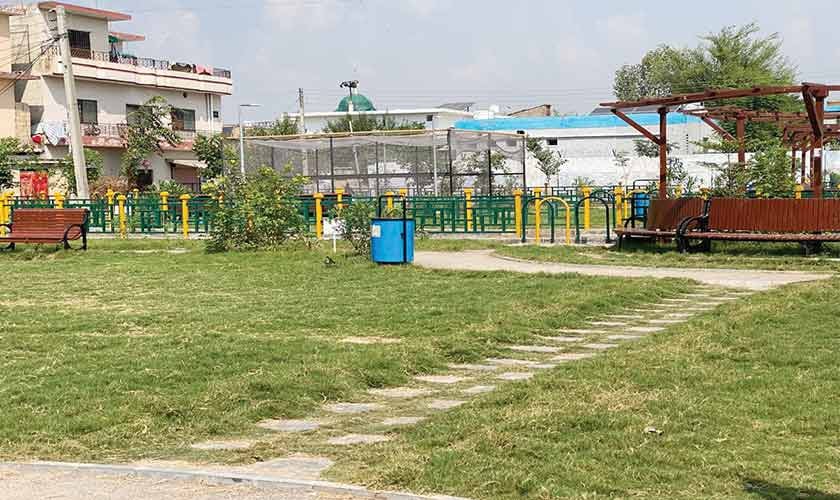
The primary goal of the project is to tailor, adopt, and demonstrate the Water Sensitive Cities approach in Pakistan. Both Islamabad and Rawalpindi are among the cities anticipated to face increasing water scarcity in the coming years. As a pilot, the project focused on two neighborhoods within these twin cities: James Town in Rawalpindi and Farash Town in Islamabad.

James Town is home to over 450 Christian households and has long struggled with acute water shortages. Farash Town, with a population exceeding 20,000, also faces severe water scarcity and declining groundwater levels.

Yasmin Bibi, a resident of Farash Town, shared her experience with The News on Sunday: “Our area had a severe water shortage. The water table had also gone down. With the help of these projects, we were able to recharge the aquifer and get water from filtration plants installed at various places in the town.”

WWF installed seven water filtration plants—five located throughout the neighborhood and two within large local schools—providing clean drinking water to approximately 24,500 people. Remarkably, these filtration plants are maintained by the community itself.

Imran Ali, another resident, described the impact: “This is a blessing for us. Earlier, many families had to travel to the Chak Shahzad government filtration plant to fetch water, often hiring a rickshaw. Now, we have clean drinking water right at our doorstep.”

He added, “Before this project, many who could afford it were selling their properties and moving to other parts of the city due to water shortages. Now, our lives and priorities have changed. It is such a relief not to have to go out of our way for something as basic as water.”

Since its inception in April 2021, the WWF has installed a wide array of infrastructure in both communities. In James Town, these efforts include 275 rainwater harvesting systems (RWHS), six water recharge interventions, two green spaces, three filtration plants (two large, one small), 15 solid waste skips, two rain gardens, and a sewerage system servicing 450 houses.

In Farash Town, WWF implemented 375 rainwater harvesting systems, four ablution water reuse systems, 31 recharge interventions, three green spaces, three communal RWHS, seven filtration plants (five large, two small), four solid waste skips, and two rain gardens.

Farah Nadeem, the project lead, emphasized the importance of such initiatives: “These projects serve as serious demonstrations of sustainable water management models and create much-needed awareness about water security.” She further noted that water security topics have been integrated into the local school curriculum as part of the initiative.

Through this project, WWF-Pakistan has not only improved access to safe water and sanitation for two disadvantaged communities but also enhanced community resilience to climate change and other water-related challenges. Capacity building for key stakeholders on water use and conservation has been another critical outcome.

Pakistan is one of the most water-stressed countries globally, with an average per capita water availability of just 964 cubic meters annually. Scientific studies indicate ongoing depletion of groundwater resources, exacerbating climate change-induced vulnerabilities for millions already suffering from shortages of water, food, health services, and energy security.

This collaborative water security initiative offers hope and a sustainable model for addressing Pakistan’s urgent water challenges, directly benefiting communities in the twin cities and beyond.
https://www.thenews.com.pk/tns/detail/1346830-covering-the-basics

Mumbai: Green Acres CHS Office Bearers Disqualified, Registrar Upholds Orders

The Divisional Joint Registrar of Co-operative Societies, Mumbai, has dismissed a revision application and appeal filed by four members of the Green Acres Co-operative Housing Society, Marol. The order upholds their disqualification from the managing committee and confirms the appointment of an authorised officer to oversee the society’s functioning.

### Orders Upheld

In a common order passed by Divisional Joint Registrar Shahaji Patil, the Deputy Registrar’s orders dated October 18 and October 30, 2023, were upheld. According to these 2023 orders, the Deputy Registrar had disqualified chairman Vinod Patrikar, secretary Sudhir Kasale, treasurer Nilesh Karmaran, and a committee member from holding office for five years under Section 75(5) of the Maharashtra Co-operative Societies (MCS) Act, 1960.

### Appointment of Authorised Officer

Following the disqualification, the Deputy Registrar invoked Section 77(A) of the MCS Act to appoint an authorised officer. This step was necessary as the committee was left without the minimum quorum required to manage the society’s affairs.

### Arguments by Disqualified Members

The disqualified office bearers argued that they had conducted annual general meetings (AGMs) properly and maintained audited accounts with a ‘B’ grade over the past two years. They also claimed there were no irregularities in the day-to-day running of the society and sought to have the orders quashed.

### Registrar’s Findings

However, the Registrar’s office noted that the AGMs held in 2019 and 2022 failed to include statutory agenda items such as annual reports, audit rectification reports, and budget estimates. This omission violated Section 75 of the MCS Act. Additionally, despite earlier disqualifications in 2020 and directions regarding mobile tower revenues under Section 79A, the committee had not complied with the law.

### Final Order by Divisional Joint Registrar

In his order, Divisional Joint Registrar Patil held that the appellants failed to provide a satisfactory explanation or establish valid grounds to overturn the Deputy Registrar’s findings. He stated,
“The Deputy Registrar, after verifying the facts and following due process of law, has rightly passed the impugned orders, which require no interference on my part.”

The decision cements the disqualification of the four members and ensures the continued oversight of the society’s functioning through the appointed authorised officer.
https://www.freepressjournal.in/mumbai/mumbai-green-acres-chs-office-bearers-disqualified-registrar-upholds-orders

Hiking in Lesotho: Remote villages to explore

**Hiking in Lesotho: Exploring Remote Villages**
*By Simran Jeet | Sep 25, 2025, 11:19 AM*

Lesotho, a tiny landlocked kingdom in Southern Africa, is renowned for its stunning landscapes and rich cultural heritage. Its remote villages offer an ideal hiking destination for adventurers seeking an offbeat experience. Winding trails lead through lush valleys, towering mountains, and traditional Basotho communities, allowing hikers to immerse themselves in the unique lifestyle of the locals while enjoying breathtaking vistas.

### Discover Traditional Basotho Culture

Hiking through Lesotho’s remote villages provides a rare glimpse into the traditional Basotho way of life. Locals live in stone houses with thatched roofs and proudly wear colorful blankets as part of their daily attire. Visitors have the opportunity to interact with villagers eager to share their customs and traditions. This cultural exchange fosters a deeper appreciation for the resilience and adaptability of the Basotho people amid modern changes.

### Navigate Scenic Trails

The hiking routes across Lesotho’s countryside vary in difficulty, accommodating all fitness levels from easy walks to challenging treks. These trails traverse lush green valleys, rugged rocky terrain, and offer panoramic mountain views that captivate every nature lover. To ensure a safe and enjoyable journey, hikers should wear comfortable, sturdy shoes and carry plenty of water to stay hydrated throughout their adventure.

### Engage with Local Communities

Connecting with local communities is an essential aspect of hiking in Lesotho. Many villages host community-led initiatives where visitors can participate in traditional activities such as weaving or farming. These experiences not only provide meaningful insight into everyday life but also contribute to supporting local economies through sustainable tourism practices.

### Tip: Preparing for Your Hike

Before setting off on your Lesotho hike, thorough preparation is key. Equip yourself with sturdy hiking boots, weather-appropriate clothing, and a reliable map or GPS device. Hiring a local guide is highly recommended, as they offer valuable knowledge about the region’s history and geography while ensuring your safety along the trails.

Embark on a journey through Lesotho’s remote villages and discover a captivating combination of natural beauty and vibrant culture unlike anywhere else in the world.
https://www.newsbytesapp.com/news/lifestyle/hiking-through-lesotho-a-guide-to-remote-villages/story