Category Archives: environment

Eagle champion Sandy Steers, who fought big developments throughout Big Bear, has died

Southern California has lost a conservation champion. Friends of Big Bear Valley announced the passing of Sandy Steers, a dedicated biologist and the group’s executive director, on Wednesday at the age of 73. The environmental education nonprofit marked Steers’ death “with heavy hearts and great sadness” and has requested time to grieve before sharing additional information.

Steers was a passionate advocate for the Big Bear Valley environment, spearheading numerous conservation projects and standing against developers who sought to build in the area. However, she was perhaps best known for her unwavering commitment to eagle advocacy.

Eagles typically visit Big Bear only in winter to find food when their usual hunting grounds are frozen, according to Friends of Big Bear Valley. That changed in 2009 when a male juvenile eagle from Catalina began nesting in Big Bear during the summer months. Shortly after, a pair of eagles established a nest on the north side of the valley, reinforcing Big Bear’s importance as vital habitat for these majestic birds of prey.

By the fall of 2011, the first bald eagle chick hatched in Big Bear Valley was named Jackie, born to parents Ricky and Lucy. Friends of Big Bear Valley documented and monitored the eagles’ progress and spent two years fundraising and planning their biggest venture: installing live cameras trained on the eagles’ nest.

Thanks to Steers and the nonprofit’s efforts, the local nesting eagles became a sensation. Thousands of fans logged monthly into the camera feed to follow new adults arriving and their offspring’s growth. Jackie, the 2011 hatchling, is now the star of a 24-hour webcam perched 145 feet up in a Jeffrey pine overlooking Big Bear Lake. Alongside her partner, Shadow, Jackie’s life is broadcast live to eagle enthusiasts worldwide.

In 2025, three eaglets were hatched, with two surviving and eventually leaving the nest. This rare inside access, provided by Steers and Friends of Big Bear Valley, kept viewers coming back to witness their daily lives. While other eagle nest cams exist across the country, few attract as much attention.

Jenny Voisard, media and website manager for Friends of Big Bear Valley, credits the unique personalities of Jackie and Shadow, along with the dedication of Steers and the nonprofit’s volunteers, for the eaglets’ fame. Steers, who once volunteered as an eagle counter for the U.S. Forest Service, became a leading authority on Jackie and Shadow.

“She totally fell in love with this eagle,” Voisard said, referring to Jackie.

Roughly 25 years ago, the original anti-development group Friends of the Fawnskin—named after the Big Bear Lake north shore community—was formed to fight a planned residential development. Steers, who had recently moved from the more developed south shore, joined the effort. Many founders of that group transitioned to Friends of Big Bear Valley in the 2010s.

Steers notably led opposition against San Diego businessman Irving Okovita, who sought to build a 132-condominium, 175-slip marina on 12.5 acres of Grout Bay territory on the North Shore in the early 2000s. She was even named in a lawsuit accusing her of blocking the project. The lawsuit eventually died in 2006 along with the development proposal.

While that fight ended unsuccessfully, another development battle saw a different outcome. In September, San Bernardino County supervisors approved a 50-home project called Moon Camp despite concerns that it would eliminate crucial foraging areas for local raptors. The project site is less than a mile from Jackie and Shadow’s nest and is visible from the eagle cam. County officials maintain that Moon Camp underwent “extensive environmental review” and will not harm the eagles.

Bald eagle eggs generally hatch about 50% of the time, but the success rate appeared even lower in Big Bear. The installation of the eagle nest camera aimed to help wildlife experts understand this phenomenon, Voisard explained. A second camera capturing a broader view of the habitat was added in 2021.

Today, a dedicated team of volunteers and contractors monitors Jackie and Shadow around the clock. Some observers are located overseas to provide continuous coverage during U.S. nighttime hours. They meticulously document every nest visitor, every stick and “fluff” delivery, eagle calls, mating behaviors, and all matters related to the eggs.

Friends of Big Bear Valley also maintains a public-facing “eagle log” with regular updates, behavioral analysis, and educational content about the power couple. Steers “believed that balancing storytelling with science was the best way to engage people,” Voisard said. “This was all her vision.”

The eagle fandom has transcended boundaries of nationality, religion, age, and political views. Many schools use the nest cam as an educational tool to introduce children to Jackie and Shadow, while older or disabled viewers gain a virtual connection to nature they might not otherwise experience. Even emergency room workers have tuned in to unwind after stressful shifts.

Beyond her environmental work, Steers was a multi-talented individual. She was a children’s author and screenwriter and held a bachelor’s degree from UCLA, according to her LinkedIn profile. Steers also practiced Neuro-Linguistic Programming (NLP), embraced the Inca tradition of Shamanic Healing, and believed in past lives. Her spirituality deepened after she recovered from Stage 4 cancer using alternative healing techniques, as detailed on her personal website.

Sandy Steers leaves behind a lasting legacy of conservation, education, and inspiration. Her passion for Big Bear Valley’s eagles and the natural world touched thousands, and her work will continue to resonate through the community she loved so deeply. Friends of Big Bear Valley and eagle enthusiasts everywhere mourn her loss and celebrate her remarkable life.
https://www.latimes.com/california/story/2026-02-12/sandy-steers-dies-activist-helped-launch-big-bears-popular-eagle-cam

Gov. Hobbs on Colorado River negotiations: Agreement is not likely by Feb. 14 deadline

PHOENIX — Despite previously expressing confidence that an agreement on Colorado River usage would be reached, Arizona Governor Katie Hobbs now says meeting the February 14 deadline is unlikely.

Hobbs and the other basin state governors met in Washington, D.C., on Friday to discuss the ongoing negotiations. Speaking Monday from the nation’s capital, Hobbs acknowledged the difficulties faced during talks.

“We were clearly at an impasse. I feel like we’re at a place where we can start to move past that now,” Hobbs said. “I think we’ll be on a path to get to a deal—not a deal by February 14, but on February 14, be on a path to get to a deal.”

The governor attributed the slow progress to the challenge of balancing “firm commitments” with what are considered both “voluntary cuts and mandatory cuts.” Regarding Arizona specifically, Hobbs made it clear that the state will not exceed a 27% reduction in river water cuts.

On Friday, Hobbs shared on X that she was “encouraged” by the willingness of upper basin leaders—from Colorado, New Mexico, Utah, and Wyoming—to transform water conservation programs into firm commitments for water savings. The meeting was also notable as the first time all basin state governors were gathered in the same room during the negotiation process.

“Without the federal government exerting some pressure and influence to get to a deal, we are going to continue to be at an impasse,” Hobbs noted. “I think leaders in the U.S. Department of the Interior heard more clearly from us all in this setting. They’ve spoken to us individually but now, with everyone in the same room, we’ve laid out what we all need to reach a deal.”

### Hobbs Reassures Arizona Will Get Its ‘Fair Share’ in Colorado River Agreement

Governor Hobbs emphasized that Arizonans need not fear dramatic impacts to river access. She stressed that her advocacy for the state’s “fair share” aligns with Arizona’s critical role in the semiconductor industry, which remains a priority under the Trump administration.

“We’ll continue to push to make sure that we get our fair share and that those making major investments in Arizona see those investments pay off,” Hobbs said.

She also underscored that litigation is not a desired outcome for any party involved in the negotiations.

“While we didn’t leave this meeting with a lot of specifics, the details are to be worked out in continued negotiation,” Hobbs explained. “Certainly for me, as the governor with the most skin in the game or the most water on the table, I felt more heard by the upper basin states than we’ve seen in the negotiations so far.”
https://ktar.com/arizona-water-news/hobbs-colorado-river-update/5816282/

A lawsuit challenges an Alaska program that allows killing bears as a way to rebuild a caribou herd

JUNEAU, Alaska (AP) — Conservation groups have filed a lawsuit challenging a state program in Alaska that authorizes the killing of brown bears and black bears. The program aims to increase the size of a once-significant caribou herd in the southwest part of the state.

The lawsuit, filed Monday in state court, claims the program lacks a scientific basis and is unconstitutional. It alleges that the program, adopted by the Alaska Board of Game in July, does not require the Department of Fish and Game to monitor bear populations to ensure their numbers remain sustainable. Furthermore, the program allows department employees to shoot bears from helicopters without setting limits on how many bears can be killed within an area roughly the size of Indiana.

Filed by Trustees for Alaska on behalf of the Alaska Wildlife Alliance and the Center for Biological Diversity, the lawsuit names as defendants the state, the Board of Game, the Department of Fish and Game, and the department’s commissioner. A message seeking comment was sent to the Alaska Department of Law, which typically represents state agencies in litigation.

This lawsuit is the latest chapter in an ongoing legal battle over what Fish and Game describes as an effort to restore the Mulchatna caribou herd. Named for its traditional calving grounds, the herd peaked at around 190,000 animals in the late 1990s and served as an important food source for subsistence hunters across dozens of communities.

However, the herd’s population began declining sharply, dropping to about 13,000 caribou by 2019. Hunting has been prohibited since 2021, according to Fish and Game. The department has cited several factors affecting caribou survival, including disease, hunting, food availability and quality, and predation. In this case, the Board of Game determined that predation could be addressed directly.

The board stated it was responding to requests to help rebuild the herd and restore caribou as a regional food source. In a fall newsletter, the department identified bears and wolves as “significant calf predators.” An aerial survey conducted last fall reported the highest recorded ratio of calves to cows in the herd’s western subgroup since 1999, suggesting a “positive response” to the 2023 and 2024 predator control program targeting bears and wolves on calving grounds.

According to the lawsuit, in May 2023, the agency killed “every single brown and black bear it found” within a 1,200-square-mile (3,108-square-kilometer) focus area encompassing the western Mulchatna caribou herd calving grounds. Altogether, in 2023 and 2024, 180 bears—most of them brown bears—were killed.

The Alaska Wildlife Alliance had previously sued to end the program. In March, a judge criticized the adoption process and ruled that the state lacked sufficient data on bear sustainability in the region before implementing the program. Despite this, the board and department moved forward, implementing emergency regulations under which 11 bears were killed before those regulations were struck down by another judge.

Following this, the department announced a public comment process regarding plans to reauthorize the program. Monday’s lawsuit claims the reauthorization plan adopted by the board in July includes elements previously struck down by the courts. The program is authorized to continue through 2028.

Doug Vincent-Lang, commissioner of the Department of Fish and Game, stated after the board’s action, “We were trying to rebuild the caribou herd, but we’re not going to jeopardize long-term sustainability of bears in so doing.” He added there is “strong evidence that neither disease nor nutrition are preventing this herd from recovering,” and that predation “has been isolated as the limiting factor preventing the herd from growing.”

Nicole Schmitt, executive director of the Alaska Wildlife Alliance, voiced concerns about the program, saying it “threatens bears who move across vast stretches of public lands.” Schmitt noted that parts of the area where bears can be killed are near Lake Clark National Park and Preserve, about 30 miles (48 kilometers) from Katmai National Park and Preserve, and near wildlife refuges.

Michelle Sinnott, staff attorney with Trustees for Alaska, characterized the program as unconstitutional. She criticized it for giving Fish and Game “a blank check to destroy bears across an entire region with impunity.” Sinnott added, “The Board of Game has once again shirked its constitutional obligations and ignored prior court decisions in its unscientific and relentless war on predator animals.”
https://ktar.com/national-news/a-lawsuit-challenges-an-alaska-program-that-allows-killing-bears-as-a-way-to-rebuild-a-caribou-herd/5774048/

SHOCK VIDEO: Rome Medieval Tower Partially Collapses During Renovation Works – Rescuers Frantically Trying to Save Worker Who Remains Trapped Under the Rubble

Shock and drama unfolded today as a worker remained trapped under the partially collapsed Torre dei Conti in the heart of Rome. The medieval tower, located near the world-famous Colosseum ruins, suffered structural collapse during ongoing renovation work.

One worker was critically injured, while another became trapped beneath the rubble, prompting a dramatic and complex rescue operation.

The Torre dei Conti, built in the 13th century by Pope Innocent III as a residence for his family, has a long and troubled history. It was previously damaged in a 1349 earthquake and endured subsequent collapses in the 17th century.

Firefighters have been working non-stop to rescue the trapped worker, who has now been beneath the rubble for several hours. According to the Associated Press, rescuers faced significant difficulties as the unstable structure continued to shift. Efforts to reach the worker through a first-floor window were repeatedly forced to retreat due to falling debris and a cloud of smoke.

Attempts to access the worker via two ladders were also aborted, leading the team to deploy a drone to assess the situation safely. As dusk approached, firefighters used a crane and giant suction tubes to remove rubble from the tower’s second-floor window in hopes of reaching the trapped individual.

Earlier in the rescue operation, three workers were successfully rescued unharmed, while one remains hospitalized in critical condition.

Rome’s top law enforcement official, Prefect Lamberto Giannini, provided an update on the situation: “There are signs of life from the trapped worker. Firefighters managed to provide some protective cover during an earlier rescue attempt.” He described the operation as “very complex,” noting that additional equipment was being brought in.

Giannini emphasized the difficulty and risks involved: “It will be a very long operation. We must try to save this person while mitigating the enormous risks to the people who are trying to save him.”

The rescue mission continues, with hope that the trapped operator under the rubble of the Torre dei Conti will be safely recovered.

Stay tuned for further updates on this developing story.
https://www.thegatewaypundit.com/2025/11/shock-video-rome-medieval-tower-partially-collapses-during/

Neglected kitten ignored during rain storm by owners, neighbor rescues her from the cold and considers adopting her furrever: ‘My heart breaks at the thought of that sweet little baby outside in the cold and the rain 24/7’

Cats are incredibly adaptive animals. They truly seem to have nine lives, and their nimble athleticism helps them handle almost any situation they find themselves in.

That being said, there are obvious signs when an animal is being neglected. Sometimes, when you see a parent mistreating their child, you might wonder, “Why did they even have kids?” But what can be even more confusing is witnessing someone treat their pet poorly.

Owning a cat comes with a basic level of responsibility. If an owner isn’t prepared to handle the tasks involved—such as keeping the cat indoors for its safety—then they shouldn’t get a pet at all.

Take the story below as a public service announcement against animal neglect. The protagonist is a woman who has neighbors that own several cats. They adopted a few cats, but all of them live entirely outdoors. This already raises the question: why did they adopt these cats in the first place?

After seeing one of their new kittens left outside in the rain, she decided to take the kitten in and care for it herself.
https://cheezburger.com/43054085/neglected-kitten-ignored-during-rain-storm-by-owners-neighbor-rescues-her-from-the-cold-and

Global Cloud Stands Out with AI and Green Energy

**Global Cloud Stands Out with AI and Green Energy**
*Published on BitcoinEthereumNews.com*

Bitcoin cloud mining has become an increasingly popular way for individuals to earn passive income without the need to purchase expensive hardware or manage complex configurations. As we approach 2025, the market offers a wide variety of cloud mining platforms, each featuring distinct investment plans, profit models, and unique advantages.

In this guide, we take an in-depth look at four leading Bitcoin cloud mining platforms: Global Cloud, HashShiny, KuCoin Pool, and BitMiner. Our comprehensive evaluation focuses on key factors such as profitability, security, ease of use, and service offerings. Notably, Global Cloud stands out as the most innovative and potentially lucrative choice among the options available.

### Global Cloud: The Leading Bitcoin Cloud Mining Platform under UK Regulation

**Visit the [Global Cloud official website](#)**

Global Cloud has rapidly established itself in 2025 as one of the most trusted Bitcoin cloud mining platforms. Headquartered in the UK, the platform operates under full registration and regulation, providing users with enhanced security and transparency.

The core strength of Global Cloud lies in its unique integration of AI-driven mining optimization alongside renewable energy-powered mining farms. This combination creates a sustainable, high-efficiency Bitcoin mining model that maximizes user returns while promoting environmental responsibility.

### Global Cloud Key Features

– **AI Intelligent Optimization:**
Global Cloud leverages advanced AI technology to automatically enhance mining efficiency, aiming to maximize investment returns for every user.

– **Compliance and Trust:**
With full UK registration and regulation, the platform ensures strict protection of investors’ interests, cultivating a trustworthy mining environment.

– **New User Rewards:**
New users enjoy a $100 bonus upon registration, providing an attractive incentive to start cloud mining immediately.

– **Green Energy Mining:**
Mining farms utilize clean energy sources including hydro, wind, solar, and geothermal power, balancing high efficiency with environmental protection.

– **Real-Time Earnings Monitoring:**
Users can conveniently track their profit changes at any time through an intuitive dashboard interface.

By combining cutting-edge technology with a strong commitment to sustainability, Global Cloud is rapidly becoming a leader in the cloud mining sector.

### Global Cloud Mining Plan Contracts

| Contract Name | Contract Amount (USD) | Duration (Days) | Daily Earnings (USD) | Total Earnings (USD) | Daily Rate |
|——————|———————–|—————–|———————|———————-|————|
| Daily Check-in | $100 | 1 | $1.50 | $1.50 | 1.5% |
| Novice Contract | $200 | *Details Coming* | *Details Coming* | *Details Coming* | *TBD* |

*Additional contract details and plans are available on the Global Cloud platform.*

With its innovative approach to mining optimization and dedication to green energy, Global Cloud offers a compelling option for anyone interested in Bitcoin cloud mining. Whether you’re a newcomer or an experienced miner, Global Cloud’s combination of security, profitability, and sustainability makes it a top contender in the cloud mining arena.

*Disclaimer: Cryptocurrency mining involves inherent risks. Please conduct thorough research and consider all risks before investing.*
https://bitcoinethereumnews.com/tech/global-cloud-stands-out-with-ai-and-green-energy/?utm_source=rss&utm_medium=rss&utm_campaign=global-cloud-stands-out-with-ai-and-green-energy

Prescribed burn planned at Sedgwick Reserve in November

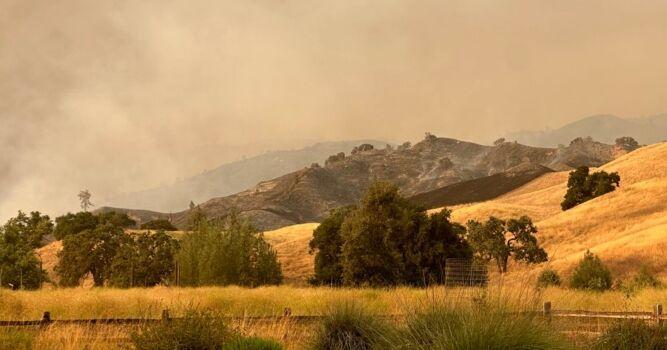
Efforts to restore what was lost to the Lake Fire are underway at Sedgwick Reserve. The fire charred approximately 3,000 acres of the conservation and education facility, impacting habitats, wildlife, trees, research plots, cameras, and other vital resources.

Despite the extensive damage, restoration teams are committed to rehabilitating the affected areas and preserving the reserve’s important ecological and educational functions.

Stay informed with the latest updates by signing up to receive headlines directly in your inbox!

| Local Sports | Daily Headlines | Local Obituaries | Weather | Local Offers |
https://santamariatimes.com/news/local/prescribed-burn-planned-at-sedgwick-reserve-in-november/article_f1e651f5-ffb0-4849-8aec-672e66e4eeba.html

NYC sidewalk shed that earned ‘worst’ award taken down after nearly 20 years – and locals are throwing a ‘party’

The owner of an Upper West Side apartment building finally removed its longtime sidewalk shed Monday after nearly two decades, and neighbors are shedding no tears.

The infamous green blight at 51 West 86th St. was even awarded the title of the Worst Sidewalk Shed on the West Side at Senator Brad Hoylman-Sigal and Assemblymember Micah Lasher’s inaugural “Sheddie Awards” this spring.

“It’s been up for a very long time, so the building’s very excited,” resident Omet Hit told The Post. The 31-year-old tech worker added, “There’s so much of it,” referring to the scaffolding that covers much of the Upper West Side. “Then it’s like a whole new world when it’s finally gone.”

“Now it’s so exciting. It’s so beautiful, it’s so open,” Hit said. “It’s like a new breath of fresh air. We had champagne already… but I think there’s going to be a party.”

“We’re organizing a big party,” confirmed another building resident who declined to share her name. “It’s a disease in this city—scaffolding—and there’s more of it there [across the street]; ours was up the longest.”

An 11-year resident of the building added, “I was actually gone for the Jewish holidays for a full month, and I had to come around again because I just didn’t recognize the building. It’s great. I think everybody’s going to be happier, and it’s nice and clean.”

The scaffolding and netting that had covered the area since 2020 came down four months ago, the West Side Rag first reported. The building’s notorious shed was erected in 2006. It is owned by Weinreb Management, which did not return a request for comment on Thursday.

In 2022, Weinreb Management was sued by the city for hundreds of building violations, including fire safety issues and “failing to correct hazardous facade defects,” following a tragic fire at another Weinreb-owned building in the Bronx that killed 17 residents.

According to the lawsuit, “Defendants have displayed a pattern of failing to correct hazardous façade defects at their buildings: rather than taking corrective action, Defendants have allowed their buildings to deteriorate to the point where they pose an imminent threat to the health and safety of the tenants and the public.”

The 51 West 86th St. building was issued two violations cited in the 2022 lawsuit, including faulty sprinklers and alarm systems, as well as missing fire extinguishers.

This litigation was part of the city’s Long Standing Sheds program, which sought to compel owner Jacob Weinreb “to make needed repairs across 11 of their buildings, several of which had long-standing sidewalk sheds,” a Department of Buildings (DOB) representative told The Post.

Weinreb Management has been “making progress on these repairs and have already resolved hundreds of open violations across their portfolio of buildings,” the DOB confirmed, including the façade repairs finally made to 51 West 86th St.

“Through an affirmative litigation case brought by our partners at the Law Department, we were able to compel the owners of this property to finally make needed façade repairs and return the valuable sidewalk space in front of the building back to the public,” said Buildings Commissioner Jimmy Oddo.

Longtime resident Ellen expressed mixed emotions: “Everybody’s so happy, and everybody is so mad that it took this long. I’m very grateful that the city sued because that’s what really got things going… and after that, I think Weinreb Management company had no choice but to respond, obviously, and they did. I hope it’s a model.”

The oldest current sidewalk sheds in New York City date back to 2010 and can be found at a pair of apartment buildings in Yorkville and the East Village, according to a Post analysis of Buildings records. They are part of 10 buildings across the city that still have scaffolding at least a decade old.

“It’s [scaffolding] clearly out of hand,” added the unnamed 11-year resident of 51 West 86th St. “The city’s beautiful, and I hope we can see more of it.”
https://nypost.com/2025/10/23/us-news/nyc-sidewalk-shed-that-earned-worst-award-taken-down-after-nearly-20-years-and-locals-are-throwing-a-party/

Roundabouts in Keene Help Cut Emissions and Air Pollution

Despite its small stature, the city of Keene has emerged as a notable example of the safety and climate benefits that come with replacing traditional traffic lights with roundabouts.

By swapping out traffic signals for roundabouts, Keene has improved traffic flow, reduced congestion, and enhanced road safety for both drivers and pedestrians.

Additionally, the city has seen environmental advantages, including decreased vehicle emissions and lower fuel consumption, contributing positively to climate goals.

Keene’s experience demonstrates how even smaller cities can lead the way in creating safer, greener transportation systems through innovative infrastructure changes.
https://www.nytimes.com/2025/10/21/climate/roundabout-auto-emissions-new-hampshire.html

Look: Blueberries create sticky traffic jam on California highway

Oct. 21 (UPI) — The California Highway Patrol (CHP) has issued a warning to travelers in the Fresno area about a “berry sticky situation” on the road.

A truck lost its load of blueberries on Monday evening, causing a spill in the southbound lanes of Highway 99 near the eastbound Highway 180 interchange.

CHP Fresno took to social media to share photos showing the blueberries scattered across the roadway, as well as the sticky, purple mess created when vehicles ran over the berries.

To address the issue and prevent traffic disruptions, a California Department of Transportation crew was dispatched to the scene to clear the blueberry jam from the highway.

Drivers in the area are advised to use caution and expect possible delays as cleanup efforts continue.
https://www.upi.com/Odd_News/2025/10/21/California-Highway-Patrol-Fresno-blueberry-spill-Highway-99/7131761058198/