Bucks’ Kyle Kuzma exits Raptors game with ankle injury

Kyle Kuzma suffered an injury during Friday night’s matchup between the Milwaukee Bucks and Toronto Raptors.

Kuzma is now in his second season with the Bucks, which began this past Wednesday. He joined Milwaukee after being acquired from the Washington Wizards in exchange for Khris Middleton.

In Friday’s game, Kuzma came off the bench and played 18 minutes before sustaining the injury. The incident occurred in the first minute of the fourth quarter when he landed on an opposing player’s foot. He immediately limped off the court and headed to the locker room.

NBA insider Brett Siegel later reported that the veteran forward would miss the remainder of the game. “Bucks say Kyle Kuzma has a left ankle sprain and will miss the remainder of tonight’s game against the Raptors,” Siegel wrote.
https://clutchpoints.com/nba/milwaukee-bucks/bucks-news-kyle-kuzma-exits-raptors-game-ankle-injury

Tyrese Haliburton Wows Coach Rick Carleslie With Surprise Dunk as Pacers Star Mirrors Jayson Tatum’s Achilles Rehab Flex

Indiana Pacers star Tyrese Haliburton is set to miss the entire 2025-26 NBA season due to a serious injury.

Haliburton is currently recovering from a torn Achilles tendon, which will sideline him for the duration of the upcoming season.

This news is a significant setback for the Pacers as they look ahead to the challenges of the next NBA campaign. Fans and teammates alike will be eagerly awaiting his return to the court.
https://www.sportskeeda.com/basketball/news-tyrese-haliburton-wows-coach-rick-carleslie-with-surprise-dunk-pacers-star-mirrors-jayson-tatum-s-achilles-rehab-flex

EA FC 26 Ultimate Team: Guide to build Bayern Munich Past and Present squad

Building a Bayern Munich Past and Present squad requires a combination of the club’s greatest legends with current-day stars. The club’s history is filled with world-class talent that shaped European football, and this team setup reflects that dominance. Bayern Munich Past and Present is a mix of icons, heroes, and active players who represent different eras of Bayern’s success.

In this article, we’ll explore the best formation, player roles, tactical setup, and the estimated squad cost for this Ultimate Team lineup.

### Best EA FC 26 Ultimate Team Formation and Tactics for Bayern Munich Past and Present Squad

The **4-2-3-1(2)** formation perfectly fits Bayern’s attacking philosophy. This formation was also famously used by Hansi Flick during his tenure at the Bundesliga club. The tactical setup features fullbacks pushing high to support the attack while a double pivot provides stability and control during transitions.

The CAM (Central Attacking Midfielder) and wingers cut inside, creating an overload in central areas. This tactic gives the striker constant support and multiple goal-scoring options, making the team highly effective in the final third.

#### Formation: 4-2-3-1(2)
– **Build-Up Style:** Balanced
– **Defensive Approach:** High Line
– **Height:** 60

#### Player Roles and Focus
– **GK:** Sweeper Keeper (Build-Up)
– **LB:** Attacking Wingback (Attack)
– **LCB:** Ball-Playing Defender (Build-Up)
– **RCB:** Stopper (Balanced)
– **RB:** Inverted Wingback (Build-Up)
– **LCDM:** Deep-Lying Playmaker (Build-Up)
– **RCDM:** Box Crasher (Balanced)
– **LM:** Inside Forward (Attack)
– **CAM:** Shadow Striker (Attack)
– **RM:** Inside Forward (Attack)
– **ST:** Poacher (Attack)

### Bayern Munich Past and Present Squad Cost in Ultimate Team

The starting XI for the Bayern Past and Present squad combines creativity, strength, and experience—making it ideal for both competitive and casual play. The core lineup is estimated to cost around **7.53 million FC coins**.

Additionally, the squad features a quality bench costing approximately **1.25 million FC coins**, which adds depth and flexibility across all positions.

**Total Estimated Cost:** Around **8.8 million FC coins**

While this squad comes with a high price tag, it offers one of the most competitive teams available in the game.

### Why Choose the Bayern Munich Past and Present Squad?

This Ultimate Team squad delivers a perfect balance of power, technique, and nostalgia. It is a costly build but performs exceptionally well across all game modes. For players who want to honor Bayern Munich’s rich history while leveraging present-day quality, this squad is one of the best club-themed teams in EA FC 26 Ultimate Team.

### Related EA FC 26 Articles:
– [EA FC 26 Ultimate Team: Guide to Build the Chelsea Past and Present Squad](#)
– [EA FC 26 Ultimate Team: Guide to Build Manchester United Past and Present Squad](#)
– [EA FC 26 Ultimate Team: Guide to Build the AC Milan Past and Present Squad](#)
– [EA FC 26 Ultimate Team: Guide to Build Real Madrid Past and Present Squad](#)

Stay tuned for more tips and squad builds to dominate EA FC 26 Ultimate Team!
https://www.sportskeeda.com/esports/ea-fc-26-ultimate-team-guide-build-bayern-munich-past-present-squad

“Classic baby-faced killer”: CFB insider makes eye-catching remarks about Alabama QB ahead of South Carolina faceoff

Ty Simpson is earning plaudits in his first season as the starting quarterback for the Alabama Crimson Tide.

His impressive performance on the field has caught the attention of fans and analysts alike, highlighting his potential as a key player for the team.

As Simpson continues to develop and adapt to the demands of college football, expectations remain high for his growth and contribution to Alabama’s success this season.
https://www.sportskeeda.com/college-football/classic-baby-faced-killer-cfb-insider-makes-eye-catching-remarks-alabama-qb-ahead-south-carolina-faceoff

CSU Theatre Students Present Cherryfield Toy Company: An Immersive Mystery Experience

By North Forty News Staff | NorthFortyNews.com

An interactive, student-created theatre experience invites audiences to uncover the haunting secrets of the Cherryfield Toy Company.

FORT COLLINS — Step into a world of intrigue and imagination as Colorado State University theatre students present *Cherryfield Toy Company*, a one-of-a-kind immersive production directed by Saffron Henke.

Performances run October 24, 25, 29, 30, 31, and November 1, with matinees on October 25, 26, and November 2. All shows take place at the University Center for the Arts, 1400 Remington Street in Fort Collins.

This interactive experience places audience members at the center of a mystery as the secrets of the Cherryfield Toy Company unfold through the memories of its heiress, Emily Cherryfield. Written and designed entirely by CSU theatre students, the show combines storytelling, movement, and atmosphere in a 50-minute adventure unlike any traditional play.

Guests will move through confined, ADA-compliant spaces as the narrative unravels around them. Evening performances feature limited seating, with 24 tickets available per time slot from 6:50 to 9:20 p.m. Matinee sessions run between 1:50 and 3:20 p.m.

Tickets often sell out quickly, so early purchase is encouraged.

For more information or to purchase tickets, contact the University Center for the Arts Box Office at 970-491-2787 (open Monday–Friday, 3:30–5:30 p.m.) or email boxoffice@universitycenterforthearts.edu.
https://northfortynews.com/category/art-lifestyle/csu-theatre-students-present-cherryfield-toy-company-an-immersive-mystery-experience/

Single-Family-Owned 1991 Acura Legend LS Coupe at No Reserve

This 1991 Acura Legend LS coupe was originally purchased new by the seller’s grandfather through Stevens Creek Motors of Santa Clara, California. The current owner acquired the vehicle in September 2025.

The car shows 74,000 miles, with a documented registration history in California since new. It is finished in a striking Golden Glow Pearl exterior complemented by an Ivory leather interior.

Under the hood, the Legend is powered by a 3.2-liter V6 engine paired with a smooth four-speed automatic transaxle. Notable features include a sunroof, a rear spoiler, 15-inch seven-spoke alloy wheels, power-adjustable front seats, a premium Bose sound system, cruise control, and automatic climate control.

This well-maintained Legend coupe is now offered for sale at no reserve. Included with the vehicle are the original window sticker, owner’s manual, service records, a clean Carfax report, and a clean California title in the seller’s name.

Don’t miss the opportunity to own this classic example of Acura’s early ’90s luxury and performance.
https://bringatrailer.com/listing/1991-acura-legend-44/

President Donald Trump says a Canadian ad misstated Ronald Reagan’s views on tariffs. Here are the facts and context.

WASHINGTON — President Donald Trump pulled out of trade talks with Canada Thursday night, furious over what he called a “fake” television ad from Ontario’s provincial government. The ad quoted former U.S. President Ronald Reagan from 38 years ago, criticizing tariffs—Trump’s favorite economic tool.

The ad features audio excerpts from an April 25, 1987, radio address in which Reagan said: “Over the long run such trade barriers hurt every American worker and consumer.”

Trump attacked the ad on Truth Social Friday, posting: “CANADA CHEATED AND GOT CAUGHT!!! They fraudulently took a big buy ad saying that Ronald Reagan did not like Tariffs, when actually he LOVED TARIFFS FOR OUR COUNTRY, AND ITS NATIONAL SECURITY.”

The Canadian premier has since said he will pull the ad that prompted Trump to end trade talks with his country.

### Reagan Foundation Condemns Ad

The Ronald Reagan Presidential Foundation and Institute criticized the ad on X Thursday night, posting that it “misrepresents the ‘Presidential Radio Address to the Nation on Free and Fair Trade’ dated April 25, 1987.” While Trump called the ad fake, Reagan’s words were real—but context is missing.

### The Facts Behind Reagan’s Stance

Reagan, who held office during a period of growing concern over Japan’s rising economic power, made the address a week after imposing tariffs on Japanese semiconductors. He was attempting to explain this decision, which seemed at odds with his reputation as a free trader.

Reagan did not, in fact, love tariffs. He often criticized government policies—including protectionist measures such as tariffs—that interfered with free commerce. Much of his 1987 radio address outlined the case against tariffs.

He said:

> “High tariffs inevitably lead to retaliation by foreign countries and the triggering of fierce trade wars. The result is more and more tariffs, higher and higher trade barriers, and less and less competition. So, soon, because of the prices made artificially high by tariffs that subsidize inefficiency and poor management, people stop buying. Then the worst happens: Markets shrink and collapse; businesses and industries shut down; and millions of people lose their jobs.”

### Reagan’s Complex Trade Policies

However, Reagan’s policies were more complicated than his rhetoric. In addition to taxing Japanese semiconductors, he imposed levies on heavy motorcycles from Japan to protect Harley-Davidson. He also pressured Japanese automakers into accepting “voluntary” limits on their exports to the United States, encouraging them to establish factories in the American Midwest and South.

He further pressured other countries to devalue their currencies to help make American exports more competitive globally.

Robert Lighthizer, a Reagan trade official who served as Trump’s top trade negotiator from 2017 to 2021, wrote in his 2023 memoir that “President Reagan distinguished between free trade in theory and free trade in practice.”

In 1988, an analyst at the libertarian Cato Institute declared Reagan “the most protectionist president since Herbert Hoover, the heavyweight champion of protectionists.”

Despite this, Reagan was no trade warrior. Discussing his semiconductor tariffs in the April 1987 radio address, he said he was forced to impose them because the Japanese were not living up to a trade agreement and that “such tariffs or trade barriers and restrictions of any kind are steps that I am loath to take.”

### Trump’s Tariff Approach

Trump, on the other hand, has no such reticence. He argues that tariffs can protect American industry, bring manufacturing back to the United States, and raise money for the Treasury.

Since returning to the White House in January, he has slapped double-digit tariffs on almost every country and targeted specific products including autos, steel, and pharmaceuticals. The average effective U.S. tariff rate has risen from around 2.5% at the start of 2025 to 18%—the highest since 1934—according to the Budget Lab at Yale University.

Trump’s enthusiastic use of import taxes has earned him the nickname “Tariff Man.” However, his approach has drawn challenges from businesses and states, claiming he overstepped his authority.

The Constitution gives Congress the power to levy taxes, including tariffs, though over time lawmakers have gradually ceded considerable authority over trade policy to the White House. The Supreme Court is set to hear arguments in this case early next month.

### Trump’s Claim on Canadian Ad

Trump claimed Thursday that the Canadian ad was intended “to interfere with the decision of the U.S. Supreme Court, and other courts.”
https://www.chicagotribune.com/2025/10/24/trump-canadian-ad-tariffs-explainer/

The NYC mob is in the news, but it’s a pathetic shell of what it used to be, full of ‘stunads’ that would make Tony Soprano blush: sources

**La Dope-a Nostra: How the New York City Mob Has Faded into a Shadow of Its Former Self**

The New York City mob is a far cry from the powerhouse it once was, now reduced to a pitiful shell full of small-time crooks, rats, and dimwits, according to law enforcement sources and experts. John Gotti, the notorious mob boss, would surely roll in his grave over how weak and brainless the Big Apple’s five families have become.

With a no-killing approach meant to keep them under the radar, each family now consists of only about 100 to 250 members, the sources revealed. “The mob is so watered down now,” said a longtime law enforcement official, speaking after a mafia-linked NBA gambling bust and a garbage scheme plea deal thrust La Cosa Nostra back into the headlines over the past week.

“Today they are letting car thieves in. In the old days, most made men had to do a [murder] hit. And if not, they had to be big earners,” the source explained. “Today it is slim pickings.”

### The Five Families: Reduced but Still Operating

The Big Apple’s infamous “five families” — Bonanno, Colombo, Gambino, Genovese, and Lucchese — still largely profit from gambling, loan sharking, and extortion schemes. However, their wise guys are “nowhere near as rich as their predecessors,” the source said.

“You still have some guys who don’t want to get up and go to work in the morning [who are] looking for get-rich-quick schemes. Problem is, they’re not as smart or as tough as their predecessors,” the source added. These modern-day mafiosi are more likely to flip on their accomplices, further weakening the organization.

“They are a shell of themselves, but they still exist,” he said, referring to the crime families. “You still have to be Italian, that is about the only thing that hasn’t changed in 100 years, except if you’re a son of John Gotti.”

### A Laughable Legacy

Asked about the current state of the mob, another law enforcement insider scoffed, “Don’t make me laugh.”

“If these guys were around in the old days, I wouldn’t even ask them to get me a cup of coffee because they would mess up the order,” he said. “If you did a job with them, if they didn’t screw it up, they would rat you out if they got caught.”

### From Family to Business: The Changing Culture

Experts say the mob’s new culture fuels more rats and plea deals. “For the old-time guys, mafia was a way of life, it was family. For guys today, it’s just a way to make money,” said mafia expert George Anastasia, author of *The Goodfellas Tapes* and *Mobfather*.

“It has an impact when you’ve got an investigation and someone gets jammed up. It becomes, ‘Am I gonna be a stand-up guy and go to jail or am I going to cooperate [with feds]?’” Anastasia explained. He covered organized crime at the Philadelphia Inquirer for nearly four decades and was once placed on a hit list by Philly mobster John Stanfa.

Today’s mob is “scraping the bottom of the gene pool” for made men because second- and third-generation Italian Americans have more opportunities, and anyone with a brain can make money legally, Anastasia said.

### The Current Mob Leadership

Law enforcement sources identify the alleged New York City mob leaders as:

– Theodore “Teddy Boy” Persico, reputed head of the Colombo family
– Michael “Big Mike” DeSantis, reputed head of the Lucchese family
– Barney Bellomo, reputed head of the Genovese family
– Mike “The Nose” Mancuso, reputed head of the Bonanno family
– Lorenzo Mannino, reputed head of the Gambino family

All five reputed bosses are currently out of prison.

Persico, a nephew of former mob boss Carmine “The Snake” Persico, pleaded guilty to a labor union extortion plot in July 2023. DeSantis, of Brooklyn, became the new acting boss of the Lucchese family after taking over from Bronx-based Matthew “Matty” Madonna in 2019.

Mancuso was sent to prison for 11 months in July 2023, partly due to a phone conversation with an alleged fellow wiseguy about making pasta “gravy,” after serving a decade behind bars for signing off on a murderous hit. Mannino is a former capo about whom little is known.

The Gambino and Genovese families have roughly 200 to 250 members each, while the other three families have about 100 to 150 members. They continue to rake in money through traditional crime schemes that have persisted for decades, Anastasia said.

### Still Italian, Still Earning

The New York City mob has very rarely “bent the rules” to admit non-Italians, but “more important than being Italian is are you an earner,” insiders note.

Meanwhile, mafia expert Jerry Capeci observes that the New York City mafia has become less murderous over the past two decades.

“The big difference between the mob today and 20 years ago is they have stopped killing people — that’s a big deal,” said Capeci, who runs the website Gang Land News. Ending murders reduces federal scrutiny, making it less likely the mob will be aggressively targeted.

“[But] there’s still almost nothing they can’t do to make a buck,” he added.

Despite their diminished power and influence, New York’s five families continue to exist, adapting to a new era while clinging to some of their old traditions. But as insiders admit, the once fearsome La Cosa Nostra is now little more than a shadow of its legendary past.
https://nypost.com/2025/10/24/us-news/the-nyc-mob-is-a-pathetic-shell-of-what-it-used-to-be-full-of-small-time-crooks-rats-and-dimwits-sources/

Sports betting guru ‘Sugar’ caught with one-way ticket to Colombia in bizarre prelude to explosive NBA gambling case

A sports-betting guru caught up in the explosive NBA gambling scandal attempted to flee the country in January with $10,000 and a one-way ticket to Colombia, court papers reveal. Shane “Sugar” Hennen, 40, was apprehended at Las Vegas’ Harry Reid International Airport as federal authorities closed in on a separate point-shaving case involving him and former NBA player Jontay Porter.

The point-shaving scheme, detailed in court documents, served as a prelude to the stunning twin indictments unveiled on Thursday. The feds accused Hennen, a convicted felon known for flaunting his gambling wins on Instagram, of masterminding a plan in which Porter would fake injuries to pull himself out of games, allowing them to place lucrative bets.

Porter eventually pleaded guilty in the game-rigging scandal and was banned from the NBA. Meanwhile, after his failed attempt to flee, Hennen entered into plea negotiations in that case.

What initially appeared to be an isolated affair unraveled into a much wider gambling probe. On Thursday, authorities arrested 31 individuals, including wiseguys from four Mafia families, Portland Trail Blazers head coach Chauncey Billups, Miami Heat guard Terry Rozier, and former NBA player Damon Jones.

Hennen faces charges in both indictments—covering illegal sports betting and rigged poker games. According to court documents, he allegedly supplied cheating technology, such as card-shuffling machines altered to digitally read the cards in the deck, which was used in the crooked poker games.

The sports betting indictment also details how Hennen placed bets based on Porter’s fake injuries. More explosively, it alleges that Terry Rozier, who had been previously cleared by the NBA after a probe into unusual betting activity, told conspirators he would pull himself out of a 2023 game with an injury.

Hennen reportedly directed a network of bettors who wagered $200,000 on Rozier’s underperformance. The indictment states:

“Rozier’s early exit from the March 23 game and his related underperformance relative to his season averages for points, assists, and three-pointers resulted in the success of numerous fraudulent wagers placed on Rozier’s unders by the defendants and their co-conspirators.”

This sprawling scandal has rocked the NBA and highlighted the growing challenges authorities face in combatting illegal sports gambling and game manipulation.
https://nypost.com/2025/10/24/us-news/sports-betting-guru-sugar-caught-in-prelude-to-nba-gambling-case/

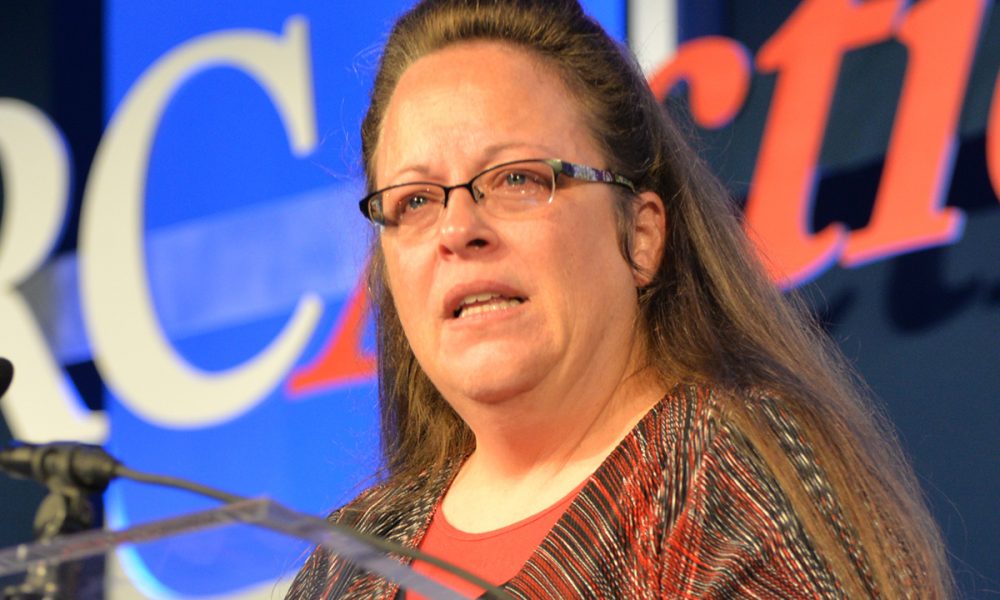
Kim Davis seeks Supreme Court review in challenge to marriage equality

**U.S. Supreme Court Considers Kim Davis’s Challenge to Same-Sex Marriage, While Conversion Therapy Case Sparks National Debate**

The U.S. Supreme Court is set to consider whether to hear Kim Davis’s latest challenge to same-sex marriage—a case that, if accepted, could have major implications for LGBTQ rights in the United States.

Kim Davis, the former county clerk for Rowan County, Kentucky, made national headlines in 2015 when she defied federal court orders by refusing to issue marriage licenses to same-sex couples and later, to any couples at all. Davis, a Pentecostal Christian, said that signing same-sex marriage licenses would violate her religious beliefs, claiming protection under the First Amendment.

When questioned at the time, Davis told reporters she was acting “under God’s authority” and suggested couples could obtain licenses in other counties. Her refusal came just weeks after the Supreme Court’s landmark decision in *Obergefell v. Hodges*, which guaranteed same-sex couples the constitutional right to marry under the Due Process and Equal Protection Clauses of the Fourteenth Amendment.

One of the couples who sought a license from Davis, April Miller and Karen Roberts, filed a federal lawsuit (*Miller v. Davis*) challenging her actions. Around the same time, another couple, David Moore and David Ermold, also sued after Davis again refused to issue them a license despite a court order directing her to do so.

In Kentucky, marriage licenses bore the county clerk’s name and title—something Davis argued forced her to personally endorse a practice she found morally objectionable. It wasn’t until the state legislature changed the law in 2016, removing clerks’ names from marriage licenses, that Davis and her deputies resumed issuing them.

In 2023, a federal jury awarded Moore and Ermold $50,000 each in damages for Davis’s repeated refusals. Davis appealed the decision, but the 6th U.S. Court of Appeals upheld the verdict earlier this year. The court ruled that Davis’s actions were not protected by the First Amendment because she was acting in her official capacity as a government official, not as a private citizen.

“The Bill of Rights would serve little purpose if it could be freely ignored whenever an official’s conscience so dictates,” the court wrote, emphasizing that personal religious opposition cannot be translated into public policy.

Davis has now asked the Supreme Court to take up her case. Her petition, filed in August, argues that *Obergefell* “has no basis in the Constitution” and should be reconsidered. The justices are scheduled to review her petition in a private conference on November 7, where they will decide whether to grant the case a full hearing.

Whether the court will take the case depends on whether at least four justices vote to hear it. Even if there are four votes to grant review, legal observers note that the justices would likely avoid taking up the case unless they are confident there is a fifth vote to overturn *Obergefell*.

Mathew Staver, Davis’s attorney, told *Newsweek* that *Obergefell* “has no basis in the Constitution” and could be overturned “without affecting any other cases.” Legal experts, however, see such an outcome as unlikely.

According to SCOTUSblog, while the case raises important questions about religious liberty and government authority, it centers on Davis’s personal liability rather than a direct challenge to the constitutionality of same-sex marriage itself. Still, the case has reignited debate over the balance between religious freedom and LGBTQ rights—and whether the Supreme Court’s conservative majority might be open to revisiting one of its most significant civil rights decisions of the 21st century.

### Conversion Therapy Case Ignites Passion as Supreme Court Hears Arguments

As the United States Supreme Court heard oral arguments in *Chiles v. Salazar* last week—a case that could overturn bans on conversion therapy in more than 20 states and the District of Columbia—a group of conversion therapy survivors gathered in Washington, D.C., to support one another and ensure their experiences are not ignored.

Members of the Conversion Therapy Survivor Network (CTSN), a nonprofit providing a safe, non-therapeutic space for survivors nationwide, began their day on the steps of the Supreme Court. The small but dedicated group of protesters held signs, waved Pride flags, and shared stories of survival. They were joined by representatives from the Born Perfect Campaign, the Human Rights Campaign, and The Trevor Project—the LGBTQ suicide prevention nonprofit that has worked to save queer lives since 1998.

The case centers on whether parents have the constitutional right to subject their children to conversion therapy under the First Amendment’s protection of religious freedom. Dozens of states have banned the practice, citing overwhelming evidence that it does not change sexuality or gender identity and often leads to long-term psychological harm.

Survivors of conversion therapy are at significantly higher risk of depression, anxiety, and suicide, according to every major U.S. medical association—including the American Psychiatric Association, the American Psychological Association, and the American Medical Association—all of which have disavowed the practice.

Kaley Chiles, a Christian therapist from Colorado, brought the case after arguing that Colorado’s 2019 law banning conversion therapy for minors violates her First Amendment rights. Chiles, who offers what she describes as “religiously informed care,” contends that the law restricts her ability to counsel clients in accordance with “biblical understandings of sexuality and gender.”

During oral arguments, the Supreme Court’s conservative majority appeared sympathetic to her claim that the law constitutes “viewpoint discrimination.” Justice Samuel Alito went so far as to say the ban represented “blatant viewpoint discrimination,” signaling that the court may be willing to expand First Amendment protections to cover conversion therapy.

For survivors gathered just blocks away, that prospect was devastating.

Following the hearing, CTSN held a vigil and celebration at As You Are, an LGBTQ bar and café in Southeast D.C. that has become a haven for the queer community. On the bar’s second floor, posters from the protest were propped against the wall—bearing messages such as “I refuse to hate myself for your comfort” and “Conversion therapy hurts kids, hurts families, hurts faith”—as two phones livestreamed survivors’ stories on TikTok.

The testimonies were both wrenching and cathartic. The group began with a moment of silence for those who did not survive their experiences with conversion therapy, setting the tone for the urgent need to end the practice.

Tears welled in the audience and among speakers as they shared how conversion therapy had scarred—and in some cases nearly destroyed—their lives.

“Since when is the freedom of religion more important than ‘do no harm?’” one survivor asked, encapsulating the frustration that ran through the room.

Curtis Lopez-Galloway, founder and president of CTSN, emphasized that the only way to end conversion therapy is through awareness. “The one way we’re going to defeat conversion therapy is by education,” he said before sharing his own story. “The more people that know about the harms, the less likely they are to take their children—or themselves—into it.”

Their commitment to breaking the cycle of harm echoed throughout the afternoon. Survivors from across the LGBTQ spectrum—gay, trans, and asexual—shared their experiences of rejection, isolation, and recovery.

Cairn, who once trained as a youth minister, recalled how their church’s teachings were weaponized against them. “We prayed for the gay to go away,” they said. “The Bible was used as a weapon to make me submissive to the normal gender roles I was destined to fill.”

They remembered being instructed on how to “walk like a lady” to suppress their masculinity. “I was advised how to walk like a lady because I have swagger. I still do,” Cairn added with a small smile, drawing laughter and applause from the crowd.

But the damage ran deep. “That year in Bible school ended my career as a youth minister—but it also ended my personal faith in God,” Cairn said. “When you are told repeatedly that you’re going to hell if you choose this lifestyle, it starts to take a toll on you.”

Years later, they found affirming pastors and began rebuilding their life. “After 35 years,” Cairn said, “I started to live my life unashamed.”

Other speakers shared stories of lives fragmented by fear.

“I lost 20 years of my life,” said Gwen Brossard, a queer and nonbinary person living in California. “It’s hard to settle with the enormity of the grief.”

“The inner conflict and continual effort of examining my attractions while trying to counter them left me emotionally and physically exhausted,” she said. “The therapy radically altered the trajectory of my life. I felt adrift, severed from my previous sense of meaning and belonging.”

For Al Linkskoog, a gay man who subjected himself to the practice due to the insurmountable pressure he felt from societal rejection, conversion therapy’s toll was both spiritual and psychological. “They told me I was broken,” he said. “It’s an interesting, although bogus, way of trying to solve a problem—decide what the problem is before even meeting the person.”

“Being called broken is a dismal diagnosis. It means you’re already in pieces,” he continued. “Every prayer, every determination to change—nothing changed. All the years of trying to change were unnecessary. I was perfectly fine as I was.”

Years later, he said, he finally found peace. “No more need for closets. I have full run of the mansion. So now I can truly say: I am not broken.”

Sarah, who identifies as asexual, reminded the audience that conversion therapy does not only target gay and trans people. “Asexuality is sometimes called the invisible sexuality,” she said. “Many ace folks encounter professionals who believe their lack of attraction is a problem to fix instead of a neutral fact of their identity.”

She challenged assumptions about what love and intimacy should look like. “Our existence doesn’t just challenge compulsory heterosexuality—it questions compulsive sexuality,” Sarah said. “We are here. We are queer. We aren’t going anywhere. We don’t need to be fixed—only to love the way we love and be loved for who we are.”

One of the most harrowing stories of the night was from Caleb Bailar, a transgender man from England who was not in attendance but whose story was read by Samuel Nieves, board director for CTSN.

“My phone was taken away, my messages read daily. I was told I was being misled and was too young to know what I wanted from life,” he recalled.

He described a form of punishment his mother practiced called “kid hell”—a conversion therapy method derived from a manual circulated among anti-trans groups.

“My kid hell was to have no time truly alone,” he said. “I could not use the phone, computer, or journal in private. Whenever I would hyperventilate and scream and beg for it to be over, my mom would hold me and tell me this was for my own good.”

“Every time I expressed myself or was interpreted correctly, I would flinch and brace for punishment,” Nieves read. “Once, she threatened to unalive herself if I got a mastectomy. I found out my experience could be considered conversion torture—the horror I had endured was a map. I can joke about it now,” he added quietly. “The pain is real, but so is the healing,” said one organizer after the stories were shared. “We can’t let the Court forget that.”

For those in attendance, the message was clear: Their survival is their protest.

### Supreme Court Hears *Chiles v. Salazar* Case on Conversion Therapy Ban

The Supreme Court heard arguments on Tuesday in the case of *Chiles v. Salazar*, which could reverse conversion therapy bans across the United States. Kaley Chiles, a Christian therapist from Colorado, works as a counselor specializing in serving clients who often seek “religiously informed care” that aligns with traditional biblical understandings of sexuality and gender.

She has argued that a 2019 Colorado law, HB19-1129—also known as the “Prohibit Conversion Therapy for a Minor Act”—violates her First Amendment rights. The act serves as a regulatory law in the state and was put in place to prevent potential harm that numerous studies by health associations across the country have shown this particular form of “therapy” can cause.

From an increased risk of suicide to being comparable to torture by the United Nations, 23 other states, as well as the District of Columbia and Puerto Rico, have passed laws restricting the practice.

Chiles brought forward a pre-enforcement lawsuit against the state, arguing that the law has caused a chilling effect on her ability to provide her “faith-informed” services to clients with religious preferences—often religious parents—and has made her stop any discussions that could be related to sexuality or gender identity. She argues this violates her right to the Free Speech Clause of the First Amendment.

A majority of the justices appeared sympathetic to Chiles’s argument that the conversion therapy ban limits her religious rights on the basis of viewpoint, indicating it may infringe on free speech. Justice Samuel Alito went as far as to say that the law was “blatant viewpoint discrimination.”

Other members of the Court, however, raised questions regarding Chiles’s standing, or the right to challenge the law, as the ban was not explicitly enforced, nor was Chiles charged with anything.

Justice Sonia Sotomayor noted the lack of enforcement undermines the idea of an “imminent threat,” while Justice Ketanji Brown Jackson suggested the law’s regulation of professional conduct falls within a state’s traditional authority to oversee medical practices.

Several justices, notably Amy Coney Barrett, seemed to think this case should be sent back down to a lower court for further examination under a stricter constitutional standard.

Justice Elena Kagan pressed the need for scientific evidence, saying, “You need to have studies, not just intuitions that harm exists. You need a scientific showing of causation rather than rely on your intuitions that this causes harm.”

Justice Brown Jackson expressed skepticism over the First Amendment framing, noting the similarity between Chiles and other medical professionals with the same goals but different methods.

Justice Alito raised concerns about politicization within medicine, asking, “Have there been times when the medical consensus has been politicized, has been taken over by ideology?”

Justice Coney Barrett questioned how far a state’s authority should go in cases of medical disagreement, asking whether states can pick sides when there are competing medical views.

James A. Campbell, who represented Chiles, argued that not only is Chiles’s speech being censored, but by not allowing her to provide this type of “therapy,” the government is causing harm to families seeking such treatment.

“There is irreparable harm going on right now. Ms. Chiles is being silenced. The kids and the families who want help are being left without any support,” Campbell told the justices. “This is an ongoing active dialogue where she’s helping them to explore their goals, and that absolutely has to be protected by the First Amendment.”

Shannon W. Stevenson, Colorado Solicitor General, argued on behalf of the state that an overwhelming amount of medical advice cites this type of “therapy” as harmful and that medical restrictions do not allow doctors to give patients incorrect information just because it goes against their religious beliefs.

“The medical consensus has been around for a very long time. Those types of statutes govern medical professionals, and no one has ever suggested that a doctor has a First Amendment defense to say the wrong advice to their patient,” Stevenson said. “The harms from conversion therapy come from when you tell a young person they can change this innate thing about themselves. They try and fail, and then they have shame and they’re miserable.”

Kelley Robinson, president of the Human Rights Campaign—America’s largest LGBTQ civil rights organization—issued a statement following the court’s arguments:

“Today’s oral arguments made clear that, as Colorado’s solicitor general stated, history, precedent, and commonsense must allow states to hold licensed providers accountable to the recommendations of every mainstream medical and mental health association in this country. The Supreme Court must uphold the constitutionality of these legal restrictions and stand strongly between our children and these abusive practices.”

While it may be months before a decision on this case is brought forward, the ruling—expected by summer—could have sweeping implications for whether states are allowed to regulate conversion therapy as a form of medical treatment, or if they infringe on First Amendment rights.

*The outcomes of these cases will have profound effects on the legal landscape surrounding LGBTQ rights, religious freedom, and the regulation of medical and psychological practices in the United States.*
https://www.washingtonblade.com/2025/10/24/kim-davis-seeks-supreme-court-review-in-challenge-to-marriage-equality/?utm_source=rss&utm_medium=rss&utm_campaign=kim-davis-seeks-supreme-court-review-in-challenge-to-marriage-equality


Exit mobile version
Sitemap Index