
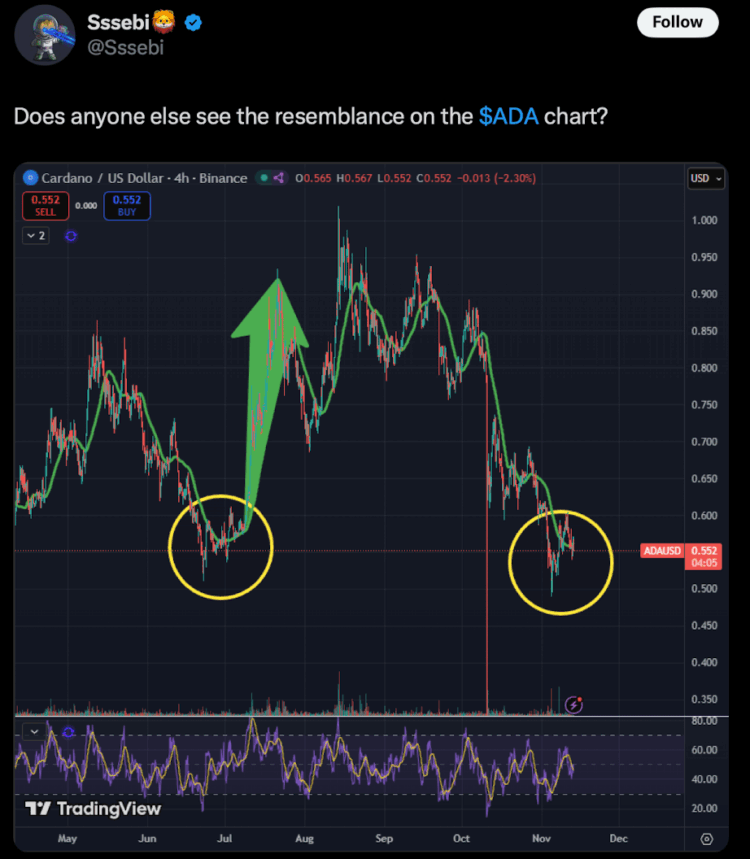
As November heats up, the crypto market continues to seek the next crypto to explode, and here, amazingly, the most talked-about cryptocurrency isn’t Cardano (ADA) but rather Mutuum Finance, a new crypto coin that keeps running at the forefront in gaining popularity. Selling at the current price of $0. 035, Mutuum Finance has successfully entered Phase 6 of its ongoing presale, in which it has sold over 90% of its supply, landing it in the list of one of the fastest-growing tokens in the crypto market this season. Given the growing interest in the market every day, consumers of the early crypto rush look forward to the upcoming protocol launch, leaving Mutuum Finance as the next crypto to explode in the crypto market soon. In the scenario where the crypto market remains thirsty for innovation, Mutuum Finance has slowly but surely indicated that the market might soon be shifting to that which they believe can be the next giant in the DeFi world, establishing itself as a new crypto coin with tremendous growth potential. Cardano Price Analysis The price movement this month has pushed Cardano firmly into a crucial, extremely sensitive support zone between $0. 50-$0. 53, where traders are observing something in extreme detail. The speed has reduced, the rallies lack punch, while the consistent series of lower highs in ADA continues to reflect a definite reluctance among buyers. There are also indications of a possible double-bottom formation at the $0. 52 level, but the possibility of falling off this particular cliff could trigger a swift move to the $0. 40 area, against which there would be virtually no halts in between. Despite the extremely weak technical charts, the Cardano community, as always, remains extremely positive, anticipating that if the support level can be successfully held, it could trigger a surge to the $0. 60-$0. 75 range. Until then, it appears that ADA remains in that delicate, fleeting zone where the markets tend to halt momentarily before deciding whether funds should continue to pour into the existing powerhouses or should instead flow to the budding alternatives, which are currently in the spotlight in the DeFi market. MUTM Presale Phase 6 Mutuum Finance (MUTM) has managed to create quite a buzz in the DeFi industry as it embarks on Phase 6 of its presale, achieving undue popularity. The tokens can be bought for $0. 035, which signifies a boost of 250% from the launch price in Phase 1, pegged at $0. 01. Phase 6 has over 90% completion, with over 18, 080 participants contributing more than $18. 8 million. After the end of Phase 6, Phase 7 will hit the market at $0. 04, close to the targeted market list price of $0. 06, placing Mutuum Finance at the forefront of crypto investment, as it’s predicted to be the next crypto to explode and one of the most promising new crypto coins in 2025. Comparisons to Aave Analysts also make similar observations between MUTM and the early stages of the development of Aave. Aave was initially a lending platform that was community-driven, but it has become one of the cornerstones of the DeFi space because of its well-defined roadmap as well as well-structured mechanics. Correspondingly, the MUTM platform also includes demand tokenization in the form of Lending Markets, Over-Collateralized Lending, mtTokens, as well as a Buy & Redistribute fee recovery model. The approach taken by MUTM corresponds to the early models of Aave, explaining the retention of the project’s users when considering the fluctuations in the market. Through this approach, it can be seen that the project has the potential for tremendous growth in the DeFi industry, and the token could potentially reach $1. Security & Community Engagement at the Core Investor confidence in MUTM also has been assured by the level of security systems in place. The project was rated an impressive 90 out of 100 in the CertiK Token Scan, placing it in the list of the most secure DeFi projects so far. Mutuum Finance has also launched a $50,000 bug bounty in order to entice white-hat hackers to look for potential vulnerabilities before the platform launches on mainnet. By integrating effective security measures along with the community-driven approach, the MUTM project shows its credibility while also manifesting commitment towards engaging early investors, thus establishing itself as one of the next crypto to explode and a top new crypto coin to consider. Mutuum Finance has currently raised $18. 8M, boasting over 18, 080+ investors, while the sale of Phase 6 has reached 90% at $0. 035. Phase 7 will increase the price to $0. 04, while the exchange list price stands at $0. 06, presenting early investors the chance to realize gains of up to 400%. For more information about Mutuum Finance (MUTM) visit the links below: Website: Linktree:.
https://bitcoinethereumnews.com/finance/why-mutuum-finance-mutm-is-beating-cardano-ada-in-investor-hype-this-november/
Tag Archives: fastest-growing


BeOne Medicines AG (ONC) Presents at Guggenheim Securities 2nd Annual Healthcare Innovation Conference Transcript
**Interview with BeOne Medicines: Key Competitive Advantages and Rapid Growth**
**Michael Schmidt, Guggenheim Securities, LLC, Research Division:**
There are a lot of exciting things happening at BeOne Medicines. BeOne is, in my view, one of the fastest-growing large biotech companies. This is really the first year in its history that the company has reached profitability. At the same time, BeOne has developed one of the deepest product pipelines in the industry.
If we step back for a moment, Aaron, what do you see as the key competitive advantages of the BeOne platform?
**Aaron Rosenberg, Chief Financial Officer:**
Great, and thank you again for having us. There are so many differentiating features of BeOne Medicines that we could probably spend the entire time discussing them. For now, I’ll highlight just a few.
One of the aspects we often emphasize is our fully integrated, CRO-free clinical development organization. This allows us to maintain direct oversight and agility throughout the clinical development process.
Additionally, we have exceptional discovery capabilities. Our performance demonstrates this: in 2024 alone, we put 10 internally developed NMEs (New Molecular Entities) into the clinic, and, to date, that number has increased to 16. This is a testament to our strength in basic science and drug discovery.
From the beginning, we recognized the critical importance of clinical development in realizing the value of innovation. By integrating this expertise into our company, we ensure that we are able to rapidly and efficiently translate scientific breakthroughs into meaningful outcomes.
—
*Stay tuned for more insights on BeOne Medicines’ strategy, growth, and innovation in the biotech industry.*
https://seekingalpha.com/article/4841713-beone-medicines-ag-onc-presents-at-guggenheim-securities-2nd-annual-healthcare-innovation?source=feed_all_articles
Sam Altman says OpenAI will top $20 billion in annualized revenue this year, hundreds of billions by 2030
OpenAI CEO Sam Altman announced on Thursday that the artificial intelligence startup is on track to generate more than $20 billion in annualized revenue run rate this year. He also revealed ambitious plans to grow the company’s sales to hundreds of billions by 2030.
In recent months, OpenAI has secured infrastructure deals totaling more than $1.4 trillion to build the data centers needed to meet growing demand. This staggering sum has raised questions among investors and industry experts about how OpenAI will finance these massive investments.
“We are trying to build the infrastructure for a future economy powered by AI,” Altman wrote in a post on X. “Given everything we see on the horizon in our research program, this is the time to invest and really scale up our technology. Massive infrastructure projects take quite a while to build, so we have to start now.”
Founded as a nonprofit research lab in 2015, OpenAI has transformed into one of the fastest-growing commercial entities worldwide following the launch of its chatbot, ChatGPT, in 2022. The startup is currently valued at $500 billion, though it has yet to turn a profit.
In September, OpenAI CFO Sarah Friar told CNBC that the company was on track to generate $13 billion in revenue this year. However, Friar recently faced scrutiny from the Trump administration after remarks at an event where she mentioned OpenAI’s intent to create an ecosystem involving banks, private equity, and a federal “backstop” or “guarantee” to help finance investments in cutting-edge chips.
She later clarified her comments in a LinkedIn post on Wednesday, stating that OpenAI is not seeking a government backstop for its infrastructure commitments. “I used the word ‘backstop’ and it muddied the point,” Friar explained. “As the full clip of my answer shows, I was making the point that American strength in technology will come from building real industrial capacity, which requires the private sector and government playing their part.”
Adding to the debate, venture capitalist David Sacks, who serves as President Donald Trump’s AI and crypto czar, declared on Thursday that there will be “no federal bailout for AI.” He wrote on X that if one frontier model company fails in the U.S., another will take its place.
Altman echoed this sentiment, stating that OpenAI “does not have or want government guarantees for OpenAI datacenters.” He emphasized that taxpayers should not be responsible for bailing out companies that make poor decisions. “If we get it wrong, that’s on us. This is the bet we are making, and given our vantage point, we feel good about it,” Altman wrote. “But we of course could be wrong, and the market — not the government — will deal with it if we are.”
As OpenAI continues to invest heavily in scaling its technology and infrastructure, the company remains confident in its strategies amid ongoing discussions about the role of government and private investment in the AI industry’s future.
https://www.cnbc.com/2025/11/06/sam-altman-says-openai-will-top-20-billion-annual-revenue-this-year.html

SDEC 2025: Where AI, chips, and talent converge in Selangor
**New Partnerships & Initiatives Strengthen R&D and Open Opportunities for Local Talent**
*Event Reinforces Selangor’s Role as Malaysia’s Hub for Semiconductor and AI Innovation*
The Selangor Smart City & Digital Economy Convention (SDEC) took place last week, marking a significant milestone in Malaysia’s drive towards becoming a design-led, innovation-driven nation. Organised by the Selangor Information Technology & Digital Economy Corporation (Sidec), the four-day convention ran from 8 to 11 October 2025 under the theme **“AI × Semiconductor: Blitzscaling Malaysia’s Deep Tech.”**
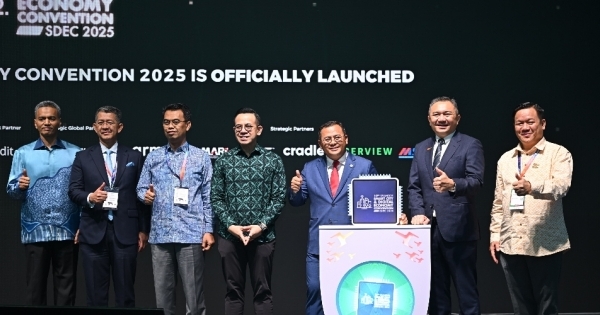
The officiating ceremony featured the launch of SDEC 2025 by Amirudin Shari, Menteri Besar of Selangor, alongside distinguished guests. The event acknowledged new semiconductor partners, reinforcing Selangor’s role as Malaysia’s data and chip innovation hub.
A key highlight of SDEC 2025 was the announcement of Synopsys’ expansion in Malaysia through Intelligent Circuit Engineering Sdn Bhd. This move represents a significant step towards strengthening the nation’s semiconductor R&D capabilities while opening new career pathways for Malaysian engineers.
Another major development was the signing of a Memorandum of Understanding (MoU) between Cheah Hun Wah, representing Oppstar Berhad, and Dr Simon Hsu, representing AsicAI Co. and serving as executive director of AIRIS Labs. This partnership aims to advance collaborative innovation in IC design, focusing on developing Arm-based AI-RAN chips through Oppstar’s subsidiary, AIRIS Labs Sdn Bhd. This initiative marks another bold stride in Selangor’s mission to build a globally competitive deep-tech ecosystem.
Over the four days, SDEC 2025 featured two flagship summits—**Semiconductor Innovation** and **AI Innovation**—alongside the **Malaysia Semiconductor Recruitment Day** and the **Selangor Twin Accelerator Programme**. Collectively, these events showcased Malaysia’s accelerating transition towards a design-led, innovation-driven digital economy powered by talent, technology, and collaboration.
Building on Selangor’s emergence as Southeast Asia’s fastest-growing digital hub, SDEC 2025 positions the state at the heart of Malaysia’s semiconductor and AI ecosystems. This year’s programme featured renowned speakers including Prof Jack Sun (former CTO, TSMC), CK Tseng (President, Arm ASEAN), June Paik (CEO, FuriosaAI), Jim Keller (CEO, Tenstorrent), and YH Simon Hsu (Director, NARLabs Taiwan). They shared valuable insights on how AI and semiconductors are transforming global industries.
Complementing these discussions was the Malaysia Semiconductor Recruitment Day 2025, which connected top engineering talent with over 30 semiconductor companies offering 500 career opportunities — making it the country’s largest hiring event for the deep-tech sector.
Highlighting the convention’s mission, Yong Kai Ping, CEO of Sidec, said,
> “SDEC 2025 is more than a conference — it is Malaysia’s bridge to the future of deep technology. By uniting the worlds of artificial intelligence and semiconductors, we are shaping the next decade of innovation made by Malaysia, not just made in Malaysia.”
As the main sponsor, Affin Group played a key role in empowering Malaysia’s digital economy by supporting entrepreneurs and technology-driven SMEs. Syed Mashafuddin, representing Affin Group, expressed:
> “Affin Group is proud to stand alongside Sidec and the Selangor state government in advancing Malaysia’s deep-tech ecosystem. Through strategic collaborations like SDEC 2025, we aim to bridge finance and innovation, fueling growth for startups, SMEs, technology enterprises, and large companies that will define Malaysia’s next decade of digital leadership.”
Marking its tenth anniversary, SDEC 2025 underscored Selangor’s decade-long commitment to advancing the digital economy through landmark initiatives such as the Malaysia Semiconductor IC Design Park and the Selangor Twin Accelerator Programme.
The convention was supported by strategic partners including Xendit (strategic payment partner), Plug and Play APAC (strategic global partner), Arm, Malaysian Investment Development Authority (MIDA), Malaysia Digital Economy Corporation (MDEC), Cradle, Cyberview, Malaysia Semiconductor Industry Association (MSIA), Malaysia Automotive Robotics and IoT Institute (MARii), and Internet Alliance.
As Malaysia’s deep-tech ambitions continue to gain momentum, SDEC 2025 stands as the region’s most comprehensive platform connecting innovation, industry, and investment — cementing Selangor’s position as the launchpad for Southeast Asia’s next wave of digital breakthroughs.
https://www.digitalnewsasia.com/digital-economy/sdec-2025-where-ai-chips-and-talent-converge-selangor