

The European Commission plans to launch a €51. 25 million call in 2027 as part of the Choose Europe initiative, which is intended to make the continent a more attractive place to pursue a career in research. The Commission launched a €22. 5 million pilot call in October, which will close on December 3, but a draft 2026-27 work programme for the Marie Skłodowska Curie Actions (MSCA), Horizon Europe’s researcher training scheme, has revealed plans to extend the support. The Choose Europe initiative, announced with great pomp earlier this year, aims to tackle brain drain and the precarity of research careers by co-funding the recruitment of postdoctoral researchers for up to five years. EU funding will cover the positions for two to three years, while the host institutions must provide funding for an additional two years. Each programme that receives funding must recruit a minimum of three researchers. While the research community welcomed the initial pilot, there have been concerns that national cuts to research budgets in several EU countries could make it difficult for research organisations to cough up their share of the money. The draft call offers universities more flexibility by allowing the EU funding to cover either the first or second phase of the programme, although the basic issue remains. Attracting foreign talent A key priority is to attract international talent to Europe, particularly as researchers from around the world find fewer opportunities than before in the US. Recruited researchers can be of any nationality and must not have resided or carried out their main work or studies in the country of the recruiting institution for more than 12 months in the previous three years. The draft work programme gives researchers the possibility of implementing their MSCA-backed project on a part-time basis, for personal, family or professional reasons, which could benefit international scientists who still have family ties in their home country. Maria Leptin, president of the European Research Council, recently suggested that Europe should offer scientists a “haven,” in a “non-selfish manner,” allowing them to spend only half their time in Europe if needed. Related articles US researchers: Choose Europe, but part-time ERC to introduce seven-year €7 million ‘super grants’ in 2026 Choose Europe talent pilot receives lukewarm welcome A related goal is to improve working conditions and long-term prospects for researchers in Europe. Institutions applying for support will be evaluated partly on the competitiveness of the salaries and career development opportunities offered as part of their programme, as well as the quality of long-term career prospects beyond the duration of the fellowship. Supported programmes can be in any research discipline, despite indications from Commission President Ursula von der Leyen, at a Choose Europe launch event in May, that support beyond the pilot phase would privilege “frontier fields like artificial intelligence.” The MSCA calls are part of a broader €500 million package to make Europe “a magnet for researchers,” including seven-year “super grants” worth up to €7 million under the European Research Council.
https://sciencebusiness.net/news/international-news/eu-plans-eu51m-choose-europe-call-research-careers-2027
Tag Archives: competitiveness

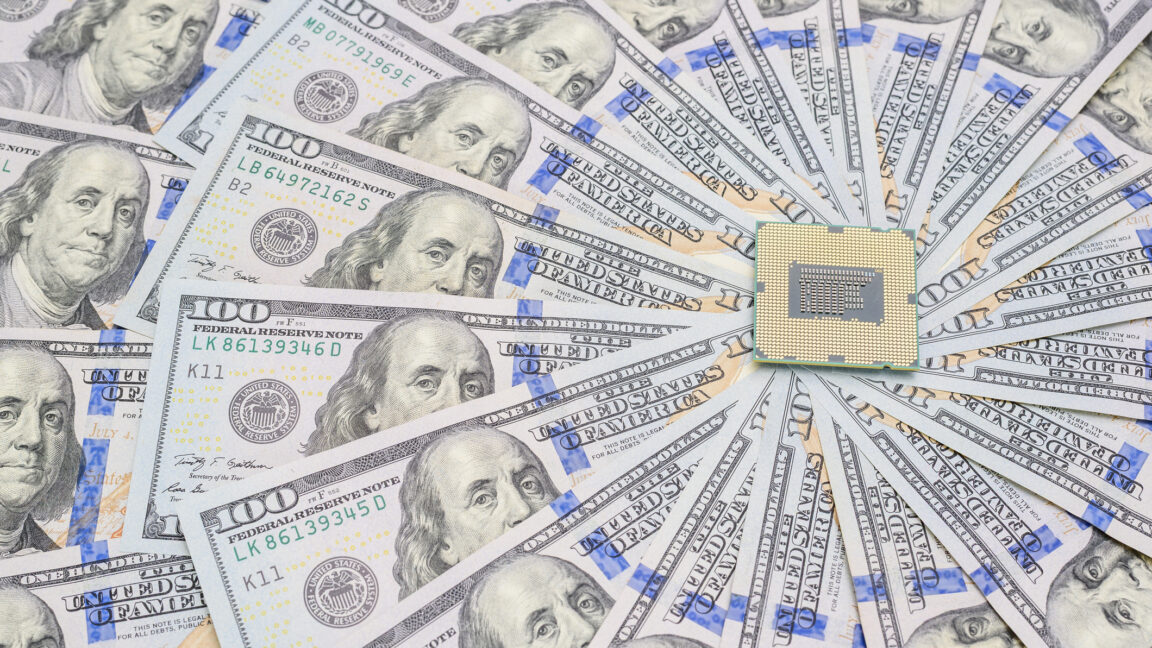
Keep your receipts: Tech firms told to prepare for possible tariff refunds
For months, the Trump administration has warned that semiconductor tariffs are coming soon, leaving the tech industry on pins and needles after a chaotic year of unpredictable tariff regimes collectively cost firms billions. The semiconductor tariffs are key to Donald Trump’s economic agenda, which is intended to force more manufacturing into the US by making it more expensive to import materials and products. He campaigned on axing the CHIPS Act-which provided subsidies to companies investing in manufacturing chips in the US-complaining that it was a “horrible, horrible thing” to “give hundreds of billions of dollars” away when the US could achieve the same objective by instead taxing companies and “use whatever is left over” of CHIPS funding to “reduce debt.” However, as 2025 winds down, the US president faces pressure on all sides to delay semiconductor tariffs, insiders told Reuters, and it appears that he is considering caving. According to “two people with direct knowledge of the matter and a third person briefed on the conversations,” US officials have privately told industry and government stakeholders that semiconductor tariffs will likely be delayed. A fourth insider suggested Trump was hesitant to impose tariffs that could rock the recent US-China trade truce, while Reuters noted that Trump may also be hesitant to announce new tariffs during the holiday shopping season that risk increasing prices of popular consumer tech products. Recently, Trump cut tariffs on grocery items in the face of mounting consumer backlash, so imposing new tariffs now-risking price hikes on laptops, game consoles, and smartphones-surely wouldn’t improve his record-low approval rating. Back in April, Trump started threatening semiconductor tariffs as high as 100 percent, prompting a Commerce Department probe into potential economic and national security impacts of imposing broad chip tariffs. Stakeholders were given 30 days to weigh in, and tech industry associations were quick to urge Trump to avoid imposing broad tariffs that they warned risked setting back US chip manufacturing, ruining US tech competitiveness, and hobbling innovation. The best policy would be no chip tariffs, some industry groups suggested. Glimmer of hope chip tariffs may never come Whether Trump would ever give up on imposing broad chip tariffs that he thinks will ensure that the US becomes a world-leading semiconductor hub is likely a tantalizing daydream for companies relieved by rumors that chip tariffs may be delayed. But it’s not completely improbable that he might let this one go. During Trump’s first term, he threatened tariffs on foreign cars that did not come to pass until his second term. When it comes to the semiconductor tariffs, Trump may miss his chance to act if he’s concerned about losing votes in the midterm elections. The Commerce Department’s investigation must conclude by December 27, after which Trump has 90 days to decide if he wants to move ahead with tariffs based on the findings. He could, of course, do nothing or claim to disagree with the findings and seek an alternative path to impose tariffs, but there’s a chance that his own party may add to the pressure to delay them. Trump’s low approval rating is already hurting Republicans in polls, New York Magazine reported, and some are begging Trump to join them on the campaign trail next year to avoid a midterm slump, Politico reported. For tech companies, the goal is to persuade Trump to either drop or narrowly tailor semiconductor tariffs-and hopefully eliminate the threat of tariffs on downstream products, which could force tech companies to pay double or triple taxes on imports. If they succeed, they could be heading into 2026 with more stable supply chains and even possibly with billions in tariff refunds in their pockets, if the Supreme Court deems Trump’s “emergency” “reciprocal tariffs” illegal. Gary Shapiro, CEO of the Consumer Technology Association (CTA), attended oral arguments in the SCOTUS case, noting on LinkedIn that “business executives have had to contend with over 100 announcements of tariff changes since the beginning of 2025.” “I hope to see the Supreme Court rule swiftly to provide businesses the certainty they need,” Shapiro said, arguing in a second post that tariffs “cause uncertainty for businesses, snarl supply chains, and drive inflation and higher costs for consumers.” As tech companies wait to see how the court rules and how Trump responds to the conclusion of the Commerce Department’s probe, uncertainty remains. CTA’s vice president of international trade, Ed Brzytwa, told Ars that the CTA has advised tech firms to keep their receipts and document all tariff payments. How chip tariffs could raise prices Without specifying what exactly was incorrect, a White House official disputed Reuters’ reporting that Trump may shift the timeline for announcing semiconductor tariffs, saying simply “that is not true.” A Commerce Department official said there was “no change” to report, insisting that the “administration remains committed to reshoring manufacturing that’s critical to our national and economic security.” But neither official shared any details on when tariffs might be finalized, Reuters reported. And the Commerce Department did not respond to Ars’ request to provide information on when the public could expect to review findings from their probe. In comments submitted to the Commerce Department, the Semiconductor Industry Association warned that “for every dollar that a semiconductor chip increases in price, products with embedded semiconductors will have to raise their sales price by $3 to maintain their previous margins.” That makes it easy to see how semiconductor tariffs risk significantly raising prices on any product containing a chip, depending how high the tariff rate is, including products like refrigerators, cars, video game consoles, coffee makers, smartphones, and the list goes on. It’s estimated that chip tariffs could cost the semiconductor industry more than $1 billion. However, the bigger threat to the semiconductor industry would be if the higher prices of US-made chip made it harder to compete with “companies who sell comparable chips at a lower price globally,” SIA reported. Additionally, “higher input costs from tariffs” could also “force domestic companies to divert funds away from R&D,” the group noted. US firms Trump wants to promote could rapidly lose their edge in such a scenario. Echoing SIA, the Computer and Communications Industry Association (CCIA) warned the Commerce Department that “broad tariffs would significantly increase input costs for a wide range of downstream industries, raising costs for consumers while decreasing revenues for domestic semiconductor producers, the very industry this investigation seeks to protect.” To avoid harming key US industries, CCIA recommended that any semiconductor tariffs imposed “focus narrowly” on semiconductors and semiconductor manufacturing equipment “that are critical for national defense and sourced from countries of concern.” The group also suggested creating high and low-risk categories, so that “low-risk goods, such as the import of commercial-grade printed circuit boards used in consumer electronics from key partners” wouldn’t get hit with taxes that have little to do with protecting US national security. “US long-term competitiveness in both the semiconductor industry and downstream sectors could be greatly impaired if policy interventions are not carefully calibrated,” CCIA forecasted, warning that everyone would feel the pain, from small businesses to leading AI firms. Trump’s plan for tariff funds makes no sense, groups say Trump has been claiming since April that chip tariffs are coming soon, and he continues to use them as leverage in recent deals struck with Korea and Switzerland. But so far, while some countries have managed to negotiate rates as low as 15 percent, the semiconductor industry and downstream sectors remain in the dark on what to expect if and when the day finally comes that broader tariffs are announced. Avoiding so-called tariff stacking-where products are taxed, as well as materials used in the products-is SIA’s biggest ask. The group “strongly” requested that Trump maintain “as simple of a tariff regime for semiconductors as possible,” given “the far-reaching consequences” the US could face if chip tariffs become as complex and burdensome to tech firms as reciprocal tariffs. SIA also wants Trump to consider offering more refunds, perhaps offering to pay back “duties, taxes, and fees paid on imported parts, components, and materials that are incorporated in an exported product.” Such a policy “would ensure the United States remains at the forefront of global chip technology,” SIA claimed, by making sure that tariffs collected “remain available for investments in expanding US manufacturing capacity and advanced research and development, as opposed to handed over to the US Treasury.” Rather than refunding firms, Trump has instead proposed sharing tariffs as dividends, perhaps sending $2,000 checks to low and middle-income families. However, CNN talked to experts who said the math doesn’t add up, making the prospect that Trump could send stimulus checks seem unlikely. He has also suggested the funds-which were projected to raise $158. 4 billion in total revenue in 2025, CNN reported-could be used to reduce national debt. Trump’s disdain for the CHIPS Act, casting it as a handout to tech firms, makes it seem unlikely that he’ll be motivated to refund firms or offer new incentives. Some experts doubt that he’ll make it easy for firms to get refunds of tariffs if the Supreme Court drafted such an order, or if a SCOTUS loss triggered a class action lawsuit. CTA’s Shapiro said on LinkedIn that he’s “not sure” which way the SCOTUS case will go, but he’s hoping the verdict will come before the year’s end. Like industry groups urging Trump to keep semiconductor tariffs simple, Shapiro said he hoped Trump would streamline the process for any refunds coming. In the meantime, CTA advises firms to keep all documents itemizing tariffs paid to ensure firms aren’t stiffed if Trump’s go-to tariff regimes are deemed illegal. “If plaintiffs prevail in this case, I hope to see the government keep it simple and ensure that retailers and importers get their tariff payments refunded swiftly and with as few hoops to jump through as possible,” Shapiro said.
https://arstechnica.com/tech-policy/2025/11/keep-your-receipts-tech-firms-told-to-prepare-for-possible-tariff-refunds/


Major privacy laws – including GDPR – could be downgraded to try and boost AI growth and cut red tape
**European Proposal to Amend GDPR and Privacy Laws Expected Soon**
New developments suggest that anonymized data may no longer always be protected under current privacy regulations, marking a significant shift in European data protection policies.
According to documents obtained by Politico, the European Union is considering easing some privacy laws, including the General Data Protection Regulation (GDPR), to enhance European competitiveness and foster AI innovation. A major proposal, expected to be unveiled on November 19, 2025, could introduce a comprehensive ‘digital omnibus’ package aimed at simplifying technology laws across the region.
### Potential Changes to Data Privacy and AI Training
If passed, these changes might allow AI developers to process certain sensitive categories of data—such as political views, religion, and health information—for training purposes. Politico reports that pseudonymized data (data from which personally identifiable information has been removed) might no longer always be protected under GDPR. This could enable its broader use in AI training models.
Additionally, websites and apps could be granted wider legal grounds to track users beyond the usual consent requirements.
Despite these shifts, the proposed amendments are said to be “targeted” and technical, potentially leaving the core principles of GDPR intact. However, any modification to these relatively new and stringent privacy laws is likely to face significant political scrutiny.
### Opposition and Support Within Europe
Jan Philipp Albrecht, one of the architects of GDPR, has voiced strong concerns over the proposed changes, warning they could “[undermine] European standards dramatically.” He questioned whether this signals “the end of data protection and privacy as we have enshrined it in the EU treaty and fundamental rights charter.”
Several countries, including the Czech Republic, Estonia, France, Austria, and Slovenia, have already expressed opposition to rewriting GDPR. On the other hand, Germany appears to support the proposed changes, while Finland has indicated openness to modifications that would boost European AI competitiveness.
### The Global Context
On a global scale, the EU’s strict data protection measures have been criticized for potentially holding Europe back in the race for AI development, especially compared to the rapid advancements seen in the United States and China.
European privacy regulators have previously delayed or blocked AI initiatives from major players like Meta, Google, and OpenAI to ensure compliance with existing laws. This ongoing tension highlights the delicate balance between innovation and privacy protection within the EU.
### What’s Next?
The European Commission has not yet made any official announcements regarding changes to GDPR or other privacy regulations. However, with expectations mounting for new proposals in the coming days, vigorous discussions are already underway—both in favor of and against potential reforms.
**Stay updated with TechRadar by clicking the Follow button!**
https://www.techradar.com/pro/major-privacy-laws-including-gdpr-could-be-downgraded-to-try-and-boost-ai-growth-and-cut-red-tape


BYD Expands China Megafactory and Brazil Plant, Potentially Surpassing Tesla in EV Output
**BYD’s Strategy: Outbuilding Rivals Like Tesla Through Massive Factory Expansions**
Construction of BYD’s Zhengzhou megafactory began in 2021, with full production ramping up in 2023 at an impressive rate of one car per minute. Satellite imagery shows that the site has more than doubled in size since mid-2023, now spanning approximately 22.5 square kilometers — significantly larger than Tesla’s largest U.S. factory in Austin, Texas, which covers just 3.53 square kilometers.
Discover how BYD’s Zhengzhou megafactory is revolutionizing electric vehicle (EV) production, outpacing Tesla through innovative expansions and a growing global reach. Explore the latest developments and what they mean for the EV industry today.
—
### What Is BYD’s Zhengzhou Megafactory and How Does It Compare to Tesla’s Facilities?
BYD’s Zhengzhou megafactory is a massive EV production site located in China. Construction started in late 2021, and the facility reached full production capacity in 2023. In 2024 alone, the factory has already produced 540,000 vehicles, operating at an astounding rate of one car every minute.
According to satellite imagery, the facility has more than doubled its size since mid-2023, now covering about 22.5 square kilometers. This dwarfs Tesla’s largest factory in Austin, Texas, which spans only 3.53 square kilometers. This size difference underscores BYD’s aggressive push to lead the global EV market through scale and innovation.
—
### Why Is BYD Expanding Its Battery Production at the Zhengzhou Site?
Recently, BYD secured conditional environmental approvals to expand battery production at the Zhengzhou megafactory. Through its subsidiary, Zhengzhou Fudi Battery Co., BYD is investing around $16 million to enhance its mold production line and build a new battery protection plate facility.
This new battery production line is projected to manufacture nearly 4.7 million units annually. These expansions support BYD’s ambitious goal to scale vehicle output to 1.8 million units per year — a figure that surpasses Tesla’s total projected 2024 production across all its factories, according to local media reports.
These initiatives highlight BYD’s commitment to vertical integration in EV components, boosting efficiency and maintaining cost competitiveness amid a slowing automotive sales environment. Industry experts believe these expansions could cement BYD’s leadership in battery technology, a critical factor for EV reliability and market share gains.
—
### Frequently Asked Questions
**What Makes BYD’s Zhengzhou Megafactory Larger Than Tesla’s Austin Plant?**
The Zhengzhou facility covers approximately 22.5 square kilometers, compared to Tesla’s 3.53 square kilometers in Austin. This vast area allows BYD to operate integrated production lines, testing circuits, and room for future expansions. Once fully ramped up, the factory is capable of producing over 1.8 million vehicles annually.
**How Will BYD’s New Brazil Factory Impact Global EV Production?**
BYD’s Camacari megafactory in Brazil, which opened in October 2024, has an initial annual capacity of 150,000 units, expandable to 600,000 units at full potential. Situated on a former Ford site and built for $980 million, the factory leverages Brazil’s abundant clean energy resources to produce EVs locally. This move fosters technological growth, job creation, and strengthens BYD’s presence in emerging markets.
—
### Key Takeaways
– **BYD’s Outbuilding Approach:** BYD aims to surpass Tesla in EV production volume this year, with 540,000 units already produced in 2024 by expanding facilities like Zhengzhou.
– **Innovative Features:** The Zhengzhou site includes a 15,300-square-meter racing circuit equipped with a 70-meter wading pool for rigorous testing of vehicles such as the Yangwang U8 SUV, enhancing durability standards.
– **Global Expansion:** The launch of BYD’s Brazil factory exemplifies the company’s strategy to localize production, boosting sovereignty, and adopting new technology in emerging markets.
—
### BYD Gears Up for More Expansion in Zhengzhou
Planning documents reveal ambitious projects at the Zhengzhou megafactory, including enhancements to battery production lines managed by Zhengzhou Fudi Battery Co. These efforts have received government approval and aim to increase production efficiency to support the factory’s target of 1.8 million vehicles annually.
Chinese media reports emphasize that these expansions position BYD ahead of its competitors, even in a market facing slowdowns.
—
### BYD Opens Mega Factory in Brazil
In mid-October 2024, BYD inaugurated its largest overseas facility in Camacari, Bahia, Brazil, investing $980 million to repurpose a former Ford site. Attended by Brazilian President Luiz Inácio Lula da Silva, the plant started operations with semi-assembled units and targets full production by late 2026.
The factory’s initial capacity is 150,000 units per year, with plans to scale up to 600,000 units. President Lula highlighted the project as a symbol of recovery and pride for the people of Camacari and Bahia:
> “This factory represents the recovery of the dignity of the people of Camacari and the people of Bahia. This is sovereignty and dignity.”
BYD CEO Wang Chuanfu praised Brazil’s clean energy advantages and open society for embracing technological innovation. Brazilian officials also noted the factory’s focus on battery safety and environmental sustainability, with potential future solar projects adding to its clean energy footprint.
—
### Conclusion
BYD’s Zhengzhou megafactory exemplifies the company’s strategy to dominate the EV market through unmatched scale and cutting-edge innovation, outpacing competitors like Tesla in both size and output capacity. With ongoing expansions in battery production and the launch of international facilities such as the Camacari plant in Brazil, BYD is well-positioned for sustained growth in the global electric vehicle sector.
As the EV industry continues to evolve, stakeholders should closely monitor BYD’s developments for potential shifts in market dynamics and emerging opportunities in sustainable mobility.
—
*Stay tuned for more updates on BYD’s global EV production strategy and industry impact.*
https://bitcoinethereumnews.com/tech/byd-expands-china-megafactory-and-brazil-plant-potentially-surpassing-tesla-in-ev-output/


Changpeng Zhao Pardon: ‘I Met Eric Trump Once, That’s It,’ Says CZ
**Former Binance CEO Changpeng Zhao Responds to Trump Pardon Controversy**
Former Binance CEO Changpeng Zhao (CZ) has addressed the recent controversy surrounding his pardon by former President Donald Trump. In an exclusive interview with Fox News, CZ revealed that the pardon came as a surprise and stressed that there was no negotiation, deal, or business connection with Trump or his family.
CZ explained that he had met Eric Trump only once at a Bitcoin conference in Abu Dhabi. However, the meeting was brief and unrelated to Binance or any discussions about the pardon.
### Acknowledging Past Legal Issues
During the interview, CZ openly acknowledged his past legal troubles. In 2023, he pleaded guilty to failing to ensure proper compliance measures at Binance, resulting in a four-month prison sentence. He emphasized that taking responsibility for these issues was crucial to moving forward.
With the case now behind him, CZ expressed his desire to focus on helping the United States build a stronger cryptocurrency industry. He noted that regulations are becoming clearer and believes cryptocurrency has evolved from a niche topic to a central part of global finance.
—
### Trump: “I Don’t Know Who He Is”
When asked about the decision to grant the pardon, Donald Trump stated that he barely knows who Changpeng Zhao is. He insisted the pardon was not based on any personal relationship.
Trump highlighted his goal for the United States to lead in crypto innovation, pointing out that other nations like China and Japan are advancing rapidly in this sector. He also claimed that the previous administration treated CZ unfairly and stressed the importance of supporting crypto growth to maintain U.S. competitiveness.
Although Trump admitted that his sons are more involved in cryptocurrency than he is, he acknowledged the industry’s significance. He warned that if the U.S. fails to encourage crypto development, the industry will simply move overseas.
—
### Congressional Inquiry into the Pardon
The pardon has sparked a formal congressional inquiry. Representative Robert Garcia has requested documents and communication records from the White House concerning CZ, Binance, and the Trump family.
Garcia’s concerns stem from media reports suggesting that Binance once promoted a stablecoin linked to the Trump family and allegedly encouraged a UAE investor to use it while considering investing in Binance.
Calling for full transparency, Garcia has asked that all related records be submitted by November 20, 2025. Lawmakers are investigating whether business connections influenced the pardon, despite denials from both CZ and Trump.
—
### Crypto’s Growing Role in Global Politics and Finance
Analysts suggest the focus should move beyond whether a deal existed between CZ and Trump. The key takeaway is that cryptocurrency has entered mainstream politics and global finance.
Leading figures in the crypto industry are now meeting with world leaders, attending major summits, and shaping national policies. This represents a turning point where cryptocurrency is no longer viewed as an outsider sector but as a recognized force influencing the future of global economies and governance.
—
**FAQs**
*(Include relevant FAQs about the pardon, CZ’s legal history, and the implications for the crypto industry.)*
https://coinpedia.org/news/changpeng-zhao-pardon-i-met-eric-trump-once-thats-it-says-cz/


U.S. Explores Quantum Computing Investments to Counter Rising Security Threats
**U.S. Government Plans to Use CHIPS Act Funds to Support Quantum Computing Firms Amid Security Concerns**
The U.S. government is exploring plans to use funds from the CHIPS Act to support quantum computing companies. This move aims to strengthen national security and maintain a technological edge over global competitors, particularly China. However, experts warn that the rapid advancement of quantum computing could soon threaten existing encryption systems that protect sensitive information across critical sectors.
—
### Government Plans to Fund Quantum Computing
The U.S. Department of Commerce is reportedly in early discussions with quantum computing firms about providing direct financial support drawn from the CHIPS Act. This funding effort is designed to keep pace with China’s advancements in quantum technologies, which have raised concerns within U.S. government circles.
Quantum computers possess the potential to break current encryption methods that safeguard vital areas such as finance, healthcare, and military operations. To mitigate these risks, government officials are seeking to exchange their investments for equity stakes in quantum tech companies—a strategy similar to an earlier deal made with Intel this year.
This proactive approach highlights growing unease over the risk that quantum technologies may soon undermine existing security measures, exposing sensitive systems to vulnerabilities.
—
### Debate Over Government Involvement in the Quantum Sector
While the government’s motivation centers on national security, its plan to invest directly in quantum computing firms has sparked debate among economists and free-market advocates.
Critics argue that increased government intervention risks steering the U.S. economy toward a centrally planned model. Economist Peter Schiff voiced his concerns on social media, emphasizing that markets, not the government, should allocate resources and determine business success.
Conversely, supporters contend that government involvement is crucial to preserving U.S. competitiveness in emerging technologies. With the global race for quantum computing supremacy intensifying—especially with China’s rapid progress—some believe federal backing is necessary to maintain the country’s leadership in technology and innovation.
—
### Quantum Computing’s Impact on National Security
Quantum computing could disrupt countless industries, especially those reliant on cryptography for security. If quantum computers achieve the capability to break current encryption algorithms, confidential information across banking, healthcare, defense, and more could be compromised.
In response, there is a significant push toward developing post-quantum cryptography—new encryption standards designed to resist quantum attacks. However, experts caution that the timeline for quantum computers to break traditional encryption is uncertain: estimates range from five to ten years, while some worry the threat may already be emerging.
A particular concern is the tactic known as “harvest now, decrypt later,” where attackers collect encrypted data today with the intent to decrypt it in the future once quantum computing advances sufficiently. This possibility intensifies the urgency for stronger security solutions.
—
### The Role of Post-Quantum Cryptography
As investments in quantum computing accelerate, so does the focus on building resilient post-quantum cryptographic solutions. Both private companies and government agencies are actively developing strategies to prepare for the quantum era.
These new encryption methods aim to protect data from being broken by quantum algorithms, ensuring continued digital security.
David Carvalho, CEO of Naoris Protocol—a cybersecurity firm specializing in post-quantum solutions—warns that quantum computers may already be operational beyond public knowledge. He stresses that adversaries could have gained control of quantum technologies without widespread awareness, making early and proactive defenses essential.
—
### Conclusion
The U.S. government’s consideration to fund quantum computing firms using CHIPS Act resources reflects the urgency surrounding quantum technology’s dual promise and risks. Balancing national security needs with economic principles and market dynamics will be critical as the country navigates this rapidly evolving technological frontier.
Simultaneously, advancing post-quantum cryptography remains paramount to safeguard vital digital infrastructure from emerging threats posed by quantum computing breakthroughs. Vigilance and proactive investment in both offensive and defensive quantum technologies will shape the future of cybersecurity and global technological leadership.
https://coincentral.com/u-s-explores-quantum-computing-investments-to-counter-rising-security-threats/


North America Health and Fitness App Market Strategic Insights and Business Growth Potential
**North America Health and Fitness App Market Report by Prophecy Market Insights**
Prophecy Market Insights has released its latest research report on the **North America Health and Fitness App Market**, delivering an in-depth study of market dynamics, growth drivers, opportunities, challenges, and the competitive landscape shaping the industry’s future. This comprehensive report offers detailed segmentation across multiple categories, profiles of leading companies, and revenue projections through 2035.
Designed as an essential tool for business leaders, investors, startups, and policymakers, the report provides actionable insights to help stakeholders make informed decisions, identify emerging growth opportunities, and maintain a competitive edge in a rapidly evolving marketplace.
—
### Competitive Landscape
The competitive environment in the North America Health and Fitness App market is highly dynamic, with companies focusing on innovation, expansion, and collaborations to strengthen their market presence. Key players include:
– Adidas Inc.
– FITBIT INC.
– Appster
– Nike
– MYFITNESSPAL INC.
– Under Armour Inc.
– APPINVENTIV
– FitnessKeeper
These organizations are actively investing in product launches, mergers & acquisitions, strategic alliances, and geographical expansions. Additionally, startups with niche innovations continue to enter the market, further intensifying competition.
—
### North America Health and Fitness App Market Overview
The North America Health and Fitness App Market is expected to witness significant growth during the forecast period, driven by rising demand for health and fitness applications, technological innovations, and supportive government regulations.
Market participants are increasingly investing in research and development (R&D) to expand their product portfolios and strengthen their market positions. Furthermore, collaborations, mergers, and acquisitions are actively reshaping the market landscape by allowing companies to enter new regions and industries.
The expanding adoption of advanced technologies, along with growing consumer awareness and increased industry digitalization, underscores the strategic importance of this market in the coming decade.
—
### North America Health and Fitness App Market Dynamics
**Key Drivers:**
– **Rapid Adoption of Innovation:** The increasing use of advanced technologies across various industries fuels market demand.
– **Supportive Regulatory Frameworks:** Governments promote innovation through favorable policies and investments, enhancing market attractiveness.
– **Rising Application Demand:** Diverse industries such as healthcare, automotive, and manufacturing are adopting health and fitness solutions to improve efficiency and productivity.
**Restraints:**
– **High Initial Investment:** Capital-intensive setups may limit entry opportunities for smaller enterprises.
– **Data Privacy and Security Concerns:** Growing reliance on digital technologies raises regulatory and compliance challenges.
**Opportunities:**
– **Emerging Applications in Developing Economies:** Expanding industrial and consumer bases in Asia-Pacific and Latin America offer significant growth potential.
– **Integration of AI, IoT, and Next-Gen Technologies:** New technological capabilities are accelerating innovation cycles.
– **Strategic Partnerships and M&A:** Collaborations and mergers open new growth avenues and strengthen competitive advantages.
—
### Market Segmentation
The North America Health and Fitness App Market is segmented to provide granular insights:
– **By Type:** Diet and Nutrition, Exercise and Weight Loss, Medication Adherence & Activity Tracking
– **By Device:** Tablets, Smartphones, Wearable Devices
– **By Platform:** Android, iOS, Others
This segmentation allows stakeholders to identify high-growth areas and tailor their strategies accordingly.
—
### Strategic Insights
– **R&D Focus:** Leading players prioritize innovation to enhance app functionality and reduce costs.
– **Partnerships & Alliances:** Collaborations between major corporations and local enterprises are driving market expansion.
– **Startups & Disruption:** Smaller firms are introducing disruptive technologies, challenging traditional business models.
—
### Report Importance
This detailed report serves as a valuable resource for:
– Investors seeking high-potential opportunities.
– Businesses and startups aiming to expand operations and identify niche markets.
– Industry professionals monitoring emerging market drivers.
– Policymakers and analysts evaluating regulatory frameworks and regional impacts.
By analyzing market dynamics, opportunities, and competitive strategies, this report acts as a roadmap for business growth and investment planning.
—
### Why Buy This Report?
– ✔️ **Comprehensive Market Analysis:** Covers trends, drivers, restraints, and opportunities with forecasts up to 2035.
– ✔️ **Reliable Data:** Backed by robust primary and secondary research methodologies.
– ✔️ **Detailed Competitive Landscape:** Includes profiles of leading market players and their strategies.
– ✔️ **Support for Business Growth:** Helps organizations identify profitable avenues and expand market share.
– ✔️ **Customization Available:** Tailored research to meet specific project or business requirements.
—
### Conclusion
The North America Health and Fitness App Market is projected to experience significant growth over the next decade, fueled by rising demand, technological integration, and new opportunities in emerging regions.
Companies that invest strategically and adopt innovative approaches will gain a distinct competitive advantage. This report provides the insights, forecasts, and strategies necessary for businesses to thrive in a fast-evolving global market.
Stakeholders can leverage this comprehensive resource to achieve sustainable growth and long-term success.
—
**Author:**
Authored by Shweta R., Business Development Specialist at Prophecy Market Insights.
This analysis combines primary and secondary research to provide strategic insights into the evolving dynamics of the North America Health and Fitness App Market.
—
For more information or to request a free sample and PDF brochure of the report, please contact Prophecy Market Insights.
https://www.prnewsreleaser.com/news/115765