
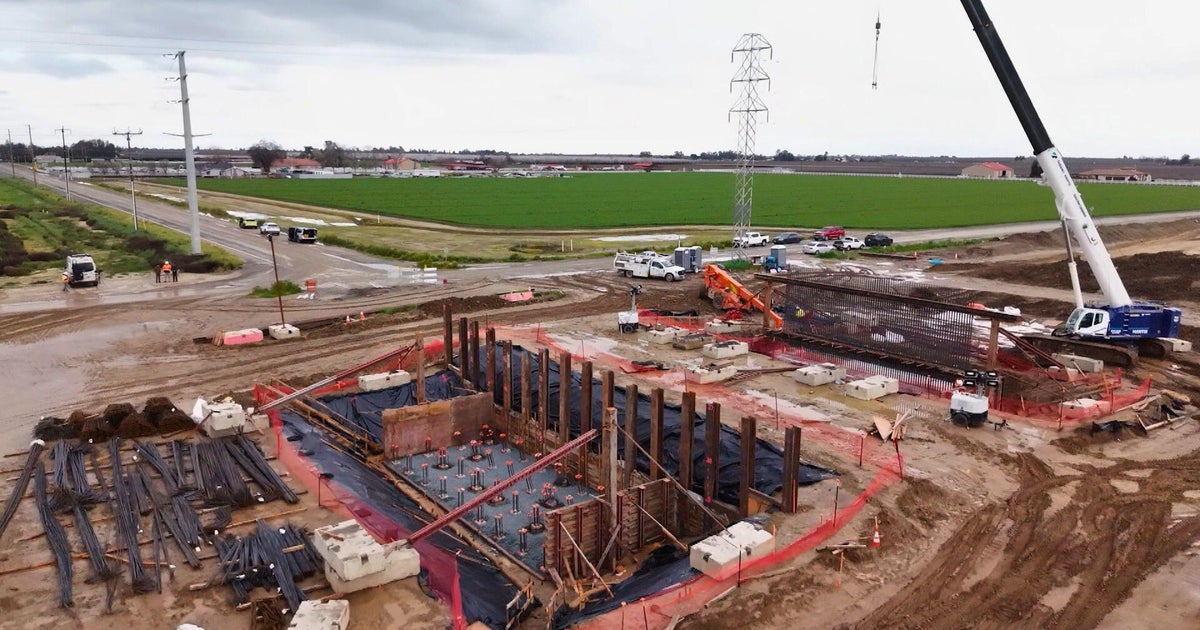
With high-speed rail ambitions in California delayed by years and coming in at a higher-than-expected cost, Lou Thompson, who sat on the state’s high-speed rail peer review group, said “failure is always an option.” He doesn’t think failure is what will necessarily happen in California, but earlier ambitions have been scaled back. When California voters approved a bullet train between Los Angeles and San Francisco in 2008, the estimated price tag was $33 billion, with a target completion date of 2020. Nearly two decades later, the California High-Speed Rail Authority is preparing to lay its first tracks to connect Bakersfield and Merced a portion of the original route with a target completion of 2033. “When you have a project like this, and when the budget no longer permits you to finish it the way you wanted to, you start cutting off your arms and legs,” Thompson said. What happened to California’s plans Rep. Vince Fong, a Republican representing California’s Central Valley, sits on the House Transportation and Infrastructure Committee. He says that when California voters first approved high-speed rail, the promise and price tag were more of a marketing campaign than a realistic projection. “We’re now in 2026. There are no trains. There’s no track laid,” he said. “It was a complete bait and switch.” It became clear after voters approved the plan in 2008 that the specifics hadn’t been worked out, Fong said. California Secretary of Transportation Toks Omishakin, who’s relatively new to the job agrees with that point. He’s been left to answer for his predecessors. “I don’t think the voters fully understood and neither did we in the public sector what it was going to take to actually get this project delivered,” Omishakin said. To get the necessary political buy-in from the whole state, the plan called for the train to run inland, threading the farmland of the Central Valley. But at the time, the California High-Speed Rail Authority hadn’t answered basic questions, like precisely where it could lay down its tracks, the public and private property the route would traverse what’s known as right of way So far, the state has had to negotiate roughly 3, 000 parcels of land to run its train through the Central Valley leg, Omishakin said. California’s environmental regulations have also slowed the process. Those regulations have triggered years-long reviews, lawsuits and delays which, combined with the relatively high cost of labor and construction in the U. S., have also added to the price tag. While the federal government made modest contributions to the project under the Obama and Biden administrations, the financial burden fell chiefly on California, and when construction started, the state didn’t have the financing to complete the full route. In 2019, with costs ballooning and the timeline years off schedule, bipartisan political pressure mounted. “Right now, there simply isn’t a path to get from Sacramento to San Diego, let alone from San Francisco to L. A.,” Gov. Gavin Newsom, who inherited the project, said at the time. Under Newsom, who didn’t respond to repeated interview requests, California decided to focus on completing that initial Central Valley segment. It’s a route few are likely to ride, according to the Rail Authority’s own projections. The ultimate goal remains connecting northern and southern California. More than 20 countries have high-speed rail. Why doesn’t the U. S.? The American rail system was once envied around the world. In the 1800s, the U. S. government oversaw the birth of the transcontinental railroad, stitching the country together as it expanded westward. In the 1950s, the Eisenhower administration decided to create and, critically, continuously fund the interstate highway system, fueling a car culture that still dominates today. Meanwhile, Japan’s bullet train opened in 1964. Today, more than 20 countries largely in Europe and Asia have high-speed rail, generally defined as cruising at 150 miles per hour or more. In Africa, Morocco has a train traveling at a top speed of nearly 200 miles an hour. And Egypt has broken ground on a high-speed rail line. “The simple answer is they’ve decided they want to do it and pay for it, and we haven’t,” Thompson said. Thompson, who is in his 80s said he’s dubious about the prospect of seeing high-speed rail completed in the U. S. in his lifetime. “But maybe yours, I don’t know,” he said. Can a private company make high-speed rail work in the U. S.? Brightline, a private company, believes it can achieve what California hasn’t. In 2018, it opened a train between Miami and Orlando that hits top speeds of around 125 miles an hour. While it’s not a high-speed rail, it’s akin to a beta test for Brightline’s next project: a bullet train connecting L. A. and Las Vegas in just two hours. It’s a trip that can take five hours by car. “Brightline West will be true high-speed rail, first time in the country,” Mike Reininger, managing director of Brightline West, said. “And we’ll operate at speeds of about 200 miles an hour maximum.” Brightline is avoiding complicated right-of-way issues out west by running on the median of the I-15 highway. Construction has already begun on some of the station structures. The plan is to start service in late 2029. The company says building out west will also avoid the tragedy that has plagued the south Florida route, where trains run at street level, through crowded neighborhoods. In the near-decade since operations began, more than 200 people have been hit and killed by Brightline trains, according to numbers compiled by The Miami Herald and local public radio station WLRN. It will be safer out west, the company says, where train crossings won’t be at street level. But there are also the finances. In Florida, stratospheric costs of building and running the rail line vastly outstrip revenues. Analysts have downgraded Brightline’s debt to junk, raising questions about private rail as a business. “The business has built slower than we originally expected it to build. We thought we would be carrying more passengers today than we are,” Reininger said. “The business is in fact growing month over month, year over year. That’s a great thing.” Brightline West has already received some federal funding and is hoping for a $6 billion loan from the Trump administration. Can California get the high-speed rail project back on track? In California, there’s not much hope for federal funding at the moment. In 2025, The Trump administration canceled $4 billion in grants previous administrations had committed to the state’s bullet train project, calling it the “worst cost overrun I’ve ever seen.” In a statement to 60 Minutes, Secretary of Transportation Sean Duffy said the administration is in favor of high-speed rail, but this project has “wasted billions in taxpayer dollars yet delivered nothing.” Omishakin said the California High-Speed Rail Authority believes it can complete the Central Valley segment without money from the federal government, but that the full route from L. A. to San Francisco would be challenging without it. Lou Thompson says large infrastructure projects like these require consistent, stable funding that only the federal government can provide, much like it did for the interstate highway system 70 years ago. Plus, he says, “a lot of the benefits of the project, the reason why you build a project, is public pollution reduction, congestion reduction, improved safety, comfort all of those things are public benefits.”.
https://www.cbsnews.com/news/us-high-speed-rail-60-minutes/
Tag Archives: administrations


Ex-US attorneys say Lindsey Halligan’s disqualification puts entire office ‘in jeopardy’
On Monday, a judge ruled that acting U. S. Attorney Lindsey Halligan was improperly appointed, and subsequently dismissed her indictments of former FBI Director James Comey and New York Attorney General Letitia James (D). Former federal prosecutors are now saying that the judge’s ruling may have thrown all of her office’s work into question. During a Monday segment on CNN, former U. S. attorneys Harry Litman who led the Department of Justice’s (DOJ, or Main Justice) operations in the Western District of Pennsylvania under former President Bill Clinton’s tenure and Greg Brower, who handled cases in the District of Nevada during the George W. Bush and Barack Obama administrations, both agreed that anything bearing Halligan’s name is likely now damaged goods. “Her future was already pretty well sealed . with a series of blunders and pratfalls, including misconduct in the grand jury,” Litman said of Halligan. “There seemed to have been some serious mistakes. Brower piled on, telling CNN host Erica Hill that prosecutors who worked under Halligan have stopped all new case filings due to the chaos within the Eastern District of Virginia that was touched off after her disqualification. He pointed to similar examples of this happening to other improperly appointed prosecutors that President Donald Trump nominated, like Alina Habba in the District of New Jersey., and said that the chaos is likely to continue of the Trump administration follows through on its promise to appeal Halligan’s disqualification. “For an acting U. S. attorney who’s been deemed unlawfully appointed to be continuing to act raises all kinds of issues that put very real, very important cases in jeopardy simply because they may have her name on it,” Brower said. “So this really this puts the U. S. attorney’s offices around the country that are in similar positions and Main Justice in a real tough spot in terms of having to figure out now, how do they go forward and prosecute cases? . It’s a very real problem for the DOJ right now.” Litman added to Brower’s point, observing that the administration standing by Halligan “short-circuits any sorts of considerations that anybody in prudence would make. While that appeal goes forward . Everything’s in jeopardy in that office so long as Halligan still remains the acting U. S. attorney,” Litman said. “And when the Court of Appeals rules, it could be a total . overhaul of everything that’s been done to date.” Watch the segment below:.
https://www.alternet.org/lindsey-halligan-disqualification/


‘So stunning’: Biden economics adviser bewildered by Trump’s latest self-destructive reply
Donald Trump’s response to the affordability crisis is “stunning” for its failure to account for political risks, according to an economics expert. Gene Sperling, a senior Biden adviser who also led the National Economic Council in the Obama and Clinton administrations, appeared on MS NOW on Thursday where he was asked about Trump’s recent comments in which the president mocked the very concept of “affordability. You know, his response to this is just so stunning, just from kind of a political self-interest point,” he said before explaining that Biden himself faced criticism for trying to brag about economic successes when people weren’t feeling them at home. “And it’s striking how many Americans understand what tariffs are and that they are raising your prices,” he said. “So what’s kind of stunning is he didn’t learn any lesson. And now, at a time when he has an economy that is very iffy, very iffy. Job numbers, not particularly strong. He’s not just deemphasizing affordability. He’s mocking it.”.
https://www.rawstory.com/trump-affordability-2674315620/

Illegal crossings at U.S.-Mexico border plummet to lowest annual level since 1970
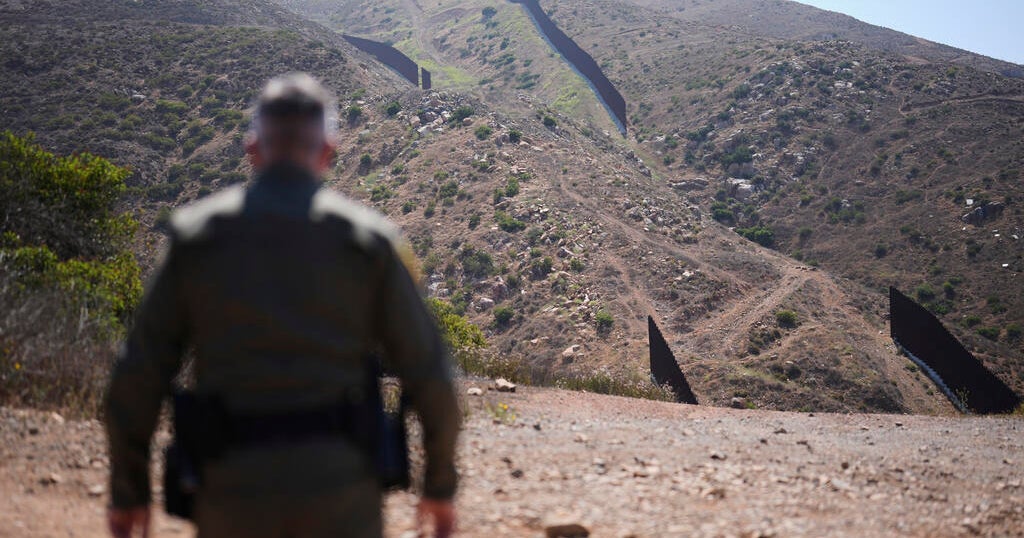
Unlawful crossings along the U.S.-Mexico border in fiscal year 2025 plummeted to the lowest annual level since the early 1970s, amid the Trump administration’s sweeping clampdown on illegal immigration, internal federal statistics obtained by CBS News show.
U.S. Border Patrol agents recorded nearly 238,000 apprehensions of migrants crossing the southern border illegally in fiscal year 2025, which began in October of last year and ended on Sept. 30, according to preliminary Department of Homeland Security data that has not been previously reported.
The number is the lowest annual tally recorded by Border Patrol since fiscal year 1970, when the agency reported roughly 202,000 apprehensions along the U.S.-Mexico border, historical figures indicate.
It also represents a seismic change from the record-high levels of Border Patrol apprehensions recorded under the Biden administration, which faced an unprecedented humanitarian crisis at the U.S.-Mexico border. In fiscal year 2022, Border Patrol made 2.2 million apprehensions—a record—and almost 10 times the levels recorded in 2025.
More than 60% of the apprehensions made by Border Patrol in fiscal year 2025 along the U.S.-Mexico border were recorded in the last full three months of the Biden administration, the preliminary data shows. (Government fiscal years start in October and end in September, often spanning different administrations.)
Over President Trump’s first full eight months in office, Border Patrol agents assigned to the southern border have recorded fewer than 9,000 apprehensions each month—a number that the agency recorded in 24-hour periods during some days under former President Joe Biden.
The internal DHS figures show Border Patrol made nearly 8,400 apprehensions at the U.S.-Mexico border in September 2025, an increase from 6,300 in August and 4,600 in July, which was a monthly record low.
Border Patrol apprehensions denote the number of times agents intercepted and processed migrants entering the country between official ports of entry, which is illegal. Some migrants can be counted multiple times if they attempt to enter the U.S. more than once after being turned back to Mexico.
In a statement, White House spokeswoman Abigail Jackson said, “President Trump has overwhelmingly delivered on his promise to secure our Southern Border. As a result, Americans are safer; unvetted criminal illegal aliens and dangerous drugs are no longer pouring over our border unchecked.”
Jackson added, “And for all the Democrats who claimed it was impossible to secure the border or that they needed new policy, turns out all we needed was a new President. A new normal.”
Ariel Ruiz Soto, an analyst at the Migration Policy Institute—a nonpartisan think tank based in Washington—noted that illegal border crossings began to fall sharply in the summer of 2024, after the Biden administration enacted strict limits on asylum. But he said the Trump administration had set “a new normal” for migration flows in just a few months.
Ruiz Soto explained that the Trump administration’s stringent policies at the border and inside the U.S. “have had a significant effect on people being deterred from coming illegally to the United States.”
Soon after Mr. Trump took office for a second time, his administration moved to seal and militarize the southern border, closing down the American asylum system using emergency powers, dispatching thousands of soldiers to repel illegal crossings, and shutting down Biden-era programs that allowed some migrants to enter the U.S. legally.
While parts of the asylum ban have been curtailed and declared illegal by courts, the Trump administration has virtually ended the practice of releasing migrants who cross into the U.S. illegally, deporting them quickly or holding them in detention while their cases are reviewed.
Beyond the border, the Trump administration has staged highly publicized operations targeting those living in the U.S. illegally, dispatching teams of Immigration and Customs Enforcement officers and Border Patrol agents across the country with the objective of overseeing a deportation campaign of unprecedented proportions.
The crackdown has not been without controversy. The administration’s border policies have been denounced as inhumane, draconian, and illegal by groups like the American Civil Liberties Union, which has challenged them in federal court on the grounds that they are at odds with U.S. and international asylum law as well as the Constitution.
The federal immigration raids well beyond the border have also triggered significant backlash, particularly in major American cities like Chicago and Los Angeles, where large-scale protests have erupted.
National and local Democrats have decried the raids as indiscriminate and overly harsh, accusing the Trump administration of not solely focusing on deporting violent offenders.
Citing confrontations and instances of violence, Mr. Trump in recent days has ordered National Guard troops to deploy to Chicago and Portland, Oregon, to protect immigration agents and facilities there. A federal judge has so far blocked the plan to send National Guard units to Portland.
Amid the national debate over immigration enforcement, those living along the southern border say there’s no denying the reality on the ground has changed markedly.
John Martin said his network of shelters in the Texas border city of El Paso housed hundreds of migrants during spikes in illegal crossings under the Biden administration. On Monday, he said his organization was not housing a single migrant, stating he has received “little to no” new arrivals who are not local homeless residents in recent months.
He attributed this change to Mr. Trump’s crackdown.
“If the goal is to decrease the number of individuals, I would say that appears to have been successful, without getting into the politics about whether or not I like it or dislike it,” Martin said. “We’re just simply not seeing the people.”
https://www.cbsnews.com/news/illegal-crossings-immigration-us-mexico-southern-border-lowest-level-1970-trump-dhs/