Category Archives: economy

Trump imposes 100 pc tariff on imported drugs without US manufacturing base

Former President Donald Trump has clarified the scope of his recent tariff measures, stating that companies that have already begun construction of plants in the U.S. will be exempt from the new pharmaceutical tariffs. In a post, he wrote, “There will, therefore, be no Tariff on these Pharmaceutical Products if construction has started. Thank you for your attention to this matter!”

Trump also announced sweeping tariffs on a variety of household products, including imported kitchen cabinets and certain types of furniture, potentially adding to the rising costs in this category seen in recent months. According to CNN, Trump detailed the new tariffs in a Truth Social post, stating:

“We will be imposing a 50 percent Tariff on all Kitchen Cabinets, Bathroom Vanities, and associated products, starting October 1st, 2025. Additionally, we will be charging a 30 percent Tariff on Upholstered Furniture.”

These tariffs come amidst a notable increase in furniture prices over the past year. Data from the Bureau of Labor Statistics (BLS) shows that overall furniture costs rose 4.7 percent compared to August 2024. Specifically, living room and dining room furniture prices jumped 9.5 percent over the last 12 months.

The surge in furniture prices is closely linked to recent tariff hikes on imports from China and Vietnam, the two largest sources of imported furniture into the U.S. Last year, both countries exported approximately USD 12 billion worth of furniture and fixtures, according to data from the U.S. Commerce Department. Notably, furniture prices had generally declined for about two and a half years before these tariffs were introduced.

Trump defended the tariffs, arguing that foreign manufacturers have been oversupplying the U.S. market. He described the large-scale “flooding” of products from other countries as “a very unfair practice,” emphasizing the need to protect U.S. manufacturing for national security and other reasons.

Meanwhile, new tariff rates affecting dozens of countries were introduced in August, following delays that allowed time for trade negotiations. These include:

– 50 percent tariffs on Indian goods, with an additional 25 percent penalty for trade related to Russia
– 50 percent tariffs on Brazilian goods
– 30 percent tariffs on South African goods
– 20 percent tariffs on Vietnamese goods
– 15 percent tariffs on Japanese goods
– 15 percent tariffs on South Korean goods

*This story has been sourced from a third-party syndicated feed and agencies. Mid-day accepts no responsibility or liability for the dependability, trustworthiness, reliability, or accuracy of the content. Mid-day management and mid-day.com reserve the sole right to alter, delete, or remove content at their absolute discretion and without prior notice.*
https://www.mid-day.com/news/world-news/article/donald-trump-announces-100-per-cent-tariff-on-imported-pharmaceuticals-without-us-based-manufacturing-plants-23595880

Hogs Close with Mixed Trade Ahead of Bullish Hogs & Pigs Report

Lean hog futures closed Thursday’s session with nearby contracts up 30 to 67 cents, while back months gained between 10 and 67 cents. USDA’s national base hog price from the Thursday PM report was down 17 cents from the day prior, settling at $104.50. The CME Lean Hog Index was up 10 cents on September 23, closing at $105.00.

The USDA’s National Agricultural Statistics Service (NASS) released their quarterly Hogs & Pigs report this afternoon. The September 1 inventory was reported at 74.472 million head, down 1.35% from last year and well below estimates that had predicted a slight increase. Hogs kept for breeding saw a decrease of 1.82%, totaling 5.934 million head—also below estimates. Market hog inventory declined by 1.31% compared to last year, falling to 68.538 million head.

In export news, USDA reported pork sales totaling 29,402 metric tons (MT) for the week ending September 18, marking a four-week high. The largest buyer was Mexico, purchasing 10,000 MT, followed by South Korea at 4,900 MT and Japan at 3,800 MT. Pork shipments for the week were recorded at 29,297 MT, down from the previous week. Mexico remained the top destination with 13,100 MT shipped, while Japan and China received 3,600 MT and 2,800 MT respectively.

USDA’s FOB plant pork cutout report from Thursday afternoon showed a decline of 64 cents, closing at $110.99 per hundredweight (cwt). However, ham and belly primals were the only cuts reported higher.

Federal hog slaughter for Thursday was estimated at 490,000 head, bringing the weekly total to 1.939 million head. This total is down 1,000 head from the previous week but 3,906 head above the same week last year.

October 2025 lean hog futures closed at $100.10, up 67.5 cents. December 2025 closed at $88.63, up 50 cents, while February 2026 closed at $89.93, up 30 cents.

*Don’t miss a day of market insights: From crude oil to coffee, sign up free for Barchart’s best-in-class commodity analysis.*

**Disclosure:** On the date of publication, Austin Schroeder did not hold (either directly or indirectly) positions in any of the securities mentioned in this article. All information and data are for informational purposes only. For more details, please view the [Barchart Disclosure Policy](#). The views and opinions expressed herein are those of the author and do not necessarily reflect those of Nasdaq, Inc.
https://www.nasdaq.com/articles/hogs-close-mixed-trade-ahead-bullish-hogs-pigs-report

‘Everything from chip to ship’: PM Modi calls for boost to Atmanirbhar Bharat

**PM Modi Calls for Boost to Indigenous Production Across Sectors at UP International Trade Show 2025**

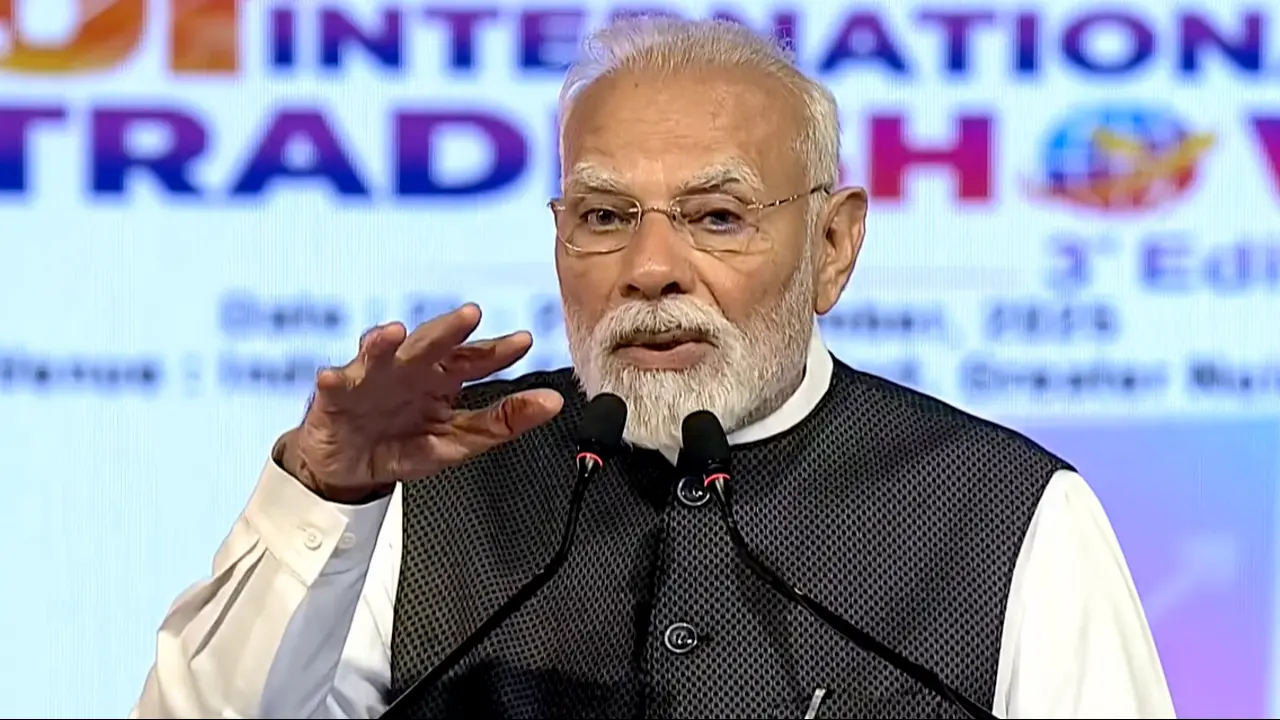
Prime Minister Narendra Modi has called for a significant boost to indigenous production across various sectors, emphasizing the importance of building a ‘Swadeshi’ economy. Speaking at the inauguration of the Uttar Pradesh International Trade Show-2025 (UPITS-2025) on Wednesday, PM Modi assured stakeholders that the government stands shoulder-to-shoulder with them in this journey.

Highlighting the government’s commitment to ease of doing business, the Prime Minister noted that several unnecessary compliances have been removed to help businesses thrive in India. “The government is putting a strong emphasis on Make in India manufacturing. We want everything from chip to ship to be manufactured in India; for this, we are focusing on your ease of doing business,” he said.

PM Modi further elaborated on the reforms, stating, “The government abolished more than 40,000 compliances, and more than a thousand laws were decriminalised. We are standing with you shoulder-to-shoulder,” addressing the business fraternity and traders present at the event.

Despite global disruptions and uncertainties, the Prime Minister expressed confidence in India’s growth potential. “Disruptions don’t hinder us, but even in those circumstances, we look for new directions. Amid all these disruptions, India is strengthening the foundations for the coming decades. Our resolve and mantra is Atmanirbhar Bharat. Nothing can be more helpless than being dependent on others. The more a country stays dependent on others, the more its growth is going to stay compromised,” he added.

PM Modi also stressed the importance of maintaining quality in indigenous products. “Every citizen is adopting Swadeshi, ‘Garv se kaho hum swadeshi hai’. Our traders will have to proudly adopt this mantra,” he said. He called for creating an ecosystem that gives special emphasis to Swadeshi designs, while urging private investment in research and innovation. “Without innovation, the world stops, businesses halt,” he remarked.

### About the Uttar Pradesh International Trade Show 2025

The trade show, held from September 25 to 29, carries the theme “Ultimate Sourcing Begins Here” and focuses on three core objectives: innovation, integration, and internationalisation. UPITS-2025 aims to connect international buyers, domestic Business-to-Business (B2B) buyers, and domestic Business-to-Consumer (B2C) buyers through a three-pronged buyer strategy, offering opportunities for exporters, small businesses, and consumers alike.

This platform will showcase Uttar Pradesh’s diverse craft traditions, modern industries, robust MSMEs, and emerging entrepreneurs. Key sectors represented at the event include handicrafts, textiles, leather, agriculture, food processing, IT, electronics, and AYUSH, among others. The trade show will also celebrate the state’s rich art, culture, and cuisine under one roof.

Adding strategic significance, Russia will participate as a partner country, facilitating new avenues for bilateral trade, technology exchange, and long-term cooperation.

The event expects participation from over 2,400 exhibitors, approximately 125,000 B2B visitors, and about 450,000 B2C visitors.

*(With inputs from ANI)*
https://www.mid-day.com/news/india-news/article/everything-from-chip-to-ship-pm-modi-calls-for-boost-to-atmanirbhar-bharat-manufacturing-23595743

Accenture plans to create 12,000 jobs in Andhra Pradesh

**Accenture Plans to Create 12,000 Jobs in Andhra Pradesh**

*By Dwaipayan Roy | Sep 23, 2025, 08:02 PM*

Accenture, a leading global technology consultancy firm, has proposed the establishment of a new campus in Andhra Pradesh as part of its strategy to expand its workforce in India by approximately 12,000 employees. This initiative aligns with similar expansions by other major IT firms such as Tata Consultancy Services (TCS) and Cognizant, supported by a new state policy offering land at a highly subsidized rate of just ₹0.99 per acre for companies committed to job creation.

**Proposal Details**

Accenture has requested around 10 acres of land in Visakhapatnam under the terms of this policy. The proposal is currently under review by the Andhra Pradesh government. India already serves as Accenture’s largest employee base globally, with over 300,000 of its 790,000 worldwide employees based in the country.

**Government Response**

An official from the Andhra Pradesh government expressed enthusiasm about bringing Accenture to the state. Although the approval process may take some time, the official indicated that the proposal is reasonable and expected to be approved soon. The statement was given on the condition of anonymity.

**Investment and Comparisons**

While the exact investment amount Accenture intends to make has yet to be disclosed, precedent exists with TCS and Cognizant, which have secured land leases under the same policy for campuses projected to generate around 20,000 jobs in Visakhapatnam. Cognizant is investing $183 million, and TCS has allocated just over $154 million for its new facility.

**Trend Toward Expansion in Tier-2 Cities**

The expansion of major tech firms into tier-2 Indian cities reflects a growing trend driven by cost advantages such as lower land prices, rent, and wage expenses. Post-pandemic shifts have also made it easier for companies to hire local talent in these smaller cities, reversing the earlier pattern of workers migrating to large tech hubs.

With Andhra Pradesh emerging as a key destination for IT investments, Accenture’s proposed campus is expected to significantly boost employment and contribute to the region’s growing prominence in India’s technology landscape.
https://www.newsbytesapp.com/news/business/accenture-seeks-land-in-ap-for-new-campus/story

H-1B visa fee hike driven by Trump`s domestic politics: Tharoor

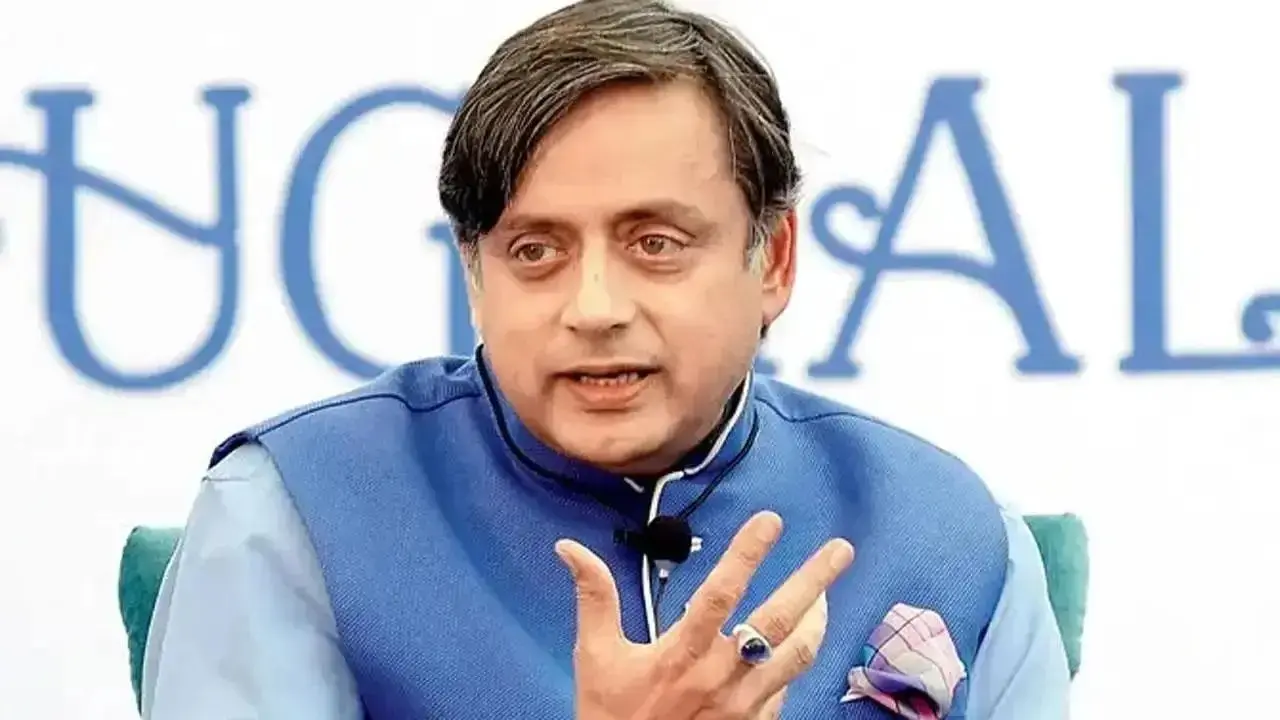
Days after United States President Donald Trump signed a proclamation mandating a USD 100,000 fee for each new H-1B visa petition filed after September 21, Congress leader and Member of Parliament Shashi Tharoor criticised the move, calling it an attempt to appease Trump’s “so-called MAGA” supporters, reported ANI.

Speaking to ANI on Monday, Shashi Tharoor stated that the sudden surge in H-1B visa fees is driven by domestic political considerations in the US. Trump aims to rally support from his anti-immigration base ahead of the upcoming US legislative elections scheduled for November. “Once again, the motivations are primarily rooted in domestic politics,” Tharoor said.

Trump believes—as those around him have convinced him—that the ease of obtaining an H-1B visa has allowed many American workers, who merit higher wages, to be overlooked in favour of Indians willing to work for less, Tharoor told ANI.

Linking the policy shift to broader political sentiment in the US, Tharoor noted, “At present, the dominant political current within the so-called MAGA movement is overtly anti-immigration, particularly targeting visible minorities—individuals of different ethnic backgrounds who are not part of the white mainstream.”

The former Union minister added that Trump’s supporters perceive Indian professionals as undercutting the wages of American workers by accepting lower pay. “An Indian tech worker earning sixty thousand dollars annually is, in the eyes of Trump’s backers, displacing an American who would refuse to work for anything less than eighty-five to ninety thousand dollars,” Tharoor explained, according to ANI.

He further stated that only the top-tier, highly skilled, irreplaceable professionals—those genuinely worth the hundred-thousand-dollar cost to employers—will continue to be brought in.

Tharoor also warned that this policy might ultimately harm the US economy. “The natural outcome will be job outsourcing. Tasks once performed in America will now be handled by multinational units in Europe or by global capability centres in India,” he said.

He pointed out that Indian tech professionals might still perform the same tasks for American firms, just remotely from India rather than from within the US.

Expressing concern for Indian IT firms, Shashi Tharoor emphasized that the steep visa fee structure could render many contracts financially unfeasible. “We simply cannot afford to pay one hundred thousand dollars per person for a low-end contract,” he remarked.

(with ANI inputs)
https://www.mid-day.com/news/india-news/article/us-h-1b-visa-news-h-1b-visa-fee-hike-driven-by-donald-trumps-domestic-politics-shashi-tharoor-23595399

Dollar pullback to offer no relief with rupee caught in US crosswinds

By Nimesh Vora

**MUMBAI, Sept 23 (Reuters)** – The Indian rupee is expected to remain under strain on Tuesday despite a dip in the dollar, with steep U.S. tariffs and visa fee increases denting sentiment towards the Asian currency.

The 1-month non-deliverable forward indicated the rupee will open marginally weaker from 88.3075 on Monday. At current levels, the rupee is only a shade away from the all-time low of 88.4550, marked two weeks back.

The rupee, already struggling under the weight of U.S. tariffs that are steeper than those faced by other Asian countries, is now contending with the fallout of President Donald Trump’s decision to raise H-1B visa fees for new applications. The move could weigh on India’s IT services sector, slow remittances, and dampen overall investor sentiment, leaving the currency vulnerable to further weakness.

DBS Bank noted that India was the largest recipient of overseas remittances in the world, with the U.S. share at about a third of the total. “We don’t expect any knee-jerk impact on this component, though steady tightening in work-related visas in the US might impact inflows,” it said.

The latest U.S. step adds to headwinds for the rupee, suggesting it may remain one of the weaker currencies in Asia in the near term, a currency trader at a Mumbai-based bank said.

The Reserve Bank of India will be watching closely and is expected to act to keep markets orderly, providing a buffer against big swings, he added.

**Dollar Retreats, Eyes on Fed**

The dollar struggled in trading in Asia on Tuesday, with traders weighing comments by members of the Federal Reserve for clues on the path of interest rates. The comments, which analysts said on balance leaned hawkish, came after the Fed cut rates last week and signaled two more cuts for the year.

Markets are now pricing in a very high probability that the Fed will follow last week’s move with another rate reduction in October.

**Key Indicators:**
– One-month non-deliverable rupee forward at 88.48; onshore one-month forward premium at 14 paise
– Dollar index down at 97.31
– Brent crude futures down 0.5% at $66.3 per barrel
– Ten-year U.S. note yield at 4.15%
– As per NSDL data, foreign investors bought a net $127.8 million worth of Indian shares on Sept. 21
– NSDL data shows foreign investors bought a net $69.2 million worth of Indian bonds on Sept. 21

— Reuters
https://www.livemint.com/market/stock-market-news/dollar-pullback-to-offer-no-relief-with-rupee-caught-in-us-crosswinds-11758596191311.html

Trump’s Federal Reserve appointee seeks steeper rate cuts

WASHINGTON — President Donald Trump’s appointee to the Federal Reserve’s Board of Governors, Stephen Miran, stated Monday that the central bank’s key interest rate should be significantly lower than the current 4.1% level, marking a position that differs sharply from his colleagues.

Speaking to the Economic Club of New York, Miran, who is also a top economic adviser to Trump, cited factors such as sharp declines in immigration, rising tariff revenue, and an aging population as reasons the Fed’s rate should be closer to 2.5%. This figure is nearly a full percentage point lower than any of his 18 colleagues on the Fed’s rate-setting committee, reflecting an unusually wide divergence.

Miran’s remarks highlight the unique perspective he brings to the Fed’s interest rate policy deliberations. His appointment has sparked controversy because he has retained his position as head of the White House’s Council of Economic Advisers while taking unpaid leave from that role, raising concerns about the Fed’s customary independence from day-to-day politics.

His term on the Fed’s board expires in January, and Miran has indicated he expects to return to the White House afterward, maintaining his Fed seat because of the short length of his term. However, he could remain on the board until a successor is appointed. It is noteworthy that there has not been a member of the executive branch on the Fed’s board since the 1930s.

Concerns over the Fed’s independence have intensified amid President Trump’s repeated criticisms of Chair Jerome Powell and demands for the Fed to reduce its rate to as low as 1.2%. Recently, Trump has sought to fire Lisa Cook, a Fed governor who has resisted her removal through legal action. This marks the first time a president has attempted to fire a Fed governor. Courts so far have ruled that Cook can stay in her position while her lawsuit seeking to overturn her firing is ongoing. The Trump administration has appealed this ruling to the Supreme Court.

During a question-and-answer session on Monday, Miran emphasized his independence, stating that Trump has not pressured him to adopt any specific policy. “At the end of the day, I make my own analysis based on my own understanding of economics and how the economy works,” Miran said. He added that in his conversations with Trump, the president “never asked me to set policy in a specific way.”

In his speech, Miran affirmed, “It should be clear that my view of appropriate monetary policy diverges from those of other members of the committee.” He described current policy as “very restrictive,” suggesting it is holding back the economy and “poses material risks” to the Fed’s congressional mandate to seek maximum employment.

Regarding inflation, Miran argued that fewer immigrants should free up more housing, lowering rental costs and thereby reducing inflationary pressures. He also pointed to tariff revenues—estimated by the Congressional Budget Office to potentially top $300 billion annually—as a factor that should help reduce the federal deficit. Over time, he suggested, these elements mean the Fed might not need to keep its benchmark interest rate as high as it currently is to bring inflation down.

However, many economists hold an opposing view on the impact of reduced immigration. They contend that fewer workers lead to labor shortages, prompting businesses to raise wages to attract staff. While this benefits workers, companies may increase prices to compensate for higher labor costs, potentially worsening inflation.

Miran also proposed that the Fed consider alternatives to its current 2% inflation target, which would represent a significant policy shift. Yet, he emphasized that any changes should only be considered after the Fed first achieves a 2% inflation rate. According to the Fed’s preferred measure, prices excluding food and energy increased by 2.9% in July compared to a year earlier.

“If you look before 2012, the Fed didn’t have a formal target at all,” Miran noted. “They pursued low and stable prices. To me, that’s an interesting way of doing things also.” He added that reconsidering the target “should only ever be entertained … after the Fed has successfully achieved its target for a sustained period, to ensure there’s no appearance whatsoever of moving the goalposts.”

Meanwhile, other Fed officials speaking on Monday expressed much greater caution about future rate cuts, underscoring the divisions among policymakers as they confront an unusual economic environment characterized by a nearly stalled hiring rate despite persistent inflation.

Last week, the Fed reduced its key interest rate by a quarter percentage point—the first cut this year. Chair Jerome Powell described the move as a “risk-management” step designed to shield the job market from further weakening, implying that the Fed’s rate cuts are more measured than they would be if a recession were imminent.

When the Fed lowers its rate, it often leads to decreases in longer-term borrowing costs—such as mortgages, car loans, and credit cards—which can boost borrowing, spending, and economic growth. Alongside the rate cut, the Fed’s 19-member rate-setting committee projected further cuts: two more this year and one in 2026, still far less aggressive than Miran’s preferred pace.

Alberto Musalem, president of the Federal Reserve Bank of St. Louis, said Monday there is “limited room” to cut rates before reaching a point that overly stimulates the economy and accelerates inflation. “We should tread cautiously,” he said, recommending that interest rates remain sufficiently high to push inflation back to target.

Stay informed and connected — subscribe to The Philadelphia Tribune NOW!

[Click Here]

*Note: Please keep discussions respectful and free from obscene, vulgar, racist, or sexually-oriented language. Threats or falsehoods will not be tolerated. Use the ‘Report’ link to notify moderators of any abusive content.*

**Community Insight:** Has job hunting as a Black Gen Zer come with more halts and frustration than expected? You’re not alone. Unemployment rates for Black/African American youth in Philadelphia remain higher than other racial and age groups. Share your experiences and help us tell the full story.
https://www.phillytrib.com/trumps-federal-reserve-appointee-seeks-steeper-rate-cuts/article_55628ac4-c7cb-451d-8207-475e6de29217.html

Breadfruit: A superfood worth trying

**Breadfruit: A Superfood Worth Trying**
*By Simran Jeet | Sep 22, 2025, 04:42 pm*

**What’s the story?**
African breadfruit is rapidly gaining attention as a sustainable superfood due to its impressive nutritional benefits and positive environmental impact. This versatile fruit can be incorporated into a variety of dishes, serving as a rich source of essential nutrients. As more people seek eco-friendly food alternatives, African breadfruit emerges as a promising option. Its cultivation demands fewer resources compared to many other crops, making it a valuable choice for sustainable agriculture.

**Nutritional Benefits of African Breadfruit**
Loaded with vitamins and minerals, African breadfruit supports overall health in numerous ways. It is a rich source of vitamin C, which is vital for boosting immunity and aiding collagen production. The fruit also contains potassium, essential for heart health and muscle function. Moreover, its dietary fiber content promotes healthy digestion and helps regulate blood sugar levels. With such a nutrient profile, African breadfruit is an excellent addition to any balanced diet.

**Environmental Impact of Cultivation**
The environmental footprint of African breadfruit cultivation is relatively low when compared to other crops. It thrives in poor soil conditions and requires less water, making it ideal for drought-prone regions. The fruit grows well without heavy dependence on fertilizers or pesticides, which helps maintain soil health and enhances biodiversity. Encouraging the growth of African breadfruit supports more sustainable farming practices.

**Economic Opportunities for Communities**
Cultivating African breadfruit can unlock new economic prospects for local communities. The fruit can be processed into various products like flour and snacks that are marketable both locally and internationally. This diversification generates income and creates employment opportunities in processing and distribution sectors. Investing in African breadfruit farming and processing helps communities achieve greater economic stability and growth.

**Culinary Versatility of African Breadfruit**
One of African breadfruit’s most attractive qualities is its culinary flexibility. When cooked, it has a texture similar to potatoes, making it perfect for soups, stews, roasting, and more. Its mild flavor readily absorbs spices, enhancing dishes without overpowering other ingredients. This adaptability has made African breadfruit a favorite among chefs seeking innovative, sustainable ingredients for their menus.

African breadfruit stands out as a nutritious, eco-friendly, and economically beneficial superfood. Whether you’re a consumer, farmer, or chef, exploring this versatile fruit offers exciting possibilities for health, sustainability, and community development.
https://www.newsbytesapp.com/news/lifestyle/african-breadfruit-a-sustainable-superfood/story

Market cap of India’s top 7 firms up ₹1.18L crore

**Market Cap of India’s Top 7 Firms Jumps by ₹1.18 Lakh Crore**

*By Dwaipayan Roy | September 21, 2025, 02:58 PM*

The combined market capitalization of seven of the top 10 most valuable companies in India saw a substantial increase of ₹1.18 lakh crore last week. This surge was primarily driven by gains in State Bank of India (SBI) and Bharti Airtel, reflecting a broadly positive trend in the equities market.

The Bombay Stock Exchange (BSE) benchmark index also experienced a boost, rising by 721.53 points, or 0.88%, during the same period.

**Market Leaders SBI and Airtel Lead the Charge**

SBI’s market valuation soared by ₹35,953.25 crore, reaching ₹7,95,910 crore. Close behind, Bharti Airtel’s valuation jumped by ₹33,214.77 crore to ₹11,18,952.64 crore. Reliance Industries also registered a significant increase, with its market capitalization rising by ₹17,389.23 crore to ₹19,04,898.51 crore.

Additionally, Tata Consultancy Services (TCS) saw its valuation climb by ₹12,952.75 crore, bringing it to ₹11,46,879.47 crore.

**Other Notable Gainers: LIC and Infosys**

Life Insurance Corporation (LIC) and Infosys also recorded considerable gains. LIC’s market cap grew by ₹12,460.25 crore to ₹5,65,612.92 crore, while Infosys’s valuation increased by ₹6,127.73 crore to ₹6,39,901.03 crore.

HDFC Bank witnessed a modest rise in its market capitalization, up by ₹230.31 crore, reaching ₹14,84,816.26 crore.

**Companies Facing Decline in Market Capitalization**

On the other hand, three companies experienced a dip in their market value. ICICI Bank’s market cap fell by ₹10,707.87 crore to ₹10,01,654.46 crore. Bajaj Finance saw its valuation decrease by ₹6,346.93 crore, down to ₹6,17,892.72 crore. Hindustan Unilever also recorded a decline of ₹5,039.87 crore, bringing its market cap to ₹6,01,225.16 crore.

Overall, the positive momentum in India’s equity markets was largely supported by strong performances from SBI, Bharti Airtel, and Reliance Industries, signaling robust investor confidence in these leading firms.
https://www.newsbytesapp.com/news/business/top-7-m-cap-gainers-add-1-18l-crore-last-week/story

Market cap of India’s top 7 firms up ₹1.18L crore

**Market Cap of India’s Top 7 Firms Surges by ₹1.18 Lakh Crore**

*By Dwaipayan Roy | Sep 21, 2025, 02:58 PM*

The combined market capitalization of seven out of the top 10 most valuable companies in India witnessed a massive jump of ₹1.18 lakh crore last week. This surge was primarily driven by strong performances from State Bank of India (SBI) and Bharti Airtel, amid a broadly positive trend in the equity markets.

The Bombay Stock Exchange (BSE) benchmark index also reflected this optimism, rising by 721.53 points or 0.88%.

### Market Leaders SBI and Bharti Airtel Lead the Gains

State Bank of India saw its market valuation soar by ₹35,953.25 crore, reaching ₹7,95,910 crore. Bharti Airtel closely followed with an increase of ₹33,214.77 crore, lifting its market cap to ₹11,18,952.64 crore.

Reliance Industries also experienced a significant rise, adding ₹17,389.23 crore to touch a valuation of ₹19,04,898.51 crore.

Tata Consultancy Services (TCS) posted an increase of ₹12,952.75 crore, taking its market capitalization up to ₹11,46,879.47 crore.

### Other Notable Gainers: LIC and Infosys

Life Insurance Corporation (LIC) saw its valuation climb by ₹12,460.25 crore, reaching ₹5,65,612.92 crore. Infosys also recorded gains, with its market cap increasing by ₹6,127.73 crore to ₹6,39,901.03 crore.

HDFC Bank’s market capitalization rose marginally by ₹230.31 crore, closing at ₹14,84,816.26 crore during the week.

### Market Laggers: ICICI Bank, Bajaj Finance, and Hindustan Unilever

On the downside, three firms witnessed declines in their market capitalizations last week. ICICI Bank’s valuation decreased by ₹10,707.87 crore to ₹10,01,654.46 crore.

Bajaj Finance and Hindustan Unilever also saw drops, with market caps falling by ₹6,346.93 crore and ₹5,039.87 crore, respectively. This brought Bajaj Finance’s valuation down to ₹6,17,892.72 crore and Hindustan Unilever’s to ₹6,01,225.16 crore.

The overall surge in market caps reflects renewed investor confidence in India’s blue-chip companies, particularly the banking and telecommunications sectors, while some pockets saw profit booking and corrections.
https://www.newsbytesapp.com/news/business/top-7-m-cap-gainers-add-1-18l-crore-last-week/story