Category Archives: economy

RBI raises IPO financing limit to ₹25L per investor

**RBI Raises IPO Financing Limit to ₹25 Lakh Per Investor**

*By Akash Pandey | Oct 01, 2025, 05:12 PM*

**Overview**

The Reserve Bank of India (RBI) has announced a significant increase in the financing limit for Initial Public Offerings (IPOs), raising it from ₹10 lakh to ₹25 lakh per investor. This decision aims to improve credit flow in the economy and was revealed by RBI Governor Sanjay Malhotra following a three-day meeting of the monetary policy committee.

**Key Regulatory Changes**

Alongside the hike in IPO financing limits, the RBI is set to remove the regulatory cap on lending against listed debt securities. In addition, the loan limit against shares has been raised substantially—from ₹20 lakh to ₹1 crore per person.

These measures form part of RBI’s wider strategy to enhance credit availability across the Indian economy.

**Expansion of Banking Lending Scope**

In a major policy shift, Indian banks are now permitted to finance mergers and acquisitions (M&A) among domestic companies. This structural change is anticipated to bolster the banking sector by diverting deal financing from private credit players to formal banking channels.

**Industry Response and Policy Alignment**

Experts have welcomed the RBI’s measures aimed at boosting credit flow. Chanchal Agarwal, Chief Investment Officer at Equirus Family Office, highlighted that these reforms will help banks regain credit flows previously moving towards structured credit products.

Furthermore, the RBI’s policy focuses on broadening credit intermediation, especially by enabling Urban Cooperative Banks to expand their services. This aligns with the government’s “Viksit Bharat” agenda, which emphasizes improving credit access and deepening India’s financial ecosystem.

**Economic Projections**

The RBI has revised upward its GDP growth forecast for the current fiscal year from 6.5% to 6.8%, while lowering its Consumer Price Index (CPI) inflation estimate from 3.1% to 2.6%.

Murthy Nagarajan, Head of Fixed Income at Tata Asset Management, noted that these adjustments may create room for potential rate cuts in upcoming monetary policy meetings. The repo rate remains unchanged for now, as broadly expected.

**Promoting the International Use of the Indian Rupee**

In efforts to enhance the global footprint of the Indian rupee (INR), the RBI has proposed measures to allow authorized Indian banks to offer rupee-denominated loans to non-residents in Bhutan, Nepal, and Sri Lanka for cross-border trade transactions.

Governor Malhotra stated that the RBI has made steady progress toward this goal, with the current proposals serving as critical steps in that direction.

**Conclusion**

The RBI’s recent policy measures—including raising IPO financing limits, expanding lending scopes, and promoting the rupee’s internationalization—are designed to stimulate credit flow, support economic growth, and strengthen India’s financial system. Market participants and experts alike view these steps as positive developments for India’s evolving economic landscape.
https://www.newsbytesapp.com/news/business/rbi-enhances-ipo-financing-limit-improving-credit-flow/story

RBI proposes risk-based deposit insurance premium structure for banks

**RBI Proposes Risk-Based Deposit Insurance Premium Structure for Banks**
*By Akash Pandey | Oct 01, 2025, 04:54 PM*

The Reserve Bank of India (RBI) has proposed a significant change to the deposit insurance premium structure for banks, shifting from the current flat-rate system to a risk-based model. This move aims to align India’s banking practices with international standards and promote stronger risk management within the sector.

**Current Premium Structure and Proposed Changes**
At present, all banks pay a uniform premium of 12 paise per ₹100 of deposits to the Deposit Insurance and Credit Guarantee Corporation (DICGC), irrespective of their financial health or risk profile. Under the new proposal, this flat rate would act as a ceiling, ensuring that no bank pays more than the current premium.

However, banks with stronger balance sheets and healthier financial indicators could benefit by paying lower premiums. This approach rewards sound financial management and incentivizes banks to maintain robust risk profiles.

**Linking Premiums to Financial Health**
The proposed risk-based premium structure will factor in critical indicators such as capital adequacy, asset quality, and governance standards. RBI Governor Sanjay Malhotra emphasized that this framework is designed to encourage sound risk management practices and increase accountability among banks.

By tying premiums to financial health, the RBI expects to foster greater market discipline and reduce the systemic risks posed by weaker banks.

**No Change in Insurance Coverage Limit**
It is important to note that this proposal does not affect the existing deposit insurance coverage. Depositors continue to enjoy protection up to ₹5 lakh per depositor, per bank— a limit that was raised from ₹1 lakh in 2020 following several bank failures that undermined depositor confidence.

The coverage includes both principal and accrued interest.

**Context of Wider Banking Sector Reforms**
The RBI’s premium restructuring is part of broader reforms aimed at strengthening India’s banking sector resilience. These reforms include implementing expected credit loss provisioning, introducing Basel III capital norms starting 2027, and enforcing stricter governance requirements under the amended banking laws.

Alongside these regulatory measures, the RBI recently maintained the repo rate unchanged for the second consecutive meeting and signaled a neutral stance on future monetary policy moves.

**Conclusion**
By transitioning to a risk-based deposit insurance premium framework, the RBI is incentivizing healthier banking practices and aligning India’s financial system with global best practices, all while ensuring continued protection for depositors.

*Stay updated with the latest developments in India’s banking sector by following our coverage.*
https://www.newsbytesapp.com/news/business/rbi-to-introduce-risk-based-deposit-insurance-premium/story

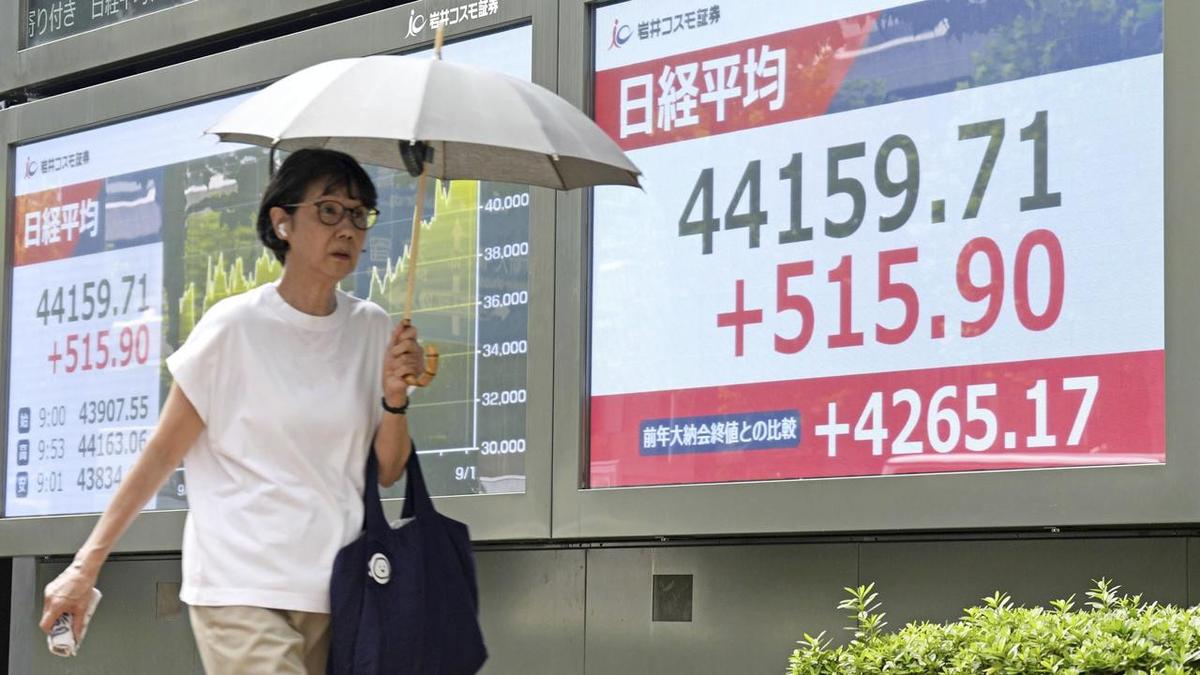
Asia shares, gold rise on US shutdown watch

Oil prices declined recently amid expectations of an increase in OPEC production. Market participants anticipate that the organization will boost output, putting downward pressure on crude prices.

Meanwhile, China’s manufacturing activity has contracted for the sixth consecutive month, highlighting ongoing challenges in the sector. This persistent slowdown contributes to concerns about the broader economic recovery in the region.

In European markets, Euro Stoxx 50 futures dipped during early trading, reflecting investor caution amid these global economic developments. Traders are closely monitoring how these factors will influence market sentiment moving forward.
https://thewest.com.au/business/asia-shares-gold-rise-on-us-shutdown-watch-c-20187675

Is Alibaba Stock a Safe Buy Now?

Alibaba Group Holding Limited (NYSE: BABA) has been a focal point for investors looking to capitalize on China’s burgeoning e-commerce market. However, recent years have seen a roller-coaster ride for the stock, driven by regulatory crackdowns and economic uncertainties in China. The question for investors now is whether Alibaba represents a safe investment opportunity or if caution is still warranted.

Alibaba’s financial performance has shown resilience despite external pressures. The company reported strong revenue growth driven by its core commerce segment and cloud computing services. These sectors remain Alibaba’s backbone, contributing significantly to its financial health. Moreover, Alibaba’s international commerce and digital media segments are gaining traction, promising further diversification.

Regulatory challenges remain a significant concern. The Chinese government’s increased scrutiny over technology companies has led to hefty fines and operational adjustments for Alibaba. These regulatory measures are part of China’s broader goal to control the tech sector’s influence and ensure data security. However, Alibaba’s proactive compliance and cooperation with authorities may mitigate long-term impacts and restore investor confidence.

The global economic landscape also impacts Alibaba’s prospects. China’s economic slowdown and trade tensions with the United States have introduced volatility in the market. As a result, Alibaba’s international expansion efforts become critical. By strengthening its presence in Southeast Asia and Europe, Alibaba aims to reduce reliance on the domestic market and tap into new growth avenues.

Investor sentiment is gradually recovering as Alibaba demonstrates adaptability and strategic foresight. The company’s innovation in cloud technology and artificial intelligence positions it well for future growth. Moreover, Alibaba’s focus on sustainability and social responsibility aligns with global trends, potentially attracting ESG-conscious investors.

In conclusion, while challenges persist, Alibaba’s comprehensive strategy and financial robustness make it a compelling option for investors with a high-risk tolerance. Those considering Alibaba should weigh the potential for significant returns against the backdrop of regulatory and economic uncertainties.

*Footnotes:*
*Featured Image: DepositPhotos @ Iurii*
https://pressreach.com/investing-news/is-alibaba-stock-a-safe-buy-now/

CBIC Fact-Checks Journalist Rajdeep Sardesai Over His Claims Of 18% GST On Caramel Popcorn

**CBIC Corrects Rajdeep Sardesai on GST Rates for Popcorn Following Recent Reforms**

*New Delhi:* The Central Board of Indirect Taxes & Customs (CBIC), the statutory body under the Ministry of Finance responsible for administering indirect taxes, fact-checked journalist Rajdeep Sardesai regarding the latest GST reforms on Thursday.

In a now-deleted post on X, Sardesai had claimed that caramel popcorn would be taxed at 18%. His post read:
*“The POPCORN debate has been resolved at last! Salted or spiced popcorn will now attract a uniform 5% GST, whether it’s sold loose or in pre-packaged form. Caramel popcorn will be taxed at 18%. Bring on the salted popcorn folks!”*

CBIC was quick to respond, sharing a screenshot of the post and clarifying:
*“Dear @sardesairajdeep, all sugar confectionery items will now be taxed at 5%. Kindly refrain from sharing incorrect information. Please see below the latest rates in Annexure II.”*

### Rajdeep Sardesai Issues Clarification

In a separate post on X, Sardesai corrected his earlier statement, saying:
*“Clarification: @cbic_india has clarified that ALL popcorn will have GST at 5%. Whether loose or packaged, or caramel. Earlier reports had said salted popcorn at 5% and caramel at 18% because of sugar element. Now, ALL sugar confectionery products will be at 5%.”*

### Background: The Popcorn GST Debate

Last year, popcorn became a topic of heated debate due to differentiated GST rates based on type:
– Loose salted popcorn: 5% GST
– Packaged popcorn: 12% GST
– Caramel popcorn: 18% GST

However, with the new GST reforms, the inclusion of all sugar confectionery items under the 5% tax bracket has effectively standardized GST rates for this popular snack.

The revised GST rates will come into effect from September 22.

The “popcorn controversy” dates back to the rollout of GST in July 2017. Initially, loose popcorn was exempt from tax, whereas packaged popcorn attracted 12% GST, leading to ongoing confusion and debate around applicable rates.

Stay tuned for more updates on GST reforms and their impact on consumers and businesses.
https://www.freepressjournal.in/india/cbic-fact-checks-journalist-rajdeep-sardesai-over-his-claims-of-18-gst-on-caramel-popcorn

RBI should opt for 25bps repo rate cut, says SBI

**RBI Should Opt for 25bps Repo Rate Cut, Says SBI**

*By Dwaipayan Roy | Sep 28, 2025, 04:49 pm*

A recent report by the State Bank of India (SBI) has recommended a 25 basis points (bps) cut in the repo rate for the upcoming Reserve Bank of India (RBI) monetary policy meeting. This suggestion comes amid expectations of benign inflation. However, most economists anticipate that the Monetary Policy Committee (MPC) will likely maintain the status quo when it announces its decision on October 1.

**Rate Reduction Considered the Best Option**

The SBI report described a 25bps rate cut as the “best possible option” for the RBI. This recommendation follows the central bank’s earlier actions, where it slashed the key short-term lending rate (repo) by 100bps in three installments since February, prompted by a decline in consumer price index (CPI)-based inflation.

Despite this, some experts believe the MPC may choose to maintain the current stance during its upcoming policy review meeting.

**Upcoming MPC Meeting**

The MPC, headed by RBI Governor Sanjay Malhotra, will convene for a three-day meeting from October 1 to 3 to discuss the policy rate. The meeting takes place amid ongoing geopolitical tensions and the US imposing 50% tariffs on Indian shipments.

In its August bi-monthly monetary policy review, the central bank opted to keep rates on hold while assessing how these external factors might impact India’s economy.

**Expectations and Analyst Views**

Aditi Nayar, Chief Economist at ICRA, noted that GST rationalization could lower headline CPI inflation by 25-50bps during Q3 FY2026 and Q2 FY2027. She also expects October-November 2025 to bring a new low in CPI inflation, though anticipates an upward trend thereafter.

Dharmakirti Joshi of Crisil Limited expects a repo rate cut as early as October, driven by lower-than-expected inflation and robust demand.

As the MPC meeting approaches, market watchers will keenly observe how these factors influence the RBI’s policy stance.
https://www.newsbytesapp.com/news/business/sbi-recommends-25bps-repo-rate-cut-for-upcoming-rbi-mpc/story

UN reimposes sanctions on Iran after nuclear talks collapse

**UN Reimposes Sanctions on Iran After Nuclear Talks Collapse**
*By Snehil Singh | Sep 28, 2025, 03:05 PM*

The United Nations has reimposed sweeping sanctions on Iran, a decade after they were first lifted. This move follows the collapse of nuclear negotiations between Iran and Western powers. The newly reinstated sanctions prohibit transactions related to Tehran’s nuclear and ballistic missile programs and are expected to have a broader impact on Iran’s already struggling economy.

### Diplomatic Efforts and Calls for Dialogue

US Secretary of State Marco Rubio has urged Iran to “accept direct talks, held in good faith” and called on UN member states to “immediately” implement the sanctions. Meanwhile, the foreign ministers of Britain, France, and Germany reaffirmed their commitment to pursuing a diplomatic solution aimed at preventing Iran from acquiring nuclear weapons. They also urged Tehran to “refrain from any escalatory action.”

### Iran’s Response and Failed Attempts to Delay Sanctions

Although Iran has permitted UN inspectors back into its nuclear sites, President Masoud Pezeshkian rejected a US proposal for a temporary pause in nuclear activity in exchange for handing over the country’s entire stockpile of enriched uranium. An effort by Russia and China to postpone the sanctions implementation until April was unsuccessful.

Germany, along with the UK and France, which spearheaded the sanctions, stated it had “no choice” but to act given Iran’s non-compliance with its international obligations.

### Diplomatic Fallout

Russia has refused to enforce the sanctions, labeling them invalid. Russian Foreign Minister Sergei Lavrov claimed the sanctions “finally exposed the West’s policy of sabotaging the pursuit of constructive solutions.” In reaction to the renewed sanctions, Iran recalled its ambassadors from the UK, France, and Germany for consultations.

### Economic Impact of the Renewed Sanctions

The reinstated sanctions are already affecting Iran’s economy. According to Iranian engineer Dariush, the exchange rate is soaring and prices are climbing. On Saturday, the US dollar reached a record high of approximately 1.12 million rials on the black market.

Despite these challenges, the Brussels-based think tank International Crisis Group noted that Iran appears dismissive of the sanctions, having already adapted to previous US restrictions.

The situation remains tense as the international community monitors developments closely, hoping for a diplomatic resolution to avoid further escalation.
https://www.newsbytesapp.com/news/world/sweeping-un-sanctions-hit-iran-as-nuclear-negotiations-completely-collapse/story

Greggs has expanded far too fast, claim critics

Greggs is a staple of the High Street, serving up a diet of affordable pastries, sandwiches, and sweet treats. However, a series of profit warnings has knocked the stuffing out of the bakery chain’s share price, which has halved in the past year, leaving investors queasy ahead of this week’s trading update.

The latest alarm was sounded in the summer when chief executive Roisin Currie blamed the hot weather for stifling customers’ appetite for steak bakes and sausage rolls, both vegan and meat varieties.

Despite the setbacks, Greggs is pushing ahead with ambitious expansion plans. Up to 150 new stores are set to have opened by the end of this year as part of a wider drive to hit a total of 3,000 outlets. Greggs has also been extending opening hours across its stores and has rolled out more evening meals, including pizzas, chicken goujons, and hot baguettes.

In a new venture, Greggs opened its first pub yesterday in the Fenwick department store in Newcastle upon Tyne, serving local beers alongside 15 Greggs-inspired dishes.

“Questions as to whether Greggs has expanded too far, too fast and made its menu too complicated have added to wider worries over the state of the UK economy,” said Russ Mould, investment director at stockbroker AJ Bell.

The high street baker was a clear winner during the cost-of-living crisis, overtaking McDonald’s as Britain’s most popular breakfast venue. However, like other retailers, it has been hit by rising costs, especially from the employer National Insurance increase in last year’s Budget.

“The broader consumer spending environment remains fragile,” said Aarin Chiekrie, equity analyst at the investment platform Hargreaves Lansdown. “While Greggs has relied on price increases to support like-for-like sales growth, the company must be careful not to stretch customer tolerance too far,” he added.
https://www.thisismoney.co.uk/money/markets/article-15139501/Greggs-expanded-far-fast-claim-critics.html?ns_mchannel=rss&ns_campaign=1490&ito=1490

Trump says Ireland and US will ‘work closely’ as new embassy opens in Washington

US President Donald Trump expressed his eagerness to “work closely” with Ireland to strengthen the long-standing relationship between the two nations.

This announcement coincided with Tanaiste Simon Harris formally opening the new offices of the Irish Embassy in the United States, located in Washington, DC. The new Embassy, situated on Pennsylvania Avenue next to the White House, was warmly welcomed by President Trump, who emphasized his commitment to advancing fair trade policies and investment opportunities that benefit the citizens of both countries.

Speaking in Washington, DC, the Tanaiste and Minister for Foreign Affairs and Trade said:
“I want to thank President Trump for his kind words as we begin to write the next chapter in the great story of Ireland-US relations. These offices at 1700 Pennsylvania Avenue, next to the White House, represent the culmination of a nearly four-year project to realize a significant commitment of the Global Ireland Strategy and National Development Plan.”

He continued, “This will be an excellent base from which to grow our vital political, economic, and cultural ties with the US over the years ahead. Our ambition stretches beyond Washington, DC too. The Government has deepened its investment in our diplomatic platform across the United States recently, with new Ireland Houses in New York, San Francisco, and Chicago, as well as new Consulates in Los Angeles and Miami.”

Mr. Harris also announced the launch of an economic impact report that maps Ireland’s economic footprint across the US. The report highlights the remarkable impact of the Ireland-US partnership in trade, employment, research, tourism, and investment.

Ireland is now the 5th largest source of foreign direct investment in America, with Irish companies creating more than 200,000 American jobs.

This growing collaboration promises a continued strengthening of ties and mutual prosperity between Ireland and the United States.
https://www.breakingnews.ie/ireland/trump-says-ireland-and-us-will-work-closely-as-new-embassy-opens-in-washington-1811131.html