Category Archives: finance

SEC chair Atkins prioritizes innovation in crypto rulemaking

**SEC’s Evolving Approach to Crypto Regulation: From Enforcement to Innovation**

Enforcement and crackdowns have long characterized the U.S. Securities and Exchange Commission’s (SEC) stance on cryptocurrencies and other digital assets. After years of standoffs, the agency’s new willingness to engage with the crypto industry could mark the start of a genuine experiment in regulatory change.

### A New Priority: Crypto and Tokenization

SEC Chair Paul Atkins has designated crypto and tokenization as the agency’s “job one” priority, signaling a shift toward a pro-innovation stance. This marks a departure from the agency’s previous approach under former Chair Gary Gensler, who primarily relied on enforcement actions. Under Atkins, the SEC appears to be asking a different question: how to let innovation thrive while maintaining effective oversight.

### Gensler-Led SEC: Enforcement as Policy

Gary Gensler treated most cryptocurrencies as “securities” and centered his regulatory strategy on aggressive enforcement and litigation. During his tenure, the SEC filed over 125 crypto-related enforcement actions, achieving substantial monetary settlements.

– Approximately 64% of these actions alleged unregistered securities offerings rather than fraud.
– About 37% of these actions were unanimously approved by the SEC Commissioners.

Between late 2020 and 2024, the SEC initiated lawsuits against several high-profile crypto firms, including Ripple (December 2020), Bittrex (April 2023), Coinbase (June 2023), Binance (June 2023), and Kraken (November 2023). These lawsuits primarily alleged violations such as unregistered securities offerings and operating unlicensed exchanges.

Ripple’s Chief Legal Officer, Stuart Alderoty, criticized Gensler’s approach, asserting that he “prejudged crypto” and pursued lawsuits against firms “without investigation,” which stifled the industry’s growth in the U.S.

The enforcement-heavy environment prompted some crypto businesses to exit the market. Even firms registered with the SEC faced challenges staying afloat under such strict regulations.

### Atkins-Led SEC: Innovation as Strategy

Following Gensler’s departure in January 2025, Acting Chairman Mark T. Uyeda announced the creation of the Crypto Task Force led by Commissioner Hester Peirce. This task force aimed to adopt a more balanced approach to cryptocurrency and digital assets, moving beyond a sole focus on enforcement.

A significant policy shift occurred in January 2025 when the SEC rescinded Staff Accounting Bulletin (SAB) 121. This move eased barriers for financial institutions offering crypto custodial services.

Since taking office in April 2025, Chair Paul Atkins has guided the SEC toward withdrawing or pausing select crypto lawsuits. In July 2025, the agency launched Project Crypto, an initiative aimed at “modernizing the securities rules and regulations” to enable U.S. financial markets to operate on-chain.

At DC Fintech Week on October 15, Atkins emphasized the goal of building a future-proof crypto framework “to actually attract people back into the United States who may have fled.” By jokingly dubbing the SEC a “Securities and Innovation Commission” during the Forum, he signaled the agency’s innovation-friendly agenda.

### Looking Ahead

Ultimately, the SEC under Atkins plans to initiate rulemaking around its “innovation exemption” vision by the end of 2025 or early 2026, depending on developments related to the ongoing U.S. government shutdown. This evolving approach suggests a new era where regulation and innovation might coexist more harmoniously in the crypto landscape.
https://bitcoinethereumnews.com/crypto/sec-chair-atkins-prioritizes-innovation-in-crypto-rulemaking/?utm_source=rss&utm_medium=rss&utm_campaign=sec-chair-atkins-prioritizes-innovation-in-crypto-rulemaking


CI High Yield Bond Private Pool ETF C$ Series declares CAD 0.0519 dividend

**CI High Yield Bond Private Pool ETF C$ Series Declares Dividend**

CI High Yield Bond Private Pool ETF C$ Series (CGHY: CA) has announced a monthly dividend of CAD 0.0519 per share.

– **Dividend Amount:** CAD 0.0519 per share
– **Declaration Date:** October 17, 2025, 1:11 AM ET
– **Record Date:** October 27, 2025
– **Ex-Dividend Date:** October 27, 2025
– **Payment Date:** October 31, 2025

Investors looking for detailed information on CGHY can refer to the Dividend Scorecard, Yield Chart, and Dividend Growth data to analyze the fund’s performance over time.

### Fund Overview: CI High Yield Bond Private Pool ETF C$ Series (CGHY: CA)

– **ETF Symbol:** CGHY: CA
– **Expense Ratio:** [Insert Expense Ratio if known]
– **Dividend Frequency:** Monthly
– **Dividend Rate:** CAD 0.0519 per share
– **Yield:** [Insert yield if available]
– **Assets Under Management (AUM):** [Insert Fund AUM & Class AUM if available]

### Performance and Trends

Stay up to date with trending news and analysis related to CGHY: CA, including daily and monthly price changes and overall market trends. For investors interested in high-yield bond ETFs that pay consistent monthly dividends, CGHY is a notable option.

**Note:** Always consult with a financial advisor or conduct your own research before making investment decisions.

*For more details on CGHY: CA performance, dividend history, and related market news, visit the official fund website or financial news portals.*
https://seekingalpha.com/news/4505072-ci-high-yield-bond-private-pool-etf-c-series-declares-cad-0_0519-dividend?utm_source=feed_news_all&utm_medium=referral&feed_item_type=news

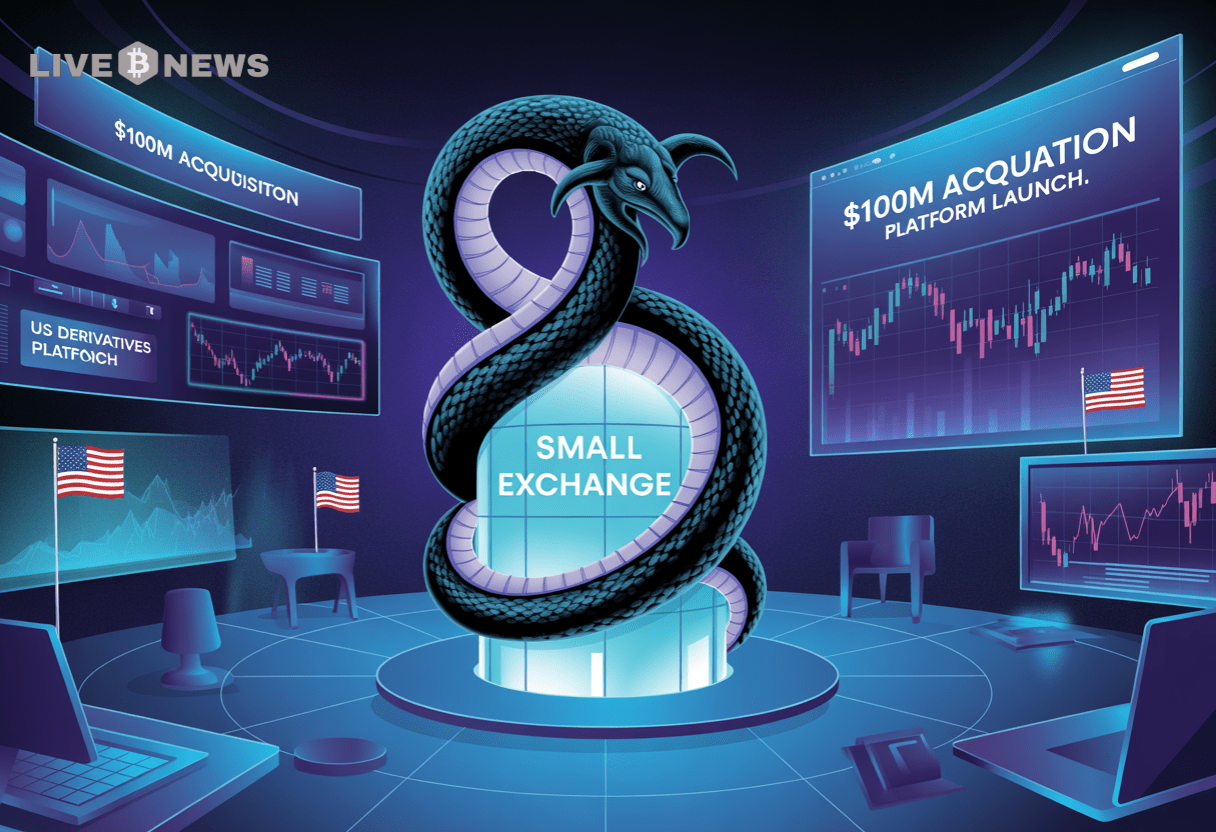
Exchange News:Kraken Buys Small Exchange to Launch Huge US Derivatives Platform

Kraken’s Acquisition of Small Exchange Propels Launch of Massive US-Based Crypto Derivatives Platform

Kraken, one of the largest international crypto exchanges, has made a significant move into the US derivatives market through its acquisition of Small Exchange from IG Group for $100 million. This strategic purchase provides Kraken with the impetus to launch a heavily regulated, US-based crypto derivatives platform under the supervision of the Commodity Futures Trading Commission (CFTC).

### A Fully Licensed Designated Contract Market

Through this acquisition, Kraken becomes a designated contract market (DCM) fully licensed by the CFTC. Partnering with Small Exchange, which is already a CFTC-licensed DCM, enables Kraken to offer regulated futures, options, and margin trading products within the United States. This marks a crucial step toward developing a comprehensive US-based derivatives platform.

### Unifying Spot, Futures & Margin Trading Like Never Before

Kraken’s co-CEO, Arjun Sethi, highlighted that the acquisition connects spot, futures, and margin products under one regulated liquidity infrastructure. Kraken now also provides clearing, risk management, and trade matching all within a single environment. This integrated approach allows Kraken to compete directly with leading global exchanges operating under CFTC supervision.

By consolidating these trading services, Kraken significantly reduces market fragmentation and enhances trade execution speed. The platform is uniquely positioned to serve both retail and institutional US clients seeking regulated crypto derivatives.

### A Strategic Win in a Booming US Crypto Derivatives Market

The US crypto derivatives market is experiencing rapid growth, fueled largely by increasing institutional participation. According to CME Group data, crypto futures daily volume surged by 136% year-over-year in Q2 2025, reaching 190,000 contracts traded daily.

Kraken’s acquisition of Small Exchange builds upon its prior $1.5 billion purchase of NinjaTrader, further strengthening its US derivatives infrastructure. This strategic expansion also aligns with Kraken’s anticipated IPO in 2026, which aims to establish an effective, fully regulated US derivatives ecosystem.

### A New Dawn for Kraken and US Crypto Trading

With this acquisition, Kraken offers unparalleled onshore performance combined with robust regulatory compliance. By providing multiple trading products under one regulated framework—linking advanced clearing and risk management systems—Kraken has the potential to transform US crypto trading standards.

This move is set to attract both retail and institutional traders as the US crypto derivatives market continues to expand rapidly, positioning Kraken at the forefront of this evolving landscape.
https://bitcoinethereumnews.com/tech/exchange-newskraken-buys-small-exchange-to-launch-huge-us-derivatives-platform/?utm_source=rss&utm_medium=rss&utm_campaign=exchange-newskraken-buys-small-exchange-to-launch-huge-us-derivatives-platform

Weekend Crypto Meltdown: What Happened and Why

**Historic $19 Billion Crypto Liquidation Rocks Markets Over Weekend of October 10-11, 2025**

Over the weekend of October 10-11, 2025, the cryptocurrency market faced its biggest liquidation event in history. Approximately US$19 billion worth of leveraged trading positions were wiped out within just 24 hours, impacting over 1.6 million traders worldwide.

To put this into perspective, this crash ranks alongside previous infamous events such as the COVID-19 market crash of March 2020 and the FTX collapse. This is a significant moment in crypto history — one that we’ll still be discussing years from now. So, let’s unpack what happened over that turbulent weekend so you can keep up with your crypto mates.

### What Does Liquidation Mean?

Before diving deeper, it’s important to note that in the UK, leverage tied to cryptoassets is not permitted. This explanation focuses on what traders abroad—particularly in the USA—are doing that affects Bitcoin’s price globally.

Imagine a USA-based investor wants to buy Bitcoin because they believe its price will rise. They have $100 of their own money but seek to buy more Bitcoin than that would normally allow. They use a crypto trading platform offering loans and borrow $900 more, enabling them to purchase $1,000 worth of Bitcoin. This is called **10x leverage** — controlling ten times more money than they actually own.

The platform agrees, but with a crucial condition:
*“If Bitcoin’s price starts dropping, we’ll automatically sell the investor’s Bitcoin before losses get too large.”*

When things go wrong and Bitcoin’s price drops by 10%, the investor’s $1,000 position is now worth only $900. Since they borrowed $900 and only had $100 of their own money, they have lost everything they invested.

The platform steps in and says:
*“We need to protect our $900. We’re selling your position right now.”*

This forced automatic sale is called a **liquidation**.

**The Result:**
– The investor loses their entire $100 — it’s completely gone.
– The platform recovers their $900 by selling the investor’s position.
– Typically, the platform doesn’t lose money.

### The Chain Reaction

Now, imagine millions of traders in similar situations with billions of dollars at stake. When the market starts dropping, it triggers a devastating chain reaction:
1. Prices begin to fall.
2. Thousands of leveraged positions hit their liquidation thresholds.
3. Platforms automatically sell assets to recover loans.
4. This massive selling pushes prices down even further.
5. More liquidations get triggered.
6. The cycle keeps snowballing downhill.

Unfortunately, the severity of such a crash means some traders can lose everything — sometimes even ending up “moving in with their weird uncle” after suffering total losses.

### What Triggered This Crash?

The immediate catalyst was geopolitical. On October 10, 2025, President Trump announced 100% tariffs on Chinese imports effective November 1, 2025, alongside export controls on critical software.

Although cryptocurrency is often considered independent of traditional finance, it behaves similarly to a high-risk tech investment. When Trump announced these massive tariffs, investors feared an escalating US-China economic conflict.

As a result:
– Investors sold risky assets such as stocks and crypto.
– They moved toward safer havens like cash, gold, and bonds.
– Crypto prices plunged sharply.
– Leveraged traders began getting liquidated.
– Liquidations accelerated price drops even more.

Markets inherently dislike uncertainty, and a trade war between the world’s two largest economies creates enormous doubt about global economic growth — exacerbating the crypto crash.

### The Scale of Destruction

– **Total liquidations:** Over US$19 billion in 24 hours
– **Traders affected:** 1,618,240 people
– **Long positions liquidated:** US$16.7 billion (bets on prices going up)
– **Bitcoin liquidations:** US$1.37 billion
– **Ethereum liquidations:** US$1.26 billion
– **Largest single trade wiped out:** US$87.53 million on one Bitcoin trade

### How Leverage Works When Things Go Right

Leverage can amplify profits — here’s a winning example for a USA-based trader:

– Using $100 of their own money and borrowing $900 (10x leverage), they buy $1,000 worth of Bitcoin.
– If Bitcoin rises 10%, their position grows to $1,100.
– After repaying the $900 loan (plus small fees), they keep $200 — doubling their initial $100 investment.

A small move in price can lead to enormous gains.

### Leverage When Things Go Wrong

But leverage cuts both ways. The more leverage you use, the faster you can get liquidated:

| Leverage | Own Money | Borrowed | Total Position | Price Drop to Liquidation | Result |
|———-|———–|———-|—————-|————————–|———————————|
| 10x | $100 | $900 | $1,000 | 10% | Lose entire $100, position liquidated |
| 5x | $100 | $400 | $500 | 20% | Lose entire $100, position liquidated |
| 2x | $100 | $100 | $200 | 50% | Lose entire $100, position liquidated |

### Who Actually Loses Money?

The trader who uses leverage loses their entire collateral — the money they put in. Most of the time, that’s the only party losing real money.

Exchanges and lending platforms generally don’t lose money because they automatically liquidate positions before losses exceed collateral. They also maintain insurance funds for extreme cases, such as rapid price crashes where selling speed can’t keep up. However, these situations are rare.

The system prioritizes protecting the lender over the trader.

### Where We Are Now

Just days before this crash, Bitcoin had been soaring, pushing past $125,000 and setting new all-time highs. The rally was fueled by strong institutional investment through ETFs in the USA and rising concerns about traditional currency devaluation.

As of Monday morning, October 13, 2025:
– Bitcoin is trading around $115,000.
– Ethereum has recovered from approximately $3,400 to about $4,100.

The market is catching its breath after the violent weekend selloff.

If confidence returns, traders may see current prices as a buying opportunity. But if bad news or trade tensions escalate, selling could continue.

There could be sideways movement or a period of relative stability as the market digests recent news. Of course, with crypto’s famous volatility, anything can happen.

### What We Have Learned

For those new to crypto volatility, this weekend taught us several key lessons:

– **Leverage trading lets traders control far more money than they actually own, but it’s extremely risky.**
– There’s potential for high rewards, but equally high risks — you have to ask yourself how much risk you can live with (or how comfortable you’d be moving in with your weird uncle).
– Even a small price drop can wipe out an entire leveraged investment.
– Despite claims of independence, crypto behaves very much like a high-risk asset tied to traditional market sentiments.
– Leverage trading is like flooring the accelerator pedal in an electric vehicle: you can take off fast, but one wrong move might mean costly crash repairs.
– What traders do overseas, especially USA-based leveraged traders, influences crypto prices worldwide — affecting all traders, even those in countries like the UK where leveraged crypto trading is banned.

**Stay informed, trade carefully, and always understand the risks before using leverage in cryptocurrency markets.**
https://blog.coinjar.com/weekend-crypto-meltdown-what-happened-and-why-2/

Omeros (OMER) Stock Rallies 149% on $2 Billion Novo Nordisk Deal

Omeros Corporation (NASDAQ: OMER) stock soared 149% to close at $10.19 on October 15, up $6.09 from the previous day’s close of $4.10. This dramatic surge followed the announcement of a $2.1 billion licensing and asset purchase agreement with Danish pharmaceutical giant Novo Nordisk for Omeros’ MASP-3 inhibitor drug candidate, zaltenibart (formerly OMS906).

### Significant Licensing Deal with Novo Nordisk

The deal grants Novo Nordisk exclusive worldwide rights to develop and commercialize zaltenibart, which targets rare blood and kidney disorders. Under the agreement, Omeros will receive $340 million in upfront and near-term payments, with potential milestone payments boosting the total deal value to $2.1 billion. Additionally, Omeros stands to earn royalties on future sales if zaltenibart successfully reaches the market.

Trading volume exploded to 77.9 million shares on October 15, a huge increase compared to the typical daily volume of 1.2 million shares. The stock opened the day at $11.53, hitting an intraday high of $12.77 before settling at $10.19. Over the past 52 weeks, OMER stock has traded between $0.92 and $12.87.

### Financial Position and Impact of the Deal

As of June 30, 2025, Omeros held just $28.7 million in cash and short-term investments and reported a cash burn of $58.9 million during the first half of the year. Without any current product sales and operating at a chronic loss, the company’s financial position has been precarious.

The $340 million upfront payment from Novo Nordisk is expected to bolster Omeros’ cash reserves significantly, enabling the company to pay down debts and fund operations for more than a year. Despite this, at midday on October 15, Omeros’ market capitalization was just under $700 million.

### Update on Lead Drug Candidate: Narsoplimab

While zaltenibart is a promising asset, it is not Omeros’ most advanced drug candidate. Their lead product, narsoplimab, a MASP-2 inhibitor, is currently under FDA review for treating hematopoietic stem cell transplant-associated thrombotic microangiopathy (HSCT-TMA). The FDA initially rejected narsoplimab’s application in 2021, citing difficulties in estimating treatment effects and requesting additional data.

Omeros submitted further data in December 2021. The FDA set an initial target decision date of September 25, 2025, but this was later extended to December 26, 2025. This delay extends the uncertainty regarding narsoplimab’s approval and commercial potential.

Adding to the concerns, narsoplimab failed a pivotal 2023 trial testing its efficacy in treating kidney damage from an autoimmune disorder different from HSCT-TMA. Moreover, the FDA likely requested a randomized controlled trial in 2021, a study Omeros did not conduct. Instead, the company compared a small group of 28 treated patients to similar untreated patients outside the trial.

### Looking Ahead

Omeros signaled in August 2025 that a significant deal was imminent, highlighting advanced negotiations around zaltenibart. The licensing agreement with Novo Nordisk represents a critical milestone for Omeros, potentially stabilizing the company’s finances while expanding the development prospects of zaltenibart under a major pharmaceutical partner.

Investors will be closely watching the FDA’s December decision on narsoplimab, which remains pivotal to Omeros’ future commercial success.

*The above content is based on developments as of October 15, 2025.*
https://bitcoinethereumnews.com/tech/omeros-omer-stock-rallies-149-on-2-billion-novo-nordisk-deal/?utm_source=rss&utm_medium=rss&utm_campaign=omeros-omer-stock-rallies-149-on-2-billion-novo-nordisk-deal

CI U.S. Money Market ETF declares $0.1893 dividend

**ETCI U.S. Money Market ETF US$ Series Declares Monthly Dividend**

On October 16, 2025, at 11:08 AM ET, ETCI U.S. Money Market ETF US$ Series announced a monthly dividend of $0.1893 per share. The forward yield stands at 4.53%.

– **Payable Date:** October 31, 2025
– **Record Date:** October 27, 2025
– **Ex-Dividend Date:** October 27, 2025

For more details, see UMNY.

### Additional Information

– **Dividend Scorecard**
– **Yield Chart**
– **Dividend Growth**

### Market Highlights for UMNY

| ETF Symbol | Last Price | % Change (1D) | % Change (5D) | % Change (1M) | % Change (6M) | % Change (1Y) | % Change (5Y) | % Change (10Y) | Expense Ratio | Dividend Frequency | Dividend Rate | Yield | Fund AUM | Class AUM |
|————|————|—————|—————|—————|—————|—————|—————|—————-|—————|——————–|—————|——-|———-|———–|
| UMNY.U:CA | — | | | | | | | | | | | | | |

### Recommended For You

– More Trending News About UMNY
– Related Stocks & Symbols

Stay updated with trending analysis and news to make informed investment decisions regarding the CI U.S. Money Market ETF US$ Series.
https://seekingalpha.com/news/4504882-ciusmoney-market-etf-declares-01893-dividend?utm_source=feed_news_all&utm_medium=referral&feed_item_type=news

Cattle Look to Thursday Following Weaker Wednesday Action

Live cattle futures settled the Wednesday session with gains ranging from 20 to 35 cents. Preliminary open interest rose by 1,887 contracts on Wednesday. Additionally, 7 of the previous 10 deliveries were retendered against October live cattle for Amarillo.

Cash trade has yet to be reported this week, as the Wednesday Fed Cattle Exchange saw no bids or sales on the 1,172 head offered.

Feeder cattle futures recovered from midday lows to close the session with losses between 20 and 65 cents. The CME Feeder Cattle Index increased by another $1.45 to $374.47 on October 14.

USDA Wholesale Boxed Beef prices were mixed in the Wednesday afternoon report, with the Choice/Select spread at $17.32. Choice boxes were up $2.06 to $366.48, while Select boxes were down $1.39 to $349.16.

USDA federally inspected cattle slaughter for Wednesday was estimated at 122,000 head, bringing the weekly total to 348,000. This figure is 13,000 head above last week but 21,193 head below the same week last year.

**Live Cattle Futures Closing Prices:**
– October 2025 Live Cattle closed at $242.175, up $0.350
– December 2025 Live Cattle closed at $246.775, up $0.275
– February 2026 Live Cattle closed at $248.750, up $0.225

**Feeder Cattle Futures Closing Prices:**
– October 2025 Feeder Cattle closed at $379.725, down $0.450
– November 2025 Feeder Cattle closed at $380.675, down $0.650
– January 2026 Feeder Cattle closed at $377.850, down $0.200

As of the date of publication, Austin Schroeder did not have, either directly or indirectly, positions in any of the securities mentioned in this article. All information and data provided herein are solely for informational purposes.

For more detailed commodity analysis—from crude oil to coffee—sign up free for Barchart’s best-in-class market insights.

**More from Barchart:**
– Will Cattle Futures Continue to Reach New Highs During the Off-Demand Season?
– Beef Prices Are Going Up: What’s Behind the Surge and How Much Higher Will They Go?
– Commodity Market Roundup: August’s Top Performers and Underperformers
– The Bullish Cattle Stampede Rumbles On: Here’s What to Watch Next After Record Cattle Highs

*The views and opinions expressed in this article are those of the author and do not necessarily reflect the views of Nasdaq, Inc.*
https://www.nasdaq.com/articles/cattle-look-thursday-following-weaker-wednesday-action

Multiply Group宣布拟通过股权置换收购2PointZero和Ghitha Holding

阿联酋阿布扎比–(BUSINESS WIRE)–(美国商业资讯)–总部位于阿布扎比、在全球范围内投资和运营业务的投资控股公司Multiply Group (ADX: MULTIPLY)今日宣布,其董事会已批准一项提案,拟通过股权置换交易收购2PointZero和Ghitha Holding。

根据拟议条款,Multiply Group将以发行股票的方式收购2PointZero和Ghitha Holding,随后通过增发新股完成交易。目前该交易正处于审核阶段,仍需获得股东和监管机构的批准。

2PointZero是一家变革型投资公司,在能源、矿业和金融服务领域拥有可规模化资产,同时兼具AI赋能与能源转型加速能力,致力于推动更智能、更可持续的未来发展。

Ghitha Holding是一家领先的综合企业集团,业务涵盖农业、食品生产和分销,在保障粮食安全方面发挥关键作用。

这两家企业分别在能源与消费领域具备互补优势,而这两大领域是所有经济体的核心支柱,既支撑日常生活运转,也助力全球向更清洁、更智能的系统转型。

此次交易预计将通过在单一上市平台整合互补资产,提升Multiply Group整体业务的协同效应和市场竞争力。
http://www.businesswire.com/news/home/20251015203161/zh-CN/?feedref=JjAwJuNHiystnCoBq_hl-Rc4vIAVcHHkbDcwJimU8QtrtlakeQ9hNboBqTAWIjTge3KWq9s9jif-UkBjBsFRyYAbRTSLTc1mgvhPlnaBA55M-oupQnbXnhKsYk8RmHF_kAy2gZikaX3QWV6xOvgFlA==

Wipro GAAP EPS of $0.03 misses by $0.01, revenue of $2.56B in-line

Wipro Limited announced its Q2 earnings with a GAAP EPS of $0.03, missing analyst expectations by $0.01. The company reported revenue of $2.56 billion, which was in line with market estimates.

The results were released on October 16, 2025, at 7:10 AM ET.

**Key Highlights:**
– GAAP EPS: $0.03 (missed by $0.01)
– Revenue: $2.56 billion (in-line with expectations)

Wipro Limited (Ticker: WIT) continues to be a notable stock to watch, with recent trends and related news influencing investor sentiment.

Stay tuned for more updates and detailed analysis on Wipro’s financial performance.
https://seekingalpha.com/news/4504714-wipro-gaap-eps-of-0_03-misses-by-0_01-revenue-of-2_56b-in-line?utm_source=feed_news_all&utm_medium=referral&feed_item_type=news

beatBread unveils $100m global indie fund in partnership with AIM, WIN, IMPALA

Two months after securing an additional USD $124 million in credit and equity capital, music financing platform beatBread has launched a new $100 million fund aimed at labels and distributors seeking alternatives to traditional industry financing.

The Global Independence Fund (GIF) marks an expansion of beatBread’s existing business model, which provides capital to independent music operations. The company has established the fund in partnership with several trade organizations representing independent labels, including AIM, AIM Ireland, WIN, and IMPALA.

This new financing vehicle will allow labels to access capital by borrowing against existing catalog revenue streams, securing advances for artist signings, and obtaining working capital for operational expenses. Unlike conventional deals, the GIF’s structure enables recipients to maintain control over their day-to-day operations.

In addition, distributors leveraging the GIF will gain access to OpenPlay, a delivery platform, as well as other services through membership programs run by the partner trade organizations.

beatBread notes that the launch of the GIF builds upon its label advance partnership with A2IM in the U.S., which began in November 2024.

Commenting on the fund’s launch, Matthew Tilley, beatBread’s Head of Artist & Industry Development, said:
“For too long, independent labels have had to play by rules set by incumbents, where access to capital comes at the cost of control, and the opportunity to sign and support artists is also limited by access to capital, even when those distributors or independent labels may otherwise be in the very best position to develop, market, and support a given artist. The Global Independence Fund is one element in the ongoing fight to change that.”

WIN CEO Noemi Planas added:
“beatBread has been a long-time supporter of the independent sector. This new funding initiative will not only offer more access to financing options, it will also provide additional benefits to members of leading independent organization friends programs.”

Planas continued:
“The Global Independence Fund is designed to give independent labels the leverage they need to build sustainable businesses on their own terms, compete with larger corporations, and retain independence. The future of music should be shaped by the diversity, creativity, and resilience of independent labels and artists. Expanding access and choice of funding options helps make that future a reality.”

beatBread also highlighted that labels interested in benefiting from the GIF will be able to choose their distribution partners and secure additional pools of co-investment capital from within beatBread’s Funding Network. Furthermore, they can compare various funding structures and options using beatBread’s Deal Comparison Tool.

Launched in February, the Comparison Tool aims to provide indie artists and labels with transparency regarding the long-term costs and potential earnings associated with different funding structures. Importantly, labels can use the tool regardless of whether they seek financing through the Global Independence Fund.

Independent labels interested in accessing the fund can apply directly through beatBread’s website. However, the company has not disclosed how it will allocate the $100 million across applicants or if it plans to raise additional capital for future deployments.

Founded in 2020, beatBread previously raised $34 million in a seed round in 2022 before closing a $100 million institutional fund later that same year. The company also launched an exclusive investor network in 2022, which brought funding from music companies, distributors, and high-net-worth individuals into its existing institutional capital pool.

In 2023, beatBread introduced multi-million dollar advances specifically for songwriters and added publishing administration services through partnerships with Kobalt and AMRA.

By February 2024, beatBread reported having paid advances covering both existing music catalogs and new, unreleased material to over 1,300 clients across six continents, with funding amounts ranging from $1,000 to over $10 million.

— Music Business Worldwide
https://www.musicbusinessworldwide.com/beatbread-unveils-100m-global-indie-fund-in-partnership-with-aim-win-impala/