

By PHILIP MARCELO, Associated Press NEW YORK (AP) Portland Trail Blazers coach and basketball Hall of Famer Chauncey Billups pleaded not guilty on Monday to charges he profited from rigged poker games involving several Mafia figures and at least one other former NBA player. The five-time All Star, who won a championship with the Detroit Pistons, was arraigned in a federal court in New York City on money laundering conspiracy and wire fraud conspiracy charges, both of which carry a maximum punishment of 20 years in prison. Some of Billups’ co-defendants are also charged with running an illegal gambling business and engaging in an extortion conspiracy. Chris Heywood, his attorney, has said Billups is a “man of integrity” and denies the charges. “To believe that Chauncey Billups did what the federal government is accusing him of is to believe that he would risk his Hall of Fame legacy, his reputation and his freedom. He would not jeopardize those things for anything, let alone a card game,” Heywood said after Billups appeared in federal court in Portland, Oregon, when prosecutors first announced the indictment on Oct. 23. Billups wore a dark gray suit during the brief arraignment and spoke only to answer the judge’s yes or no questions. He has been free on bond since his initial court appearance in Oregon. Billups was arguably the most prominent name among more than 30 charged in last month’s sprawling federal takedown of illegal gambling operations linked to professional sports. The other defendants were also expected to appear in the Brooklyn court for Monday’s proceedings, in which the judge, prosecutors and defense lawyers will likely discuss next steps in the case. Prosecutors say the 49-year-old Denver native, who was inducted into the Naismith Memorial Hall of Fame last year, was involved in a scheme to rig Mafia-backed illegal poker games in Manhattan, Las Vegas, Miami and the Hamptons. Former NBA player and assistant coach Damon Jones was also nabbed in that alleged scheme, which prosecutors say utilized a range of sophisticated technology that allowed the gambling to be rigged, such as altered card-shuffling machines, hidden cameras in poker chip trays, special sunglasses and even X-ray equipment built into the table to read cards. Jones was also charged along with Miami Heat guard Terry Rozier in a separate scheme at the same time that allowed gamblers to exploit insider information about players to win bets on NBA games. Prosecutors say the poker scheme Billups was involved in defrauded victims of an estimated $7 million starting in at least 2019. They say he served as a celebrity “face card” that could draw wealthy, unsuspecting players to the games. Prosecutors said during one game, the scheme’s organizers exchanged messages saying one of the victims “acted like he wanted Chauncey to have his money” because he was “star struck.” Prosecutors say Billups, who earned about $106 million from his playing days, received a portion of the ill-gotten gains. After one rigged game in October 2020, for example, they say he was directly wired $50,000. The scheme organizers also had to share a portion of their proceeds with the Gambino, Genovese and Bonanno mob families for operating within the illegal poker games run by the New York criminal enterprises, prosecutors said. Mafia members, in turn, helped commit violent acts, including assault, extortion and robbery, to ensure repayment of debts and the continued success of the operation, they said. Billups was selected as the third overall pick in the 1997 draft by the Boston Celtics after starring in college for the Colorado Buffaloes. He played 17 years in the NBA, with stints with the Toronto Raptors, Denver Nuggets, Minnesota Timberwolves, New York Knicks and Los Angeles Clippers. But he is perhaps most beloved in the Motor City, where he earned the nickname “Mr. Big Shot” for his knack of making clutch shots. Billups was named the NBA Finals MVP during the Pistons’ title run in 2004 and had his No. 1 jersey retired by the team. After retiring in 2014, Billups embarked on a career as a TV analyst before pivoting to coaching. He was hired as Portland’s coach in 2021 and signed a multiyear extension with the Trail Blazers earlier this year after the team missed out on the playoffs for the fourth straight season in 2024. Billups previously served as an assistant coach on the Los Angeles Clippers.
https://www.redbluffdailynews.com/2025/11/24/chauncey-billups-pleads-poker-games/
Tag Archives: sophisticated


The GameCube Lost The Console War Of Its Time, But It Won My Heart
It’s fascinating to look back at Nintendo’s history. Just like all of us, the company has made some wise moves and some absolute splatteringly disastrous missteps, but that’s the rich tapestry of life. Sometimes, you have to have an appalling relationship before you meet your soulmate, and other times, you have to release the poor old Wii U before you can drop the now-beloved Nintendo Switch. The GameCube’s position, I’ve often thought, falls somewhere in between those two extremes. In the battle against Xbox and PS2, it was utterly outshone by the monstrous success of the latter in particular. However, it also brought the world a string of wonderful new games. Some of the most beloved titles of all time found homes on the GameCube, and similarly, it marked the beginning of some now-iconic IPs too. In 2001, with the Millennium Bug (whatever that was supposed to be) safely behind us, two incredible events happened that would impact my gaming life forever: the Game Boy Advance and GameCube both released, months apart. My very first gaming system was the original Game Boy (Super Mario Land: Six Golden Coins was a heck of an introduction to the industry), but the Game Boy Advance and its companion cube (as I liked to call it) were the first gaming systems I bought with my own money, and I felt utterly flush with riches as I did so. I was 14 at the time and a lot of the money had been given to me for my birthday by my grandparents, but that doesn’t at all diminish my achievement. I chose the black model of GameCube over the ‘default’ purple, and there were two reasons for this. The first was that black was far more stylish and sophisticated, and the second was so that it would be a life decision I could regret later. I must have known even then that I’d spend a lot of time doing this in the years to come, so it was nice to get the practice in. Purple is now my favorite color, you see, but back then, I was a far more conventional red enjoyer. That shade of purple would go on to be as emblematic of the GameCube as the beloved start-up jingle. So, unfortunately, would a “for kids” reputation that surely contributed to the system’s relative failure that era compared to its rivals. I remember a wave of “Fisher Price” jokes about the system’s appearance, and it’s certainly true that it didn’t look like a sleek multimedia system. That’s partially because it wasn’t: Instead of pulling double-duty as a DVD player, it was instead made compatible only with those adorably dinky disks Nintendo made for it. The era of memory cards was a special one, but that’s more of a general thing. Beloved In Hindsight, One Mighty Little Cube “Cute” could be the word used to describe the GameCube aesthetically, and for the crowd for whom appearances are everything, that was less than ideal. Of course, you can simply store your console in a TV unit or similar, meaning that the design of the box itself really doesn’t matter very much. What should and did matter the most is the crop of games available on said system, and here again the GameCube was controversial: A little after launch, The Legend of Zelda: The Wind Waker arrived, and it had been widely disparaged for its art style since the public first caught a glimpse of it. The cel-shaded look was considered a huge misstep by those who had seen that initial footage of a rather more realistic Link in action, and cemented for some the idea that Nintendo wasn’t to be “taken seriously.” Nintendo is well-known for the strength of its first-party titles, often suffering when it comes to the third-party side of things. Logically, then, if you’re not interested in the former, you may not sign up for the system just for the multiplatform titles on it that are available elsewhere. Xbox’s now legendary Halo also launched in 2001, a paradigm-shifting exclusive and launch title that became more of a wider movement than a game. It was unfortunate that the GameCube’s launch line-up was less than stellar, with Luigi’s Mansion being the highest-profile Nintendo release. The system didn’t have that Super Mario 64 appeal to kick off with. Nonetheless, almost 25 years of hindsight later, it’s clear to see just how important and influential the GameCube era was for the company. Wind Waker is now one of the most beloved Zelda games ever among fans and critics (it was much-lauded by the latter on its arrival anyway), Super Smash Bros. Melee is often considered the competitive pinnacle of the beloved series, and the Resident Evil remake was the definitive way to play this classic until its HD remaster arrived (there were some fantastic horror games on the GameCube). Super Mario Sunshine, though it continues to divide opinion, was a creative and innovative new entry in the series that wasn’t afraid to experiment. The system was far from awash with third-party releases, but what a line-up it ended its run with. That deal with Capcom brought not only then-exclusive Resident Evil titles, but cult classics like Viewtiful Joe too. From curios like Doshin the Giant and Cubivore to mega-hits like the formerly exclusive Resident Evil 4 and classics like Eternal Darkness: Sanity’s Requiem, Prince of Persia: The Sands of Time and Beyond Good and Evil, GameCube owners had a wide range of fascinating games to enjoy. Some, today, are valuable collector’s items. Star Wars Rogue Squadron II: Rogue Leader is yet another example, a technically impressive and visually stunning journey through some of the biggest setpieces of the original trilogy. There were some excellent games every year of the system’s run. When it comes to Nintendo’s own offerings, Pikmin would rise to become iconic, as would Metroid Prime. Luigi’s Mansion, meanwhile, was a bold new direction to take the character in. The GameCube wasn’t my introduction to gaming, but it’s the system I look back upon most fondly. It’s also the one for which I have the biggest physical games collection (kindly stored at my parents’). When some GameCube titles arrived for the Switch 2’s Nintendo Classics range, I was playing back through Metroid Prime Remastered, and it all just coalesced to remind me how much this system continues to mean to me.
https://www.dualshockers.com/gamecube-lost-console-war-but-won-my-heart/
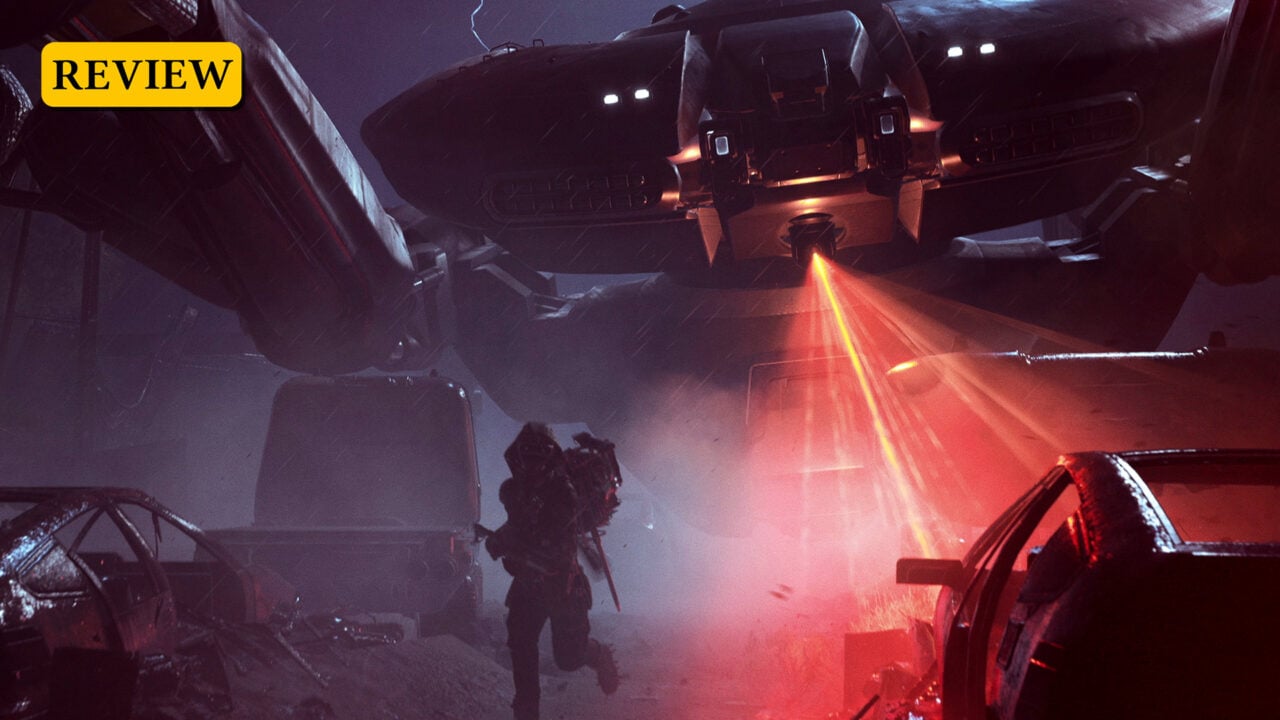
Arc Raiders: The Kotaku Review
As I’ve continued to sink hour after hour into **Arc Raiders**, I keep thinking about Paintball—a sport I’ve never spent any meaningful time with but have always been attracted to, especially as a fan of video games where you shoot other people. Specifically, I reflect on the origins of this kind of sport, in which human beings willingly participate in a simulation of violent survival.
In Paintball’s case, the game was sparked by an argument between a country boy, Charles Gaines, and a city boy, Hayes Noel. It became a way to settle a score between two friends: Who is better equipped to survive in the wild? It turns out the country boy fared better, encapsulated by an anecdote that almost perfectly describes a kind of interaction I’ve had multiple times in Arc Raiders:
> “Within about 20 minutes, I came around a big maple tree and Hayes was sitting on a rock. I walked right up behind him, put the barrel of the gun right on his neck and said, ‘Alright, I don’t wanna shoot you. Who wins?’”
This experience inspired the duo to gather a whole bunch of friends to play out more survival scenarios, equipped with nonlethal—but still painful—weaponry to defend themselves. According to Gaines, Paintball was an exciting game of “stealth, wood skills, and strategy. The idea of running through the woods, competing and symbolically surviving, those go way back into our genetic development.”
—
I’m convinced **Arc Raiders** taps into similar primal instincts, lighting up a part of the brain that is both thrilled and terrified about entering a dangerous area to earn rewards, establish victory, and get out alive. Of course, Arc Raiders’ arsenal is way more diverse and, mercifully, free of any physical pain from getting shot. Losing, though? That sting is something you still have to learn to deal with.
If you’re up for the mental challenge of tolerating devastating losses baked into a thrilling set of third-person shooter encounters, Arc Raiders distills that distinctive combination into a single package like few other games out there.
—
### What is Arc Raiders?
Arc Raiders is a **PvPvE extraction shooter** set in the late 2100s, following two world-ending events: a total ecological collapse that destroyed human civilization as we know it, and the arrival of deadly, autonomous machines called Arc that have made recovery almost impossible.
Nobody knows where these machines came from. They were beaten back once but have now returned with more sophisticated, deadlier designs. Humanity’s only option for survival is to live underground while brave pioneers, called Raiders, venture Topside to collect resources and manage what little infrastructure remains.
Players take on the role of Raiders, accomplishing quests related to the underground community Speranza’s survival, while grabbing items to craft weapons, gadgets, and restorative items.
—
### Gameplay: Gathering and Surviving
The gameplay divides roughly into two parts: inventory management and combat survival.
**Inventory management** involves flipping through menus, breaking down found items, and combining them to build resources—essentially the “vegetables” you have to eat before the “main course” of shooting and survival.
The **other half**—the meat and potatoes—is the shooting and surviving necessary to acquire that loot and, crucially, hang onto what you’ve claimed.
—
### Maps and Missions
Each match lasts roughly 15 to 30 minutes on one of four post-apocalyptic Italian maps. Your goal is to grab as much as you can and leave before the timer runs out—or before you get gunned down, whether by an Arc machine or another player looking to steal your gear.
If you make it back alive, you keep everything. Die, and your loot is left behind for others to claim.
—
### The Social Dilemma: PvP isn’t Optional
Other players aren’t necessarily enemies. But when two un-partied players encounter each other, a sort of prisoner’s dilemma unfolds:
– Is this person a threat?
– Can they be trusted?
– Will you feel safe if you take your eyes off them?
– How should you split any loot you find together?
After spending significant time in-game, Arc Raiders has thoroughly won me over with its slow-paced, tactical third-person shooting and satisfying game of collecting *Things™*. But the social game between two random players has become the most engaging aspect for me.
—
### Communication Without Words
I rarely use a mic, but thankfully Arc Raiders has an emote system with a decent range of options. This lets me get a sense of someone and decide if I feel safe traveling with them for the rest of the match.
All these unpredictable elements—the fluctuating loot, random Arc locations, and whether other players are friendly or hostile—combine to create a game engine that generates interesting situations and memorable encounters.
—
### An Unsurpassed Experience
From escape sequences and tense sniper battles to close-quarters showdowns and stealthy infiltrations, Arc Raiders offers:
– Quests to hunt down tough Arc machines
– Spontaneous firefights fueled by whoever’s on the map and their agendas
Gone is the safety of a single-player campaign with checkpoints and forgiving game overs. Gone too are prescribed PvP rules and static win/lose conditions.
Here, it’s all live and in the moment. You, alone or with two squadmates, are literally fighting to keep what you’ve claimed. You don’t raise your gun just to look cool—you do it because it’s a tool for survival, with danger lurking around every corner.
—
### The Primal Thrill and Stress of Arc Raiders
This game taps deeply into the brain’s fight-or-flight mechanism. For some, Arc Raiders will be too stressful. For others, it’s the thrilling pulse of third-person shooting straight from the tap.
After hours invested, it feels like the experience I’ve been training for by loving tactical shooters with survival elements for so long. The risk of losing your hard-earned loot triggers an adrenaline rush unique to extraction shooters—and **Arc Raiders** stands out as one of the best executions of the format.
—
### Raiders of a Lost Age: The Extraction Shooter Experience
Arc Raiders offers a solid variety of maps to enter and exit, hopefully wealthier than when you arrived. The four launch maps depict post-apocalyptic Italy in different states and environments, each presenting countless stealth and combat scenarios.
Upon successfully extracting, you keep your loot and earn XP to spend on skill trees. You also gain **Cred** to progress “Raider Decks,” the game’s take on battle passes. Currently, only one free Raider Deck exists, offering cosmetics and items as rewards.
—
### Exploring the Field
Out in the field, you encounter:
– Wide-open spaces littered with broken-down machines from past battles
– Abandoned buildings with winding staircases and long empty hallways
– Rust, peeling paint, and signs from a forgotten era
Weather conditions and changes in time of day keep the maps feeling fresh and varied.
—
### Risk vs. Reward: Loot and Noise
Loot is everywhere, but breaking into locked caches is risky due to the noise and time required. You might find that elusive piece of rusted gear crucial for crafting or upgrading your weapons back home.
Quests lead you to important locations for gathering items or activating infrastructure, rewarding you with extra loot. These missions aren’t riveting on their own and often have vague directions, but this encourages genuine observation rather than mere waypoint chasing.
—
### Immersive Quests and Encounters
For example, one quest asked me to find a room with a beautiful view of the map. That sent me exploring until I found a window that offered a pretty vista—exactly what the quest was after.
Though most quests boil down to “go here, grab that, flip a switch,” encounters with other players and roaming Arc machines make these objectives much more exhilarating.
—
### Loot Hotspots and Player Conflict
Certain map areas hold better loot but attract greater danger—either from aggressive Arc patrols or from other players seeking those same rewards.
It’s a tense choice: shoot or sneak your way to survival?
—
### Loot Quality and Customization
Items are color-coded by quality:
– Gray: common
– Green: better
– Blue: even better
– Purple: excellent
– Gold: GOAT (greatest of all time)
Purple guns, for example, are generally more desirable than green ones, and green crafting materials yield better items than gray.
—
### Augments and Loadouts
You customize your Raider with an **Augment** that affects your shield type and inventory size. You always have a free option sufficient for most runs, including a gun with ammo. Unless you want a specific challenge, you’ll never start with just your fists.
—
### Tactical, Weighty Combat
Combat feels deliberate and semi-realistic, reminiscent of **The Last of Us**, **Metal Gear Solid**, or **Resident Evil 4**, rather than fast-paced shooters like **Vanquish** or **Max Payne**.
The finite, essential loot and slower pace give it a survival-horror vibe—minus the screaming monsters, but with deadly machines to dread.
—
### The Deadly and Fun Arc Enemies
Arc machines pose a significant threat: flying enemies, deadly weapons, and unpredictable patrols keep you on edge. Shooting them is satisfying—their metal parts fly off, dents appear on armor, and drone varieties spin and sputter when hit.
It reminded me of **clay pigeon shooting**—you have to aim carefully, shoot key parts, and understand enemy capabilities.
—
### Intelligent and Unpredictable AI
Because the Arc are machines, they don’t repeat canned dialogue, and their patrol patterns feel believable as a continuous force trying to keep you off the map. Some AI behaviors were developed using machine learning, resulting in satisfying unpredictability.
—
### Players: Allies or Enemies?
But your real threats are other players. They may be opponents or uneasy allies, sparking social dynamics that rarely play out the same way twice.
—
### Forming Alliances and Sharing Keys
You may embark solo and find an ally en route. Perhaps they hold keys to unopened areas—great for loot and quest progression.
If you’re mic-shy, you can use a ping system to communicate inventory items without saying a word.
—
### Memorable Encounters
Once, I teamed up with two players aiming to take down a Leaper, a deadly Arc. We dug in, defeated it, grabbed its loot, then fended off another team trying to ambush us.
In another instance, I joined a player on a quest to reach the Control Tower with a key I had. However, the door was blocked by a player-made Door Blocker. We broke it down, alerting an ambush of “Pops,” explosives that detonate when close. After clearing them, we secured the area and claimed the loot left behind.
—
### Death and the Economy of Loot
You can lose everything when you die—guns and items have durability meters, too. But when your gear falls into others’ hands, it contributes to the game’s evolving economy; your trusty shotgun could become their chaos tool.
Lately, I’ve been gifting overflowing inventory gear to other players, hoping to aid their future battles.
—
### PvP: A Pendulum of Conflict and Cooperation
Player interactions range from hostile firefights to fragile alliances. Sometimes you influence which way the pendulum swings; other times, you must dodge or flee.
—
### Home Base: Inventory Management
Between matches, you tinker with your inventory in a grid-based system, breaking down items and crafting new ones. This is a time-consuming process requiring commitment.
—
### The ‘Joy’ of Menu Diving
Rough estimates suggest I spend about a third of my playtime sorting menus—back and forth, managing items, combining materials.
—
### Areas for Improvement
The menu is serviceable but could improve. Crafting requires switching to a separate workshop menu instead of a simple right-click option. There’s no way to lock or mark items to prevent accidental selling or destruction.
Some item descriptions are vague—e.g., a “Rusted Gear” says its only purpose is to be recycled, but it also upgrades your gun workshop.
—
### What’s it All For?
Shooting, surviving, socializing, and crafting form satisfying loops that can theoretically run forever, as better loot becomes accessible.
—
### Projects and Server Wipes
Your current ultimate goal is investing in “Projects”—building a caravan to send your Raider to unknown frontiers. This serves as a narrative wrapper for a mechanic common in survival games and extraction shooters: the server wipe.
Because loot and power can escalate uncontrollably, wipes act like controlled burns to reset the balance.
—
### A Unique Wipe Mechanism
Unlike many games, Arc Raiders doesn’t enforce a strict global wipe schedule. Instead, you opt into it by sending off your character, their loot, skills, and workshop upgrades.
In return, you gain XP bonuses and skill tree points to invest in new progress.
At the time of writing, no one can yet send off their character—this will happen during a timed event.
—
### Trials and Leaderboards
Weekly trials challenge you with objectives like damaging specific Arc or searching loot caches, letting you ascend publicly viewable leaderboards and compete globally.
—
### The Story Ahead
The origin of the Arc remains a mystery in-game. Some speculate that humans escaped Earth before collapse and may be behind the Arc, possibly mining the planet remotely.
Certain quests hint the Arc behavior is changing, while NPCs focus on basic survival concerns for Speranza’s community.
—
### Future Plans and Narrative Potential
The 2025 roadmap promises new Arc types and additional narrative content to unravel the mystery.
—
### Conclusion
Arc Raiders naturally will evolve, but as it stands now, it offers:
– Eustress-inducing combat with real consequences
– Unpredictable player encounters
– Challenging AI threats
– Endless loot hunting and crafting
– Gorgeous, atmospheric maps brought to life by top-tier sound design
From the satisfying clang of metal to the terrifying digital chirps of Arc machines, Arc Raiders delivers a compelling experience that’s part survival, part shooter, and all adrenaline.
—
If you have an appetite for hunting, gathering, and tactical shooter gameplay wrapped in a rich social experience, Arc Raiders is a standout title worthy of your time.
https://kotaku.com/arc-raiders-review-extraction-loot-shooter-embark-2000642198


Bitcoin ATMs Under Fire: How Scammers Steal Millions From Victims
**Federal Prosecutors Warn Bitcoin ATMs Facilitate Widespread Cryptocurrency Scams**
Federal prosecutors have raised concerns about Bitcoin ATMs being used to facilitate widespread cryptocurrency scams across the United States. Washington, D.C., Attorney General Brian Schwalb has revealed that these machines have enabled scammers to steal millions of dollars from victims, with elderly individuals being the primary targets.
### Rising Scam Reports Linked to Bitcoin ATMs
Across multiple counties in the U.S., reports of cryptocurrency fraud cases involving Bitcoin ATMs are on the rise. Scammers often exploit vulnerable older adults through fear tactics, such as falsely claiming that relatives are facing arrest or that victims owe penalties for missing jury duty. These criminals then demand payment in Bitcoin and direct victims to nearby Bitcoin ATMs to complete the transactions.
The effectiveness of these scams lies in the sense of panic and urgency created by the perpetrators. Victims feel compelled to act quickly without verifying the authenticity of the claims.
### A Victim’s Story: Maryland Retiree Loses Life Savings
Maryland retiree Diane Reynolds is one such victim of a Bitcoin ATM scam. She received an online message warning that access to her computer had been blocked and advising her against turning it on or off. Following instructions, Reynolds called a provided phone number supposedly for tech support, but instead reached a scammer.
The scammer claimed hackers had accessed her bank accounts and insisted she must convert her money to Bitcoin immediately. Under pressure, Reynolds withdrew her entire bank balance of approximately $13,100. The scammers directed her to use a Bitcoin ATM at a local gas station operated by Athena Bitcoin, a company running over 4,000 Bitcoin ATM terminals across multiple states.
### Concerns Over Bitcoin ATM Operators
Attorney General Schwalb notes that Reynolds’ case is just one of many similar incidents nationwide. These schemes have become increasingly common in recent months, with Bitcoin ATMs serving as tools scammers use to defraud people.
“Bitcoin ATMs are a tool that scammers, that criminals, are using to separate people,” Schwalb said. He added that while operators are aware of these criminal activities, they often fail to put sufficient measures in place to prevent fraud.
Additionally, Bitcoin ATM operators profit from each transaction through substantial fees, even when deposits result from fraudulent activity. This financial incentive, Schwalb argues, undermines efforts to combat fraud.
### Legal Action Against Athena Bitcoin
In September, Schwalb filed a lawsuit against Athena Bitcoin, alleging that the company charged undisclosed transaction fees and failed to implement adequate anti-fraud measures. These legal actions aim to hold Bitcoin ATM operators accountable for enabling theft through their systems.
### Company Response and Defense
Athena Bitcoin strongly denies the allegations. According to company representatives, their Bitcoin ATMs include multiple fraud prevention features designed to protect customers.
“Our kiosks employ multiple safeguards, from prominent warnings and daily transaction limits to five separate verification screens designed to prevent coerced transactions,” the company stated. Athena Bitcoin plans to vigorously defend itself against the charges in upcoming court proceedings.
### Victim’s Legal Pursuit
Diane Reynolds has also initiated legal action against Athena Bitcoin. Her attorney, Vaught Stewart, contends that the company knowingly allowed fraud to occur and profited from the transaction despite clear warning signs of criminal activity.
—
As cryptocurrency scams continue to evolve, authorities urge the public—especially the elderly—to remain vigilant when approached with urgent demands for Bitcoin payments via ATMs. Awareness and verification remain key tools in preventing financial loss from such fraudulent schemes.
https://coincentral.com/bitcoin-atms-under-fire-how-scammers-steal-millions-from-victims/


Nasdaq Embeds AI Capabilities in Surveillance Platform
**Nasdaq Unveils Advanced AI Enhancements to Market Surveillance Platform**
Nasdaq, Inc. has announced a series of significant enhancements to its market surveillance platform following the successful completion of a pilot that embedded advanced AI functionality throughout every stage of market abuse investigation.
The platform, already trusted by financial institutions worldwide—including 50 exchanges and 20 international regulators—offers cutting-edge capabilities that cover the entire investigation spectrum, from anomaly detection to regulatory enforcement.
**Addressing Sophisticated Market Manipulation**
“Manipulative actors are increasingly coordinating sophisticated schemes through indirect relationships that evade traditional detection methods, demanding equally sophisticated tools that can unmask hidden connections and advance at a faster rate than the threats we face,” said Edward Probst, Head of Regulatory Technology at Nasdaq.
With growing adoption of these enhanced functionalities, Nasdaq is uniquely positioned to leverage the collective strength of its client community in upholding the integrity of global capital markets.
**Challenges with Traditional Detection Methods**
As market manipulation schemes become more sophisticated across jurisdictions, reliance on manual detection processes has proven increasingly ineffective and labor-intensive.
Nasdaq’s new AI-driven detection capabilities utilize extensive industry and internal data sets to deliver comprehensive activity assessments and predictive analytics, dramatically improving detection accuracy while reducing false positives. This empowers market operators and participants to more precisely identify high-risk activities and instruments.
These added AI features build upon existing platform functionalities that streamline the triage and examination processes for suspected abuse cases, enabling global regulators to accelerate enforcement actions against market misconduct.
Nasdaq plans to roll out these enhancements to all market surveillance platform customers starting in Q4 2025.
**Transforming Market Abuse Detection, Analysis, and Regulatory Review**
During a strategic partnership with the Capital Markets Authority of Saudi Arabia, the pilot AI-powered anomaly detection tools were employed to identify unusual activity linked to predefined behavioral patterns.
The pilot achieved an 80% identification rate of pump-and-dump schemes using historical data—significantly outperforming traditional detection methods.
“We welcome the opportunity to partner with Nasdaq and demonstrate our relentless commitment to maintaining the trust and integrity of Saudi Arabia’s capital market,” said Saeed Ali Juraybi, Director of Market Surveillance and Analysis at the Capital Markets Authority of Saudi Arabia.
“The dramatic improvement in detection accuracy experienced during the pilot validates the transformative potential of these AI capabilities. Global capital markets face increasingly sophisticated, cross-border threats, and this technology represents a quantum leap in our ability to identify and combat market manipulation.
By working collectively to develop and enhance innovative new tools, we can stay ahead of emerging threats.”
**Tailored Surveillance Across Global Markets**
Nasdaq’s surveillance technology supports the world’s most comprehensive range of asset classes and market structures, connecting to vast data sets throughout the lifecycle of trades and subsequent review processes.
“Each market segment benefits from tailored multi-agent behaviors adapted to specific trading patterns and regulatory requirements,” explained Tony Sio, Head of Regulatory Strategy and Innovation at Nasdaq.
“The platform’s machine learning models continuously learn and adapt to new market conditions and manipulation tactics. This dynamic defense system equips market operators and regulators to stay one step ahead of sophisticated market abuse schemes.”
**Broad Commitment to Fighting Financial Crime**
As part of Nasdaq’s broader mission to combat financial crime, Nasdaq Verafin recently introduced the Agentic AI Workforce—a suite of digital workers designed to revolutionize the efficiency and effectiveness of financial institutions’ anti-money laundering (AML) programs.
Globally, Nasdaq’s technology serves 97% of systematically important banks, half of the world’s top 25 stock exchanges, 35 central banks and regulatory authorities, and over 3,800 clients across the financial services industry.
Leveraging deep industry experience, technological expertise, and cloud-managed services, Nasdaq continues to help financial services firms solve complex operational challenges while driving modernization across the industry.
—
*Source: Nasdaq*
https://www.marketsmedia.com/nasdaq-embeds-ai-capabilities-in-surveillance-platform/