

Gender pay gap widens for 2nd year in a row Data from the U. S. Census Bureau shows that women working full-time, year-round jobs still earn less than men.
https://abcnews.com/video/131447606/
Category Archives: gender

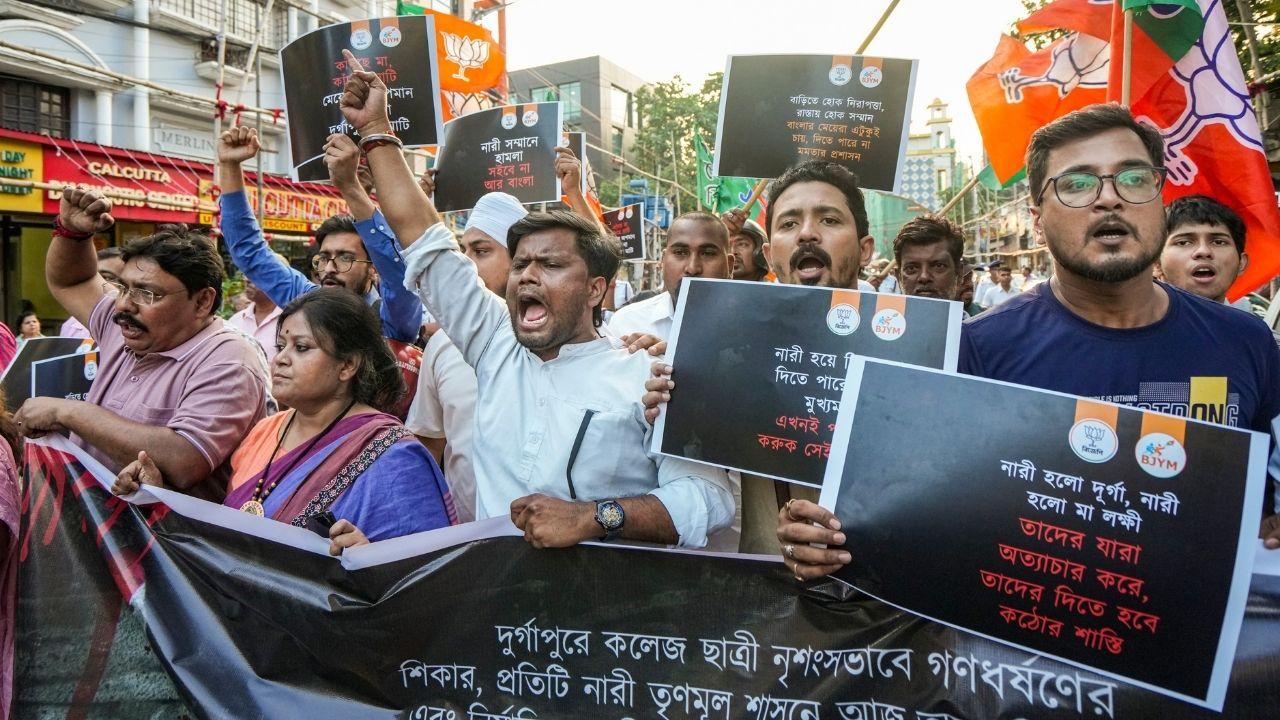
Court remands 2 more accused in Durgapur `gangrape` case to nine day custody
A local court in West Bengal on Monday remanded two men to police custody for nine days in connection with the alleged gangrape of a medical student in Paschim Bardhaman district. Earlier, three other accused were remanded to 10-day police custody on Sunday.
The Sub-Divisional Judicial Magistrate (SDJM) in Durgapur ordered the nine-day custody for the two men following a request from the prosecution. The prosecution alleged their direct involvement in the case alongside the previously arrested three accused and sought custody for questioning and further investigation.
The medical student, who hails from Odisha, was allegedly gangraped outside the campus of a private medical college in Durgapur on Friday night. The incident occurred when she had gone out for dinner with a friend.
Her parents subsequently lodged an FIR with the New Township police station.
All five accused are scheduled to be produced before the court on the next hearing date.
*Note: This story has been sourced from a third-party syndicated feed. Mid-day accepts no responsibility or liability for the dependability, trustworthiness, reliability, or accuracy of the text. Mid-day management reserves the right to alter, delete or remove the content at its sole discretion without prior notice.*
https://www.mid-day.com/news/india-news/article/durgapur-gangrape-case-court-remands-2-more-accused-in-nine-day-police-custody-23598525

Reese Witherspoon’s impact on female-led films
Reese Witherspoon’s production company, Hello Sunshine, has been a game-changer for female-led films.
The company focuses on telling stories from women’s perspectives, revolutionizing the industry and opening doors for more diverse and authentic narratives.
By championing female voices, Hello Sunshine continues to make a significant impact on Hollywood and beyond.
https://www.newsbytesapp.com/news/entertainment/how-reese-witherspoon-is-changing-women-s-stories/story
Mumbai Bank Launches 0% Interest Loans For Women Recipients Of Ladki Bahin Scheme; BJP Leader Pravin Darekar Supports Initiative
**Mumbai Bank Launches Zero-Interest Loans to Support Women Under Ladki Bahin Scheme**
Mumbai: As the Ladki Bahin scheme experiences a slight decline, Mumbai Bank has introduced a new initiative aimed at supporting women beneficiaries of the program. Under the vision of BJP leader Pravin Darekar, the bank is offering zero percent interest loans to women recipients of the Chief Minister’s Ladki Bahin Yojana, which was launched on September 4.
The rollout event took place at Mumbai Bank’s head office auditorium in Fort and was attended by the bank’s chairman and MLA Pravin Darekar. During the press conference, Darekar shared, “Chief Minister Devendra Fadnavis personally addressed the sisters present at the program where loans were provided at zero percent interest from Mumbai Bank. The Maharashtra government launched the Ladki Bahin Yojana to provide ₹1,500 per month to women in order to improve their financial condition and ensure their overall development.”
He further explained, “The women can use the monthly amount to invest in their businesses. This idea aligns with the vision of Honorable Chief Minister Devendra Fadnavis Saheb. I requested the Chief Minister to allow me to provide 1 lakh interest-free loans to these beloved sisters.”
### Key Details of the Loan Program
Under this initiative, Mumbai Bank will offer loans up to ₹1 lakh to Ladki Bahin beneficiaries at zero percent interest. According to a report by *Saamana*, approximately 5,000 women are expected to benefit from this program. At the launch event, loans were disbursed to the first 200 beneficiaries.
The event was also attended by Mumbai Bank Vice President Siddharth Kamble, along with other dignitaries including Shivajirao Nalawade, Prasad Lad, Nandkumar Katkar, Shilpa Sarpotdar, Tejaswini Ghosalkar, Kavita Deshmukh, and Sandeep Ghandat.
### Introduction of QR Code Service
In addition to the loan scheme, the bank also introduced a QR code service rollout at the same event, aimed at facilitating easier and more secure transactions for beneficiaries.
—
### Recent Updates on the Ladki Bahin Scheme
The Maharashtra government encountered controversy and audits in 2025 over irregularities in the scheme’s benefit disbursements. Minister Aditi Tatkare revealed in August that around 26 lakh women might be ineligible for the benefits.
In response, a physical verification drive was launched to confirm eligibility based on criteria such as age, income, and household status. The government temporarily paused payments in July 2025 to complete this verification process, with plans to resume payouts to eligible women subsequently.
An audit uncovered fraudulent enrollments, including over 14,000 men listed as beneficiaries, resulting in ₹21 crore being wrongly disbursed. Opposition leaders have demanded a CBI investigation into alleged scams worth ₹4,800 crore linked to the scheme.
Despite these challenges, the government disbursed the July installment of ₹1,500 on August 8 to the verified eligible beneficiaries.
—
Mumbai Bank’s new zero-interest loan program aims to revitalize support for women under the Ladki Bahin scheme, promoting financial empowerment and encouraging entrepreneurship among Maharashtra’s women.
https://www.freepressjournal.in/mumbai/mumbai-bank-launches-0-interest-loans-for-women-recipients-of-ladki-bahin-scheme-bjp-leader-pravin-darekar-supports-initiative


Re-imagining the political economy of learning
Despite modest improvements, Pakistan’s education system remains structururally unbalanced, gender-biased, and administratively bloated. This is a call for bold reform: a shift to female-led primary schooling, decentralisation through maternal engagement, curriculum downsizing, and the accreditation of non-formal education pathways.
By placing mothers and female teachers at the heart of school education and reorienting education toward life and occupational skills for sustained livelihoods, Pakistan can reshape its destiny and political economy.
### A Stark Reality
Thirty-nine percent of Pakistan’s 241 million people are illiterate. Despite modest gains, the education sector is critically underperforming. With a Human Development Index (HDI) value of 0.540, the country ranks 164th out of 193 nations, underscoring pervasive deficits in literacy, life expectancy, and income.
As a signatory to the Dakar Declaration, Pakistan pledged ambitious targets: universal primary education, gender parity, and quality education for all. A full decade later, these promises remain largely unfulfilled. According to the Economic Survey 2024-25, 38 percent of children aged 5-16 remain out of school. Educational outcomes lag behind South Asian peers on nearly every metric.
### Gender Gap and Learning Inequity
Girls account for 43 percent of total enrollment, but their numbers diminish sharply across levels—37 percent in primary, 20 percent in middle, and fewer than 10 percent in higher secondary education. Completion rates are dismal: only 42 percent of girls complete primary education compared to 51 percent of boys.
Female literacy stands at 52.8 percent, trailing behind men’s 68 percent. The gap widens in rural areas, where women’s literacy averages 38 percent compared to over 60 percent for men.
### Structural Imbalance in Public Education
Public spending on education has risen to 1.91 percent of GDP—a modest improvement from the previous year but still far below UNESCO’s recommended 4 percent. Most of this allocation goes to recurrent expenditures that sustain a bloated operational architecture rather than promote catalytic reform.
School budgets tend to favor pre-existing infrastructure due to outdated costing methodologies, leaving girls’ schools under-resourced and underserved. While a boys’ school exists within a kilometer of 77 percent of villages, girls’ schools meet this criterion in only 69 percent of villages. This distance barrier deters access and reinforces dropout rates.
### Buildings, Bureaucracy, and Barriers
Infrastructure remains a glaring bottleneck: 17 percent of primary schools lack appropriate buildings, with many missing basic resources like furniture, toilets, blackboards, and instructional tools.
Parental mistrust of the schooling environment, especially for daughters, remains high. Teachers, though relatively better paid, are constrained by a system that prioritizes scale over substance. Recruitment is skewed, training is patchy, and ongoing support is nearly nonexistent. Many teachers describe their experience as punitive, disconnected, and uninspiring.
Moreover, the education bureaucracy is overstaffed with administrators rather than technical staff who can support pedagogy, regulate quality, and assess learning outcomes. Most districts lack capacity for instructional coaching or effective curriculum delivery oversight.
A recalibration is imperative to reduce administrative bloat, expand technical staffing, and focus on direct academic support.
### A Feminized Frontline for Education
Among Pakistan’s most underutilized assets in the education ecosystem are mothers—present, engaged, and consistently invested in their children’s well-being. In rural and peri-urban areas, fathers often travel for work or remain detached from schooling concerns, leaving mothers as frontline guardians of children’s rights.
The child in the village, the teacher in the classroom, and the mother at the doorstep must all be woven into a shared story of learning.
To harness this untapped reservoir of advocacy and support, primary schooling should be assigned exclusively to female teachers, especially in underserved regions. Female educators can better engage mothers as partners—not only in academic learning but also in child protection, attendance monitoring, and community-led support systems.
Together with community teachers, mothers can become potent champions of education continuity and safe learning environments. Such a gender-sensitive shift can catalyze trust and traction. Children, especially girls, are more likely to attend schools where maternal figures have a visible role.
This approach also creates a feedback loop where female teachers and mothers co-create solutions, monitor school conditions, and advocate for improvements.
### Revitalizing School Management Committees
School management committees (SMCs) must be revitalized with maternal inclusion. Over 90 percent of SMCs exist only nominally, lacking operational clarity and ownership. For example, the revamped Punjab SMC Policy of 2024 has seen inconsistent implementation.
Women-led, community-rooted governance must become the foundation of sustainable reform. Rather than expanding government control, primary education should be privatized—especially in underserved areas—with robust regulatory oversight.
Public-private partnerships, carefully structured and monitored, can diversify options, stimulate innovation, and relieve the public sector of its unwieldy operational load.
### From Access to Autonomy
Girls’ education must transcend mere enrollment targets to become a strategy for transformation. Safe environments, female teachers, flexible pathways, and curriculum relevance remain pivotal to girls’ access to education.
For girls to thrive, they must not only attend school but also engage actively, excel academically, and envision futures beyond inherited constraints.
Non-formal education (NFE) models should be accredited through centralized assessments, allowing marginalized children—especially girls—to gain certified completion of primary schooling.
For rural and culturally constrained communities, NFE pathways must be extended to higher secondary levels, offering continuity, credibility, and mobility to girls aspiring to overcome barriers to education.
### Curriculum for Livelihoods, Harmony, and Humanity
The current syllabus is cognitively overloaded and socio-politically skewed. At primary and secondary levels, the number of subjects must be drastically reduced, prioritizing comprehension over memorization and relevance over repetition.
Such issues have significantly contributed to a widespread denouncement of education’s value, especially among underserved segments of society where schooling often appears irrelevant to livelihood prospects.
To align learning with future livelihoods, technical content and occupational skills must be embedded across disciplines. The promotion of do-it-yourself (DIY) learning, craftsmanship, repair skills, digital literacy, and entrepreneurial thinking can nurture both competence and confidence.
Equally urgent is the need for life skills education—financial literacy, socialization, hygiene practices, ecological awareness, and civic responsibility. These should replace religiously prescriptive content, which is better cultivated at the household level.
Where religious instruction is retained, it should be reframed as civic ethics rooted in humane, tolerant behaviors and interfaith harmony.
### A New Political Economy of Learning
Pakistan’s education crisis is not merely a sectoral issue; it is a political economy dilemma rooted in priorities, institutional design, and ideological discomfort with decentralization.
Reform cannot be incremental; it must be structural, beginning with a reassessment of how education is defined and whom it serves.
If Pakistan is to achieve inclusive growth, social stability, and democratic resilience, education must be treated as infrastructure, not charity.
The current system must be reimagined and transformed: privatized at the base, regulated at the core, and liberated from bureaucratic grip.
The child in the village, the teacher in the classroom, and the mother at the doorstep must be woven into a shared story of learning—a story not of quotas and expenditure, but of dignity, autonomy, and aspiration.
Let Pakistan’s next decade of education be not just a revision but a reinvention.
https://www.thenews.com.pk/tns/detail/1346843-re-imagining-the-political-economy-of-learning