

President Donald Trump will meet with New York Mayor-elect Zohran Mamdani on Friday after months of name-calling and threats against the 34-year-old democratic socialist, who has vowed to resist his agenda. “We have agreed that this meeting will take place at the Oval Office on Friday, November 21st,” Trump said in a social media post Wednesday evening. Mamdani’s campaign confirmed the meeting. “As is customary for an incoming mayoral administration, the Mayor-elect plans to meet with the President in Washington to discuss public safety, economic security and the affordability agenda that over one million New Yorkers voted for just two weeks ago,” Mamdani spokeswoman Dora Pekec said in a statement. Earlier in the week, Trump had signaled his intention to meet with Mamdani, telling reporters on Sunday night, “We’ll work something out.” Mamdani will be sworn in as New York’s first Muslim mayor on Jan. 1. Trump waded into the New York mayoral race by endorsing one of Mamdani’s opponents, former New York governor Andrew M. Cuomo – a Democrat who ran as an independent. The president has kept up a relentless line of attack on Mamdani over his policy positions, which include free city bus services, freezing rent on rent-stabilized apartments, launching city-owned grocery stores and free early child care. Ahead of the mayoral election, Trump also threatened to cut funding to New York and “take over” the city in the event of a Mamdani victory. Trump wields considerable influence over federal dollars going to New York City, where the 2026 operating budget relies on $7.4 billion in federal funding, The Washington Post has reported. Previously, Trump threatened to arrest Mamdani if he were to block Immigration and Customs Enforcement raids in New York. He has variously called Mamdani “terrible,” “bad news” and a “total nutjob.” Mamdani has also faced a barrage of Islamophobic attacks and baseless questions about his citizenship status from some Trump supporters and Republican lawmakers – including from Rep. Andrew Ogles (R-Tennessee), who referred to Mamdani as “little muhammad,” called for him to be deported and asked the Justice Department to investigate him earlier this year. Mamdani was born in Kampala, Uganda, to parents of Indian origin. The family moved to New York City when Mamdani was 7, and he became a naturalized U.S. citizen in 2018. Mamdani has not backed down in the face of Trump’s insults and threats. In his victory speech, Mamdani said New York can become a model for how to defeat Trump “by dismantling the very conditions that allowed him to accumulate power.” “So, Donald Trump, since I know you’re watching, I have four words for you: Turn the volume up,” he said. He has been a vocal critic of the Trump administration’s agenda, especially an immigration crackdown that has targeted Democratic-led cities. In his first news conference after being elected, Mamdani said he would address the “twin crises” of “an authoritarian administration and an affordability crisis.” Recently, Mamdani said he would contact the White House as he prepares to take office, emphasizing his responsibility to work collaboratively, even with political adversaries. “I’ll say that I’m here to work for the benefit of everyone who calls the city home, and that wherever there is a possibility for working together toward that end, I’m ready,” Mamdani told NBC New York last week. “And if it’s to the expense of those New Yorkers, I will fight it.” Stay informed and connected — subscribe to The Philadelphia Tribune NOW! Click Here Keep it Clean. Please avoid obscene, vulgar, lewd, racist or sexually-oriented language. PLEASE TURN OFF YOUR CAPS LOCK. Don’t Threaten. Threats of harming another person will not be tolerated. Be Truthful. Don’t knowingly lie about anyone or anything. Be Nice. No racism, sexism or any sort of -ism that is degrading to another person. Be Proactive. Use the ‘Report’ link on each comment to let us know of abusive posts. Share with Us. We’d love to hear eyewitness accounts, the history behind an article.
https://www.phillytrib.com/news/state_and_region/trump-to-meet-new-york-mayor-elect-zohran-mamdani-on-friday/article_cbdd8fd2-6f9f-4f46-b5fa-b061a95507fd.html
Category Archives: politics

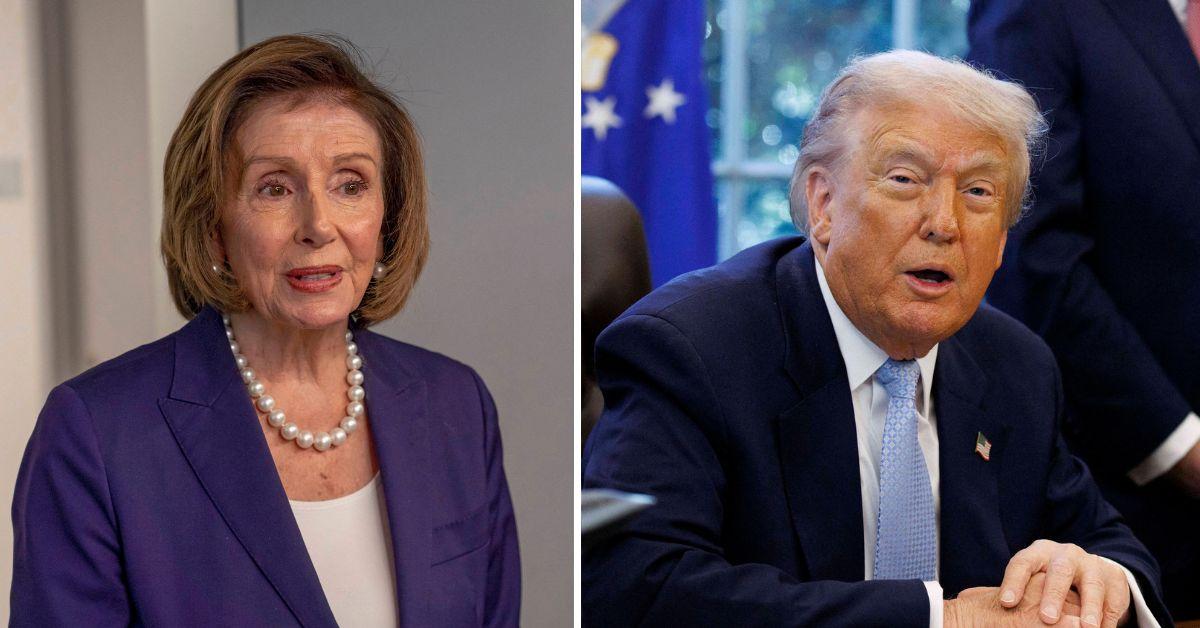
Nancy Pelosi’s Vicious Message to ‘Vile’ Trump After Calling Him ‘The Worst Thing on Earth’ — ‘I Could’ve Done Much Worse’
Nov. 20 2025, Published 1:45 p.m. ET Nancy Pelosi isn’t backing down from her comments calling Donald Trump a “vile creature,” RadarOnline.com can reveal. The former House Speaker, 85, showed she still has plenty of sass left in the tank when she also called the president, 79, “the worst thing on the face of the Earth” and boasted how she could have sunk even lower in her first interview since announcing her retirement. ‘I Could’ve Done Much Worse’ “I said that as a euphemism; I could’ve done much worse, Pelosi bragged to CNN’s Anderson Cooper in an interview that aired on Wednesday, November 19. The California Democrat went on to bash Trump’s second term. “He’s surrounded by much worse people than he was before,” Pelosi moaned. “There was some check on him before, but I don’t see that now. I think the people that he has appointed are probably the worst Cabinet in history.” The congresswoman made her original statements on CNN host Elex Michaelson’s The Story Is on November 2, while claiming Trump “doesn’t honor the Constitution.” Pelosi went on to claim the controversial politician has “turned the Supreme Court into a rogue court, He’s abolished the House of Representatives, He’s killed the press.” ‘An Evil Woman’ Pelosi and Trump have been at loggerheads throughout both of his terms as president, the first of which began in 2017. When the two-time House Speaker announced on November 6 that she will retire from Congress at the end of her current term after nearly four decades in the chamber, Trump celebrated while calling out his sworn enemy. “I’m glad she’s retiring. I think she did the country a great service by retiring,” the Commander-in-Chief told reporters hours after Pelosi said she would not seek re-election in 2026. Trump added: “I think she was a tremendous liability for the country. I thought she was an evil woman who did a poor job, who cost the country a lot in damages and in reputation. I thought she was terrible.” Sworn Enemies As House Speaker, Pelosi presided over both of Trump’s impeachments in December 2019 and again in January 2021. The first was over abuse of power and obstruction of Congress, while the second was related to the January 6, 2021, Capitol insurrection. Neither was successful. Pelosi also showed her open contempt for Trump when she tore up his copy of the State of the Union address after he delivered it to a joint session of Congress in February 2020, in what many consider to be her most defiant show of hatred toward the president. Who Will Succeed Pelosi? The first and only female House Speaker explained in a taped video message, “With a grateful heart, I look forward to my final year of service as your proud representative,” while announcing her retirement. Two candidates had already lined up to challenge Pelosi in 2026, including controversial far-left California State Senator Scott Wiener, who is terming out and now wants to represent San Francisco’s 11th District in Congress. Former tech executive Saikat Chakrabarti also entered the race and is even more progressive than Wiener, having previously served as the chief of staff to socialist New York Congresswoman .
https://radaronline.com/p/nancy-pelosi-vicious-message-trump-vile-creature-comment/

Judge tosses DOJ lawsuit challenging a New York law barring immigration agents from state courts
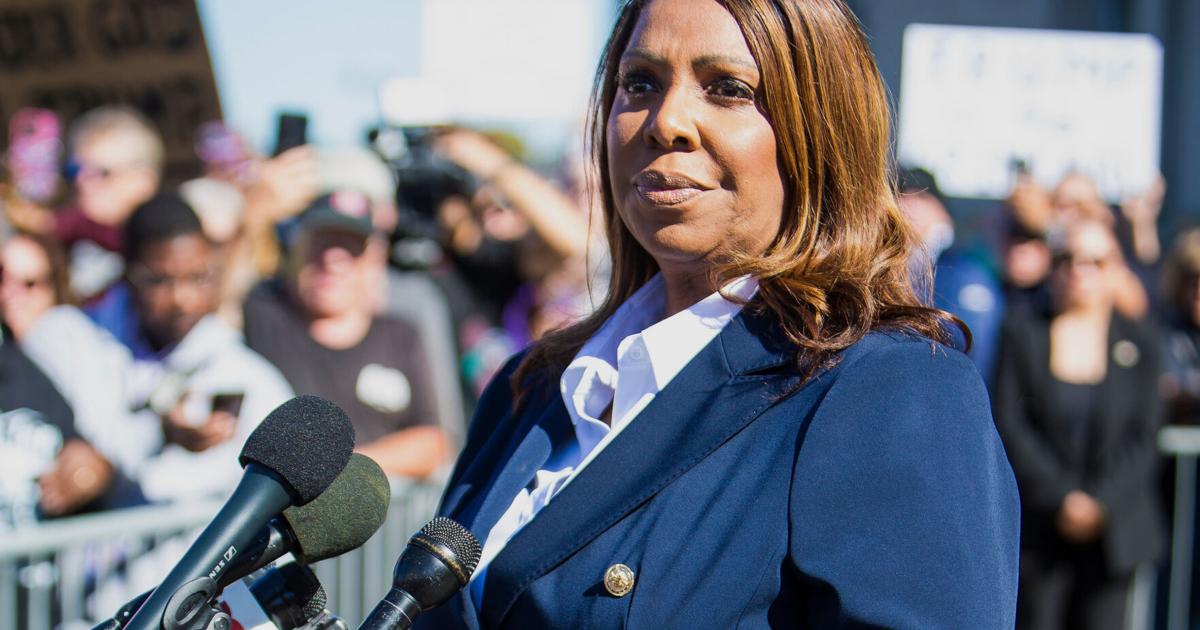
FILE – New York Attorney General, Letitia James, speaks after pleading not guilty outside the United States District Court on Friday, Oct. 24, 2025, in Norfolk, Va. (AP Photo/John Clark,File) ALBANY, N.Y. — A judge has dismissed a Trump administration legal challenge to New York policies that block immigration officials from arresting people at state courthouses, saying the federal government can’t force states to cooperate with those enforcement efforts. U.S. District Judge Mae D’Agostino late Monday granted New York’s motion to dismiss the government’s lawsuit, one of several legal actions from the Republican administration targeting state and local policies over immigration enforcement. The lawsuit challenged a 2020 state law banning federal immigration officials from arresting people who are coming and going from New York courthouses or in court for proceedings unless they have a warrant signed by a judge. The law, called the Protect Our Courts Act, was approved in response to enforcement actions at courthouses during President Donald Trump’s first term. The law doesn’t cover federal immigration courts. In its lawsuit, the Department of Justice claimed that the New York law and two related state executive orders were unconstitutional because they obstructed the execution of federal immigration authorities. D’Agostino, though, found that New York’s decision not to participate in enforcing civil immigration law is protected by the 10th Amendment, which sets boundaries on the federal government’s powers. “Fundamentally, the United States fails to identify any federal law mandating that state and local officials generally assist or cooperate with federal immigration enforcement efforts. Nor could it,” the judge wrote. “No such federal laws exist because the Tenth Amendment prohibits Congress from conscripting state and local officials and resources to assist with federal regulatory schemes, like immigration enforcement.” A Justice Department spokesperson said in response to an email seeking comment that, “President Trump’s immigration enforcement agenda is a top national security and public safety priority that this Department of Justice will continue to vigorously defend whenever challenged in court.” New York Attorney General Letitia James, a Democrat whose office argued for the lawsuit to be dismissed, said she was fighting for the “dignity and rights of immigrant communities.” “Everyone deserves to seek justice without fear,” James said in a statement. “This ruling ensures that anyone can use New York’s state courts without being targeted by federal authorities.” Stay informed and connected — subscribe to The Philadelphia Tribune NOW! Click Here Keep it Clean. Please avoid obscene, vulgar, lewd, racist or sexually-oriented language. PLEASE TURN OFF YOUR CAPS LOCK. Don’t Threaten. Threats of harming another person will not be tolerated. Be Truthful. Don’t knowingly lie about anyone or anything. Be Nice. No racism, sexism or any sort of -ism that is degrading to another person. Be Proactive. Use the ‘Report’ link on each comment to let us know of abusive posts. Share with Us. We’d love to hear eyewitness accounts, the history behind an article.
https://www.phillytrib.com/news/state_and_region/judge-tosses-doj-lawsuit-challenging-a-new-york-law-barring-immigration-agents-from-state-courts/article_baf5abe3-70bb-42b4-baf8-8a77189f50d2.html
Trump Administration Plans to Send Border Patrol to Charlotte and New Orleans
Plans for the operations were still being finalized, according to a federal official with knowledge of them.
https://www.nytimes.com/2025/11/11/us/trump-administration-plans-to-send-border-patrol-to-charlotte-and-new-orleans.html
CFTC a Natural Fit For Regulation: Solana Policy Institute’s President
Kristin Smith, president of the Solana Policy Institute, emphasizes the importance of a fully staffed Commodity Futures Trading Commission (CFTC).
Speaking to Romaine Bostick on “The Close,” Smith highlighted the need for both Republican and Democratic commissioners to be appointed. She stressed that all five seats on the commission must be filled to ensure effective leadership.
Smith pointed out that it is not sufficient to pass a law and then simply hand it over to a commission without the proper leadership in place. Full and balanced representation is crucial for the commission’s success.
(Source: Bloomberg)
https://www.bloomberg.com/news/videos/2025-11-11/need-leadership-at-cftc-solana-policy-institute-s-smith-video
Federal agents allegedly drive off with baby in car after father detained in Cypress Park raid
**Father Released After Detention During Immigration Raid at Cypress Park Home Depot**
*CYPRESS PARK, LOS ANGELES (KABC)* — A father is reunited with his family after being detained during an immigration raid at a Cypress Park Home Depot. Federal agents reportedly drove off in his car with his baby still in the backseat.
The 32-year-old father, who is a U.S. citizen, was released after two days in custody. He was detained last Tuesday following allegations that he threw rocks at agents during the raid.
According to witnesses, agents then took off in his vehicle, with his 1-year-old daughter still inside.
“There’s a baby in the back! Yeah, bro, and the guy was doing absolutely nothing, bro,” a witness said while recording the incident on a cellphone video.
The footage shows the child seated in the backseat, with two masked federal agents in the front of the vehicle.
Fortunately, the baby was later released to her family. Her grandmother reported that the child had a bruised cheek but was otherwise okay.
https://abc7.com/post/federal-agents-allegedly-drive-off-baby-car-father-detained-cypress-park-raid/18140560/

WLFI and TRUMP Prices Surge Amid Political Buzz—Can the Rally Last?
**WLFI and TRUMP Prices Surge Amid Political Buzz — Can the Rally Last?**
The post **WLFI** and **TRUMP** have recorded explosive price gains. WLFI’s price jumped over 35% in the past 24 hours, while TRUMP’s price spiked nearly 30%, with combined trading volumes crossing $1 billion. This rally comes amid renewed political attention, rising social media mentions, and speculative flows ahead of a busy U.S. macro week.
While these memecoins are enjoying unprecedented momentum, analysts warn that such rallies can fade as quickly as they form — making risk management crucial for traders chasing this narrative.
—
### WLFI Price Analysis: Political Hype Meets Market FOMO
World Liberty Financial (WLFI) has emerged as the week’s most talked-about token, riding a wave of political and retail speculation. Currently priced near $0.15, WLFI saw trading volume soar more than 800% within a day. Much of the enthusiasm stems from its association with Trump-linked branding and perceptions of upcoming policy-friendly shifts in the U.S. economy.
However, analysts note that whale concentration remains high, and reports of wallet blacklisting have raised concerns about centralization risks.
From a technical perspective, WLFI has broken past short-term resistance near $0.18, turning it into support. If momentum continues, the next target lies around $0.25–$0.28. Yet, profit-taking could trigger sharp retracements given its rapid, sentiment-driven rise.
As observed in the price chart, WLFI spiked heavily, piercing through pivotal resistance levels at $0.133 and $0.152. The token has now reached a resistance zone between $0.163 and $0.167 — a breakout from this zone would validate a bullish reversal.
The Stochastic RSI has entered the overbought zone, suggesting a potential small pullback on the horizon. Should this occur, the area around $0.15 may act as strong support, potentially triggering a rebound toward $0.18 and later $0.20.
—
### TRUMP Token Price Analysis: Speculation Fuels a Meme Revival
TRUMP’s price is experiencing a powerful revival, climbing above $10.70 amid soaring market enthusiasm. This surge follows increased media coverage of Trump-related political events and renewed speculation surrounding potential crypto policy discussions.
Trading activity on decentralized exchanges has spiked, making TRUMP one of the most active political memecoins in the market.
Technically, the token is approaching a breakout zone between $11.50 and $12.00. A successful breakout here could open the door toward $15.00, provided the volume sustains.
However, traders should remain cautious: TRUMP’s historical rallies have often been followed by 20–40% pullbacks within days. For now, sentiment and volatility — not fundamentals — are driving the price direction.
The price chart shows TRUMP has broken above a descending trend line with strong momentum, forming a rising parallel channel that indicates the beginning of a fresh ascending trend. RSI and CMF indicators are trending upward, supporting a bullish outlook.
Notably, RSI has not entered the overbought range since the token’s inception. If it does now, it could trigger a strong upswing, helping secure levels above $10.
—
### Market Outlook and Conclusion
The twin rallies in WLFI and TRUMP highlight how narrative-driven speculation continues to dominate certain segments of the crypto market. With rising macroeconomic optimism and political cycles fueling trader enthusiasm, these tokens have become short-term beneficiaries of attention-based liquidity.
However, long-term sustainability will depend on whether either project delivers tangible progress beyond branding.
As the week unfolds, WLFI and TRUMP are likely to remain key volatility plays in a politically charged crypto landscape. Traders should approach with caution and prioritize risk management amid unpredictable swings.
—
*Stay tuned for further updates on these dynamic tokens and their evolving market narratives.*
https://bitcoinethereumnews.com/tech/wlfi-and-trump-prices-surge-amid-political-buzz-can-the-rally-last/


Philippines Introduces Rice Import Quota to Balance Farmer Protection and Food Security
The Philippines has announced that it will reopen rice imports in January 2026, allowing 300,000 tonnes of rice to enter the country after several months of import restrictions. This move comes as local rice stocks run low and prices soften across Asia, raising questions about how far protectionist policies can go before hurting consumers.
Since September 2025, the Philippine government has banned rice imports to support domestic farmers during the harvest season and prevent a collapse in farmgate prices. This is a classic example of a protectionist policy—a government action designed to shield local industries from foreign competition. By limiting imports, the government aimed to increase demand (and prices) for locally produced rice, giving farmers higher incomes.
However, the downside soon became clear. Domestic rice stocks began to run out, pushing the government to temporarily lift the import ban in January. The import quota, which restricts the quantity of rice entering the market to 300,000 tonnes, is meant to ease shortages without flooding the market and driving prices down too sharply.
Meanwhile, Thailand and Vietnam, the region’s biggest rice exporters, are reporting strong harvests. Thai rice prices have dipped to around 6,200–6,600 baht per tonne, while Vietnam has maintained stable prices and reaffirmed its export target of 8 million tonnes for 2025. These trends demonstrate the power of global supply and demand in determining market prices: when supply increases, prices tend to fall.
Adding uncertainty to the picture, the UN’s Food and Agriculture Organization (FAO) has warned that El Niño conditions could reduce future harvests across Southeast Asia, threatening regional food security. If this occurs, reduced supply could push prices up sharply—a reminder of how external shocks affect both producers and consumers.
For students, this story is a textbook case of how governments use trade restrictions like import quotas to balance the competing goals of protecting farmers and ensuring affordable food for consumers. It also highlights the tension between free trade, which promotes efficiency and consumer choice, and protectionism, which prioritizes domestic economic stability and employment.
https://thecuriouseconomist.com/philippines-introduces-rice-import-quota-to-balance-farmer-protection-and-food-security/


Destroying Europe in order to save it: Extortion, theft, and the EU’s two disastrous choices
Europe can postpone recognition of failure, but it cannot postpone the bill.
Europe now faces a stark choice forced by its disastrous war policy against Russia: either allow the EU to successfully move toward a centralized state over the heads of its member states, risking a mass Eurexit that may or may not succeed in reaction to that gamble, or delay the larger crisis through member states quietly accepting one of several schemes that will cripple the economy and create social strife regardless.
The Union must decide whether to use frozen Russian sovereign assets to finance a €140 billion “reparation” loan for Ukraine, or to issue joint debt through Eurobonds. Both paths carry severe legal risks and impose heavy costs on citizens: one through contingent liabilities, the other through immediate taxes, austerity, and political instability.
Pushing through the Eurobond option would amount to a structural coup, a radical re-engineering of the EU against its current form. A recent…
https://www.sott.net/article/502868-Destroying-Europe-in-order-to-save-it-Extortion-theft-and-the-EUs-two-disastrous-choices

The expert conversation: What’s Trump’s endgame in Venezuela?
If there is a strategy behind recent U.S. actions regarding Venezuela, it is not entirely clear. Perhaps there is one, but it has yet to be fully articulated. A good strategy always begins with clear goals. So, what exactly is the U.S. trying to achieve?
There seem to be at least two possibilities — and of course, it could be both.
One potential goal is removing Nicolás Maduro from power. Maduro has long been an anti-American dictator, detrimental both to Venezuela and the United States. The second possibility focuses on border security and stopping narco-trafficking.
### What Are the Major Steps?
The most prominent recent military development has been the buildup of forces. Is this solely about striking drug-carrying vessels? It appears to be more than that.
If the objective is to remove Maduro, is the expectation that he might self-deport? Senators Rick Scott and Lindsey Graham have floated similar ideas publicly, suggesting Maduro should go to Russia or China.
Alternatively, could this buildup be a preparation for strikes on Venezuelan mainland targets, possibly even Maduro himself? The U.S. has traditionally maintained a policy against assassinating foreign leaders, but President Trump seems willing to break norms.
The President has stated his top priority is stopping the flow of illicit drugs into the United States. In the Caribbean, countries like Trinidad and Tobago have been supportive of strikes on vessels suspected of drug trafficking.
### Signaling to the Region and Beyond
This posture is also a signal to other countries in the region and globally, demonstrating how serious this administration is about security and drug interdiction. The U.S. has increased pressure on other countries in the hemisphere, such as Colombia, which faced sanctions and was decertified as cooperative with the U.S. on drug-control efforts due to policy disagreements with President Gustavo Petro.
Secretary of State Marco Rubio, from his Senate days, has been very clear: he wants to see Maduro removed. For Rubio, given his Cuban heritage, this is deeply personal—the rise of dictators and the erosion of civil liberties in Venezuela resonates strongly.
### Maduro’s Days May Be Numbered
As the President mentioned on *60 Minutes*, he wants Maduro gone and sees his days as numbered. However, the question remains: to what extent is the U.S. willing to go to advance Maduro’s removal?
It is expected there will be limited strikes on Venezuelan territory linked to illicit drug activities.
Across the region, Maduro is widely seen as a destabilizing force. Venezuela’s economic collapse, political repression, and erosion of rights have created the largest mass migration crisis the Western Hemisphere has seen. The crisis impacts not only the U.S. southern border but also countries like Chile, which are experiencing unprecedented migrant influxes.
### Focus on the Western Hemisphere in the National Defense Strategy
There are indications that the Western Hemisphere will receive more emphasis in the Trump administration’s forthcoming National Defense Strategy (NDS) than in previous versions. Security and stability in the hemisphere arguably require Maduro’s removal, as his regime contributes to regional instability.
Every national defense strategy underscores the importance of homeland defense, and for this administration, the Western Hemisphere is priority number one, with the Indo-Pacific and China following.
This increased focus is evident in the unique military buildup in the region, unlike anything seen in years.
### Differing Views Within the Administration
Within the administration, there appear to be different camps with varying views on Venezuela.
Secretary Rubio and National Security Advisor Jake Sullivan represent voices seeking Maduro’s removal. Conversely, members of the “MAGA restraint” camp prioritize border security and drug interdiction, and are wary of direct military conflict with Venezuela. This camp is wary of costly, protracted military interventions, having criticized past U.S. involvements in Iraq and Afghanistan.
For now, these camps agree on applying increased pressure against Venezuela, but there is no clear, coherent strategy that everyone supports.
### Peace Through Strength: The Administration’s Approach
President Trump has often used the phrase “peace through strength,” emphasizing deterrence over extended military campaigns. He is skeptical of drawn-out wars like those in Iraq, Afghanistan, Syria, and Ukraine, but open to short, sharp, and decisive actions.
Examples include the strikes against Iranian General Qasem Soleimani and operations targeting Iran’s nuclear program.
In this context, limited strikes against drug infrastructure in Venezuela or possibly regime targets align with this approach. However, a full-scale, boots-on-the-ground regime-change operation—akin to Panama or Grenada—is unlikely under this administration.
### Maduro’s Grip on Power
Historically, attempts to overthrow Maduro have been quickly suppressed. Cuban agents embedded within the Venezuelan military provide early warnings, and the regime has fractured military communications to prevent mass uprisings.
Maduro maintains control partly through illicit activities—drug trafficking, illegal gold mining, arms dealing, and human smuggling—which enrich the regime and key military figures.
If U.S. efforts can significantly degrade these illicit enterprises, Maduro’s financial resources to maintain loyalty among generals may diminish, potentially encouraging military leaders to consider alternative futures.
### Unique Context and Democratic Alternatives
Unlike other countries targeted for U.S. intervention without clear democratic successors, Venezuela has established opposition leaders waiting in the wings.
A presidential election a year ago reportedly elected Edmundo González (according to publicly available vote data), who currently lives in exile. María Corina Machado, a Nobel Peace Prize laureate, remains active within Venezuela, fighting for the democratic government elected last year.
Venezuela’s vast natural resources and oil reserves also offer key economic potential that could support stability.
### Offers to Leave and the Importance of Democratic Transition
Maduro has reportedly offered to leave power, but those offers have been rejected by the U.S. administration. If Maduro does step down, it is crucial to prevent a henchman from simply taking over.
Robust support exists for Venezuela’s democratic opposition, but it is equally important to make clear to the Venezuelan military that their future depends on supporting a transition grounded in democratic principles.
—
In summary, while the U.S. objectives regarding Venezuela seem focused on both removing Maduro and combating narcotics trafficking, a fully-fledged, unified strategy remains elusive. What is clear is an increased emphasis on security in the Western Hemisphere and willingness to apply pressure through military and diplomatic means short of full-scale intervention. The future course will likely balance these elements while remaining mindful of regional dynamics and the complexities of Venezuelan politics.
https://www.atlanticcouncil.org/blogs/new-atlanticist/the-expert-conversation-whats-trumps-endgame-in-venezuela/