Category Archives: politics

Secretary Noem says body cameras are being deployed to field officers in Minneapolis

**Homeland Security to Deploy Body Cameras to Field Officers Nationwide**

WASHINGTON — U.S. Homeland Security Secretary Kristi Noem announced on Monday, February 2, that her department is deploying body cameras to every field officer in Minneapolis, with plans to expand the program nationwide as funding becomes available.

“Effective immediately we are deploying body cameras to every officer in the field in Minneapolis. As funding is available, the body camera program will be expanded nationwide,” Noem said in a post on X.

The announcement comes amid heightened scrutiny of the immigration enforcement policies under President Donald Trump’s administration, following the recent killing of two U.S. citizens in Minnesota by agents of the federal Immigration and Customs Enforcement (ICE) agency, a branch of the Department of Homeland Security. These incidents have sparked nationwide protests.

Human rights advocates have widely condemned Trump’s immigration policies, criticizing them for lacking due process and fostering a hostile environment for immigrant communities. In contrast, President Trump has defended his administration’s actions as necessary measures to improve domestic security.

Commenting on Noem’s announcement, President Trump told reporters that body cameras “generally tend to be good for law enforcement, because people can’t lie about what’s happening.”

“So it’s, generally speaking, I think 80% good for law enforcement. But if she wants to do that, I’m OK with it,” Trump said, noting that the decision was made by Noem and not by him.

Noem’s announcement followed a call with U.S. Customs and Border Protection Commissioner Rodney Scott, Trump’s Border Czar Tom Homan—who has been tasked with taking over operations in Minnesota—and Acting ICE Director Todd Lyons.

The Secretary affirmed that the Trump administration will “rapidly acquire and deploy body cameras to DHS law enforcement across the country,” signaling a swift move toward increased transparency and accountability in immigration enforcement operations nationwide.
https://www.wctrib.com/news/national/secretary-noem-says-body-cameras-are-being-deployed-to-field-officers-in-minneapolis


Gov. Hobbs on Colorado River negotiations: Agreement is not likely by Feb. 14 deadline

PHOENIX — Despite previously expressing confidence that an agreement on Colorado River usage would be reached, Arizona Governor Katie Hobbs now says meeting the February 14 deadline is unlikely.

Hobbs and the other basin state governors met in Washington, D.C., on Friday to discuss the ongoing negotiations. Speaking Monday from the nation’s capital, Hobbs acknowledged the difficulties faced during talks.

“We were clearly at an impasse. I feel like we’re at a place where we can start to move past that now,” Hobbs said. “I think we’ll be on a path to get to a deal—not a deal by February 14, but on February 14, be on a path to get to a deal.”

The governor attributed the slow progress to the challenge of balancing “firm commitments” with what are considered both “voluntary cuts and mandatory cuts.” Regarding Arizona specifically, Hobbs made it clear that the state will not exceed a 27% reduction in river water cuts.

On Friday, Hobbs shared on X that she was “encouraged” by the willingness of upper basin leaders—from Colorado, New Mexico, Utah, and Wyoming—to transform water conservation programs into firm commitments for water savings. The meeting was also notable as the first time all basin state governors were gathered in the same room during the negotiation process.

“Without the federal government exerting some pressure and influence to get to a deal, we are going to continue to be at an impasse,” Hobbs noted. “I think leaders in the U.S. Department of the Interior heard more clearly from us all in this setting. They’ve spoken to us individually but now, with everyone in the same room, we’ve laid out what we all need to reach a deal.”

### Hobbs Reassures Arizona Will Get Its ‘Fair Share’ in Colorado River Agreement

Governor Hobbs emphasized that Arizonans need not fear dramatic impacts to river access. She stressed that her advocacy for the state’s “fair share” aligns with Arizona’s critical role in the semiconductor industry, which remains a priority under the Trump administration.

“We’ll continue to push to make sure that we get our fair share and that those making major investments in Arizona see those investments pay off,” Hobbs said.

She also underscored that litigation is not a desired outcome for any party involved in the negotiations.

“While we didn’t leave this meeting with a lot of specifics, the details are to be worked out in continued negotiation,” Hobbs explained. “Certainly for me, as the governor with the most skin in the game or the most water on the table, I felt more heard by the upper basin states than we’ve seen in the negotiations so far.”
https://ktar.com/arizona-water-news/hobbs-colorado-river-update/5816282/

Killing Prompts Only a Defiant Response From Trump

Even as the second death of a protester in Minnesota sparked widespread demands for accountability, the president remained insulated from dissenting voices.

He continued to follow his established pattern of reflexively blaming opponents, rather than addressing the concerns raised by the tragedy.
https://www.nytimes.com/2026/01/25/us/politics/minneapolis-killing-trump-defiant-response.html

Senator Lummis says delay likely for market structure bill: Bloomberg

US Senator Cynthia Lummis reportedly expects the US Senate Banking Committee to delay its hearing on crypto market structure legislation after Coinbase withdrew support for the bill.

There were already some murmurs of a CLARITY Act Senate markup delay on Wednesday, which intensified following an X post from Bloomberg reporter Steven Dennis on Wednesday night. Dennis stated: “Lummis tells me her recommendation and expectation is that the markup be pulled for now. It’s Banking Chair Tim Scott’s call.”

The Senate markup is scheduled for Thursday at 10:00 am Eastern Time. Cointelegraph reached out to Scott’s office for comment but did not receive an immediate response.

Lawmakers have been consulting with members of the banking and crypto industries over provisions of the CLARITY Act for several weeks. However, Coinbase publicly withdrew its support for the bill on Wednesday, citing concerns that the latest text was unfavorable to the industry.

In addition to eliminating stablecoin rewards, Coinbase CEO Brian Armstrong highlighted several concerns, including restrictions on tokenized stocks, the government having unlimited access to financial records, and the US commodities regulator receiving less authority over the crypto markets than initially anticipated.

Armstrong summarized the company’s position: “This version would be materially worse than the current status quo. We’d rather have no bill than a bad bill. Hopefully we can all get to a better draft.”

This is a developing story, and further updates will be provided as more information becomes available.

Related: A16z raises $15B, says crypto a ‘key’ to America winning next 100 years
https://cointelegraph.com/news/crypto-market-structure-bill-hearing-could-be-delayed-after-coinbase-pulls-support-report

Republican Sharanjit Singh Thind announces run for Congress from NY’s District 18 – News India Times

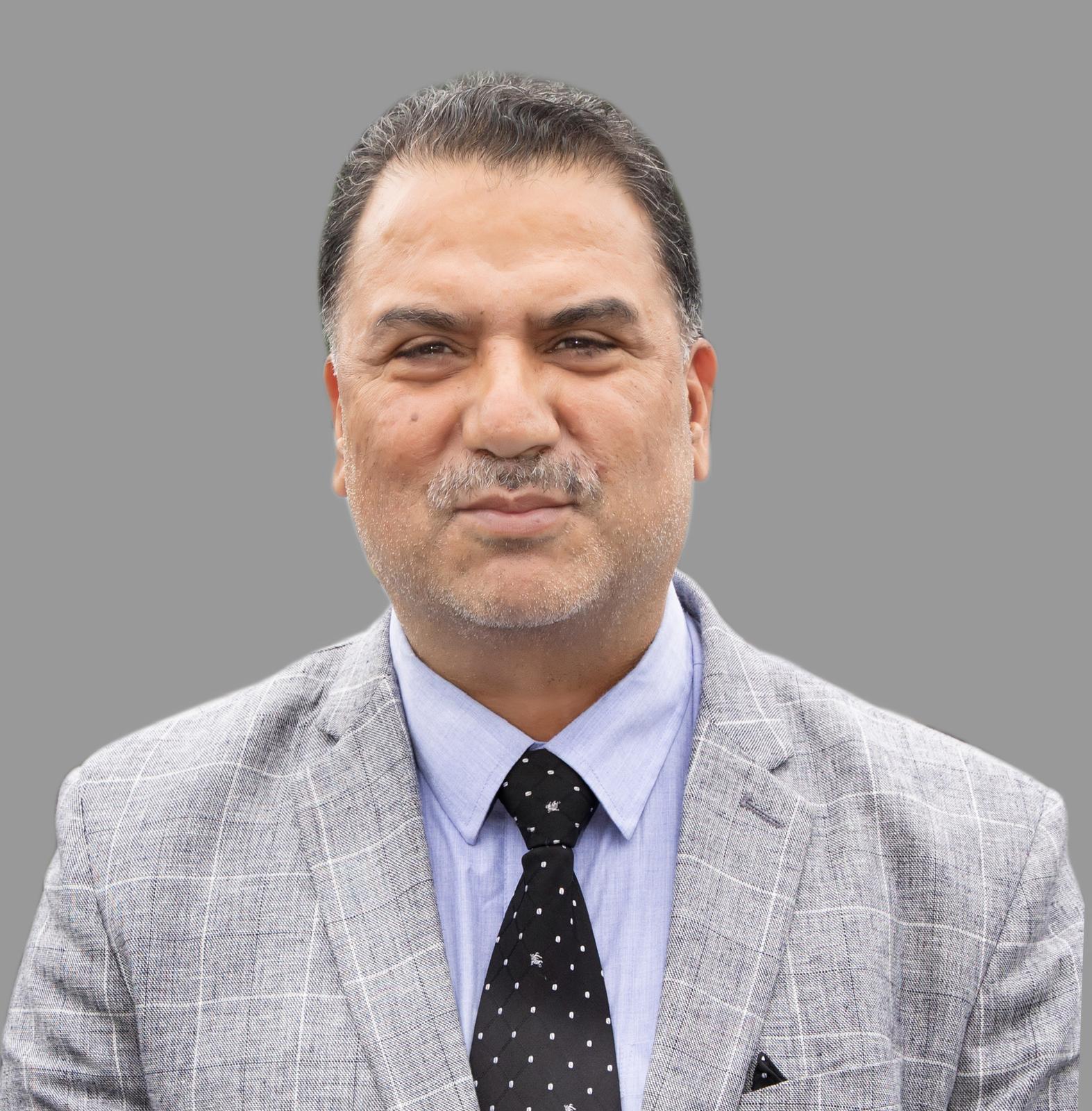
Democrat-held CD18 in the Hudson Valley is flippable, insists the Indian American, who is using his extensive business and government experience to build a campaign to win the 2026 election. Sharanjit Singh Thind filed his candidacy in September 2025 for the US House of Representatives from New York’s District 18 in the Hudson Valley. A lifelong Republican and Sikh born in Punjab, India, he believes this Democrat-held seat is ready to flip. His campaign focuses on promoting business, making jobs AI-proof, defending family values, and prioritizing community safety. With extensive experience in both the private and public sectors, he sees himself as the best candidate to represent this district north of Manhattan. In a wide-ranging conversation over coffee, Thind told me that he believes he has the blessing of the party’s establishment. Before filing his nomination papers in September, he met with New York Republican State Committee Chairman Ed Cox—son-in-law of President Nixon—to discuss the party’s support. At the time, Thind was told that there were no other Republican candidates in the fray and that the 18th Congressional District (CD-18) would be a strong place for him to run. “But, even with the best intentions and backing of the party leadership, primaries are unavoidable and even healthy,” said Thind. Thind describes himself as fully familiar with CD-18 and notes that he is in close contact with local party leadership, thanks to Chairman Cox. “I am getting a very enthusiastic response when I interact with constituents of all stripes and backgrounds,” he added. While agreeing that the incumbent, Patrick Ryan, defeated Alison Esposito (R) by 14 points in 2024, Thind points to a changed environment that would help him emerge victorious on November 3, the election day in 2026. “People were fed up seeing hotels and motels teeming with illegal migrants housed in the Hudson Valley under President Biden and Mayor Adams. Under Presdient Trump, that threat to law and order has been cleared.” The recent election of self-declared socialist and freebies-promising Zohran Mamdani as Mayor of New York City is worrying all, Thind claims. In sharp contrast are Trump’s America First, pro-business policies, which he supports as do most upstate New York voters. In the context, Thind talks passionately about what has made America the world’s largest economy and a magnet for the world’s best. The answer is: by putting business first. To do that, you have to know about business, which he does, having run media and real estate businesses. Appealing Policy Platform The policy platform Thind is building is solely to serve his constituents he says. “The biggest challenge in the coming months and years,” Thind projects, “is that many, many jobs will evaporate under the AI heat. I am not against AI or automation, but I will make the AI behemoth companies accountable, to make them funnel back some of their profits to retrain the retrenched workers.” Similarly, banks should be held accountable for the financial scams happening under their nose that upend so many seniors’ lives. Promoting tourism in the picturesque Hudson Valley is a no-brainer. “I will give tourism full attention to attract high-paying visitors and create jobs,” says Thind while pointing to a recent Netflix series, ‘Four Seasons’, which was shot there and stars Steve Carell and Tina Fey. With his business acumen and the region’s appeal, he is confident that more entertainment projects will follow. Thind can boast a rich resume that highlights his multifarious career. Armed with an MBA and a journalism degree, Thind arrived in America at the cusp of this century. Over the years, he worked for many reputed companies, founded his own ad agency in Manhattan, and has been Editor-Publisher of ‘The South Asian Insider’ for almost two decades. Recently, he became an author with “The Beginning – Mad Men of Nu Way Advertising,” highlighting his experience at the helm of the once-thriving ad agency on Madison Avenue. Experience in Government and Politics From 2012, he has worked with the government in one capacity or another. He served as a Commissioner on the Nassau County Human Rights Commission until 2018. He also worked with the Receiver of Taxes office in the Town of Hempstead, the largest township in America. In electoral politics, Thind has gained valuable experience helping others run for office. “From local councilman, mayoral to state senate and assembly to DA to Congress races, I have been very closely involved, spending long hours strategizing policy. I have helped raise and also personally contributed to the campaigns of quite a few races,” he says. Twice, he has received the Congressional Excellence award. Running for Congress, Thind insists, he also draws on the perspective he gained as an editor on how government is run and what needs to be done to fix what is broken. To kick-start his campaign, Thind will put his own money into it and seek support from small donors (the maximum individual contribution is $3,535). He clarifies that no government matching funds are available for Congressional races. Because CD18 is flippable and can help the GOP retain control of the House after 2026, Thind expects “America-loving, like-minded” individuals to help lift his campaign to victory. Thind owns a property in the Catskills and is in the process of signing a lease for a house in Saugerties, in Ulster County. He lives with his wife and two sons on Long Island. Thind’s appeal is straightforward: Elect a representative who will bring more jobs and protect those jobs from AI; bring more tourism to the Hudson Valley; expand healthcare benefits; protect family values; and pass laws to save senior citizens from scams.
https://newsindiatimes.com/republican-sharanjit-singh-thind-announces-run-for-congress-from-nys-district-18/

Trump issues Executive Order creating Genesis Mission AI Action Plan for America

Section 1. Purpose. From the founding of our Republic, scientific discovery and technological innovation have driven American progress and prosperity. Today, America is in a race for global technology dominance in the development of artificial intelligence (AI), an important frontier of scientific discovery and economic growth. To that end, my Administration has taken a number of actions to win that race, including issuing multiple Executive Orders and implementing America’s AI Action Plan, which recognizes the need to invest in AI-enabled science to accelerate scientific advancement. In this pivotal moment, the challenges we face require a historic national effort, comparable in urgency and ambition to the Manhattan Project that was instrumental to our victory in World War II and was a critical basis for the foundation of the Department of Energy (DOE) and its national laboratories. This order launches the “Genesis Mission” as a dedicated, coordinated national effort to unleash a new age of AI‑accelerated innovation and discovery that can solve the most challenging problems of this century. The Genesis Mission will build an integrated AI platform to harness Federal scientific datasets the world’s largest collection of such datasets, developed over decades of Federal investments to train scientific foundation models and create AI agents to test new hypotheses, automate research workflows, and accelerate scientific breakthroughs. The Genesis Mission will bring together our Nation’s research and development resources combining the efforts of brilliant American scientists, including those at our national laboratories, with pioneering American businesses; world-renowned universities; and existing research infrastructure, data repositories, production plants, and national security sites to achieve dramatic acceleration in AI development and utilization. We will harness for the benefit of our Nation the revolution underway in computing, and build on decades of innovation in semiconductors and high-performance computing. The Genesis Mission will dramatically accelerate scientific discovery, strengthen national security, secure energy dominance, enhance workforce productivity, and multiply the return on taxpayer investment into research and development, thereby furthering America’s technological dominance and global strategic leadership.
https://www.shacknews.com/article/146962/trump-ai-genesis-mission-executive-order

Explained: the EIC advanced innovation challenges pilot

The European Innovation Council (EIC) has provided more details about what to expect from its pilot advanced innovation challenges, a new staged funding instrument based on the US Advanced Research Projects Agency (ARPA) model. The EIC wants to assess whether staged grants can accelerate the path to market for high-risk deep-tech innovations, and whether early involvement of end users can enhance the uptake of breakthrough solutions. It will inform the wider roll-out of ARPA-style mechanisms in the EIC in the next iteration of Horizon Europe, from 2028. The EIC currently offers Pathfinder grants, supporting early-stage development up to proof of concept; Transition grants, to mature and validate new technologies; and the Accelerator, to develop and scale-up innovations. But technologies do not always move smoothly from one phase to the next. “There are some potentially.
https://sciencebusiness.net/news/r-d-funding/european-innovation-council/explained-eic-advanced-innovation-challenges-pilot

Australia’s top universities say Horizon association is ‘a strategic necessity’

Despite the EU being Australia’s largest foreign research funder, granting €1. 8 billion between 2015 and 2024, the country has never been an associate member of Europe’s Framework Programmes for research and innovation. That could change if exploratory talks launched in September bear fruit. The prize for Australia’s universities was spelled out in a Horizon Europe Capability Statement released on.
https://sciencebusiness.net/news/r-d-funding/international-news/australias-top-universities-say-horizon-association-strategic-necessity

EU plans €51M Choose Europe call for research careers in 2027

The European Commission plans to launch a €51. 25 million call in 2027 as part of the Choose Europe initiative, which is intended to make the continent a more attractive place to pursue a career in research. The Commission launched a €22. 5 million pilot call in October, which will close on December 3, but a draft 2026-27 work programme for the Marie Skłodowska Curie Actions (MSCA), Horizon Europe’s researcher training scheme, has revealed plans to extend the support. The Choose Europe initiative, announced with great pomp earlier this year, aims to tackle brain drain and the precarity of research careers by co-funding the recruitment of postdoctoral researchers for up to five years. EU funding will cover the positions for two to three years, while the host institutions must provide funding for an additional two years. Each programme that receives funding must recruit a minimum of three researchers. While the research community welcomed the initial pilot, there have been concerns that national cuts to research budgets in several EU countries could make it difficult for research organisations to cough up their share of the money. The draft call offers universities more flexibility by allowing the EU funding to cover either the first or second phase of the programme, although the basic issue remains. Attracting foreign talent A key priority is to attract international talent to Europe, particularly as researchers from around the world find fewer opportunities than before in the US. Recruited researchers can be of any nationality and must not have resided or carried out their main work or studies in the country of the recruiting institution for more than 12 months in the previous three years. The draft work programme gives researchers the possibility of implementing their MSCA-backed project on a part-time basis, for personal, family or professional reasons, which could benefit international scientists who still have family ties in their home country. Maria Leptin, president of the European Research Council, recently suggested that Europe should offer scientists a “haven,” in a “non-selfish manner,” allowing them to spend only half their time in Europe if needed. Related articles US researchers: Choose Europe, but part-time ERC to introduce seven-year €7 million ‘super grants’ in 2026 Choose Europe talent pilot receives lukewarm welcome A related goal is to improve working conditions and long-term prospects for researchers in Europe. Institutions applying for support will be evaluated partly on the competitiveness of the salaries and career development opportunities offered as part of their programme, as well as the quality of long-term career prospects beyond the duration of the fellowship. Supported programmes can be in any research discipline, despite indications from Commission President Ursula von der Leyen, at a Choose Europe launch event in May, that support beyond the pilot phase would privilege “frontier fields like artificial intelligence.” The MSCA calls are part of a broader €500 million package to make Europe “a magnet for researchers,” including seven-year “super grants” worth up to €7 million under the European Research Council.
https://sciencebusiness.net/news/international-news/eu-plans-eu51m-choose-europe-call-research-careers-2027