Category Archives: technology

Porsche 718 Boxster and Cayman to retain their combustion engines

**Porsche 718 Boxster and Cayman to Retain Combustion Engines**

*By Dwaipayan Roy | Sep 20, 2025, 06:46 PM*

**What’s the Story?**

Porsche has announced a significant shift in its electric vehicle strategy. The next-generation 718 Boxster and Cayman models will continue to offer combustion engine options for their “top” variants. This move aligns with the automaker’s broader plan to revamp the combustion engine and plug-in hybrid versions of the Cayenne and Panamera, ensuring these models remain relevant well into the 2030s, according to Porsche CEO Oliver Blume.

**Strategic Shift and Financial Impact**

As part of this strategy, Porsche will halt the development of the SSP 61 ‘Sport’ version of Volkswagen Group’s platform, resulting in a €1.8 billion financial hit. Originally, this platform was intended to support the K1 large SUV, along with electric successors for the Panamera and Taycan. Blume explained that the decision reflects a “clear drop in demand for exclusive battery-electric cars.”

**Update on the K1 Model**

The much-anticipated K1, described by Porsche as a ‘D-SUV,’ will now launch with combustion engine and plug-in hybrid variants instead of being fully electric. However, the company has not disclosed a specific launch date for this model. The change in plans follows a noticeable decline in luxury good demand in China, coupled with the US’s imposition of higher tariffs on imported vehicles.

**Financial Outlook**

These combined challenges are expected to reduce Porsche’s predicted net profit margin to around 2% for the current year. Nevertheless, the company remains optimistic about the medium-term outlook, aiming to boost margins above 10% with the introduction of new products.

Blume emphasized the company’s confidence in its revised approach:
*”This flexibility gives us a strong position with a compelling mix of combustion engines, plug-in hybrids, and battery electric vehicles.”*

With this strategic pivot, Porsche is balancing tradition and innovation to adapt to shifting market demands while maintaining its renowned performance legacy.
https://www.newsbytesapp.com/news/auto/porsche-to-offer-combustion-engines-in-next-gen-718-models/story

Trump’s new visa policy could hit India’s real estate market

**Trump’s New Visa Policy Could Impact India’s Real Estate Market**

*By Akash Pandey | Sep 20, 2025, 07:13 PM*

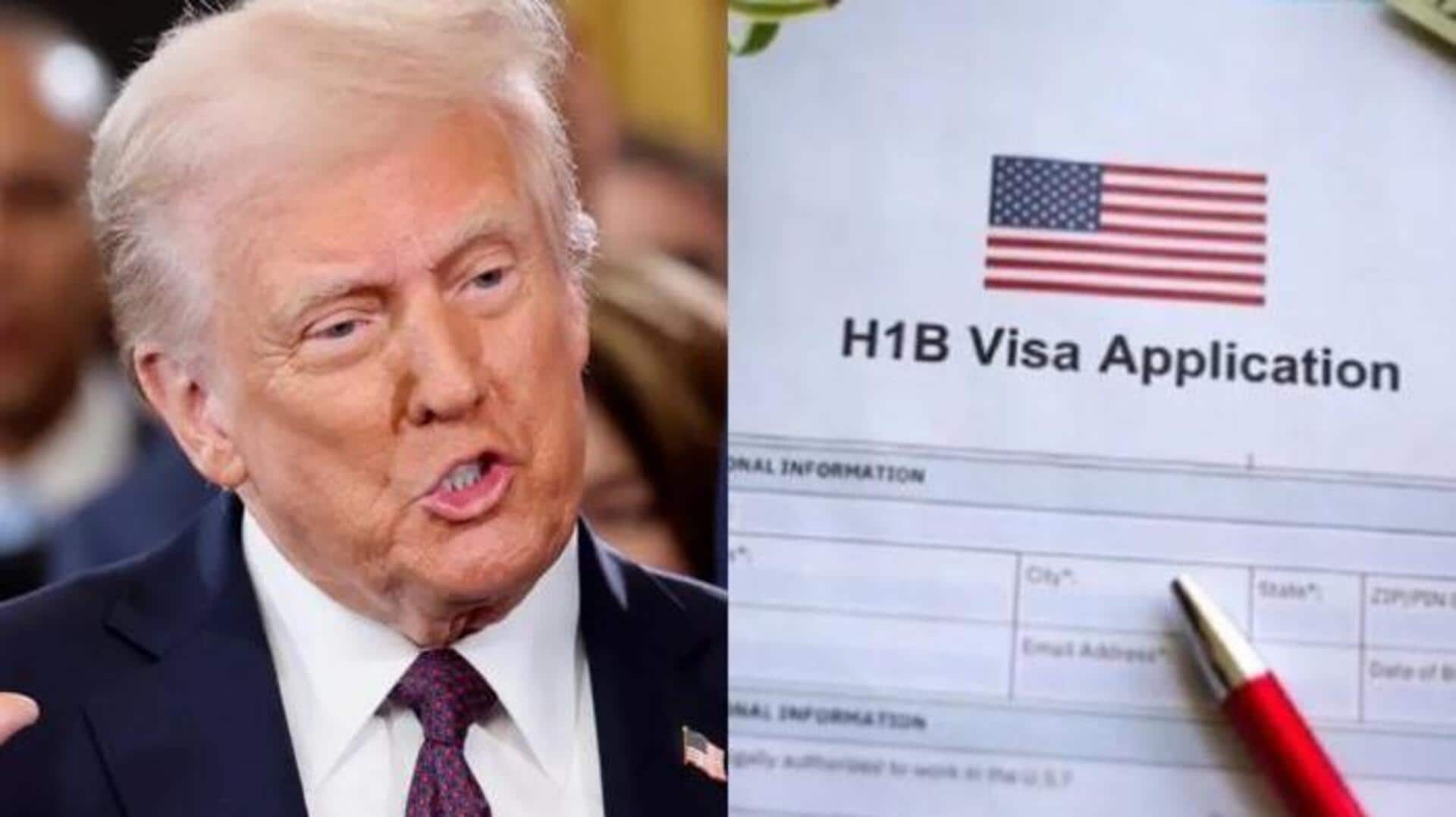
US President Donald Trump has introduced a new visa policy that is set to influence India’s real estate market significantly. Starting September 21, 2025, a hefty $100,000 annual fee will be imposed on most H-1B visa petitions. This development is expected to impact the residential property segment in Indian metro cities notably, while the commercial real estate sector might experience different effects, particularly through the operations of Global Capability Centres (GCCs).

### Major Impact on Indian Metro Cities

In the fiscal year 2024, over 71% of H-1B visa approvals went to Indian nationals. Experts believe that the new fee will discourage US onsite deployments and reduce overseas hiring. This shift could directly affect remittance-driven home buying and long-term housing decisions among Indian tech professionals.

Real estate specialists warn that cities such as Bengaluru, Hyderabad, Pune, and Gurugram are especially vulnerable to a slowdown due to this policy change.

### Housing Market Risks

Industry experts have highlighted three primary risks to India’s residential real estate market due to this policy:

– A decline in demand for premium housing.
– Delays in property purchase decisions as US relocations get postponed.
– Slower absorption of mid-to-high-end residential projects targeted at technology sector buyers.

A real estate consultant based in the Delhi NCR region noted that the sudden increase in visa costs is likely to dampen the sentiments of families planning overseas relocations, which could reduce property investments back home.

### The Role of Remittances in Housing Demand

Pareekh Jain, CEO of Pareekh Consulting, pointed out that remittances have been a major driver of housing demand in India. Although primary housing demand may rise due to some individuals returning from the US or moving to Indian metros, overall investment demand in the real estate sector is expected to weaken amid reduced remittances and increased job insecurity.

Similarly, Vishal Raheja, Founder and MD of InvestoXpert, emphasized that the increased H-1B visa fee is likely to affect housing demand negatively.

### Potential Boost for Commercial Real Estate

Despite challenges facing the residential sector, commercial real estate might see a potential upswing. American companies may accelerate the growth of their Global Capability Centres (GCCs) in India as they rethink staffing strategies in response to the new visa costs.

Indian metro cities could witness increased leasing of office spaces and expanded infrastructure development driven by this shift. According to data from CBRE, GCCs currently account for 35-40% of office space absorption in major cities like Bengaluru, Hyderabad, and Pune.

### Shifting Global Investment Patterns

As developers, buyers, and investors adapt to these new conditions, India’s real estate market is likely to experience a shift towards mid-segment housing and rental ecosystems.

Akash Puri from India Sotheby’s International Realty noted that higher H-1B visa costs might encourage top Indian talent to explore luxury real estate markets in other global cities. This dynamic could create fresh demand for real estate markets that offer greater stability and enhanced lifestyle options.

The new H-1B visa fee represents a significant shift with wide-ranging consequences for India’s housing and commercial property sectors. Stakeholders will need to closely monitor these trends and adjust their strategies accordingly.
https://www.newsbytesapp.com/news/business/trump-s-h-1b-fee-threatens-india-s-property-boom-in-tech-hubs/story

Trump’s new visa policy could hit India’s real estate market

**Trump’s New Visa Policy Could Impact India’s Real Estate Market**

*By Akash Pandey | Sep 20, 2025, 07:13 PM*

**Overview**

US President Donald Trump has introduced a new visa policy that could significantly affect India’s real estate market. Beginning September 21, 2025, an annual $100,000 fee will be imposed on most H-1B visa petitions. This move is expected to influence primarily the residential property market in major Indian metro cities, while the commercial real estate sector may experience distinct effects, especially through Global Capability Centres (GCCs).

**Market Impact on Indian Cities**

With over 71% of H-1B approvals in fiscal year 2024 granted to Indian nationals, experts anticipate that the new fee will discourage onsite deployments and reduce overseas hiring. This shift could profoundly impact remittance-backed home buying and long-term housing decisions among technology professionals.

Real estate analysts warn that cities like Bengaluru, Hyderabad, Pune, and Gurugram could witness a downturn due to this policy change.

**Housing Forecast: Three Key Risks**

Industry experts have identified three major risks to the residential real estate market caused by the new visa fee:

1. A decline in demand for premium housing.
2. Delayed purchase decisions resulting from postponed relocations to the US.
3. Slower absorption rates of mid-to-high-end projects targeting tech-sector buyers.

A Delhi NCR-based real estate consultant highlighted that the sudden spike in visa costs is likely to dampen sentiment among overseas-bound families who were relying on US assignments for property investments back home.

**Investment Shifts: Remittances Driving Housing Demand**

Pareekh Jain, CEO of Pareekh Consulting, emphasized that remittances play a crucial role in driving housing demand in India. He predicts that while primary housing demand may see growth as some professionals return from the US or relocate to Indian metros, overall investment demand in real estate is expected to weaken due to lower remittances and increased job insecurity.

Vishal Raheja, Founder & MD of InvestoXpert, echoed these concerns, stating that the proposed H-1B visa fee could dampen housing demand among Indian buyers.

**Commercial Real Estate: A Potential Boost**

Despite challenges in the residential sector, the commercial real estate market may find new opportunities. The expansion of Global Capability Centres (GCCs) might accelerate as American companies restructure their staffing strategies to minimize overseas costs.

Indian cities could experience increased office space leasing and infrastructure development as a result. According to CBRE data, GCCs currently account for 35-40% of office space absorption in metros like Bengaluru, Hyderabad, and Pune.

**Uncertainty and Shifting Investment Patterns**

As developers, buyers, and investors adapt to these developments, India’s real estate market is likely to see a pivot toward mid-segment housing and rental ecosystems.

Akash Puri from India Sotheby’s International Realty observed that higher H-1B costs could prompt top Indian talent to explore global cities for luxury real estate investments. This shift is expected to fuel fresh demand in markets offering stability and lifestyle benefits.

**Conclusion**

The new H-1B visa fee introduced by the US government is poised to reshape India’s real estate landscape, with mixed effects across residential and commercial sectors. While residential properties in tech-centric metro cities may face challenges, commercial real estate, propelled by GCC growth, could witness new momentum. Stakeholders will need to navigate this evolving environment carefully to capitalize on emerging opportunities.
https://www.newsbytesapp.com/news/business/trump-s-h-1b-fee-threatens-india-s-property-boom-in-tech-hubs/story

Trump’s H-1B fee will drive start-ups to India: Amitabh Kant

**Trump’s New H-1B Visa Fee Will Drive Start-Ups to India: Amitabh Kant**

*By Akash Pandey | September 20, 2025, 03:07 PM*

Amitabh Kant, former G20 Sherpa and ex-CEO of NITI Aayog, has voiced strong opinions regarding US President Donald Trump’s newly announced H-1B visa policy. In a recent post on X (formerly Twitter), Kant highlighted that the proposed $100,000 annual fee per H-1B visa worker would stifle innovation within the United States while providing a significant boost to India’s rapidly growing startup ecosystem.

According to Kant, by effectively shutting its doors to global talent, America risks shifting technology labs and startups to Indian cities such as Bangalore, Pune, Gurugram, and Hyderabad. He emphasized that this policy shift presents a unique opportunity for India’s top doctors, engineers, scientists, and innovators to contribute meaningfully to the country’s developmental goals.

### An Opportunity for a ‘Viksit Bharat’

Kant described the new US visa restrictions as a potential catalyst for India’s ambition to become a developed nation—often referred to as ‘Viksit Bharat’. With Indian professionals historically dominating the H-1B visa program, the move could propel domestic innovation and entrepreneurship at home.

Last year, Indian nationals accounted for approximately 71% of approved H-1B visa beneficiaries, according to official government data. This statistic underscores the pivotal role Indian talent has played in shaping the US technology landscape.

### Understanding the New H-1B Policy

The Trump administration’s executive order aims to curb abuses of the H-1B program and prioritize American workers. The new rules apply to both new applications and renewals, introducing a steep $100,000 annual fee per skilled worker under the visa program. Additionally, a “gold card” program has been launched, offering expedited visas for wealthy investors willing to invest up to $2 million in the US economy.

Major technology companies like Amazon, Microsoft, and Meta have historically received thousands of H-1B approvals under the previous rules, leveraging global talent to drive growth.

### Potential Impact on US Industries

These changes, which take effect from September 21, 2025, could severely affect several crucial sectors in the US, including healthcare, higher education, and technology. The steep fees may deter companies from hiring skilled international workers, potentially leading to talent shortages.

While the new policy is expected to face legal challenges, if upheld, it would significantly increase the cost of employing foreign professionals under the H-1B program.

### Global Talent Shift: ‘America’s Loss, India’s Gain’

Amitabh Kant’s remarks serve as a strong endorsement of India’s ability to fill the innovation void that might be created by America’s tighter immigration rules. He stated, “America’s loss will be India’s gain,” underscoring the vast pool of Indian doctors, engineers, scientists, and innovators who are now positioned to contribute substantially to India’s growth story.

As the H-1B program remains a critical gateway for Indian engineers and professionals impacting the global tech industry, the evolving US visa landscape could reshape the innovation map, favoring India’s burgeoning technology hubs.

*Stay tuned for more updates and in-depth analyses on global tech and policy shifts.*
https://www.newsbytesapp.com/news/world/trump-s-h-1b-fee-hurts-us-but-helps-india-amitabh-kant/story

Trump’s H-1B fee will drive start-ups to India: Amitabh Kant

**Trump’s H-1B Fee Will Drive Start-ups to India: Amitabh Kant**

*By Akash Pandey | Sep 20, 2025, 03:07 PM*

Amitabh Kant, former G20 Sherpa and ex-CEO of NITI Aayog, has voiced strong opinions on the recent changes to the US H-1B visa policy introduced by President Donald Trump. In a post on X (formerly Twitter), Kant highlighted that the newly imposed $100,000 annual fee for each H-1B visa worker could stifle innovation in the United States while accelerating growth in India.

According to Kant, America’s decision to restrict global talent inflow is effectively pushing research labs and start-ups to Indian cities such as Bangalore, Pune, Gurugram, and Hyderabad. This shift, he argues, presents India with a unique opportunity to boost its innovation ecosystem and move closer to realizing the vision of *Viksit Bharat* (Developed India).

**Opportunity for India’s Talent**

Kant emphasized that India’s top doctors, engineers, scientists, and innovators now have an unprecedented chance to lead the nation’s development in technology and innovation. Given that Indian professionals have been significant beneficiaries of the H-1B visa program—accounting for 71% of approvals last year—this policy shift could redirect global talent and investment back to India.

**Understanding the H-1B Visa Changes**

The new H-1B visa rules, effective from September 21, 2025, aim to curb abuses within the program while prioritizing American workers. Besides the steep $100,000 annual fee per visa worker, the policy introduces a “gold card” program designed to attract wealthy investors who can make expedited visa applications by investing up to $2 million in the US.

Major US tech companies like Amazon, Microsoft, and Meta have historically utilized the H-1B program extensively, with thousands of approvals under the previous regulations. The updated policy changes could have significant repercussions across America’s healthcare, higher education, and technology industries due to increased costs and stricter requirements.

**Impact and Industry Response**

While the new rules could face legal challenges, if upheld, they may compel companies to rethink their international hiring strategies, potentially reducing opportunities for skilled global workers in the US market. The steep fees could discourage start-ups and innovation hubs from building operations stateside.

**Global Shift: ‘America’s Loss Is India’s Gain’**

Summarizing his views, Amitabh Kant stated, “America’s loss will be India’s gain.” He further praised India’s pool of talented professionals, noting they are well-equipped to fill the innovation gap left by the US’s restrictive approach.

As India stands ready to harness this opportunity, the global technology landscape could see a significant pivot toward Indian innovation centers, reshaping the future of start-ups and research worldwide.

*For more updates on international policies and tech innovation, stay tuned.*
https://www.newsbytesapp.com/news/world/trump-s-h-1b-fee-hurts-us-but-helps-india-amitabh-kant/story

National Consumer Helpline Now Accepts GST-Related Complaints In 16 Languages To Address Queries And Disputes Effectively

New Delhi: The Department of Consumer Affairs on Saturday launched a dedicated GST grievance category on the National Consumer Helpline to address queries and complaints related to the GST 2.0 reforms.

The National Consumer Helpline can be accessed via the toll-free number 1915 or online in 16 Indian languages and English. It functions as a single pre-litigation point of access for consumers across the country to register grievances at the pre-litigation stage.

Consumers can also register GST-related complaints through the Integrated Grievance Redressal Mechanism (INGRAM) portal. This portal covers key sectors such as automobiles, banking, consumer durables, e-commerce, and fast-moving consumer goods.

The new GST reforms are set to take effect from September 22. To address the expected consumer queries and complaints following the implementation of revised GST charges, rates, and exemptions, a dedicated category has been enabled on the INGRAM portal, the Ministry of Consumer Affairs, Food & Public Distribution said.

On September 11, officials from the Central Board of Indirect Taxes and Customs (CBIC) conducted an inaugural training session to equip National Consumer Helpline counsellors to handle GST-related queries and grievances effectively.

The Ministry highlighted that consumer complaint data and insights will be shared with affected companies, the CBIC, and other authorities. This collaborative approach aims to enable prompt action under relevant laws, enhance GST compliance, and support a participatory governance model.

The National Consumer Helpline’s omni-channel platform supports multiple registration modes, including WhatsApp, SMS, email, a dedicated app, web portal, and the Umang app, the ministry added.

Significant technological upgrades have boosted the helpline’s call-handling capacity. Call volumes increased from 12,553 in December 2015 to 1,55,138 in December 2024. Similarly, the average number of complaints registered per month rose from 37,062 in 2017 to 1,70,585 in 2025, with around 65% of grievances now filed digitally.

Each complaint is assigned a unique docket number to ensure transparent tracking and resolution, the ministry noted.

*(Except for the headline, this article has not been edited by FPJ’s editorial team and is auto-generated from an agency feed.)*
https://www.freepressjournal.in/business/national-consumer-helpline-now-accepts-gst-related-complaints-in-16-languages-to-address-queries-and-disputes-effectively

Amazon Doubles Product Deliveries In The Same & Next Day Categories In Assam, Registering Demand Hike For Premium Commodities

**Amazon Doubles Same and Next Day Deliveries in Assam, Sees Surge in Demand for Premium Products**

Guwahati: E-commerce giant Amazon has announced a significant increase in its operations in Assam, reporting that it has doubled its product deliveries in the same and next-day categories within the state. This growth is accompanied by a rising demand for premium products among customers in the region.

According to a company official, more than 10,000 sellers from Assam have benefited through Amazon’s platform, reaching out to customers across India. Pallavi Singh, Senior Manager of Amazon Prime India, stated, “Amazon India is gearing up to meet rising customer demand in Assam, especially Guwahati, bringing customers unmatched value, speed, and selection.”

Singh highlighted that this festive season, there is a noticeable preference for premium products in the fashion and beauty categories among Guwahati shoppers. She elaborated, “Watches and luxury beauty products are seeing a 30 percent year-on-year growth, driven by demand for metal strap digital and analog watches and moisture-rich beauty products. Demand for jewellery in Assam is also on the rise, growing 20 percent year-on-year, with traditional Assamese designs continuing to be a customer favourite.”

With Durga Puja approaching, Singh noted a spike in searches for complete beauty looks on Amazon. Furthermore, contemporary jewellery and luxury beauty products are gaining higher traction during the wedding season.

Other popular product categories among buyers in Assam include smartphones, consumer electronics, fashion and beauty items, home and kitchen products, groceries, and everyday essentials.

Singh also emphasized that Amazon empowers over 10,000 sellers from Assam who sell across various categories such as home goods, groceries, and toys to customers nationwide. Additionally, the company is generating hundreds of new job opportunities in the region.

Amazon’s operational network in Assam now includes one new fulfilment centre, one sortation centre, more than 200 I Have Space (IHS) stores, and over 50 delivery stations. “These investments have enabled Amazon to deliver more than twice as many products year-on-year with same and next-day delivery options in Guwahati,” Singh said.

Looking ahead, Amazon is preparing to launch its ‘Amazon Great Indian Festival’ starting September 23. Customers can expect the widest product selection at competitive prices, coupled with fast delivery services. Prime members will enjoy exclusive benefits, including additional offers and early 24-hour access to deals.

*Disclaimer: This story is sourced from a syndicated feed. No changes have been made except to the headline.*
https://www.freepressjournal.in/business/amazon-doubles-product-deliveries-in-the-same-next-day-categories-in-assam-registering-demand-hike-for-premium-commodities

Key Highlights From The Two-Day Luxury Innovation Summit 2025 Held In Geneva

The seventh edition of the Luxury Innovation Summit took place in Geneva on September 1-2, 2025, once again proving why it’s the premier platform for leaders to explore the future of the luxury industry. This summit brought together global experts to discuss the forces transforming luxury—from AI and digital identity to circular models and market expansion in Asia.

“AI, sustainability, and circular business models are no longer side topics,” said Deependra Pandey, Founder & CEO of Luxury Venture Group. “They are the main drivers of transformation in luxury today.”

### Looking Ahead: Mumbai 2026

As the industry shifts gears toward new growth markets, the Summit’s next edition will take place in Mumbai in March 2026. The event will bring together global luxury leaders, entrepreneurs, and investors for high-impact dialogue and collaboration in one of the world’s most dynamic economies.

In parallel, Luxury Venture Group will lead an International Business Delegation to India, connecting global brands and SMEs with India’s fast-growing luxury market through discovery visits, private B2B matchmaking, cultural immersion, and exclusive Summit access.

“India is now at the centre of luxury’s future,” said Pandey. “Rising demand, cultural richness, and the upcoming EFTA–India trade deal are creating unprecedented opportunities. For global luxury brands, India is no longer an optional market—it’s a strategic priority.”

### AI and Digital Experiences

AI is driving a new era of hyper-personalised luxury. Companies like Nestlé and New Relic showcased how real-time data, predictive analytics, and spatial computing are reshaping premium retail. Sessions also explored the future of blockchain, digital identity, and emotional engagement through immersive technologies.

### Sustainable Luxury

Sustainability and circularity are now at the heart of luxury business models. Platforms such as eBay, Bunjang, and Certilogo highlighted how technology can extend product lifecycles and build consumer trust. Re-commerce is not just a trend, it’s a core strategy.

### Women Lead the Way

With the global ‘Great Wealth Transfer’ (estimated $30 trillion in the US alone), women are shaping consumption, innovation, and sustainability in the luxury industry. A panel led by 100 Women @ Davos revealed how women consumers and leaders are influencing environmental, social, and governance (ESG) priorities and digital transformation.

### India: New Growth Frontier

India’s accelerating appetite for luxury, spanning watches, jewellery, fashion, hospitality, and travel, was the focus of a dedicated masterclass. Speakers emphasised how cultural events like weddings and festivals, along with trade policy shifts, growth in e-commerce, and strong demand from smaller cities, are driving luxury consumption and long-term investment opportunities.

### Innovation Is the Key

A surge in funding is flowing into startups focused on sustainability, AI, and next-gen craftsmanship. The Luxury Innovation Awards showcased promising early-stage ventures redefining what luxury means for the next generation of consumers.

*The writer was a speaker at the Luxury Innovation Summit 2025.*
https://www.freepressjournal.in/lifestyle/key-highlights-from-the-two-day-luxury-innovation-summit-2025-held-in-geneva

Indore: 61 Booked For Rumours, Hate Posts On Instagram After Salman Lala’s Death

**Indore Crime Branch Books 61 Instagram Users for Posting Misleading Information Following Death of Criminal Salman Lala**

Indore (Madhya Pradesh): The City Crime Branch on Friday booked 61 Instagram account users for posting misleading information after the death of criminal Salman Lala. Officials stated that these posts and reels could hurt the sentiments of various communities.

Following Lala’s death, some anti-social elements attempted to instigate hatred and animosity between communities by sharing provocative and misleading content through multiple Instagram IDs. Such actions have the potential to disturb public peace and adversely affect harmony among castes and communities, the police warned.

The Crime Branch team identified a total of 61 Instagram IDs involved in spreading this misleading information. Prima facie, the actions of these users have been found to violate sections 223, 196, 353 (1)(a), and 353 (1)(c) of the BNS. Consequently, a case has been registered against them, and further investigations are ongoing.

Additional DCP (Crime) Rajesh Dandotiya provided insight into Salman Lala’s death. Lala drowned in a pond in Sehore while attempting to escape from the Crime Branch a few days ago. The Crime Branch was actively searching for him due to his involvement in drug supply operations.

After tracing Lala’s location to an area between Bhopal and Dewas, the team reached the spot and pursued him. Lala managed to flee from the vehicle and later jumped into a pond in Sehore to avoid apprehension. His body was recovered from the pond the following day.

After his body was brought back to the city, thousands of people and Lala’s supporters gathered near his residence and at the BRTS stop near LIG Square.

To identify individuals spreading rumors on social media, SI Reena Rathore from the Social Media Monitoring Cell was tasked with collecting information about the users involved.

In response to the situation, the Commissioner of Police has issued prohibitory orders against posting misleading content, reels, and similar material on social media platforms.

The authorities urge the public to refrain from sharing unverified information and to maintain communal harmony during this sensitive time.
https://www.freepressjournal.in/indore/indore-61-booked-for-rumours-hate-posts-on-instagram-after-salman-lalas-death

iPhone Air Faces Condensation Complaints As Early Users Report Foggy Patches Inside Camera Lens After Just One Day

Just a day after hitting the shelves, the new iPhone Air is already facing complaints from early adopters about condensation forming inside the camera lens. Reports on Reddit and Twitter have surfaced, showing photos of fogged-up lenses. This raises questions about whether Apple’s ultra-thin iPhone can withstand real-world conditions.

### Early iPhone Air Buyers Report Condensation Inside Camera Lens

The problem appears sporadically, with some users noticing foggy patches inside the camera lens after sudden changes in temperature or exposure to humid environments. While condensation inside smartphone cameras is not a new issue, it is surprising to see it occurring in a premium iPhone model—especially since Apple emphasized design refinements aimed at improving durability.

YouTuber Luke Miani shared an image on X (formerly Twitter), stating that his brand-new, day-one iPhone Air had condensation inside the camera. Another user on X, known as Dongle, also posted several images and commented, “My iPhone Air has condensation in the camera… maybe this is widespread.”

There was also a Reddit post featuring a similar experience, though the user later deleted the image. From available reports, it seems multiple early users have encountered the same issue.

### Potential Cause and Concerns

It remains to be seen if this problem is widespread. If confirmed, it could fuel criticism that Apple may have gone too far with the design in pursuit of extreme thinness. Even if the condensation inside the camera lens disappears on its own, the issue might tarnish the iPhone Air’s reputation among early adopters.

Some users speculate the problem may stem from reduced internal sealing or differences in thermal dissipation compared to the iPhone 17 Pro models, which feature a dedicated thermal management solution.

### What to Do If You Experience Camera Lens Condensation

If your iPhone Air’s camera lens is fogged up with condensation, it is advisable to:

– Keep the phone at room temperature for extended periods, allowing the water droplets to evaporate naturally.
– Store or use the iPhone in dry environments.
– Avoid sudden temperature shifts between hot and cold settings to reduce the chance of condensation reoccurring.

Apple has previously acknowledged that condensation inside the camera lens is not normal and could potentially lead to long-term hardware damage.

### Final Thoughts

It is still too early to declare this a widespread flaw, so we will wait for more reports before drawing any firm conclusions. For now, follow Apple’s advice to let the device dry naturally. If the condensation persists, you should contact Apple Support for assistance.

Have you experienced condensation inside your iPhone Air camera lens? Share your thoughts and experiences with us in the comments below.
https://wccftech.com/iphone-air-condensation-camera-lens-issues-reports/