Leech Lake Band of Ojibwe wins federal relief for June storm cleanup

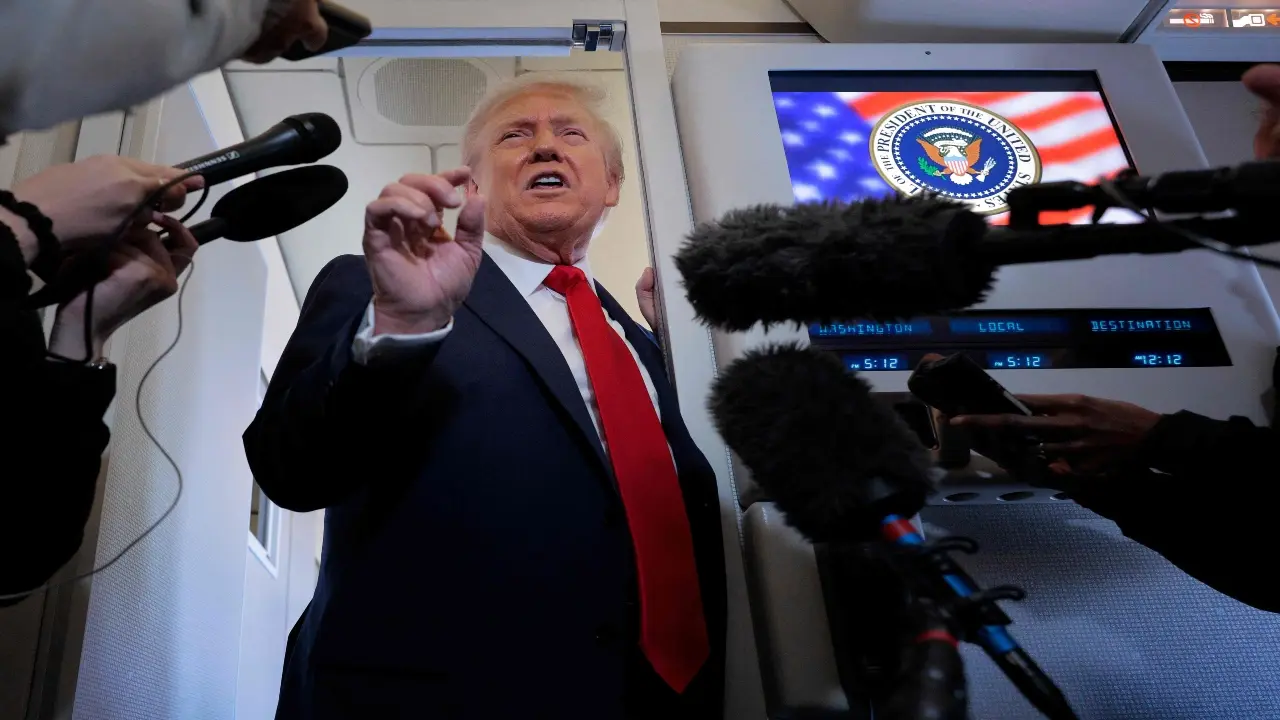
President Donald Trump approved major disaster declarations for Alaska, Nebraska, North Dakota, and the Leech Lake Band of Ojibwe late Wednesday, while denying requests from Vermont, Illinois, and Maryland. Other states are still awaiting decisions.

The approvals and denials mostly followed party lines. Trump noted on social media that he had “won BIG” in Alaska in the last three presidential elections and expressed that it was his “honor” to deliver for the “incredible Patriots” of Missouri, a state he also won three times.

The disaster declarations authorize the Federal Emergency Management Agency (FEMA) to provide federal financial assistance to help repair public infrastructure damaged by disasters. In some cases, survivors may also receive funds for repairs and temporary housing.

Although Trump has approved more disaster declarations than he has denied this year, he has repeatedly suggested “phasing out” FEMA to encourage states to take more responsibility for disaster response and recovery. While states already lead disaster management efforts, they rely on federal assistance when their resources are insufficient.

An Associated Press analysis found that Trump has taken longer to approve disaster declaration requests than any previous administration.

**Approved Disaster Declarations**

– **Alaska** filed an expedited request after back-to-back storms this month wrecked coastal villages, displaced 2,000 residents, and killed at least one person. Trump approved a 100% cost share of disaster-related expenses for 90 days.

– **North Dakota** and **Nebraska** will receive public assistance for severe weather experienced in August.

– The **Leech Lake Band of Ojibwe** in northern Minnesota was approved for both public and individual assistance following a June storm that felled thousands of trees across its tribal lands.

**Denied Requests**

Trump denied four requests, including Maryland’s appeal for reconsideration after being denied a disaster declaration for severe May flooding affecting its two westernmost counties.

Governor Wes Moore, a Democrat, called the denial “deeply frustrating,” accusing the Trump Administration of politicizing disaster relief. Moore stated, “Our communities are the ones who will pay the price.”

Maryland has independently supported impacted individuals, deploying over $450,000 from its State Disaster Recovery Fund. Although Maryland met the preliminary damage assessment threshold for public assistance, Trump denied the July request. The state appealed in August with additional data showing $33.7 million in damage—more than three times the federal assistance threshold.

Vermont was also denied a major disaster declaration for July 10 floods after waiting over nine weeks for a decision. Eric Forand, Vermont’s emergency management director, said the damages to small towns “far exceed what they can afford on their own,” noting that repairs might cost over one or two years’ worth of annual budgets.

Other denials included Illinois’ request for individual assistance for three counties affected by July storms and flooding, and Alaska’s request to rebuild a public safety building destroyed in a July electrical fire.

White House spokesperson Abigail Jackson defended the decisions, stating, “President Trump provides a more thorough review of disaster declaration requests than any Administration has before him.” She added that Trump is “ensuring American tax dollars are used appropriately and efficiently by the states to supplement, not substitute, their obligation to respond to and recover from disasters.”

**Leech Lake Band’s Challenges**

Several states and tribes continue to wait for decisions. Lack of federal assistance can delay vital recovery projects, especially for smaller jurisdictions with tight budgets. Survivors may also be left without help to secure temporary housing or repair unsafe homes.

Before its approval, the Leech Lake Band of Ojibwe was financially strained, having spent about $1.5 million of its own funds to clear thousands of trees felled by a June thunderstorm. The tribe, which can apply for assistance independently of the state, had submitted its request nine weeks prior.

Beltrami County, the surrounding jurisdiction, did not meet the damage threshold to qualify for federal assistance, falling $800,000 short.

Duane Oothoudt, emergency operations manager for the Leech Lake Police Department, explained that the tribe had been “doing a lot of juggling, using reserve funding to operate and continue paying our contractors.”

Following the disaster declaration approval for both public and individual assistance, Oothoudt said his emergency management department would focus on helping survivors first. “There’s a lot of work to do,” he said. “People were hurt by the storm.”
https://www.twincities.com/2025/10/23/leech-lake-band-of-ojibwe-wins-federal-relief-for-june-storm-cleanup/

President Trump Pardons Binance Founder Changpeng Zhao After He Helped Promote WLF

**President Donald J. Trump Pardons Binance Founder Changpeng “CZ” Zhao Amid Cryptocurrency Scrutiny**

President Donald J. Trump has issued a pardon for Changpeng “CZ” Zhao, the embattled founder of Binance, following intense scrutiny Zhao faced under the Biden administration. This move reflects Trump’s intent to shift the current American government’s stance on cryptocurrency, contrasting with the Biden administration’s previously stringent approach.

According to a statement by White House Press Secretary Karoline Leavitt to the Wall Street Journal, “President Trump exercised his constitutional authority by issuing a pardon for Mr. Zhao, who was prosecuted by the Biden Administration in their war on cryptocurrency.”

### Zhao’s Conviction and Allegations

Zhao was previously convicted for offenses related to facilitating money laundering on the Binance platform. The allegations included enabling multiple transactions totaling up to $900 million between the United States and Iran. These charges form the backbone of the legal actions taken against him during the Biden administration.

### Zhao’s Involvement with the Trump Family’s World Liberty Financial (WLF)

The Wall Street Journal reports that President Trump’s decision to pardon Zhao came after months of Zhao publicly promoting the Trump family’s cryptocurrency venture, World Liberty Financial (WLF). Notably, WLF reportedly benefited from a covert partnership with a trading platform operated by Binance. This platform has generated approximately $4.5 billion since the 2024 U.S. elections.

### Impact of the Pardon on Ongoing Investigations

Following the pardon, The Verge reported that the U.S. Department of Justice’s investigation into Binance has effectively come to an end. This development could potentially clear the path for Zhao and Binance to resume their business operations within the United States.

### Binance and Zhao Under Biden Administration Scrutiny

The Biden administration had been rigorously investigating Binance and Changpeng Zhao, especially in the wake of the landmark prosecution of former FTX CEO Sam Bankman-Fried. In late 2023, after charges were filed against Binance and Zhao, the executive pleaded guilty. Binance then began negotiating a plea deal settlement amounting to $4.3 billion.

The scrutiny centered on allegations from the U.S. Securities and Exchange Commission (SEC) that Binance and Zhao violated multiple federal regulations by failing to secure proper licenses and effectively handling securities related to their operations.

### Sentencing and Plea Deal Details

Despite the seriousness of the charges, Zhao received a relatively lenient sentence of four months in prison, short of the recommended 12 to 18 months. As part of his plea deal, Zhao agreed to pay a $50 million fine to the Justice Department and consented to permanently step down from any executive role at Binance.

This presidential pardon marks a significant turning point in the relationship between regulatory authorities and the cryptocurrency industry, potentially influencing the future regulatory landscape of digital assets in the United States.
https://www.techtimes.com/articles/312347/20251023/president-trump-pardons-binance-founder-changpeng-zhao-after-he-helped-promote-wlf.htm

Ric Flair reveals that WWE legend wanted to him make a dangerous career move that was turned down by Hulk Hogan

A WWE legend once wanted Ric Flair to make a dangerous career move—forming a labor union within professional wrestling. This idea was even turned down by Hulk Hogan.

While several other industries have unions to protect workers and ensure fair treatment, professional wrestling does not have one. This is largely due to the scripted nature of the business. Wrestlers at the top of the industry earn substantially more than mid-carders and lower-card talents. For a company like WWE, factors such as merchandise sales and royalties also play a significant role in determining how much a wrestler makes.

There were attempts to form a labor union in the 1980s, led by Jesse Ventura. However, Hulk Hogan intervened and approached Vince McMahon, who promptly shut down the idea. Since then, no further efforts have been made to establish a union within professional wrestling.

During a recent appearance on *Games with Names*, Ric Flair revealed that Jesse Ventura asked him repeatedly to help form a union, but Flair wasn’t interested at the time. Surprisingly, even Hulk Hogan turned down the idea.

“How do we not have a union? A multi-billion dollar company, no union. Yeah, nobody wants to do it because they’ll just move on without you. They wanted me and Hogan to do it, then Hulk called me and said, ‘I said I’m not jumping out there because they’ll just replace me.’ I don’t know. I just didn’t want to be in. Jesse Ventura drove me crazy, but come on, come on. I know Jesse. What he said. So I give up the NWA World Championship, walk out there—they’ll just put the belt on DiBiase or back to Harley or somebody who knows. I don’t know, it just wasn’t something I wanted to explore, but I certainly was asked to do a lot.”

— Ric Flair

It will be interesting to see if the next generation of wrestlers will be successful in forming a union.

**Vince McMahon’s Controversial Moves**

Ric Flair also shared a troubling story about WWE during a critical point in his health. While battling for his life and on life support for 14 days, Flair discovered WWE had sent him letters attempting to claim the rights to his name.

“Because I sued them. Well, because when I was dying, I was on life support for 14 days, everybody cashed in. My agent stole $150,000, because if I was dead, then it would all go to court, whatever my will was at that time. Estate planning is very important, by the way. But everybody cashed in because they thought I was going to die. And then when I lived, I find out what was going on. I read the letters, WWE was writing me letters, wanting me to sign them while I was assigning my intellectual property back to them. So I didn’t sue them, I just said, ‘I’m going public with this. Give me my sh*t back.’”

— Ric Flair

Fortunately, Flair was able to survive and fully recover despite these difficult circumstances.

**About the Author**

Sunil Joseph is a pro wrestling journalist covering AEW and WWE news stories at Sportskeeda. Holding an MBA in Marketing, Sunil brings nearly seven years of experience. He admires former world champions AJ Styles, Will Ospreay, and Kenny Omega for their in-ring excellence and mic skills.

If given the chance to change a storyline, Sunil would have booked Roman Reigns to end The Undertaker’s WrestleMania streak instead of Brock Lesnar, believing Reigns needed the victory more. Sunil is committed to accuracy, thoroughly fact-checking his articles. When not writing about wrestling, he enjoys watching cricket.

*H/T Sportskeeda Wrestling for the quotes and source material.*
https://www.sportskeeda.com/wwe/news-ric-flair-reveals-wwe-legend-wanted-make-dangerous-career-move-turned-hulk-hogan

“None of your teammates have taken you?” – Fans take shot at Blue Jays after Trey Yesavage reveals unique living setup ahead of World Series

Toronto Blue Jays rookie Trey Yesavage made a remarkable impression by starting in Game 7 of the American League Championship Series (ALCS). His outstanding performance helped the team secure their spot in the World Series.

Building on this momentum, Yesavage has now been announced as the starting pitcher for Game 1 of the World Series against the Los Angeles Dodgers. Fans are eagerly anticipating his debut on baseball’s biggest stage as he takes the mound for the Blue Jays.
https://www.sportskeeda.com/baseball/news-none-teammates-taken-you-fans-take-shot-blue-jays-trey-yesavage-reveals-unique-living-setup-ahead-world-series

Xbox boss Phil Spencer says ‘nurturing and protecting creative teams that want to go take risks’ is the priority, admits ‘we don’t always succeed at that’

Speaking alongside Double Fine founder Tim Schafer at the Paley International Council Summit on Thursday, Microsoft Gaming CEO Phil Spencer emphasized the value of creative risk-taking to a small crowd of film, TV, and online media bigwigs.

“The creativity of the teams is, in my mind, the most important thing and the thing that we need to protect and foster,” Spencer said during the moderated discussion.

According to Schafer, whose acclaimed adventure game studio was acquired by Microsoft in 2019, Spencer and the software giant have been true to their word, at least in his experience.

“When we talked about becoming acquired, it was a big thing for me, like, ‘How do we keep our culture intact?'” Schafer explained. “And everyone was like, ‘No, we really want you to stay who you are.’ And that’s been true all these years. You know, creatively, we can be like, ‘Hey, we want to make this game about a walking lighthouse,’ and they’re like, ‘Cool. Sounds cool.'”

The walking lighthouse game in question is the recently released *Keeper*, which has been well received — we just awarded it a 90% in our review.

Schafer said that Microsoft’s acquisition freed Double Fine from the burden of constantly “shaking the bushes for money,” providing the stability to ask, “What would we do if we weren’t constantly afraid?”

He also emphasized the importance of individuals, sharing that he learned from his time at LucasArts to “make bets on people” rather than ideas. This approach nurtures and develops leaders who are later trusted to run their own projects.

However, hanging over these reflections on the value of creative risk-taking and individuals are the expansive layoffs Microsoft has executed across its gaming division in recent years. These followed a period of rapid expansion that, besides Double Fine, included major acquisitions like Bethesda and Activision Blizzard.

Spencer did admit that Microsoft has not always succeeded at protecting its creative risk takers, though his comments came in the context of internet criticism.

“I think it’s the most brave thing a team can do, whether you’re making a movie or a television show, to go and put something out for the internet to evaluate, judge and comment on,” he said. “Sometimes I scratch my head on why anybody wants to go do that, because the internet’s not always a nice place for the discourse around things that have been created. But nurturing and protecting creative teams that want to go take risks — we don’t always succeed at that, but I think it is kind of the root of any media industry, the creative nugget.”

In Double Fine’s case, the partnership with Microsoft seems to have been positive, freeing the studio from the chase for publisher and crowdfunding support.

Obsidian, which Microsoft acquired in 2018, also appears to be thriving with three notable releases this year: *Avowed*, *Grounded 2*, and *The Outer Worlds 2*, which we recently reviewed positively.

At an industry event earlier this year, Obsidian presented a remarkably sober plan for longevity, aiming to maintain low employee turnover and focus on moderate successes rather than chasing ever-larger profits.

Meanwhile, however, reports suggest Microsoft’s gaming division as a whole has been asked to achieve unreasonably high profit margins in recent years. This pressure may explain why the company has laid off thousands of workers, cancelled major projects—including a Blizzard survival game and a Zenimax MMO—and shuttered multiple studios. These actions do not exactly paint a picture of creative risk takers happily and securely doing their work.

“With every subsequent round of mass layoffs, I’ve witnessed the dread in my coworkers grow stronger because it feels like no amount of hard work is enough to protect us,” Diablo 4 producer Kelly Yeo said after the team voted to unionize in August. It is a common sentiment throughout the industry.
https://www.pcgamer.com/gaming-industry/xbox-boss-phil-spencer-says-nurturing-and-protecting-creative-teams-that-want-to-go-take-risks-is-the-priority-admits-we-dont-always-succeed-at-that/

U.S. Explores Quantum Computing Investments to Counter Rising Security Threats

**U.S. Government Plans to Use CHIPS Act Funds to Support Quantum Computing Firms Amid Security Concerns**

The U.S. government is exploring plans to use funds from the CHIPS Act to support quantum computing companies. This move aims to strengthen national security and maintain a technological edge over global competitors, particularly China. However, experts warn that the rapid advancement of quantum computing could soon threaten existing encryption systems that protect sensitive information across critical sectors.

### Government Plans to Fund Quantum Computing

The U.S. Department of Commerce is reportedly in early discussions with quantum computing firms about providing direct financial support drawn from the CHIPS Act. This funding effort is designed to keep pace with China’s advancements in quantum technologies, which have raised concerns within U.S. government circles.

Quantum computers possess the potential to break current encryption methods that safeguard vital areas such as finance, healthcare, and military operations. To mitigate these risks, government officials are seeking to exchange their investments for equity stakes in quantum tech companies—a strategy similar to an earlier deal made with Intel this year.

This proactive approach highlights growing unease over the risk that quantum technologies may soon undermine existing security measures, exposing sensitive systems to vulnerabilities.

### Debate Over Government Involvement in the Quantum Sector

While the government’s motivation centers on national security, its plan to invest directly in quantum computing firms has sparked debate among economists and free-market advocates.

Critics argue that increased government intervention risks steering the U.S. economy toward a centrally planned model. Economist Peter Schiff voiced his concerns on social media, emphasizing that markets, not the government, should allocate resources and determine business success.

Conversely, supporters contend that government involvement is crucial to preserving U.S. competitiveness in emerging technologies. With the global race for quantum computing supremacy intensifying—especially with China’s rapid progress—some believe federal backing is necessary to maintain the country’s leadership in technology and innovation.

### Quantum Computing’s Impact on National Security

Quantum computing could disrupt countless industries, especially those reliant on cryptography for security. If quantum computers achieve the capability to break current encryption algorithms, confidential information across banking, healthcare, defense, and more could be compromised.

In response, there is a significant push toward developing post-quantum cryptography—new encryption standards designed to resist quantum attacks. However, experts caution that the timeline for quantum computers to break traditional encryption is uncertain: estimates range from five to ten years, while some worry the threat may already be emerging.

A particular concern is the tactic known as “harvest now, decrypt later,” where attackers collect encrypted data today with the intent to decrypt it in the future once quantum computing advances sufficiently. This possibility intensifies the urgency for stronger security solutions.

### The Role of Post-Quantum Cryptography

As investments in quantum computing accelerate, so does the focus on building resilient post-quantum cryptographic solutions. Both private companies and government agencies are actively developing strategies to prepare for the quantum era.

These new encryption methods aim to protect data from being broken by quantum algorithms, ensuring continued digital security.

David Carvalho, CEO of Naoris Protocol—a cybersecurity firm specializing in post-quantum solutions—warns that quantum computers may already be operational beyond public knowledge. He stresses that adversaries could have gained control of quantum technologies without widespread awareness, making early and proactive defenses essential.

### Conclusion

The U.S. government’s consideration to fund quantum computing firms using CHIPS Act resources reflects the urgency surrounding quantum technology’s dual promise and risks. Balancing national security needs with economic principles and market dynamics will be critical as the country navigates this rapidly evolving technological frontier.

Simultaneously, advancing post-quantum cryptography remains paramount to safeguard vital digital infrastructure from emerging threats posed by quantum computing breakthroughs. Vigilance and proactive investment in both offensive and defensive quantum technologies will shape the future of cybersecurity and global technological leadership.
https://coincentral.com/u-s-explores-quantum-computing-investments-to-counter-rising-security-threats/

Nets look to clean up sloppy defense for home opener against Cavaliers

The Nets will be big underdogs to the Cavaliers in Friday’s home opener. They’ll be hard-pressed to play worse than in Wednesday’s season opener.

“We definitely need to have a sense of urgency and figure out our identity. So we’ve got to figure that out as a team,” Michael Porter Jr. said. “It’s the first game, can’t overreact, but at the same time, we saw some glaring problems individually and collectively. So we’ve got to figure out how to get better, watch the film and be better Friday, for sure.”

Being better than they were in the opener is a low bar. The Nets didn’t defend. They didn’t stick together. They didn’t get back in transition. And they didn’t get production from Porter and Cam Thomas, who combined for 27 points on 7-of-24 shooting and a minus-38 rating.

That was in a 136-117 humbling in Charlotte at the hands of a Hornets team that went 19-63 last season.

Next up, the Nets are facing a Cavaliers squad that had the East’s best record last season and has every reason to be motivated—between an opening loss to the Knicks and coach Kenny Atkinson having been unceremoniously fired by the Nets five years ago.

“Watch the film, learn from it,” said Nic Claxton. “Obviously, it wasn’t a good performance, but it’s no need to panic.”

There’s no need to panic because tanking is the plan. Building bad habits isn’t.

The Nets’ defense was in abysmal disarray. They didn’t defend at the point of attack or in transition and were outscored 23-5 on the fast break, including an 18-0 deficit in the first half.

“We’ve just got to execute better from top to bottom, all five guys on the court, the bench, our energy,” Claxton added. “We just all have to be better, for real. It starts on the defensive end. Our energy just has to be better. And when we face adversity, we all have to be better—everybody.”

Frankly, nobody should be surprised at the opening loss. With five rookies, including three teenage point guards, the Nets are bound to struggle.

But while the score wasn’t shocking, the ease with which they let go of the rope was.

When adversity hit, the Nets abandoned the game plan on both ends of the court.

“We had a game plan where we had to do things in a certain way. [We were outscored] in fast-break points, we didn’t defend the rim, we couldn’t defend the 3-point line,” coach Jordi Fernández said. “So all those things that go with KYP.”

In NBA parlance, that’s “know your personnel,” the basis of any game plan. And it’s something at which the Nets failed miserably.

“We were just doing things with no purpose, just running around, running around. And you run around hard, but you’ve gotta know exactly what the call is, what your positioning is,” Fernández said. “So it’s exciting because, definitely, we can be better. And that’s the goal: show up the next day and next game and be better.”

The Nets had better be better Friday because the opposing personnel will be. Donovan Mitchell and Evan Mobley are a step up in competition and present a stiff test.

Even the Nets’ rookies know they must do a better job at KYP.

“There was a lot of stuff that we’ve been talking through… that we thought were the problems, and this is something we can fix, such as being louder, talking to each other, helping each other whether it’s offense or defense or the bench bringing positive energy,” said Egor Dëmin, the Nets’ lottery pick in the 2025 draft.

“We need to get better at knowing personnel and knowing who you’re closing out, rather than the way you’re closing the guys out, things like this. And get back, just protect the rim and protect the 3s, trying to force them to take shots we want them to take.”
https://nypost.com/2025/10/23/sports/nets-look-to-clean-up-sloppy-defense-for-home-opener-against-cavaliers/

Deckers outlines $5.35B revenue target and focuses on HOKA, UGG growth amid tariff pressures

**Deckers Outlines $5.35B Revenue Target, Focuses on HOKA and UGG Growth Amid Tariff Pressures**

*October 23, 2025 | 9:08 PM ET*

Deckers Outdoor Corporation has announced a revenue target of $5.35 billion, emphasizing growth in its key brands HOKA and UGG. Despite ongoing tariff pressures affecting the industry, the company remains focused on expanding these flagship product lines.

**Short Interest and Market Performance**

Deckers Outdoor Corporation (Ticker: DECK) has shown notable activity in the market, with recent trends indicating shifts in short interest. Investors are keeping a close eye on the company’s strategic moves as it navigates current economic challenges.

Stay tuned for further updates and in-depth analysis on Deckers and related stocks.
https://seekingalpha.com/news/4508035-deckers-outlines-5_35b-revenue-target-and-focuses-on-hoka-ugg-growth-amid-tariff-pressures?utm_source=feed_news_all&utm_medium=referral&feed_item_type=news

Jason Momoa Looks Unrecognizable With Bald Hair Transformation

Jason Momoa’s latest transformation takes the Iron Throne—literally. The *Game of Thrones* alum surprised fans by debuting a bald hairstyle for his new Chime holiday campaign, making him almost unrecognizable with the fresh look.

In the “Bank Smarter This Season” ad, Jason plays several characters while narrating the chaos of gift-giving. One of his standout roles is a bed salesman who sports long copper hair on the sides but is bald on top. To fully embody the character, the 46-year-old donned wire-framed glasses and wore a wool gray suit, clutching a clipboard in a mattress store setting.

The commercial doesn’t stop there. Jason also rocks a mullet as a security officer and appears in an all-pink outfit paired with pearl-adorned spectacles to portray a store cashier. For the *Aquaman* star, dressing up as various characters added an extra layer of fun to his collaboration with Chime.

This playful campaign showcases Jason Momoa’s versatility and willingness to embrace bold, unexpected looks—all in the spirit of holiday cheer.
https://www.eonline.com/news/1424231/jason-momoa-bald-hair-transformation-photos?cmpid=rss-syndicate-genericrss-us-top_stories

Exit mobile version
Sitemap Index