
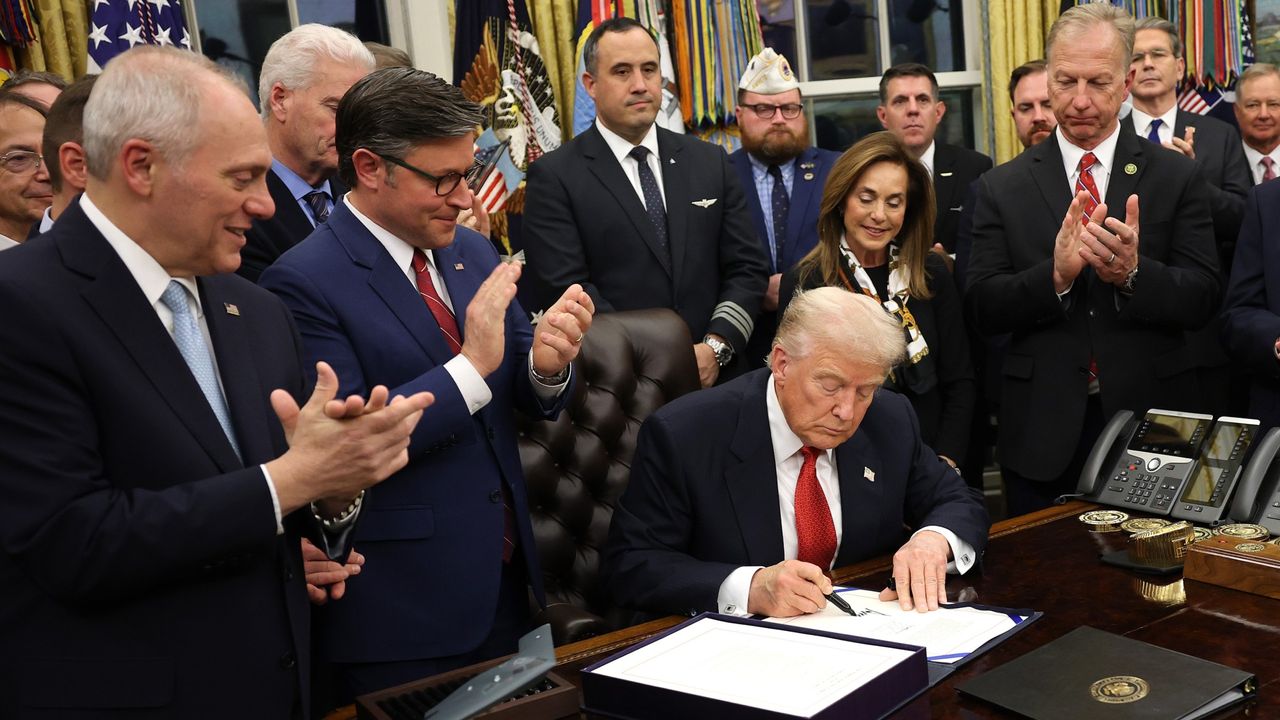
The longest government shutdown in US history ended with a whimper, said Nitish Pahwa on Slate. For 43 days, Congress had been in a stalemate as Senate Democrats withheld support for a government funding bill in a bid to force the Republicans to extend Covid-era healthcare subsidies. The subsidies are set to expire next month, at which point the average health insurance premiums of millions of Americans will more than double. But last week, enough Democrats eight senators “caved”, allowing the budget to pass in return for the mere promise of a future vote on whether to revive the subsidies. ‘Angry activists’ How pathetic, said Jamelle Bouie The Democrats had been winning the stand-off. Polls showed that many voters blamed the GOP for the shutdown. Even as senators were preparing to capitulate, President Trump was booed by a crowd at an American football game. Talk about stealing defeat from the jaws of victory. The Democrats were right to back down, said Michael Powell in The Atlantic. The shutdown was hurting too many people. Poor families were going hungry without food stamps. Federal employees were struggling to pay mortgages and bills without paycheques. Unpaid air traffic controllers meant flight cancellations. The Democrats, who take pride in defending the less fortunate, couldn’t sustain their position. It’s always the way with government shutdowns, said The Washington Post. Parties instigate them to placate “angry activists”, only to have to fold, prompting a backlash from those same activists. Democrats ‘may have dodged a bullet’ The recriminations among Democrats have indeed been bitter, said Ed Kilgore in New York Magazine. There have been calls for the replacement of Senate Minority Leader Chuck Schumer. But “losing” the subsidy-extension battle is no disaster for the party. On the contrary, the Democrats “may have dodged a bullet”. Securing the extension would have neutralised one of the GOP’s key political vulnerabilities: the Republicans have “emerged from the shutdown row having abundantly displayed their lack of interest in soaring healthcare costs”. That’s not a good look at a time when “affordability” has become such a big election issue, and voters will remember it when their insurance premiums soar. “The short-term stakes of the shutdown fight may soon be overshadowed by more enduring public perceptions” of what the two parties stand for.
https://theweek.com/politics/us-government-shutdown-why-the-democrats-caved
Tag Archives: vulnerabilities

Markets in Late-Cycle Phase, Not Recessionary: QCP
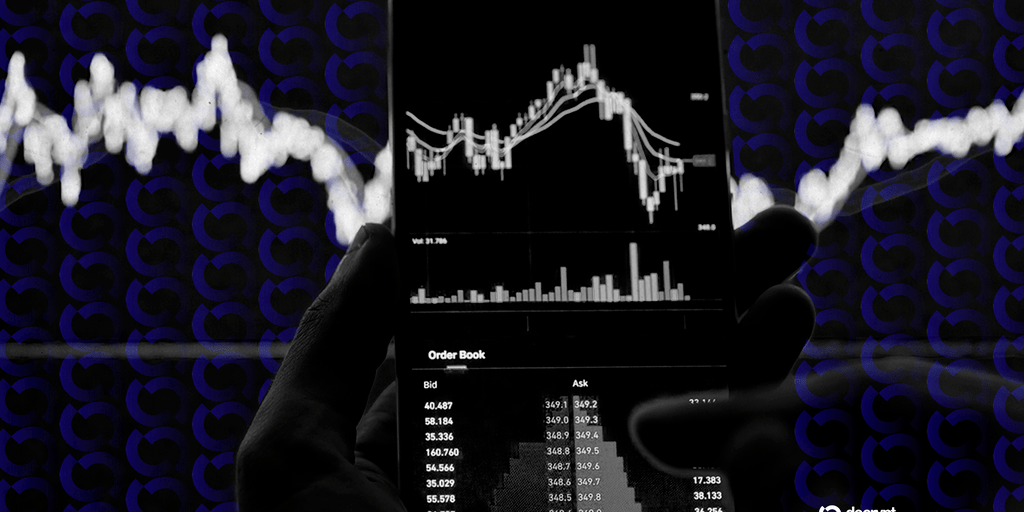
The behavior in global financial markets is a classic late-cycle characteristic and not a signal of an imminent recession, Singapore-based crypto trading firm QCP Capital said in a Wednesday note, referring to a broad-based correction across equities, gold, and crypto markets. Bitcoin is trading flat over the past 24 hours at around $91,750, attempting a recovery after a brief dip below $90,000, according to CoinGecko data. The pullback was amplified by thinner liquidity and persistent spot Bitcoin ETF outflows, underscoring the asset’s sensitivity to macro shifts, Decrypt was told. “The reasons behind this round of broad-based asset corrections are highly consistent with tightening liquidity, a reversal in policy expectations, declining risk appetite, and valuation adjustments after excessive gains,” Tim Sun, a senior researcher at HashKey Group, told Decrypt. The rapid repricing of investors’ sentiment and expectations amid macro uncertainty is evident in the odds of a quarter-point rate cut, which dropped from over 60% a week ago to 32. 8% today, according to CME’s FedWatch tool data. On prediction market Myriad, owned by Decrypt‘s parent company Dastan, users put the chance of a 25bps rate cut in December at just 32%. Duration-sensitive assets like Bitcoin, as a result, have been hit hard, QCP analysts noted, highlighting crypto’s lagging performance even as equities benefit from strong corporate earnings. Equities, on the other hand, appear more resilient due to strong earnings from AI-based equities’ corporate capital expenditure and strong household balance sheets. “We believe the broader financial markets are firmly past the early-cycle phase,” Jyotsna Hirdyani, South Asia Head at Bitget, told Decrypt. She characterized the current environment as a “late-mid to early-late stage, where momentum is slowing, vulnerabilities are rising, and markets are more sensitive to macro shocks, but the classic recession markers are not flashing red yet.” The U. S. credit spreads have widened only slightly, and systemic stress remains limited, suggesting the current correction is a positioning shakeout rather than a fundamental breakdown, Sun explained, echoing QCP Capital’s take. Is the Bitcoin bottom in? Regarding Bitcoin’s trajectory, analysts see a bottoming process underway but caution against expecting a rapid V-shaped recovery. “Bitcoin’s bottoming process is primarily driven by liquidity, market sentiment, and the distribution of coin-holding,” the HashKey analyst said. “A weak rebound followed by range-bound bottom formation is the more probable scenario. A true trend reversal still requires stabilization in macro liquidity.” While structural metrics like exchange balances suggest underlying resilience, “confidence is limited because liquidity conditions remain fragile and macro sentiment is weak,” Hirdyani added, stating that confirmation of a durable bottom would require “higher lows, improving ETF and spot inflows, and clearer policy signals.” All eyes are now on the December FOMC meeting, which could provide the catalyst for a more sustained recovery if it delivers dovish language regarding the 2026 policy path. Investor sentiment remains muted, with Myriad users putting a 63% chance on Bitcoin’s next move taking it to $85,000 rather than $115,000.
https://bitcoinethereumnews.com/tech/markets-in-late-cycle-phase-not-recessionary-qcp/
Investigations increasing into violent online 764 network targeting minors
CHICAGO (WLS) — The 764 network operates not only in the United States but all over the world using threats, blackmail, and perverse manipulation to groom children for violence and pain. Members force young people to perform depraved acts against themselves and others. “When we started seeing these reports concerning online enticement, but with extremely egregious sadistic elements our team immediately knew this was an outside of the norm and began tracking this trend specifically,” said Fallon McNulty. She is the executive director of the CyberTipline at the National Center for Missing and Exploited Children. ABC7 Chicago is now streaming 24/7. Click here to watch McNulty says members of 764 start to groom their victims on seemingly innocuous platforms and blackmail them into producing sexually explicit material, harming themselves, or even other children. “Offenders are first making contact with children through online gaming platforms or through social media and then trying to move children to more private or encrypted messaging spaces,” McNulty told the I-Team. The more debased and violent the image or video a member is able to coerce a child to produce, the higher their standing in 764. “They’re striking up communication or chat in gaming, they are trying to seek what that child’s interests are, what that child’s vulnerabilities are, their personal information, and then they’re using that against the child,” warned McNulty. SEE ALSO | ’10 minutes of murder’: Why one family is speaking out about the online extremist network 764 The FBI is now comparing 764 actions to those of terrorist organizations. “Lots of commonalities with other types of terrorist activity,” said Javed Ali, an associate professor at the University of Michigan Ford School of Public Policy. Ali worked at the FBI and National Security Council during the Trump Administration. “All this activity that is just so reprehensible. What’s to say that they wouldn’t go to another level and try to commit an act of terrorism, even though it may not be part of the origin, origins, or the initial ideals of what the 764 network tries to do,” said Ali. But there are real challenges to dismantling a network that exists all over the world and primarily online. “How do you, either from a parenting side, or from a national security perspective, how do you get your arms around it? Because it is so vast, and it’s so unregulated for the most part,” Ali told the I-Team. Additional resources: To report an incident to the National Center for Missing & Exploited Children CyberTipline: For more resources on child sexual exploitation, including how to talk to your child about this topic: To report an incident of child exploitation to the FBI:.
https://abc7chicago.com/post/what-is-764-group-investigations-increasing-violent-online-network-targeting-minors/18171678/
Samsung monthly updates: November 2025 security patch details
With the One UI 8.0 rollout nearly complete for most eligible devices, Samsung is shifting its focus back to regular security updates. The company has already published details of this month’s security patch for Galaxy devices a little earlier than usual.
The November 2025 patch addresses a total of 25 vulnerabilities discovered in the Android operating system. Among these, two are classified as critical-risk, while the remainder are marked as high-risk. One of the critical vulnerabilities affects Android versions dating back to Android 13, whereas the other impacts only Android 16. Notably, no moderate or low-risk vulnerabilities have been resolved in this release.
In addition to Android OS fixes, Samsung has included nine patches for vulnerabilities found in its own software that affect only Galaxy devices. The update also addresses 11 security flaws related to the company’s Exynos chips, which are used in both smartphones and wearables. Most Exynos chips manufactured from 2019 through 2024 appear to have been potentially affected.
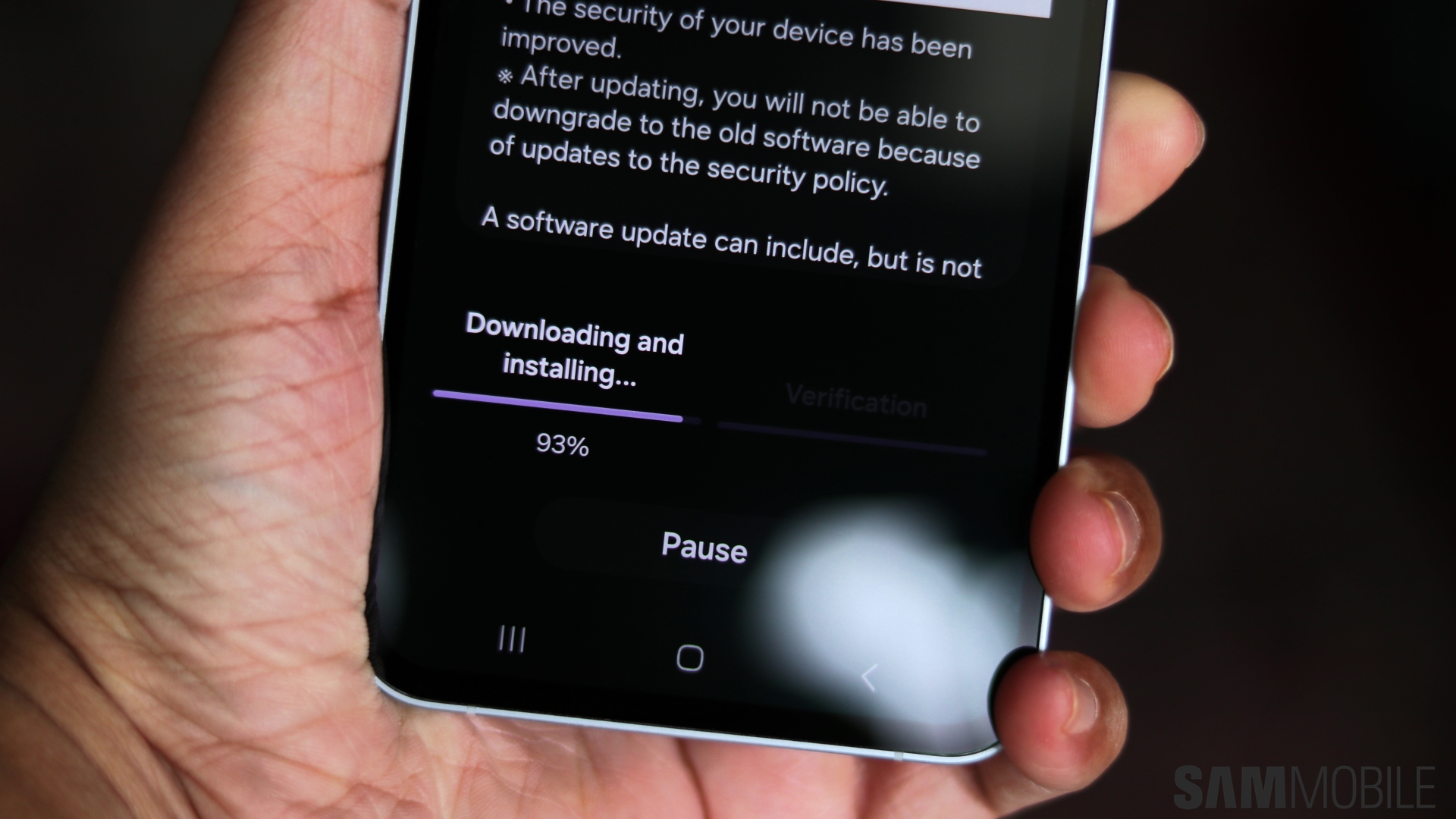
As of November 3, Samsung has not yet released any software updates containing the November 2025 security patch for its devices. However, this is expected to change soon. As usual, only devices on Samsung’s monthly security maintenance schedule are guaranteed to receive this patch. For models on quarterly or biannual schedules, availability will depend on when they last received a security update.
Some devices may also receive the November 2025 patch bundled with the One UI 8.0 update.
To check for updates manually, go to your device’s **Settings > Software update** menu and tap **Download and install**.
https://www.sammobile.com/news/samsung-monthly-updates-november-2025-security-patch-details/


U.S. Explores Quantum Computing Investments to Counter Rising Security Threats
**U.S. Government Plans to Use CHIPS Act Funds to Support Quantum Computing Firms Amid Security Concerns**
The U.S. government is exploring plans to use funds from the CHIPS Act to support quantum computing companies. This move aims to strengthen national security and maintain a technological edge over global competitors, particularly China. However, experts warn that the rapid advancement of quantum computing could soon threaten existing encryption systems that protect sensitive information across critical sectors.
—
### Government Plans to Fund Quantum Computing
The U.S. Department of Commerce is reportedly in early discussions with quantum computing firms about providing direct financial support drawn from the CHIPS Act. This funding effort is designed to keep pace with China’s advancements in quantum technologies, which have raised concerns within U.S. government circles.
Quantum computers possess the potential to break current encryption methods that safeguard vital areas such as finance, healthcare, and military operations. To mitigate these risks, government officials are seeking to exchange their investments for equity stakes in quantum tech companies—a strategy similar to an earlier deal made with Intel this year.
This proactive approach highlights growing unease over the risk that quantum technologies may soon undermine existing security measures, exposing sensitive systems to vulnerabilities.
—
### Debate Over Government Involvement in the Quantum Sector
While the government’s motivation centers on national security, its plan to invest directly in quantum computing firms has sparked debate among economists and free-market advocates.
Critics argue that increased government intervention risks steering the U.S. economy toward a centrally planned model. Economist Peter Schiff voiced his concerns on social media, emphasizing that markets, not the government, should allocate resources and determine business success.
Conversely, supporters contend that government involvement is crucial to preserving U.S. competitiveness in emerging technologies. With the global race for quantum computing supremacy intensifying—especially with China’s rapid progress—some believe federal backing is necessary to maintain the country’s leadership in technology and innovation.
—
### Quantum Computing’s Impact on National Security
Quantum computing could disrupt countless industries, especially those reliant on cryptography for security. If quantum computers achieve the capability to break current encryption algorithms, confidential information across banking, healthcare, defense, and more could be compromised.
In response, there is a significant push toward developing post-quantum cryptography—new encryption standards designed to resist quantum attacks. However, experts caution that the timeline for quantum computers to break traditional encryption is uncertain: estimates range from five to ten years, while some worry the threat may already be emerging.
A particular concern is the tactic known as “harvest now, decrypt later,” where attackers collect encrypted data today with the intent to decrypt it in the future once quantum computing advances sufficiently. This possibility intensifies the urgency for stronger security solutions.
—
### The Role of Post-Quantum Cryptography
As investments in quantum computing accelerate, so does the focus on building resilient post-quantum cryptographic solutions. Both private companies and government agencies are actively developing strategies to prepare for the quantum era.
These new encryption methods aim to protect data from being broken by quantum algorithms, ensuring continued digital security.
David Carvalho, CEO of Naoris Protocol—a cybersecurity firm specializing in post-quantum solutions—warns that quantum computers may already be operational beyond public knowledge. He stresses that adversaries could have gained control of quantum technologies without widespread awareness, making early and proactive defenses essential.
—
### Conclusion
The U.S. government’s consideration to fund quantum computing firms using CHIPS Act resources reflects the urgency surrounding quantum technology’s dual promise and risks. Balancing national security needs with economic principles and market dynamics will be critical as the country navigates this rapidly evolving technological frontier.
Simultaneously, advancing post-quantum cryptography remains paramount to safeguard vital digital infrastructure from emerging threats posed by quantum computing breakthroughs. Vigilance and proactive investment in both offensive and defensive quantum technologies will shape the future of cybersecurity and global technological leadership.
https://coincentral.com/u-s-explores-quantum-computing-investments-to-counter-rising-security-threats/


The inner pandemic
We all remember the visible battle—the haunting quiet of empty streets; the muffled voices behind masks; the endless news updates counting lives and losses. During those long months, our mission as a nation was clear: protect our bodies, flatten the curve, and survive.
Pakistan, like many nations, showed remarkable courage. Our doctors, nurses, and volunteers worked tirelessly; communities rallied to support one another; and faith carried millions through uncertainty. But as the physical threat of Covid-19 faded, another quieter crisis emerged—one that affects minds, hearts, and communities. It is the crisis of mental and emotional well-being.
### The Hidden Crisis: Mental Health After Covid-19
The trauma of a health emergency does not vanish when the lockdowns end. Covid-19 was not only a medical or economic disaster; it was a deep psychological shock. Anxiety, grief, isolation, and exhaustion became part of everyday life.
The traces remain visible across the country: in the mother in Lahore who still feels anxious in crowded places; in the university student in Karachi, Peshawar, Balochistan, and Gilgit Baltistan, struggling with concentration and mental fog. These are the unseen wounds of what experts call the shadow pandemic—a surge in mental health problems worldwide.
In Pakistan, where the topic of mental health has long carried stigma and silence, this invisible crisis poses one of the biggest public health challenges of our time.
### Why Crises Shake Our Inner World
Health emergencies like Covid-19 shake the psychological foundations of daily life. Several factors contribute:
– **Loss of Safety and Control:** Overnight, routines vanish. The sense of predictability—essential for mental stability—disappears, leaving behind anxiety and helplessness.
– **Disconnection:** Our culture thrives on social connections—gatherings, family visits, community prayers. Lockdowns disrupted these lifelines, breeding loneliness.
– **Distorted Mourning:** Thousands lost loved ones without proper goodbyes or funerals. The lack of closure left many with unresolved grief.
Covid-19 and other health emergencies made one truth undeniable: there is no health without mental health. Yet, mental health remains one of the most neglected sectors in Pakistan.
### The Mental Health Care Gap in Pakistan
We face an acute shortage of mental health professionals. Clinically qualified psychologists, counsellors, and psychiatric nurses are even fewer. This shortage means millions struggling with depression, anxiety, or trauma have little access to care.
During the pandemic, many suffered silently, unable to find or afford help.
### The Way Forward
Given this shortage, Pakistan cannot rely solely on specialist-based care. We need a shift—from an individual clinical model to a public mental health approach—where mental well-being becomes everyone’s responsibility, not just the psychiatrists’.
In this model, mental health is integrated into primary healthcare, schools, workplaces, and community networks. Frontline health workers, teachers, religious leaders, and social volunteers can be trained to identify distress early, provide psychological first aid, and refer people for help when needed.
This approach relies heavily on **task-shifting**: empowering non-specialists through structured training to deliver basic mental health support. The World Health Organization’s mhGAP programme and PM+ are good examples.
Pakistan must adapt such frameworks to its own culture and social realities. We need locally developed modules—in Urdu and regional languages—that reflect our values, beliefs, and community structures.
Training lady health workers, school teachers, and faith-based counsellors can bridge the massive treatment gap and bring mental healthcare closer to the people.
The trauma of a health emergency does not vanish when the lockdowns end. Covid-19 was not only a medical or economic disaster; it was a deep psychological shock. This public mental health strategy can become a cornerstone of Pakistan’s broader health preparedness.
It is practical, affordable, and sustainable—a way to protect minds as we protect bodies.
### A National Preparedness Plan for Mind and Body
As the world braces for future health emergencies—from viral outbreaks to climate-related disasters—Pakistan must build resilience not just in hospitals but also in hearts and minds.
A National Preparedness and Response Plan should include a strong mental health component, ensuring that psychosocial support is part of every health emergency. This means:
– Establishing mental health desks in hospitals and emergency centres.
– Training healthcare providers in psychological first aid.
– Including mock preparedness drills that test not only logistical readiness but also emotional resilience.
– Setting up community-based counselling and helplines during crises.
Preparedness is not only about ventilators and vaccines; it is also about equipping people to manage fear, loss, and uncertainty. Mock drills and proactive planning can reduce harm, strengthen resilience, and preserve the mental health fabric of our society.
### Pathways to Healing
Recovery is both a national and personal journey. Healing begins when we collectively acknowledge the emotional cost of crises and invest in our inner well-being.
– **Acknowledge to Heal:** Accepting that we are affected—anxious, sad, or drained—is not weakness; it is the first step towards recovery.
– **Rebuild Human Connection:** After years of distancing, rekindling relationships is vital. A kind word or shared meal can restore belonging.
– **Protect Your Mind:** Limit exposure to distressing media; prioritise rest; and spend time in nature or prayer.
– **Seek Help Without Shame:** Therapy and counselling should be seen as normal healthcare, not a stigma.
– **Community Care:** Schools, mosques, workplaces, and the media can all play roles in spreading awareness and reducing stigma.
### Lessons from the Pandemic
Covid-19 was a mirror that reflected our vulnerabilities—not only medical but emotional. It reminded us that true health is holistic, encompassing both the physical and the psychological.
As Pakistan rebuilds its economy and health systems, mental health must be at the centre of policy and planning. National campaigns should promote mental health literacy; schools should include emotional education; and every public health initiative should have a psychological well-being arm.
Most importantly, for policymakers: if we invest in mental health today, we will save lives—not only from suicide or depression but also from the ripple effects of future crises.
### Towards Resilience
True recovery from the pandemic will not only be measured in economic terms but in how we healed as a people—in our compassion, our calm, and our ability to face the next challenge with courage.
A nation’s resilience begins with the mental resilience of its citizens. When minds are strong, communities thrive; when emotional health is valued, societies prosper.
Let us remember: **there is no health without mental health.**
With good mental health, we can face—and overcome—any health crisis that comes our way.
https://www.thenews.com.pk/tns/detail/1350038-the-inner-pandemic